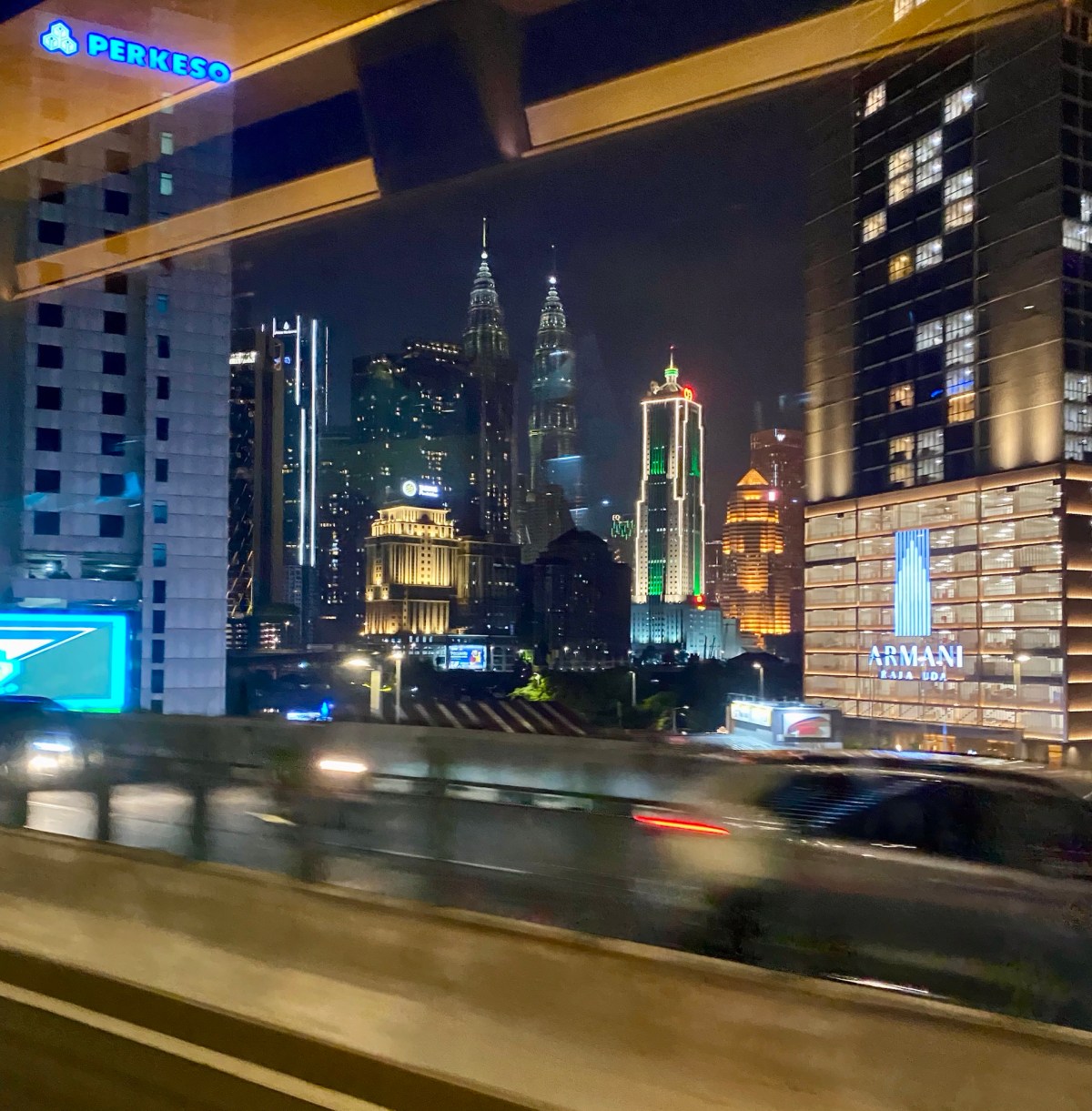
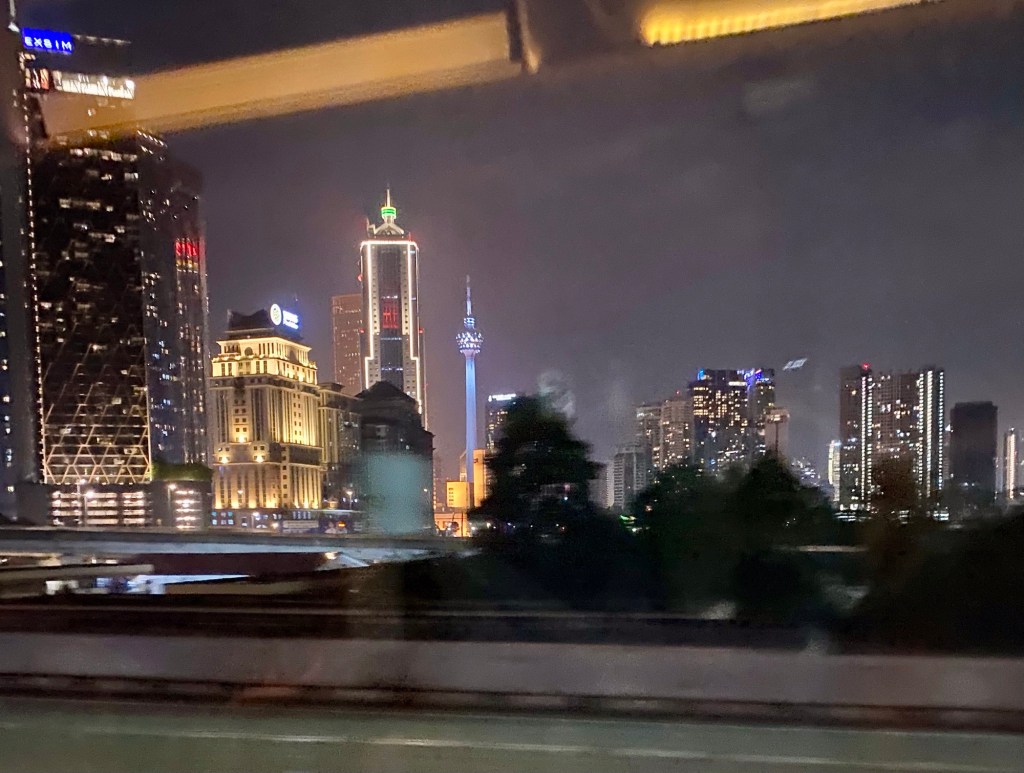
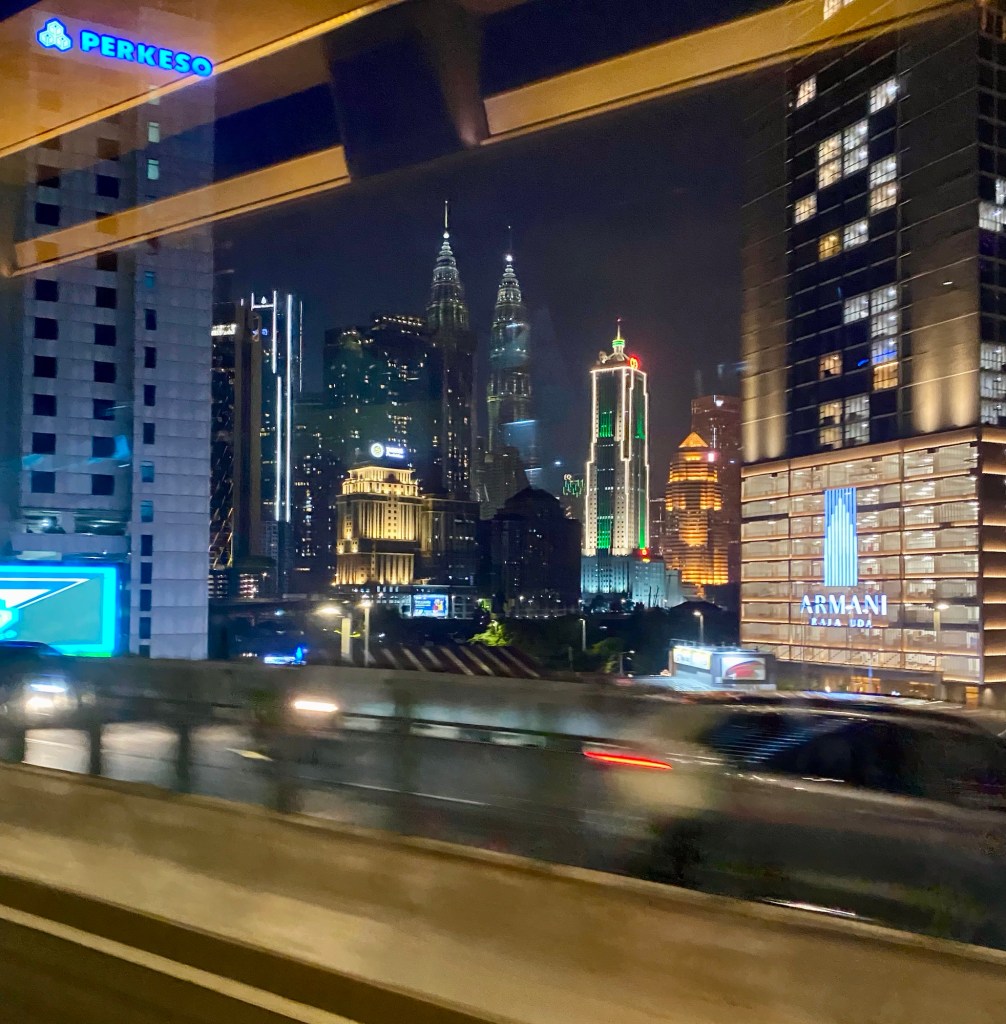
Really what can you say about Kuala Lumpur. What a dame! What a glitz blizzard. Day or night the towers compete for shiniest, most unusual features, height, lighting and colour. Big names, little names, it’s all part of the landscape that is known to its fans as KL.
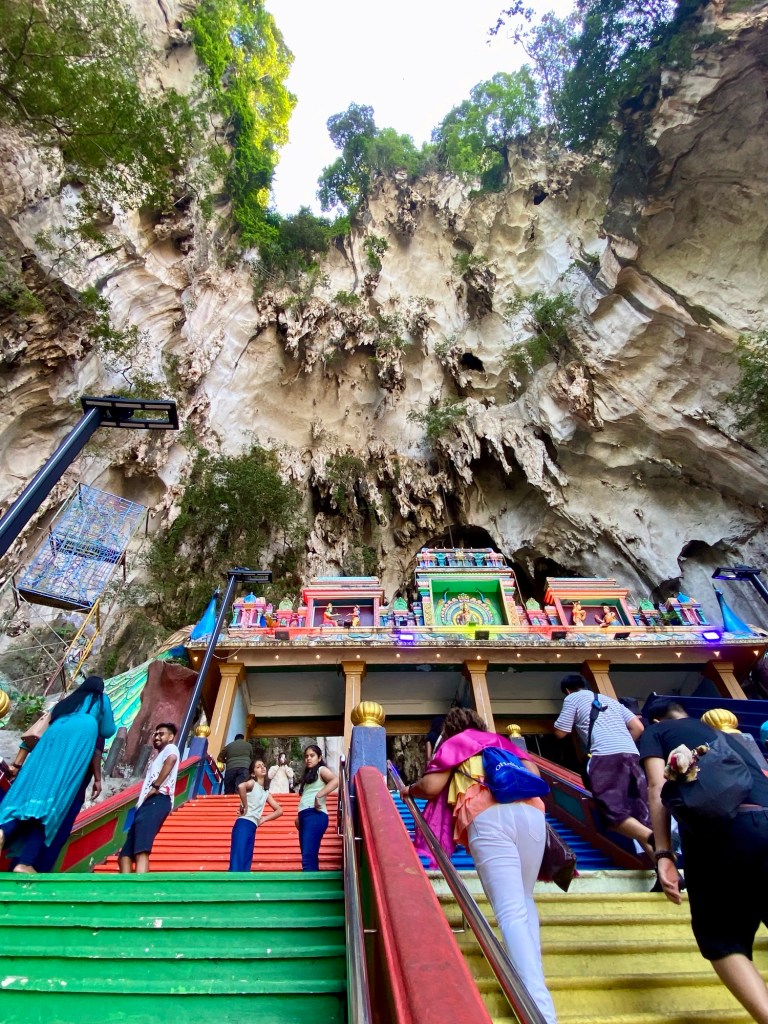
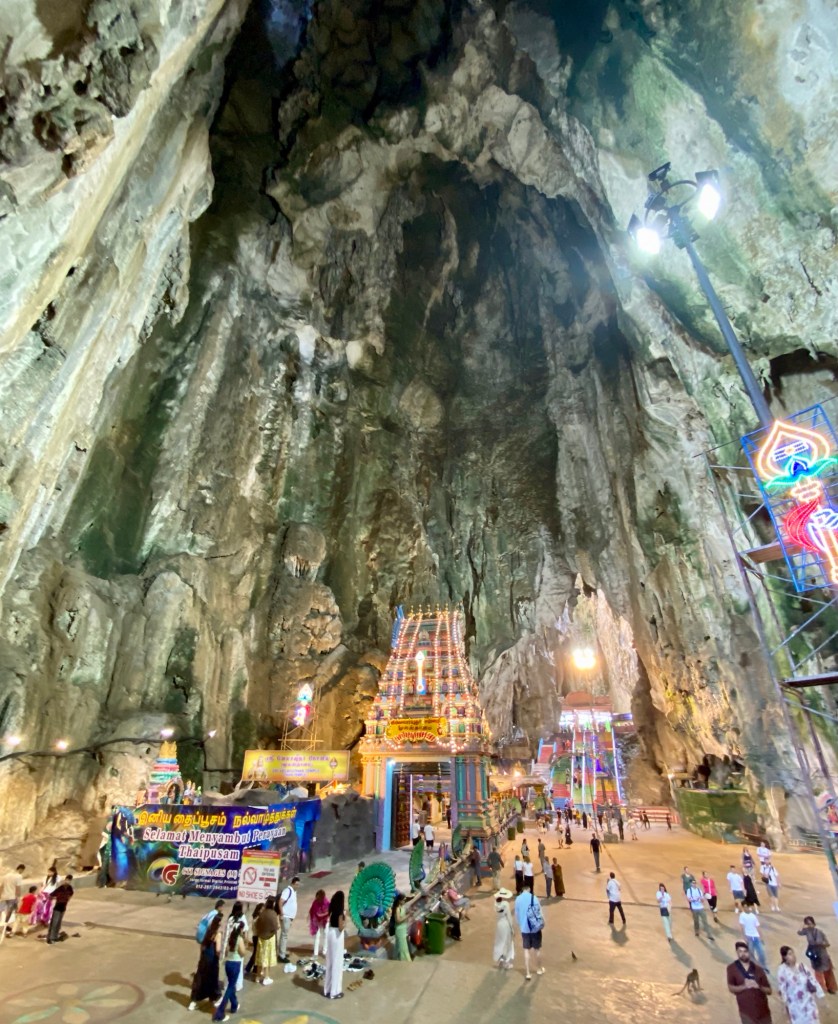
In one day I managed to hit so many hot spots. Started with the Batu Cave which is an amazing Hindu temple built right into the mountain. After my 700 step climb on Langkawi the mere 200 and some odd steps up to the cave was a walk in the park. Carved into the walls of the temple are shrines and holy sanctuaries to offer thanks and prayers to the Hindu Gods. It was crowded of course but so interesting to watch the eclectic mix of people, attire and generations within families.
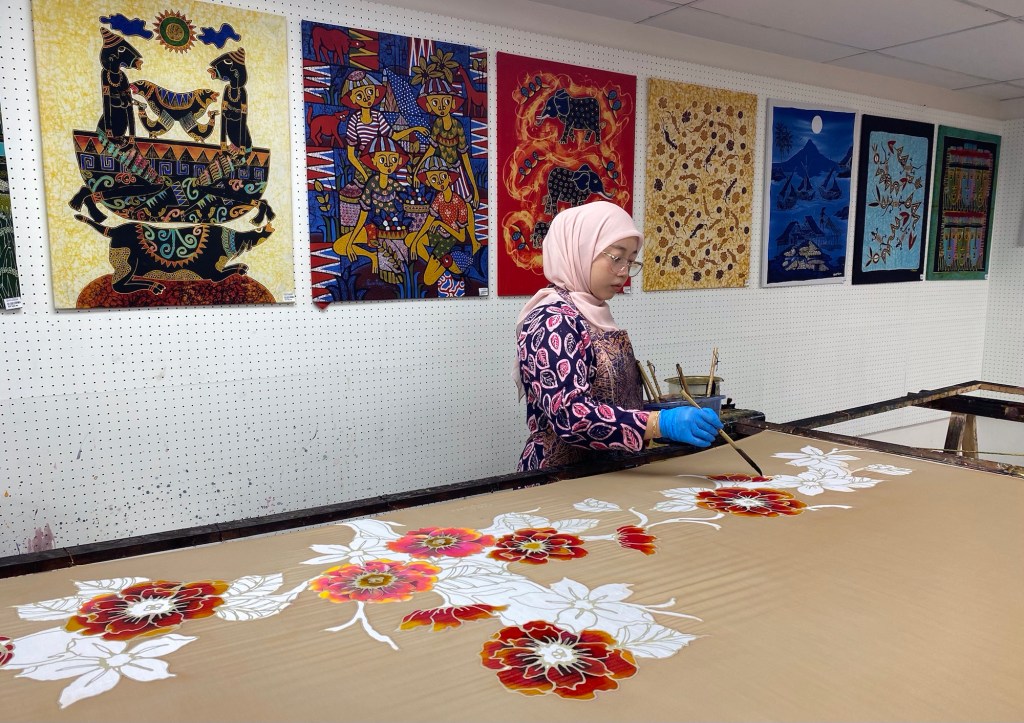
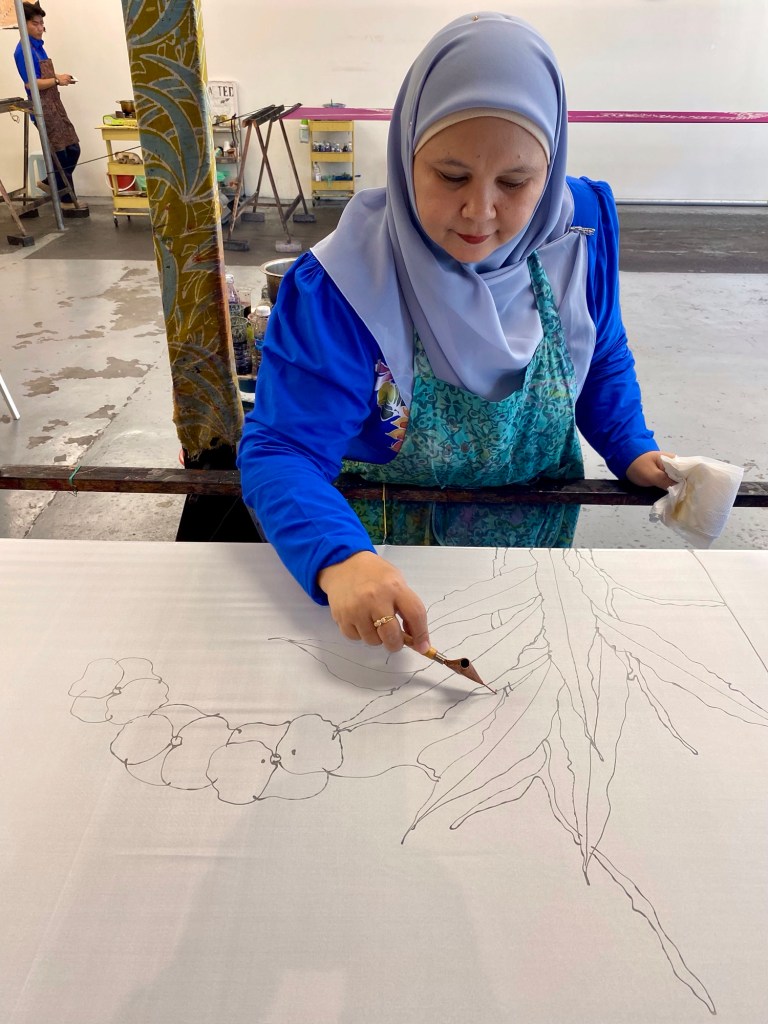
Close to the Cave was a Batik shop with free demonstrations and opportunities to buy product made by the resident artists, who continued to work away while the crowds watched. I even had a go at painting on silk after it had been drawn and waxed by a special little pen that looked more like a pipe. It very effectively dribbles the wax that corrals the dyes. The shop sold bolts of silk fabric and I was sorely tempted until I remembered that I’m not much of a seamstress.
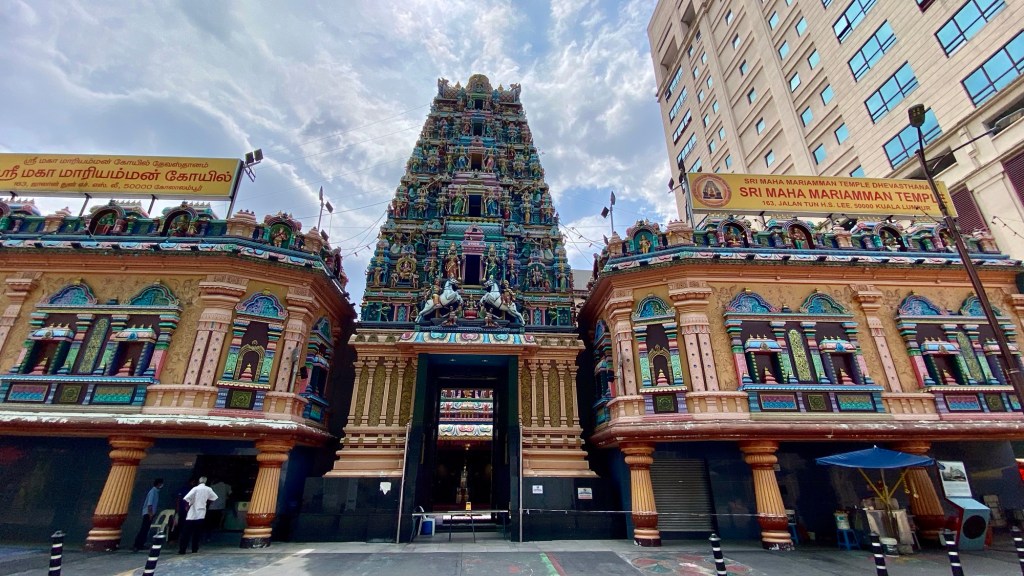
Heading back in to the city centre I found my way to the Central Market in the Old Town. As a great contrast to the new sleek architecture, the old town is full of British built colonial style buildings and across the an administration building is a Cricket Pitch complete with clubhouse. One can just imagine Graham Greene here in his “whites.”
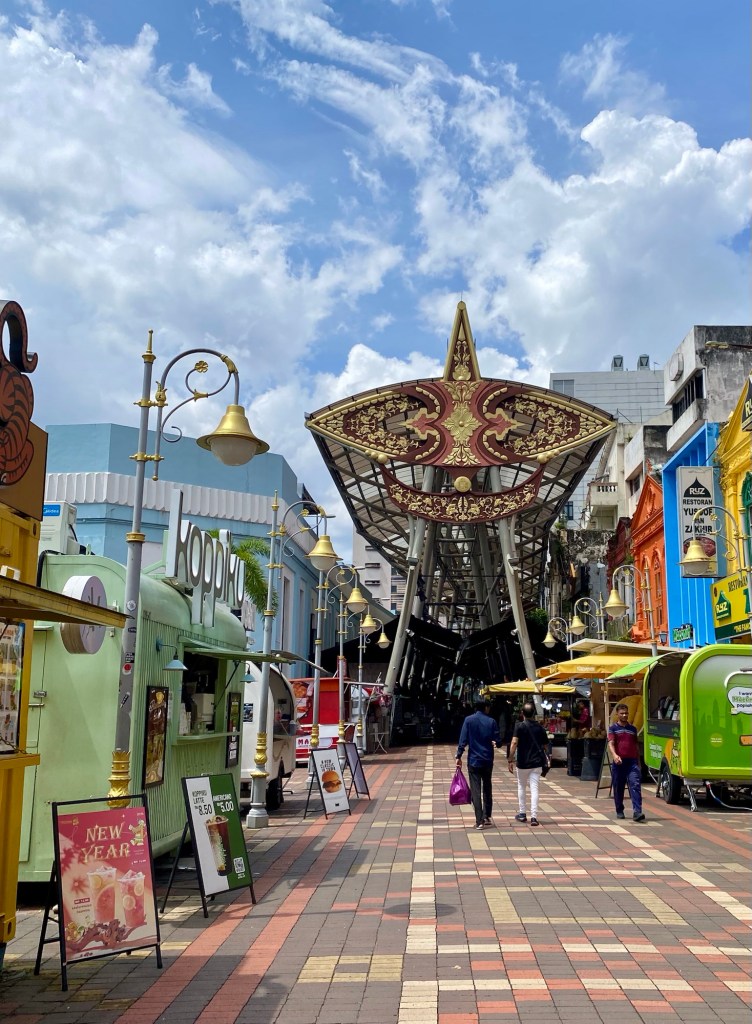
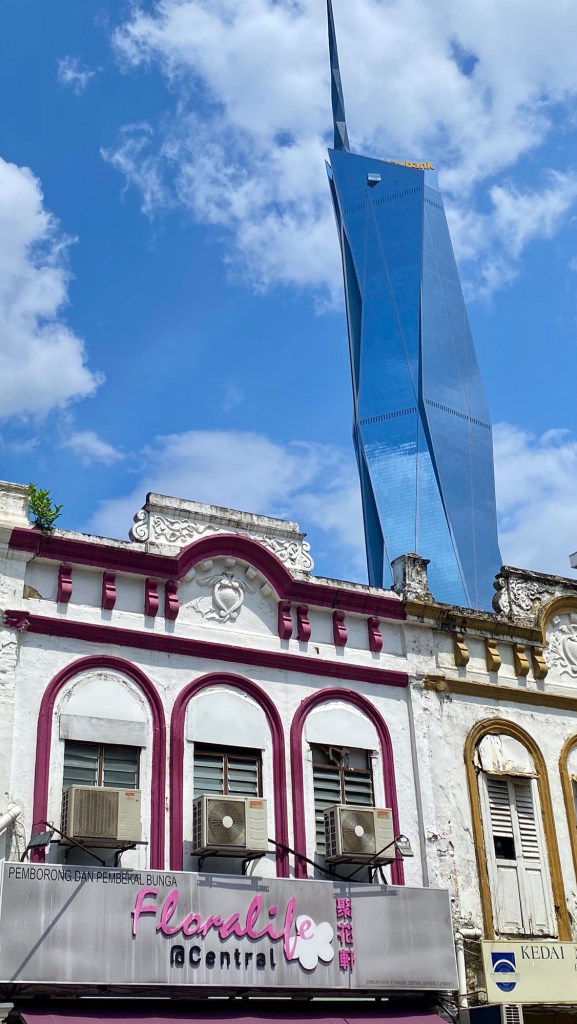
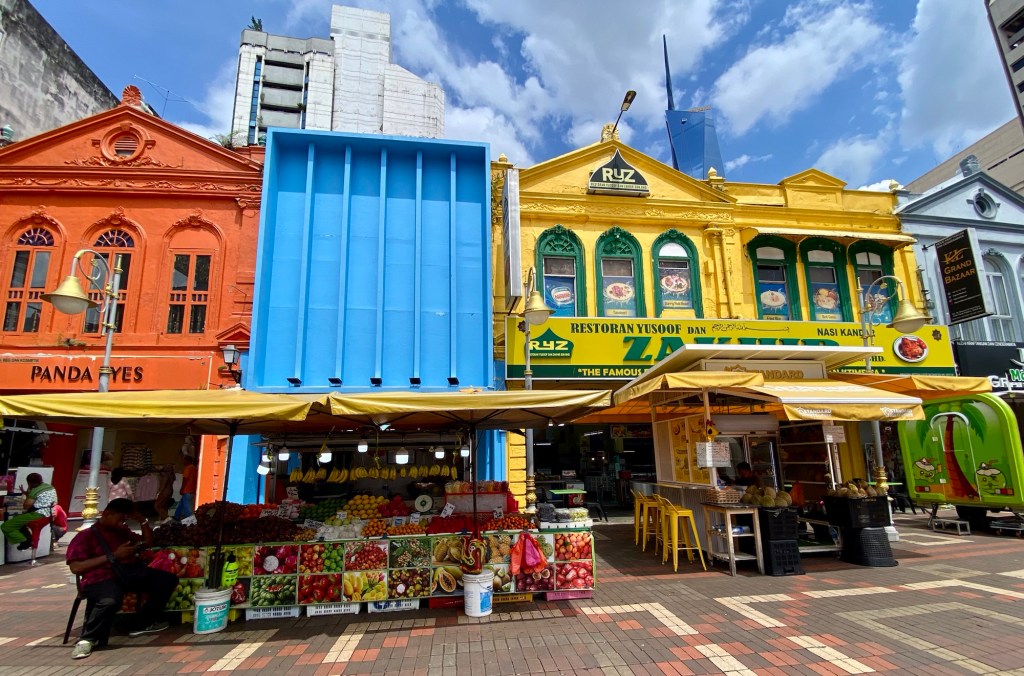
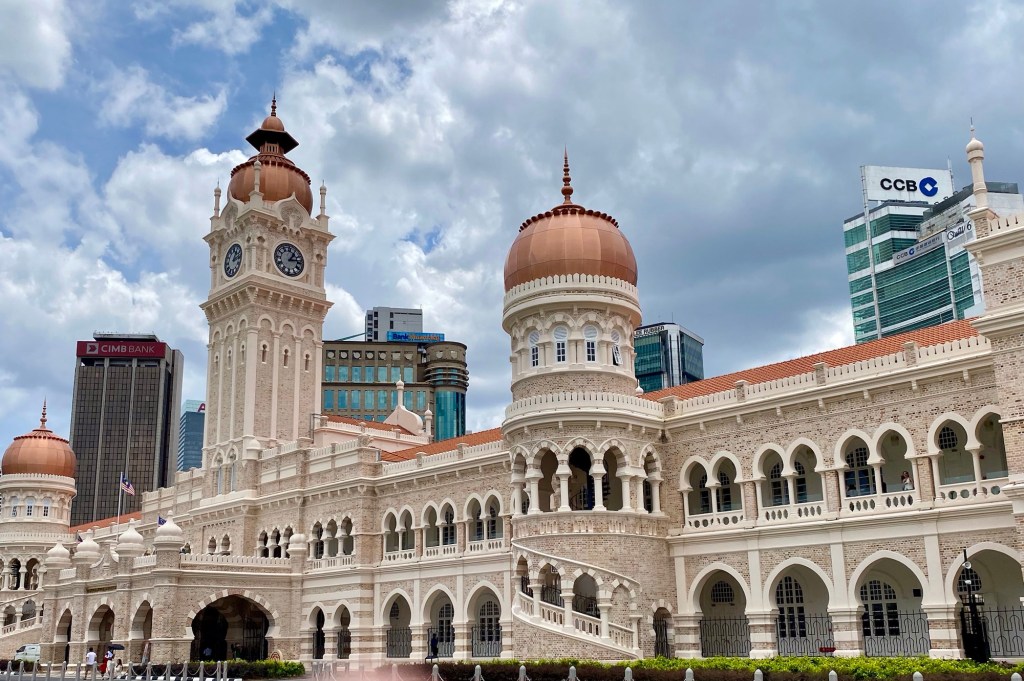
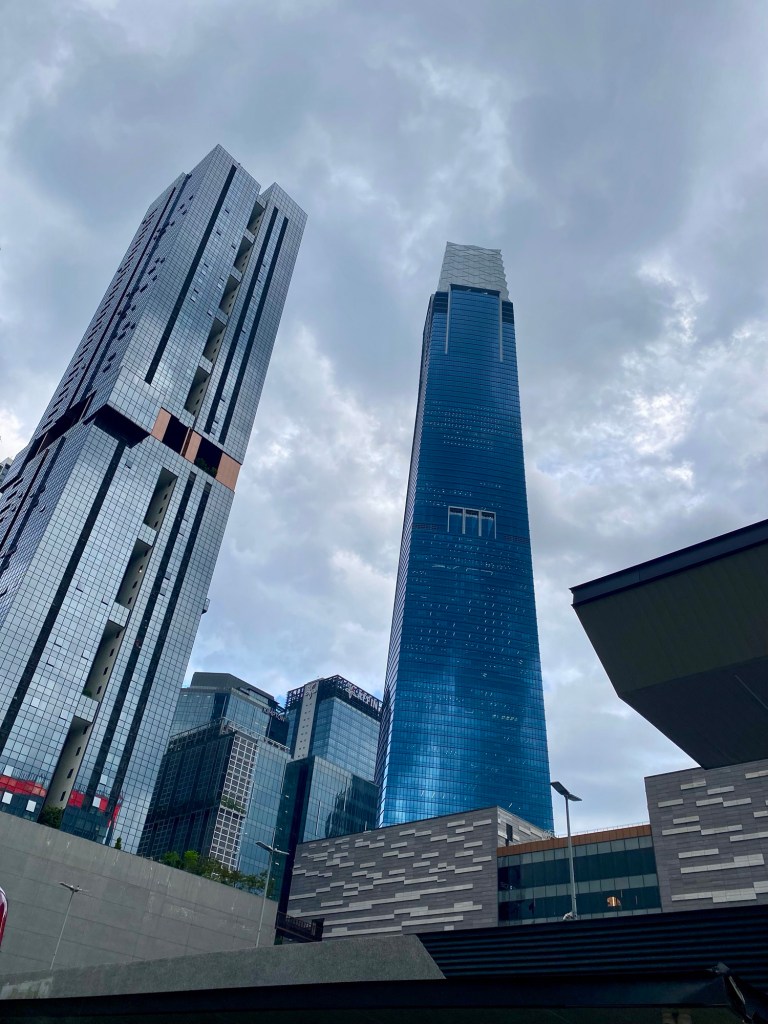
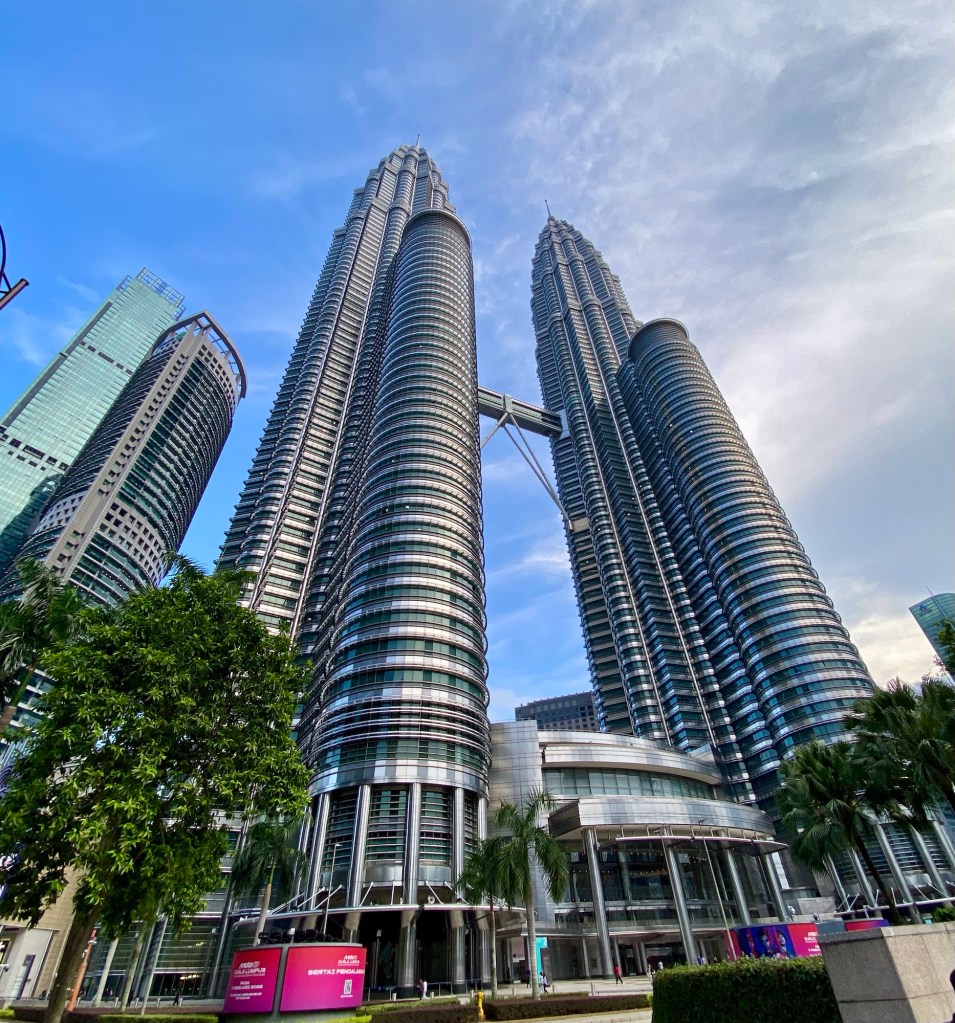
From the Old Town I made my way to the newer part of the city where the skyscrapers really take off. Sadly it was the final day of Ramadan and the start of Eid when I went to the Petrona towers to walk the sky bridge and travel to the observation deck. I was planning on a sunset view and night skies of the city but when I arrived the tower was closed early for the celebrations to come that evening. All night long there were fireworks all around the city and Muslim family and public celebrations for Eid.
Cameron Highlands
Although my time was limited I decided to take a full day tour and head north towards the Thai border to visit the Cameron Highlands where the gardens and tea plantations thrive in the cool of the mountains.
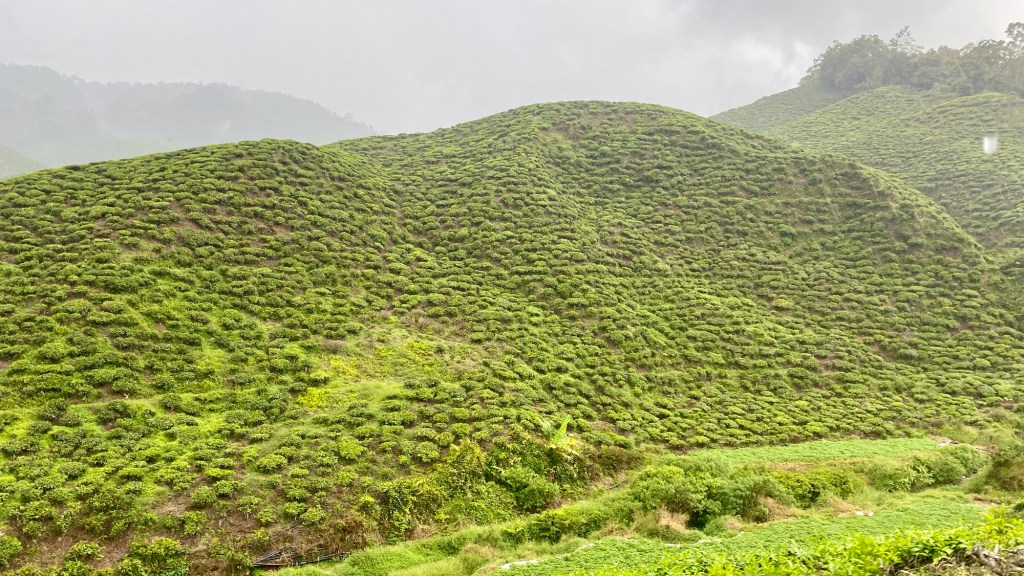
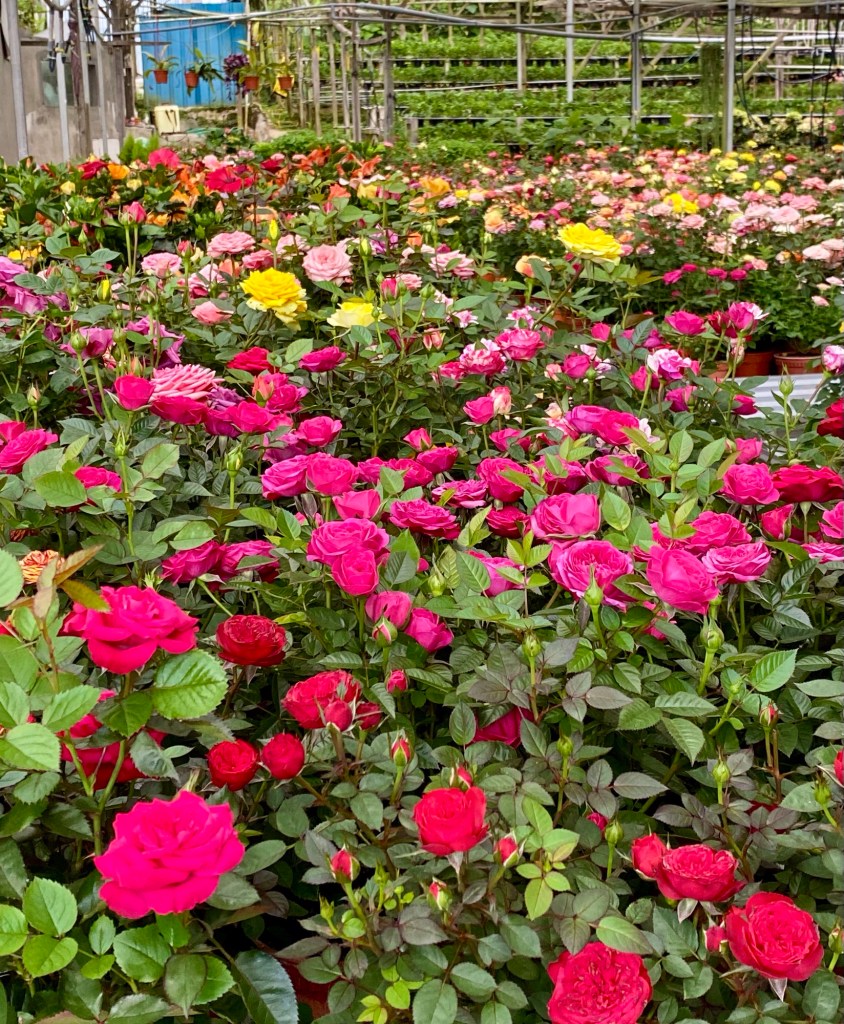
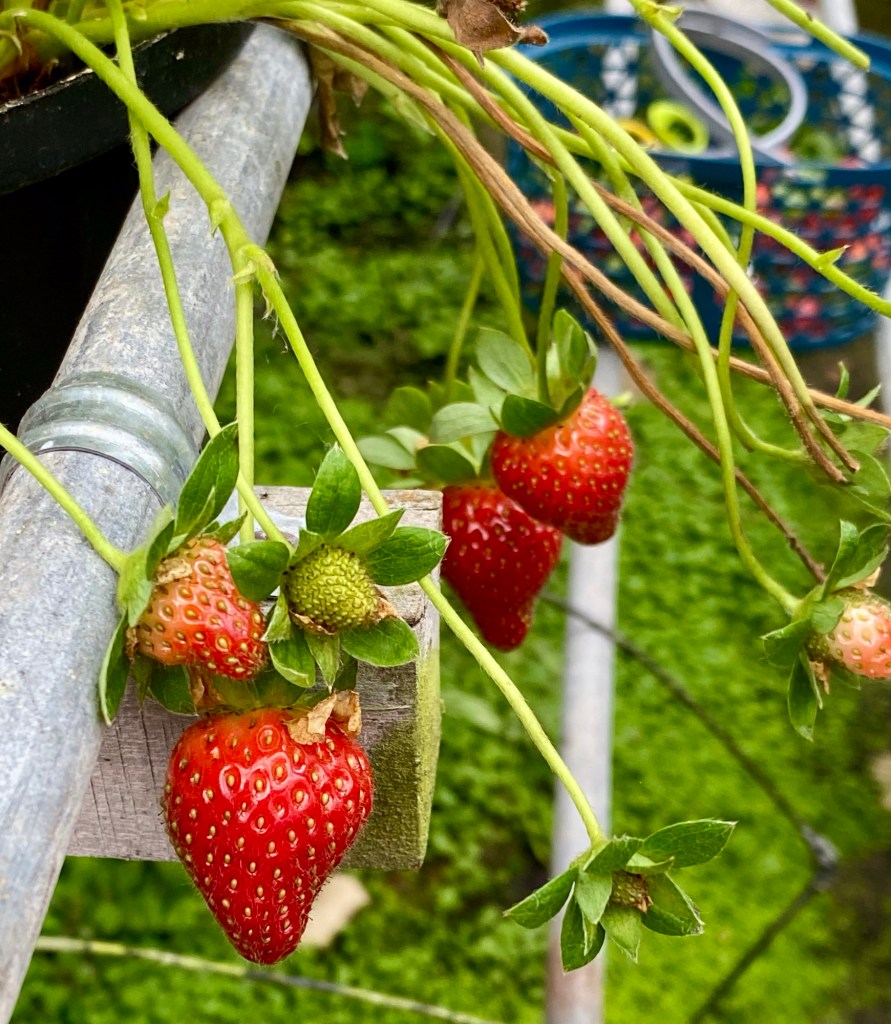
At one time I’m sure it was very colonial, a playground for wealthy foreigners escaping the heat of KL, but now it is clearly a modern mountain get away for weekenders and outdoorsy types.
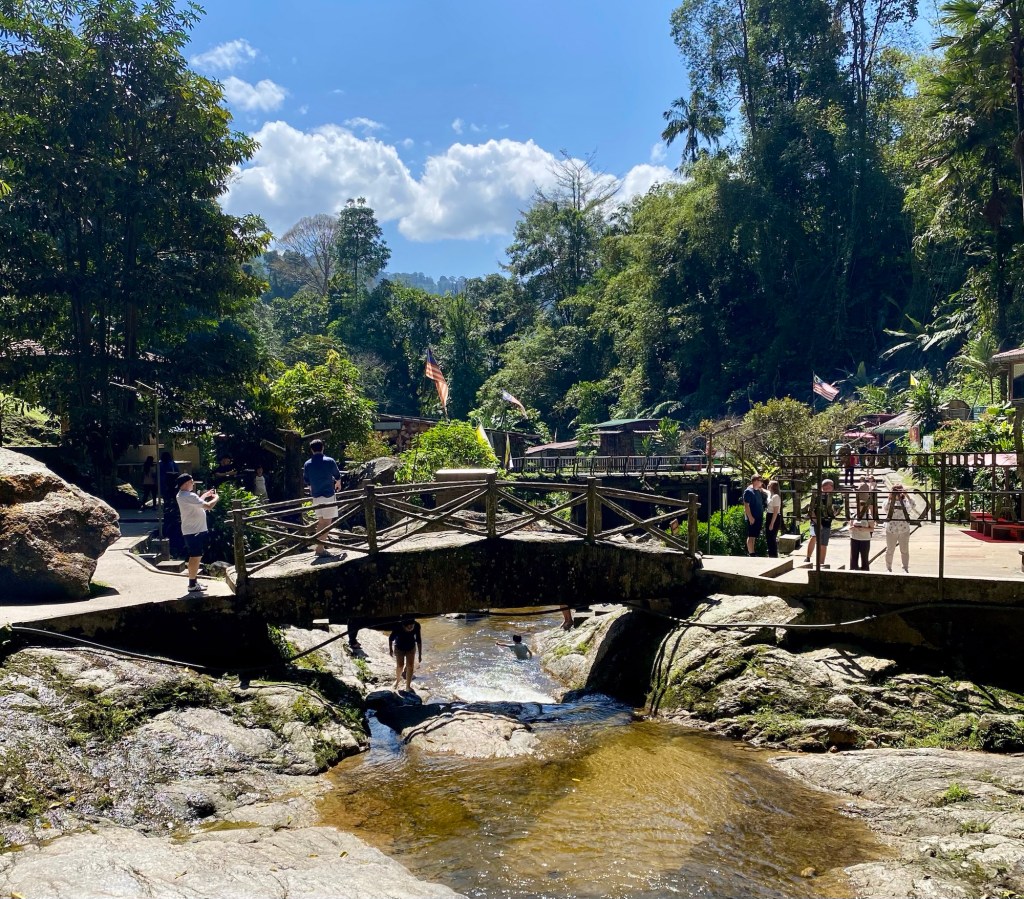
There is a large assortment of roadside attractions to amuse all ages, and much like most mountain resorts, hotels and condominiums have sprung up and it is much more populated and busier that I would have expected.
Roadside attractions the world over seek to distract and entertain and the owners here go to all lengths to make sure that the visitors are given a variety of diversions.
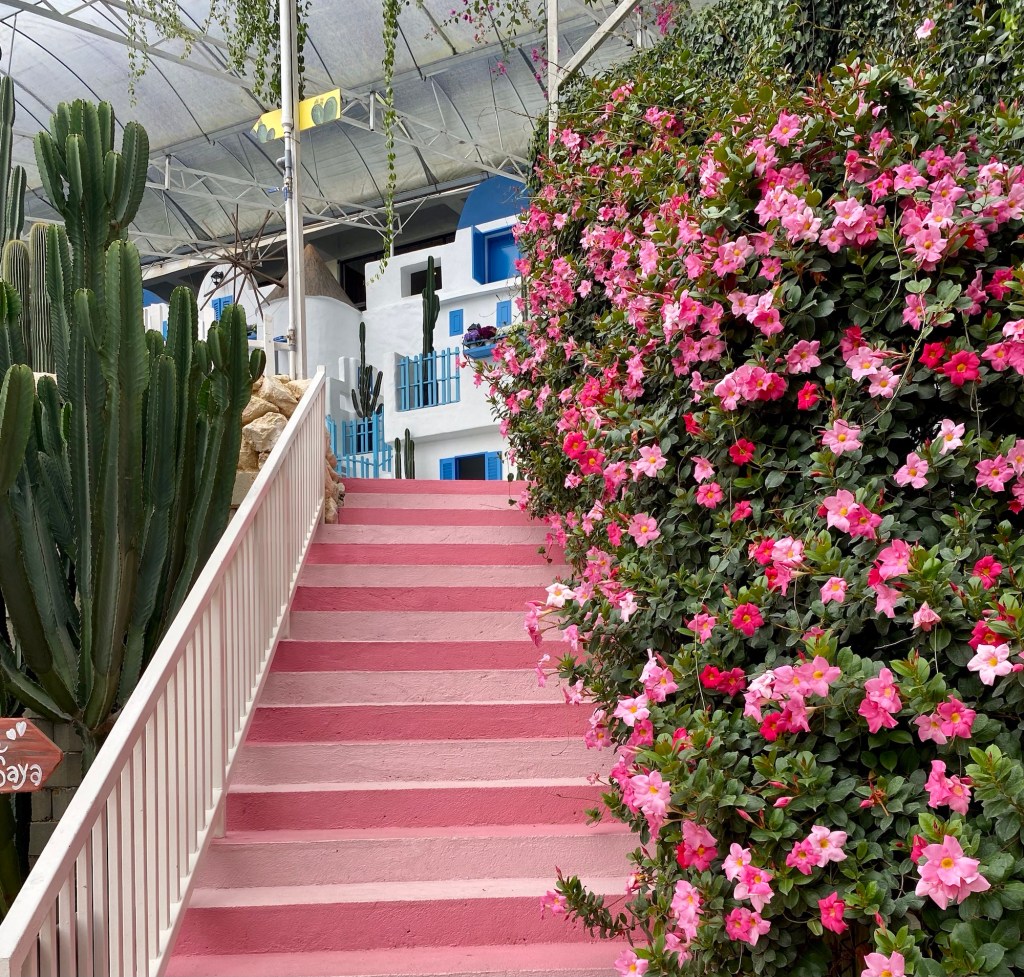
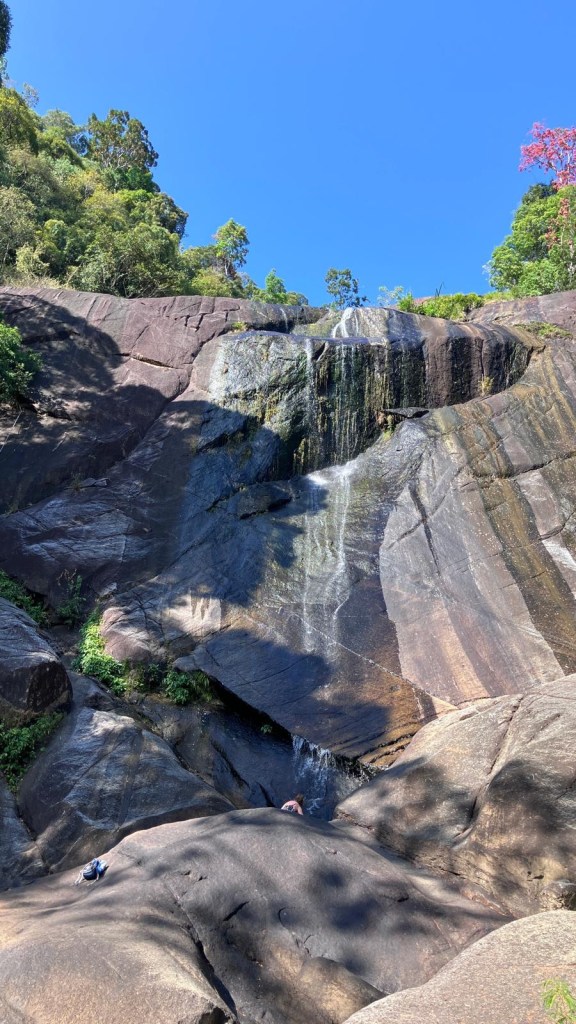
From a mini Greek Island Village, to kiddy rides, jungle treks and of course shopping there is plenty to do in the Cameron Highlands. The better part of the day was fair weather and after a long and winding road about half way up the mountain we stopped to see a waterfall. It was nice to get out and stretch our legs as we had already been about three hours on the bus.
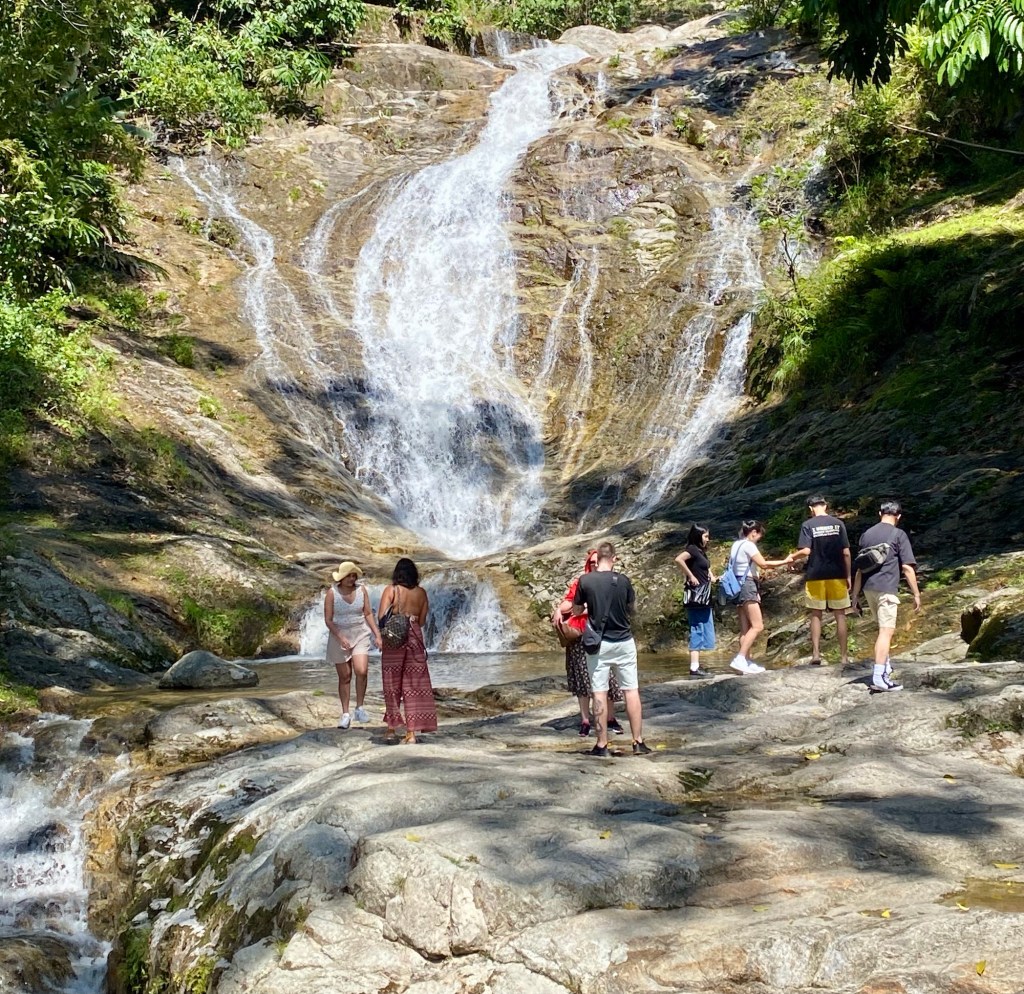
Interestingly Malaysia has indigenous people called Bateeks, not to be confused with Batik. At the waterfall, along the roadside there is a cluster of shacks, stocked with goods made and sold by the Bateeks who still live a “simple life” as our guide informed us.
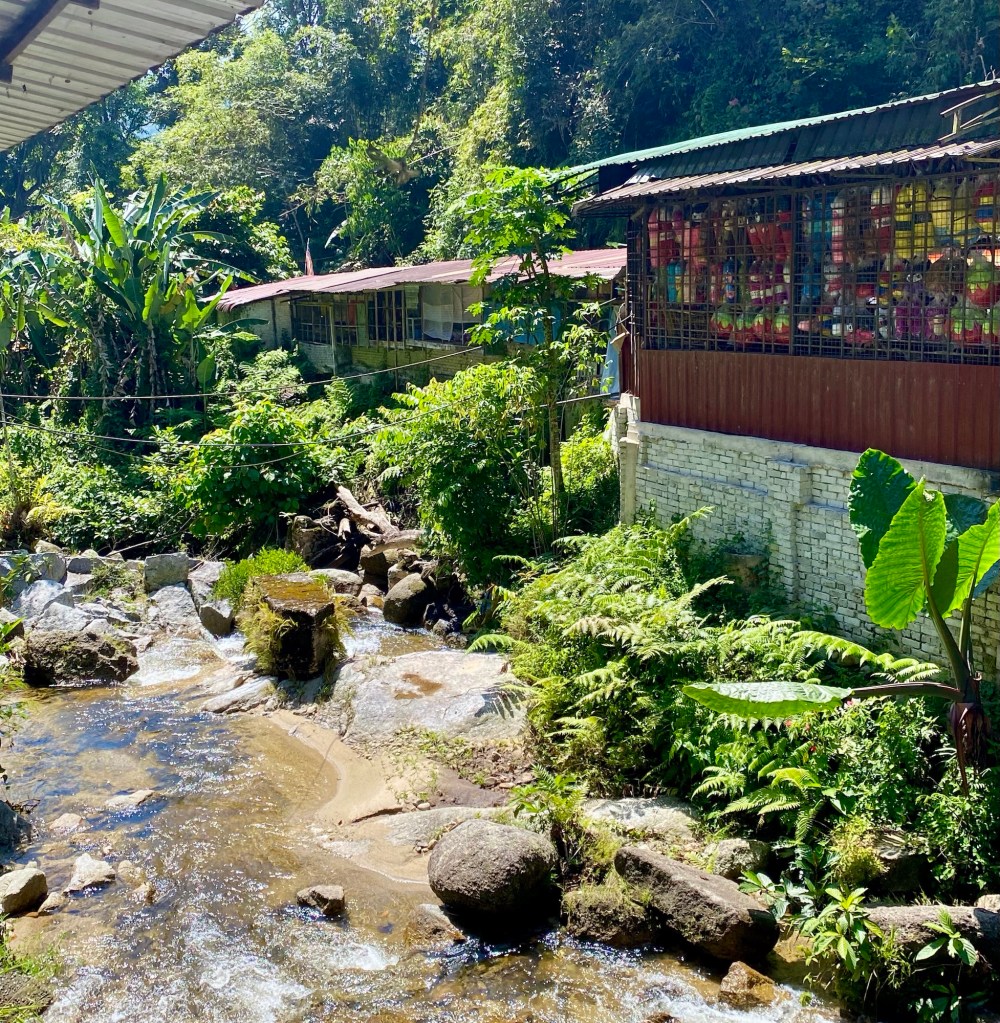
Not sorry I did the tour up to the Highlands, it was a very long day, more than twelve hours and really most of them were spent on the bus or getting on and off the bus. Had I thought ahead I would have made it an overnight trip.
That’s a Wrap
Well that’s a wrap on another one of my “favourite” trips. Such an interesting and captivating part of the world. Wherever I went individual people made all the difference to my experience and I will be forever grateful for the people I met along the way.









 Wander With Stella