A Month in the Yucatan: Day of the Dead

Day of the Dead, a colourful, festive and joyful way to show love and respect for deceased family members.

As in years past, I started my Mexican Adventure by returning to the sea side town of Progreso in the Yucatan. This year for the first time I made it to Mexico in time for Dias del Muertes, a celebration in which death and deceased loved ones are honoured. Things were scaled back somewhat due to Covid but there were still some interesting things to see and do.
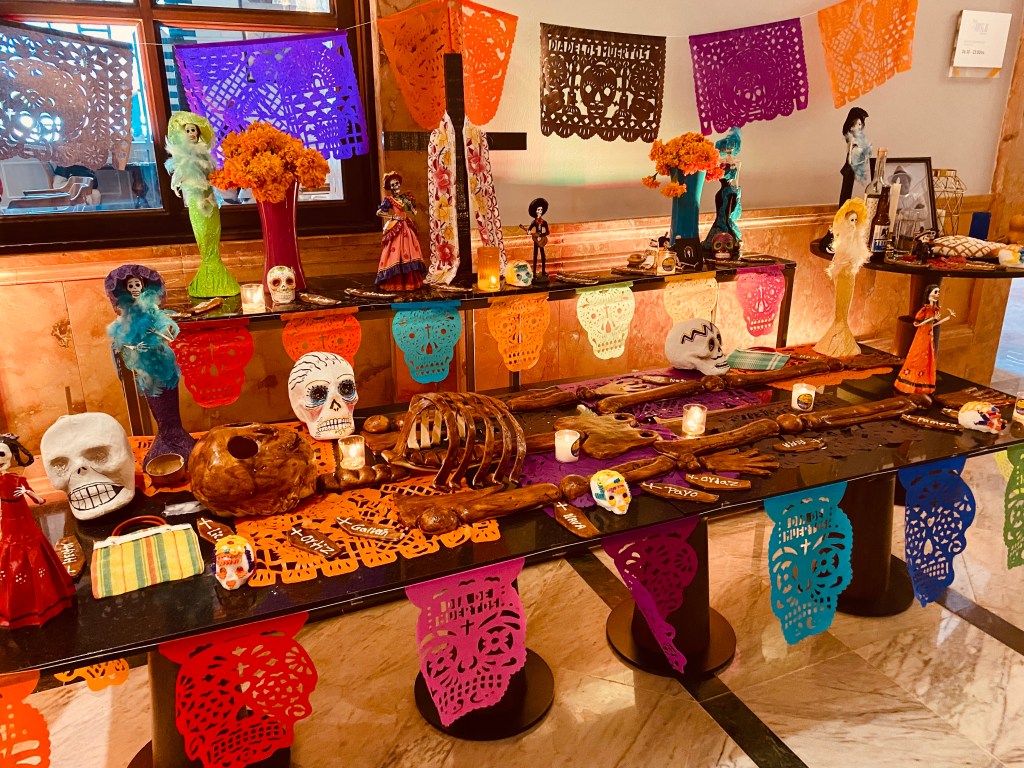
Symbols of the Day of the Dead: Skulls, Calvera Catrinas, Offerendas & Papel Picados

If you haven’t seen the movie Coco I highly recommend it as a fun and touching way to acquaint yourself with Mexican culture and especially the believes and practices around the Dias del Murertes.

Dias del Muertes is actually several days in duration with a day dedicated to children, and then one for adult relatives and ancestors. Similar to our Canadian Halloween, people dress in costume and walk the streets admiring each others costumes. Adults and children alike participate. There are generally musical & cultural events and each community celebrates in a different way but all have in common a visit to the cemetary to spruce up the graves of lost relatives and to invite them to return to this realm by offering food, drink and special treats. Elaborately decorated altars can be seen in private homes, (called offrendas) to welcome the spirits.

Family Home Oferenda
Costumes often include Marigolds

We spent a few days visiting various locations that we heard would be interesting examples of the festivities. One evening we went to Merida and sat in a restaurant to watch a pasado of costumed families followed by a cultural performance in a square at the end of Paseo de Montejo.

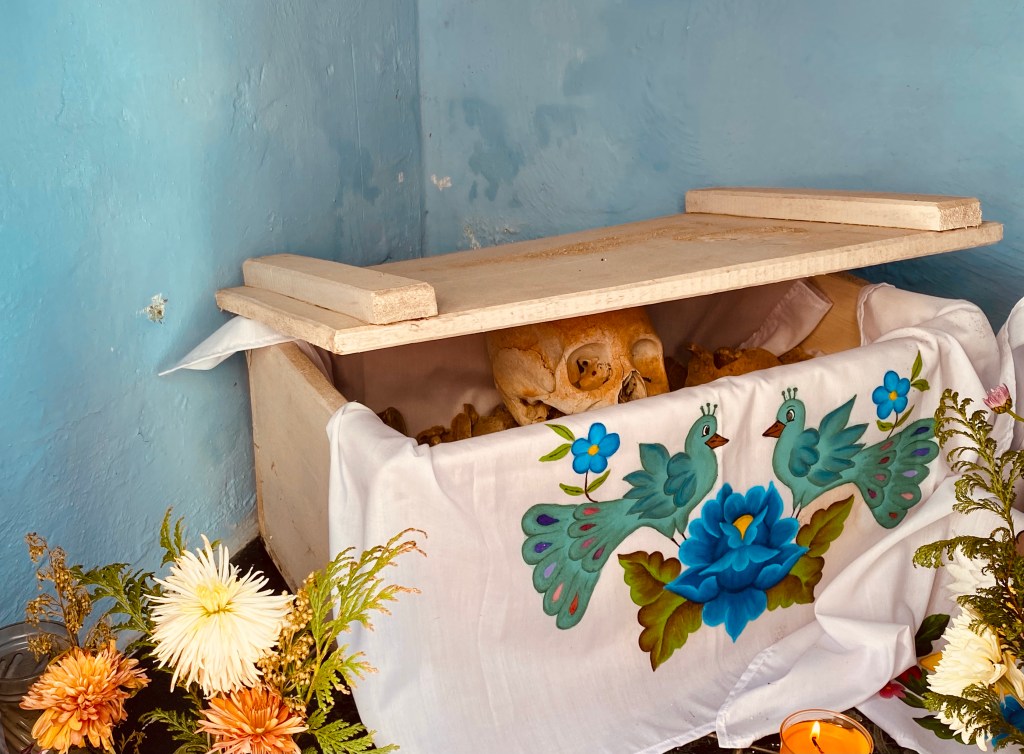
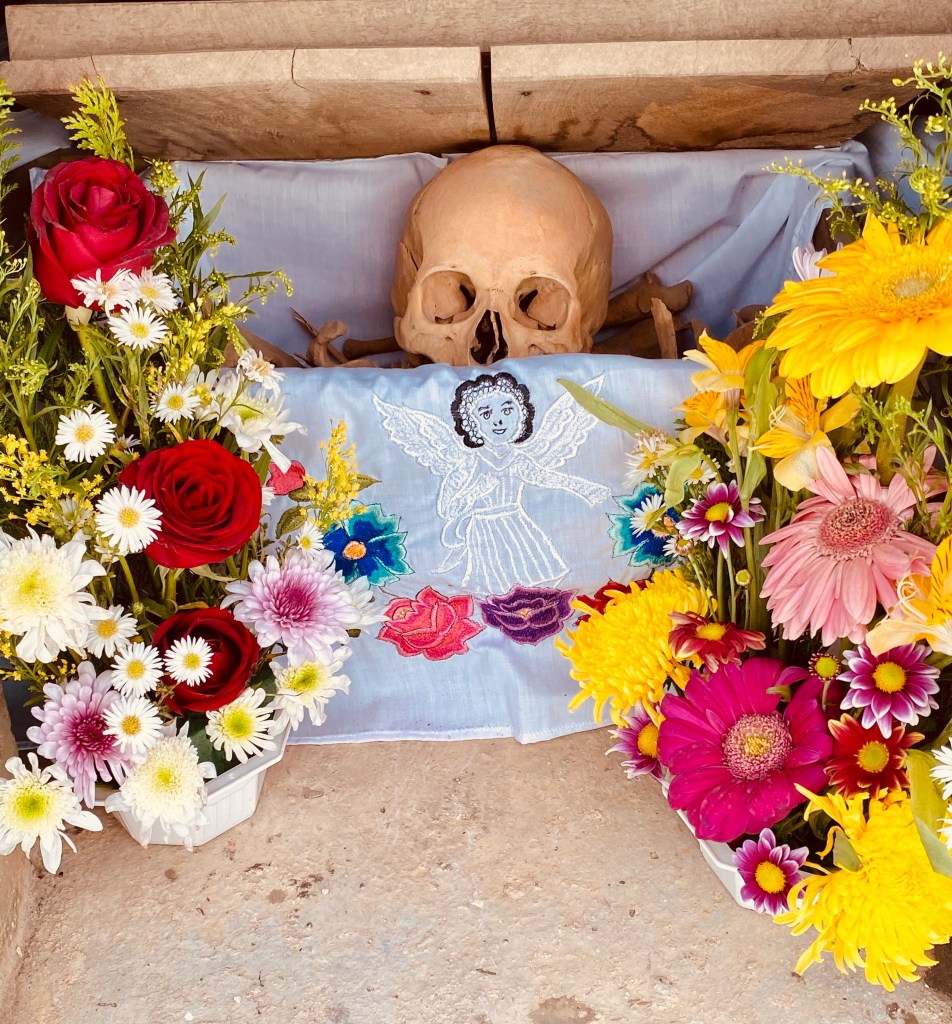
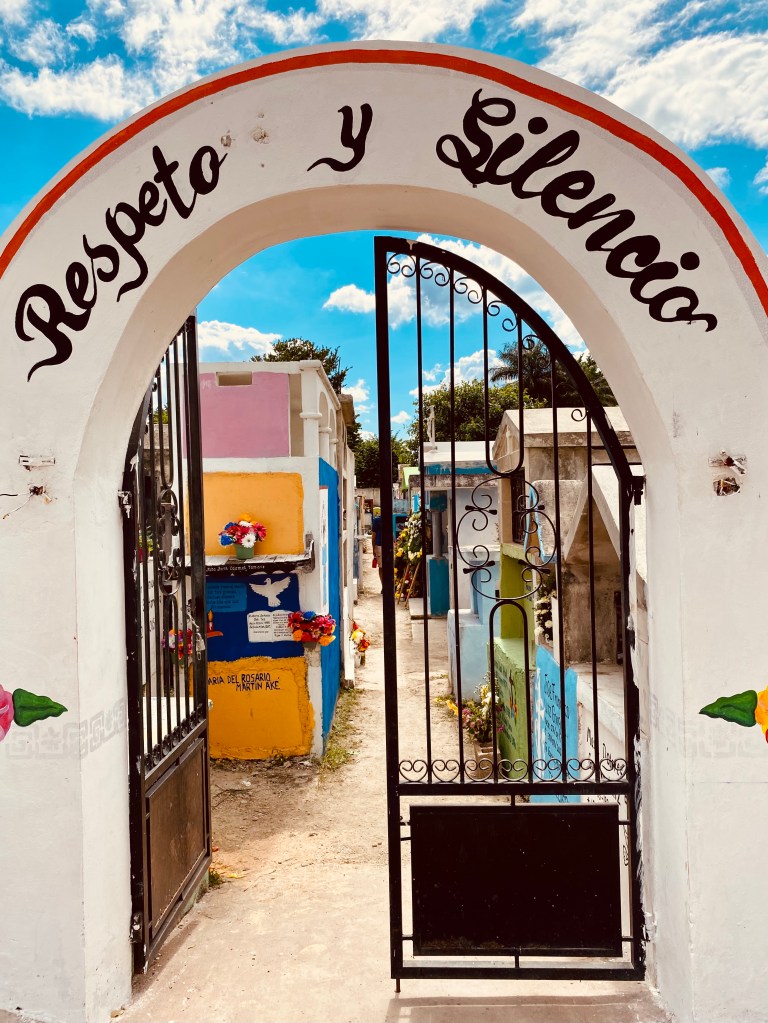
Perhaps the most interesting event for us was a visit to a pueblo called Pomuch, where we walked through the local graveyard. The tradition here is to open the boxes of the deceased and clean the bones, leaving them on display, free to roam, for a few days before they are returned to rest in peace. Unlike Halloween which is a dark night of terror and mischief, Day of the Dead festivities take place over two days and are colourful, festive and joyful, with the point being to show love and respect for deceased family members.

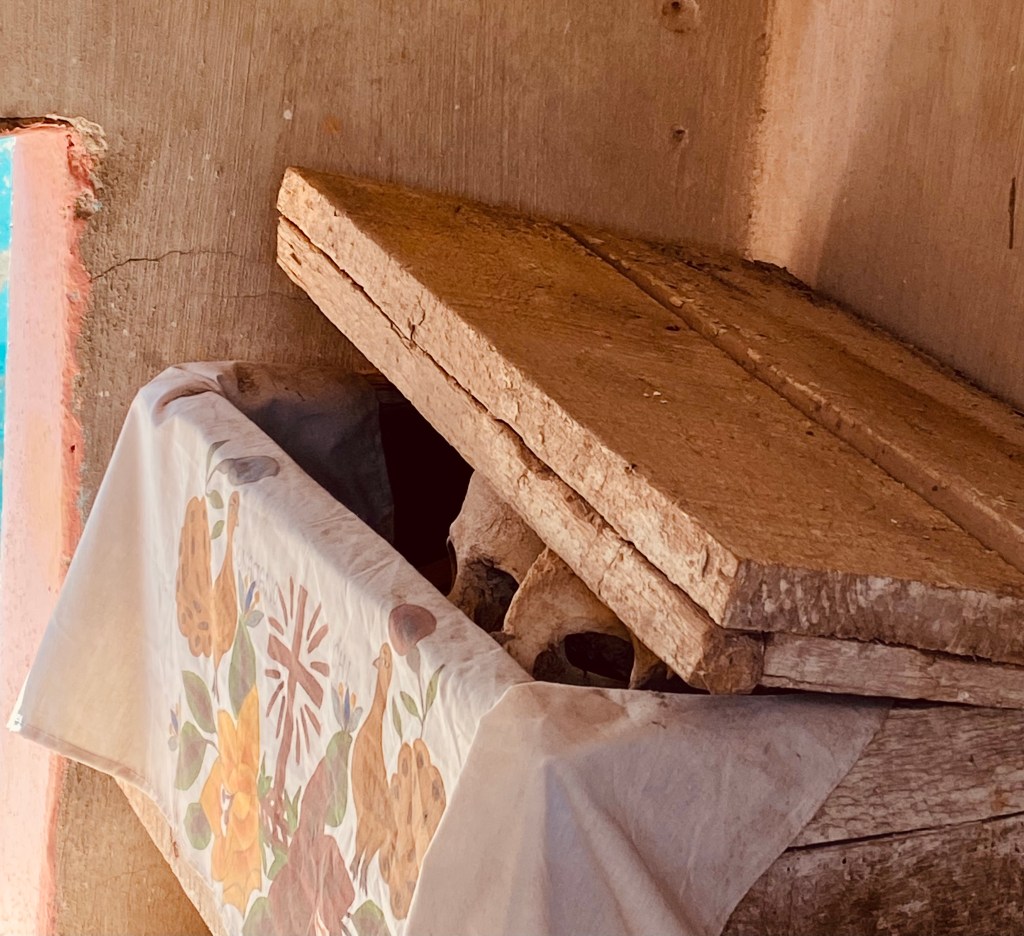
Cemetaries are Cleaned and Decorated

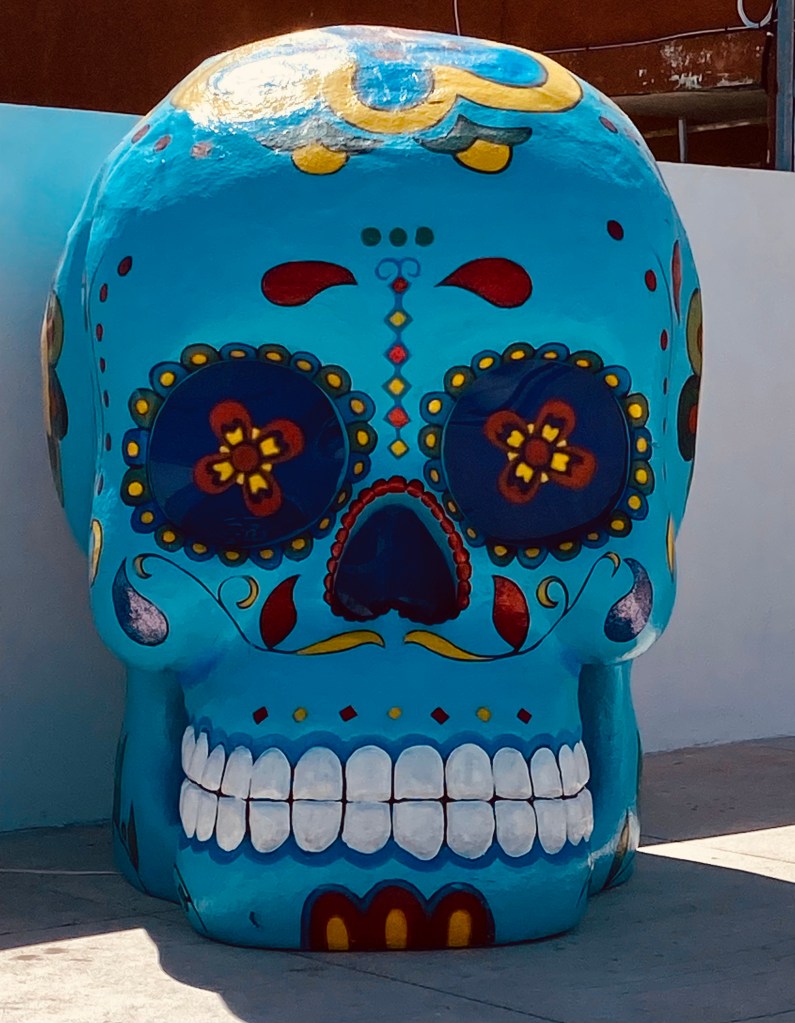
A mish-mash of indigenous and christian beliefs the symbols of the Day of the Dead are important and include calveras or skulls. One of the most ubiquitous symbols of the Day of the Dead came about when Diego Rivera, Mexicos beloved muralist, painted a stylized skeleton in one of his murals. Dressed in a large feminine hat, Rivera named her Catrina, a poke at the rich. Sugar skulls abound and food items like pan de muerto, or bread of the dead is often shaped into bones and skulls. Other sweets include tiny dough teardrops to symbolize sorrow. Of course there are drinks too including pulque, a sweet fermented drink made from the agave. Of course costumes are important as festivities normally spill into the streets and public squares at all hours of the day and night. Faces are painted to resemble skulls and the Calvera Catrina. It wouldn’t be Mexico without some noise and costumes often include shells or other noisemakers to rouse the dead and keep them close during the fun.
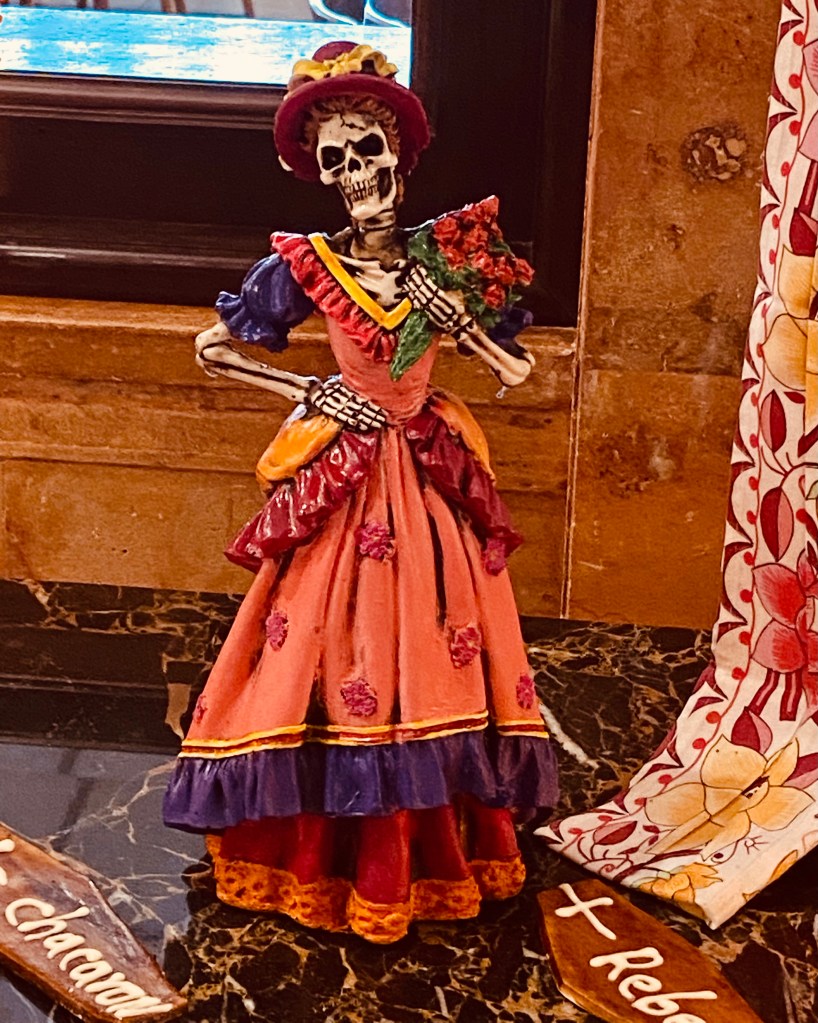
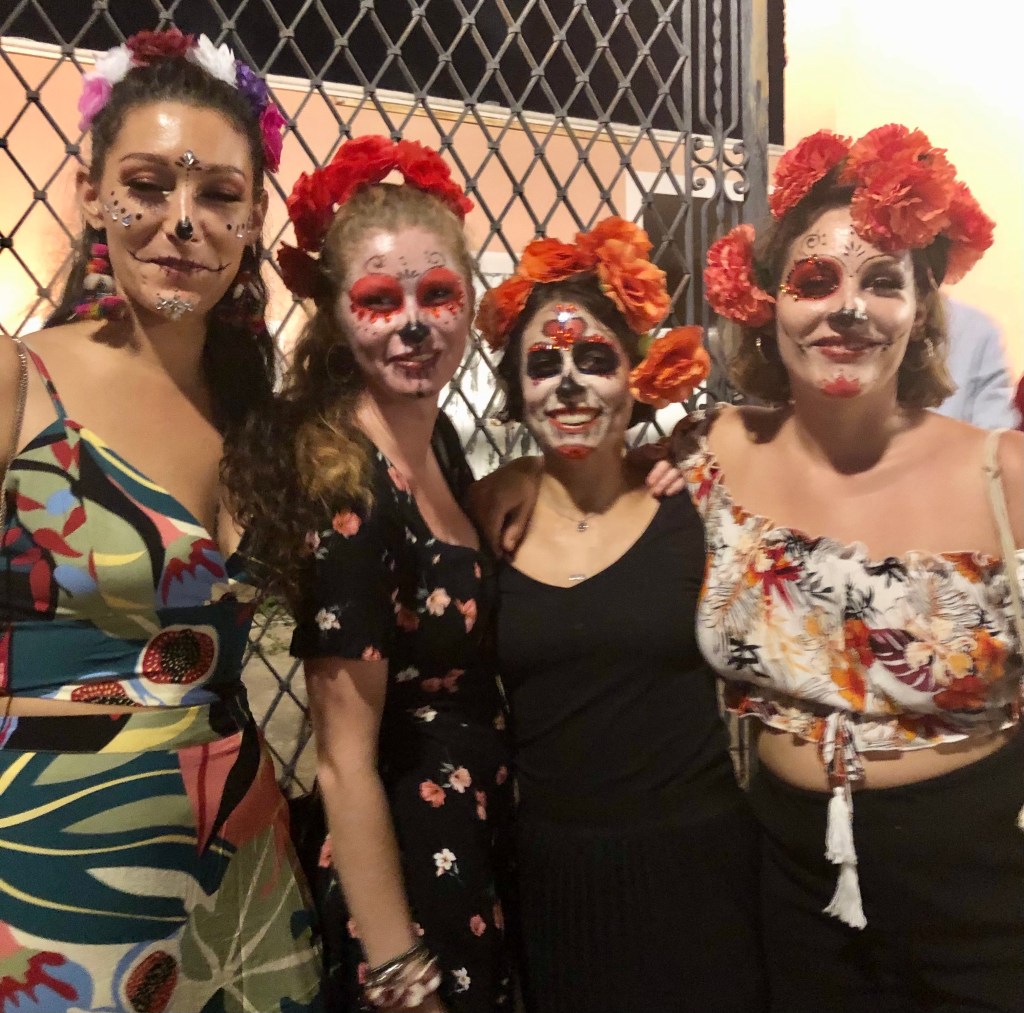
Calvera Catrina

To represent the wind and the fragility of life Mexican’s use layers of paper, piercing it with a hammer and chisel points to form elaborate patterns. The Papel Picado is draped around homes, streets and restaurants and adds to the festive atmosphere that permeates the day of the dead.

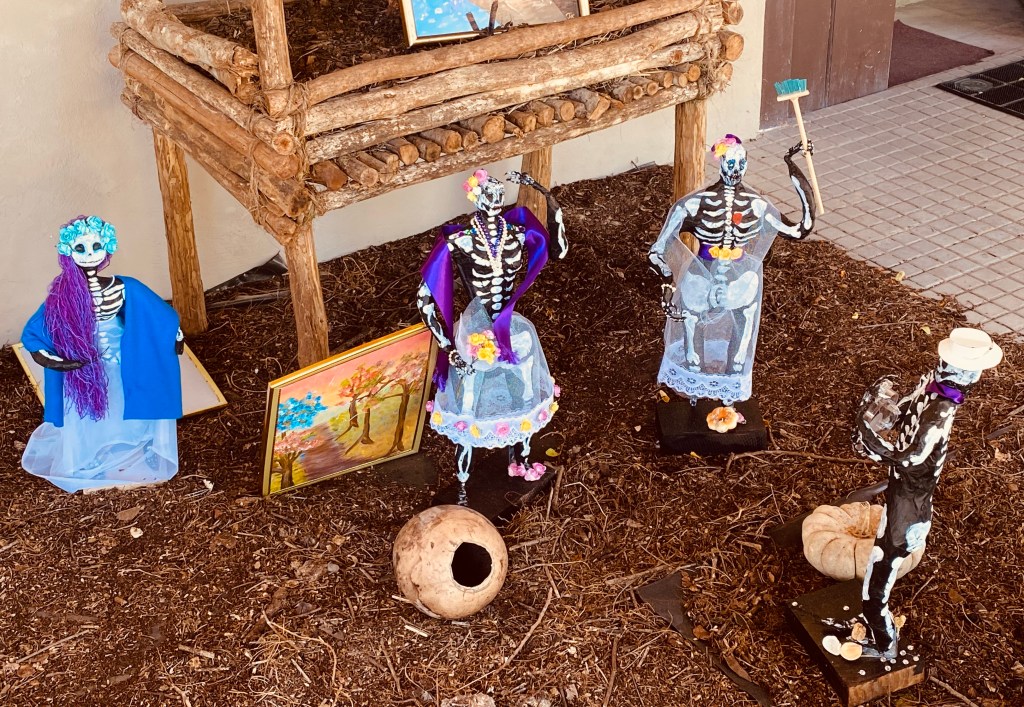
Certainly this celebration of death wasn’t the same as in other years without the pandemic but Mexico being Mexico there was still lots to see and do even without the large scale celebrations and gatherings that are the norm.
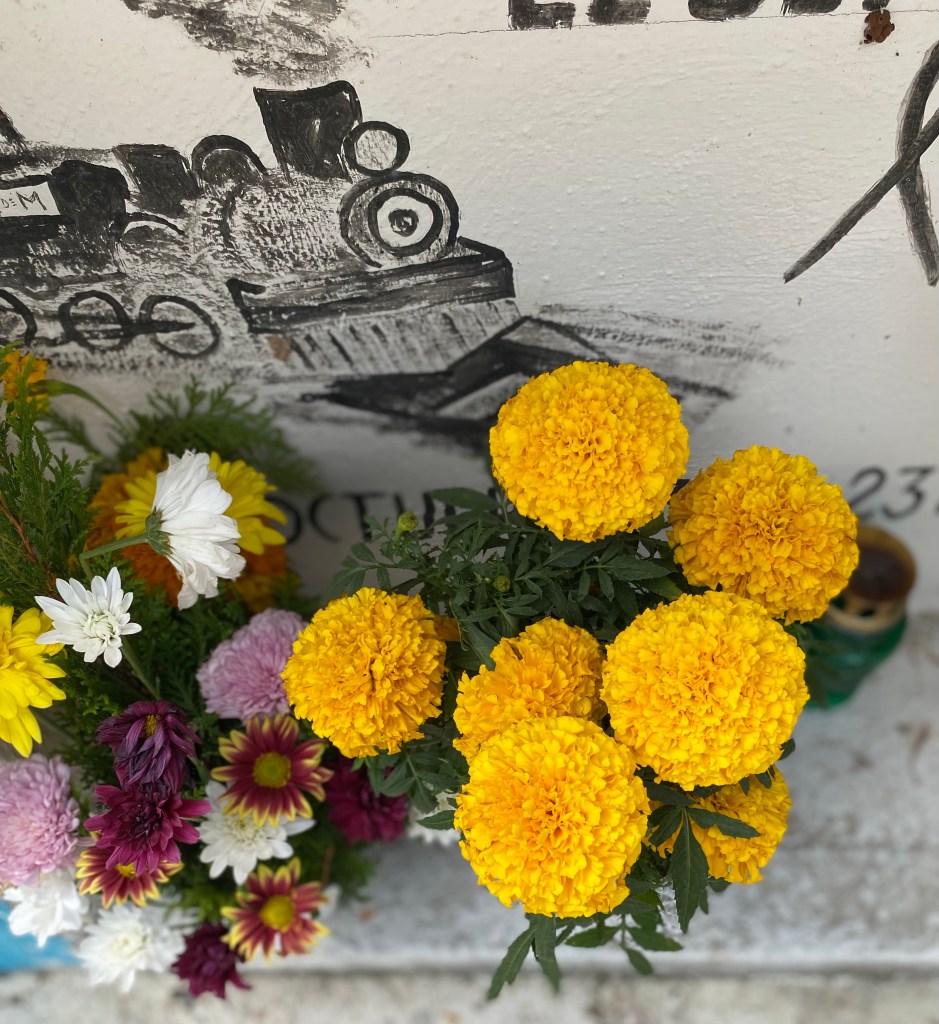
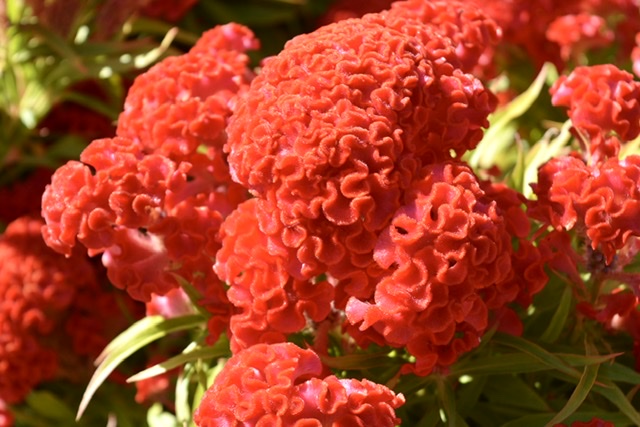
Marigolds

On the Road Again….Headed to Mexico and with any Luck, South America.

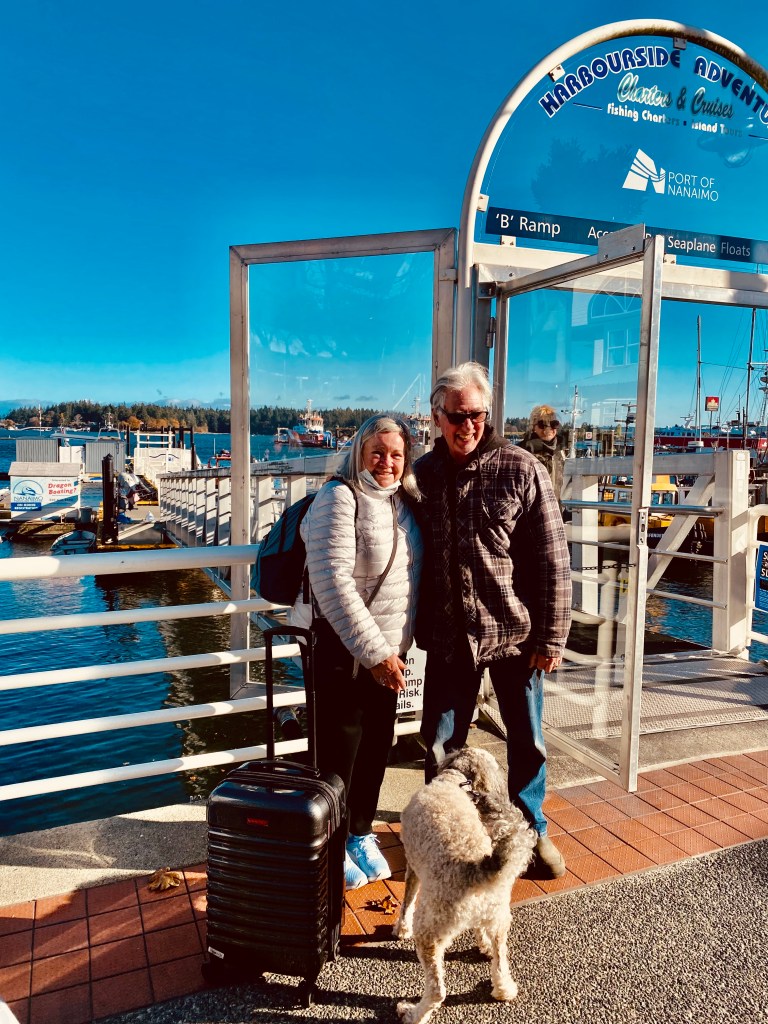
It’s been a long 2 years since covid hit and the pandemic stalled my travel plans, but here I am on the road again. As with most of my wandering this one started with a float plane to Vancouver, A beautiful blue skied fall day. Not a bad way to say goodbye to Vancouver Island and flying over my house for one last goodbye was as delightful as being driven to the float plane by my lovely friends Ralph & Lucy. A proper send-off indeed.

Farewell
A beautiful fall day in Nanaimo

All Set to Fly

Now at gate 53 YVR and I know it’s the right one because not only does it say that on my boarding pass but most of my fellow passengers are speaking Spanish. These mostly men have been working in Canada on a special program that brings them here to fill in positions unfilled by Canadians, usually in agriculture.

I am so excited to see my friends in Mexico, to return to Progreso, Puerto Escondido, Oaxaca City and to explore some new destinations as well. If all is safe by next January, I plan to fly to Ecuador and Peru, but that remains to be seen. If not, Mexico will more than suffice.

Brighton, Amsterdam, Cotswold’s & London

Soho in London

Brighton, Amsterdam, Cotswold’s & London

Phu Quoc Island a Tropical Paradise

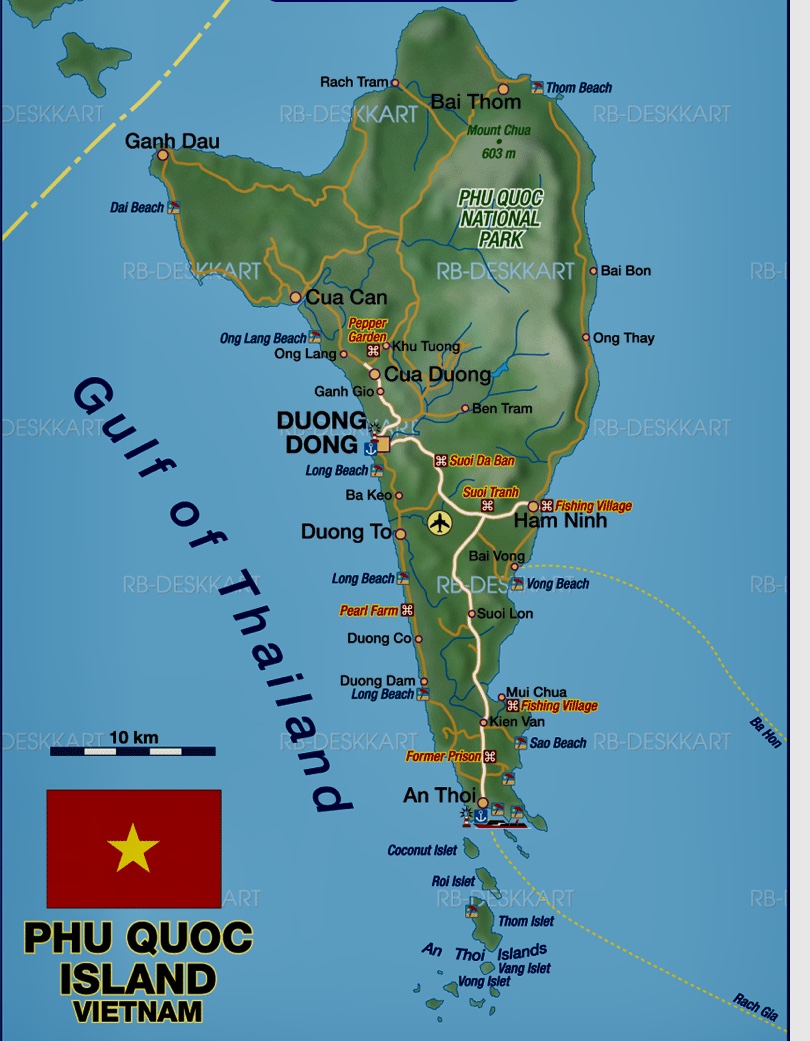
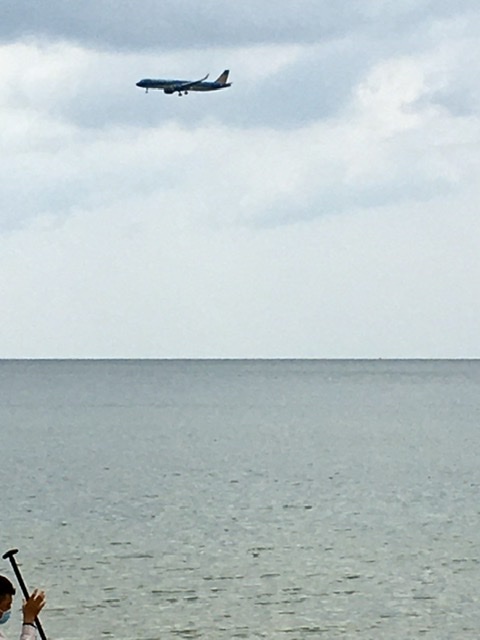
Phu Quoc is a tropical island in the Gulf of Thailand. It belongs to Vietnam but lies closer to Cambodia. It is easily reached on a short 50 minute flight from Ho Chi Minh City, over the mighty Mekong Delta and is well worth a visit.

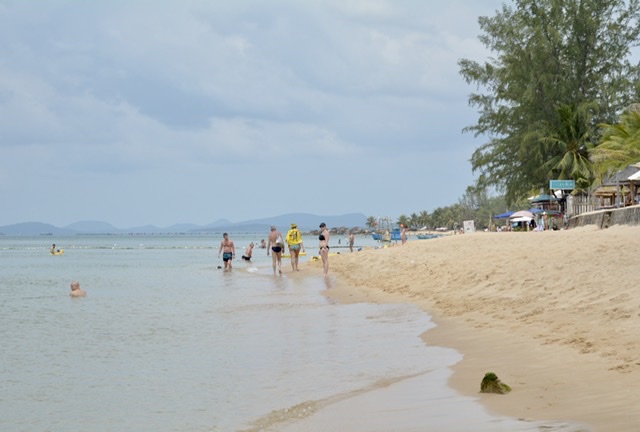
After two plus months of traveling throughout SE Asia, Phu Quoc was a welcome beach vacation destination. Admittedly there are many touristy things to do on Phu Quoc but if you’re me and your somewhat tired of shifting about, sitting still on a white sandy beach under some palm trees for a week or more is a welcome respite.

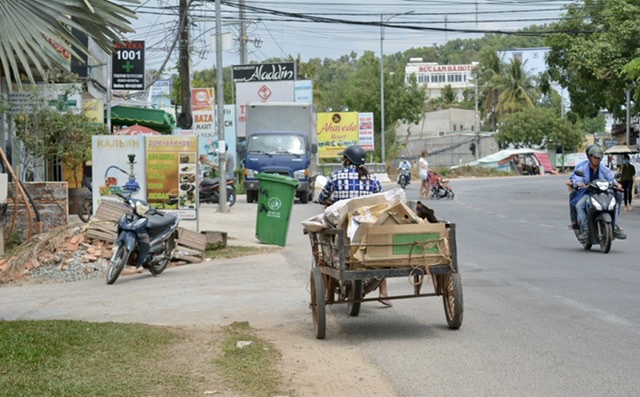
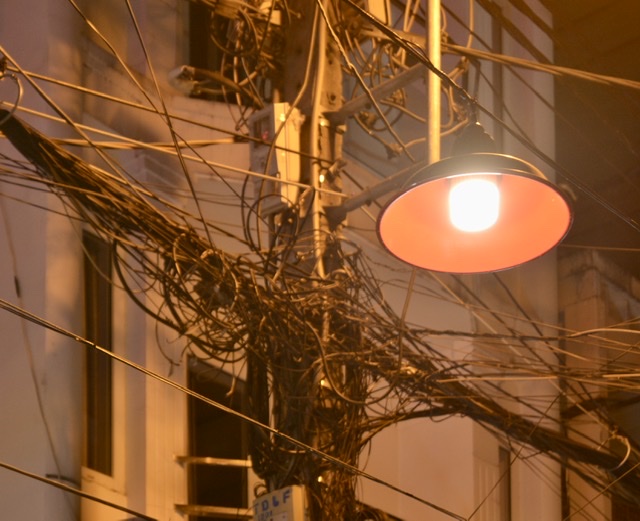
There are several different areas to stay on Phu Quoc and we booked way back in October in an area quite far from the main town of Duong Dong. First impressions along the highway and the side roads may not be favorable, there is a lot of garbage and the ubiquitous unruly collection of traffic, businesses and residences that I have come to associate with SE Asia.

Busy streets, a mix of everything.

But once you are off the beaten track and you have arrived at your accommodation, then hopefully you will find what we did at the Camellia Hotel & Spa, (spa because you can arrange to have a massage there). We had booked this hotel well in advance and by Vietnamese standards we paid a high price, 63.00 CAD per night, if we’d waited we would have paid much less, maybe even half.

The rooms were big, well appointed and the pool and free breakfast offset the distance to the beach, (about a 25 minute walk, although the hotel ad says 10). Sadly, the closest public beach was squeezed to a bare minimum by beach front hotels with private amenities so we opted to spend most of our day around the Camellia pool.

The area around the Camellia is very rural, as in….there were roosters, lots of roosters and we saw a new born calf, still wet and wobbly legged in the road right in front of our hotel. Nearby there were lots of restaurants and bars so we didn’t have far to go to eat and we found a variety of cuisines from French to western and of course local.

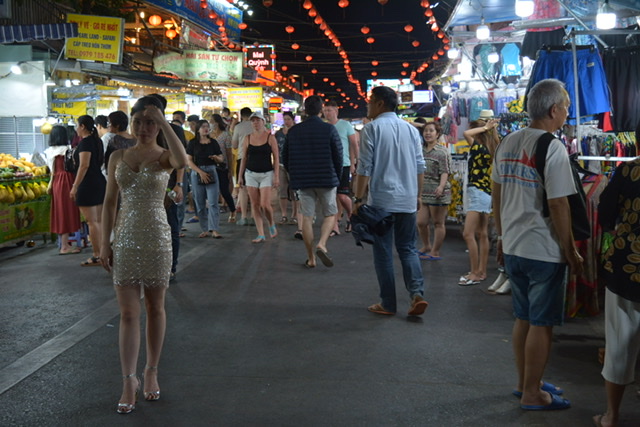
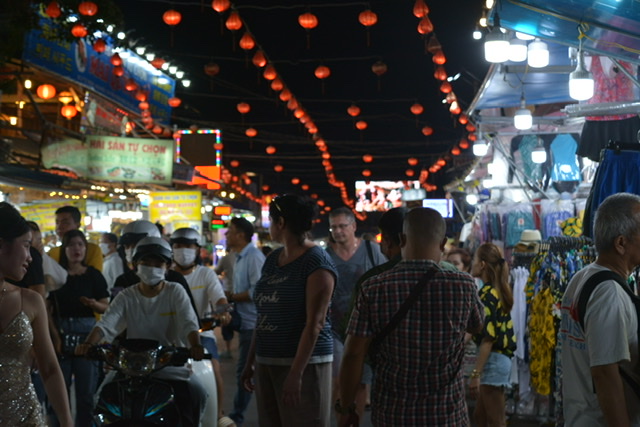
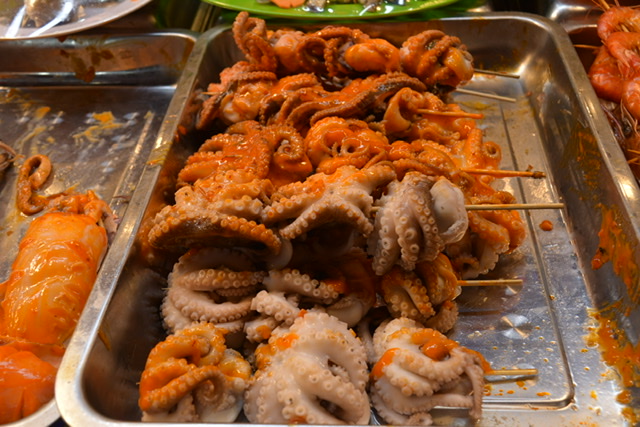
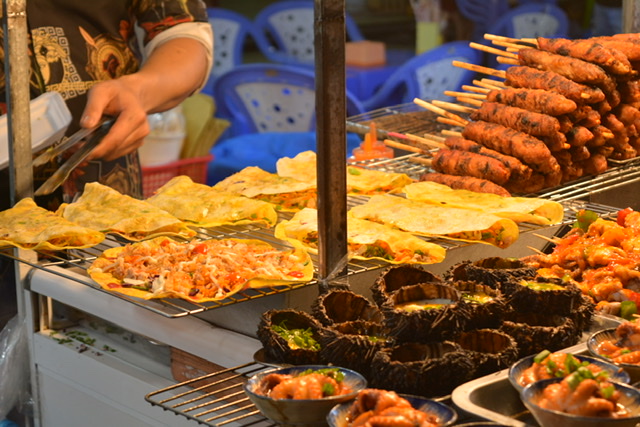
One evening we ventured into town by cab (pricey enough you wouldn’t want to do it everyday) had dinner and wandered through the night market. Lots of seafood of course, Phu Quoc being an Island.

Four nights passed quickly and it was time for my Canadian friends to head back to the chill of the Yukon, the poor things. I was to stay on for another nine nights and opted to shift to a “Retreat” Hotel closer to town. So glad I did, the An Nhien retreat lived up to it’s promised amenities with friendly helpful staff, healthy breakfast, massage, pool and beautiful tropical garden complete with a small stream full of fish and ornamental fountains. My room was a good size and done up like a cabana, very nice.

The hotel was a three minute walk to the beach and An Nhien shared a private beach with another hotel. Great place to the spend the days and the truth is I did little else. Swimming, reading, snoozing, contemplating and ruminating with very little movement from A to B. I didn’t even head back to town.

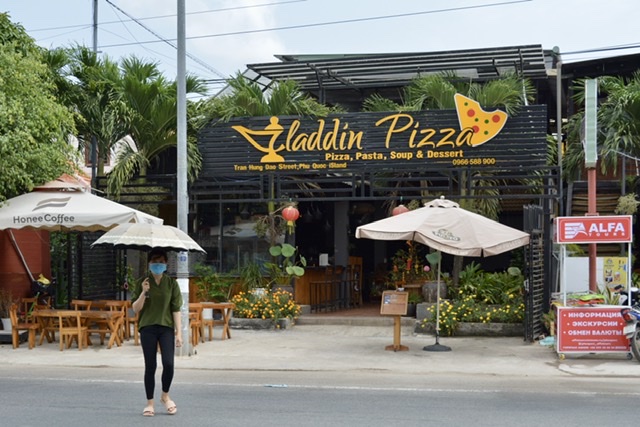
I met very few English speaking people on Phu Quoc, most other beach goers were from Russia. It is a close sun spot for them and plane loads arrive daily if not hourly.

Here come the Russians….

I made a decision to return to England a week early when I heard that there was a Corona Virus quarantine in a small village in northern Vietnam. A week more in England seemed a good bargain given that the most fun you could expect to have in a quarantine situation would be to stay healthy. If I had only just started or was part way through my explorations I would have stayed on. But I am glad to have had the luxury of playing it safe and don’t feel that I have made too much of a concession. After all, I’m all tucked up at Heather’s in Brighton, drinking tea and watching Tellie and hoping that Vietnam is spared the spread of the virus.
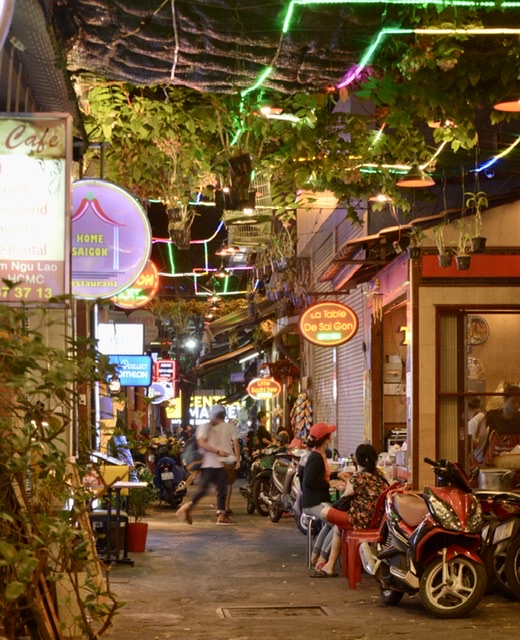
Once Upon a Time it was Saigon…Now Ho Chi Minh City.

The Wild West of the traffic world….

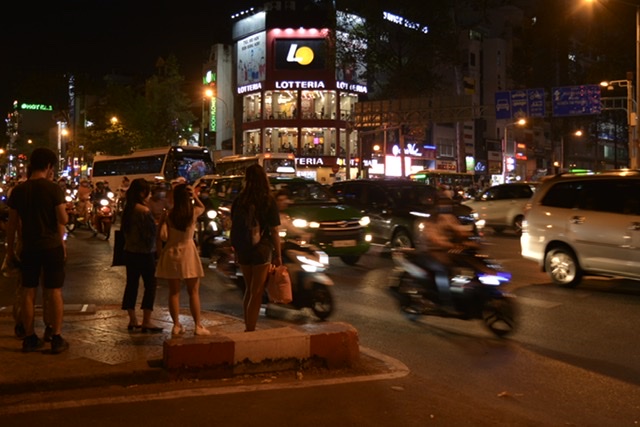
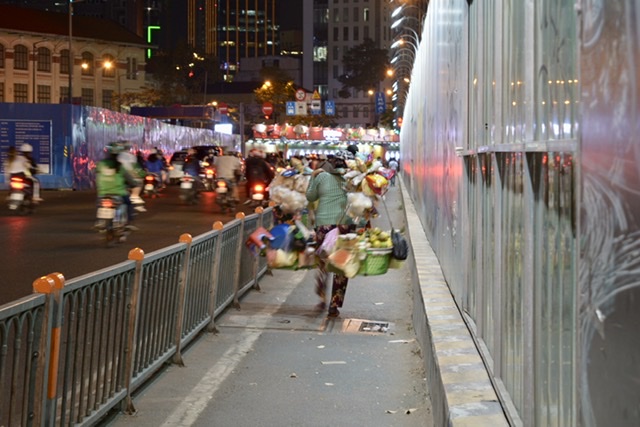
Ho Chi Minh City is the Wild West of the traffic world. There are more scooter/motorbikes here than anywhere on the planet I am sure. It’s as if my travels through Vietnam led to this crescendo of ever pulsing veins of traffic coursing through the heart of the city, pumping its way out to the eighteen districts that make up HCMC. Imagine crossing this road…..we did and we survived, without a cross walk or a light I might add. There is an art to this!

Saigon it was, that was until the communists rolled into town in 1975, taking control of the city and renaming it HCMC a year later. In spite of the official change, the name Saigon still lives on, particularly in the French Quarter and many people use it to this day.

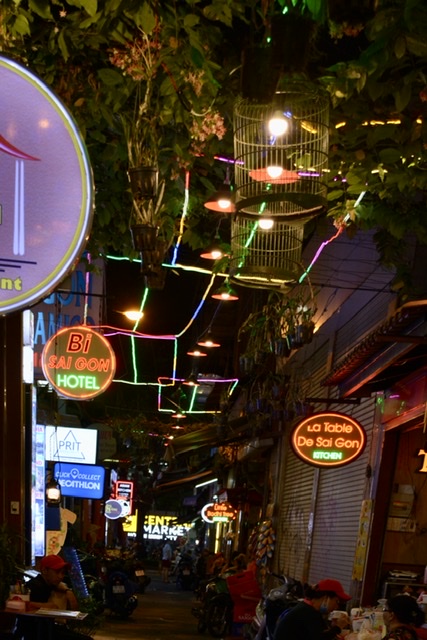
Districts 1,2 & 3 are where most foreigners hang out and within this area is where most of the sights are located including, museums, palaces, pagodas, temples, towering skyscrapers, glitzy malls, trendy restaurants and more down market tourist bars and clubs around the “Backpacker Area”, which is where we stayed in the Beautiful Saigon 3 Hotel. A great small boutique style hotel, it was clean, friendly staff, good breakfast, up a quiet alley-way but close to everything, I would recommend it if you are on a budget.

A walkable area, both night and day, we took in the sights mainly on foot. We had time to visit the Night Market, one of the high end shopping malls (WOW), the beautiful old French Opera House, and we wandered along streets lined with other examples from the French colonial period.

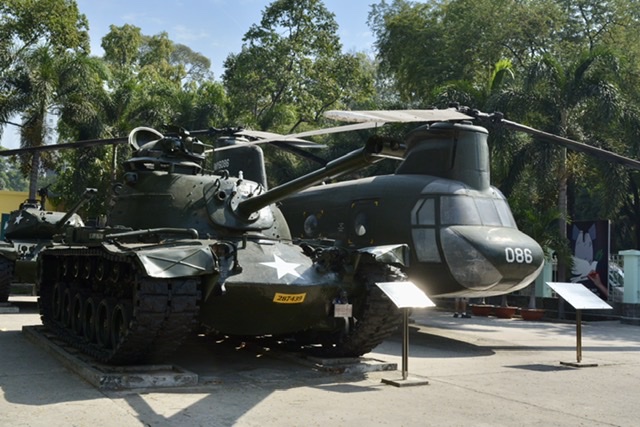
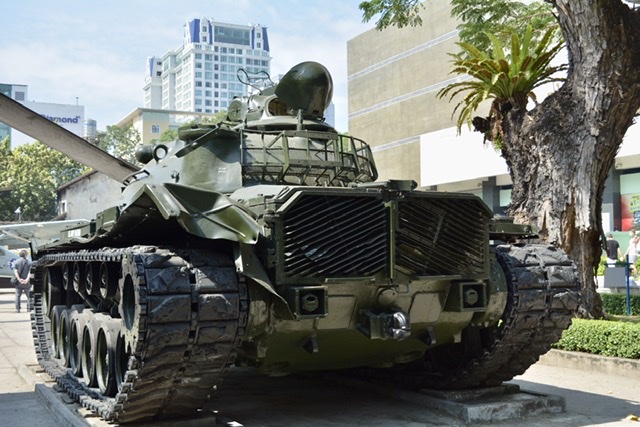
The War Remnants Museum as it is called was an interesting stop. Meant to depict the horrors of war in general and the war with the Americans specifically. With three million dead, and two thirds of those being non-combatants it’s hard not to feel anger at the fate of those poor souls. However, in spite of some hard hitting exhibits the message of the museum is clearly one of peace since the brutality of war ultimately effects more citizens than combatants. There are photo displays of mutilations, napalm burns, torture and massacres including the famous My Lai where American troops murdered nearly a whole village of innocent elders, women and children.

But in a spirit of apparent forgiveness there is a large display of photos on the “peace movement in the States” and subsequent visits and charitable acts of American Vietnam veterans. All in all a moving place and for those more mechanically minded there are some tanks, planes, bombs etc outside that you can wander around and see up close.

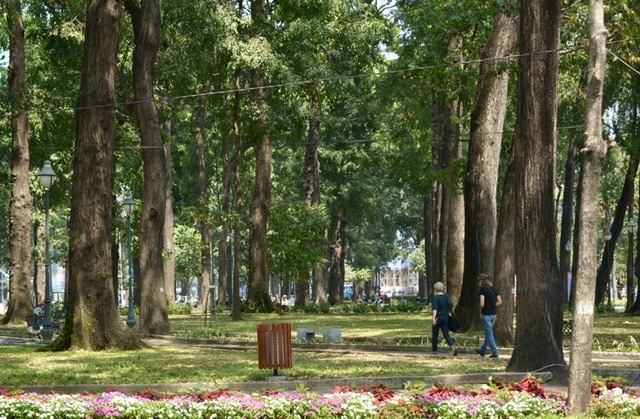
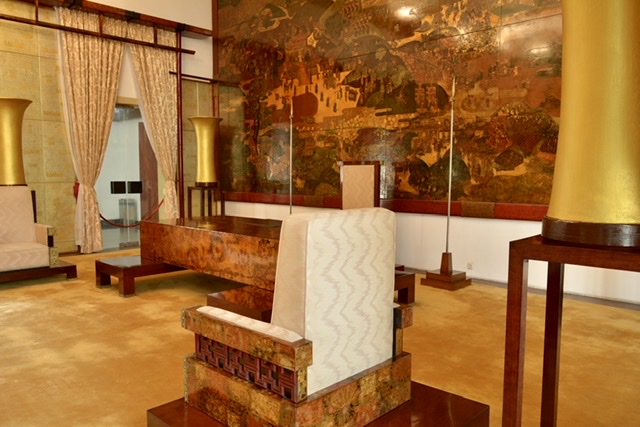
The Reunification Palace, previously the Independence Palace (to celebrate independence from France), was renamed to signify the reunion of North & South Vietnam. Located on park like grounds, it’s working days were in the 60’s and 70’s and everything is preserved from this time, a gentle mix of modern style furnishing with Asian materials and symbolism. There are a number of floors with meeting rooms, hosting areas, the presidential library and private suites. All eerily preserved and roped off with red velvet and brass.

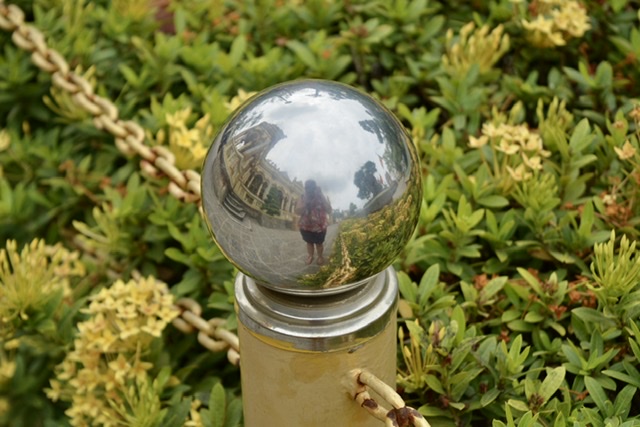
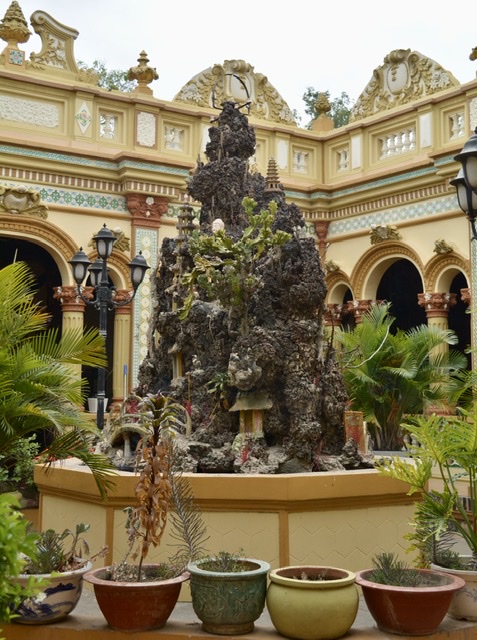
With limited time, we really wanted to experience at least some of the Mekong Delta, so we signed on for a day trip to cruise around Dragon, Unicorn, Phoenix and Tortoise Islands. The first stop in the tourist van was a beautiful pagoda and temple, and if you look closely below you will see my selfie.

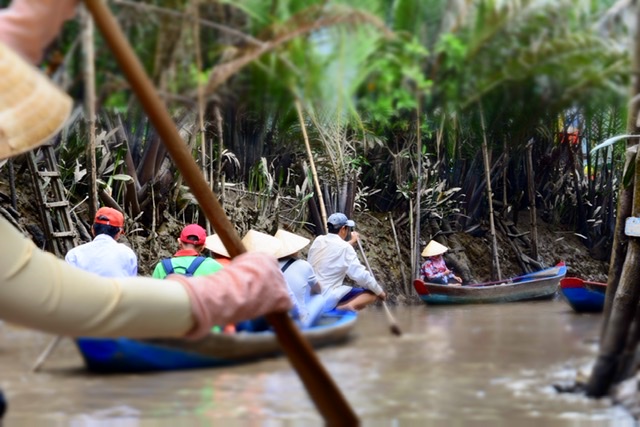
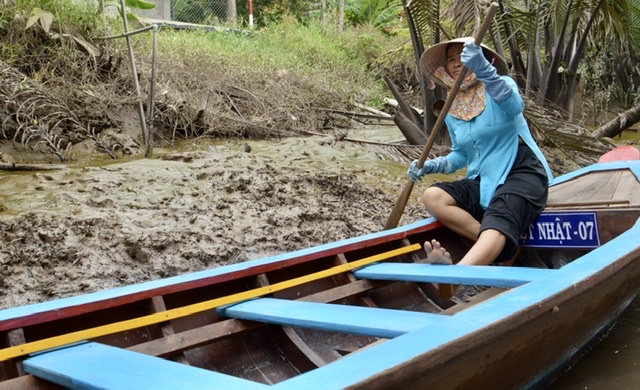
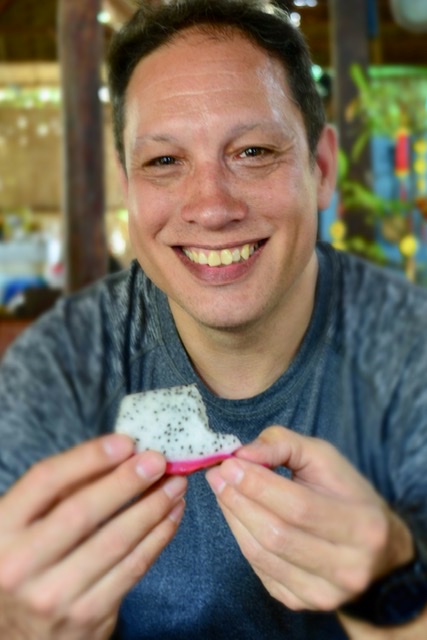
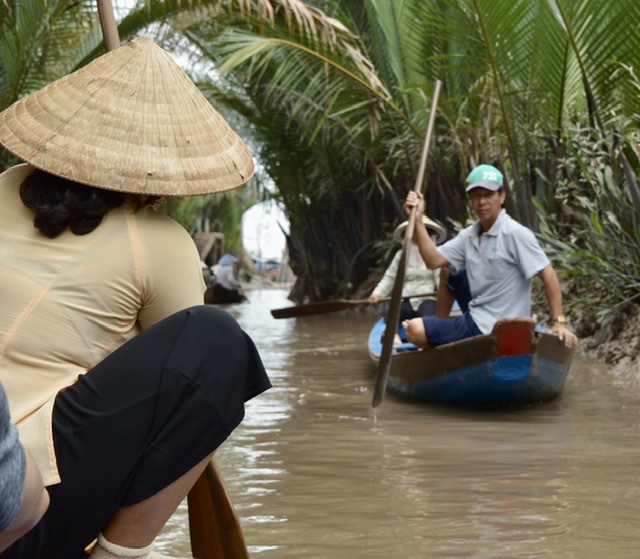
After the Pagoda we boarded one of dozens of sampans and cruised through the brown water channels, narrowly missing other sampans as they paddled by. We were taken to a fruit orchard where we saw where they grow mangoes, jackfruit, something like a lychee but smaller, dragon fruit and pomelos. The best part was getting to taste everything the farmer grew.

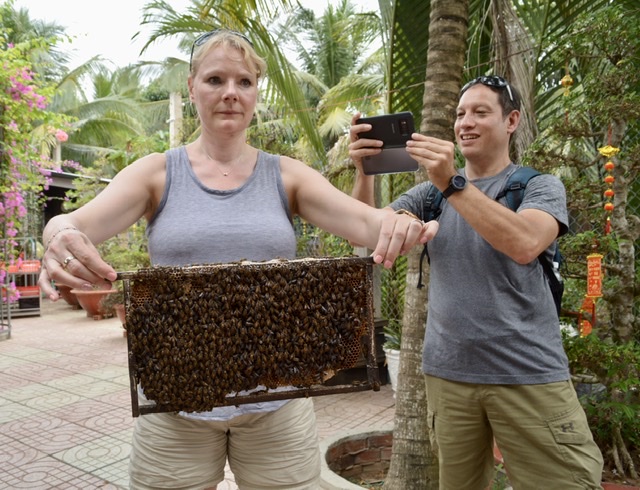
After the orchard we were paddled in a tippy sampan to a honey farm where we got to hold the honeycombs while the bees slept peacefully but we were warned not to drop them. After the bee combs we were introduced to a boa than snaked it’s way around my shoulders and then proceeded to probe my arm with its head. Much more dry and solid than you would expect I was nevertheless glad when Dave snapped the photos and the snake was taken away by its owner.

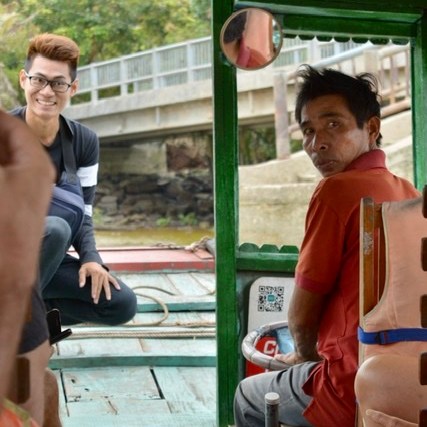
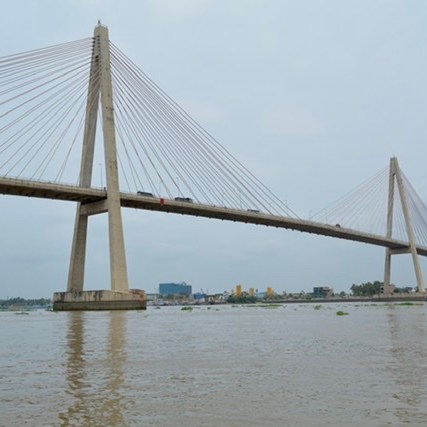
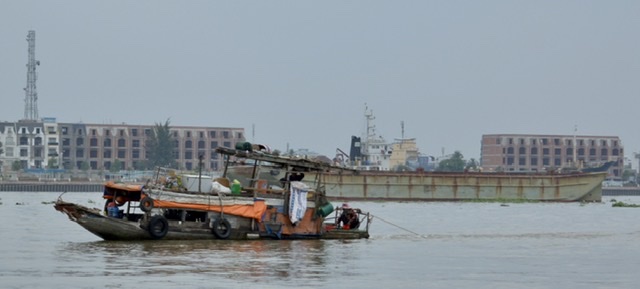
Back on a larger boat we cruised around the Mekong delta and more of its islands. It is a busy river and much traffic in a variety of shapes, sizes and conditions floats by. The river, we were told, is brown in colour due to diluvian deposits of clay, sand and silt at the mouth of this long and flowing river and not to more unsavoury confluences.

Three days is probably not enough for Ho Chi Minh, especially given it’s proximity to the Mekong Delta and the famous floating markets that you can visit but are some distance from the city. However we were anxious to move on to Phu Quoc Island and the beautiful beaches where we could restore ourselves before my friends head home to Canada.

Da Lat – The Central Highlands of Vietnam

Da Lat..the flower city, a breath of fresh air.

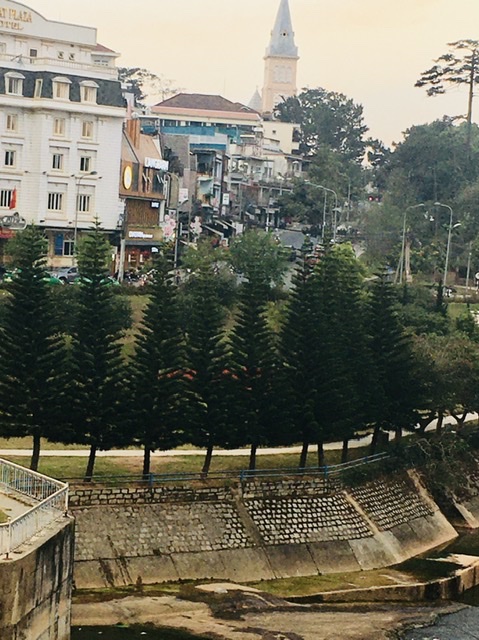
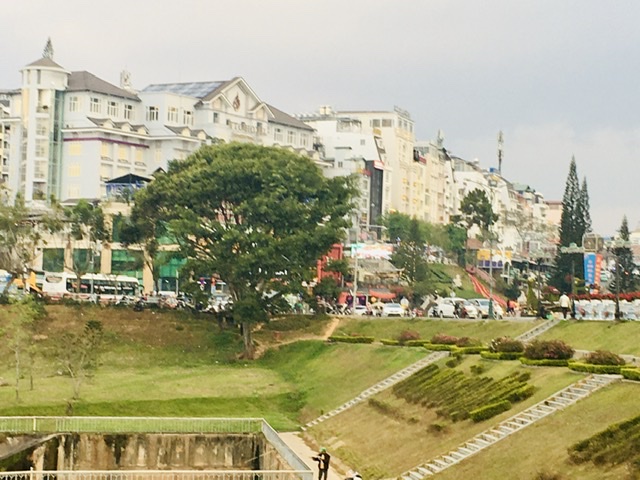
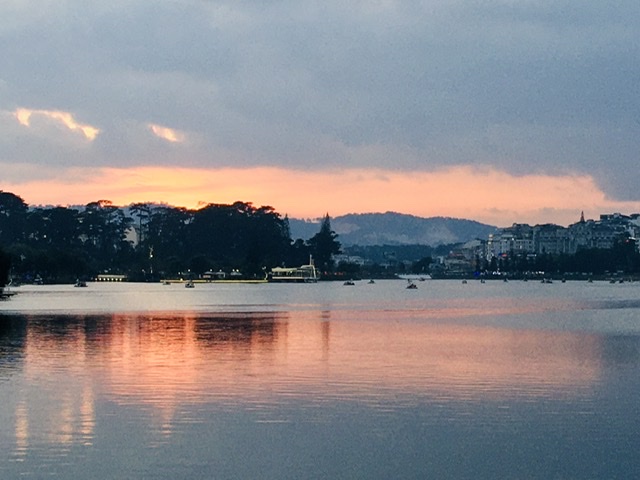
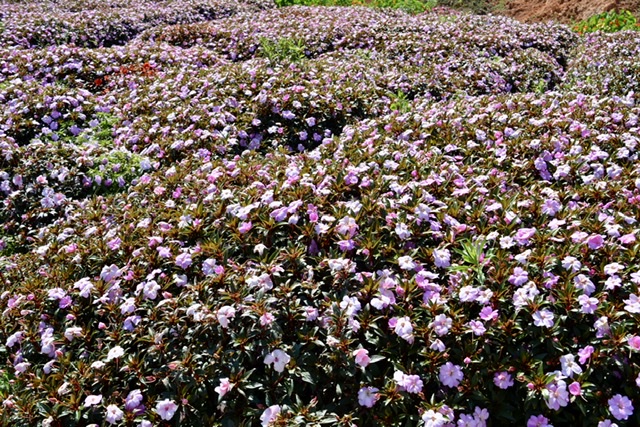
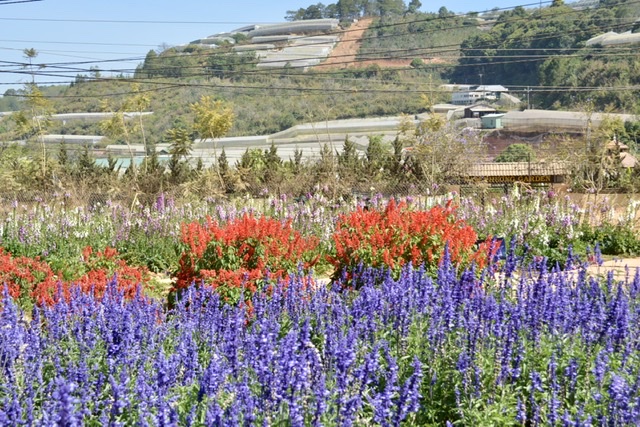
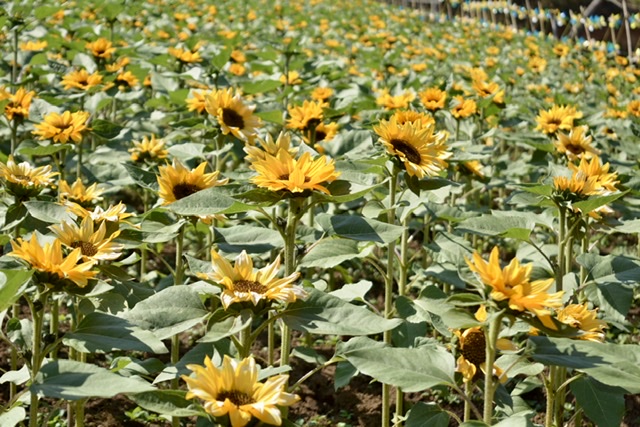
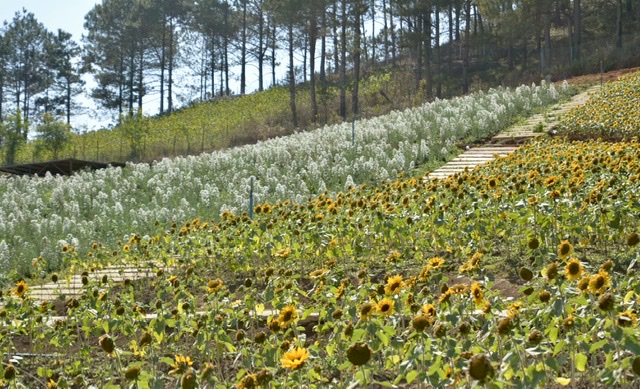
Da Lat, the flower city, is located in the central highlands of Vietnam and it is a breath of fresh air. We arrived at our very pink hotel, the Dalat Boutique, with it’s great views of the city below, with enough daylight to wander out and about, down the hill along twisting streets to Lake Xuan Huong, in the center of the city. At the Lake we rented bicycles to ride the 7 km trail that circles the late and that took us through beautiful flower gardens. With spring in the air and on the heels of Tet there were plenty of floral arrangements. In keeping with the “got space…fill it” philosophy of Vietnam, this well used path, was a bikers obstacle course full of runners, walkers and sightseers, and even the odd motorcycles.

Other thank the crowded path it was a lovely ride and gave us a change to get the lay of the land in central DaLot. The center of Da Lat is very busy with traffic circles, open air markets, narrow lanes, busy streets and a hodgepodge of buildings mixing French colonial with Vietnamese homes, stores, malls big and small and myriads of street vendors.

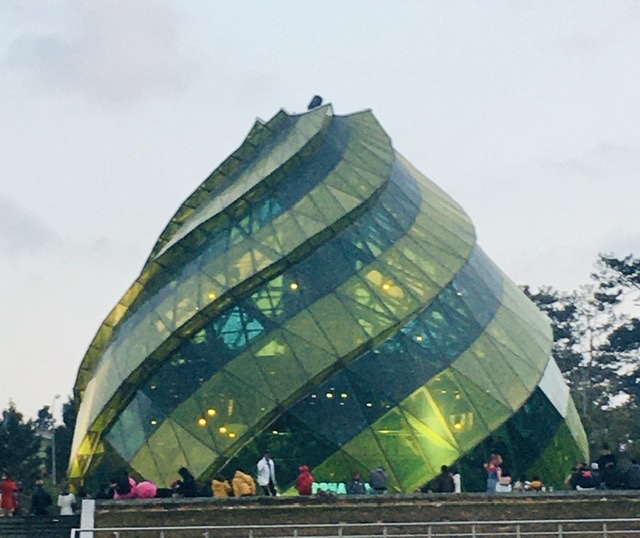
Examples of French Colonial architecture, like a Catholic Church, are interspersed with new construction, much of which fails to conform to any particular style and visual collisions happen on every corner. We saw a building that resembles the tip of “The Pickle”, London’s city hall and just behind it was a communications tower build to resemble the Eiffel Tower.

We reached the end of our bike ride as the sun set, returning the rentals we struck off on foot toward the night market. Hoping for some delicious street food we soon found ourselves faced with the prospect of crossing the road connected to a traffic circle. A near impossibility given the dangerous swirl of buses, cars, trucks and motor bikes. Our weeks in Vietnam have taught us that however counter intuitive it may seem you cross by launching yourself at the vehicles and as soon as they pass you advance as many steps as possible until the next one zooms by. By some miraculous process you go around the cars and the motorcycles go around you. Repeating this process you eventually arrive on the other side of the street shaken but not scathed. It’s like a very complicated game of dodgeball. The other option is to attach yourself to a group of locals, ignoring the traffic and keeping your eyes glued on their movements which you copy through the river of traffic.

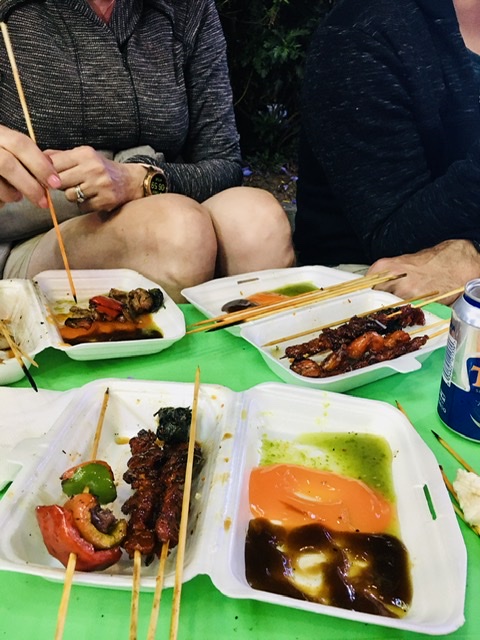
The night market was packed, blocks and blocks of open stalls selling everything under the sun. We managed to scrounge a spot for ourselves at a street food spot with their pint sized chairs and tables which are fine until you try to rise up out of them. We paid a pretty penny for our supper, mostly bbqued meat and vegetables which were good but definitely foreigner priced.

Dalat is an outdoor adventure city, perfectly situated in the highlands, surrounded by pine forests, and blessed with natural beauty. For about $25 CAD each we signed up for a small group tour and were picked up at our hotel for a day long trip to the areas surrounding Dalat.

Our first stop was Robin mountain where we rode a gondola to the top and had views to the farmlands below. The area around Dalat is densely agricultural and hothouses stretch as far as the eye can see.

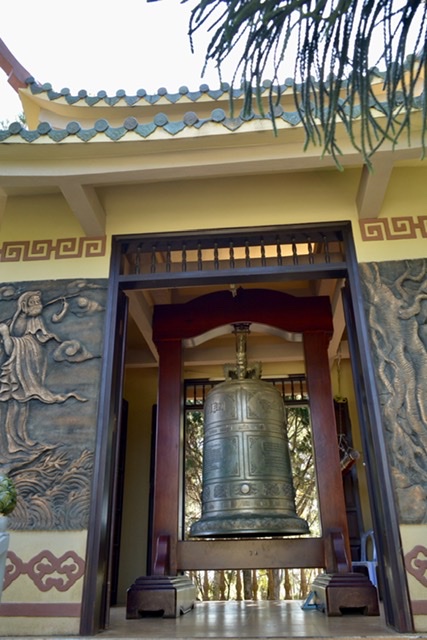
Back in the van, we followed the twisting mountain road to the Truk Lam Zen monastery the biggest Zen monastery in Vietnam. Here

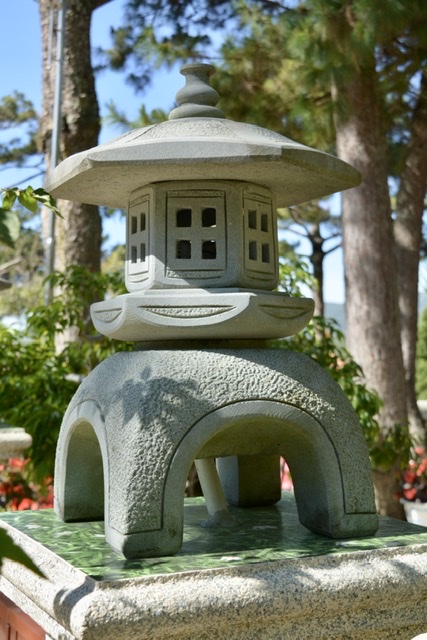
the monks and nuns have built a beautiful series of gardens and trails, including some really interesting bonsai, all linking the various temples and pagodas.

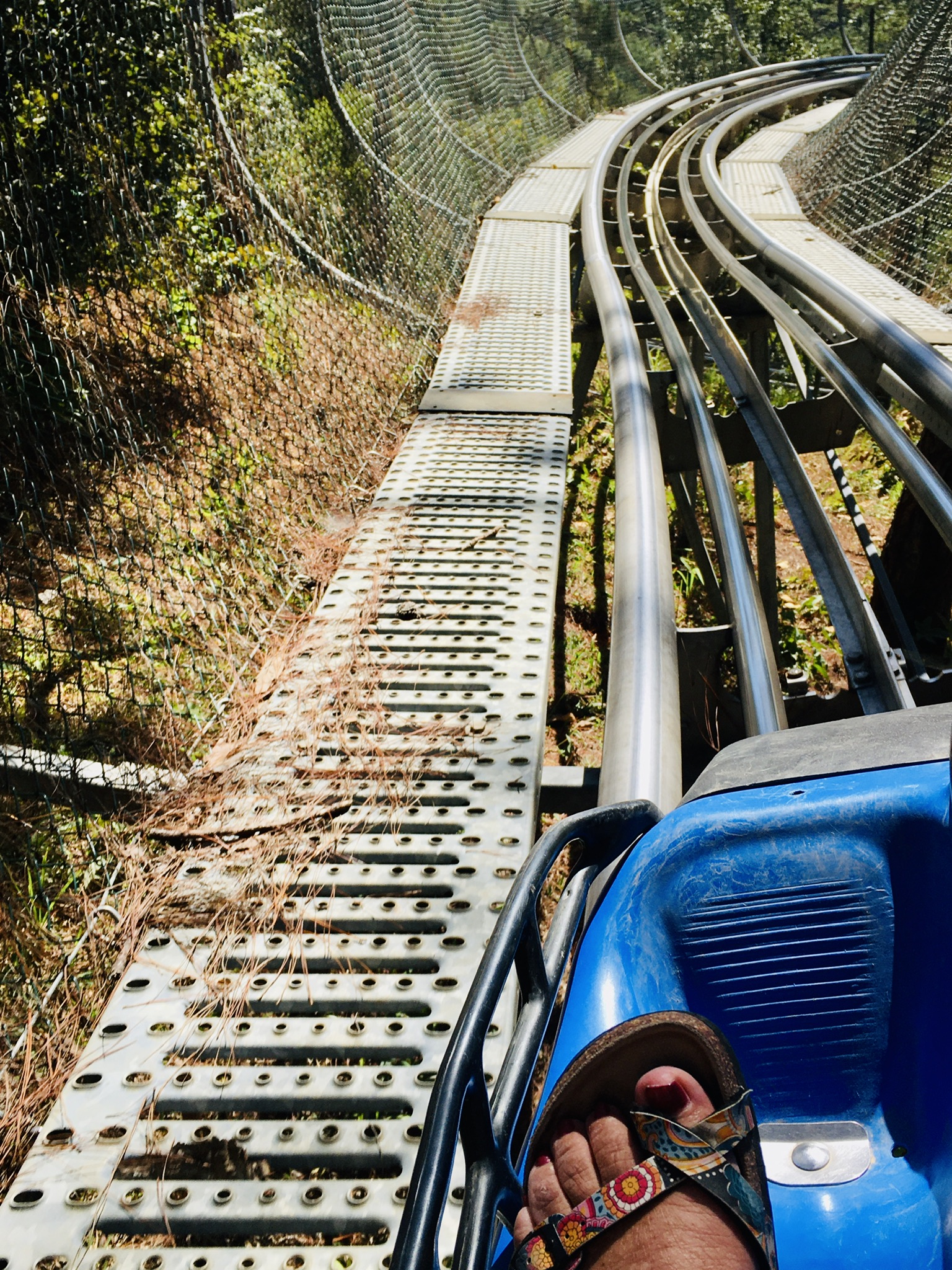
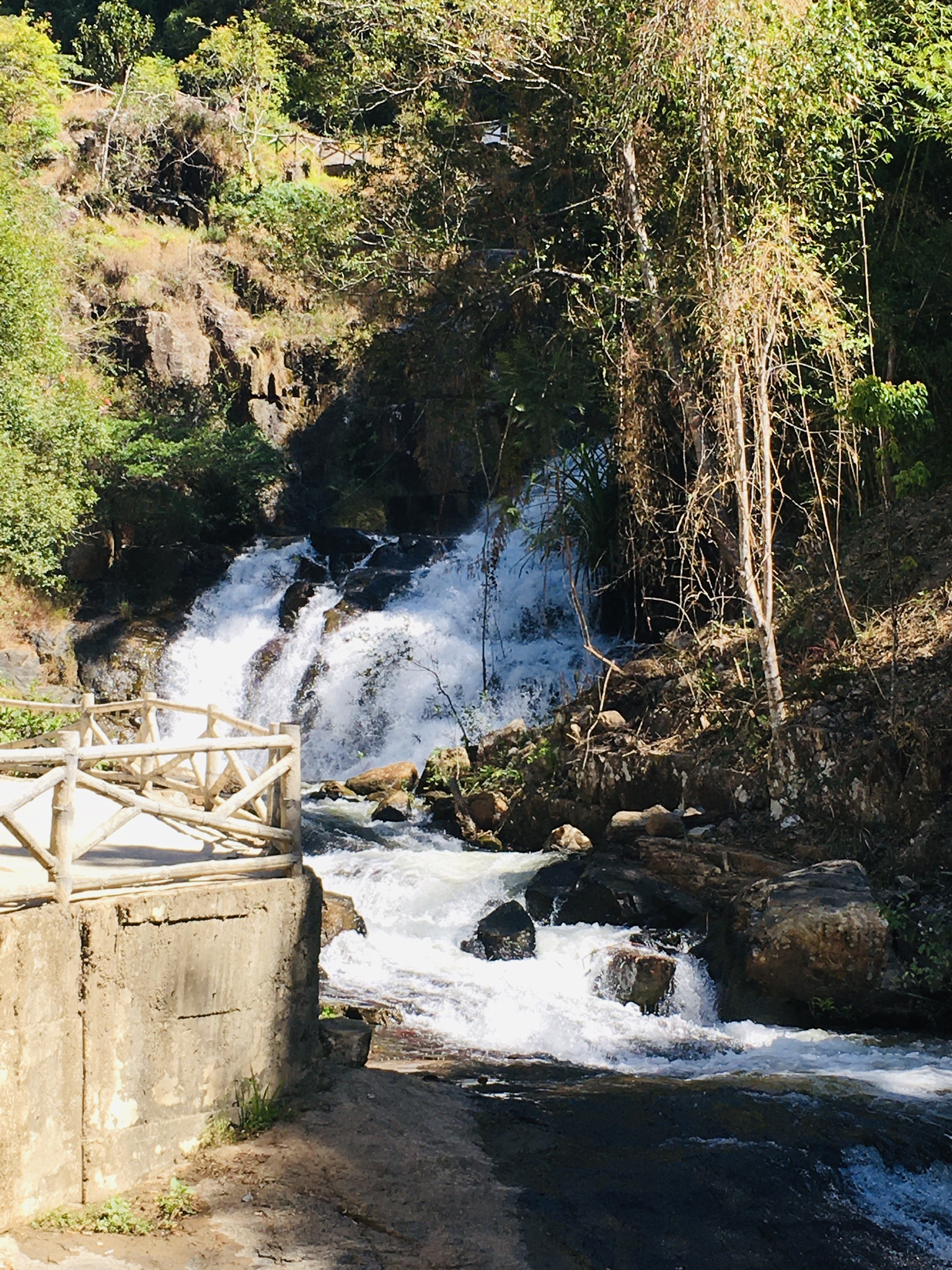
Our next stop was Datania falls accessible by foot or by a much more novel means, a self operated bob sled on a narrow track. We opted for the sled ride and whisked our way down to the falls. At the falls we saw some folks who had repeled down the whitewater, and we thought we were extreme by taking the sleds. Fortunately the sleds also took you back up the mountain and at one point if was pretty vertical with the track taking over the controls so you just had to lie back and stare at the deep blue sky.

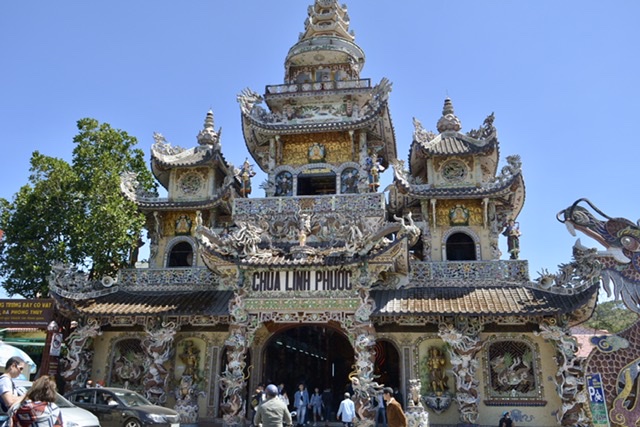
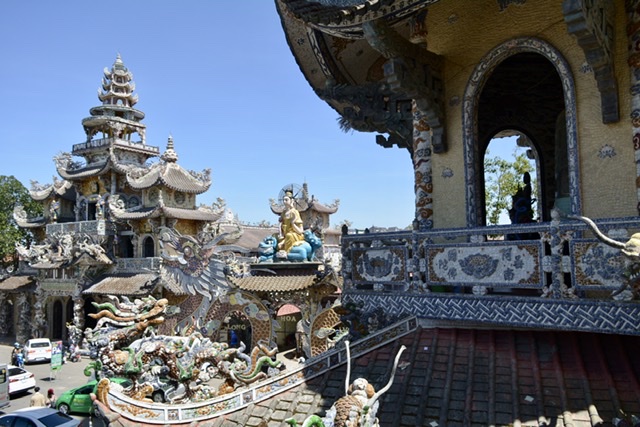
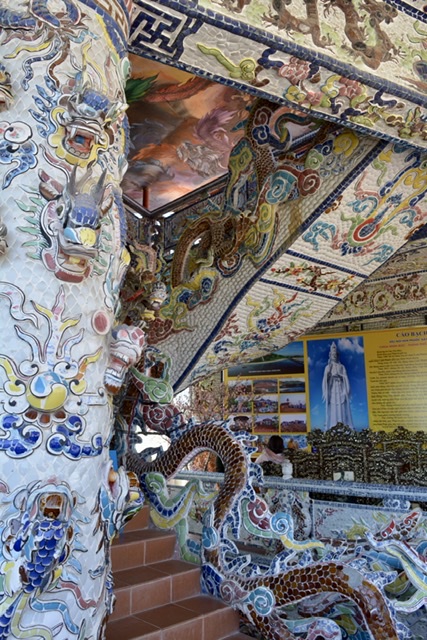
A few miles from the bob-sled/falls was the “Glass Pagoda”, which on closer inspection is made from small bits of broken china and glass. An elaborate design it is a real draw for both Buddhist pilgrims and sightseers. You are able to climb the internal staircase of the pagoda and from there you see the farms below.

An odd little stop was at a “Puppy Farm” whose claim to fame was being a breeding kennel for more than 100 breeds of dogs. Not really my cup of tea, I didn’t like to see so many dogs (no puppies) in large but cement floored kennels or small individual cages. Still not sure why this was on the tour except right next door and included isn’t he price of admission was another beautiful garden, well worth visiting.

Saving the best for last we parked the van at the bottom of Langbiang mountain, the highest point in the Da Lat area. Leaving the van we were loaded into a very old, utilitarian jeep to make the steep climb to the top.

The mountain is named after a tragic love story between Lang and Biang, young lovers, and like Romeo and Juliet they were denied the chance to marry by their rival parents, ending in their double suicide. The elephants that were present cried so hard a waterfall, aptly named “Elephant Waterfall” formed nearby.

At the top there are a number of attractions like a craft shop by a local indigenous group, pony rides, hiking paths, a restaurant etc. The views alone were worth the trip up in the clanking grinding jeep.

Tour over we spent our third and final day in Da Lat revisiting the city center and visiting a place know as the “Crazy House”, which was only half a block from our very pink hotel.

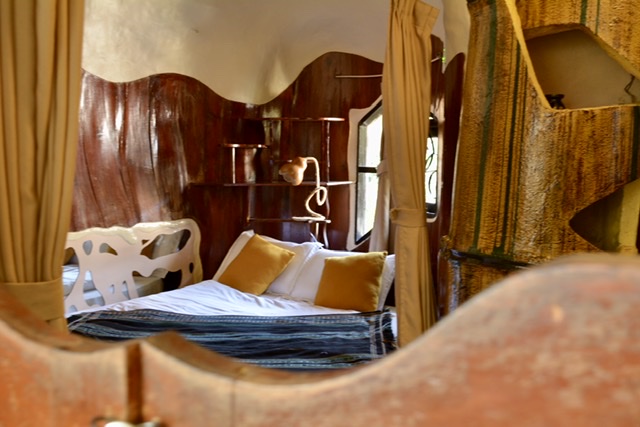
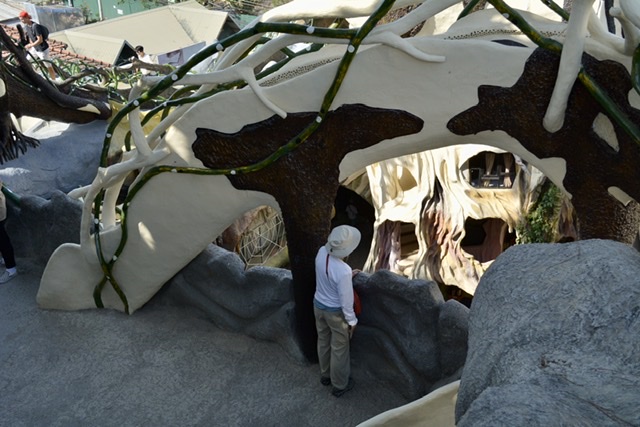
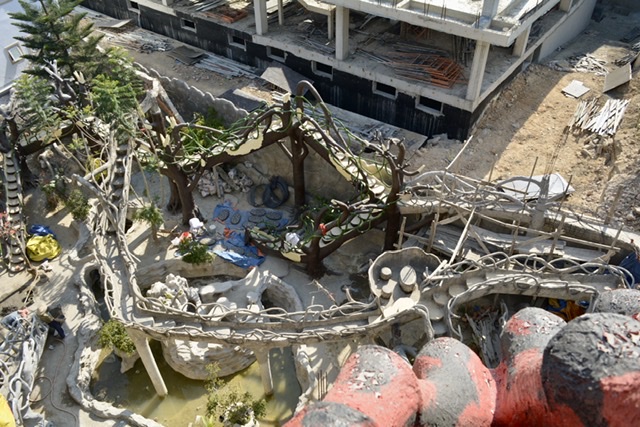
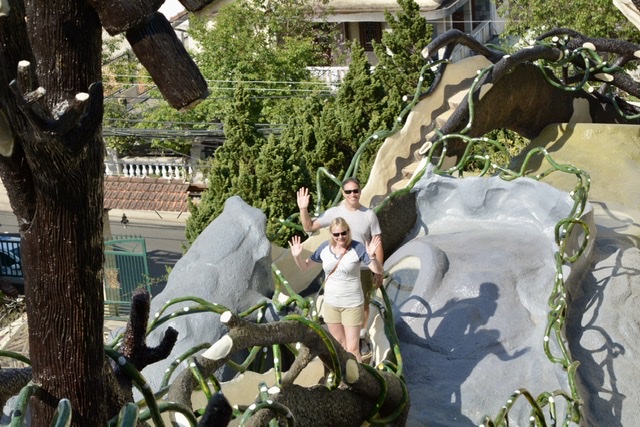
A most unusual attraction it was built by Mra Dang Viet Nga, the daughter of Ho Chi Min’s right hand man. She studied architecture in Russia but her creation certainly doesn’t resemble anything you picture as coming out of Russia. The Crazy House is in fact a hotel in addition to be a busy tourist attraction with dozens of bus loads of folks visiting everyday. The place is not finished and has an organic propensity toward expansion not unlike the Sagrada Familia in Barcelona. Like Gaudí Nga’s vision is a chaotic construction of intertwining buildings all connected by tangled walkways suspended mid-air giving it the air of a tree house.

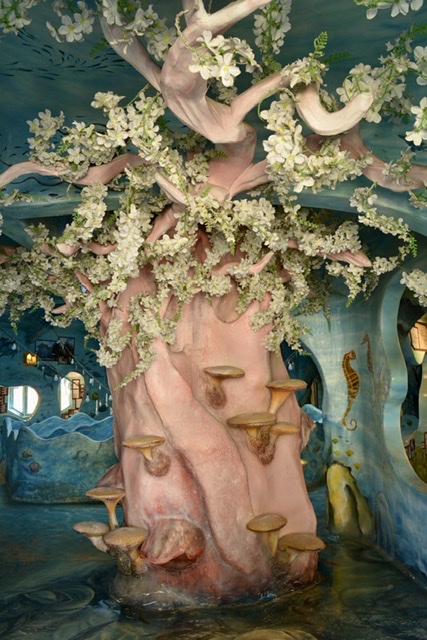
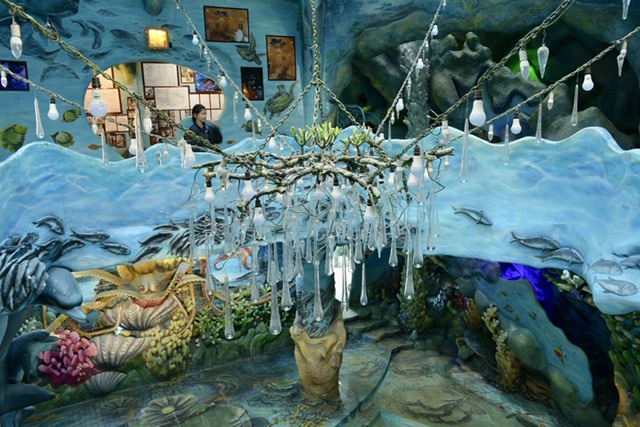
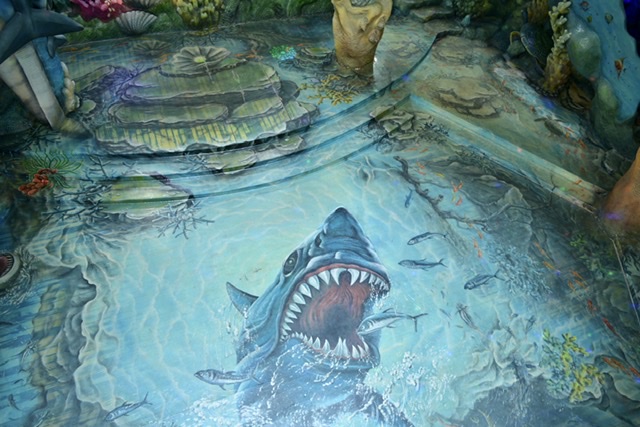
There are a couple of restuarants and coffee bars, the rental rooms are all named and overall the place looks like Gaudí fed steroids to the Hobbits. There are giant cobwebs, oversized mushrooms, aquarium motifs and a museum describing Nga’s journey.

It was hard to leave the beautiful city of Da Lat, the fresh cool air, the gorgeous scenery and the rural vibe made the “Flower City” well worth the visit.