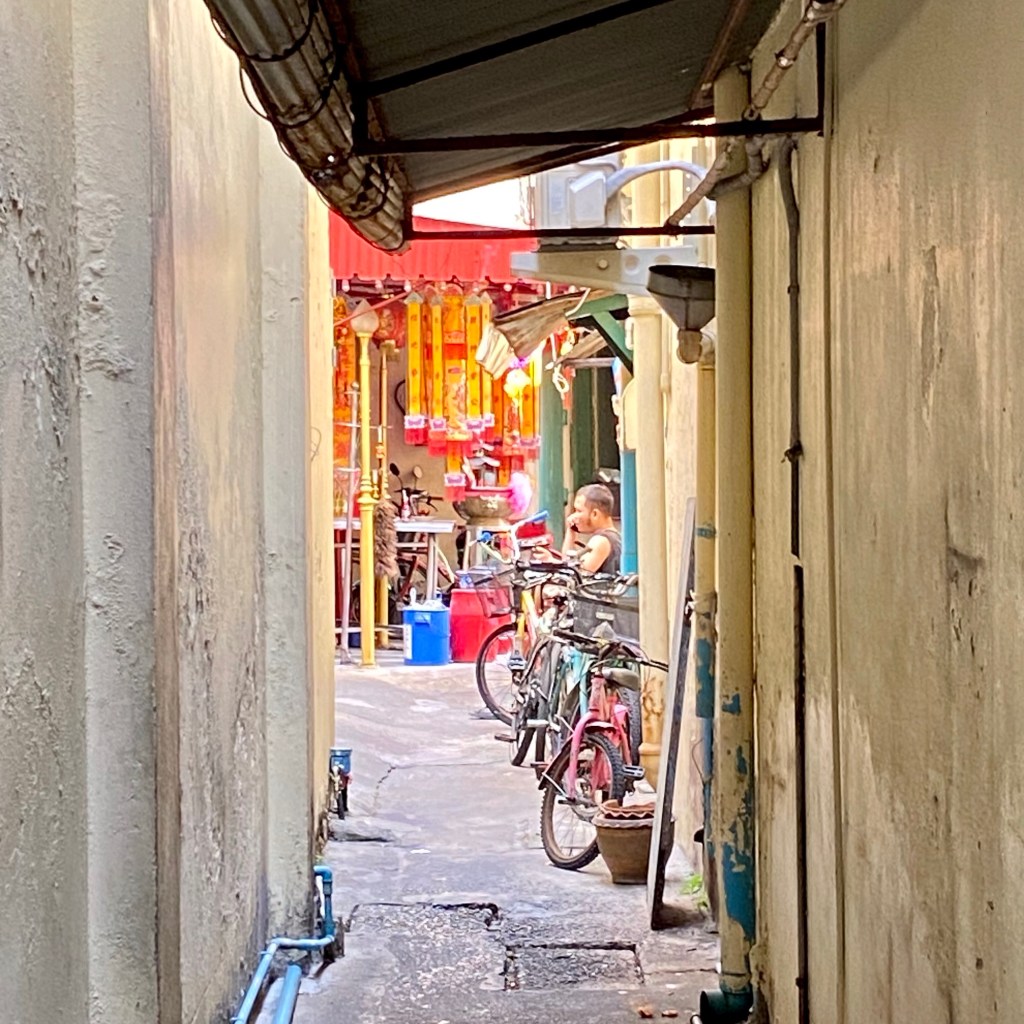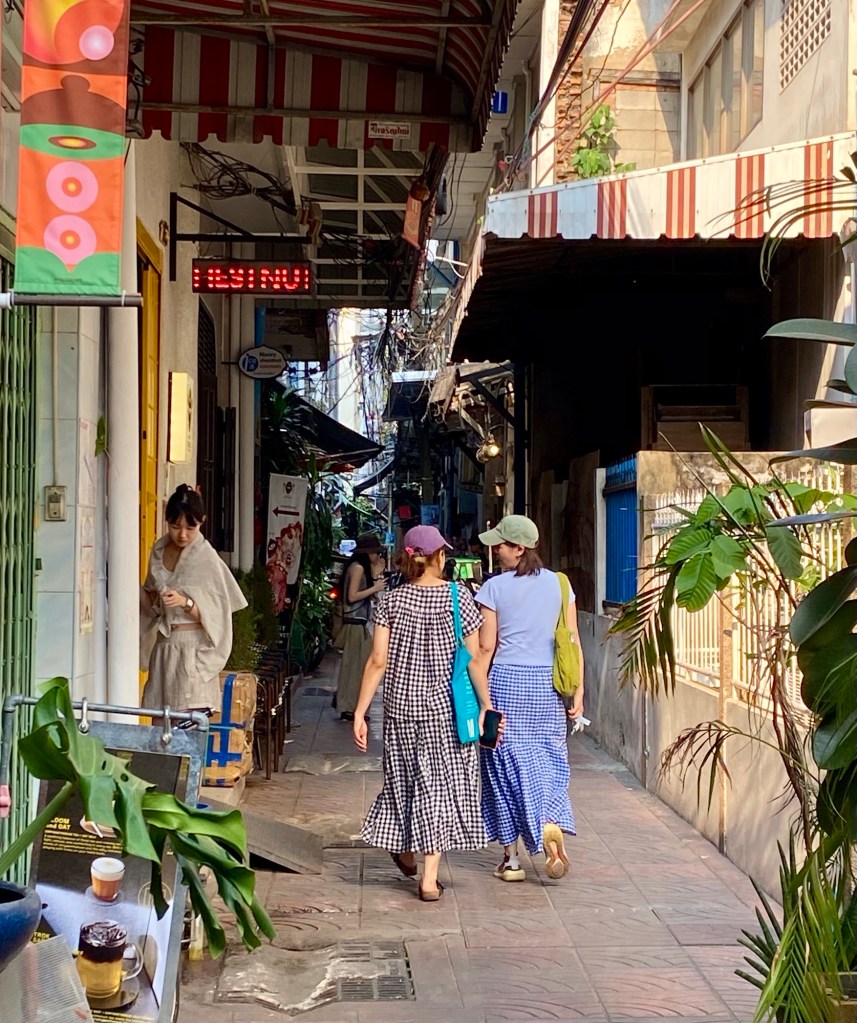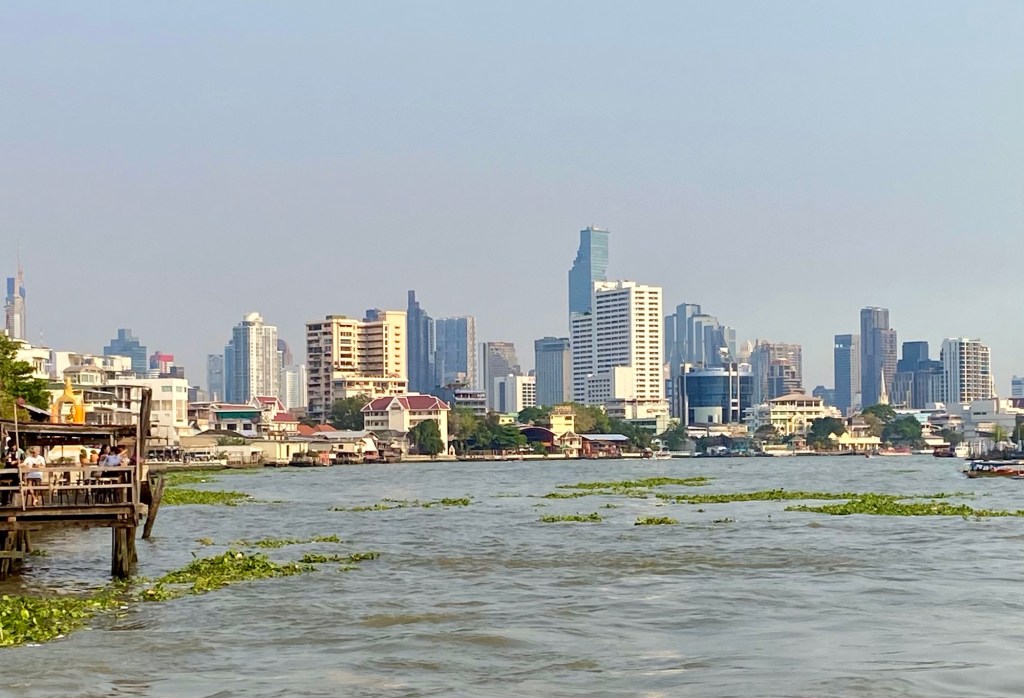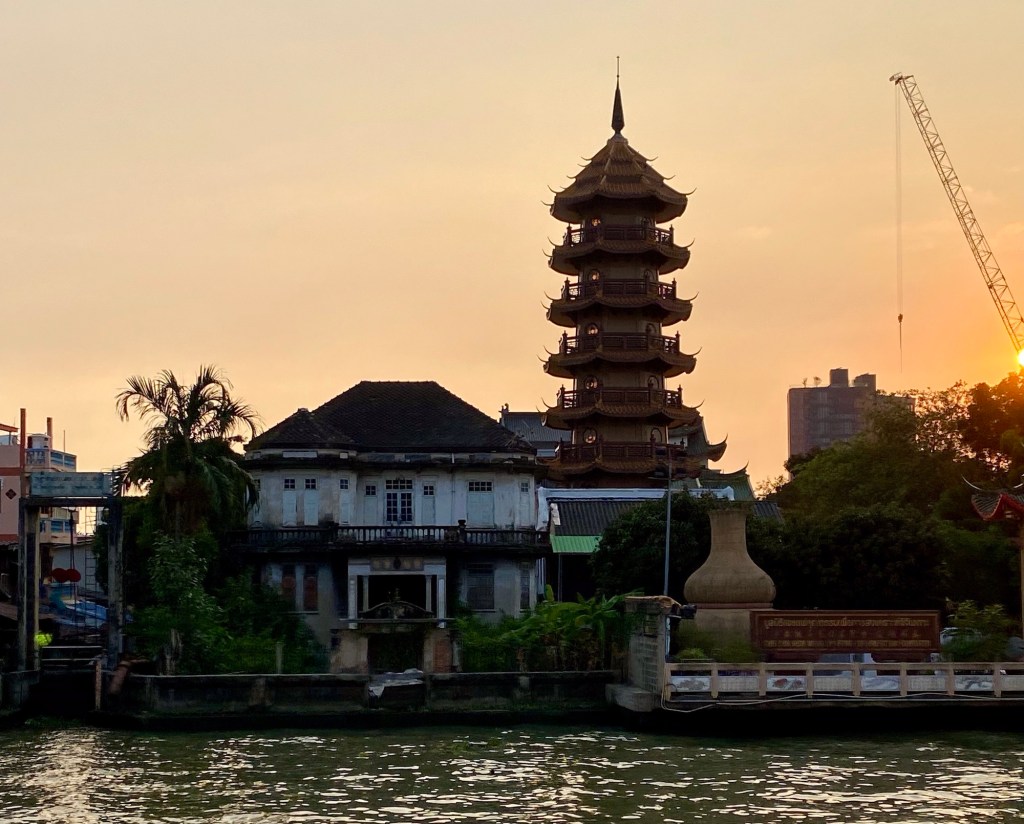
United Kingdom 2025 Bed, Bath & Beyond to Bruges

Bed, Bath and Beyond to Bruges

A “Bed” in Isle of Thanet in County Kent

I am blessed and grateful to have a “Bed” in Westgate on Sea at the lovely home of the “J’s” where the foot of said bed reaches out to meet the sea. A home base and a family I love to visit, gives me great opportunity to do short trips to wherever my heart desires.

My Playground (not necessarily rich or famous)

But before I leap ahead to Bath & Beyond to Bruges, come with me while I wander around county Kent with a brief foray to Sussex.

The list of things to see and do goes on and if you have a car it’s easy to get about and if you don’t the trains are everywhere in this eastern part of Kent known as the Isle of Thanet (because it once was an island).

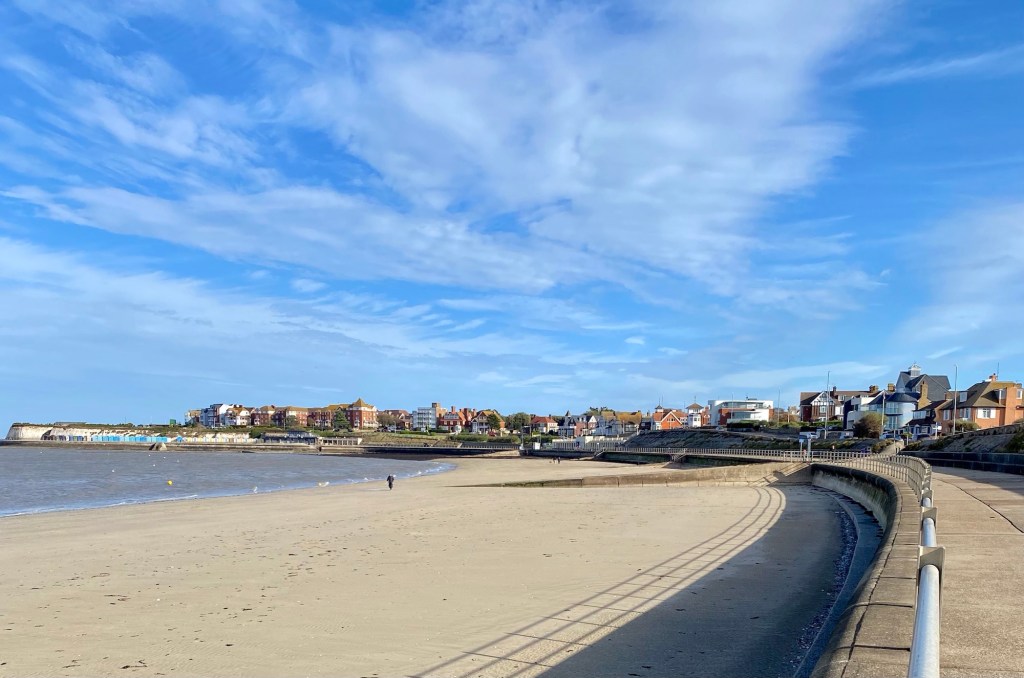
Westgate-On-Sea Beach

Westgate-on Sea, Canterbury (yes that Canterbury) Margate, Broadstairs, Ramsgate, Sandwich, Deal and Dover, all within a short drive and all worth the trip if only to see some of the places where folks flood to for beach holidays in the summer.

Westgate-On-Sea Highstreet
Full English (note no blood pudding)
Chalk Cliffs Near Broadstairs
Broadstairs Seaside

Holiday makers are given the full treatment along this stretch of coast from beach bathing to amusements and rides such as those at Dreamland in Margate. Fish & chips and pints round out the day with easy stumbling back to one of many hotels or trains.

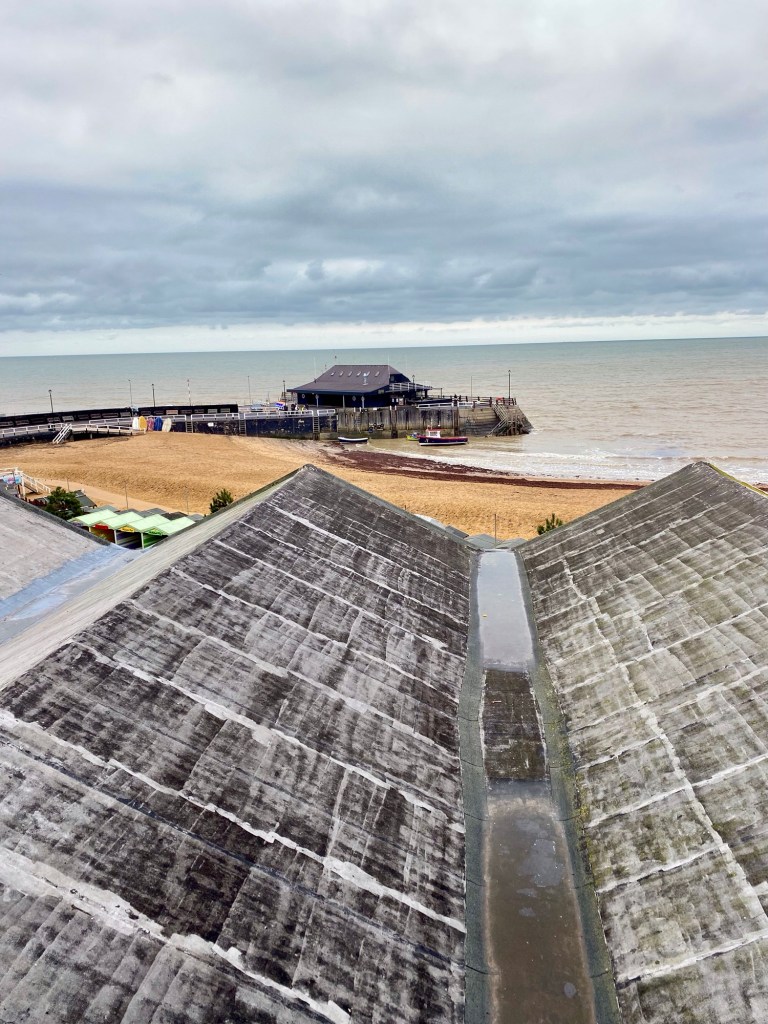
Ramsgate Radio Station

Thanet is not just a beach destination however, there are also beautiful stately homes with amazing gardens, famous cathedrals, castles, Roman ruins, museums and art galleries.

Quex Park – Once a Stately Home & Garden
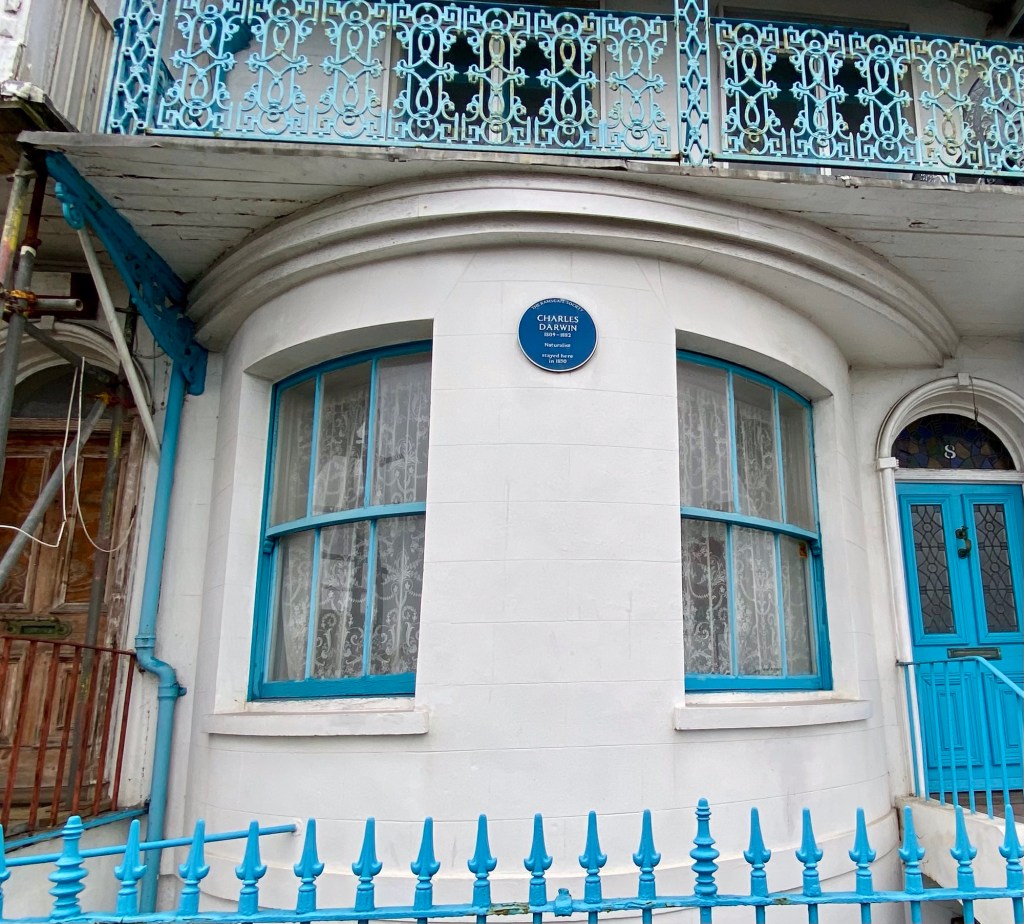
Charles Darwin Stayed Here in Ramsgate

The blue plaques on houses indicate that someone of note once stayed or lived therein. Charles Darwin wasn’t alone in Ramsgate, he was in good company with Vincent Van Gogh who spent some time working in a boys school there, documented by his brotherly letters to Theo. You can even plan your stroll around Ramsgate by following in his footsteps to his various haunts. Broadstairs is known to have hosted Charles Dickens for one, and museum there is dedicated to him.

County Sussex – Rye and Winchelsea for the Day

A little further afoot is the ancient town of Rye and a stones through further is Winchelsea.

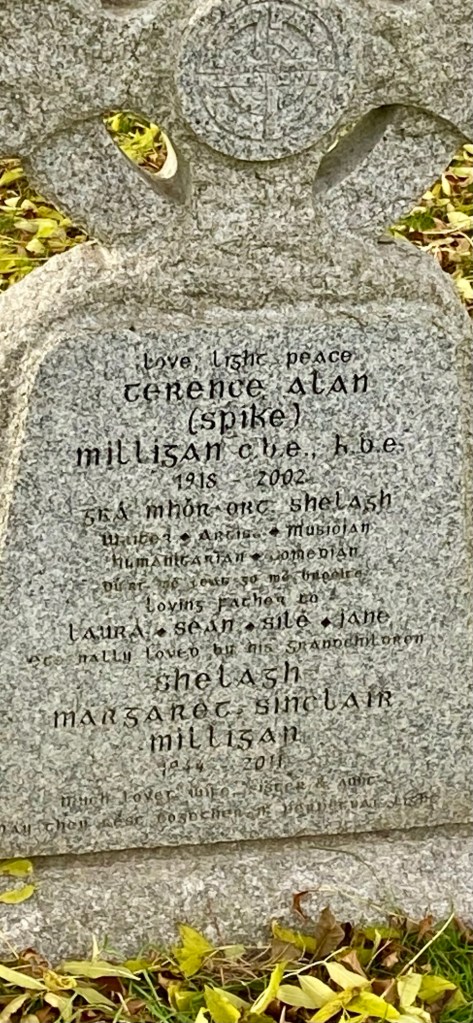
Winchelsea, where Spike Milligan, Anglo-Irish comedian, author, etc., is buried with his famous Irish enscrtiption, “see I told you I was sick”.

Spikes Headstone

Rye

A wander around the quaint little streets and lanes is the first thing you should do in Rye. As one of the best preserved medieval towns in England, the cobbled streets and the half-timbered buildings give it a story book look that is enchanting.

Half-Timbered Buildings
Drift Wood Jesus
Ancient Pub
Mermaid Lane, Wish Street & Bluebell Lane – Some Street Names
Medieval Gates to Rye

Bath – From Roman Ruins to the Regency & Georgian Periods

A return to Bath seemed a good idea as I loved my first time there when I did a Cotswold walk with a friend (dear friend). The purpose of my visit was mainly to see this World Heritage Site again in all its splendour. It’s no wonder the Romans, enjoyed the spa waters as evidenced by one of the best-preserved Roman remains in the world. Not to be out down by the Romans I too took the waters in the modern Thermae Bath Spa, complete with roof top pool and series of steam rooms and saunas.
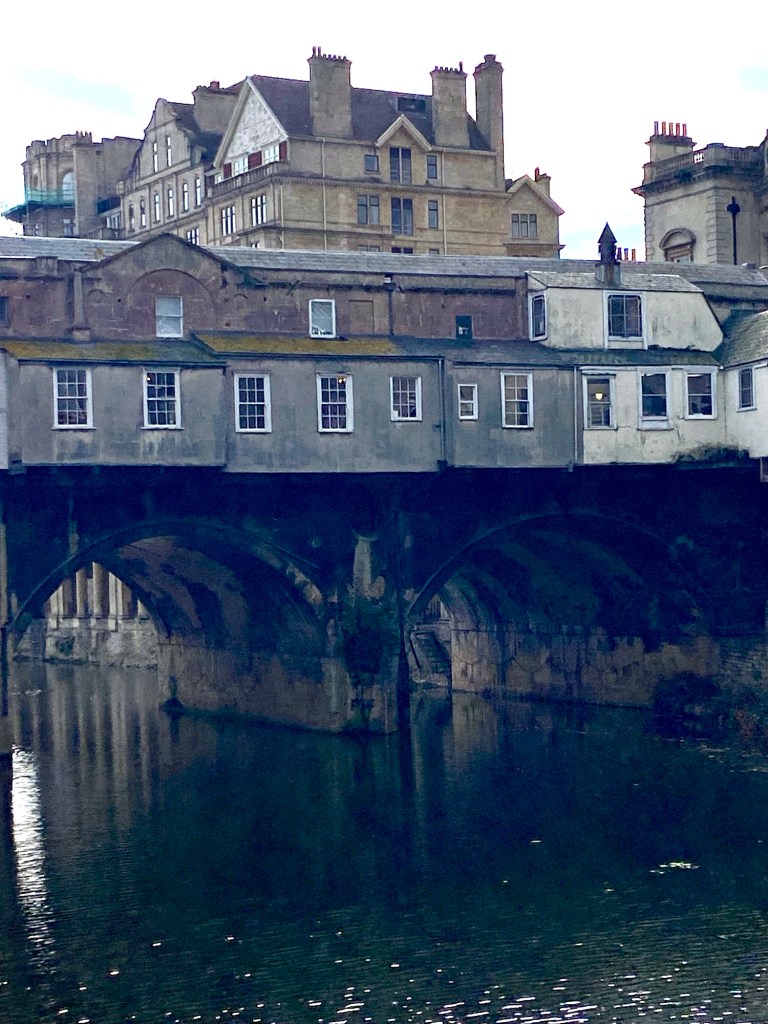
Pulteney – A Bridge with Shops
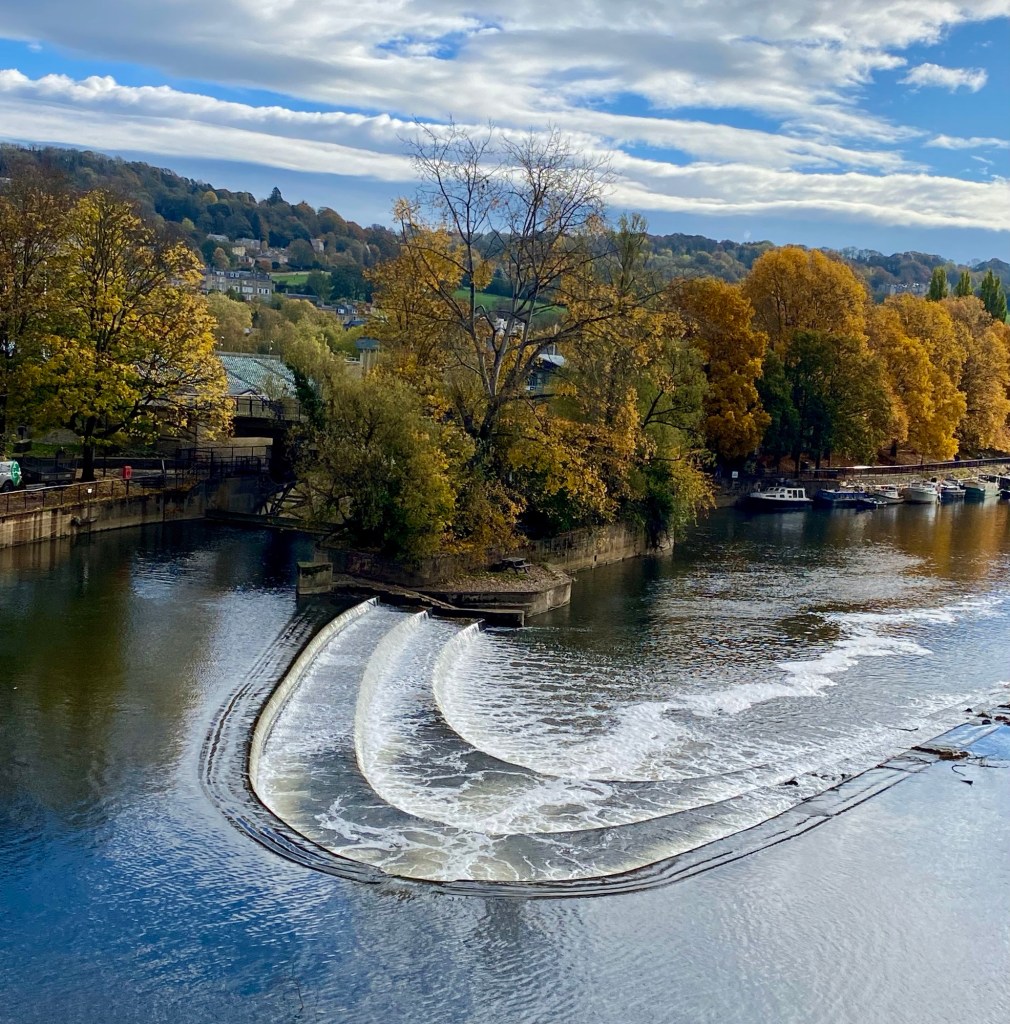
Avon River Wier
Tea Shop on Pultney Bridge
See Next Photo
Bath Cathedral
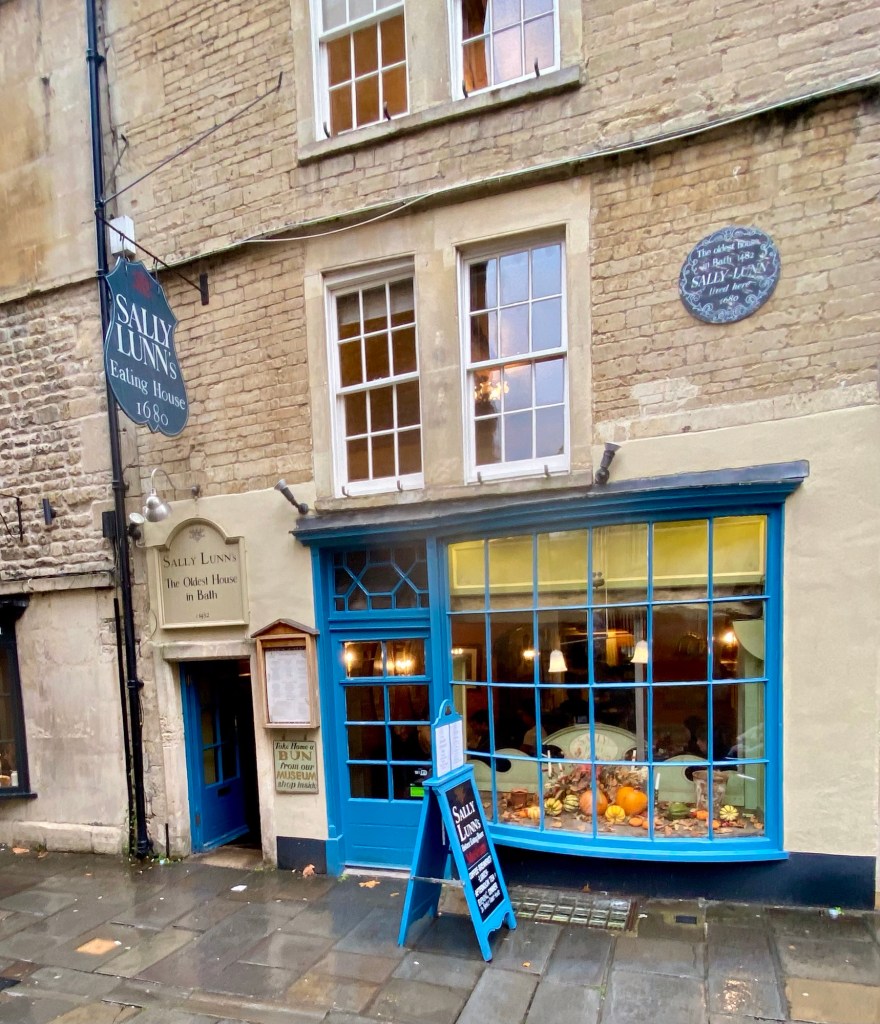
Sally Lunn – Oldest Restaurant in Bath (Not Cheapest)
The Bridge from the Back
Surprise – a Freda Sighting

Of course to speak of Bath without the mention of Jane Austin would be next to sacrilege, especially as 2025 is the 250th anniversary of her birth. Although she lived in Bath for only five years, Bath has done a good job of claiming her as their own. Festivals, promenades and dress-ups pay homage to this wonderful, funny, witty author who brought attention to the female mind.

Not to be forgotten Mary Shelley wrote Frankenstein in Bath revealing even more of the dexterity of the female mind and Bath boasts a museum dedicated to her famous monster.
Of course no slouch in architectural beauty, Bath is often the setting for films in need of Georgian or Regency scenery, including Bridgerton, Les Miserables, Vanity Fair and Persuasion to name a few.
Would I go back, you bet!

Beyond to Bruges

My nephew encouraged me to go to Bruges in Belgium and as you will see in the photos below it is an epic monument to medieval times. The energy that is created by modern day living amongst medieval architecture is always a delight to a western Canadian like me.

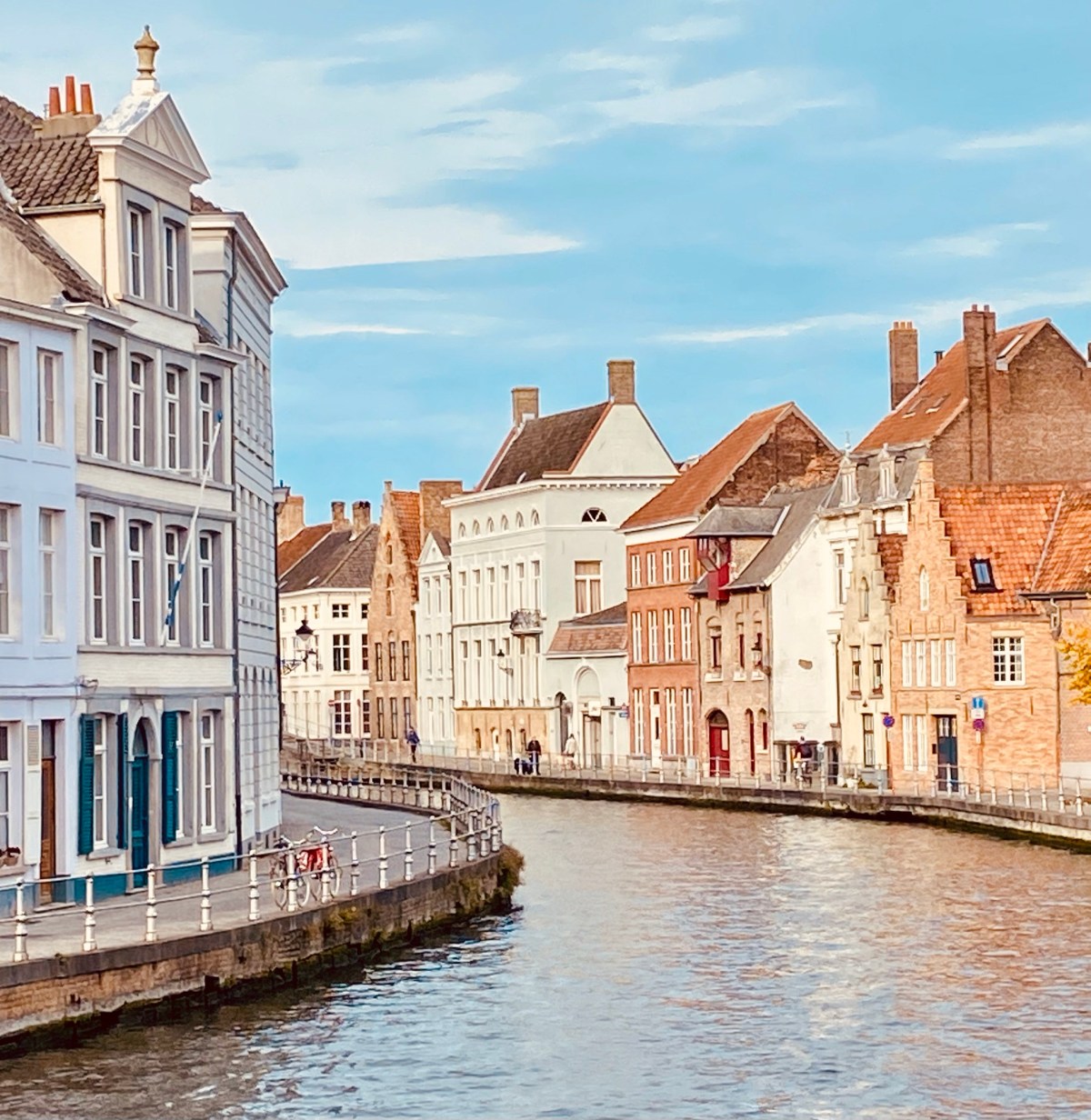
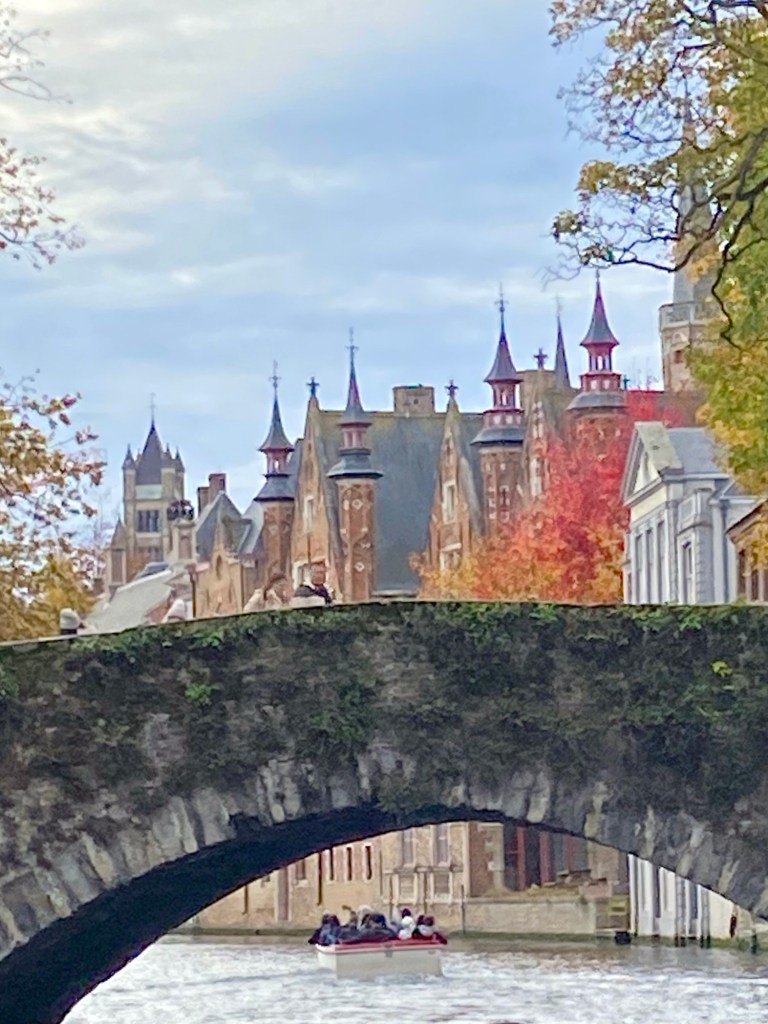
Bruges – Venice of the North

App of Note: In Bruge, Dubrovnik and Split, I used an app called GPSmycity and found it most helpful in planning my day. Not only does it help you with route planning it gives information about the places both in written and audio formats. Especially useful in places that are densely packed with things to see and do. Particularly good if you lack access or desire to join group tours. Let’s you wander and linger as you wish.

From the 9th to the 15th century Bruges was the northern seat of trade and commerce matching that of Venice in the south. The riches that resulted from being a centre of trade are abundantly evident through the city. At that time Bruges was connected to the sea by the river Reis which eventually silted up becoming impassable and Bruge faded into sleepy obscurity only to be rediscovered as a tourist Mecca in modern times.

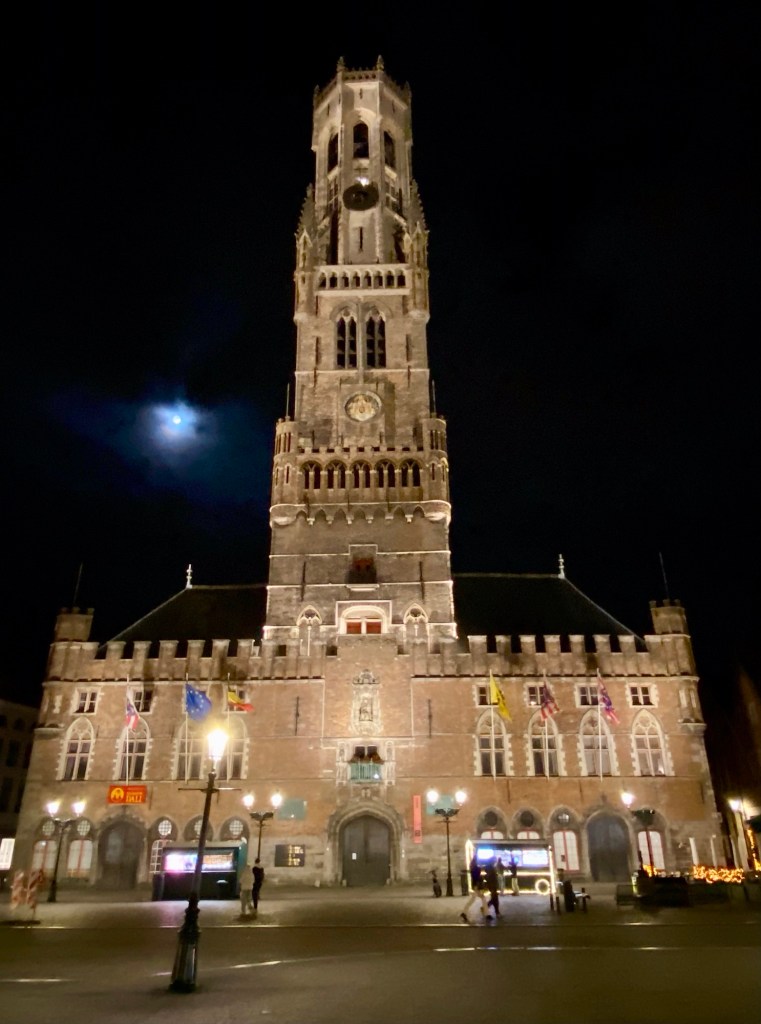
The Markt and the Belfry (Belfort)

At the heart of Bruges, the bustling Markt square is lined with colourful gabled houses and cafes and at one end is a belfry that you can climb for a view of the city.

Markt Square
Markt Square Belfry

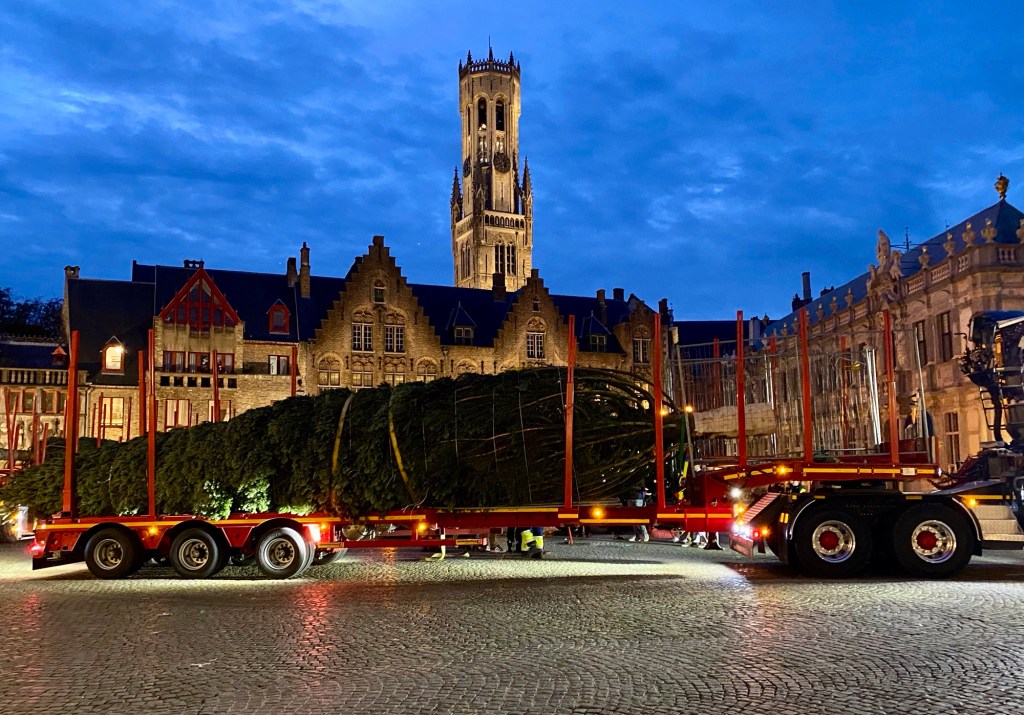
Burg Square & City Hall

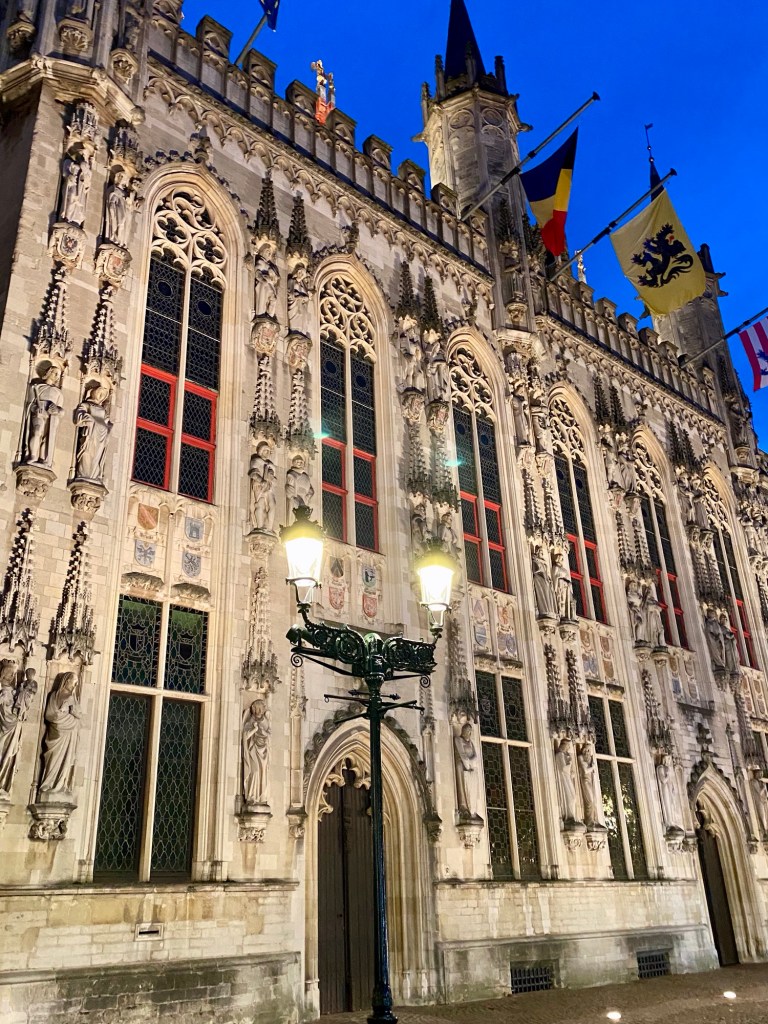
A smaller, elegant square showcasing Bruges’s civic and religious power is home to a very ornate City Hall. The city chambers are open to the public and includes a history of the waterways and canals that made Bruge prosperous.

Burg Square – Xmas Tree Delivery
City Hall

The Canals

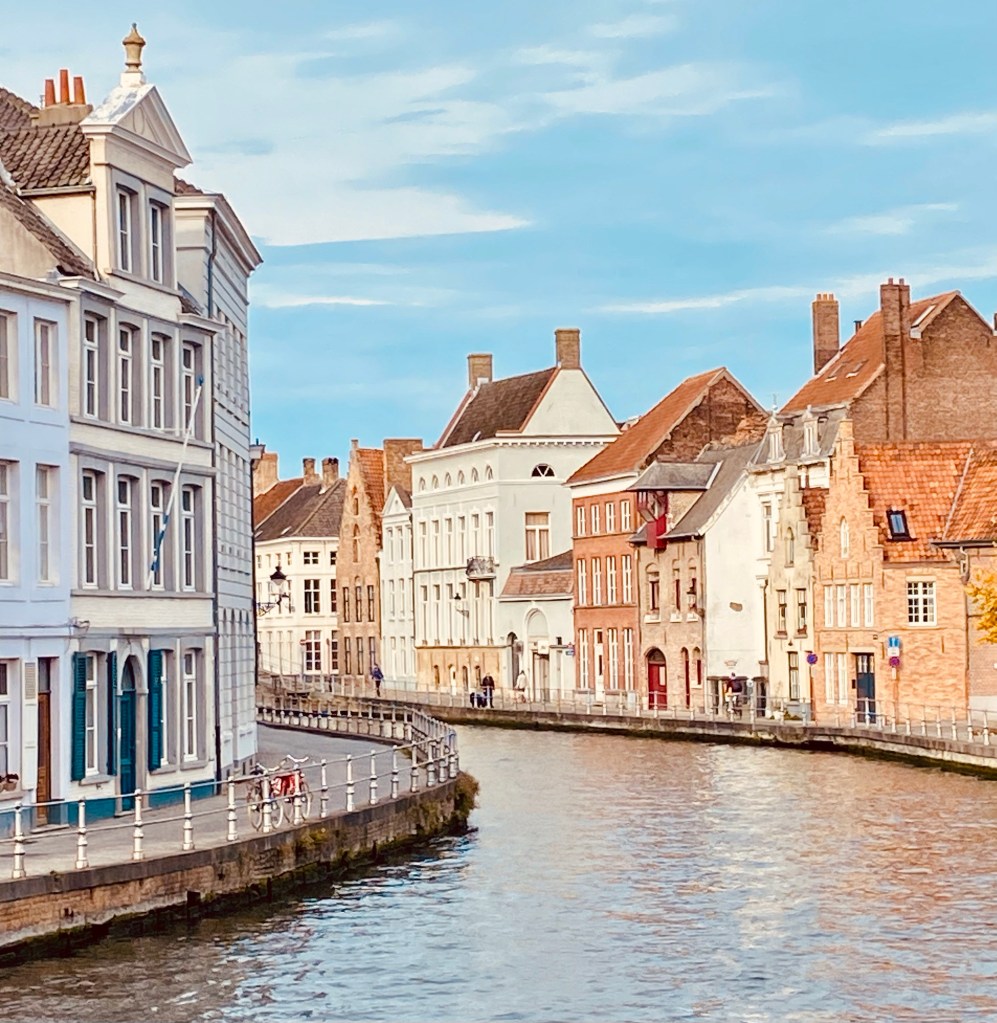
The canals are the city’s lifeblood. A boat tour gives a magical view of Bruges from the water, especially around Rozenhoedkaai, the most photographed spot in town, where medieval buildings reflect perfectly in the water.

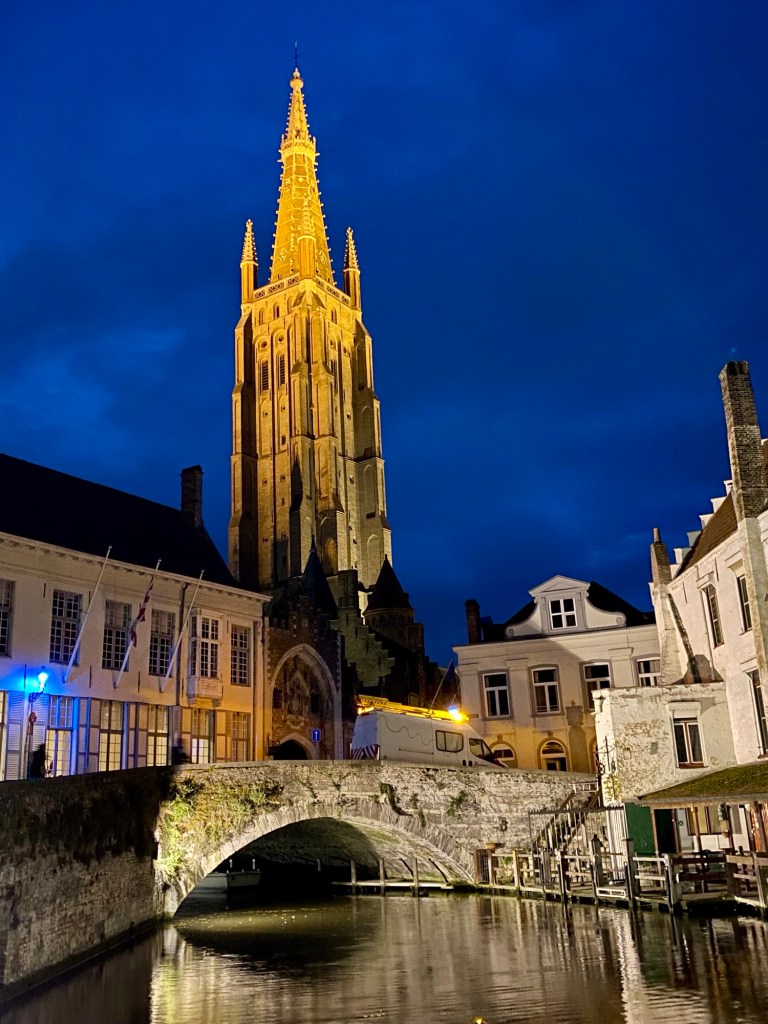
Cathedral Towers
Sunsets on a Canal
Bruges the Beautiful – Day or Night
Canal Boat Tours

Gothic Churches and Towers

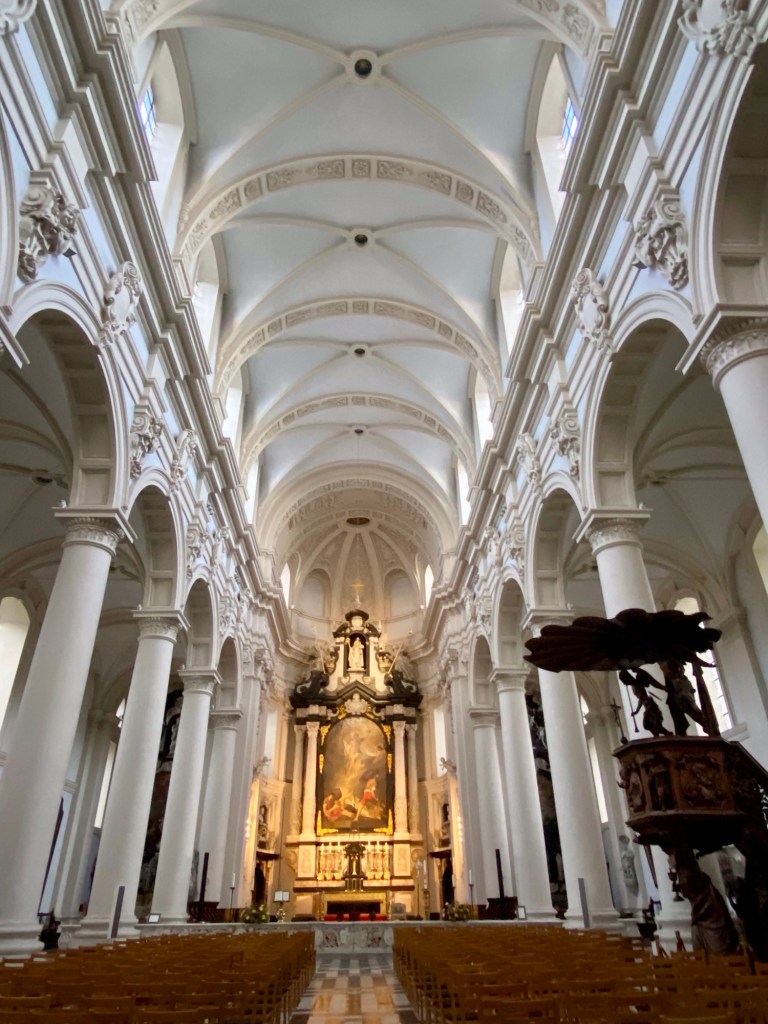
Of course a reminder of the influence of religion in medieval times is omnipresent in Bruges. Towering churches house treasures, art and other spoils and riches of the time. You can see Michelangelo’s Madonna and Child, one of his few sculptures outside Italy.

Michaelangelo Pieta in Bruges
Artistry Meets Religion
Church Attic with Ancient Timbers & Multi-Media

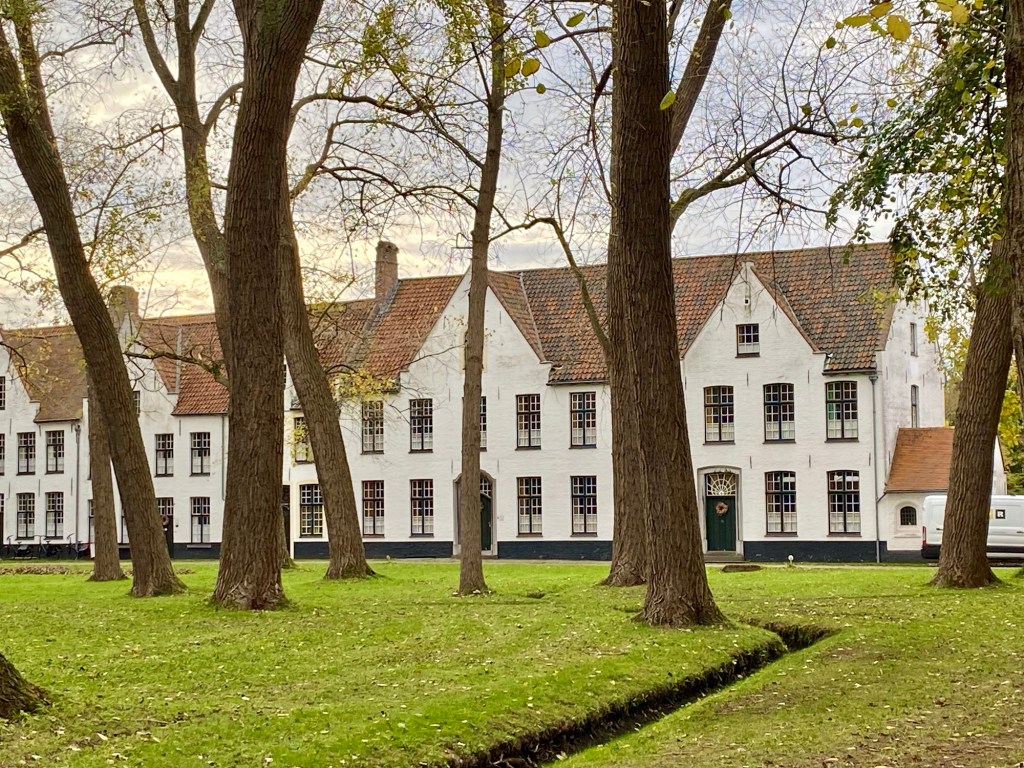
The Begijnhof

An idea ahead of its time? In the 13th C these whitewashed buildings formed a peaceful enclave for lay women who wanted to live a religious life free from marriage and children without becoming a nun. They were free to come and go as they pleased and many worked outside of the community. Today it’s a haven of silence for Benedictine nuns and a lovely contrast to the busy centre.

Home to Women Only

Windmills of Sint-Janshuismolen

If you fancy a walk to the edges of the city you will see historic windmills built on grassy mounds that could have been dykes or defensive ramparts. In one of them there is a museum but when I got there it was closed for lunch.

Windmill Museum

Modern Bruges

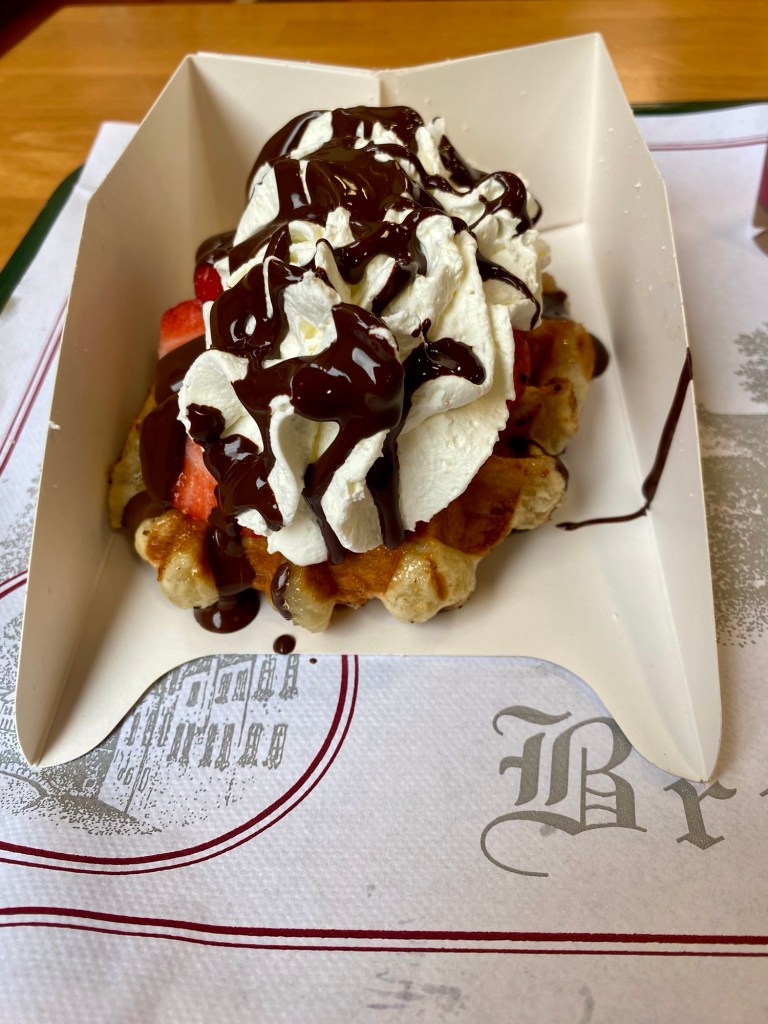
It’s easy to look to the past in Bruges and certainly that is the polished version that is resplendent for the purpose of tourism. But there are other things that continue to define Bruges and are very much alive and well. From lace making, beer, chocolate, confections and of course waffles, there is plenty to experience.

Belgian Beers
Family Fun
invite to Tourists
Waffles and Chocolate
Modern Interpretation of Patient Care
Street Food Stalls
My Hotel in Puje

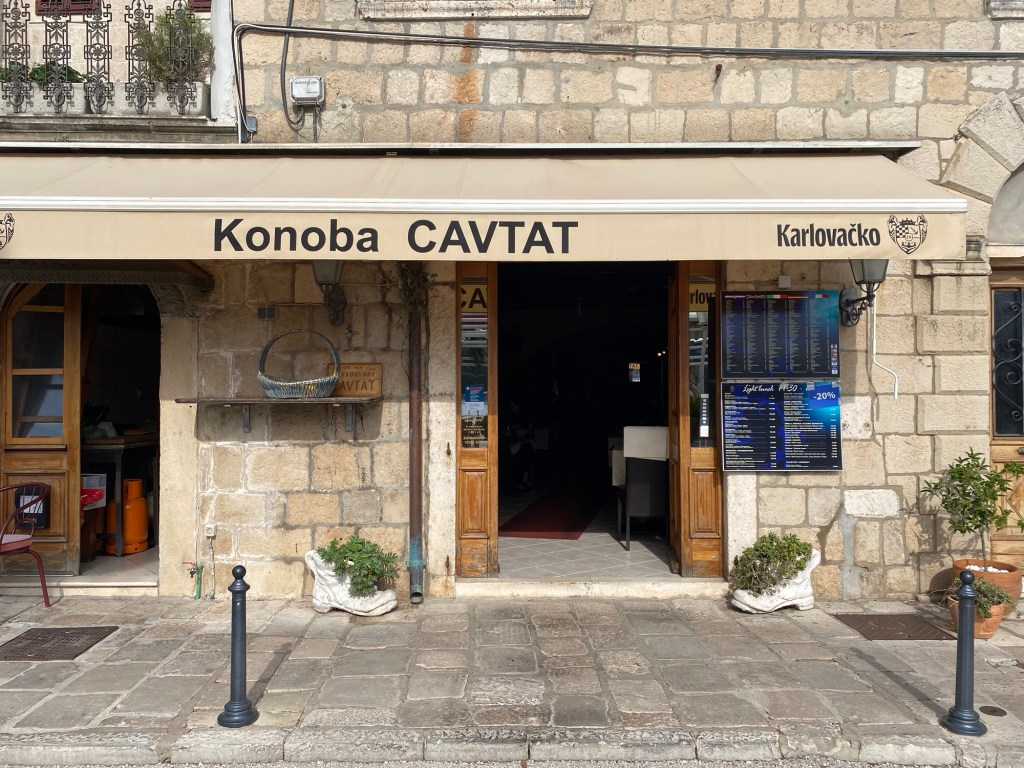
Balkans Final Part 5 – Leaving Gently from Cavtat

A gentle way to leave the Balkans…

The Dubrovnik airport is significantly far from Dubrovnik and so we arranged to stay in the village of Cavtat, yet another wonderful seaside town that captured and reflected the beauty of all the other towns that we had enjoyed on our driving tour. Cats abounded every where in the Balkans so Cavtat is now officially renamed Catvat.
Seaside Town
Last Chance Sun Bathers
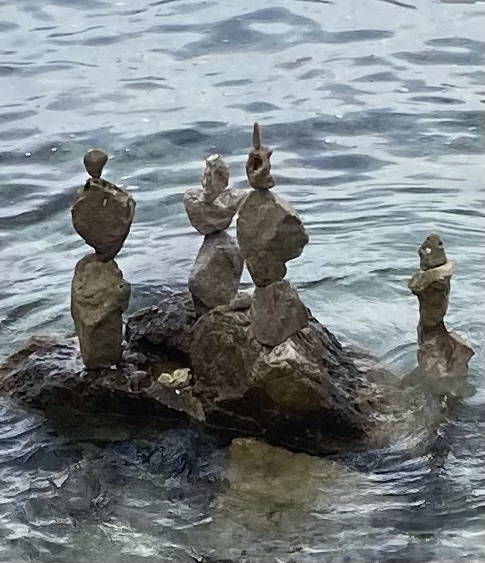
Croatian Inukshuks

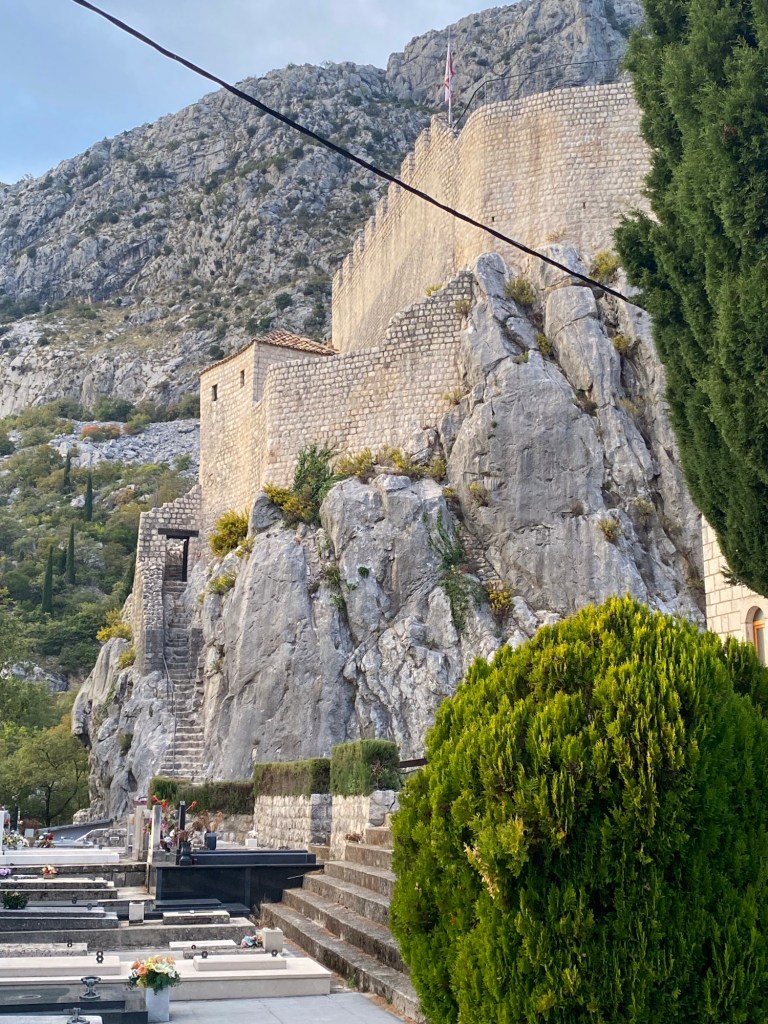
One of the great things in the Balkans is that wherever you are you do not have to go far to see some wonderful historic site, a castle, a palace a bridge etc. And of course near to Cavtat was an old fortress built from rock and standing guard above the valley floor.
Sokol Grad Fortress
Impressive Heights

It was a great way to slowly and gently leave the beautiful Balkans with a well of new memories, some funny anecdotes and enough fridge magnets to topple even your sturdiest appliance back home.
Thank you Albania, Montenegro, Croatia and Bosnia & Herzegovina for your scenic beauty, great food, warm hospitality and ancient history. I hope to return one day to discover the rest of the countries of the Balkans.

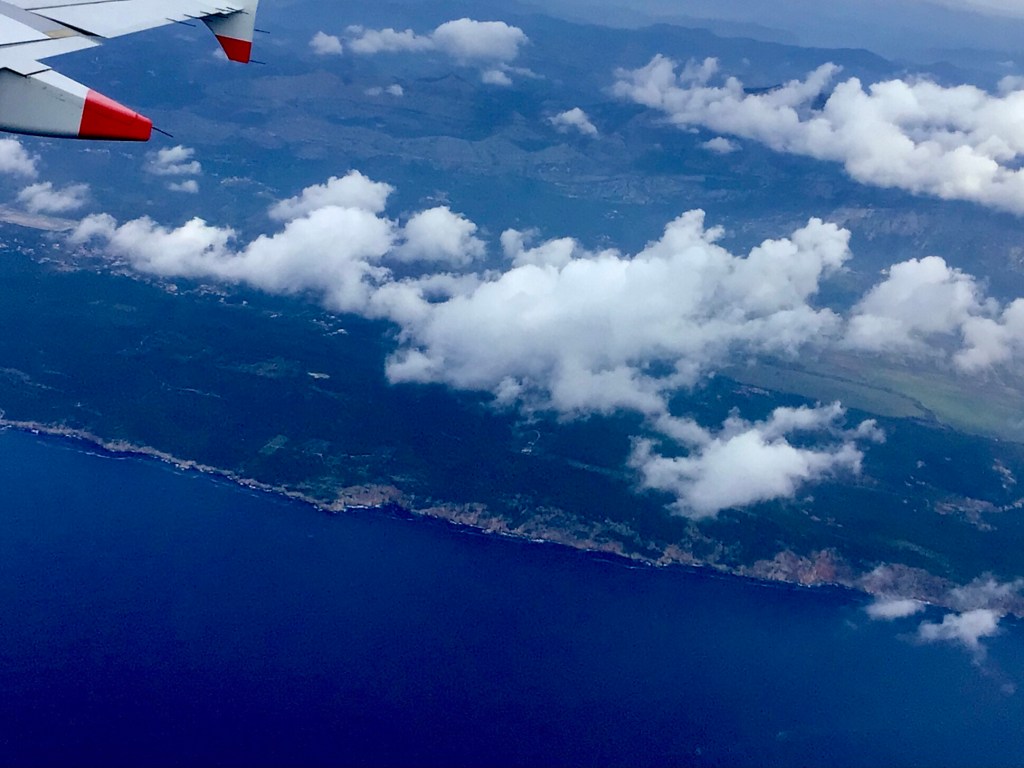
Croatian Shores from Above
Flying Back to England Over Austria

Balkans Part 4 – Self Catered Driving Tour

Self-Driving tour of Croatia with a dip into Bosnia & Herzegovina, a great way to have hotels and car organized for you with the freedom to wander off script between destinations. Seeing what you want to see without joining a tour group. Easy driving and good roads for the most part.

Croatia and Bosnia & Herzegovina

We opted to do a self-catered driving tour arranged by Tour Radar that booked all hotels and of course the car for us. They were very helpful and responsive to texts and emails through their app as we navigated around Croatia and Bosnia & Herzegovina.

Day 1 – Around Dubrovnik

When our driving tour actually commenced we left the Old City and moved to the new city of Dubrovnik. We picked up our car and headed to our first hotel, the Ivka. It was much nicer than we had anticipated and we actually had a suite with sitting room and all the mod-coms. Not your typical tiny euro hotel. Since we had already spent several days in Dubrovnik we used our first day with the car to venture north along the coast. It was a good idea as it gave us an sense of how the roads and the traffic behaved.

Driving north along the coast highway we were gobsmacked by the beauty of the scenery. We stopped frequently to take photos and visited small towns where we would park up and wander about, going where our noses took us. Although it was late October there were some very warm days which meant we had a few swims in the Adriatic.

Lapad
Zaton
Zaton
Neretva
Veliki Zal Beach

Day 2 & 3 – Stone & Biograd

Leaving the Ivka hotel and its trendy university neighbourhood filled with locals enjoying pubs and restaurants, we headed north to Biograd. Of course with many stops to ooh and ahh at the scenery and invevitably we strayed off the beaten path a few times and ended up following our noses to Ston.

Great Wall of Ston

Ston turned about to be a wonderful side trip. Ston is an ancient town that boasts a Great Wall that in my mind measures up favourably against the Great Wall of China. Originally it was 7000 meters long and had three fortresses and six bastions. Now due to a variety of historical events such as an earthquake and various wars and incursions, it is much smaller but still impressive.

Bastion in Ston
Church of St. Blaise

Returning to the main highway we motored on to Biograd that was at the end of a long day of driving, but the toll roads were excellent and had speed limits of 130 kph which helped speed things along. Biograd is meant to be a gateway to some national parks but for us it was a great two night resort stay. The hotel was lovely, right on the water and had the best indoor pool. Since it was late in the season we had the pool to ourselves. It was easy to spend a day wandering around Biograd, a fishing port and resort destination, there were several boat rental agencies offerings from small runabouts to luxurious yachts.

On the Road to Biograd
Biograd – A Boaters Paradise
Sunsets in Biograd
Biograd – Commercial Fishing
Fishing Fleet
Biograd Lane Ways

Day 5 – Split

Heading back South we spent a day exploring the Old City of Split. Like Dubrovnik it is a tourist Mecca complete with cruise ships and tour buses. A beautiful city with the same layers of history as the rest of Croatia, Split has some unique architectural features that distinguish it as a clear winner in the old city category.

Gateway to Diocletian’s Palace

Diocletian’s Palace is one of the biggest and most complete Roman sites. The Peristyle or square is at the heart of the palace and you can sit on marble steps that surround the crowded square to do some serious people watching.

Old City Split

The square leads to the Vestibule where traditional Dalmatian singing is performed for crowds enjoying the acoustics of the dome.

Traditional Dalmatian singers
Vestibule – Open Dome Acoustically Magic

The amazing things about these very old structures is that they still stand today, made of nearly indestructible materials they stand as they were. That is if they weren’t a victim of events like war or earthquake. (You certainly couldn’t say that about modern building practices.

A Painful Modern Art Display
Passageways in Diocletian’s Palace
St Dominus Cathedral Bell Tower

For a fee in addition to a fee to visit the Cathedral you can climb to the top of the bell tower, up steep and slightly scary stairs with sharp corners and uneven steps. But the views are well worth the climb,

Roman Ruins
Signature Croation Red Tiled Roofs
Looking Out Over Split Harbour
Narrow Lanes for Living and Shopping
Ukrainian Tour Group of Injured Soldiers
Ukrainian War Amputees

A grim reminder of the war in Ukrainian was a tour group of Ukrainian veterans and their families inside the Old City. Many of the veterans are amputees and it was heartening to see them having some R&R.

Our hotel was not actually in Split itself but just outside in a place called Podstrana. A long narrow community that hugs the coastline and has lovely hotels and beaches. With sunsets like this we didn’t miss staying in the heart of Split and the drive along the seaside was beautiful.

Sunset from Hotel Neva
Podstrana Beach – Evidence of Summer Fun, Parked Up For Now

Day 6 – Mostar – Bosnia & Herzegovina

The road to Mostar was another wonderful upward climb with spectacular scenery and viewpoints. And what a warm and welcoming country, maybe not as polished as Croatia but certainly charming, beautiful and interesting nevertheless.

Signage in Roman and Cyrillic’s
Long and Winding Road to Mostar
Looking Down, Way Down

Only a brief overnight foray, but long enough to see Mostar it was perhaps the most enlightening part of the trip in terms of the dissolution of the former Yugoslavia and the strife that arose as a result.

A Sad Reminder but Worth Seeing
Key Points

Mostar is another ancient city and one that strongly reflects the different cultural and religious groups that made up this area. Muslims, Christians, Orthodox and I suppose some “others” live among the well preserved ancient buildings and the still war ravaged structures that stand as a witness to the carnage that occurred during the 4 year siege of Mostar.

Many bombed out buildings and structures have been rebuilt like the old bridge that arches over the Neretva river. This most famous of bridges was first built between 1557 and 1566 during the time of Suleiman the Magnificent. The bridge was attacked an fell to the river in 1993 but has been carefully reconstructed and is now a UNESCO world heritage site.

Rebuilt Bridge

Mosques, baths and a bazaar all built during the reign of the Turks make for a rewarding wander along the upper banks of the river and provide great views back to the famous bridge.

Mosques, Riverside Cafes & Ancient Turkish Bazaar
Cobbled Streets Through Bazaar
River and New Bridge
On the Bridge
Winner Best Cherry Gelato

Day 7 & 8 End of the Line and Back to Dubrovnik

Down we went back to the coast with scenery that is the making of any successful road trip.

Stopping to Enjoy the Views Below
Nearly Down

We drove on deciding to stop in Slano where the opportunity to have a swim and a walk presented itself.

Swim Spot – Clear Cool Water
Slano Resort Hotel

Returning again to the Hotel Ivka in Dubrovnik we felt the need to see how olives and olive oil are produced and the desk clerk helped us set up a visit to a local farm to see and hear about the history of olive oil production.

So once again we headed out of Dubrovnik on our final day and ventured to the village of Orasac where a friendly gentlemen invited us into his shed where we saw a demonstration of how olive oil was produced before mass production took over.

Neighbours got together and picked olives from groves that were ready, the olives were ground down into a paste inside a stone mortar using horse power. The paste was then pressed in coconut fibre bags and the oil squeezed out. The remains were used for animal feed and compost for gardening. At the end of the day a communal dinner with farm fresh food and local wines made for a day of work and fun.

Coconut Fibre Bags
Oil Press
Implements of Days Gone By

We were able to walk about the gardens and were given an opportunity to purchase olive oil made there and to taste and of course buy a rose brandy that was delicious.

Rose Brandy

Still a few hours before we headed to our next destination we visited another charming seaside town Trsteno. A final opportunity to swim in this fairy tale town was a great way to finish the day before the tour part was a wrap and we were once again civilians on our way to Cavtat

Fairy Tale Trsteno
Last glimpses of the Adriatic
A Lovely Swim in Crystal Clear Waters
The Soccer Ball Pine Cone Tree (Not Really)

Balkans Part 3 – Dubrovnik Croatia

Old City Dubrovnik, crowded but lovely and charming…a collection of history, beautiful architecture, tour groups and proof of every day living in an ancient place.

Taking the bus from Kotor in Montenegro to Dubrovnik in Croatia seems to be the only option if you don’t have a car. It’s a beautiful trip, cheap, but not necessarily punctual, but eventually it gets you there and the border crossing is easy. (By not punctual I mean a 2.5 hour delay in leaving Kotor Bus Station with no information of reason or eta.)

In Dubrovnik, city traffic is bustling, there are loads of cruise ships and bus loads of tourists, all descending on Dubrovnik even this late in the season. In addition, regular flights from all over and ferry boats from other countries arrive constantly making for a very touristy place. Getting around is easy on public transportation and uber is efficient and much cheaper than taxis.

The reason so many people start here is that Dubrovnik is a stunning city — full of history, coastal beauty, and culture. There are so many things to do, depending on your interests and how long you’re staying. It also serves as a gateway to the rest of Croatia with great roadways and ease of driving.

We arrived a few days before our booked driving tour and stayed right in the thrum of things in the Old City behind the ancient walls. Such a wonderful example of how a place can absorb and reflect culture over a thousand years or so. This UNESCO heritage site deserves its designation just for the City Walls.

Walking the City Walls is apparently a must-do in Dubrovnik! The full circuit takes about 1.5–2 hours, offering incredible views over the old town, terracotta roofs, and the Adriatic Sea.

Outside the Walls

But, I chose to spend my time wandering the Old Town (Stari Grad). Strolling the marble streets of this UNESCO World Heritage site you will come upon the Stradun (main street), leading to the Rector’s Palace, Sponza Palace, a Franciscan Monastery (with Europe’s oldest pharmacy). Not to be left out, the Dubrovnik Cathedral & Treasury all Beautiful Baroque architecture. You can also get a different perspective with a short climb outside the city walls, offering panoramic views and fewer crowds.

St. Blaise’s Church
Sponza Palace
Stradum (Main Street) – Franciscan Church & Monastery
Dubrovnik Cathedral
Onofrio Fountain – Pile Gate
Old City – Popular Wedding Photo Spot

Food and drink, claiming local heritage is everywhere in the old city. One place that came highly recommended was Pipi’s and there’s a photo that follows that will enlighten you as to the origin of the name. Eating out was expensive, so to cut costs, we had breakfast in our room and shared dishes that would have been too much food for one.

Cafe’s, Pubs & Restaurant Abound – Fewer Tourists at Night
Pipi’s – Restaurant with Acclaimed Views
Nights are Chilly in October

Part of the fun of wandering the Old City is visiting the trinket, souvenir and candy shops. During the daytime the streets and shops are so packed with tourists that if you’re a solo traveler you will welcome the night time when the Old City streets empty to some degree and wandering about becomes much more enjoyable.

Love the Colour and Displays
Colourful Candy Shops
Trinket Shops on Every Corner

Game of Thrones

Dubrovnik was King’s Landing in the series that I’m sure most of you have knowledge of. Visit filming sites like Pile Gate, Jesuit Staircase (Cersei’s “walk of shame”), Fort Lovrijenac, and taking a dedicated tour of settings is something many folks enjoy about the Old City.

Jesuit Staircase – Daytime Crowds

In spite of its touristy function, the Old City is home to some brave souls who abide not only the crowds but the long treks up to their homes.

Stairway to Residences – Very Steep & Long
Street for Living

Enjoying the back lanes and the artistic touches of the merchants and residents was much more relaxing than navigating the crowds at the established tourist sites. So many quirky and delightful scenarios if you stand still a minute and let your eye wander.

Local Pub
Che is Everywhere
Old Postcards on a Cork Board
Of Course – A Frida Sighting

The Western Balkans Part 2

Four days in Kotor, Montenegro….not long enough but so beautiful.

Montenegro

Crossing the border on the bus from Albania was relatively easy and fast given that everyone had to get off the bus and line up at the customs booth.

As soon as you enter Montenegro you are swept away by the majesty of the landscape. If you took a broom and swept up all the beautiful bits of the Western Balkans, making a tidy pile of mountains, oceans and scenic villages, you would have Montenegro. Smaller than the other Balkan countries it is not to be outdone because of its size.

Lots of Beauty Packed Into a Small Country

Small though it is, there wasn’t enough time to do everything on my list. I visited the capital, Podgorica long enough to change buses and then set up in Kotor for four days.

Capital City – Podgorica

Kotor is a UNESCO World Heritage Site because it is a stunning example of a medieval town surrounded by fjord-like mountains. Staying in an air BnB just outside of the old town gave us easy access to the walled city and the quieter residential areas where normal life goes on. Kotor is also the gateway to several other places of interest nearby including Budva, a beach town with an ancient look, historic Cetinje the capital of the mountain region and Durmitor National Park where folks go to hike, raft and ski. Sadly we only got to one, Perast and an ancient Venetian port.

Four Days in Kotor

Day one of four was spent visiting the Old Town, the medieval fort is quite interesting and the layers of history complex and intriguing.

Moat Around Medieval Kotor
More Moat
City Walls Looking Out
Locals

The town is a medieval maze of churches, cafe-lined squares and Venetian palaces. If you were to rummage about in the treasure chest that is Kotor you would come up with one cathedral, five churches and many Venetian piazzas and of course a castle. The whole treasure chest is held together with a wall that didn’t want to quit and so snaked its way up the mountain. If you’d like you can climb it. Be my guest.

Clock Tower
Maritime Museum
Ancient Streets

There are several museums including a town museum, a maritime museum but if you’re looking for something funky be sure and take in the Cat museum. Not to be missed in my books.

Cats of Kotor
Everybody Loves Cats
Even this Guy
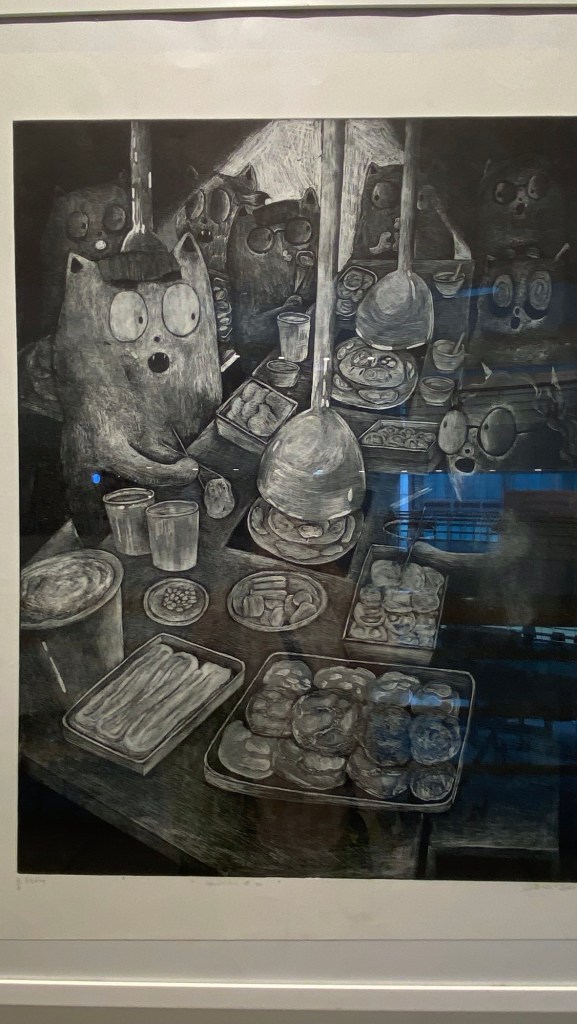
One of Thousands of Cat Illustrations in the Kotor Cat Museum
Cat Occupations & Vocations

There is a down-side to Kotor and that is its popularity. Cruise ships and bus tours arrive with without regard to the lone travellers and they flood the old town with clutches of cruisers all crushed behind the flag bearing guide that tours them about in whatever language best suits them.

Tour Boats at the Ready

Besides being famous for the Old Town, Kotor is a beach town and all that that presents in the way of water sports and activities. One of our highlights was a boat tour around the Bay of Kotor that took in man made caves that were used to hide Yugoslavian submarines. Huge and cavernous there are three or four of them along a shore and apparently they are all connected by underground tunnels.

Submarine Cave
Entrance to Sub Cave

We also circumnavigated an old prison, now a five star hotel in the middle of the bay. Apparently it is thousands of euros per night. Maybe next time.

Once a Jail Now 5 Stars

We also visited and went ashore on the famous islet of Our Lady of the Rocks. Legend has it that somewhere back in the 15th century two fisherman brothers put in on the island and found a statue of the Virgin Mary. Taking it home they awoke to find it gone but upon returning to the island they discovered it had returned to where they found it. And so a miracle was declared a church was built and they all lived happily ever after. Nearby there is another island with and old convent, St. George, but it is not open to the public.

Our Lady of the Rocks
St George Convent

On the way back the captain of our tour boat offered me a chance to take the helm and I couldn’t say no. It was a good tour and a beautiful day, one of the only ones we had in Kotor. It rained heartily a good deal of the time and there was a sick day given a cold likely resulting from fluctuating temperatures.

Cap’n Stella

As mentioned earlier we had time only to visit Perast an ancient Venetian Port that boasts 16 churches and 17 grand palazzi that date back to the 17th century. We arrived during daylight but stayed long enough to enjoy the sunset, have a lovely dinner and wander the streets to see the old buildings prettily lit for the evening.

Pretty Perast
Perast in the Dark

And so I left Montenegro without having accomplished much of what I’d hoped to, between the weather and a sick day, time and moving about were limited. But Montenegro is definitely on my “hope to return one day list.”

Wanderings in The Western Balkans

Albania a must go destination before it’s fully appreciated and discovered!

Part One – Albania

The Western Balkan are so named as they share the western slopes of the Balkan Mountain Range and include: Albania, Bosnia and Herzegovina, Croatia, North Macedonia, Montenegro, Serbia and Kosovo. Although my wanderings only took me to Albania, Montenegro, Croatia and a brief visit to Bosnia & Herzegovina, the other Western Balkans countries are said to share the same beautiful landscapes and rich cultural backgrounds. With the exception of Albania and the addition of Slovenia these were the countries that made up the former Yugoslavia.

The Albanian Riviera

Corfu Ferry Terminal to Albania

When planing to visit Albania from the UK, the cheapest flights were from Gatwick Airport to Corfu in Greece. From Corfu there is an inexpensive ferry to Albania. It is a short crossing of just over an hour to the city of Sarande, the centre of the Albanian “Riviera”.

Approaching Sarande Albania from Corfu

The Albanian “riviera” is rapidly becoming known for its beautiful beaches and has become an alternative to other more crowded and expensive European beach destinations. As a result it attracts beach party enthusiasts and the many beautiful beaches that extend from Vlore in the North to Ksamil in the South are said to be a beach lovers paradise, and with the exception of Ksamil which we soon found out, can be quite affordable.

Sarande the Gateway to the Albanian Riviera

Having read that the beaches got nicer south of Sarande we headed for Ksamil. The hotel and beach scene there left a lot to be desired. The Lonely Planet guide says that it twice as expensive as the other Albanian Riviera spots.

Ksamil is an interesting place and even though it was end of season the place was still relatively crowded but we managed a soak in the sun and a swim in the sea during our overnight stay.

My Only Photo of Ksami

Enjoying Agri-tourism in Albania

After a night in Ksamil, we took a local bus back to Sarande and caught an intercity bus to Durre, a busy coastal port town that deserved more time than we could give it. We were in Durre long enough to pick up a rental car.

There are definitely some things that I would recommend doing differently in Albania. One would be to have more that three or four days, the distances are longer than expected given that buses are the only mode of inter-city travel. The schedules you find on-line don’t always match up with reality and although the buses are inexpensive they are intermittent and sometimes slow going.

Once we realized the limitations of bus travel in Albania, we quickly regrouped and decided to focus on a growing sector of Albanian tourism, that of Agritourism, which given its remote aspect, justified the rental car.

There are many options to choose from but most of the farms offer accommodation, farm to table cuisines, local wines and beautiful scenery.

View from Hani I Leks Patio

We loved our two nights at the “Hani I Leks” Torshavn Lezhe farm. Gorgeous setting with amazing sunsets, cozy cabin and farm to table meals. Dinner the first night was a pre-set menu with appetizers that never quit coming: three cheeses, olives, bread, marinated vegetables, an entire family sized bowl of tossed green salad, grapes, yogurt dips etc, followed by the main course of lamb, slow roasted fall off the bone! No room for the desert after all of that. 

Off Season Meant Few Guests

Breakfasts at the farm were just as elaborate as the dinners. Starting with deep fried bannock-like fritters drizzled with honey, followed by the main course of tomatoes, cucumbers, eggs, bread, sweet buns, and a rolled crepe filled with Nutella. All this accompanied by yogurt and a sweet white porridge. Then just when you can’t eat another bite, comes breakfast desert, flans and grapes. It seems impossible to starve in Albania! 

Breakfast Fritter
More Breakfast

Having the car to explore the area was really a good idea. We’ve been finding that the average price for a taxi or a car/driver is close to 40 CAD and that’s for short distances, making the renting of a car a much cheaper alternative, and gave us much more freedom to get out into the countryside. 

Goats Roam Free
Beautiful Rural Countryside
Thanksgiving’s Coming

Being up in the mountains meant it was cooler in the evenings and the first night there was an impressive thunder storm which made our cozy cabin more welcoming. The AGRO-TURIZEM thing is really the way to go if you want to experience the countryside and overall the roads aren’t too bad. The second night was a sunset delight, moon rising and star watching with a bottle of Albanian red on a patio suspended over the valley. 

Sunsets from Hani I Leks

Shengjin a Seaside Town

We spent our exploration day cruising through small towns wending our way down to the beach town of Shengjin on the ocean side of Lethe. Our kind of place. If I went back to Albania and wanted beach time I would head here. Lovely clear water, more locals (fewer party people) and regular prices. Easy to rent a chaise and umbrella and have a good swim. 

Shengjin Beach

The Lezhe area has several AGRO-TURIZEM places and we visited one close by our own for a late lunch. It had gotten high ratings which as we discovered were well deserved. The Mrizi i Zanave farm is a busy place filled with areas of interests: flower gardens, children’s play areas, livestock and a market store full of farm made treats. There is no menu, as you are served only what is fresh and prepared in the kitchen. A welcome drink of rose water is followed by at least five or six plates of appetizers that crossed our table before the main of baby goat arrived. Albanian house wines are delicious and for this meal we tried a white. The appetizers were really varied between grilled, marinated and fresh vegetables, accompanied by three types of cheeses and a type of very tasty prosciutto.

The place was quite large and being a farm had vineyards, wheat crops and the animals including goats that nibbled away at a corn crib about twenty feet heigh. We passed several corn fields that had clearly “finished” for the year so we missed corn season but it seems that much of it is used for animal feed. 

Corn Crib for the Goats
Corn Crib
Garden at Mrizi i Zanave
Appetizer Plates
Beautiful Setting for the Restaurant

Mountains, valleys, the Adriatic Sea and beautiful skies are the hallmarks of Albania. Being out of the cities and on the winding country roads, passing small villages, crossing narrow bridges over meandering streams and rivers makes for a very pretty passing. Country settings give you a better sense of life for average Albanians who are striving to gain pace with the rest of Europe.

Albanian History

AI Generated Chart

Always when I wander I wonder about the original peoples of a region and the history that followed. Clearly Albania evolved through many time periods each one influencing language, architecture, art, politics, economics and cultural beliefs.

One of the most recent regimes occurred between 1945 to 1992. It was an oppressive, Stalinist regime led by Enver Hoxha, marked by “extreme isolationism, pervasive surveillance, and economic neglect.”Hoxha and his party controlled all aspects of life, executing thousands and imprisoning tens of thousands, while shifting alliances from the Soviet Union to China before completely isolating itself. The regime ultimately collapsed amid economic crisis in 1990, leading to the establishment of a democratic state that is now working to join the European Union. One of the lasting reminders of the regime is thousands of cement bunkers built across the country with the goal of having one for every man.

Albania is now gaining ground economically which some hope will end in entry to the European Union. The LEK not the Euro is the currency and be warned that it is not easily exchanged to other currencies once you leave the country.

One of Thousands of Bunkers

Four brief days in Albania was just a teaser. There are so many historic and interesting sites that we had to pass by as we made our way by bus to Montenegro. I’ve seen enough though to peak my interest and will hope to return one day with several more days and a full-time car to go deeper on this interesting country.

Frida Spotting of Course – I Rarely Don’t See Her Wherever I Go