Thekkady

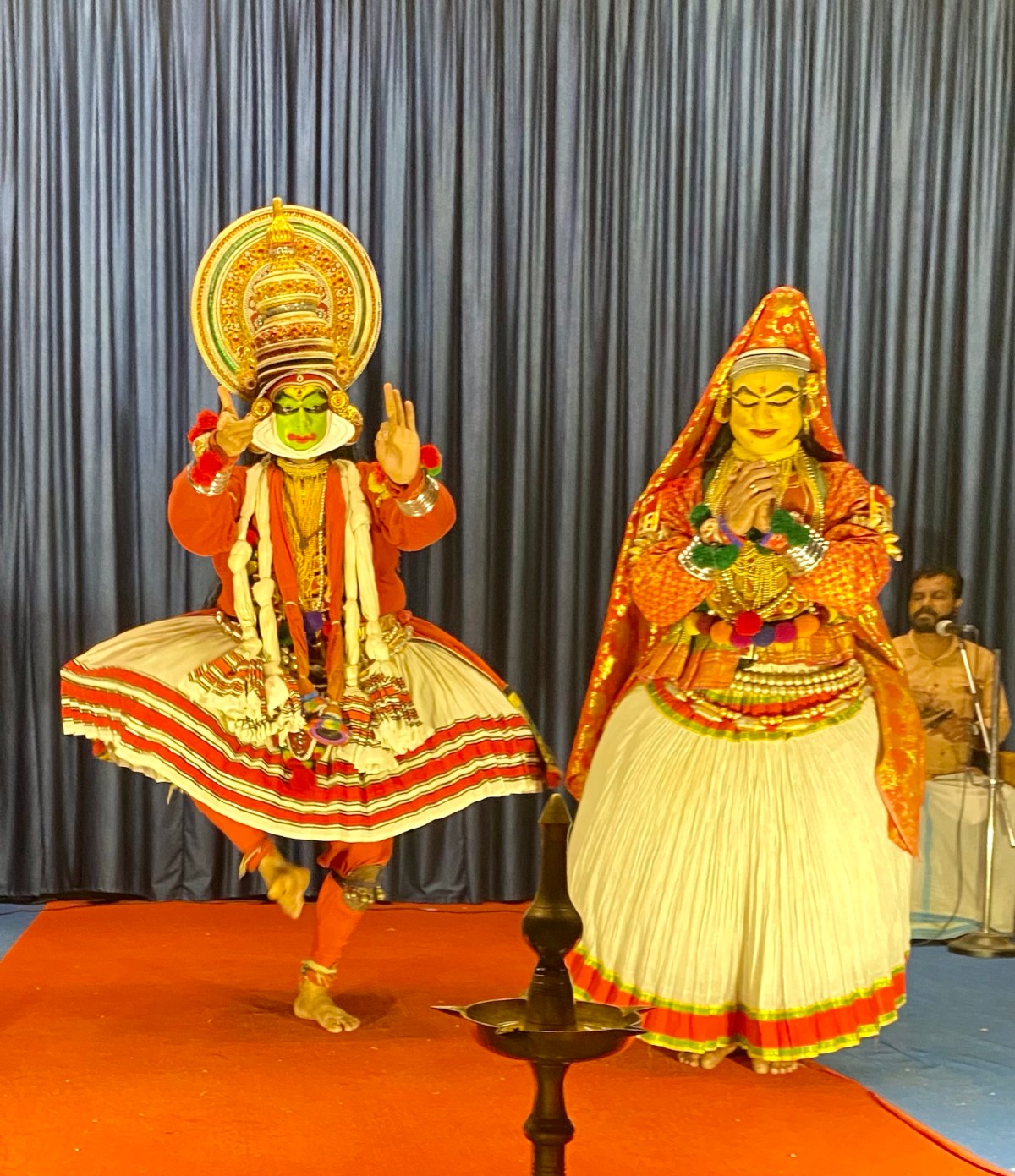
The performer that started the show, rolled, raised, lowered, shuffled, circled and otherwise manipulated only his eyes such that your eyes hurt just watching…

The drive from Munnar to Thekkady takes about three hours and continues to be as awe inspiring as the drive from Kochi to Munnar. The picture below gives a good idea of the Shola Forest predominant in the Ghats.

On the Road Again…to Thekkady
Botanical Garden but No More Flowers…I Promise

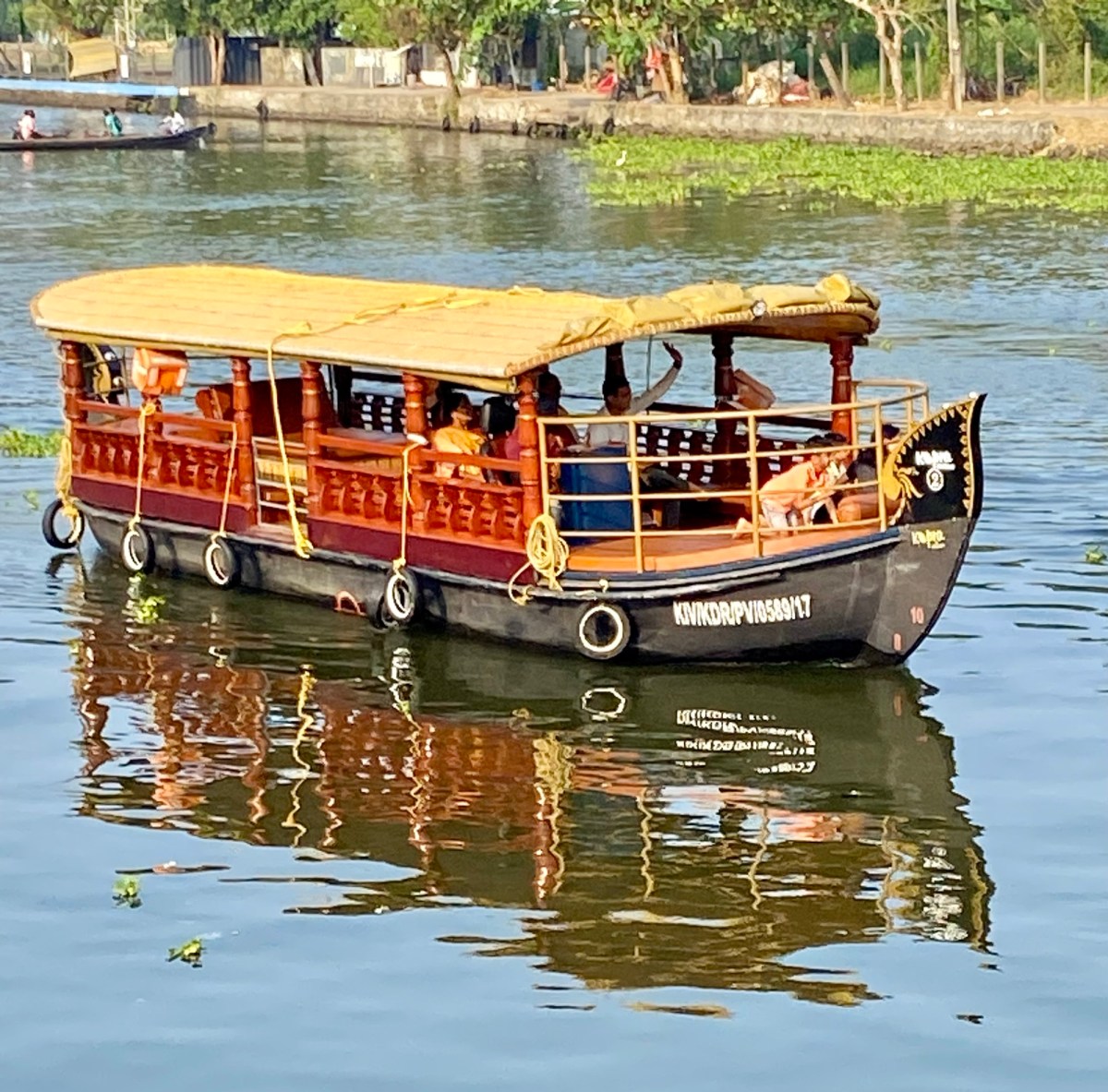
Thekkady is quite distinctive from Munnar, has more of a National Park Vibe than does Munnar which for its part is really just a jumble of a town that straddles the highway for the purpose of commerce. The area around Munnar is what makes it a destination whereas Thekkady itself has some actual charm. The big draw for me was Periyar National Park, famous for its flora and fauna. It is also a Tiger Reserve and a great way to see the Park is on a boat cruise. We got extremely lucky by all accounts as we cruised Periyar Lake seeing bison, elephants and deer, all relatively rare sights given that it was a midday sailing.

Inside the Park…No Cars Buses Only

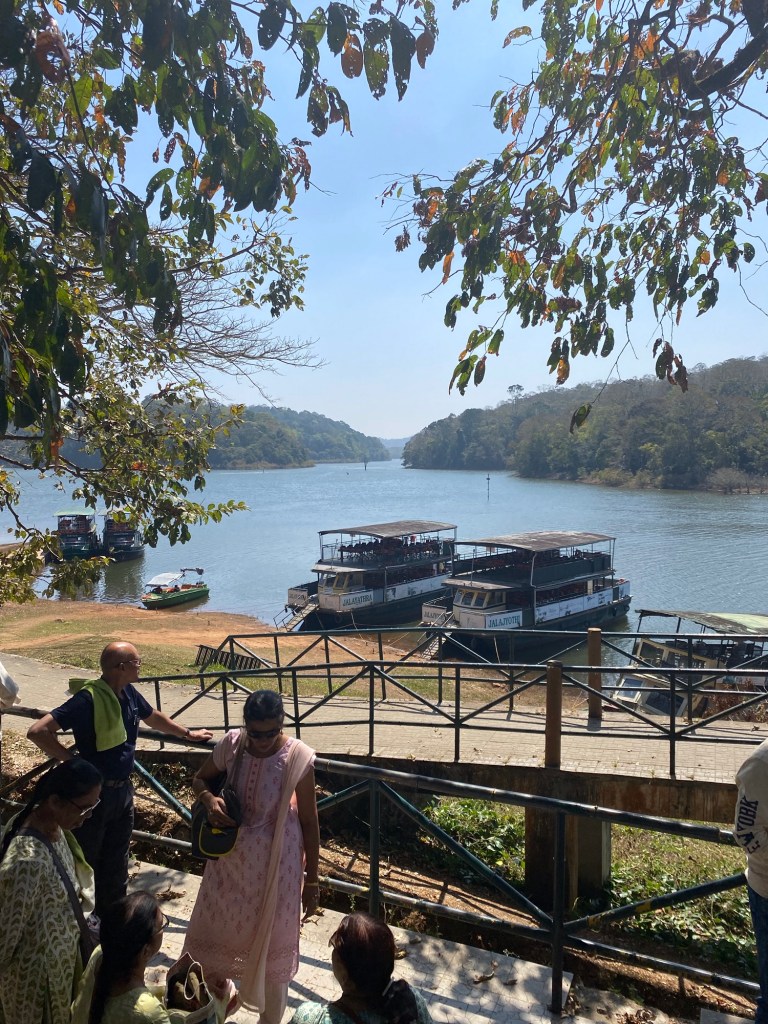
After paying a bus fare that got me into the park and up close to the lake I purchased a ticket for the boat cruise and while I waited I had some fun people watching and some monkey antics as well. On the cruise I came to regret my decision to be lazy and leave my Nikon with telephoto lens at home. My iPhone just doesn’t cut the distances and my animal shots would have been much more satisfying.

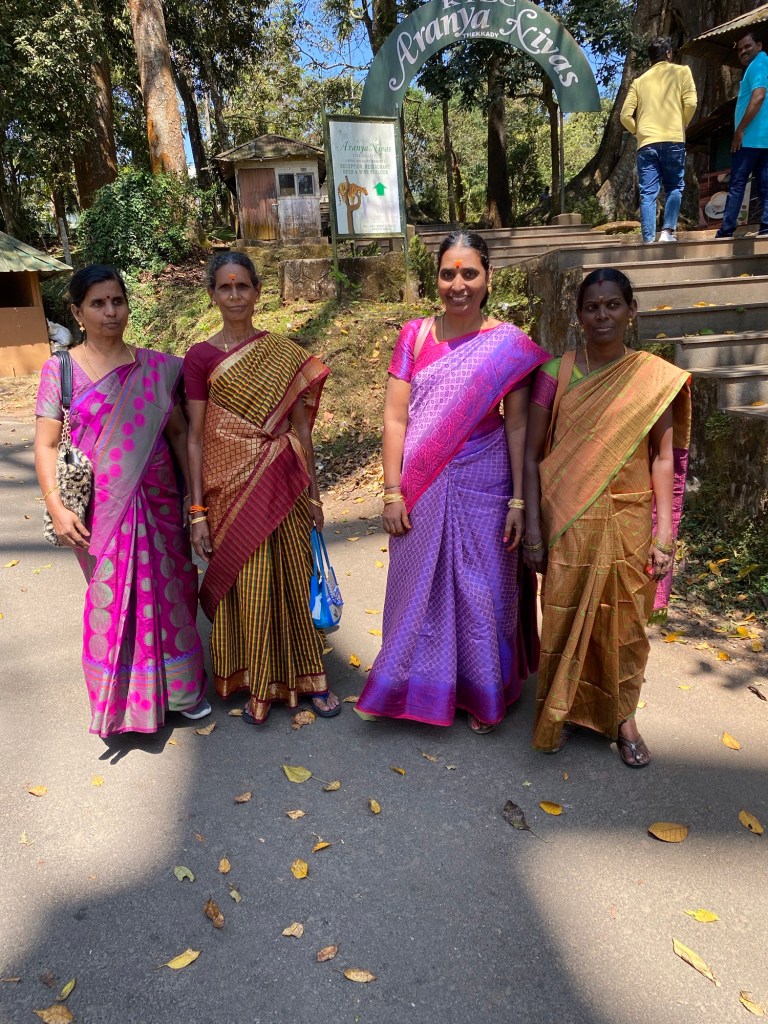
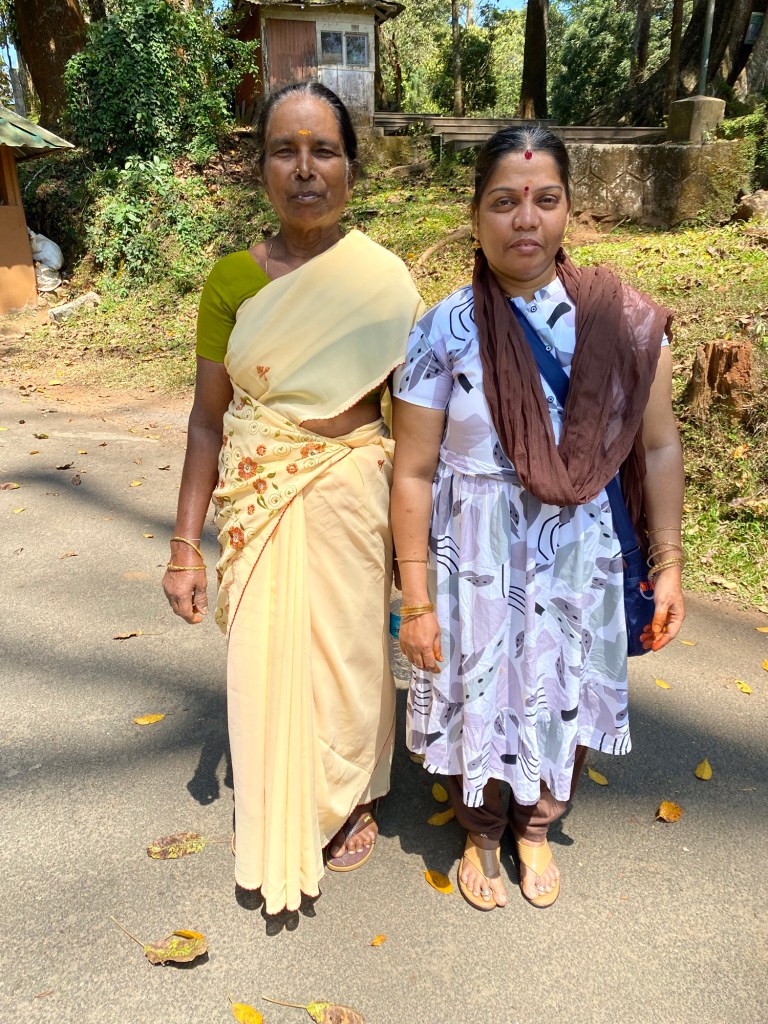
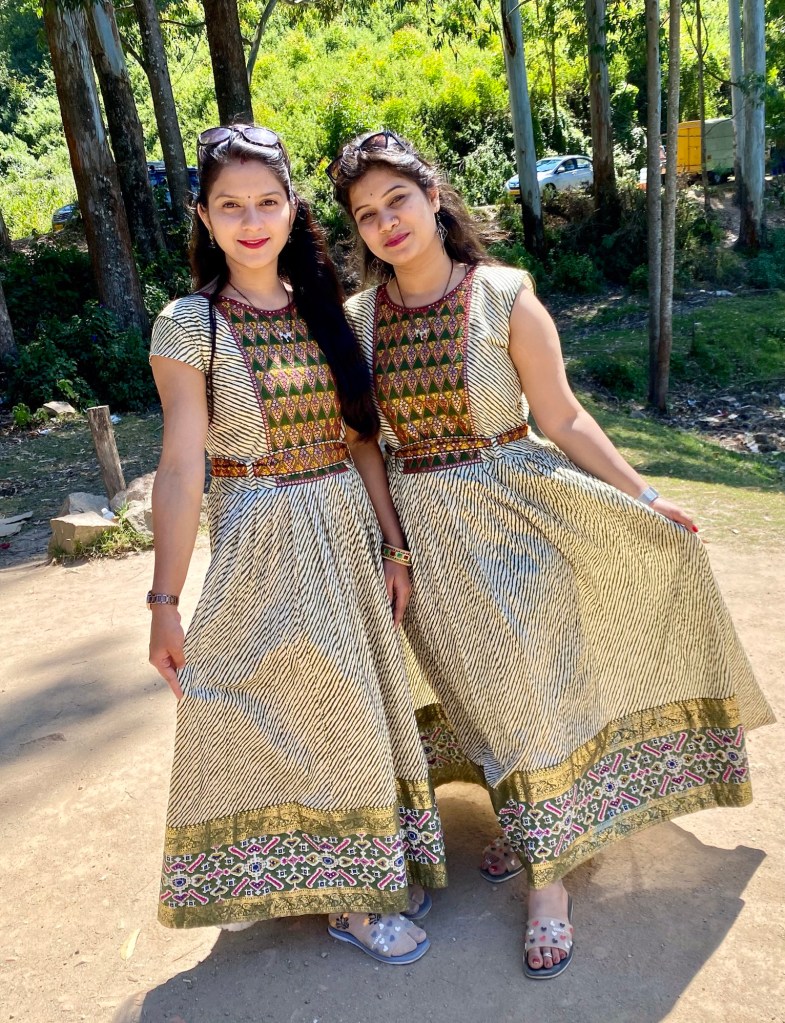
These ladies happily agreed to have their photo taken
Seeing this and not to be outdone these ladies volunteered to be photographed. I love it!
I did alert the owner and he shooed the little fellow off…
Waiting to Board
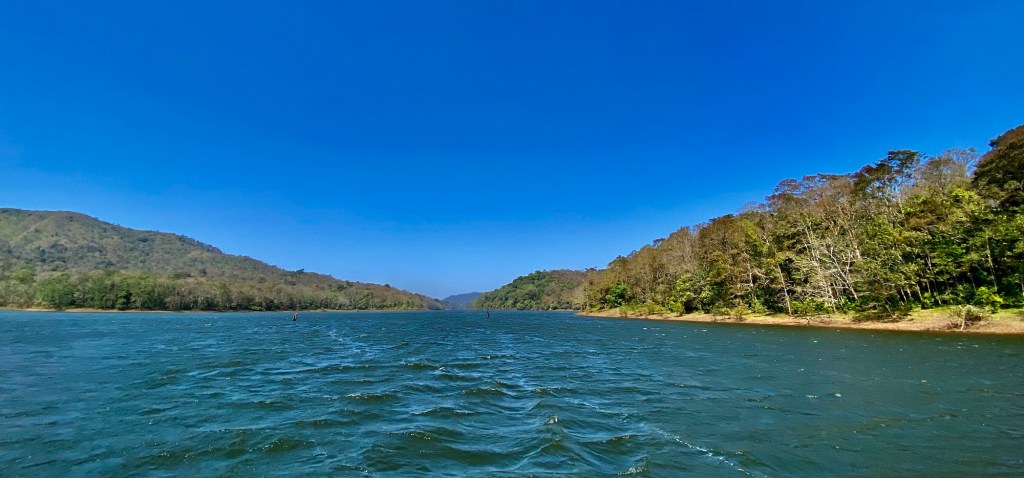
Periyar National Park Lake
Deer and Stork
Bison
Wow just wow! Everyone on the boat was excited.
Two tiny babies and two older ones..

Cruise over and bussed back to the entrance, I met up with Srihari who took me to my Hotel. Really nice rooms and pool and I had a few hours to relax before the evening activities of a Kalaripayat Martial Arts performance followed by a performance of Kutiyattam the traditional dance of Kerala.

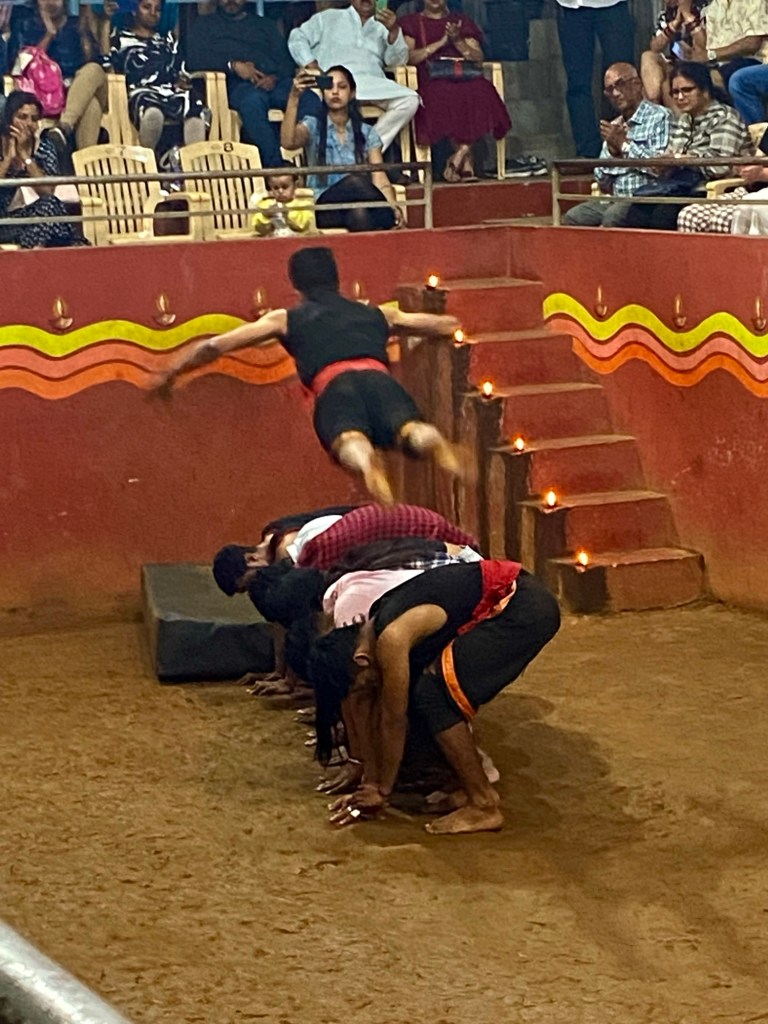
The arena where the martial arts demonstration happened was packed and by an enthusiastic audience of all ages. I sat beside an elderly woman who didn’t hold back when demonstrating her approval, clapping and yelling when something exciting happened. It was really fun. A combination of Kerlalan traditional martial arts and weapons, with extreme yoga poses and acrobatics it was quite entertaining and I was glad I went and equally glad that I avoided the audience participation part as seen below, although I did suggest that the avid older lady fan beside me volunteer which elicited giggles and chuckles.

Increasing number of backs to hurtle over and finish with an aerial tumble.
Weapons demo
T-shirt contest winners by far
The grand finale
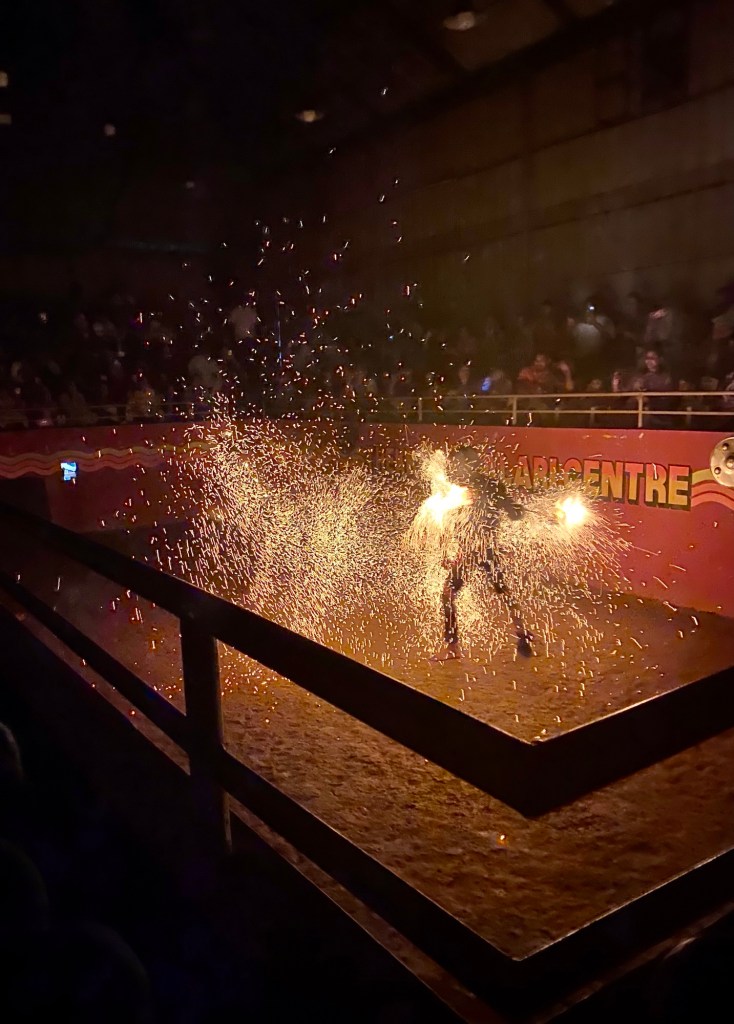
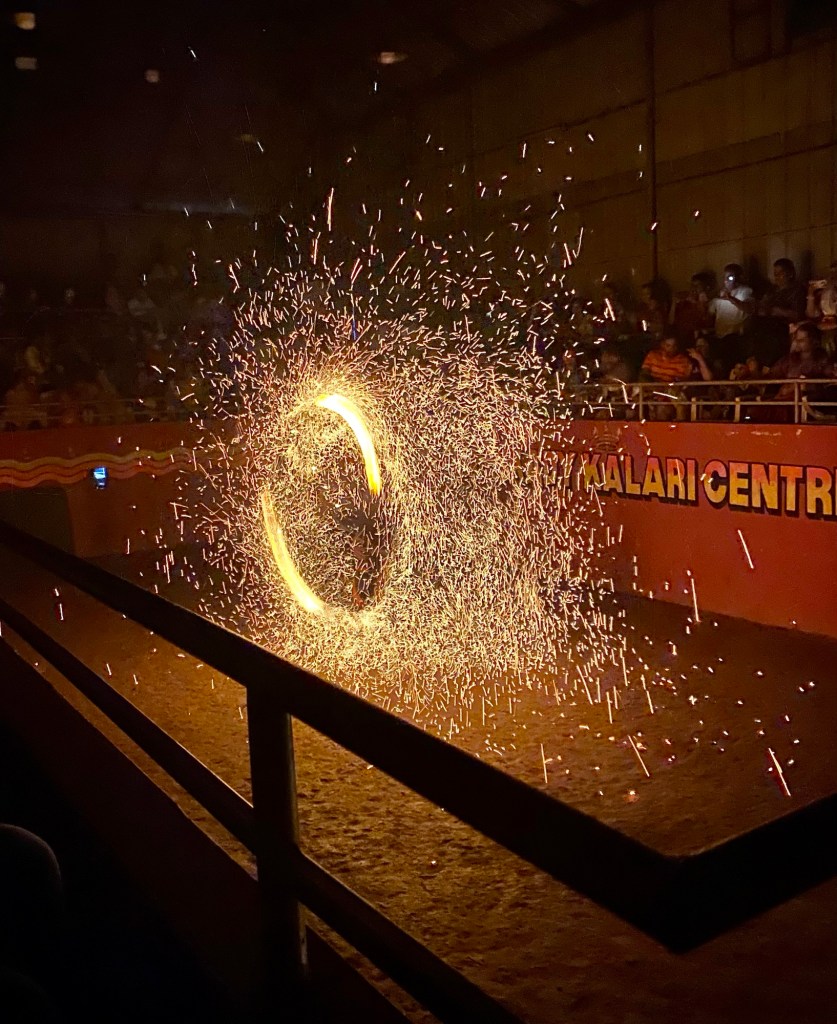
Tumbling, spinning holding live fire

Immediately following the Martial Arts event I walked to the nearby theatre to see Kutiyattam, India’s oldest living theatrical art form, possibly 2000 years old. Starting out in temples as a story telling form of worship it advanced in the 20th century to stage and theatres. The meaning of the word Kutiyattam is ‘acting and dancing together’. The dance is performed in a specific manner and a lot of rules must be followed. The dance can only be presented by men of Chakiar caste and the music is played by men of the Nambiear caste. All of this was explained to the audience before the performance began. A very deliberate slow moving performance which relies heavily on extreme eye movements.

The performer that started the show, rolled, raised, lowered, shuffled, circled and otherwise manipulated only his eyes such that your eyes hurt just watching. In this first part only the eyes moved everything else was stony still. After the eye tumbling and with controlled breathing, fine facial movements and hand gestures, the story unfolds. Eventually other actors join the stage and the story becomes more dynamic. The music consisted of a drum, conch shell, cymbals and flute. A bit surreal the performance definitely gave the flavour of otherworldly beings as it was intended to do.

Amazing Dress

Back to my hotel and a good nights rest in a rather swanky hotel whose name escapes me. Tomorrow we leave the mountains and rolling hills of the Western Ghats and return to the Malabar Coast to the city of Alapuzza, south of Kochi.

The Road to Munnar and the Kerala Ghats

The history of the Western Ghats is written in tea leaves..

I had such a good experience with my one day tour that I booked through Nicy Charly at Sight City Tours & Travels, that I decided to go all in with them and book my full itinerary with them. I don’t usually do this, because I am avoiding commercialising my Blog, but this company was outstanding both in their prices and their organisational skills and of course I was lucky and got their star driver again. If you visit Kerala I would highly recommend Nicey. She can be found on Facebook

So Srihari and I set out for Munnar, not too early, and arrived four hours later, but not without several stops.

My Fearless Driver Srihari KS after Lord Vishnu, Lion of Prosperity, Divine Krishna
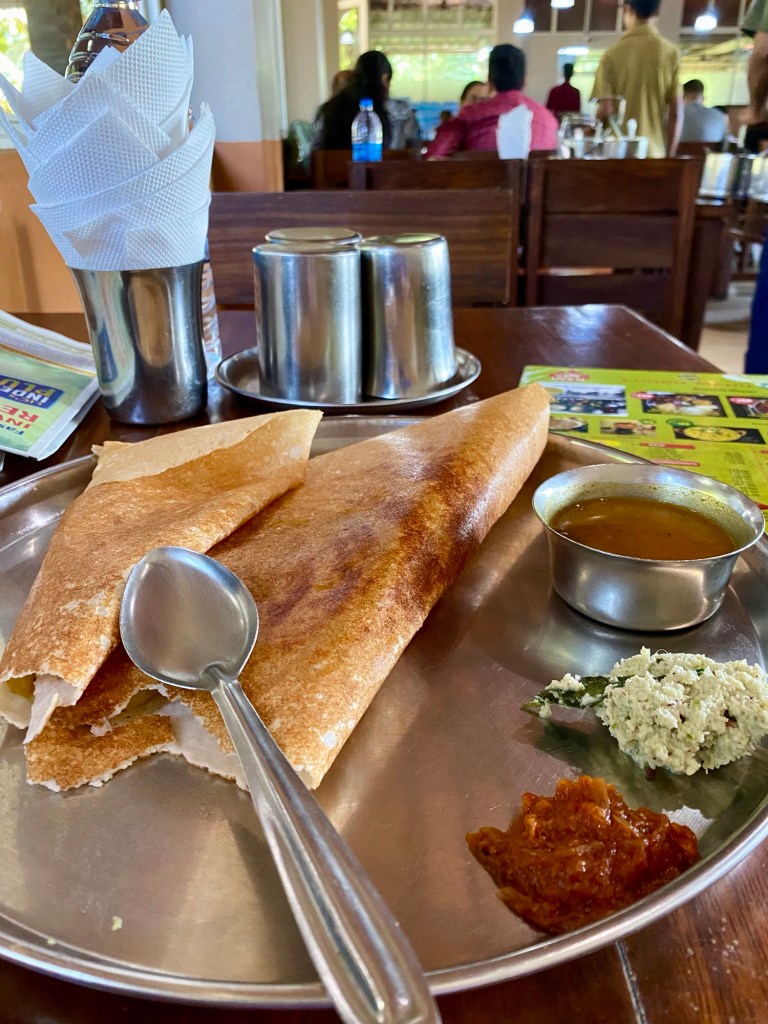
Dhosa Lunch Stop…so good
Being a lover of colour…India fits the bill

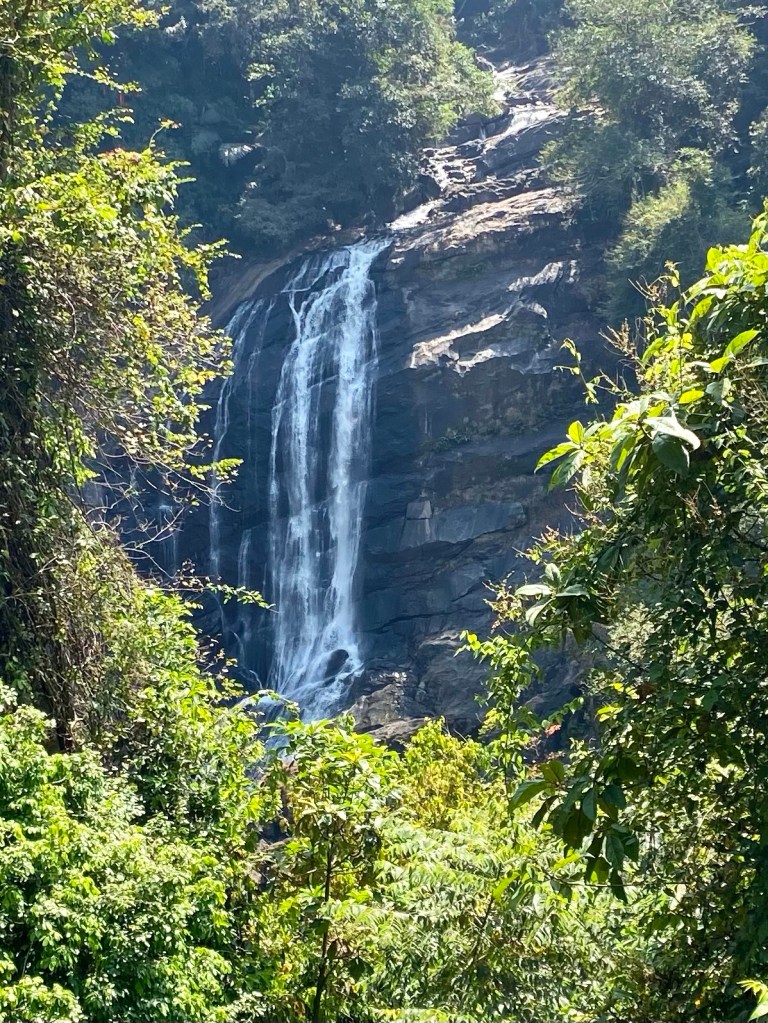
Along the way to Munnar there are several suggested stops in the guide books including these two waterfalls, Cheeyapara and Valera one of which is waiting for the Monsoon season to return to glory and the other one that is just hanging in there.

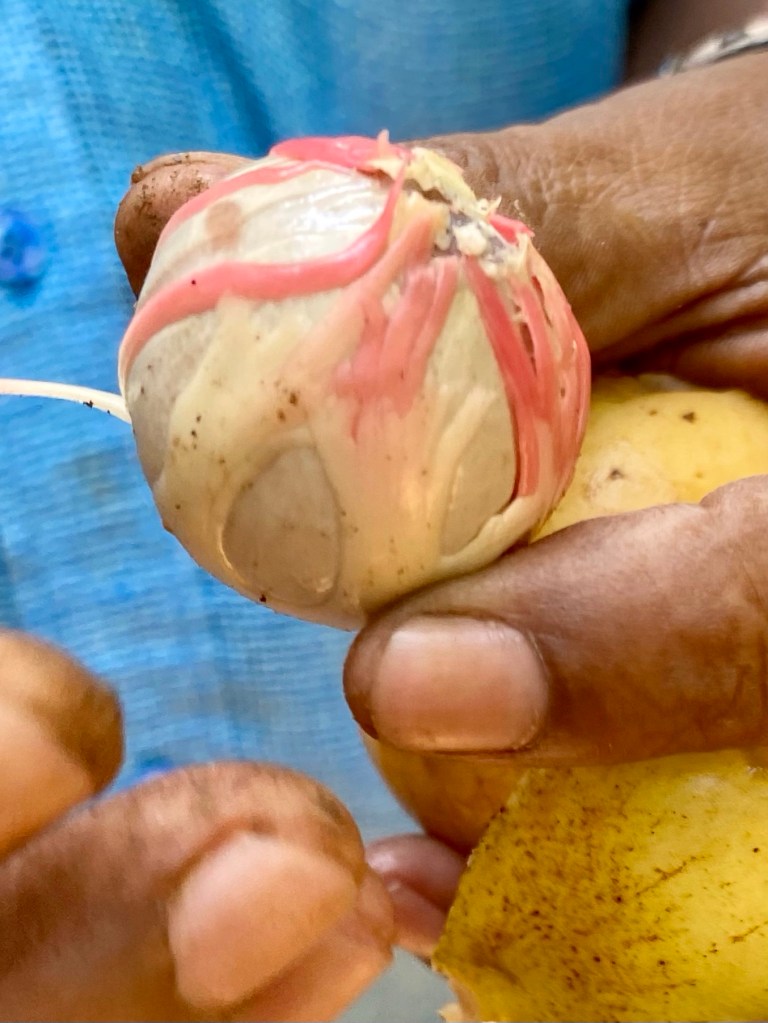
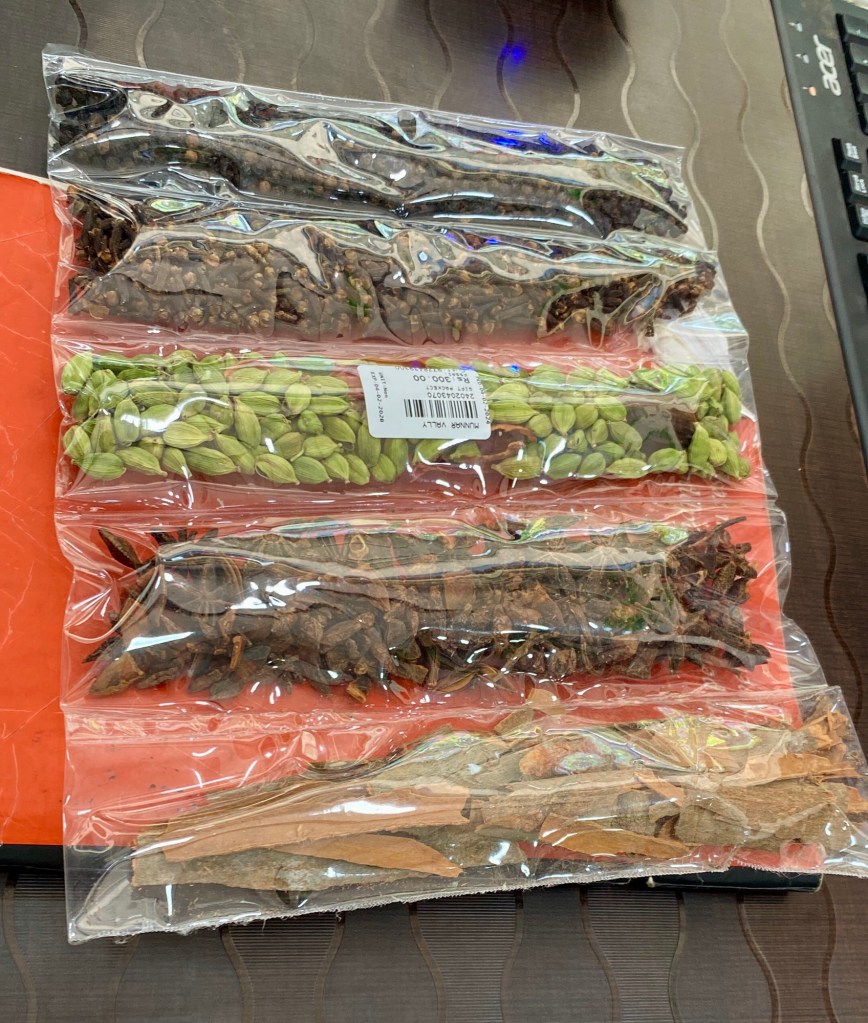
I expressed an interest in Ayurvedics and Srihari suggested we stop at one of many Ayurvedic Farms along the way. I paid for a tour with a practitioner and he ushered me about the garden naming all the plants and their medicinal purposes. Very interesting but a great deal of information to absorb in a short time. Of course there was a retail outlet attached to the farm and I purchased some herbs and spices used for various health related purposes.

Ayurvedic Plant Medicine
Ayurvedic Medicine for Skin Disorders – Type of Burrweed

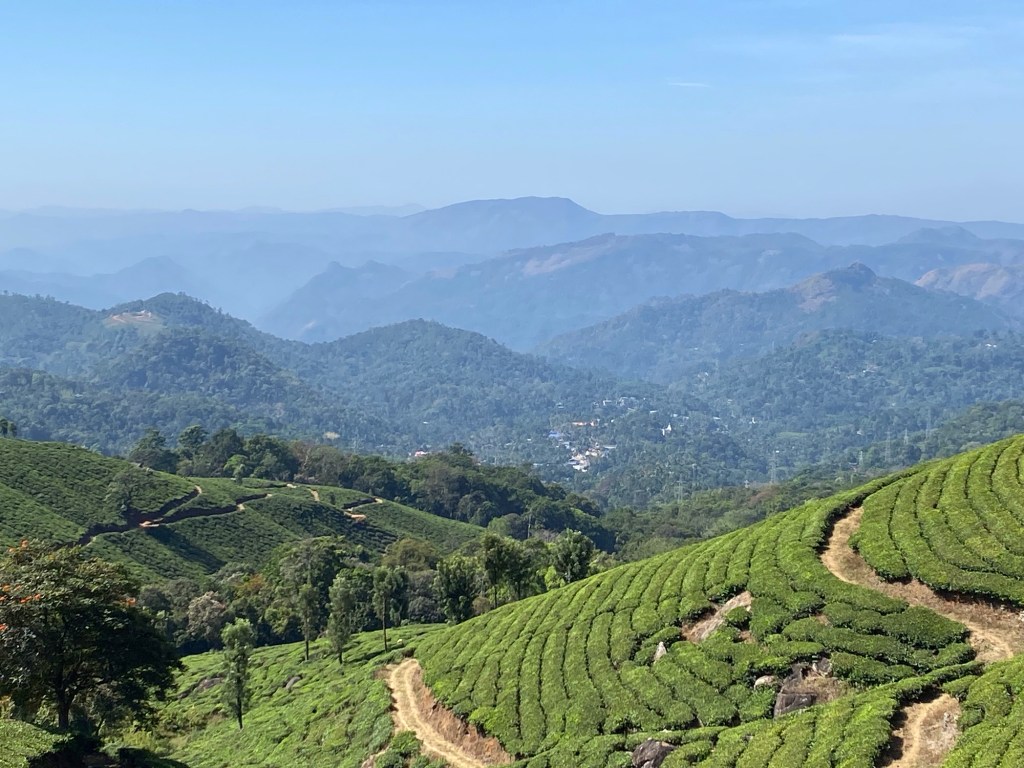
The higher we got into the Ghats the more beautiful the scenery became with the contours of the slopes planted with tea and of course many road side attractions and Srihari humoured me with many stops for exclaiming and photographing the alluring landscapes.

Terraced Tea Plantations following the steps of the Western Ghats
This is Why I Came for the Beauty and the Colour
I’m sorry but you don’t know green until you’ve
been to the hills of Kerala

Finally at 1880 meters, we arrived at top station and of course the views were never ending, much like India itself,

Top Station Views
Still More Greens
Kerala is known in India as “God’s own country” for a reason
Another Colourful Moment

At one point I saw a sign for a botanical garden and I’m sorry but I had to stop and of course photograph madly and chat up the other garden fans. One family I met were from my home town Calgary and lived not far from the neighbourhood that I grew up in. The cheeky grandson told me his grandfather was single, hint, hint, until he was caught out as the man’s wife rounded the corner.

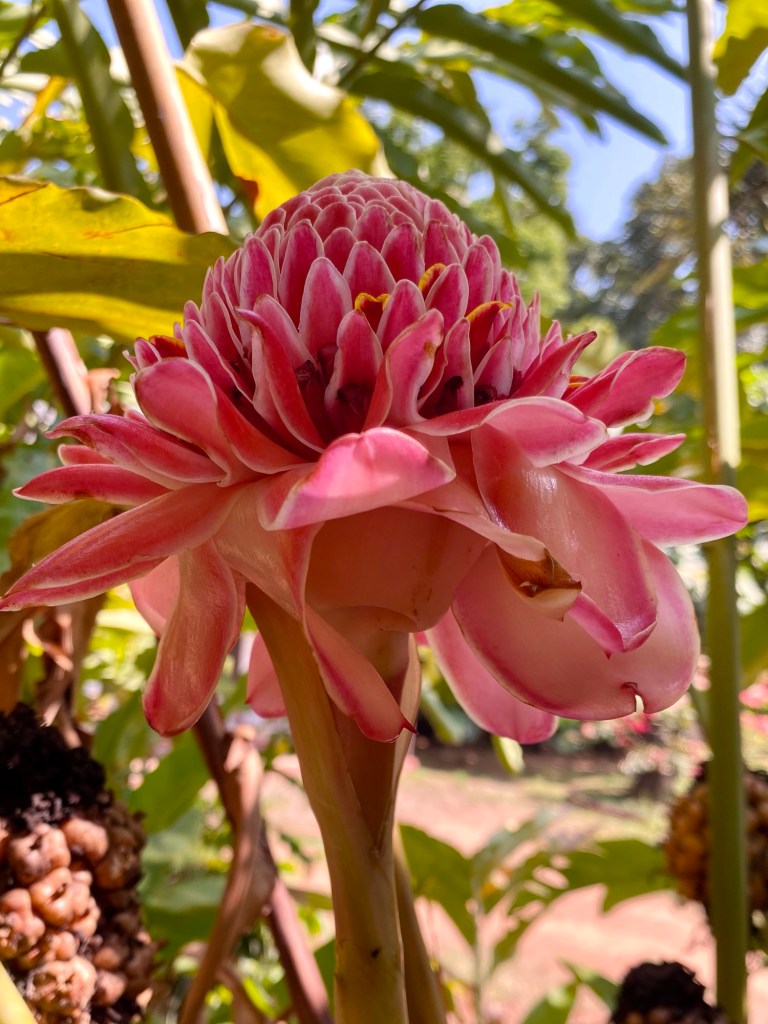
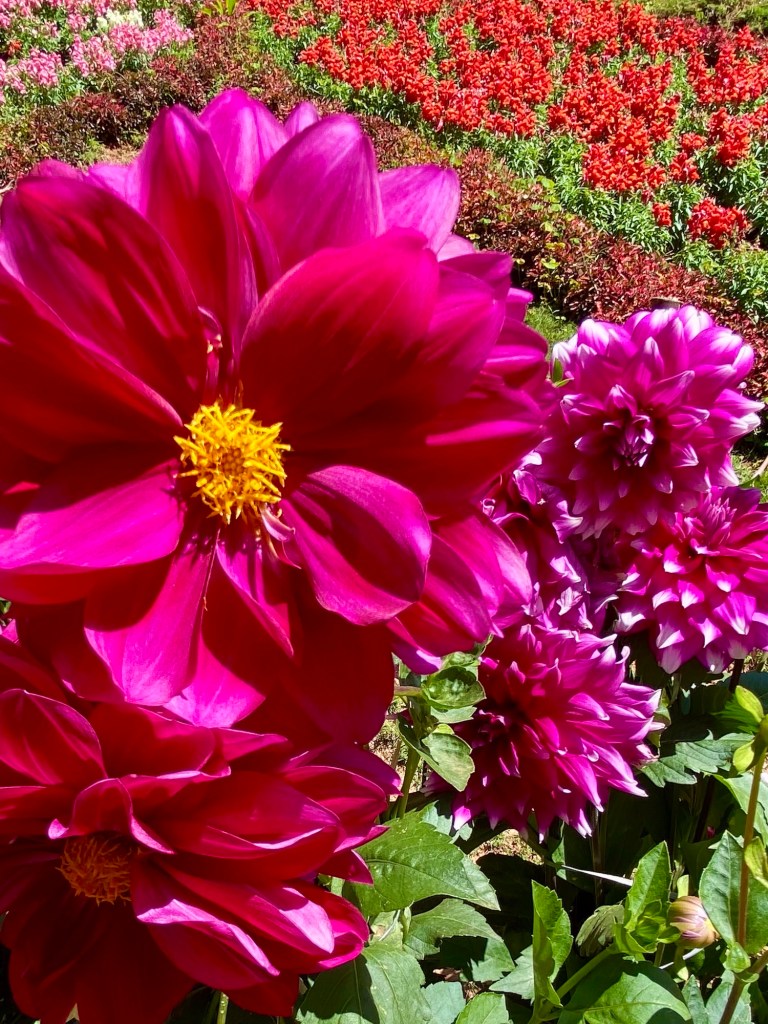
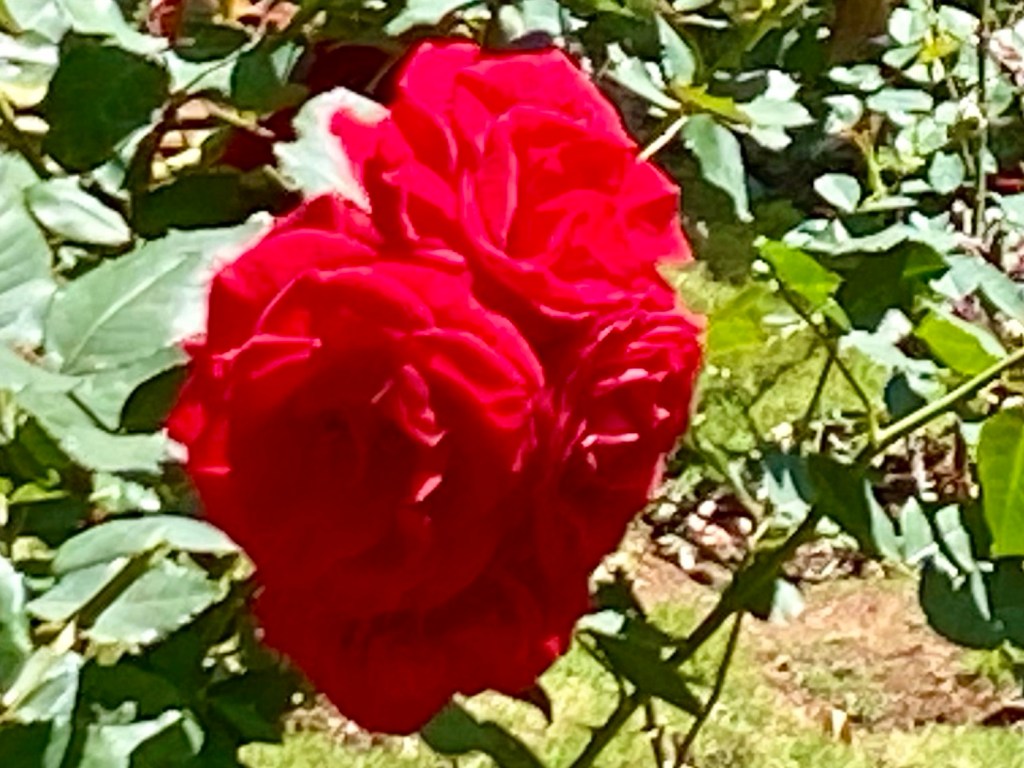
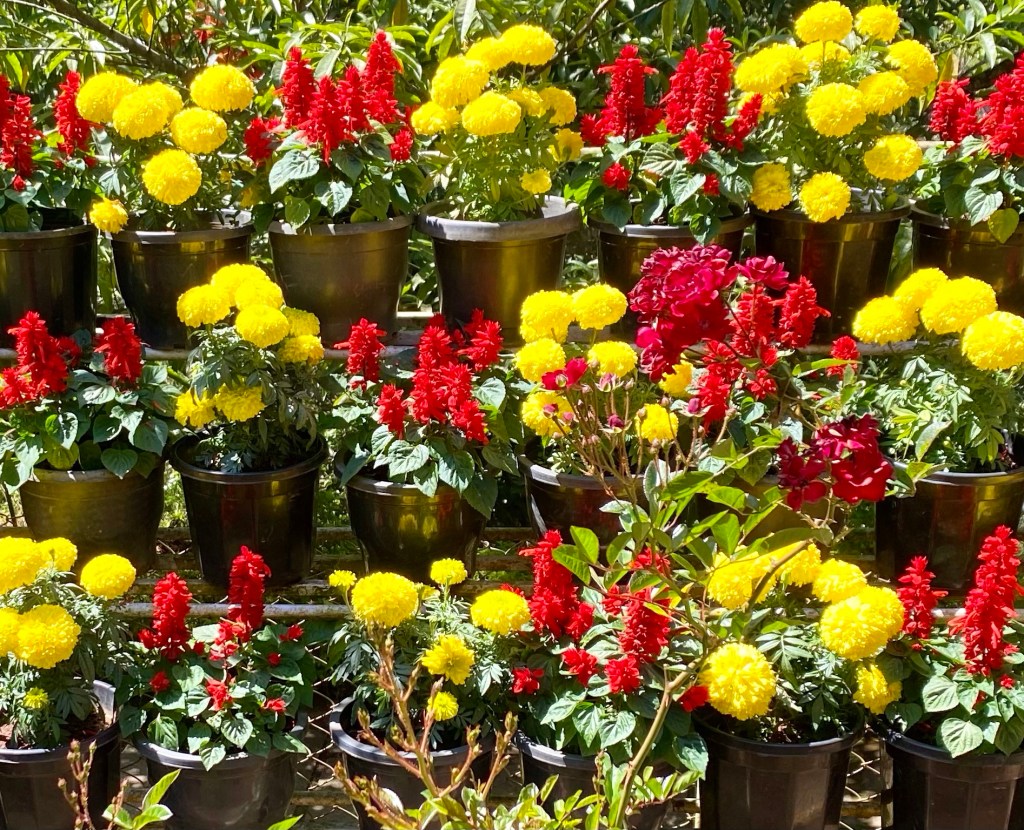
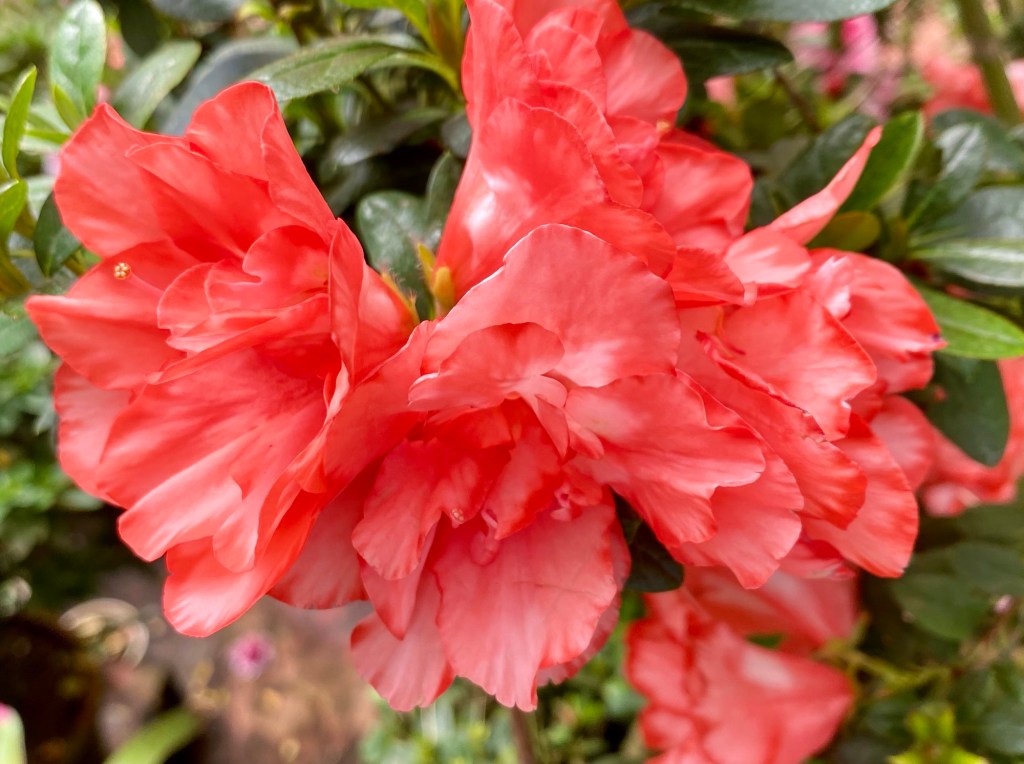
A garden feels like home to me, so many flowers are the same the world over and the sense of familiarity when seeing them outside of your own back yard, reminds me of the commonalities in this world. (I warned you I took a few pictures.)

Green goes with so many other colours…especially if you stop at a Botanical Garden

The trip to Munnar was so wonderful just when you thought it couldn’t get any prettier it would. The hotel that Nicy had booked for me had a definite alpine feeling and I instantly felt at home and was told that I had been upgraded to a chalet room all of my own. Lovely balcony with views over the garden and the valley, pool and great food, mostly vegetarian and delicious.

My Little Green Chalet
View from the Arbour Resort

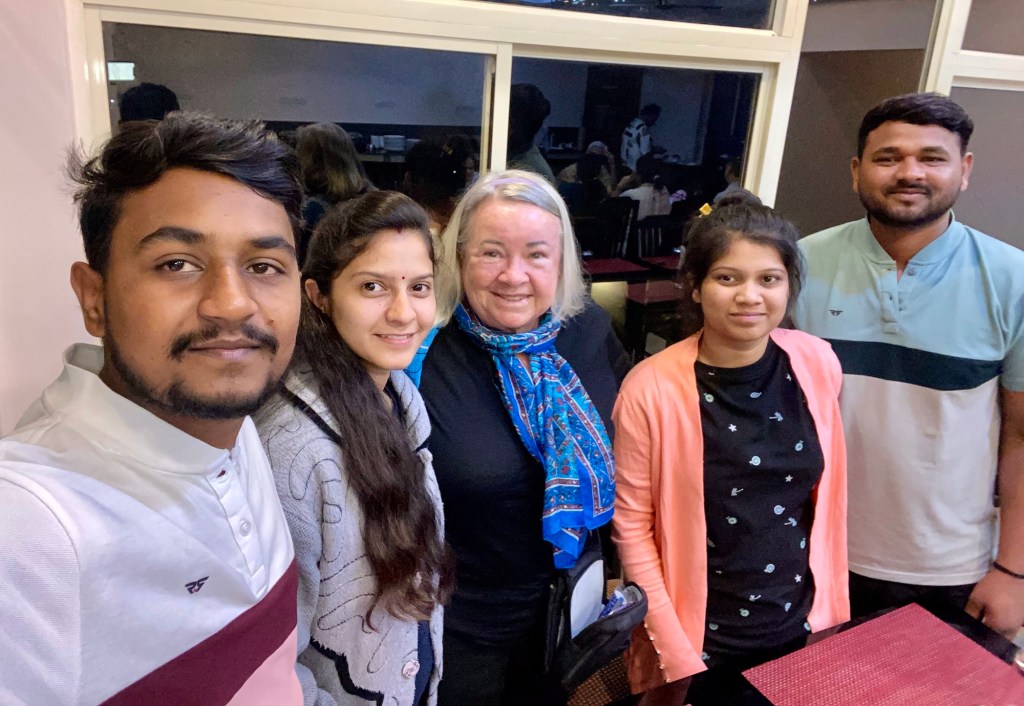
In the hotel dining room people were very friendly and I met a young foursome from Pune, Chtrapati Shivaji Nagar near Mumbai. Each couple had been married one year and were super into taking their picture with me and even came one morning to knock on my door so we could take one from my balcony. Following the selfie stage they moved on to the FaceTime stage with their families back home and I was introduced to parents and siblings and grandmothers who were all very happy to meet me. Young and sweet and definitely enjoying their vacation.

Laxmi & Anand Kade and Arti & Shubham Shinde
Lovely Ladies

Likewise in the cabin next door the young couple asked to come over to meet me and I said of course. Selfies and calls home to meet the families ensued and I began to feel like somewhat of a celebrity.

Guaya & Anika Rohit
Anika’s Wedding Photo Now Screensaver! Stunning or what!

Three nights in Munnar allowed lots of time for road tripping and visiting the Matupetti Dam and Lake, very scenic and surrounded by Shola Forest. According to Mr. Goggle the Shola Forest are rolling grasslands adorned with evergreen vegetations and stunted trees and spectacularly are now part of an ecosystem that is older than humanThe only disappointment was not being able to visit Eruvikulam National Park said to be home to 26 species of mammals. Leopards and tigers being the main predators with seasonal visits from elephants. But it had been closed as it was breeding time for the deer in the park.

Matupetti Dam
Four Doctors and a Chef – More selfie requests

After spending several days exploring the spectacular growth patterns of the tea plant I wondered how I could have gone on so long drinking the stuff and yet knowing so slittle about it. Well that ignorance is gone following my tour of a tea museum and a processing plant.

The history of the Western Ghats is written in tea leaves. The cool temperature, the soil conditions and the local labour force were the exact right conditions for the British Empire to reap the benefits. When India gained its independence local coops took ownership of many of the factories but today many are owned by multinational corporations based in India such as Tata one of the biggest Indian conglomerates.

The tea museum run by the Kanan Devan Hills Plantations Company showcases the history of tea cultivation in Munnar since 1876 when tea was first planted in here. On display are several rare artefacts and curios as well as evocative photographs from an era of settlement and isolation and a rail engine wheel of the Kundaly Valley Light Railway, that transported men and material between Munnar and Top Station during the early part of the last century, before then everything was carried by humans or livestock.

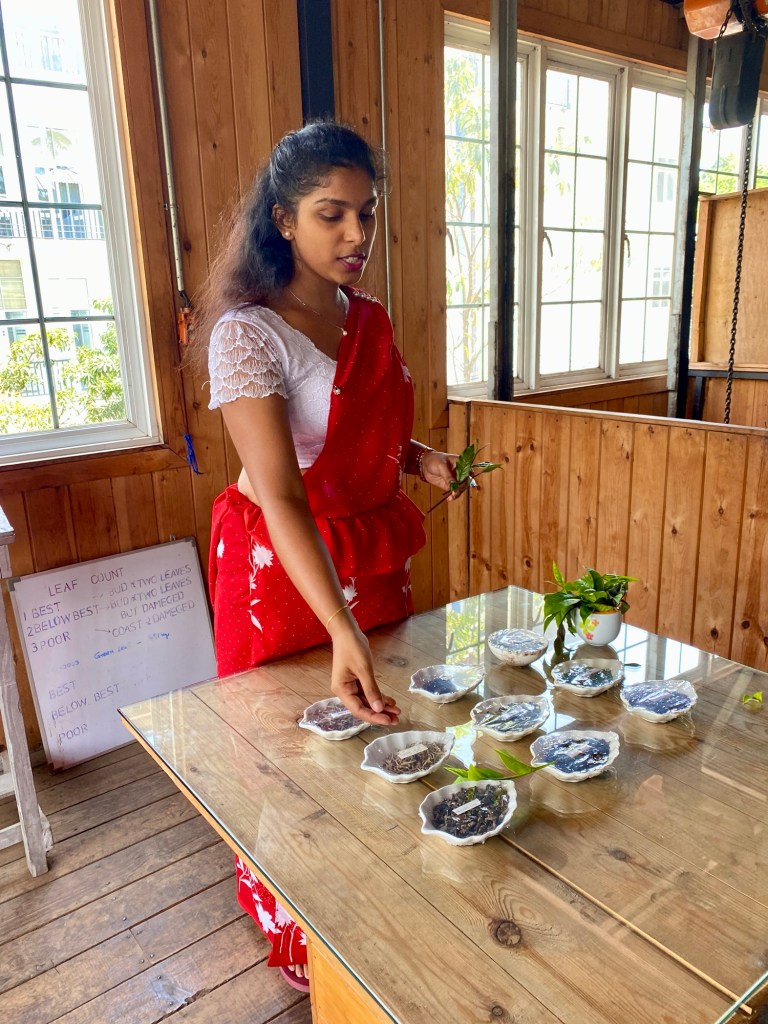
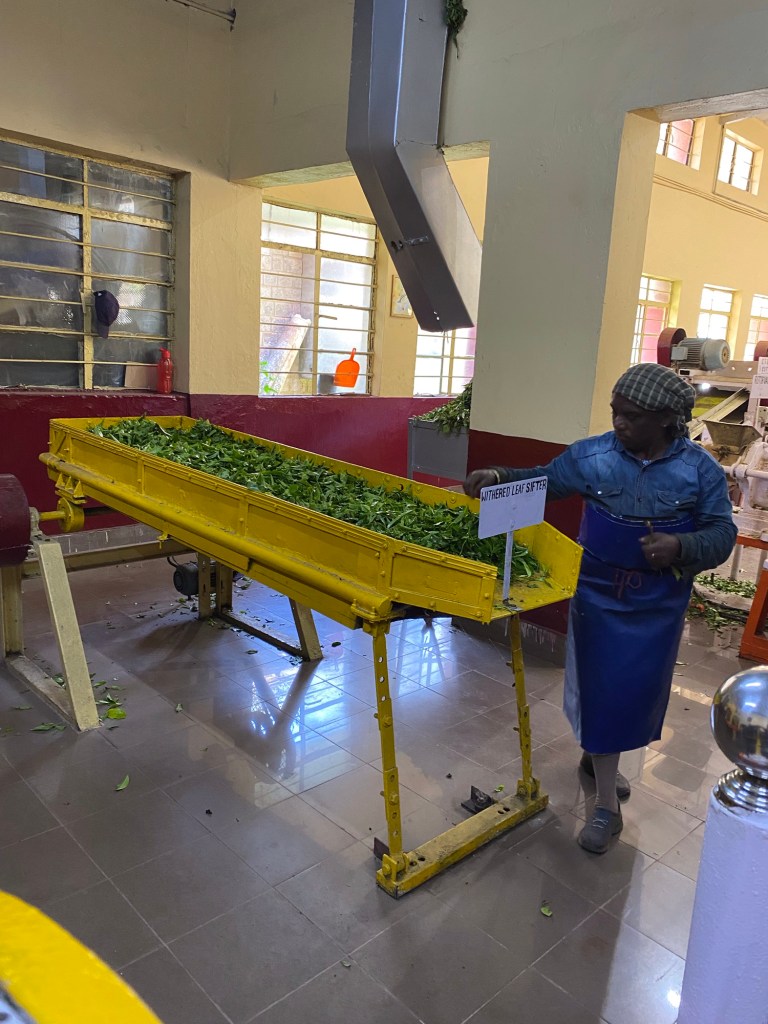
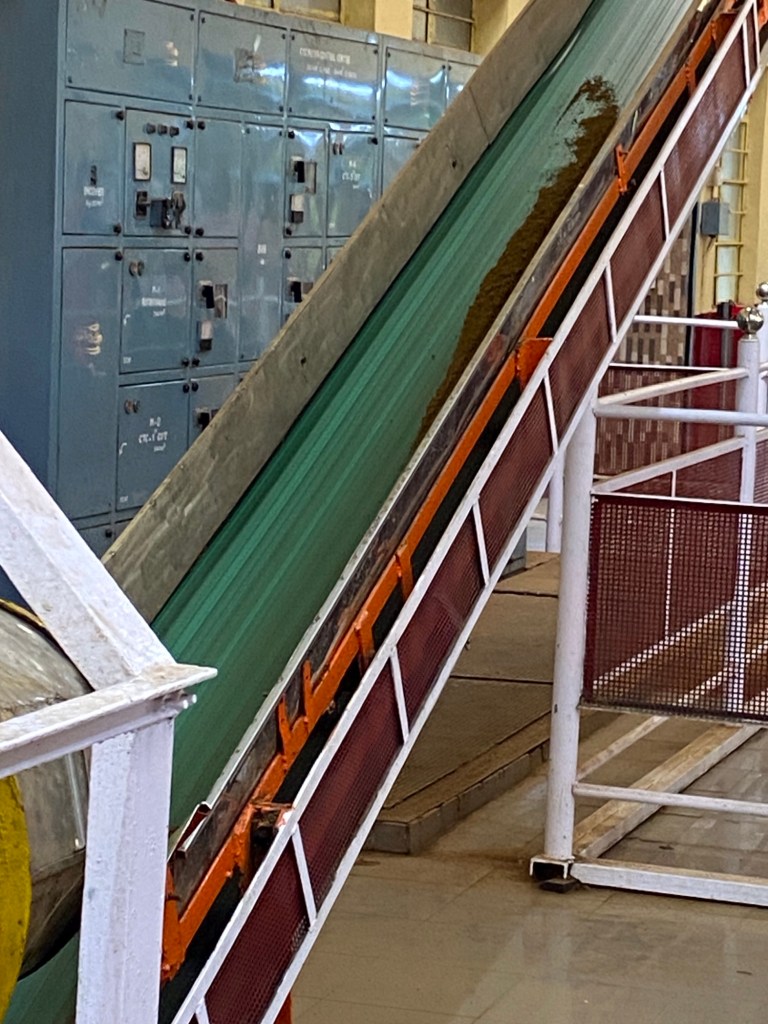
Then at the Nullatanni tea processing plant we were walked through the process of harvesting and processing the leaves until the final stage where they are sorted into three levels of quality. Interesting tour and of course I bought some White Tea which I look forward to trying when I get home.

The Leaves are Withered
And Rolled
Dried and Rolling Along
Fermenting Tea Leaves…Who Knew?
Crushing, Tearing and Curling Machine
All Done and Separated by Grade

From what I could see education is highly regarded in Kerala, apparently having one of the highest rates of literacy in the country. Large schools, often resembling hotels are government run, church run and private and are frequent sights even out in the countryside, resulting in a 93.9% literacy rate.

More Colours in a Girls High School

Three nights at Arbour Resort Srihari and I say goodbye to Munnar and venture on our way to Thekaddy a town about two hours by car.

Kochi the city, Kerala the state and India…well you know, the country

In case you’re wondering exactly where I am at the moment…

Find the State of Kerala…look down, way down
Then find the city of Kochi on the Malabar Coast of the Arabian Sea

This being my last day of two whole days in Kochi I have been busy squeezing in as much as possible. I hired a diver with an AC car (it being only 35 C) to take me to the must see sights in Kochi. It was well worth the 2300 Indian Rupees (40 CAD) to be taken through the crazy busy streets from my hotel to the Fort Kochi area where much of the history of the Malabar coast was unfurled.

Amazingly good driver in some very robust traffic.

So many layers of influence converged on this slice of the planet mainly in the name of spice and as all food lovers will tell you that is not a minor consideration. First came the Portuguese, then the Dutch, then the British and finally, after many squabbles, they all went away. Fortunately, they did not abscond with all the spices. They did however leave their mark and Fort Kochi is the place to see it.

Mahatma Ghandi Beach

As a nod to its precolonial past, Kochi was a princely state ruled by the Maharaja. A surprise to me, “Kochi” includes a group of islands and towns, including Ernakulam, Mantancherry, Fort Cochin, Willingdon Island, Vypin Island, and Gundu Island. The urban mainland areas included the neighbourhoods of Trikkakara, Eloor, Kalamassery, and Trippunithura. That’s a mouthful right? The islands can be reached from the mainland where I stayed by both frequent ferries or several bridges, or better yet if you don’t mind very close quarters there are several hotels on Fort Kochi.

Food Stalls Along the Promenade
Banyan Tree Roots Bottle Depot
Signage or Graffiti?

Kochi was a fishing village until, in the 14th century, water erosion caused it to be separated from the mainland but created a safe inside harbour. The Portuguese came and settled in the late 15th C and founded the first European settlement on Indian soil at Kochi in 1500. Fort Kochi remained a Portuguese possession until it was conquered by the Dutch in 1663.

Todays Catch
Cantilever Nets Based on Ancient Chinese Method

Under Dutch rule (1663–1795) Kochi had its greatest prosperity, shipping pepper, cardamom and other spices and drugs as well as coir (coconut shell fibre – think doormats), coconut, and copra (dried coconut seeds used for oil and animal feed).

Locked up Tight but some interesting looking very old graves.

According to the museum in the old Mattancherry Palace, the city’s ethnic and religious groups, including its Hindu majority and the Muslim, Syrian Christian, and Jewish minorities, shared in the city’s prosperity.

In the Beginning
Inside the Palace
A Remnant of the Dutch

Interestingly I sat beside a man on the plane from London whose heritage was Jewish. His people left Europe in one of the pogroms to settle in Kochi as spice farmers and merchants but have assimilated and become Catholic over the generations. I also read that the Jewish community in Kochi was the oldest in India, claiming to date from the 4th century. They trickled in over the centuries and lived peacefully until the Portuguese imported the ideas of the Inquisition.

Five Hundred Year Old Synagogue

At Fort Cochin is St. Francis Church, built by the Portuguese in 1510 and reputedly the first European church on Indian soil. It was for a time the burial place of Vasco da Gama before his remains were taken to Portugal. Other churches as well as Hindu temples, mosques, and the historic synagogue at Mattancherry all stand in the area.

St Francis Church
St. Francis Church History – I don’t expect you to read it but if you do well good on you!

British rule over Kochi lasted from 1795 until 1947, when India became independent. (Watch the movie Gandhi)

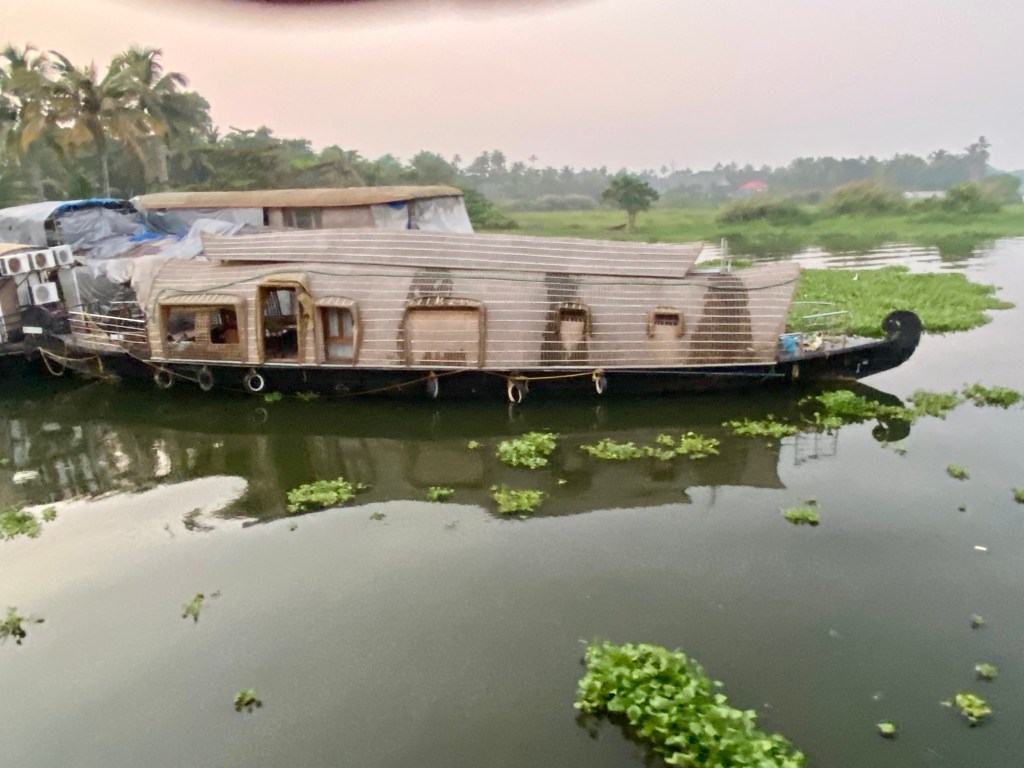
A system of inland waterways running parallel to the coast provides Kochi with cheap transportation, and picturesque lagoons and backwaters that attract tourists.

Backwaters as they are known surround the islands
in front of the mainland.

The mainland part of Kochi is one endless jumble of noisy streets, buildings, commerce, life being lived, people constantly on the move using every conveyance possible to get to their jobs, homes, schools, whatever the case may be. In one single block on the main streets you pass a multitude of businesses, homes and schools. Scooters dart between Tuk Tuks darting between cars darting between trucks, daring between buses. You get the drift. (Nothing to my Mexican friends)

My Uber Tuk Tuk Ride

Street scenes always of interest, can present some forms of urban irony wherever you go and I took the opportunity to snap this one. If you know that the woman on the right in the photo is a beggar with a severe limp, you will get my drift.

Street Scenes
The good the bad and the ugly all in one moment
Then the American’s Came
The Beautifully Spiced Food of Kerala

Just when I was beginning to recover from jet lag and get the hang of things it was time to leave Kochi but not before I visited the Lulu Mall a temple of consumerism at its best. If this mall was in Vancouver I would not be able to afford to shop there. It has every shop knows to man the world over and is very expensive by Indian standards. My driver/now friend Sreehari told me that the average person does not shop there. That includes me! It is huge and shiny and even has a Starbucks! Of course.

My Starbucks Moment

And so Kochi until I pass through on my way to Sri Lanka in a few weeks time, thank you for a lovely stay and special shout out to the Ginger Kochi Hotel! I highly recommend it should you find yourself able to visit Kerala.

Budapest for the Christmas Markets

As I was going to be in England and a friend mentioned Budapest for the Christmas Markets, I could hardly say no. I had never been to Hungary and it had long been on my list of places to visit. Just over a two hour flight from Heathrow we arrived late in the day and went by taxi to our air BnB in District V, the central area of Budapest.

As an introduction to the city we used the Hop on Hop off Bus which offered a perfect opportunity to have an overall view of the city, giving us ideas of what we wanted to make a point of getting back to for a longer look.

The Danube in Winter colours
Written up as the most Beautiful Restaurant in the World but too long a line up!
Our Neighborhood
Parliament Buildings
Parliament Building by Day

Our BnB location was within walk distance of the St Stephen’s Basilica Christmas Market which in the end was our favourite of the markets. Seemed a little less crowded than some others, the food was wonderful and there was a light show set to the Nutcracker Suite beamed onto the front of the Basilica. Named after Stephen, the first King of Hungary, it is the largest church in Hungary and home to one of King Stephen’s mummified hands. 

St Stephen’s Basilica
Love the sellers at the a Christmas Markets

The stalls were full of Hungarian Christmas goodies and crafts and sitting outdoors at picnic style benches and tables was not the least unpleasant in spite of the chill in the air.

Christmas Crafts
Entering the Market

The Danube River divides the Pest and Buda sides of Budapest and several bridges span the river, dotted with cruise boats and especially pretty at night. On the Pest side which is where we stayed are some of the sights we visited including the impressive Parliament Buildings, the Grand Market Hall, the Jewish Quarter surrounding the Dohány Street Synagogue and the museum dedicated to the memory of Holocaust victims.

One of many squares lit up for Christmas

The Jewish museum is well worth the visit, although it is gut wrenching to hear some of the stories and view the photos from Budapest during WW11, it is a necessary reminder, especially timely today. Visitors from all over and from all religions appear to be drawn to the Synagoue and Museum and certainly the interior of the synagogue is very impressive. The streets around the synagogue are great to wander after a visit and give you an idea of the density of Jewish population in that area at one time.

Dohany Street Synagogue
Interior of Synagogue
Sculpture in Synagogue Courtyard

The National Museum of Hungary is housed in a stately palace. It is a vivid account to the lengthy and turbulent history of Hungary from the earliest of times to the present day and while there we took in a special exhibit called Brides of Hungary, a tribute to women in different time periods and the dresses that reflected the style of various decades. With feminist leanings it went beyond fashion and provided glimpse into the lives of women over time.

National Museum of Hungary
Bride’s Exhibit

The Grand Market is just that, huge, multi-layered and full of Hungarian art, craft, food, clothing, accessories and of course at this time of year Christmas gifts. Well worth a wander and not to be missed, the neighbourhood around the market is great for a wander as well. 

Grand Market
Grand Market

On the Buda side of the Danube we visited Buda castle by taking the beautiful wooden funicular up the side of the hill to the castle itself. At the top we had a great view of the city on both sides of the river and were able to wander back to our hotel across the Chain Bridge, so names for the chains it hangs from.

Buda Castle
Buda Castle
Buda Castle Courtyard
Chain Bridge

Also on the Buda side of the river we visited the Gellert Thermal bath, one of many that make Budapest a draw for their healing properties. Built in the Art Nouveau style between 1912 and 1918, it has several hot baths each labeled with their particular temperature, a massive numbers of lockers, and spa services including massage. A bit of a maze and challenging to navigate it was a very relaxing way to spend a few hours.

The food in Budapest deserves special recognition and we were able to sample several notably Hungarian dishes and drinks including. As you can imagine Goulash or Gulyas was on most restaurant menus and served at the Christmas markets as well. A popular dish it is a hearty and warm stew filled with beef, paprika, onions and potatoes and sometimes served with spetzel like noodles. Delicious and warming especially outside at night.

Chicken paprikas (Csirke Paprikas) is astonishingly red because of the amount of sweet paprika mixed with tomatoes, garlic and sweet peppers in. Sour cream is added and delicious chewy dumplings make the dish very filling. A must try in Budapest in.

Chicken Paprikas

Of course the signature dish of Hungary is Goulash and nothing beats a warm bowl at an outdoor market.

Goulash Served in a Bread Bowl

We also indulged in Chimney Cakes which we saw cooked over barbecue coals at one market and in a special rotisserie like oven at another market. A doughnut like batter is wrapped around a wooden form and rotated over heat until done, sprinkled with sugar while it cooks gives a cartelized effect and when removed from the wooden form this confection stand erect like a chimney. Quite delicious and definitely shareable.

Chimney Cakes

Meat Pancakes (Hortobagyi Palacsinta) are thin pancakes filled with savoury chicken or beef minced into small pieces. Once filled the pancakes are rolled into burrito like shapes and baked and then covered with a paprika sauce and of course a dollop of sour cream. Mmmmm

Stuffed Cabbage Leaves (Toltott Kaposzta) the Hungarian cabbage roll is made from cooked, pickled cabbage and filled with minced pork, paprika (of course) and rice. When I ordered this dish at a Christmas market it came with sausage and grilled vegetables and went down well with mulled wine.

A very popular dish with the Hungarians was a deep-fried flat bread (Langos), crispy on the outside while soft on the inside, it is sprinkled with cheese and topped off with sour cream. Looked delicious but one can only eat so much so I didn’t have the room to try it. 

Fancy Version of a Langos

I hope to visit Hungary again when I have more time and I’m able to see other parts of the country. It has a quietness about it that you don’t find in other European Capitals. People seem less hurried and definitely friendlier, especially the people who work with tourists like myself. Until I return Budapest, keep your magic alive.

Cambodia Part One: Siem Reap

Kind, gentle & beautiful……

Gentle, kind and beautiful my travels in Cambodia have been made easy and enjoyable by the people. I’m traveling with my friend Heather for a few weeks before she returns to work in England. She kindly met me at the international airport in Bangkok after a long flight from London. We transferred to the smaller airport and flew off to Siem Reap where we stayed at a lovely little guesthouse off the noisy tourist streets. Chheng Residence Hotel was lovely with a garden pool area and very helpful staff. Always good to have somewhere to cool down the body temp after a long hot day of exploring.

After dinner and a swim, we wandered out into the evening and strolled down the avenues to the river and into Psar Chas, the old French colonial heart of Siem Reap. There are markets, restaurants and bars tucked away in the old French-era shophouses and the Main Street of the area is known as Pub street. There were tons of tourists and it was crowded but still somehow manages to keep a small town feeling. Lots of travellers, vacationers mingling with the Khmer people as the Cambodians and their language are called.

Other than the pretty zip of this little town people come to Siem Reap to visit the Angkor Temples, impressive monuments to the greatest ancient civilization in SE Asia. These 12th century temples were originally built as places of Hindu worship and later over the eons converted to Buddhist Temples. There are more than one hundred monuments spread over 3000 acres that mark where the Angkor era was born and marked by huge building projects. We managed to visit Angkor Wat, Angkor Thom and Phnom Bakheng for the sunset. After repeated attacks from Siam in the 15th century the city was abandoned and lost to the jungle. An extraordinary set of ruins one can see where the early people of Cambodia lived and worshipped and displayed their wealth and culture.

We had a nice mix of town/country while in the Siem Reap area by shifting from the Chheung Residence to the Bong Thom Forest Lodge about twenty minutes by Tuk Tuk outside of Siem Reap. A beautiful resort hotel it had proximity to some of the lesser visited temples and was a nice respite from the hustle and bustle of the city. The food was great and we were given a “certified” cooking lesson on how to make mango salad and the national dish of fish amok, a coconut cream base mildly spiced dish served with rice.

There are buses and vans etc that will get you from Siem Reap. To Phnom Penh the capital, but since hiring a private car was a $100USD option we decided on that and it would allow us to make a couple of stops along the way. Our driver was great and our first request was to stop and see the floating villages on Tonle Sap Lake. Interestingly, the people who live in the floating villages are mostly stateless ethnic Vietnamese fishermen and their families. The homes are pretty basic and the lake is not somewhere you would want to swim but it is pretty nonetheless and bordered by green rice fields. We stuck to the land roads but you are able to catch one of many boat tours that take you up and down the lake and to a variety of villages, some genuinely floating and other on poles. We also tried to visit some Monks who live along highway 6 near Kompong but our driver was unable to locate the school where a Canadian friend had volunteered. It was a long day in the car, broken up by a couple of stops and a great lunch we finally entered Phnom Penh as dark was settling in.