
As I was going to be in England and a friend mentioned Budapest for the Christmas Markets, I could hardly say no. I had never been to Hungary and it had long been on my list of places to visit. Just over a two hour flight from Heathrow we arrived late in the day and went by taxi to our air BnB in District V, the central area of Budapest.
As an introduction to the city we used the Hop on Hop off Bus which offered a perfect opportunity to have an overall view of the city, giving us ideas of what we wanted to make a point of getting back to for a longer look.


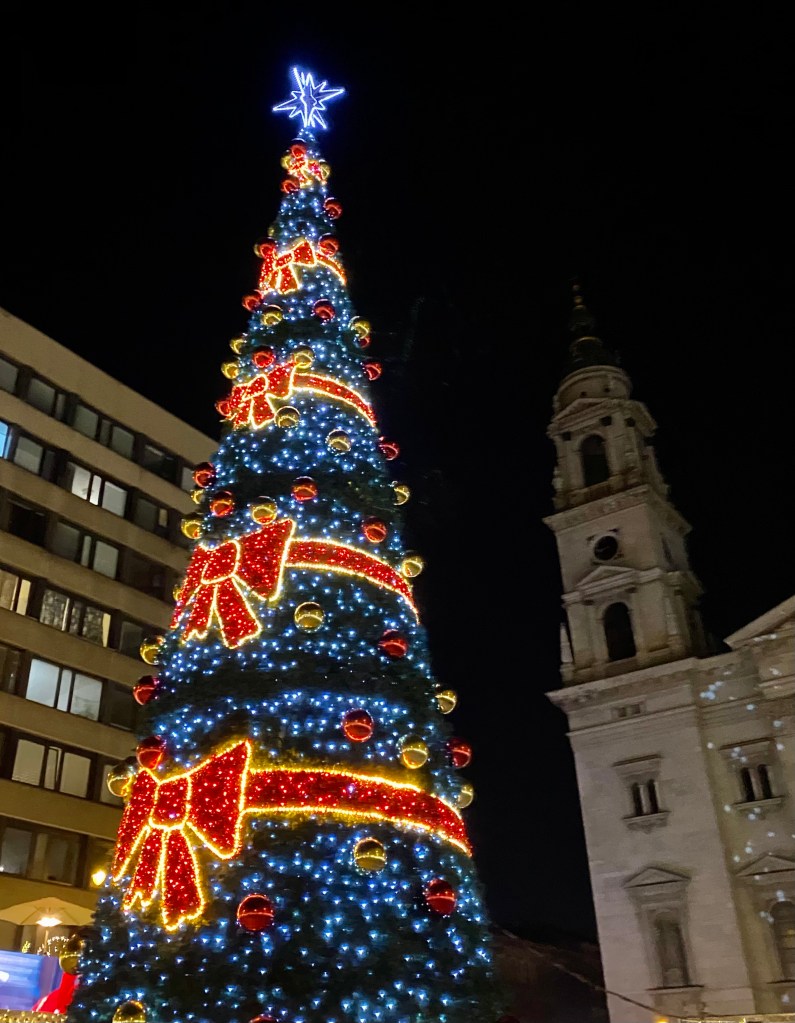
Our BnB location was within walk distance of the St Stephen’s Basilica Christmas Market which in the end was our favourite of the markets. Seemed a little less crowded than some others, the food was wonderful and there was a light show set to the Nutcracker Suite beamed onto the front of the Basilica. Named after Stephen, the first King of Hungary, it is the largest church in Hungary and home to one of King Stephen’s mummified hands.

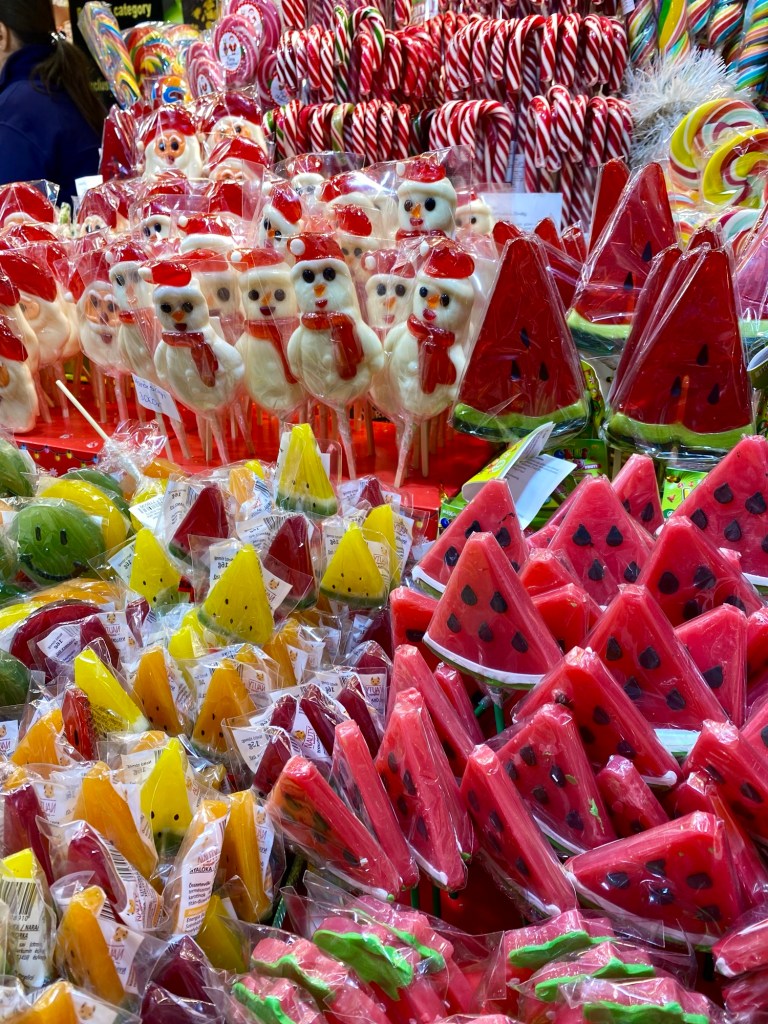
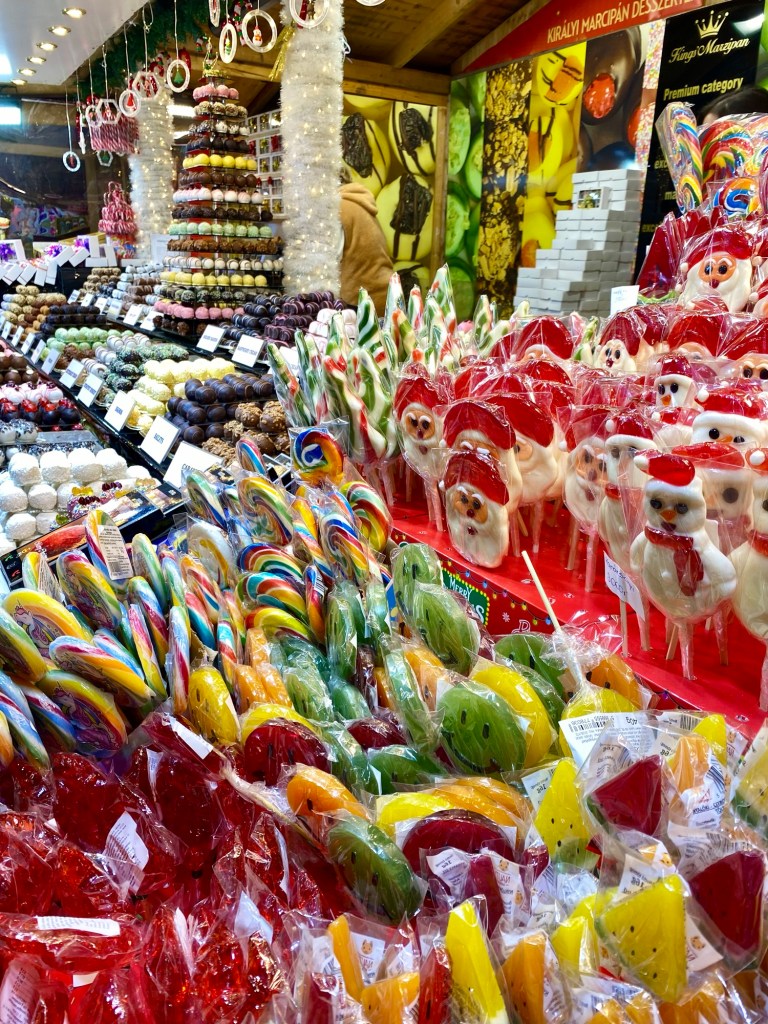
The stalls were full of Hungarian Christmas goodies and crafts and sitting outdoors at picnic style benches and tables was not the least unpleasant in spite of the chill in the air.




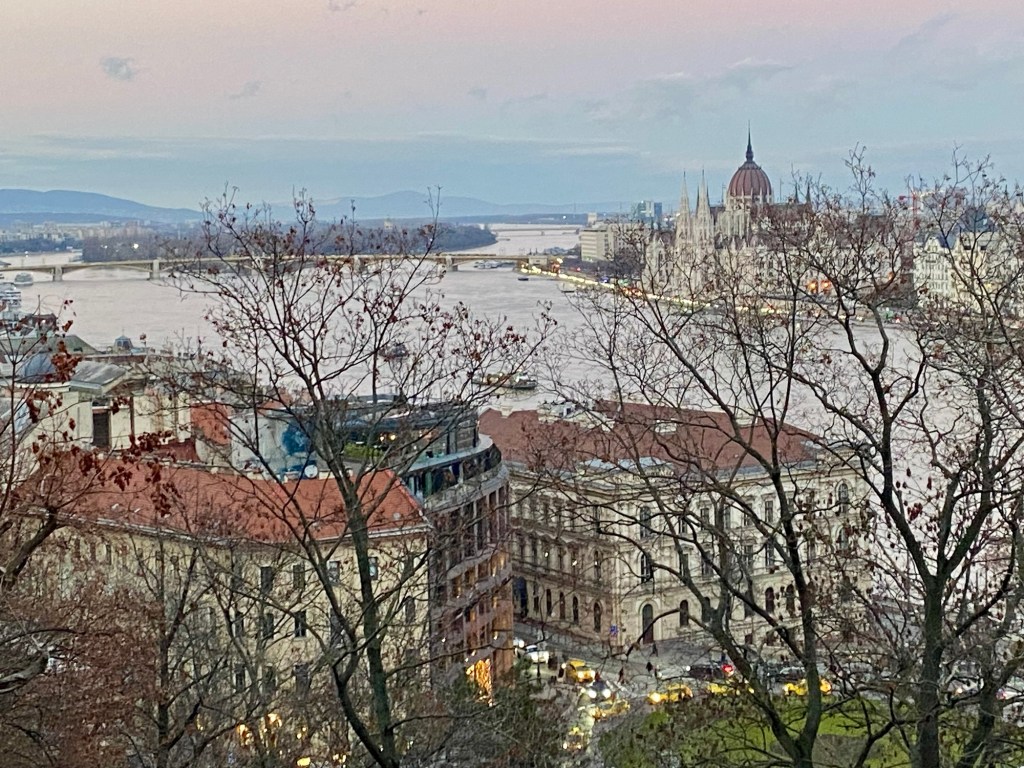
The Danube River divides the Pest and Buda sides of Budapest and several bridges span the river, dotted with cruise boats and especially pretty at night. On the Pest side which is where we stayed are some of the sights we visited including the impressive Parliament Buildings, the Grand Market Hall, the Jewish Quarter surrounding the Dohány Street Synagogue and the museum dedicated to the memory of Holocaust victims.



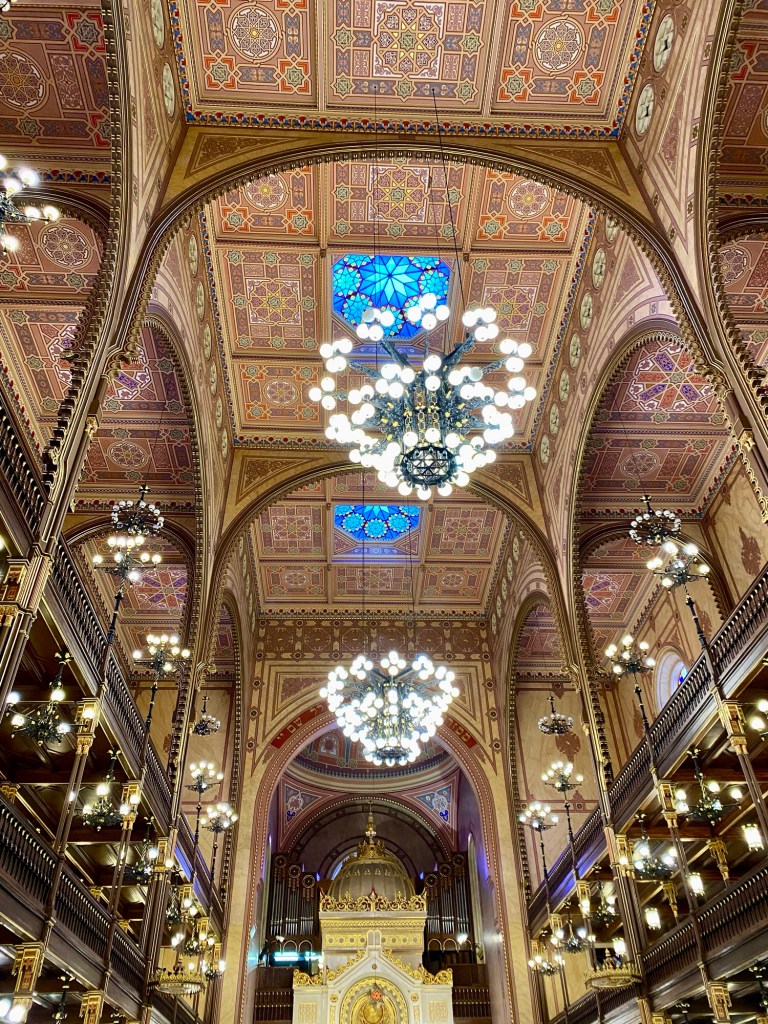
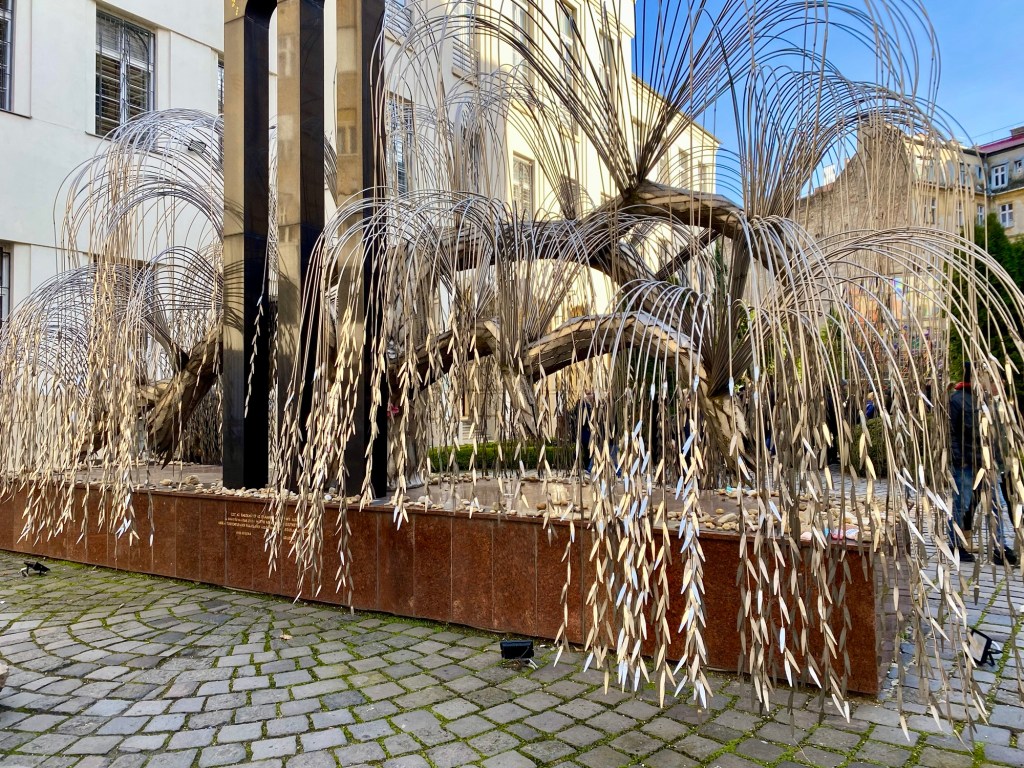
The Jewish museum is well worth the visit, although it is gut wrenching to hear some of the stories and view the photos from Budapest during WW11, it is a necessary reminder, especially timely today. Visitors from all over and from all religions appear to be drawn to the Synagoue and Museum and certainly the interior of the synagogue is very impressive. The streets around the synagogue are great to wander after a visit and give you an idea of the density of Jewish population in that area at one time.

The National Museum of Hungary is housed in a stately palace. It is a vivid account to the lengthy and turbulent history of Hungary from the earliest of times to the present day and while there we took in a special exhibit called Brides of Hungary, a tribute to women in different time periods and the dresses that reflected the style of various decades. With feminist leanings it went beyond fashion and provided glimpse into the lives of women over time.

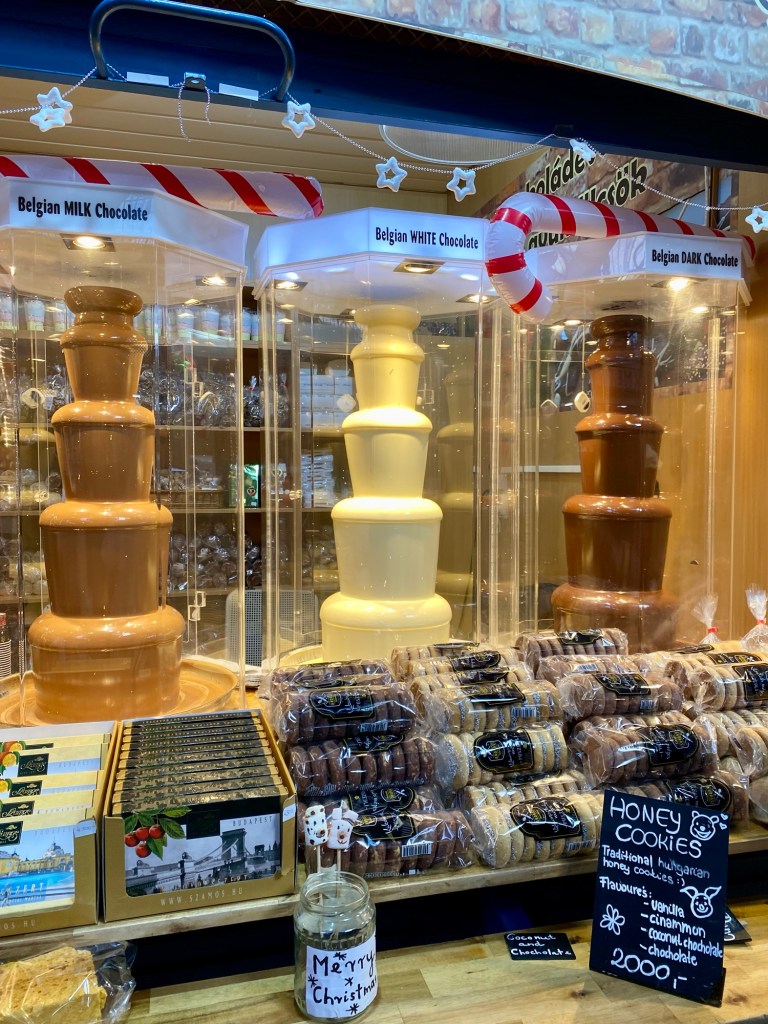
The Grand Market is just that, huge, multi-layered and full of Hungarian art, craft, food, clothing, accessories and of course at this time of year Christmas gifts. Well worth a wander and not to be missed, the neighbourhood around the market is great for a wander as well.

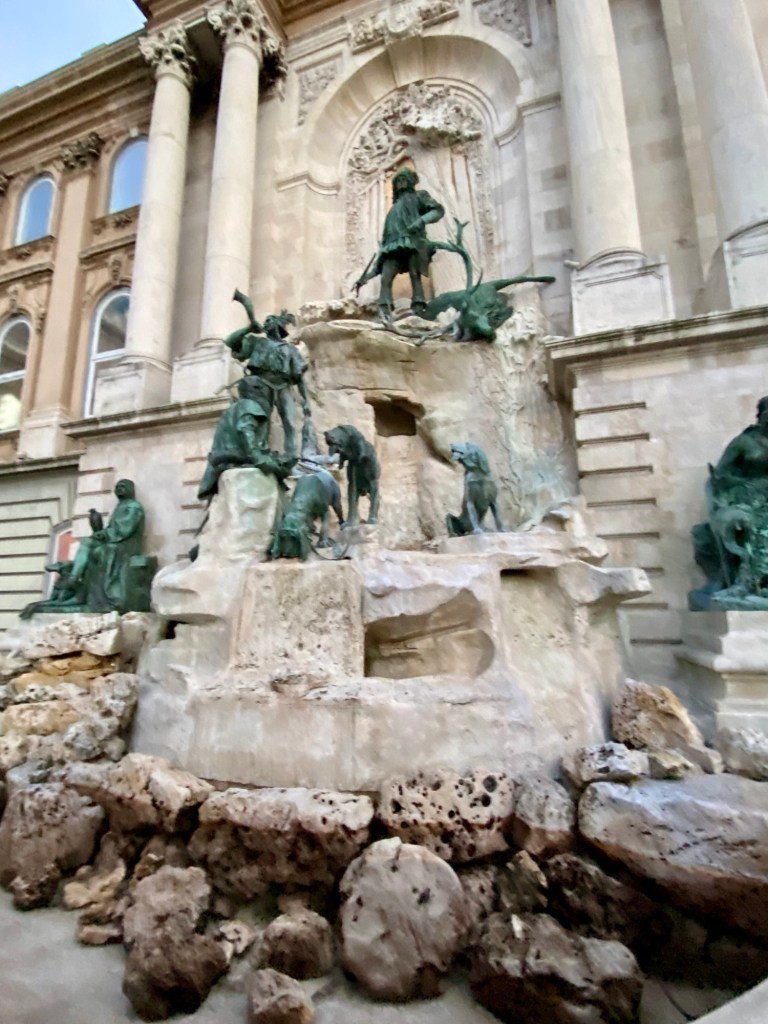
On the Buda side of the Danube we visited Buda castle by taking the beautiful wooden funicular up the side of the hill to the castle itself. At the top we had a great view of the city on both sides of the river and were able to wander back to our hotel across the Chain Bridge, so names for the chains it hangs from.



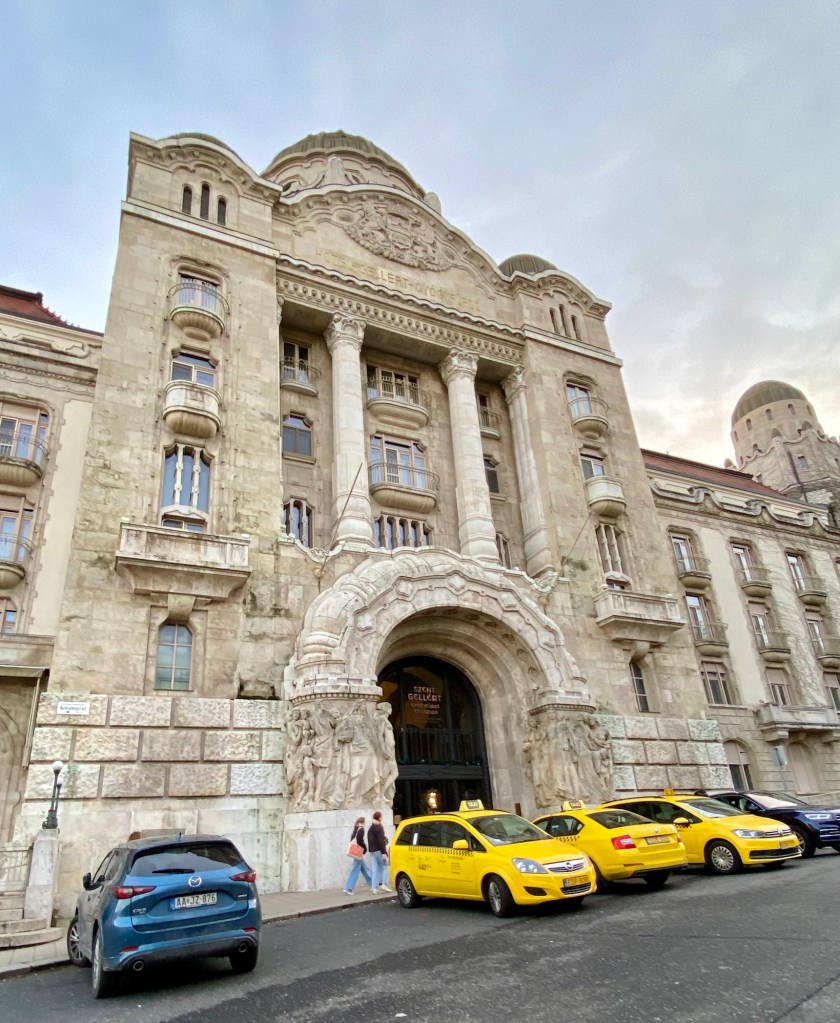
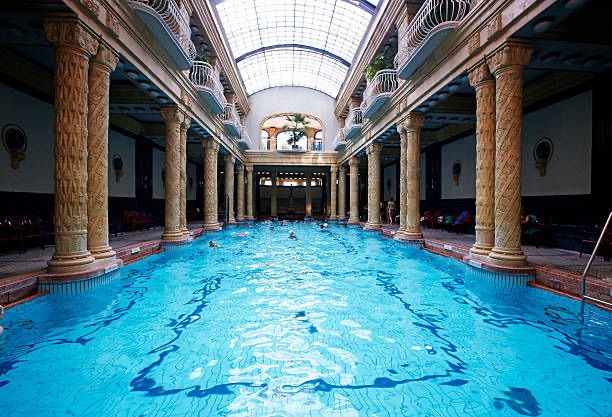
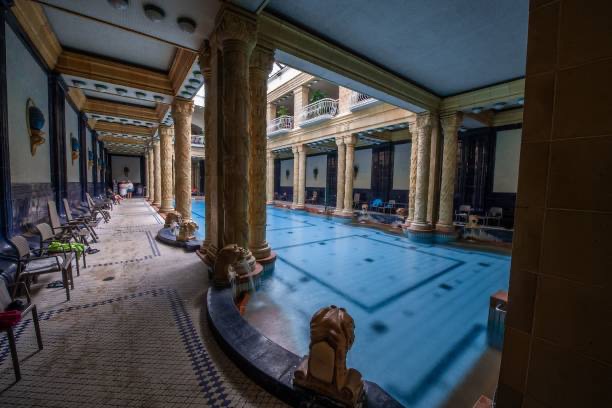
Also on the Buda side of the river we visited the Gellert Thermal bath, one of many that make Budapest a draw for their healing properties. Built in the Art Nouveau style between 1912 and 1918, it has several hot baths each labeled with their particular temperature, a massive numbers of lockers, and spa services including massage. A bit of a maze and challenging to navigate it was a very relaxing way to spend a few hours.
The food in Budapest deserves special recognition and we were able to sample several notably Hungarian dishes and drinks including. As you can imagine Goulash or Gulyas was on most restaurant menus and served at the Christmas markets as well. A popular dish it is a hearty and warm stew filled with beef, paprika, onions and potatoes and sometimes served with spetzel like noodles. Delicious and warming especially outside at night.


Chicken paprikas (Csirke Paprikas) is astonishingly red because of the amount of sweet paprika mixed with tomatoes, garlic and sweet peppers in. Sour cream is added and delicious chewy dumplings make the dish very filling. A must try in Budapest in.
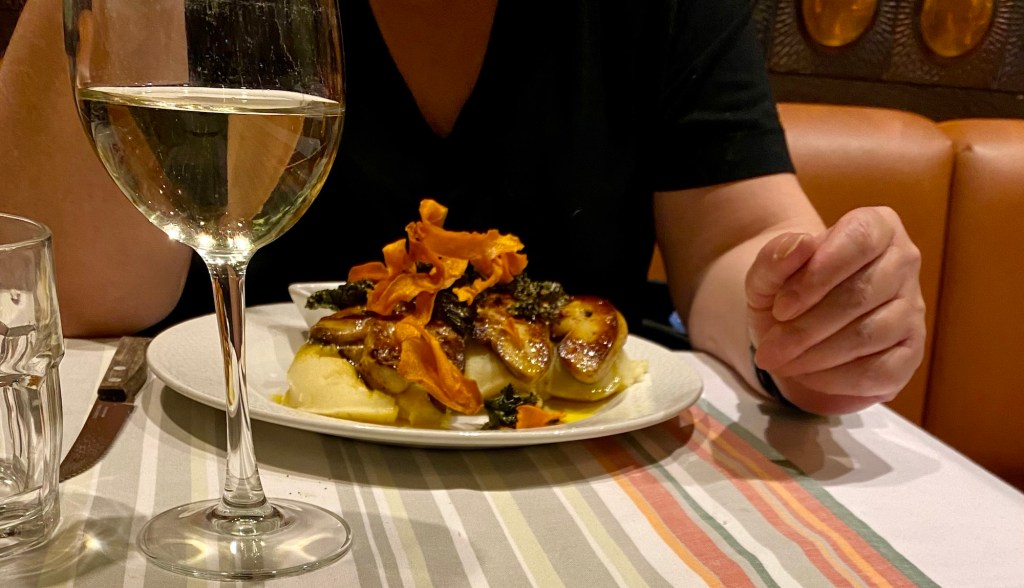
Of course the signature dish of Hungary is Goulash and nothing beats a warm bowl at an outdoor market.

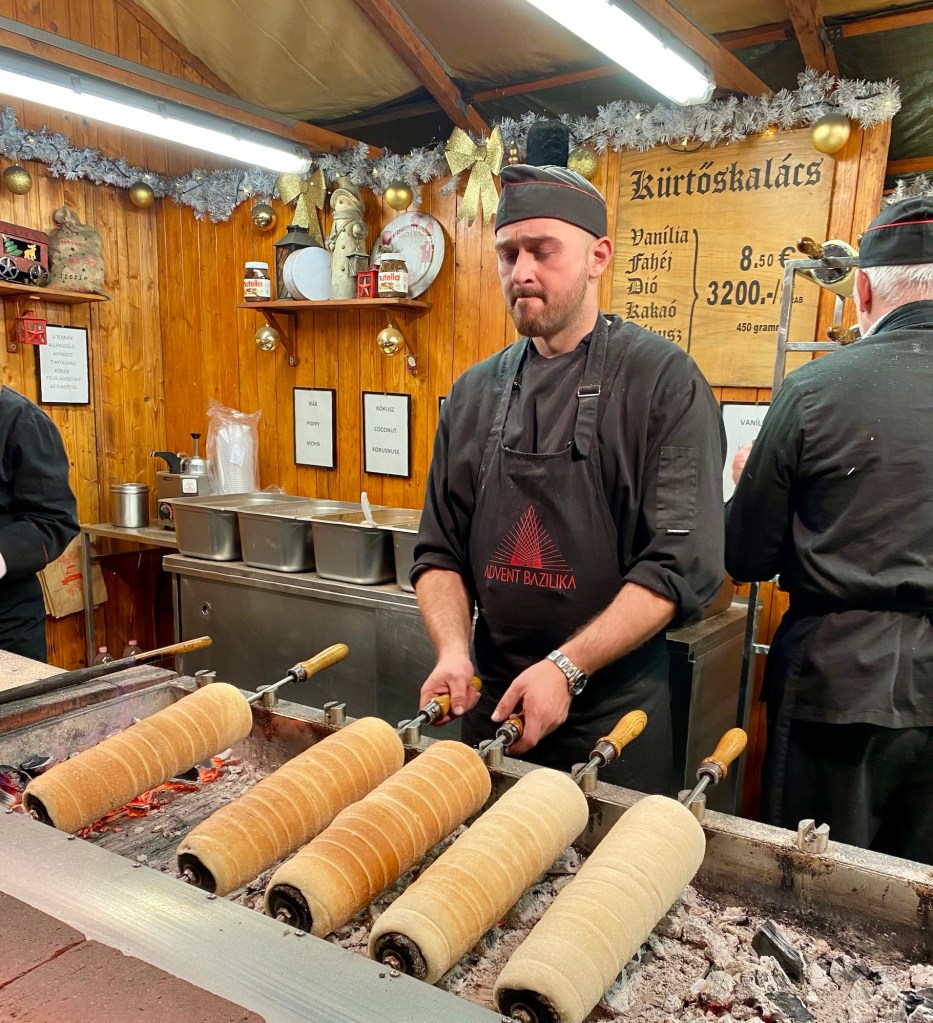
We also indulged in Chimney Cakes which we saw cooked over barbecue coals at one market and in a special rotisserie like oven at another market. A doughnut like batter is wrapped around a wooden form and rotated over heat until done, sprinkled with sugar while it cooks gives a cartelized effect and when removed from the wooden form this confection stand erect like a chimney. Quite delicious and definitely shareable.
Meat Pancakes (Hortobagyi Palacsinta) are thin pancakes filled with savoury chicken or beef minced into small pieces. Once filled the pancakes are rolled into burrito like shapes and baked and then covered with a paprika sauce and of course a dollop of sour cream. Mmmmm
Stuffed Cabbage Leaves (Toltott Kaposzta) the Hungarian cabbage roll is made from cooked, pickled cabbage and filled with minced pork, paprika (of course) and rice. When I ordered this dish at a Christmas market it came with sausage and grilled vegetables and went down well with mulled wine.
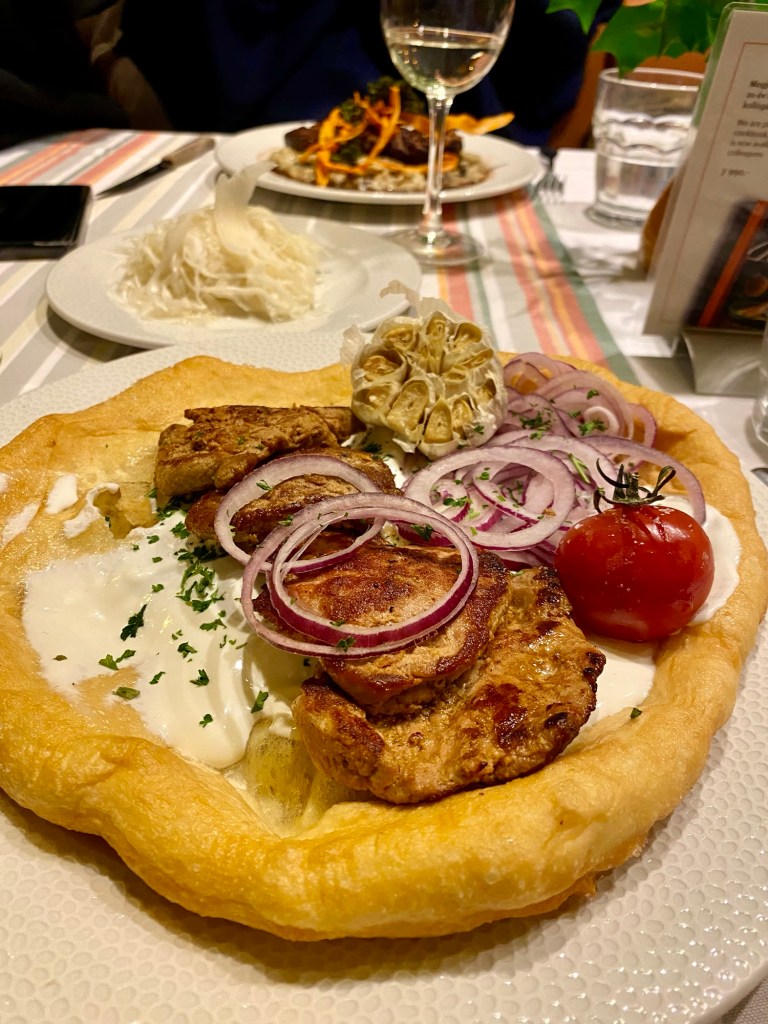
A very popular dish with the Hungarians was a deep-fried flat bread (Langos), crispy on the outside while soft on the inside, it is sprinkled with cheese and topped off with sour cream. Looked delicious but one can only eat so much so I didn’t have the room to try it.
I hope to visit Hungary again when I have more time and I’m able to see other parts of the country. It has a quietness about it that you don’t find in other European Capitals. People seem less hurried and definitely friendlier, especially the people who work with tourists like myself. Until I return Budapest, keep your magic alive.









 Wander With Stella