Phuket Island

Phuket, the bigger Thai Island with a little bit of everything for everyone. Surprising for its beauty, food, beaches and friendly Thai people.

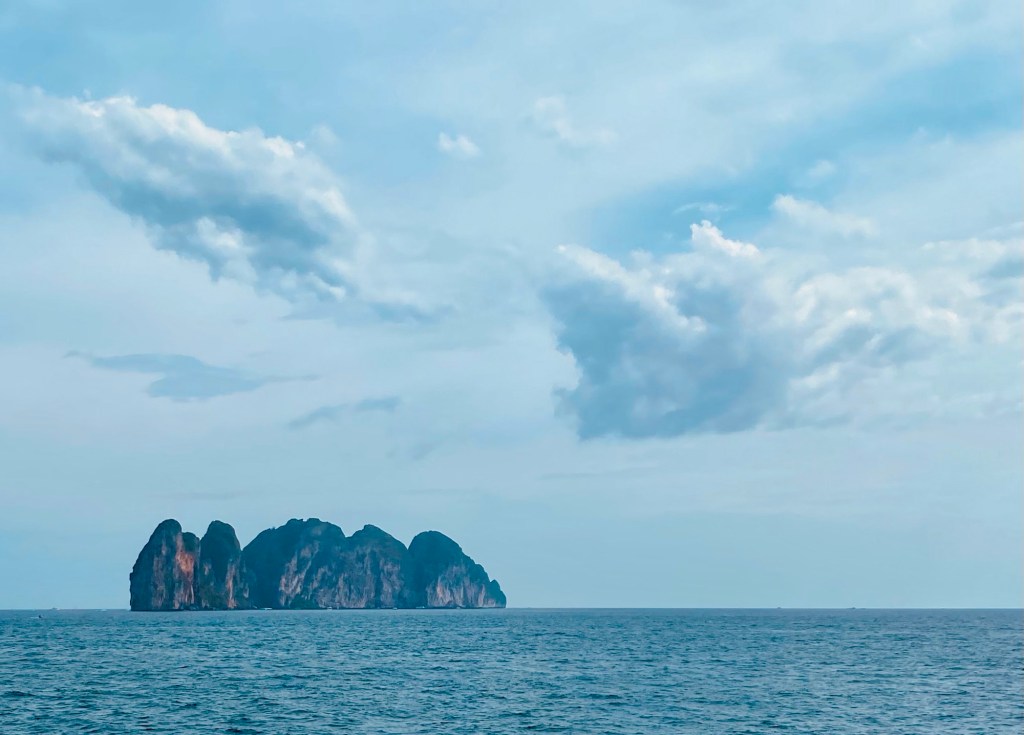
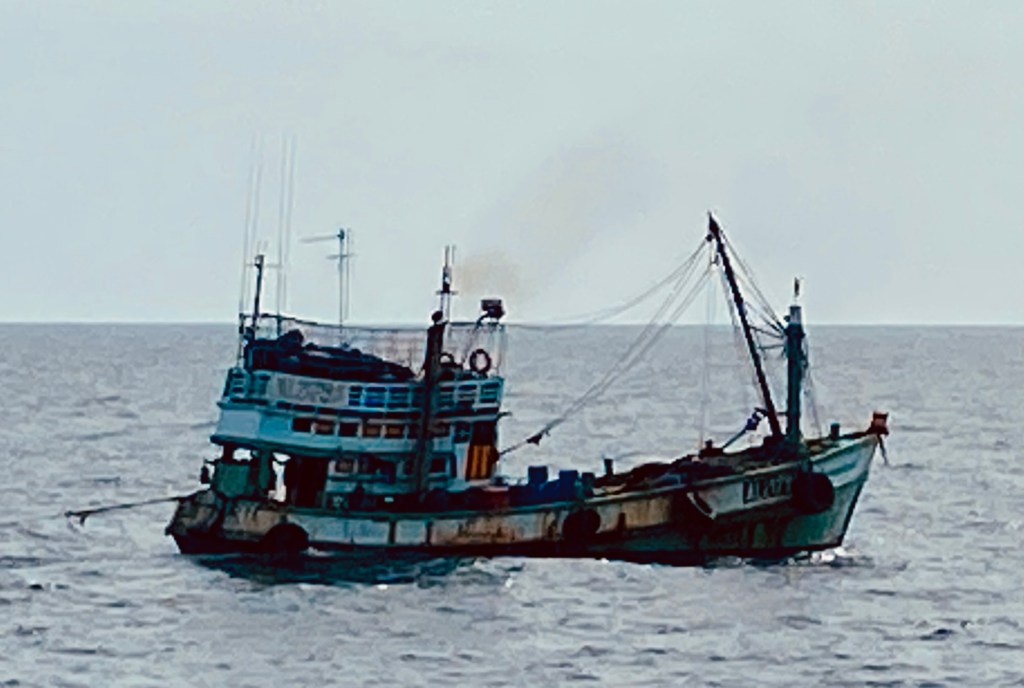
Phuket Island will be the final stop on my journey through Thailand, before I head to Malaysia. The ferry from Koh Lanta to Phuket Island was just long enough, and on the way there was blue sky, fishing trawlers and the well known island of Koh PiPi which I will have to leave for another time.
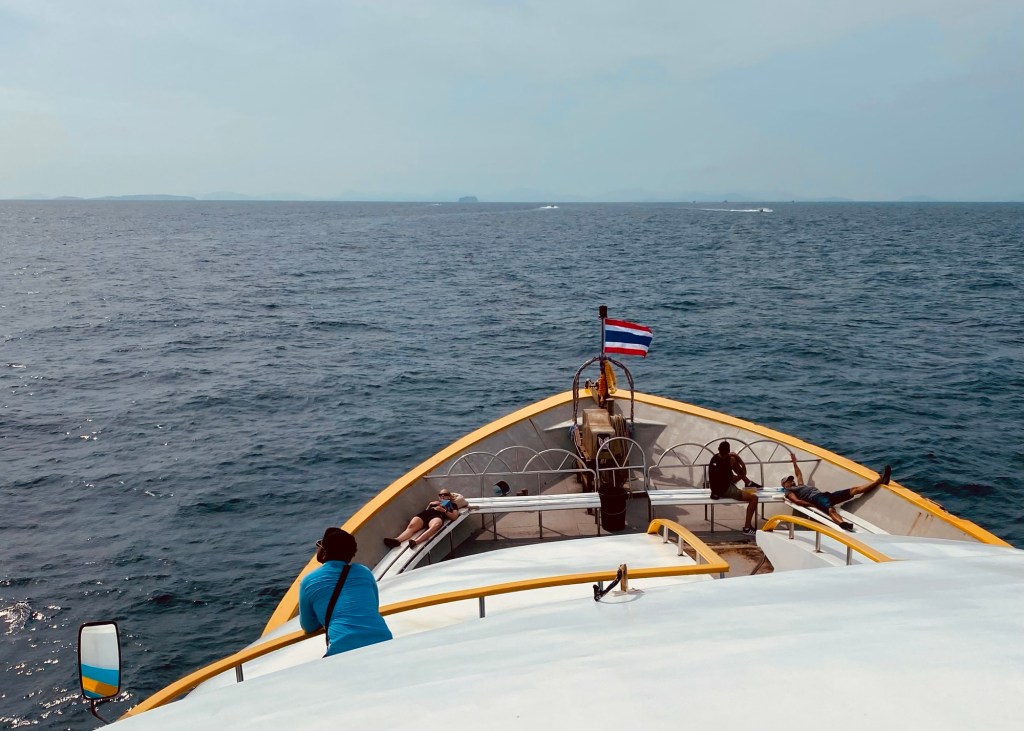
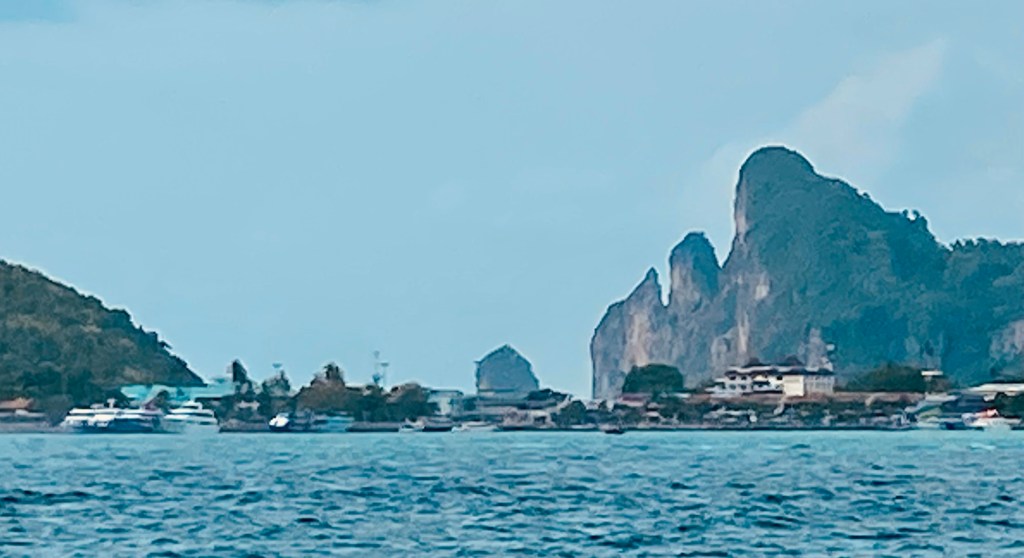
Koh Lanta to Phuket Ferry
Koh PiPI
Island North of Koh LiPi
Trawler

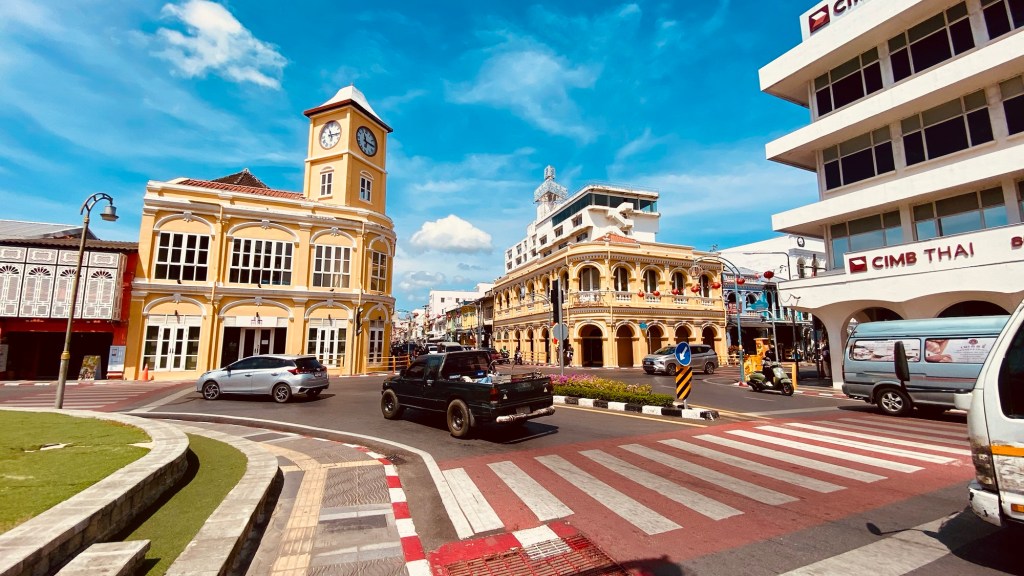
Old Town Phuket

Of course there is the Island of Phuket, the City of Phuket and “Old Town” Phuket, and it is here that I spent my first four nights on Phuket Island. Lovely walking area, my hotel was not one of the heritage hotels, like the one below, but it was a block from the Old Town as it is known, it was very nice and it had a decent size pool.
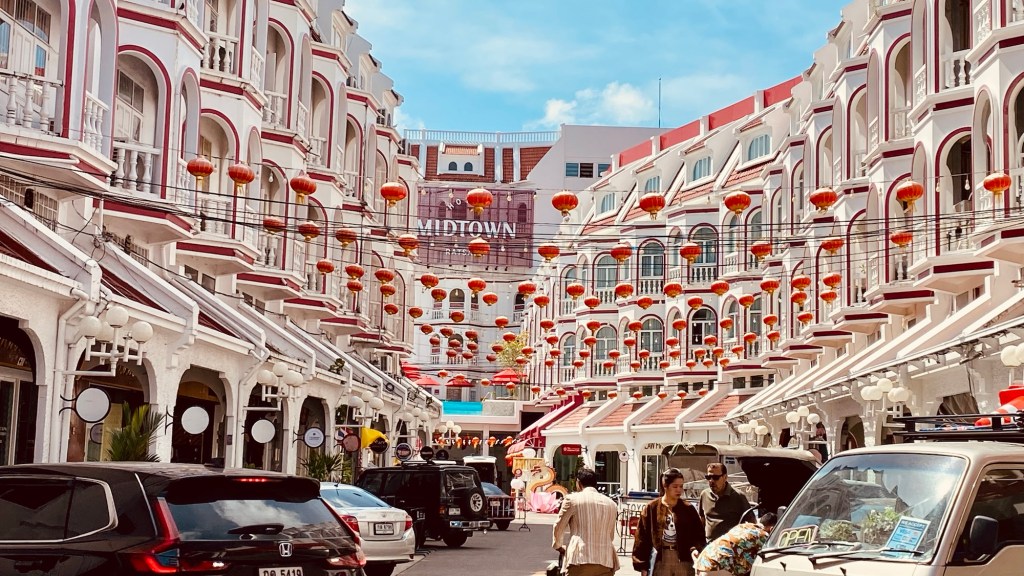
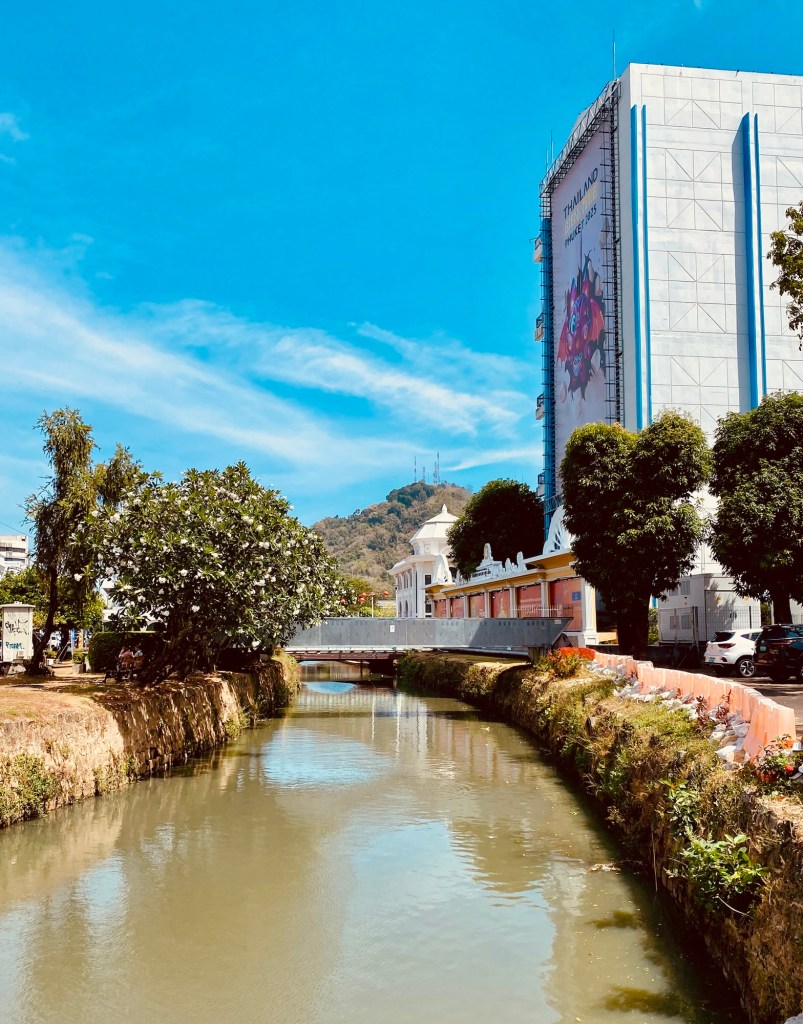
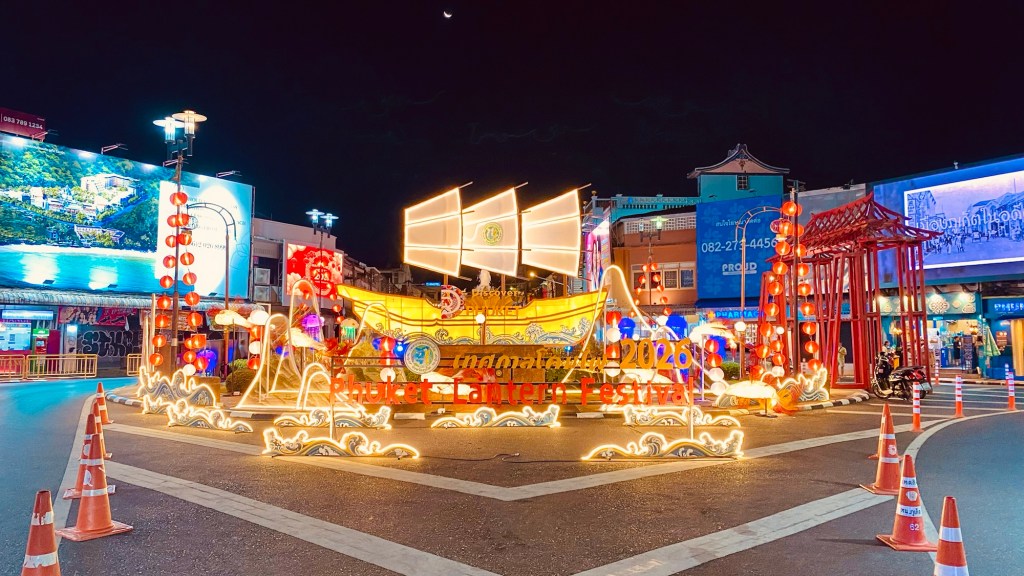
Old Town Decked Out for Chinese New Year
Canal in Old Phuket
Old Town Phuket – Nominated To Be A World Heritage Site
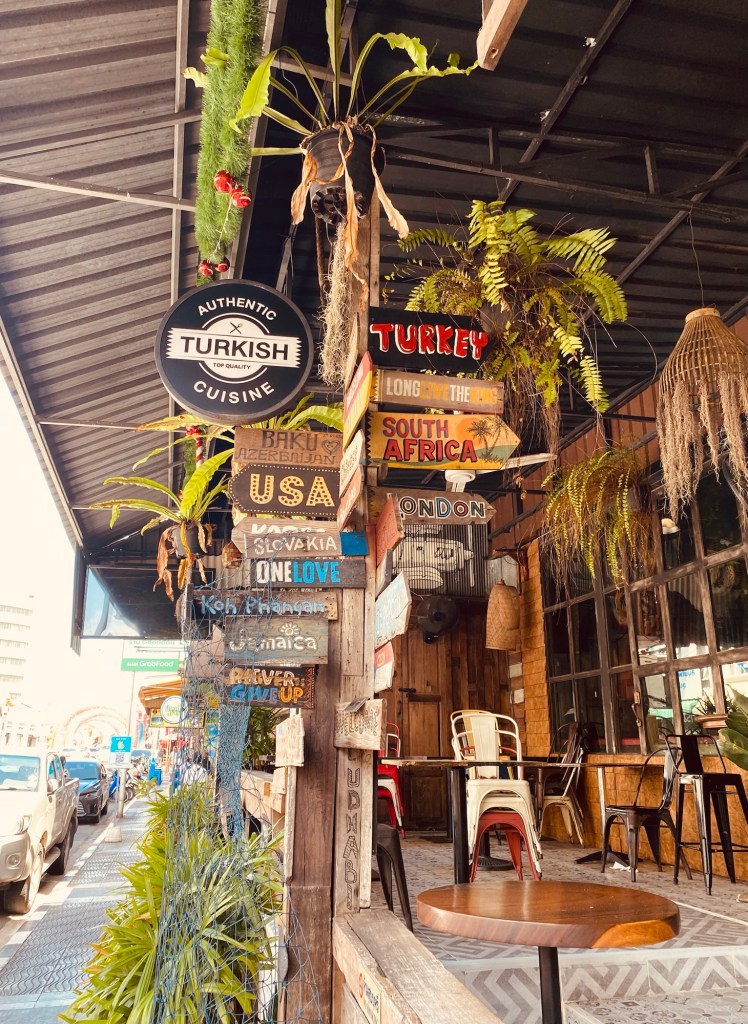
Restaurants Galore Welcoming the Four Corners of the World

Once again I used the Map My City Ap for its walking tour of the old town and it took me the better part of a day to follow their routes. The tour took me past several sites that represent the history and the culture of Phuket that dates back to the 1st C AD. An important port in the trade route between China and Malaysia, it’s early history meant an influx of Chinese. The Golden Dragon is a symbol that is given offerings and prayers in exchange for protection of Phuket and its people.
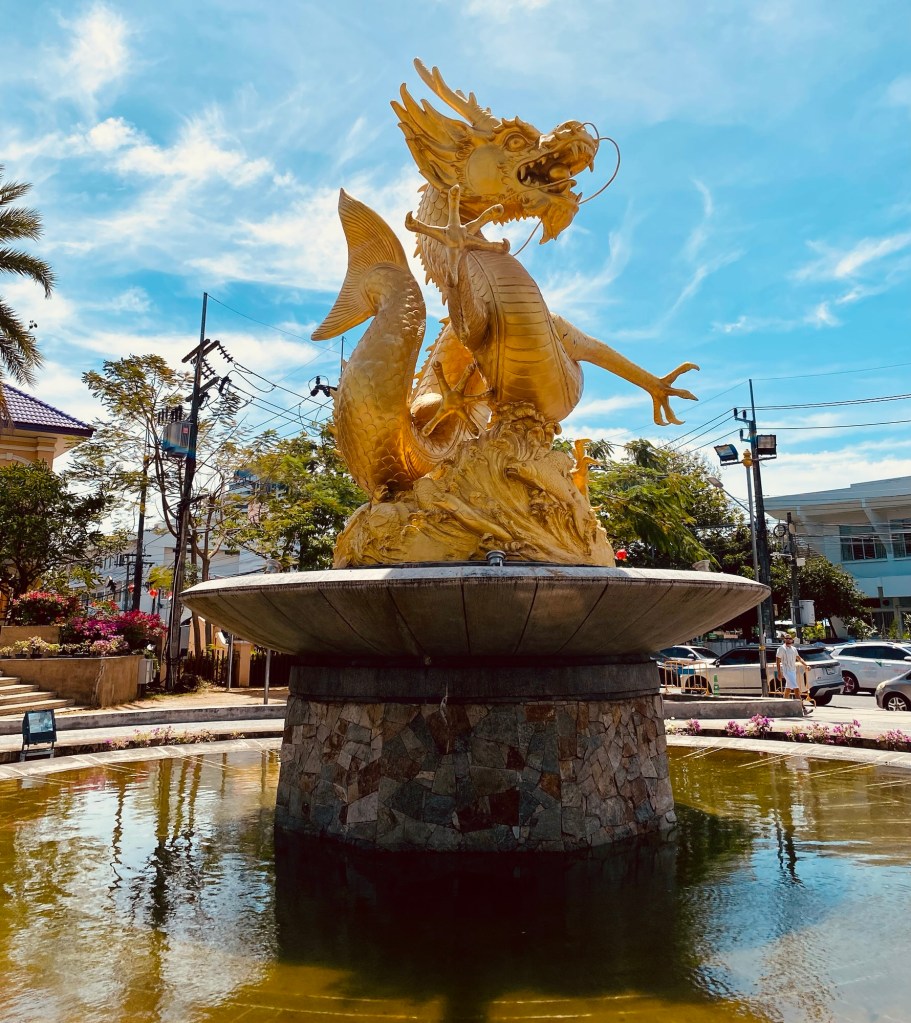
Golden Dragon

In spite of it being Old Phuket there are many reminders of a modern art scene as you stroll the streets and turn corners to find the unexpected.
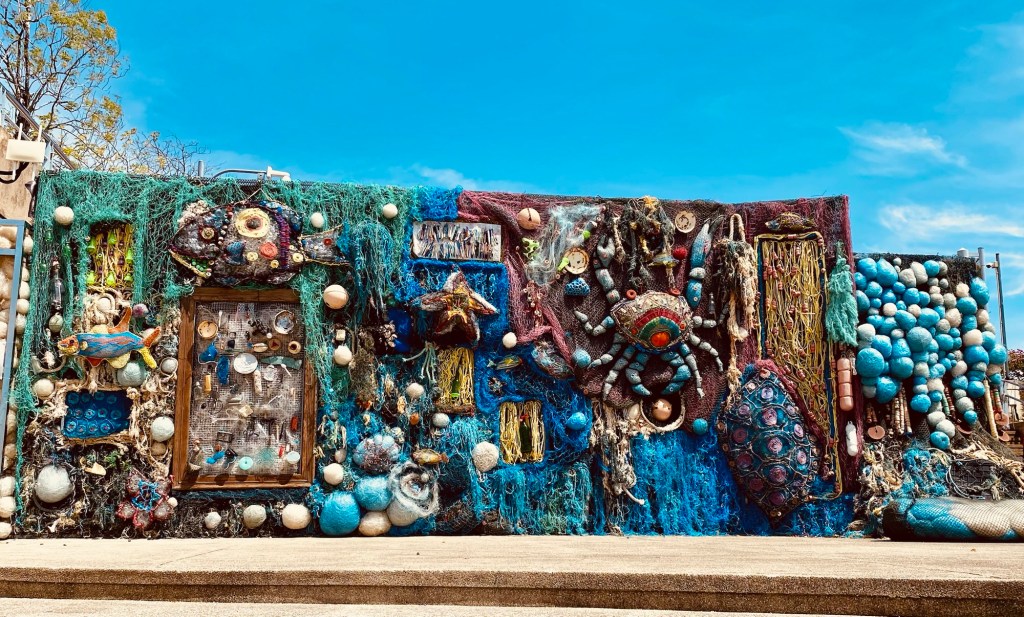
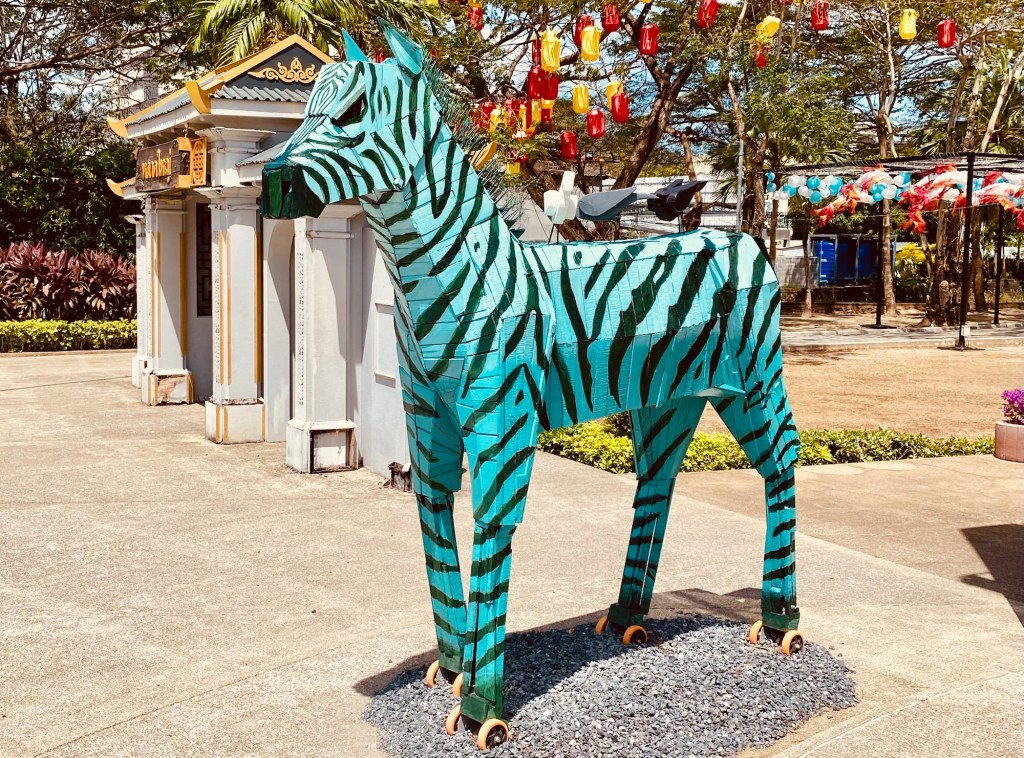
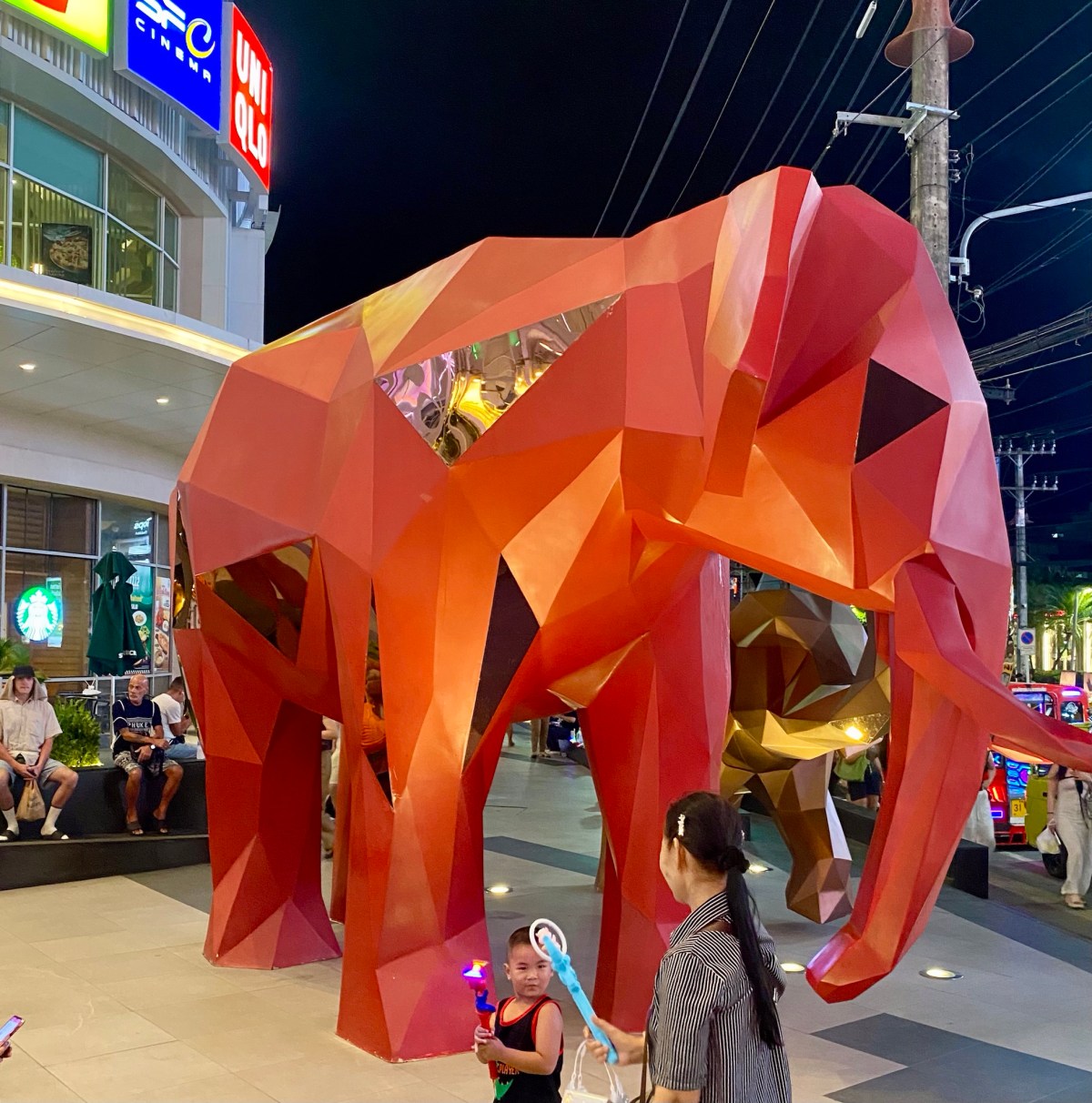
Art Installment
Art Installment

Thanon Dibuk Road is a bustling street of cafes and shops catering to tourist and local alike. A good area to sample Thai food in one of the many cafes.
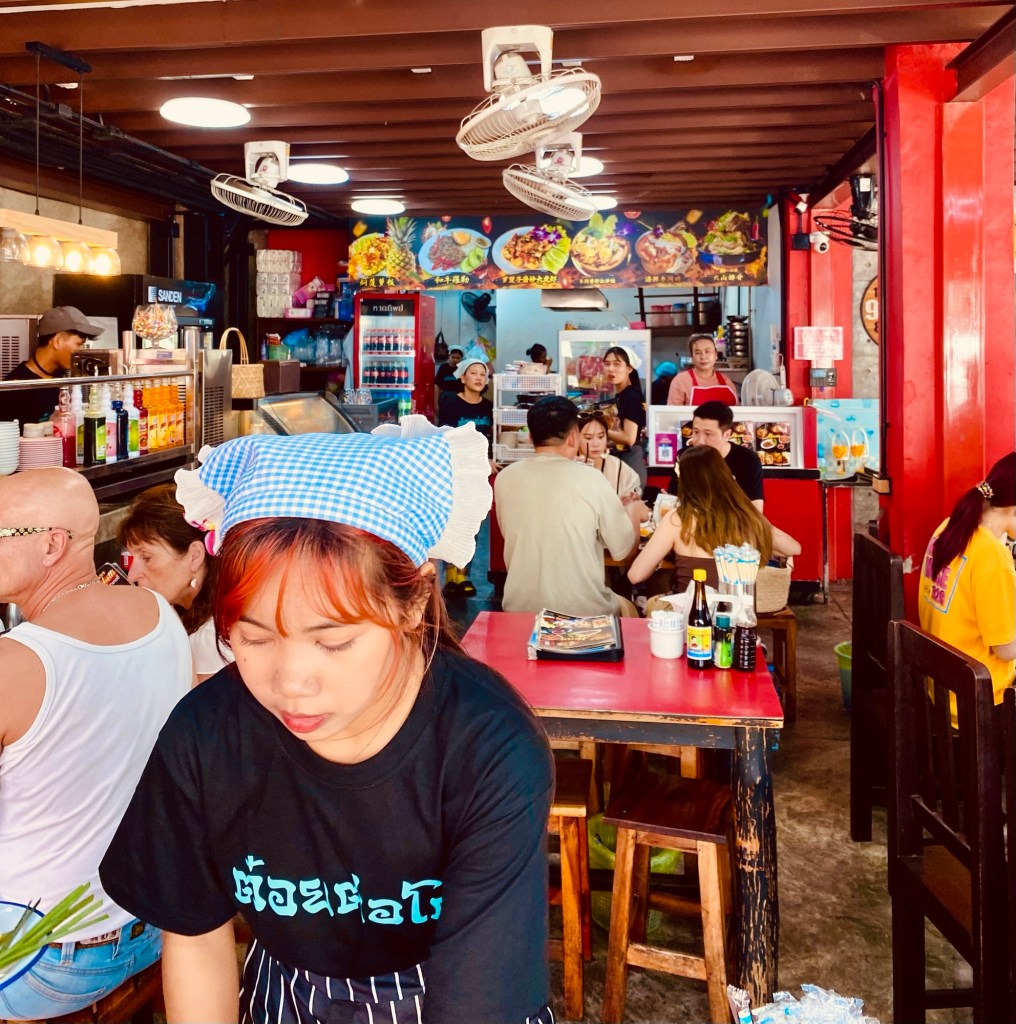
Thanon Dibuk Road Cafe
Shops Galore

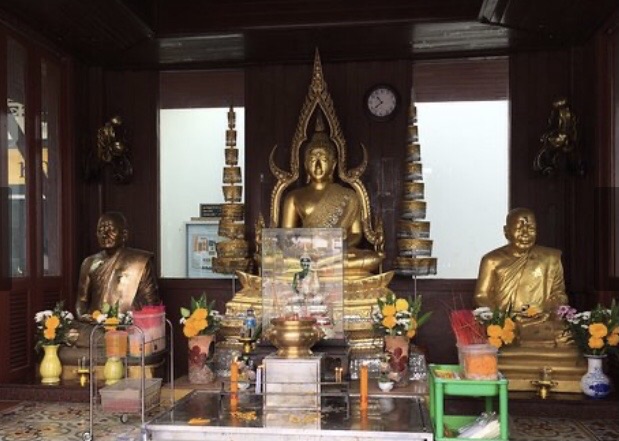
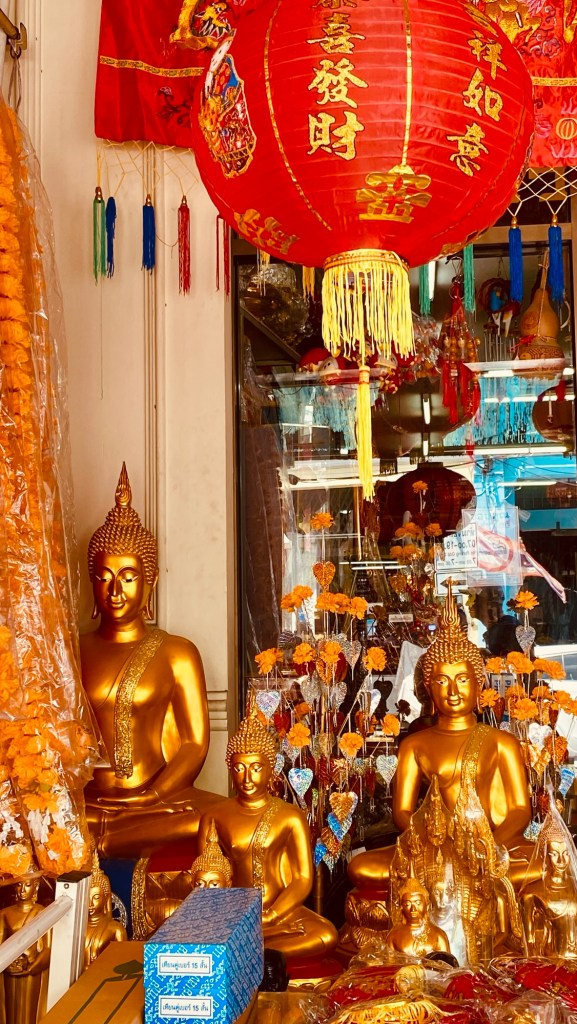
Perhaps the most outstanding feature of Thanon Dibuk Road is an off shoot called Soi Rommanee Lane a narrow passage of Sino-Portuguese shophouses which were at one time brothels and gambling houses. Ironically this former street of sin, leads to the Wat Mongolian Nimit built in 1880. Mongolian Nimit Wat is a an especially sacred place for gathering and making offerings to the Buddha. Inside the Pagoda style Wat are intricate colourful art works and a giant stupa surrounded by other small stupas and of course a statue of Buddha.
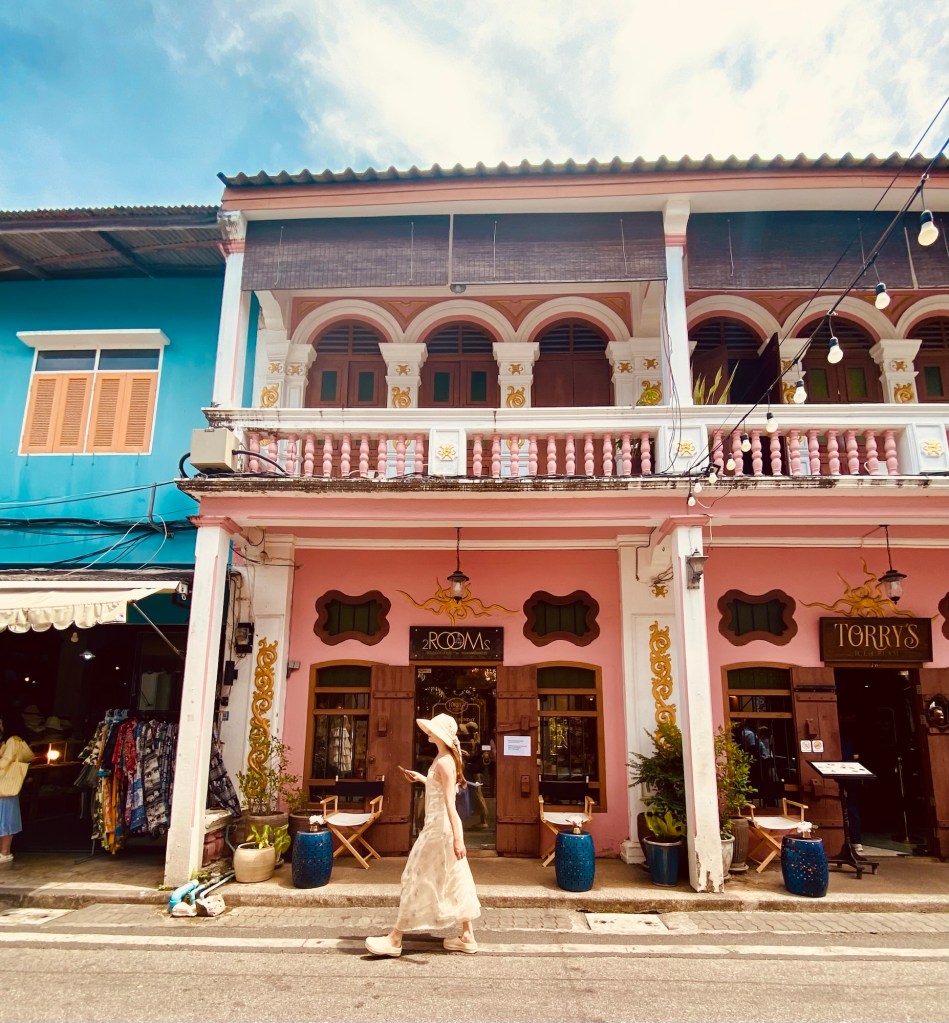
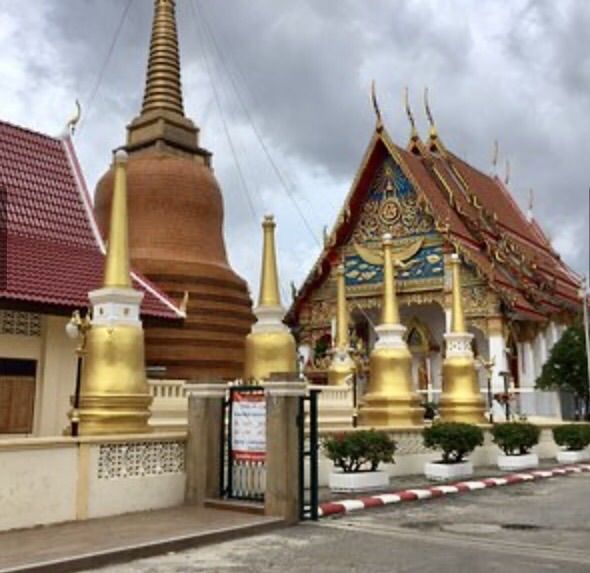
Soi Rommanee Lane
Pagoda Style Wat
Inside the Temple
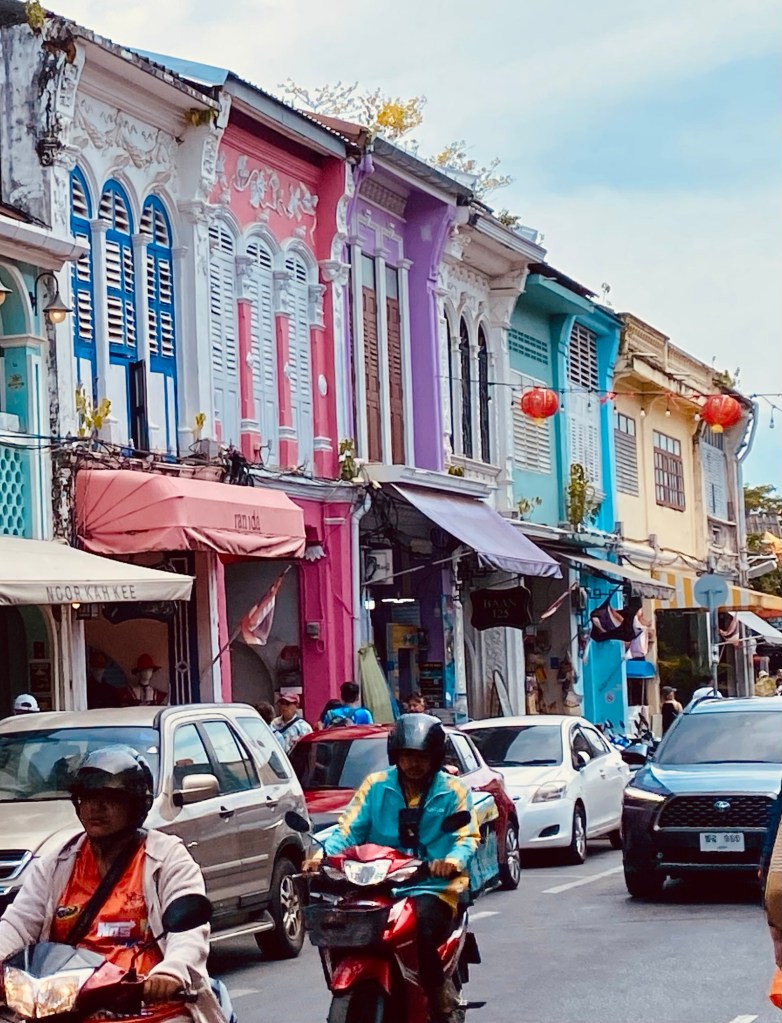
Sino-Portuguese Restored Shop Houses

Sino-Portuguese architecture is not unique to Phuket, Southern India and Sri Lanka also have architecture that reflect the melding of European and Asian cultures. These colourful, practical buildings certainly remain as evidence of the Portuguese, Malay and Chinese who came to trade in the 19th Century and earlier. Eventually trade involved the mining and exporting of tin which really meant an economic boom for Phuket. Great care has been taken to restore these buildings to make them as authentic as possible. Most are now shops, bars and restaurants and full of tourists.
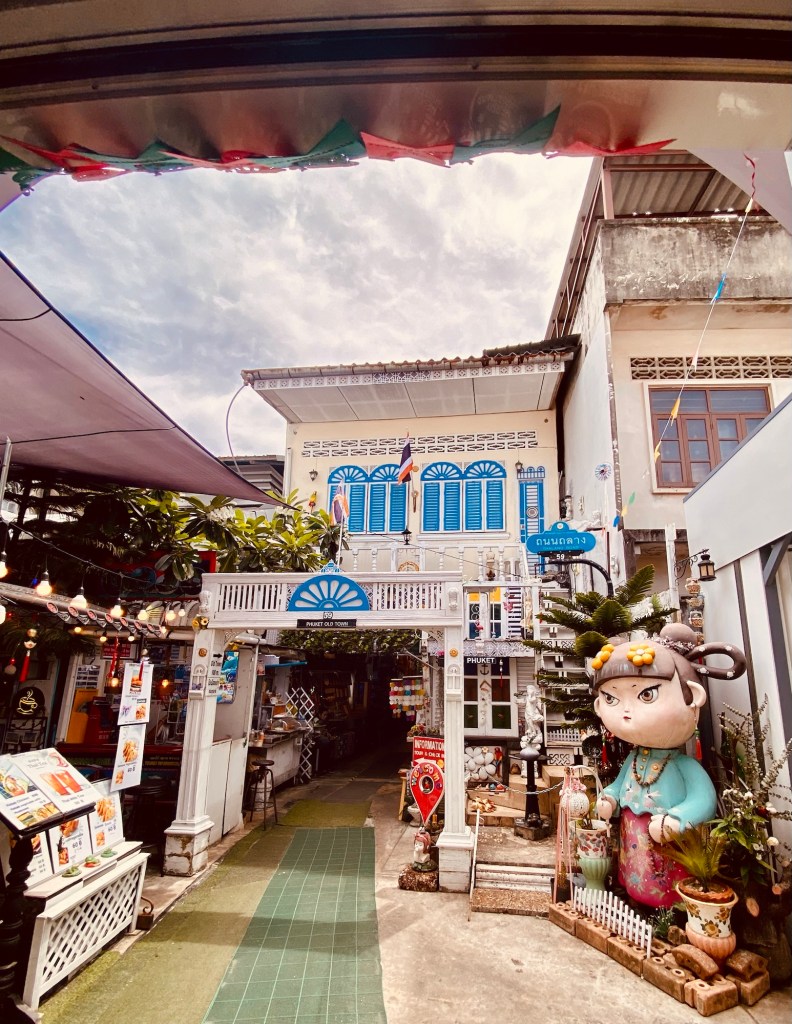
Old Alley Ways Between and Under Buildings
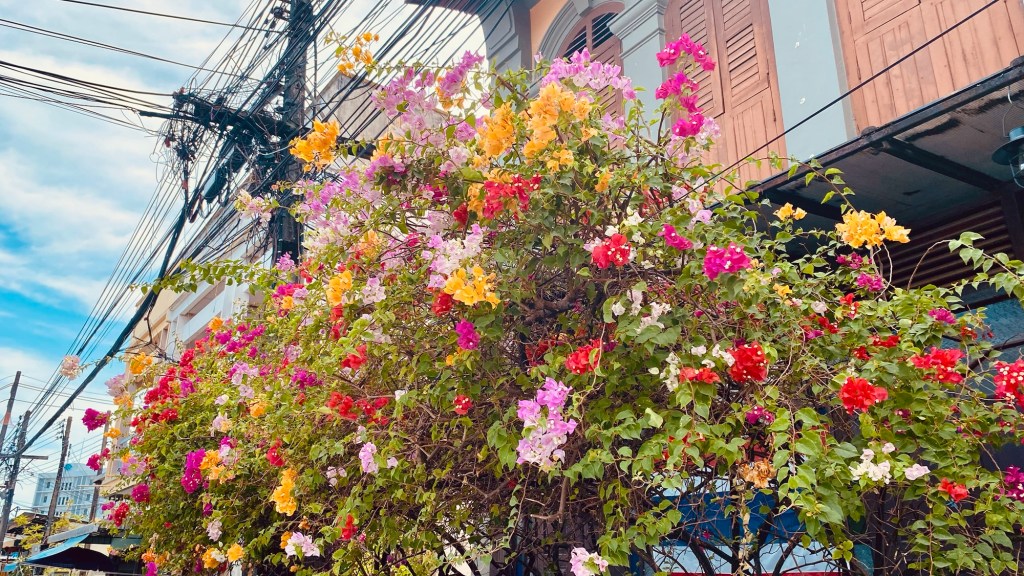
Tangle of Flowers and Wires

Chinese history is very prominent in Old Town Phuket as waves of settlement led to the construction Chinese Schools and Family Shrines that honoured their ancestors.
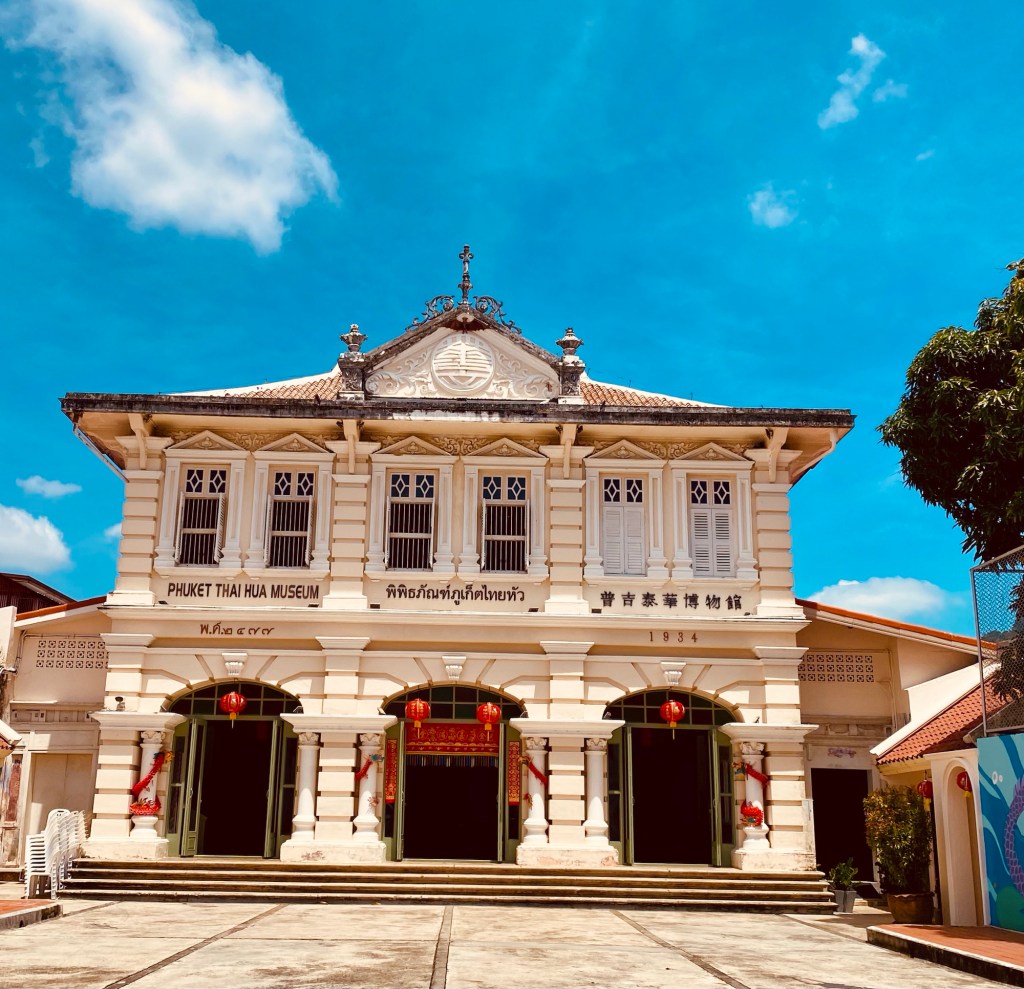
Old Chinese School – Now a Museum
Shrine of Serene Light to Chinese Ancestors
Chinese New Year Display
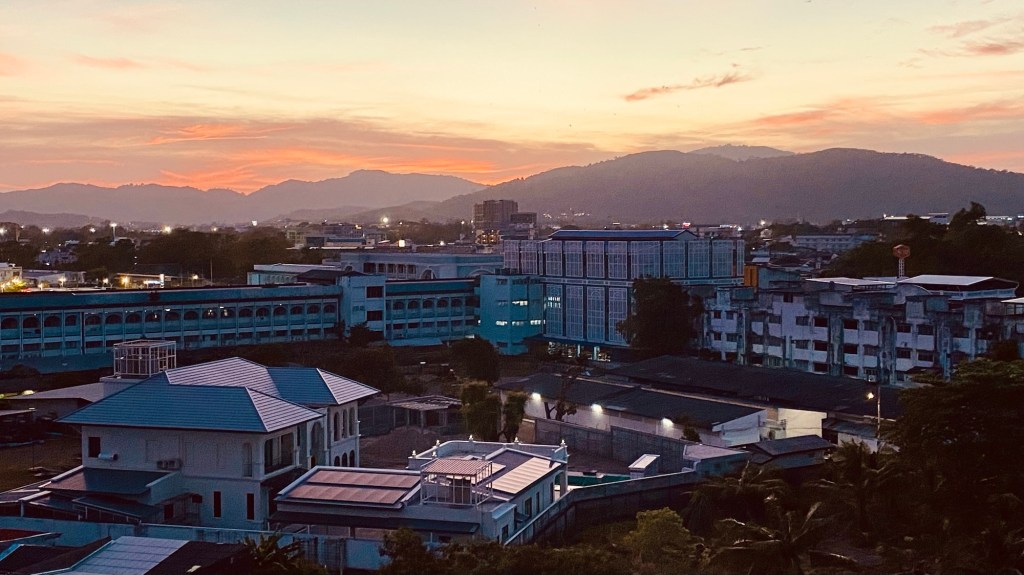
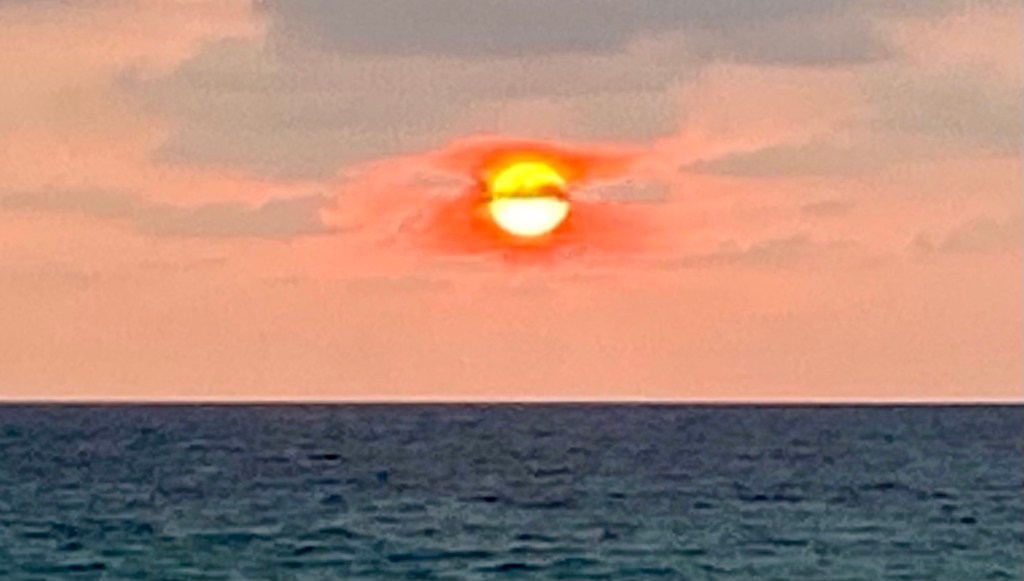
Sunset from my Balcony

Surin, Kamala, Pukhet & Karon Beaches

Of course the Island of Phuket is known as a beach holiday destination and offers the choice of several well-known beaches, many of which were sadly destroyed in the 2004 Tsunami in which many people lost their lives.
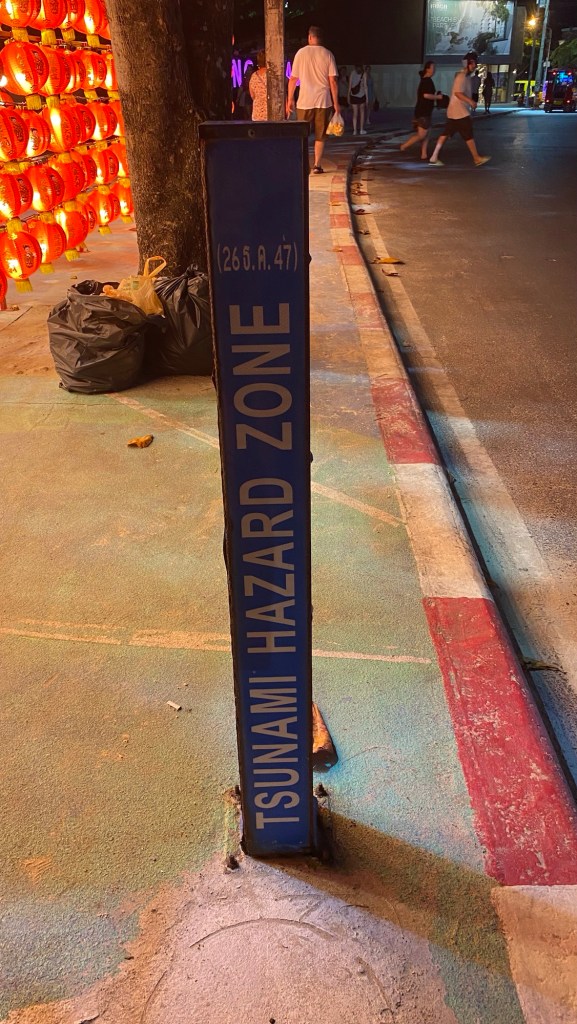
A Grim Reminder of the 2004 Tsunami

Surin Beach

I had the chance to explore several of the beaches along the west coast of Phuket Island. I definitely started at one of the top tier beaches, Surin, where the hotels are quite pricy so a short stay was in order.
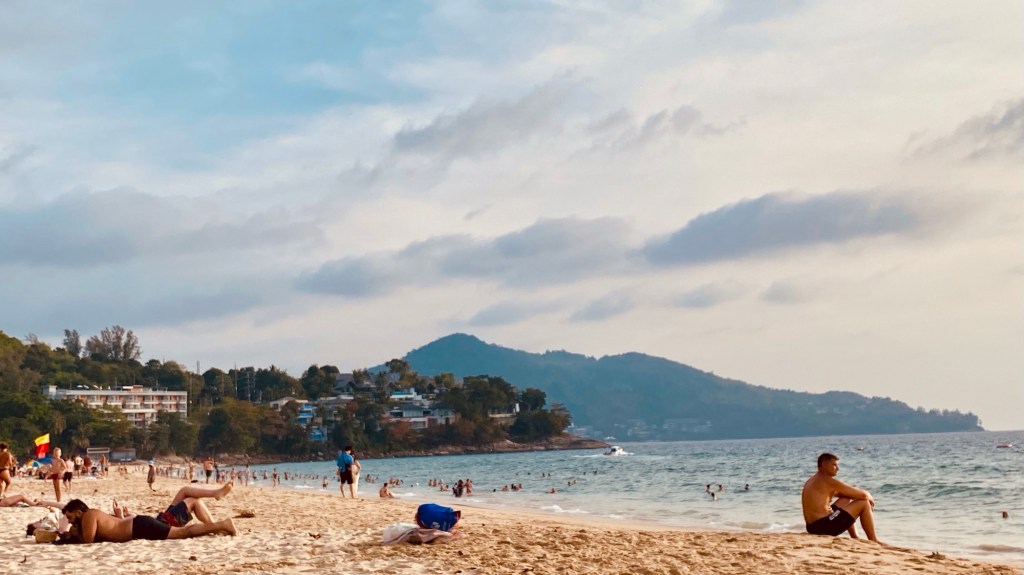
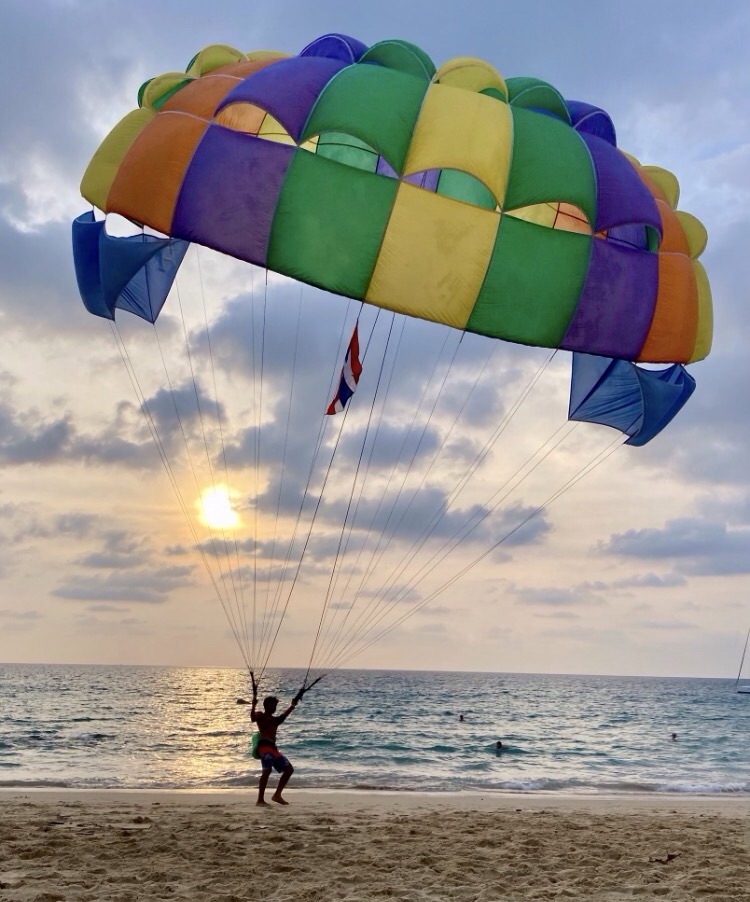
Surin Beach
Surin Beach Sunset Sail
Best Sunsets on Phuket
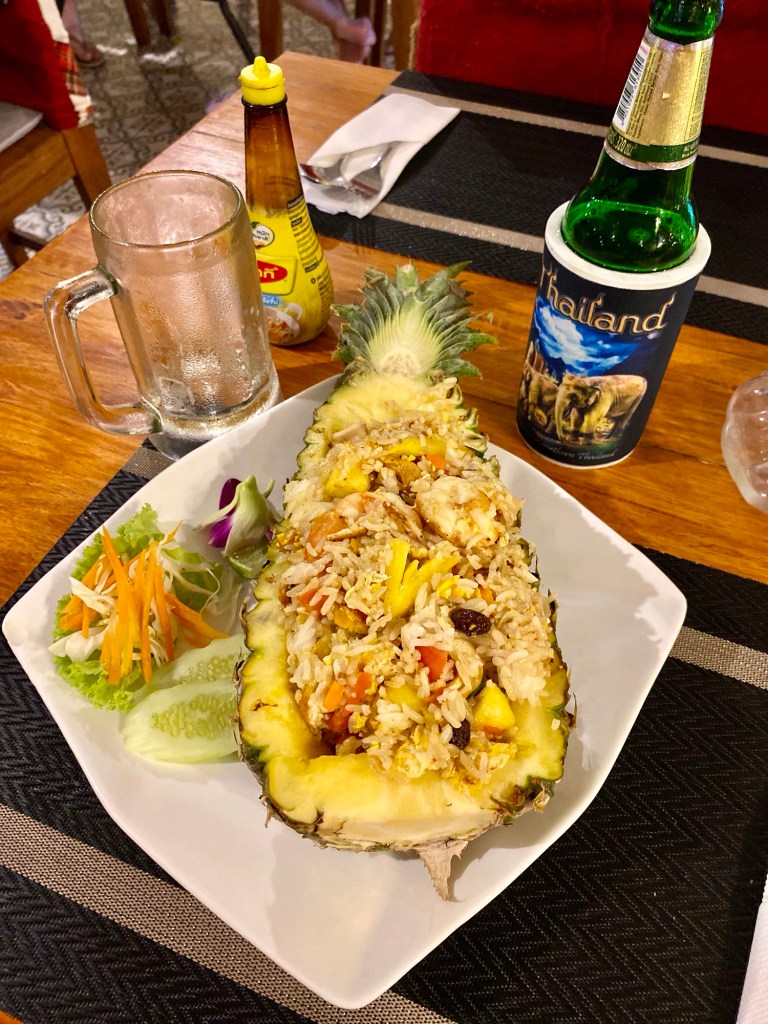
Pineapple Stuffed Rice
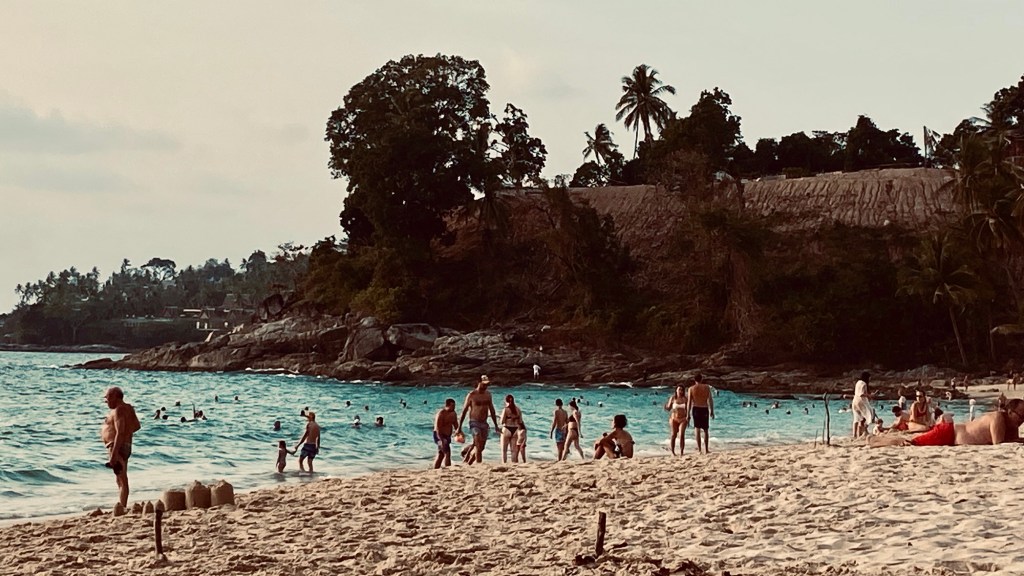
Surin. Beach not too Crowded
Surin Beach

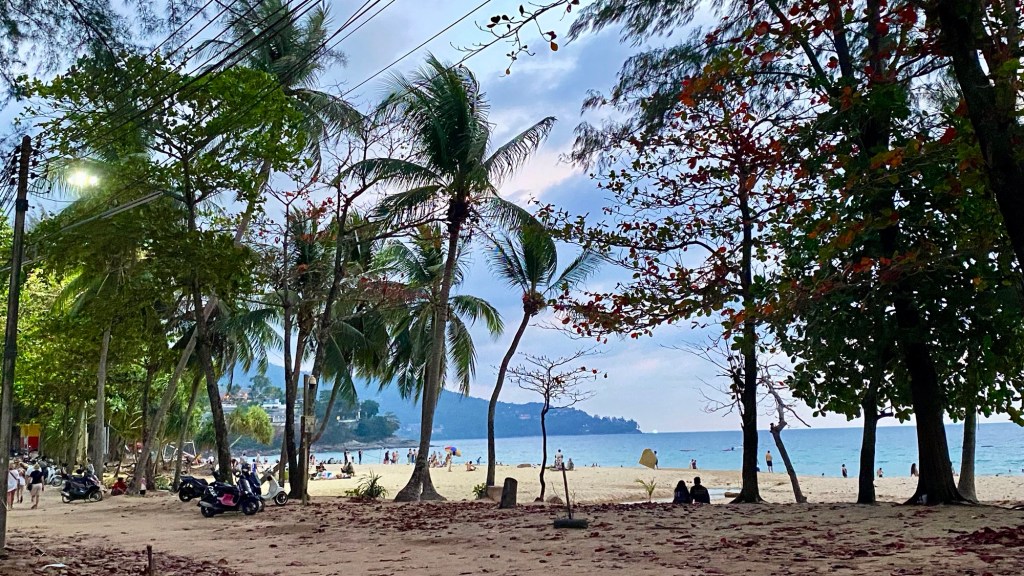
Kamala Beach

If I had to pick a beach to stay at for an extended period of time it would be Kamala Beach, a little less expensive than Surin and a little less crowded and cluttered than Paton Beach.
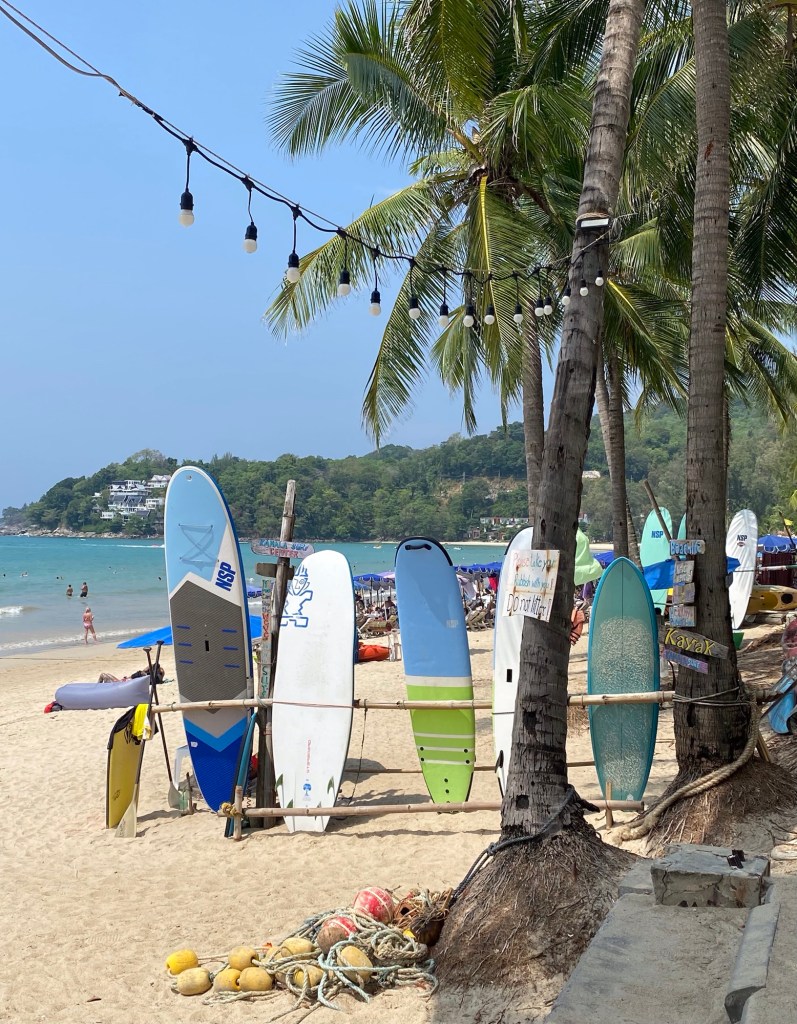
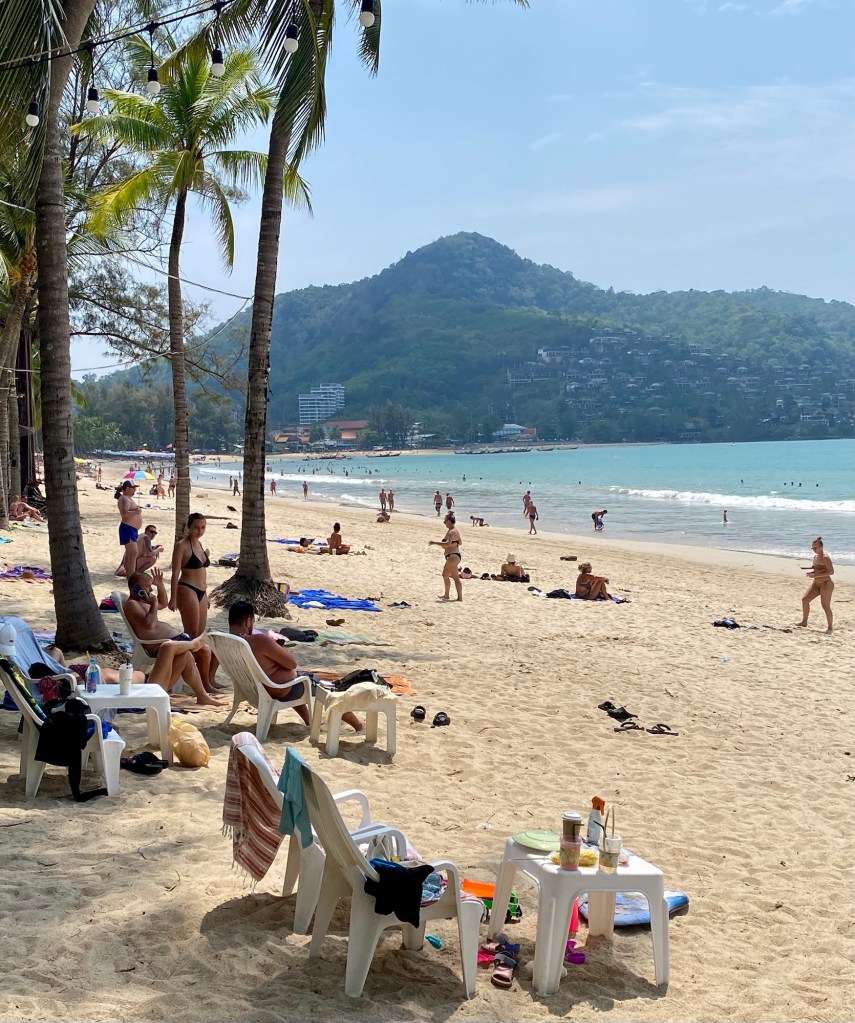
Surfs Up on Kamala Beach
Kamala Beach

Patong Beach

I actually spent more time in a Patong Beach hotel, which wouldn’t have been my first choice but definitely more affordable. I really can’t complain though I was at the far northern end of the beach and my hotel had a balcony with a lovely view of the ocean and the sunsets. It had a cute little pool and the bus that runs between the various beaches stopped right outside my door.
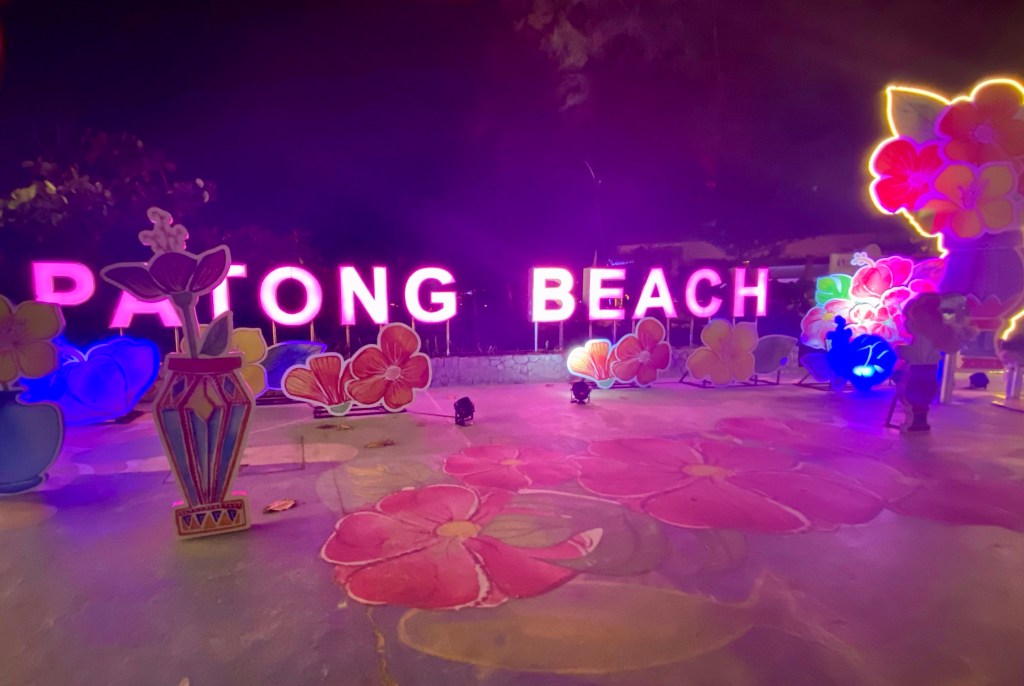
Nicely Lit Up at Night
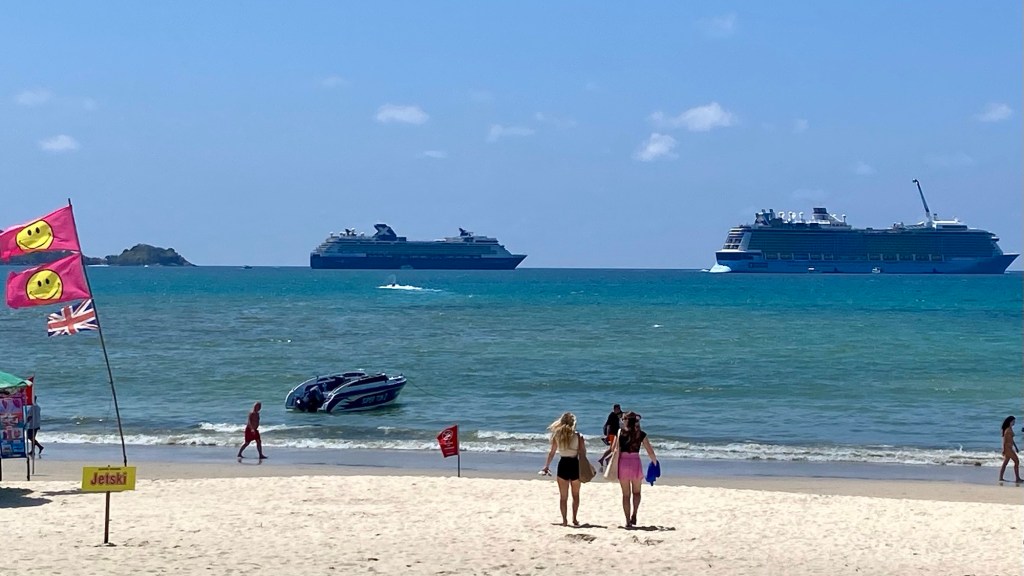
Patong Cruise Ship Day
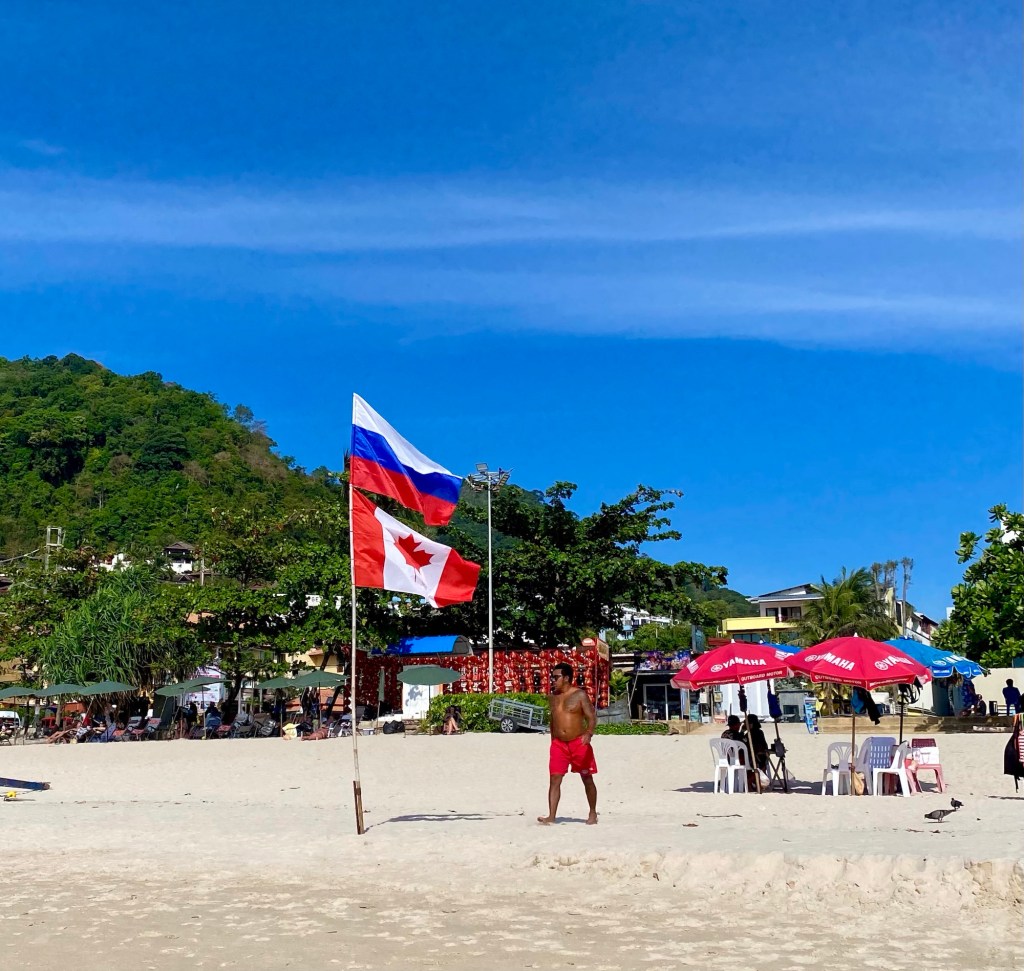
Odd Combo…Canada & Russia
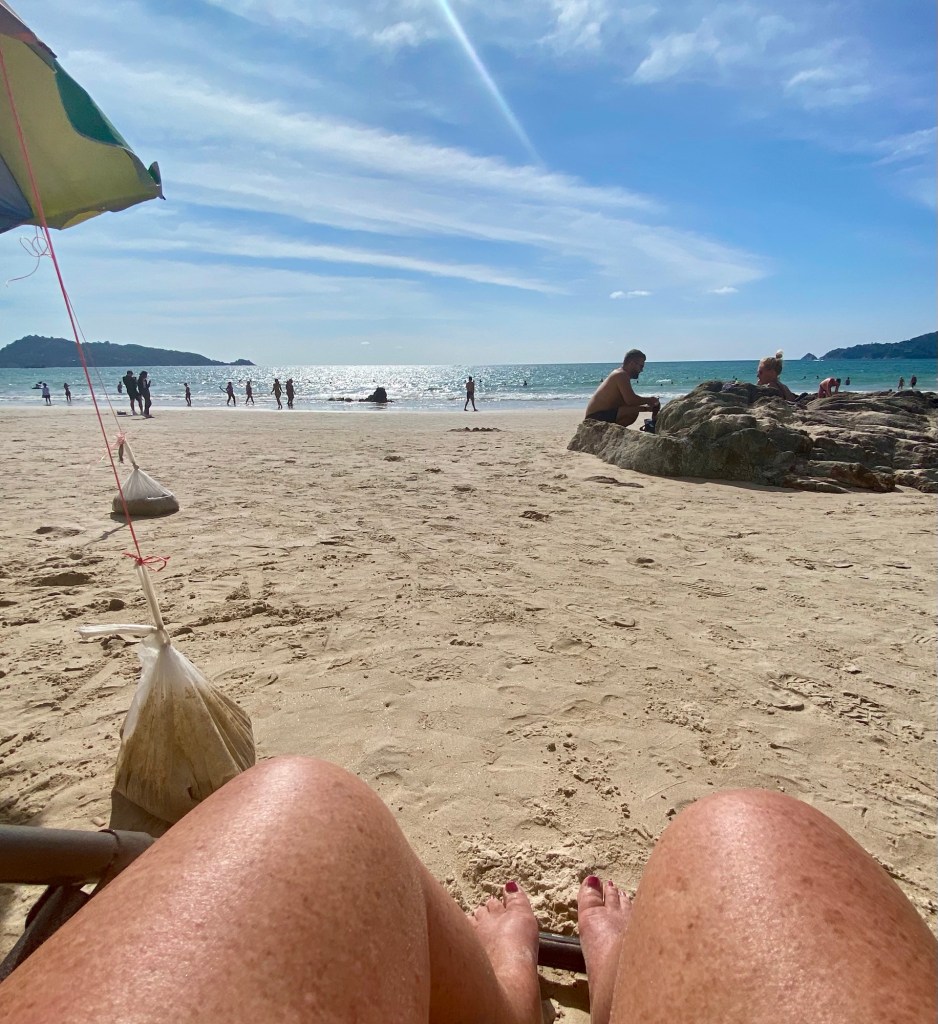
My Patong Perch

The beach chair renters called me Mama and if I missed a day they wanted to know why. They were really sweet and started to give me discounts.
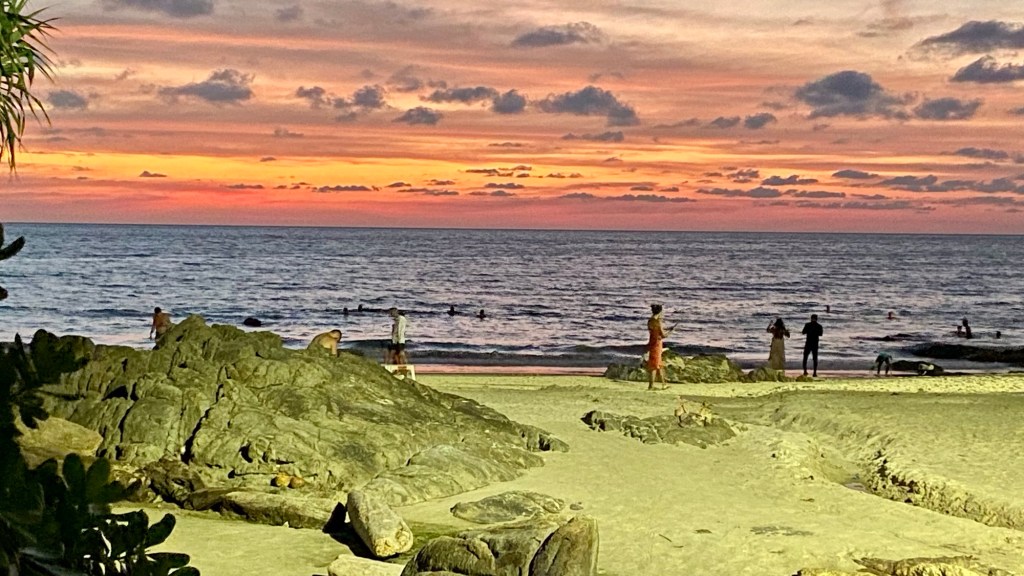
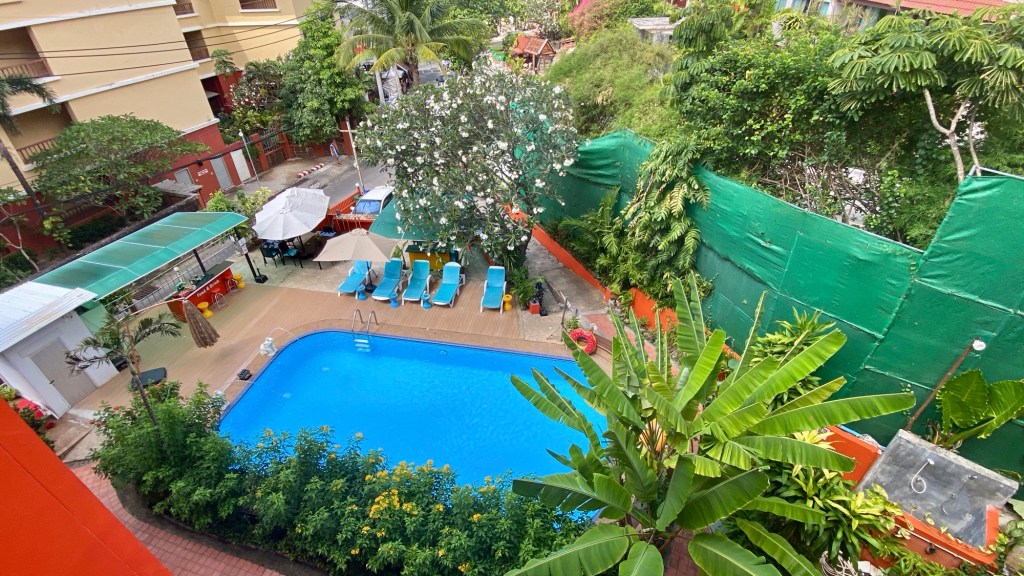
Sand Under Brilliant White Lights Gives a Nice Green Glow
Patong Hotel Pool – Across a Busy Road to the Beach
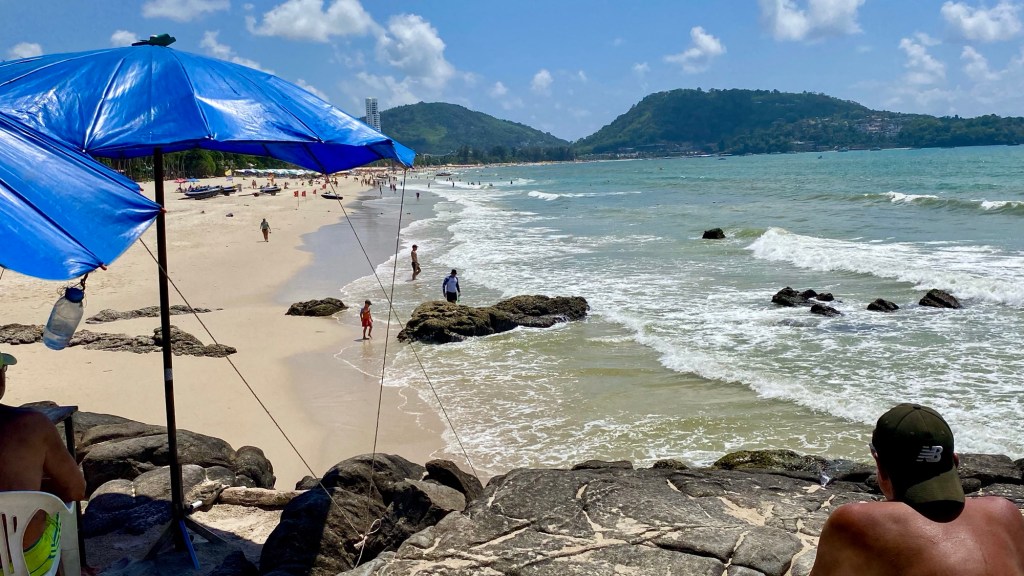
Restaurant on the Rocks – Far End of Patong Beach
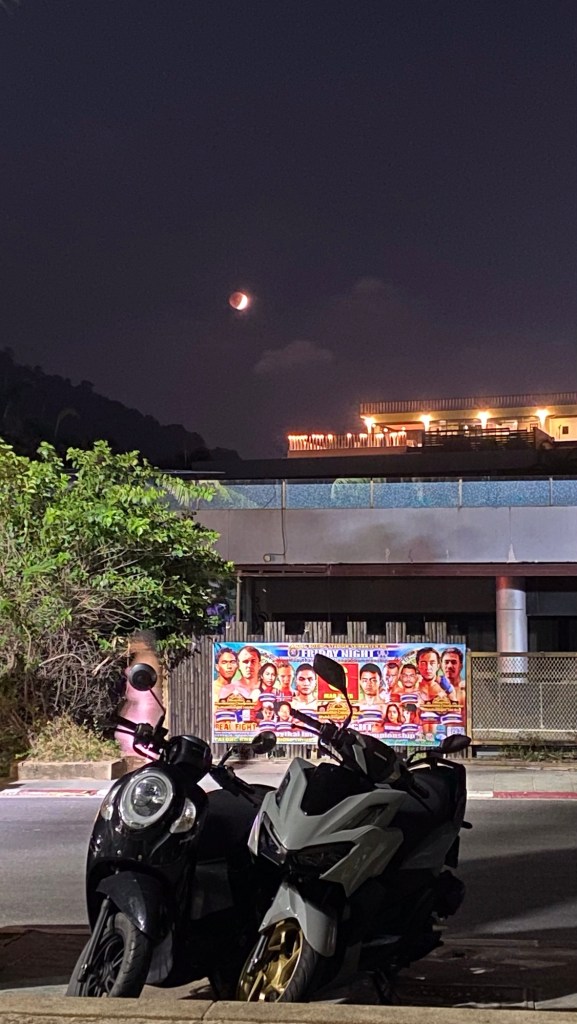
The Lunar Eclipse from Patong Beach

Karon Beach

I had the good fortune of meeting a Thai woman named Nok and as soon as we started to chat we realized we were practically twins. We enjoy the same hobbies, shared many opinions and even like to travel alone. She worked for a large corporation at one time and was sent all over on business so we even shared a love of travel. She very kindly took a day off work to show me around and one of the places we went was to Karon Beach. We had a picnic there and she had brought along friend chicken and sticky rice. She sat and crocheted under a palm tree while I swam in the surf which was a little wild for me. Knocked me off my feet a couple of times, making it very hard to get out of the water.
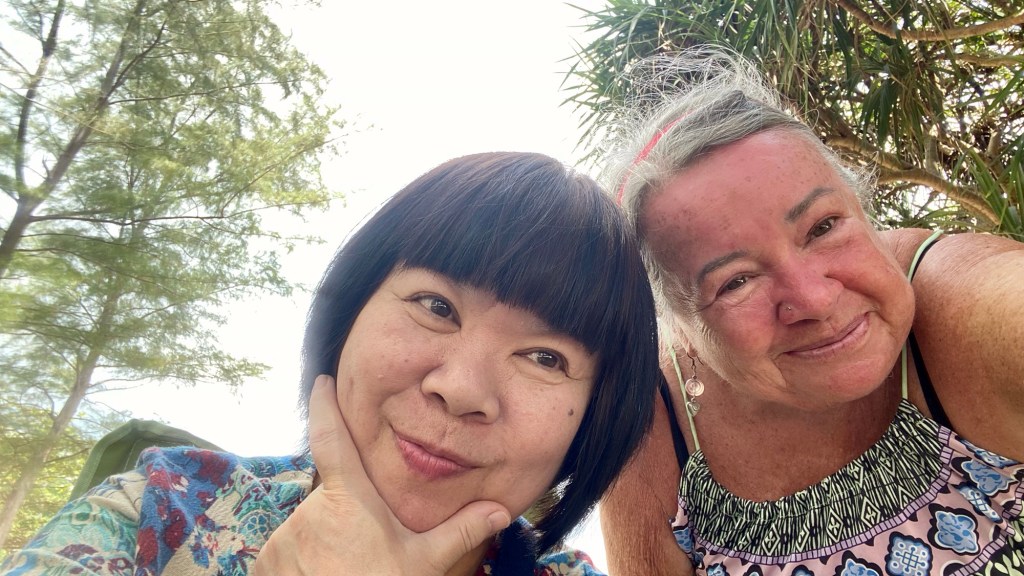
Nok and I at Karon Beach

One thing I missed on all of the beaches was a variety of folks from different parts of the of the world. All of these beaches are packed with Russians who tend to be an unfriendly bunch that speak little English. It’s said that there are over 100,000 Russians in Thailand at any given time and many wealthy families send their children here to sit out the war against Ukraine. They are given 6 month visas whereas most tourists get 3 months and even have to extend that one after 60 days. Of course the Russians pay more for their visas.

Since there were so many Russians about, I became quite curious about the Russian people and I even googled, “why are Russians so unfriendly”. The answer was interesting in that it’s said to be a cultural phenomena not to waste time and energy on what could be viewed as falsely friendly exchanges. A waste of time, but I also read that they are warm and friendly with those that they know. I was told an old Russian saying “enjoy today, it will only get worse.” Which may explain their somewhat dark moods. Like all people, there are a mix of good and bad but the collective exterior Russian persona is decidedly cold.

In my observation the second largest group are the French and then a smattering of other European groups who tend to be more friendly and speak English for the most part quite well. Don’t get me wrong I don’t expect people to speak English everywhere I go but a little friendly conversation goes a long way when you’re a solo traveller. One sure thing is that Russia and Europe are the bulk of the beach holidayers on Phuket. I met the odd Canadian but surprisingly there are very few travellers from the U.S.A.

Patong and Surrounding Areas

Banga Street & Shopping Zone

Patong, the sin city of Thailand, or one of them anyway, was not nearly as repugnant as I thought it might be. Maybe because I only wandered about in the party zone earlier in the evenings.
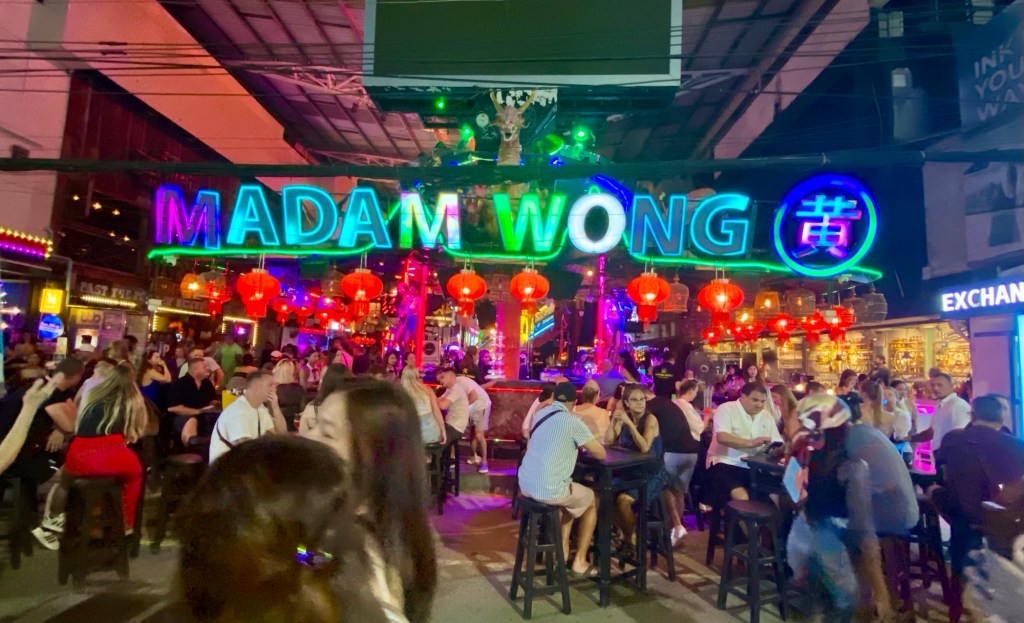
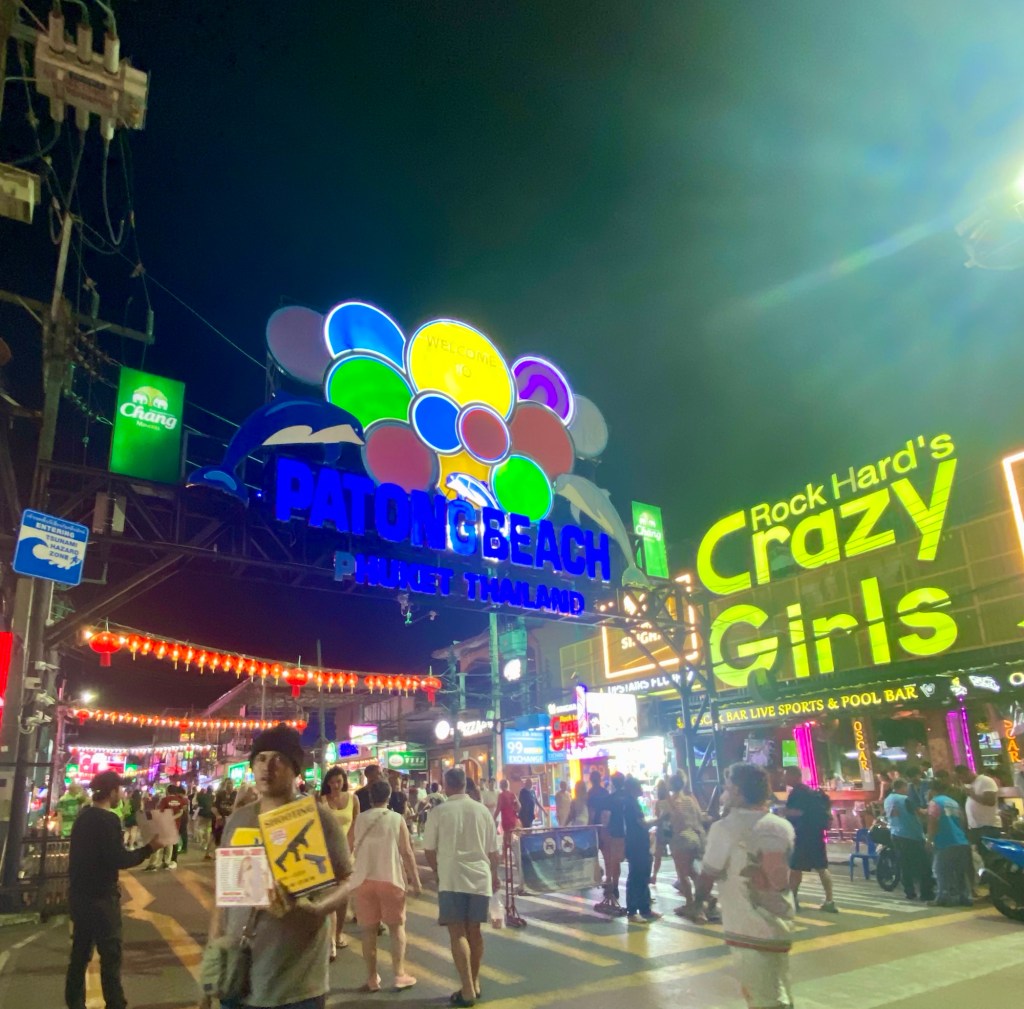
Bars & Clubs Along the Famous Banga Street
Most People Seemed Like Tourists not “Customers”
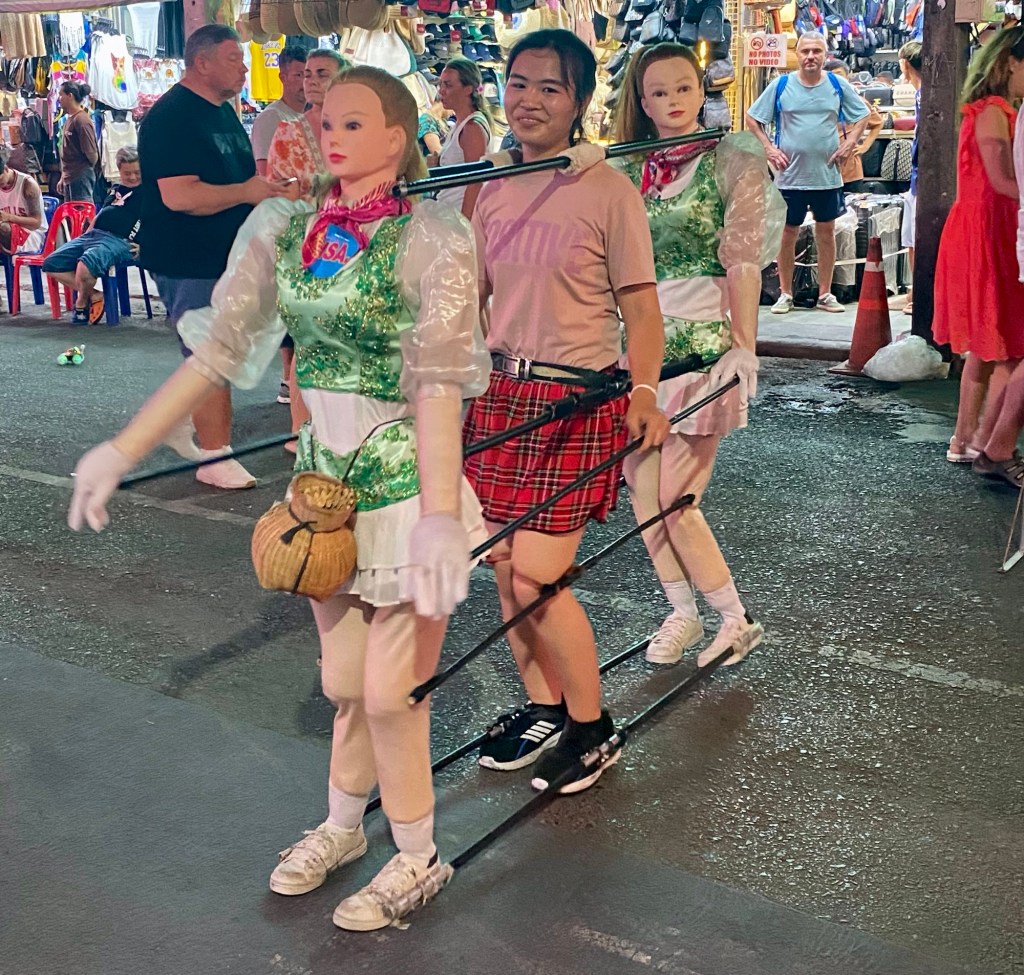
Middle One Moves, Outer Two Follow

One thing I saw was the photo above. It was little creepy to be honest and to music the “real live” girl in the middle danced about and the two “not so real and not so alive” girls on each end followed her steps. Clever but creepy.

Big Buddha

Once again my friend Nok came and collected me to take me to see the Big Buddha as it is known. Going with a local I learned all kinds of things about the Buddha that I might otherwise have missed.

For one thing, Big Buddha was a commercial venture created for tourism and not a holy site with deep history. It was opened some years ago but due to poor engineering it was not quite completed when the government stepped in and shut it down. I was lucky that on March 3rd I was there for the reopening that followed a two year hiatus. Apparently the engineers failed to determine the impact of the weight of Buddha and during a heavy rainstorm the settling of the monument caused a land slide killing several people living on the slopes below. Supposedly the faults are rectified and the site was deemed safe to reopen. The views from the Big Buddha are amazing.
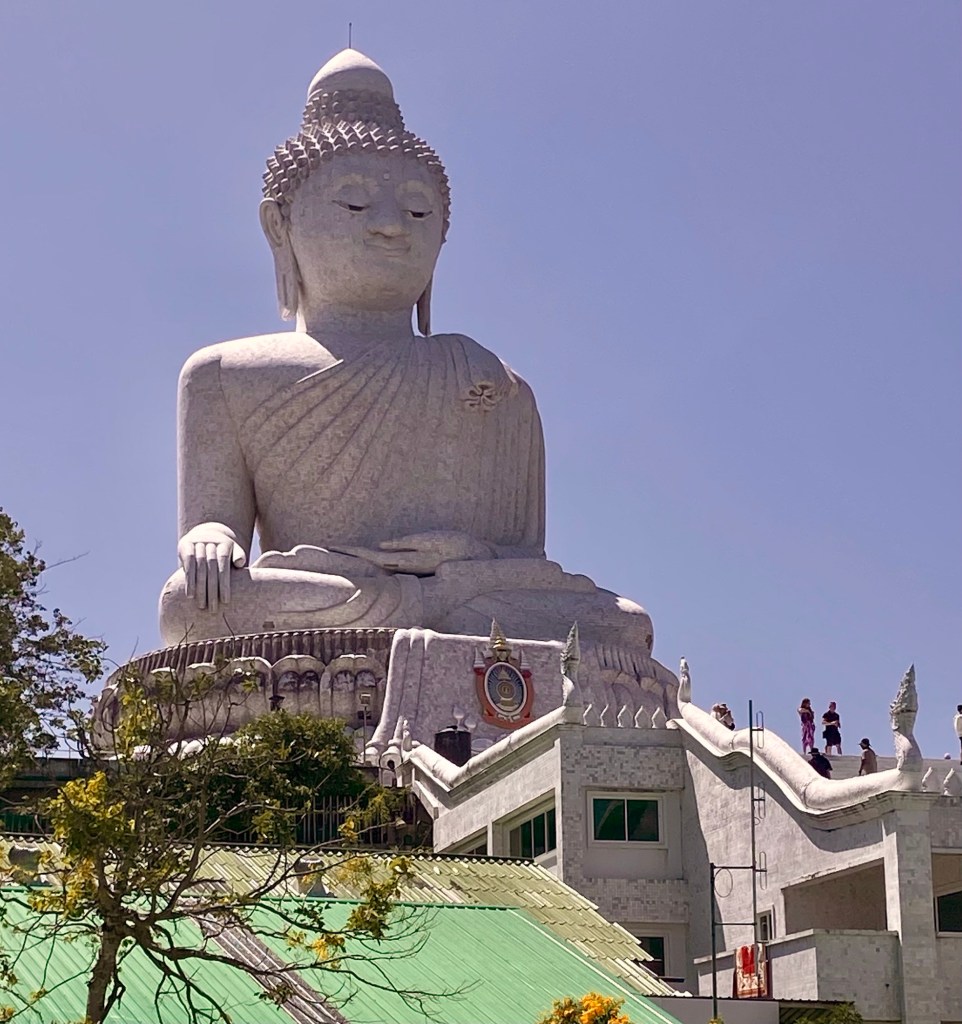
Big Buddha

The monument to Buddha is concrete covered with marble tile. As of yet there is nothing inside the open space beneath the Buddha but that may come.
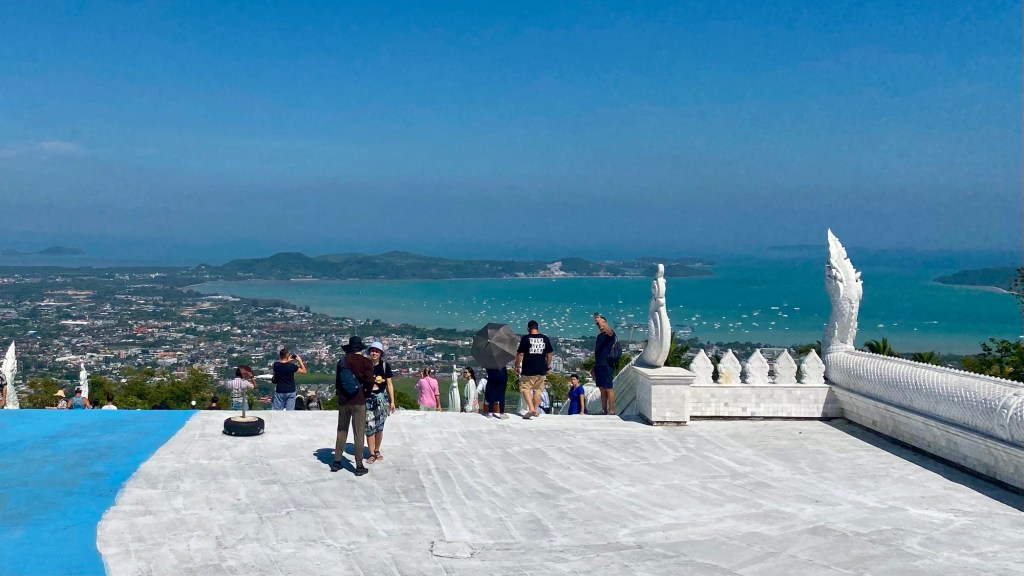
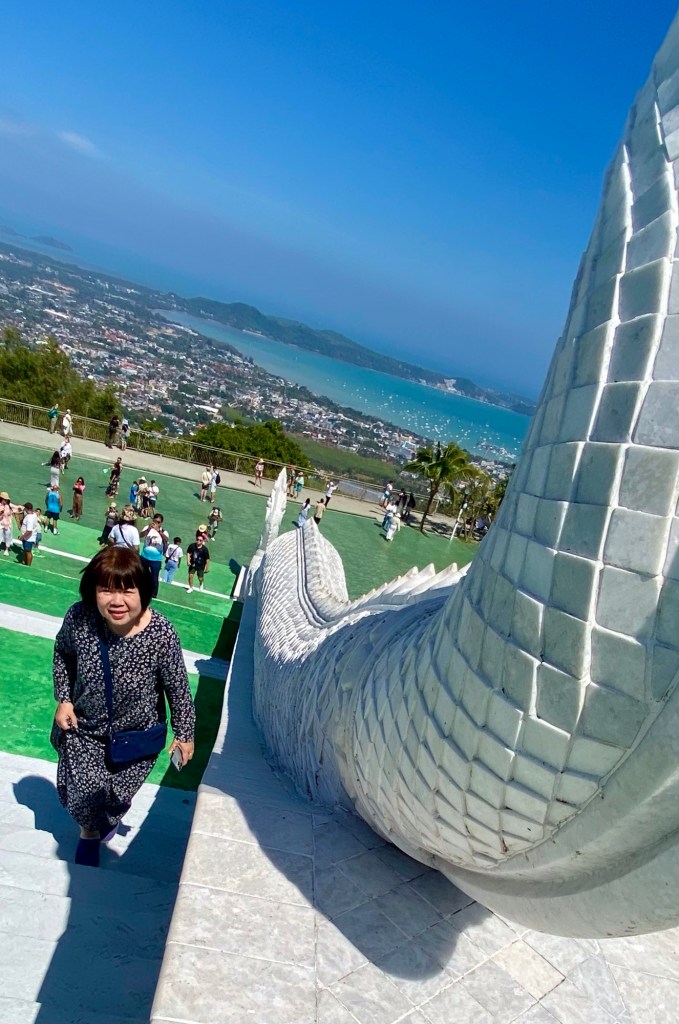
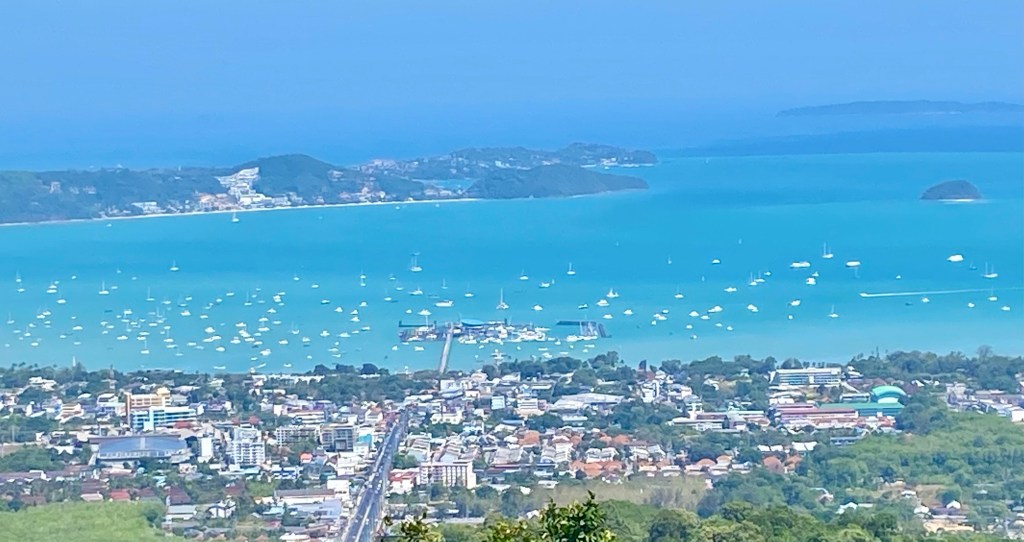
The View
Nok Climbing the Dragon Staircase
Another Gorgeous View Shot

I was surprised by how much I enjoyed Phuket Island but meeting my Thai friend Nok had a lot to do with that. Between picnics on beaches, shopping trips, massages, tours of Phuket and gifts of crocheted items I appreciated the time she took to spend with me and to answer my many questions. I have extended an invitation for her to visit me in Canada and one day I hope we meet again.

And now off to Langkawi Island via Kuala Lumpur in Malaysia.

.
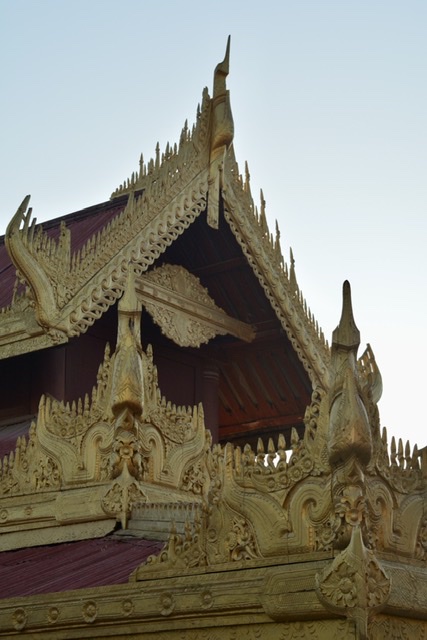
Mandalay, Myanmar

Where the catfish play…

Mandalay

Getting off the boat in Mandalay was a mad rush of taxis and Tuk Tuks vying for our business. Of course you have to bargain and I managed to get the price down from 10000 kyats to 8000. I established that this was the normal price through a series of hand signals with a fellow passenger as he was whisked away into the crowd. At this time that is worth about $8 cad. This scrum of who will carry who and for how much is always invigorating and riding in a Tuk Tuk is a much more in the now experience that being shut up in an air conditioned taxi.
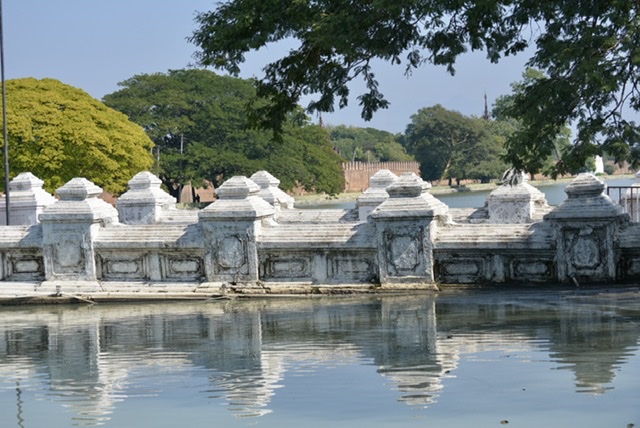
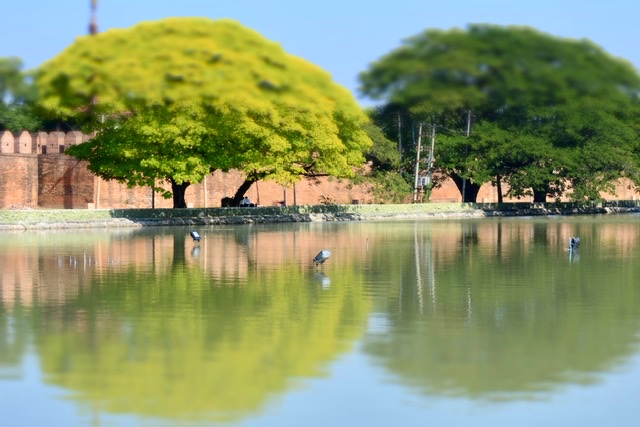
My hotel, The Royal Pearl, in Mandalay was very close to the palace grounds but based on the hallways I had a bit of a gulp when I first arrived, but it turned out my room itself was quite lovely. It was well located and walking distance to the main sights. Not the prettiest city, Mandalay for a couple of days might be sufficient unless you are able to get out into the countryside. Glad though, to have some time to walk and stretch my legs after the boat trip, I left Royal Pearl after breakfast and headed to the palace, the grounds of which are huge and surrounded by a moat. Foreigners can only enter from the east gate for 10000 kyats so it was a long lovely stroll along the broad sidewalk that skirted the moat around the palace.

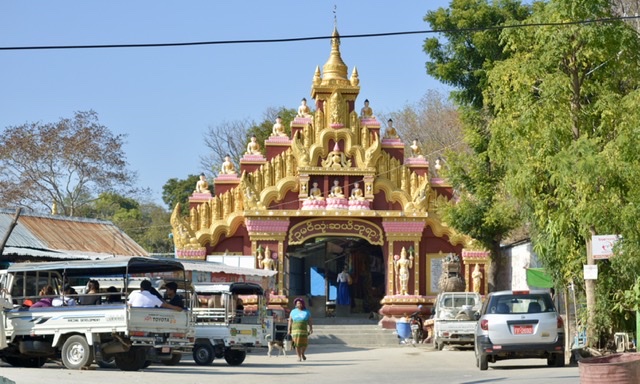
But as chance would dictate my direct beeline took an interesting turn when a young guide talked me into a full day tour outside of Mandalay, across the Ayeyarwady to visit Sagaing (temples)and then return via a country market which he assured me far surpassed the beauty and grandeur of the palace and the pagodas in Mandalay. Turns out the tour was on the back of his motorbike. A little wobbly getting on the first time he said to me “Mother you are very strong”to which I replied “yes and you may call me grandmother” trying to muster all the esteemed treatment possible given my undignified lunge on to the bike. 

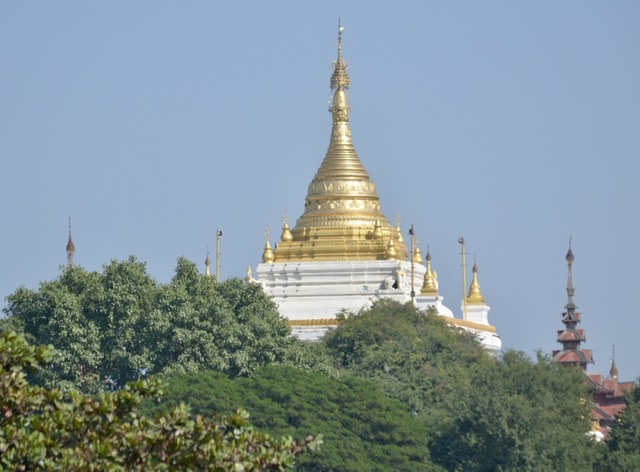
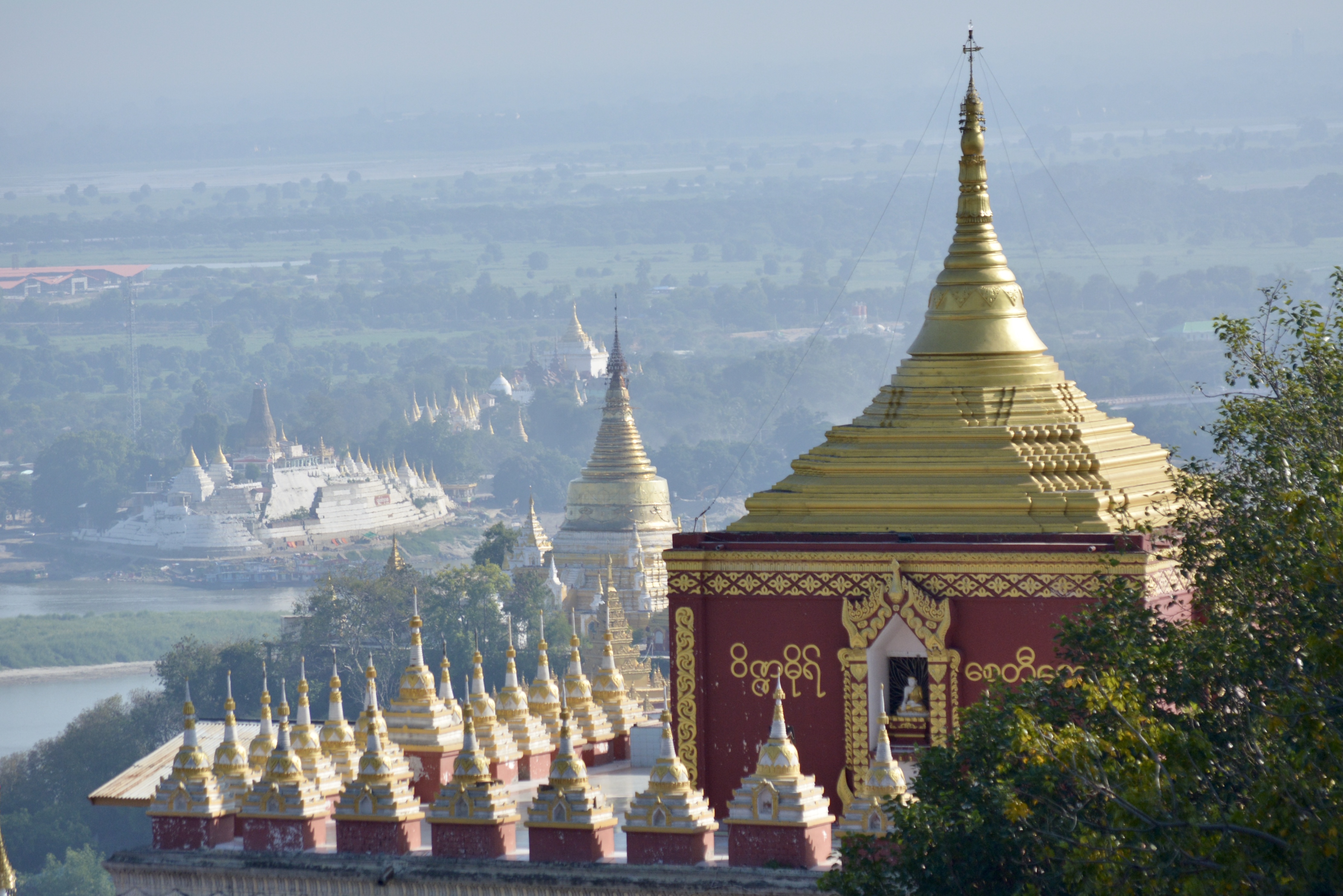
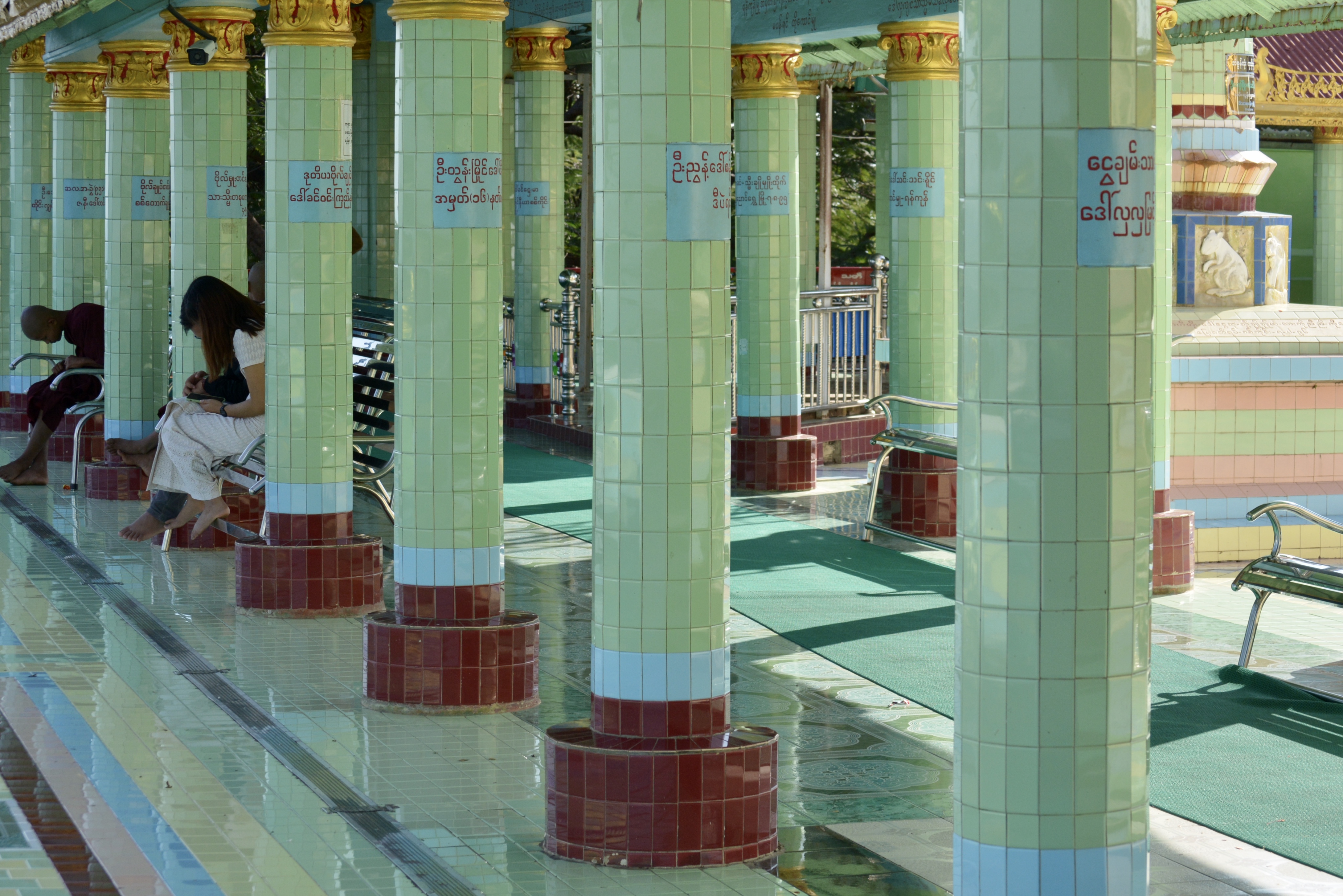
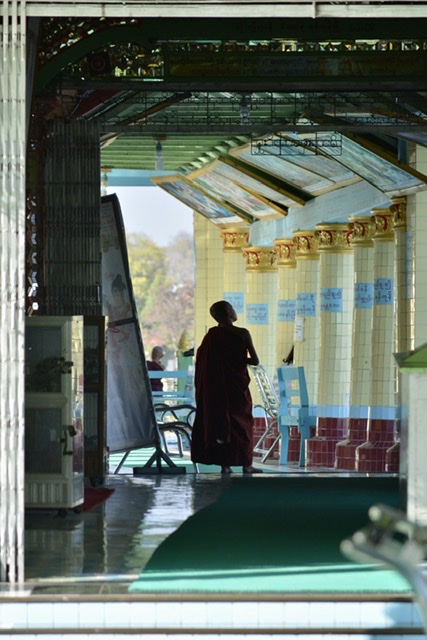
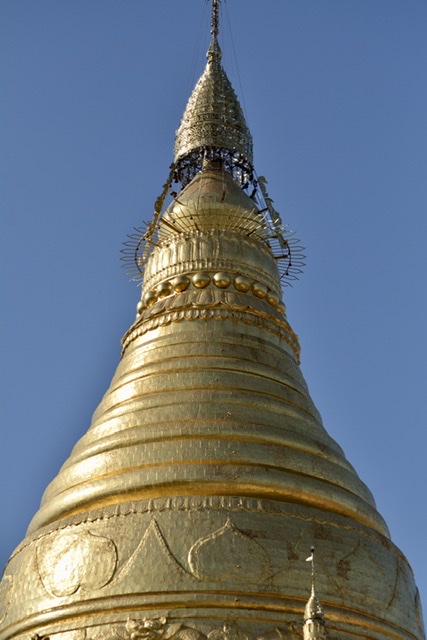
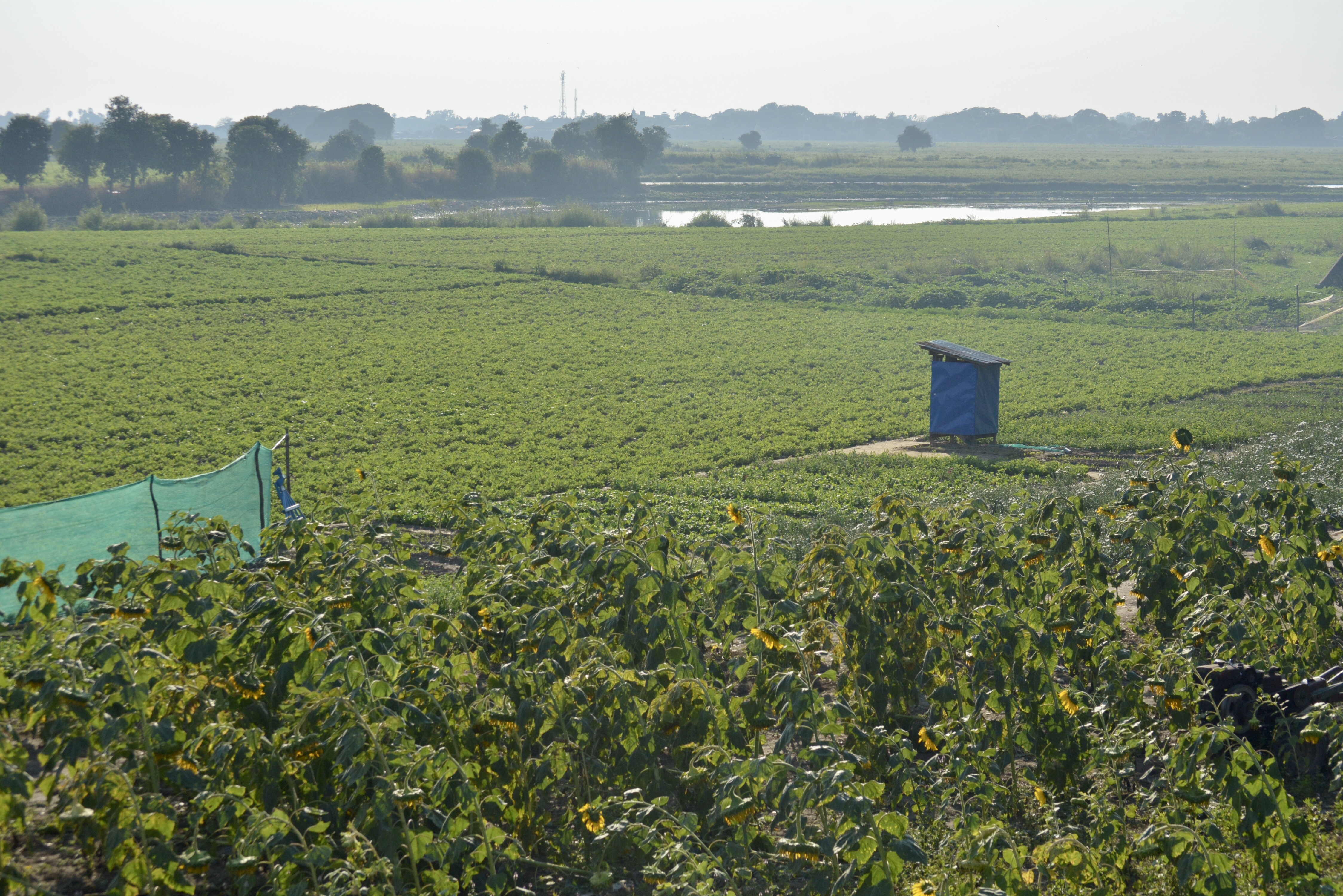
He was right and the tour was great and took me up into the hills that we had passed on the boat, great vistas and amazing pagodas (yes more pagodas) we spent the day whizzing up and down the hills in the fresher country air. Turns out my guide knew just enough English to talk me into the tour and not much more. At the top of Sagain Hill, which is dotted with white and gold pagodas, is the Soon U Ponya Shin Paya and the Unmin Thounzeh temples.

My guide offered me the opportunity to have an authentic Myanmar meal at a road cafe. They served a meat dish of your choice along with rice and then lifted a bug screen from an array of a dozen or more small dishes, condiments, vegetables, pickles, sauces etc. Myanmar excels in fresh veg dishes; green beans, cauliflower, squashes of all kinds, etc. There is a subtle spicing not as hot as Thailand but slightly above Cambodia. I paid “our” bill and out of the corner of my eye I saw the owner give my guide a kickback, can’t complain as the total for both of us was less than 5.00 Cad.

After tootling around the Mandalay hills for five or so hours we crossed back over the Ayeyarwady River to visit a pier/market (think Granville Island) for a short stop. By now I was mounting and dismounting like a pro and wasn’t nearly pulling my little guide over to the pavement each time.

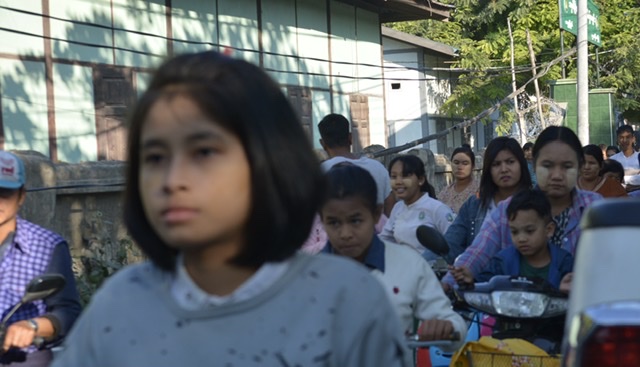
How motorcyclists weave in and out among the traffic, traveling together like a school of fish, always close but never touching, is beyond me. The only rule seems to be if there’s a space…fill it. All in all it was an interesting and exhilarating day and my butt was glad to see the east gate foreigner entrance to the royal palace of Mandalay. 

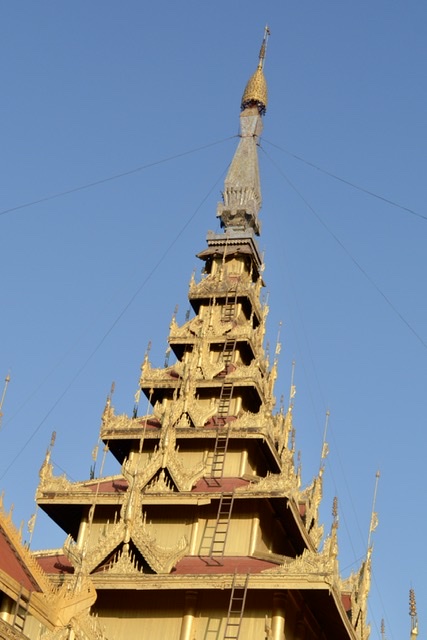
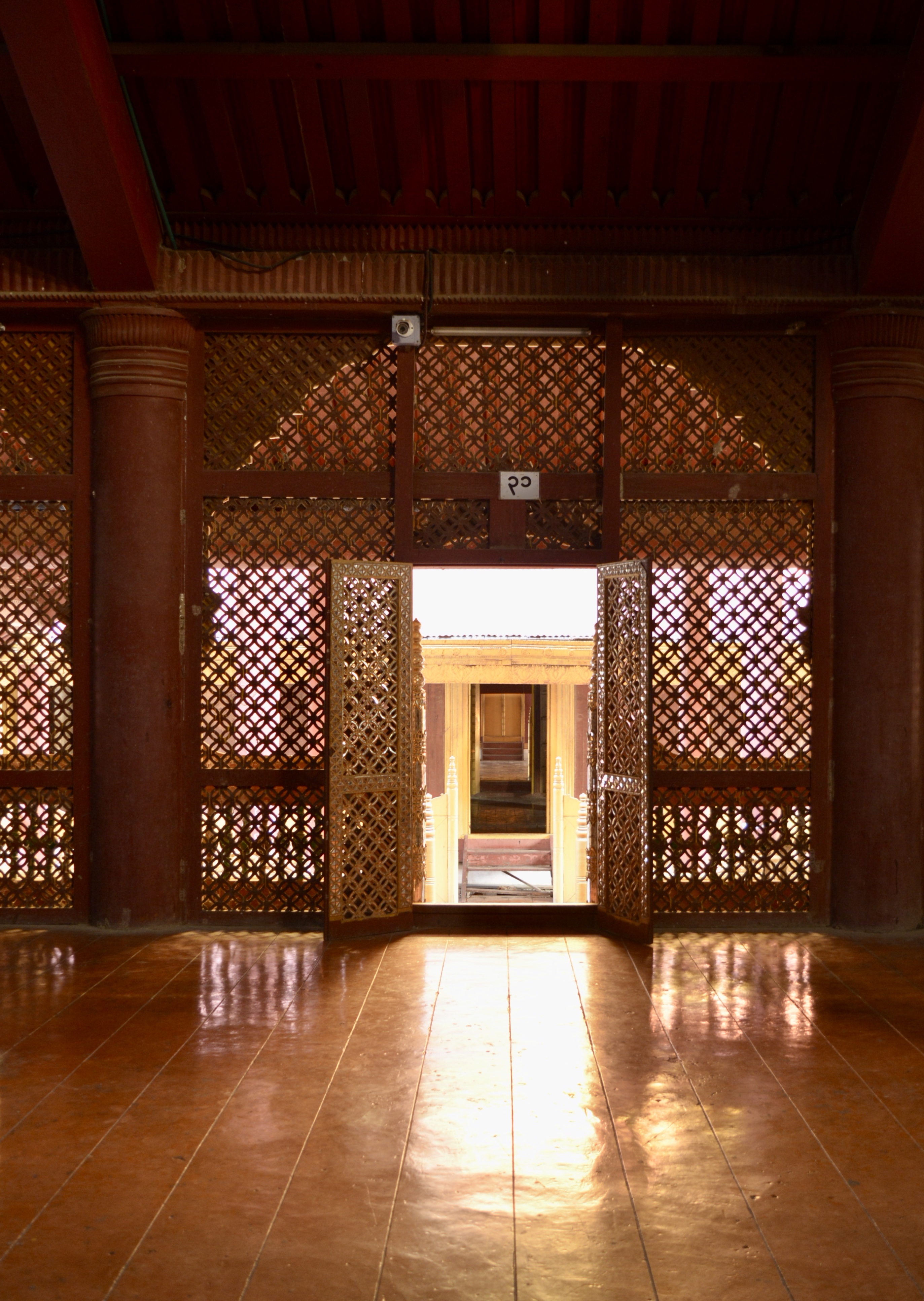
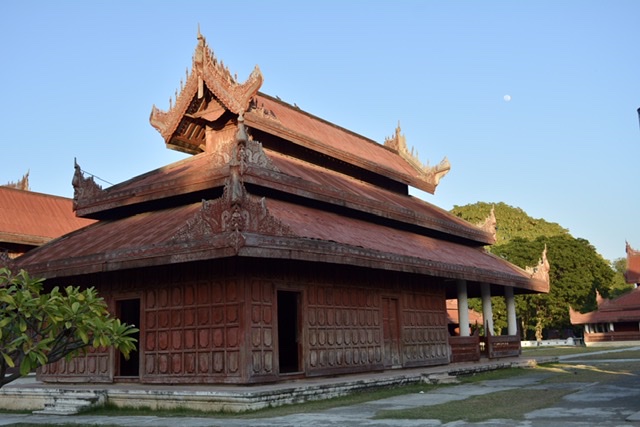
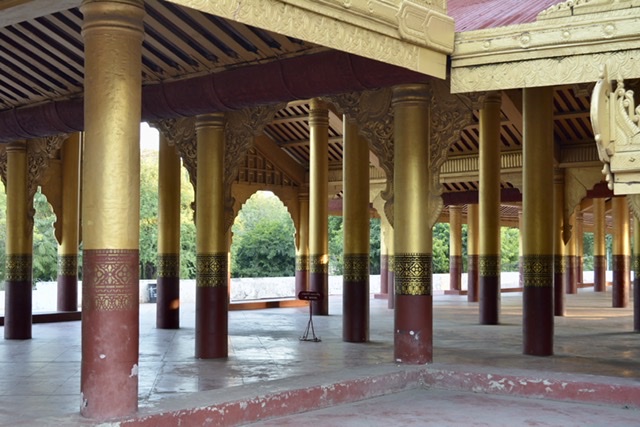
It is a very long walk from the gate to the actual palace grounds and along the way there are army barracks for soldiers and their families. Other than that the grounds are pretty and a nice place to walk. The palace itself is rather minimalist when compared to others, like the one in Bangkok, but it’s simplicity leaves a lot to the imagination. There are a few structures that would have been reserved for the royal family and clustered around them were panabodes that would have been reserved for the retinue that served them.

Too late to climb Mandalay hill for the sunset, which apparently is the Mandalay thing to do, I returned to my hotel and caught the last of it from the rooftop restaurant of the Royal Pearl. Tomorrow an early flight to Heho, gateway to Inle Lake.

Solo Travel in Yangon Myanmar

A beautiful dream come true….

Between books, movies and a letter my brother once wrote to our mother in which he told her the was “on the road to Mandalay”, there awakened in me a romantic, nostalgic ideal of a place so different, magical, golden and so far away I could only dream of seeing it. But with some careful preparation requiring library time, online research, talking to people that have been here, and applying for and being granted a visa, here I am.

Getting here from Bangkok was easy and I had the foresight to ask , My Hotel (that is the actual name) to send a driver to meet me at the airport. Generally pick up service is out of my price range but I thought as a first time traveller to Yangon it would simplify things and it did. But, as I discovered, it is way cheaper and easy enough to take a taxi from the airport to your hotel. My Hotel is lovely and I would recommend it as being in a great location, well priced and right across the street from The People’s Park and the Shwedagon Pagoda, which I could see all lit up as I settled into my room. The staff at the Hotel are friendly and polite and make every effort to make you feel welcome, which I came to discover is a hallmark of Burmese people. The first thing upon arrival you are presented with a cold fruit juice before the business of check-in commences.

Day one I made a list on paper of the places I wanted to visit because I would never remember how to spell never mind pronounce them. Then I made a google map trail with all of the sites and started out the door. My driver that picked me up at the airport had helped me get cash (not available outside of Myanmar) and buy a SIM card with data making google maps and other on the go research possible.

First stop was a travel office where they helped me buy a ticket for the boat between Bagan and Mandalay where I will head after Yangon. All flights and hotels I have booked through Hotels.com and Air Asia or Myanmar airlines, flights being relatively cheap. I find the hotel prices a tad higher than in Thailand, but so far I have not been disappointed. As well I booked a private taxi tour in Bagan for 35USD. Generally making arrangements in a reputable travel agency rather than in your hotel can result in a greater variety and often a better price of options.

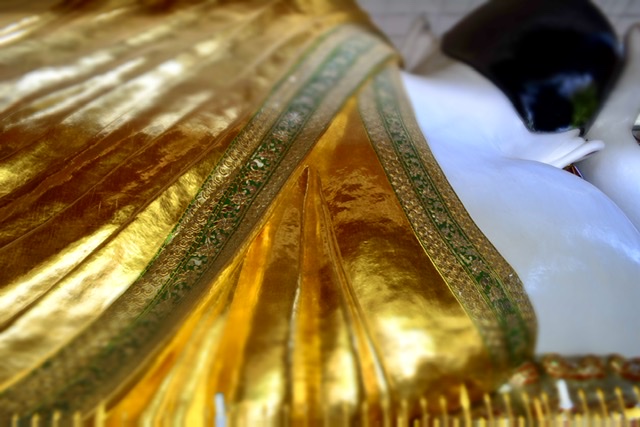
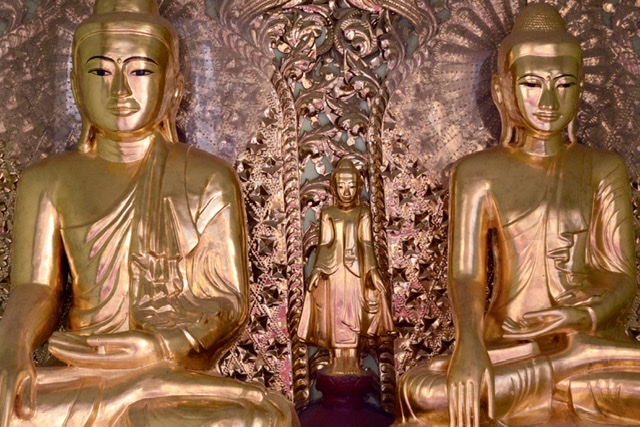
Business taken care of I headed to my first stop on the google map trail, the giant sized Reclining Buddha, weighing in at 66m long, 7.3m long face, 2.7 m worth of nose and 50cm high eyes, but who’s measuring? Not really old, built from 1959 to 1974, it is housed in the Chauk Htat Gyi Pagoda. Maybe the most interesting thing about the place was a giant sized mural depicting the life of Buddha, there were some English explanations and it covered his pre-life existence to his death and of course rebirth. The monks were welcoming and entrance was free/donations welcomed. Both the scale and the colour of the Buddha’s feet were impressive as were the golden robes.

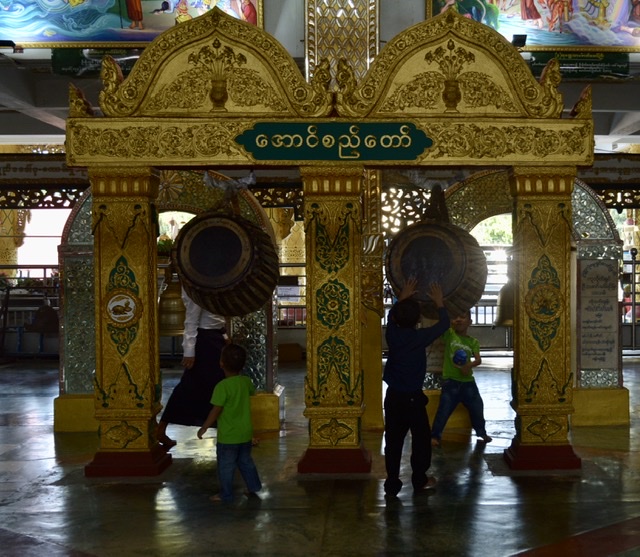
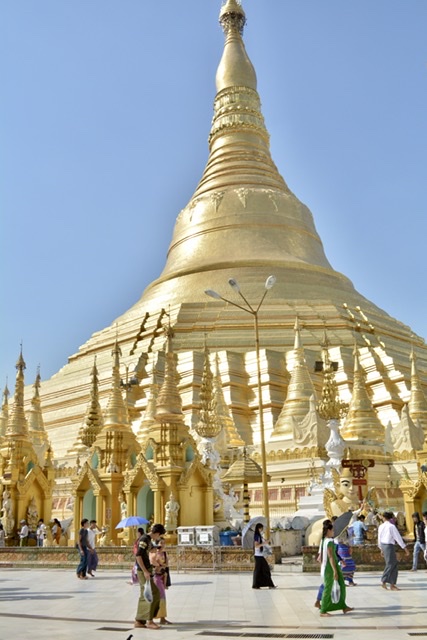
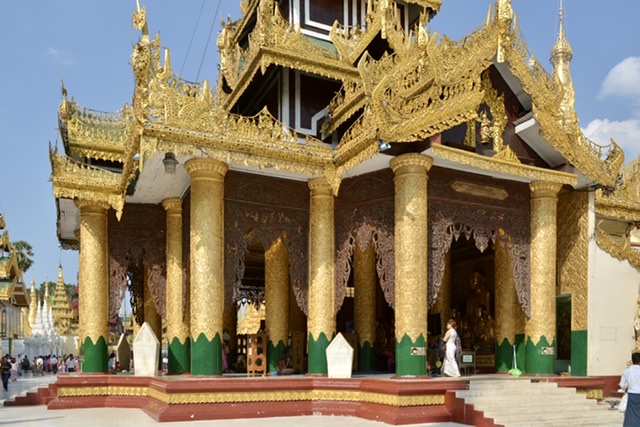
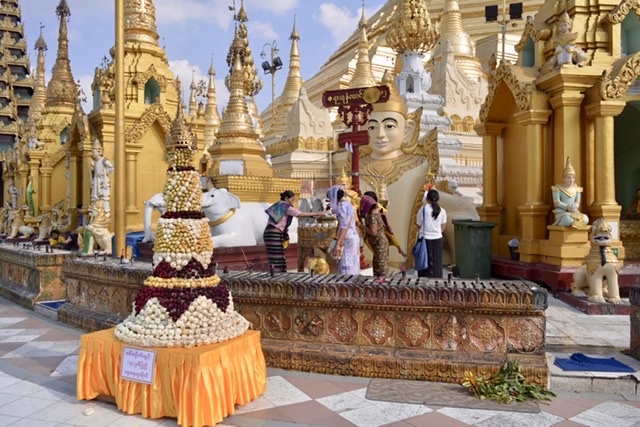
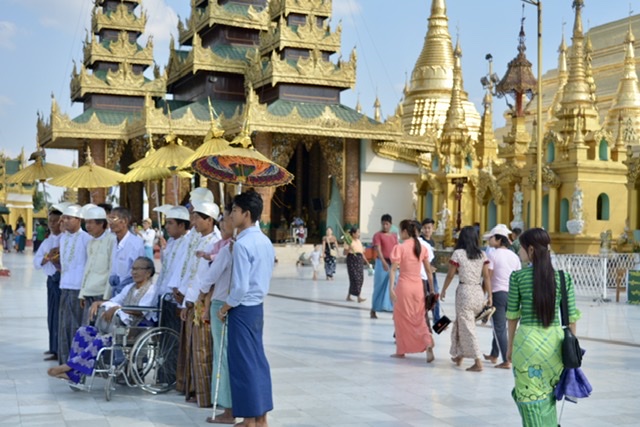
My second stop was the most important spiritual home for the people of Myanmar. The huge golden stupa of the Shwedagon Pagoda is visible from many parts of the city. The shrine is said to have been built during the lifetime of the Buddha and houses eight of his hairs. I was very fortunate to hire a guide at the entrance and he was very informative. I never would have gleaned as much had I attempted it on my own. Si Thu, named for the day of the week he was born on and another word with significance to his parents, explained that everyone born on the same day off the week has the same first name or version thereof. Unlike us they do not have surnames and in business and relationships it is thought that some days are more suited than others to a positive interaction.

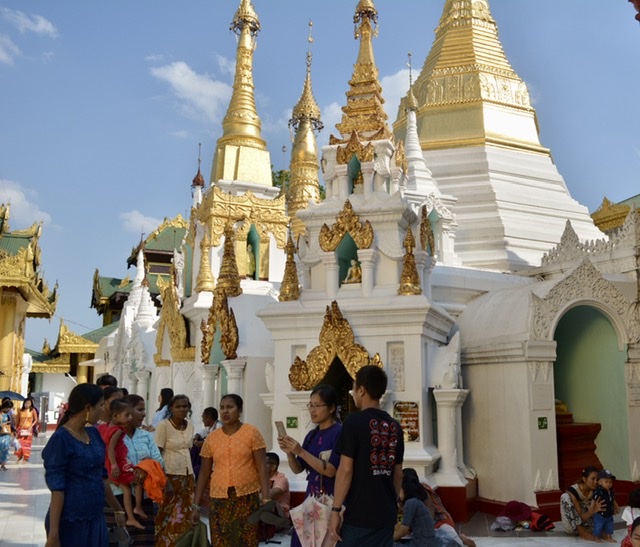
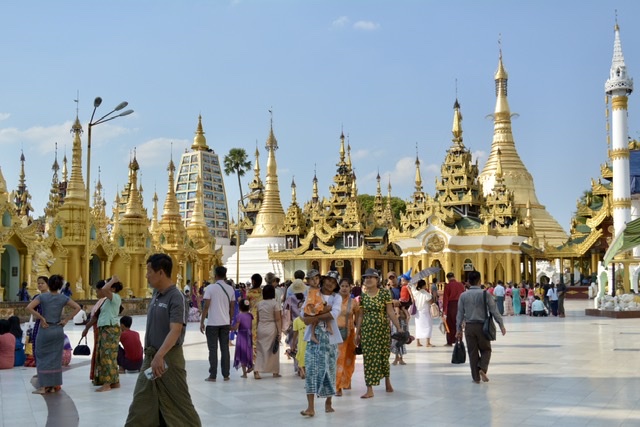
The most notable thing, even at the airport, were the Burmese people, they are calm, elegant and well-dressed. For the most part they still wear the long beautiful skirts and long-sleeved blouse/shirts that reflect their modest natures. They walk tall in these skirts and even though the men in particular, often wear a western style dress shirt they pair it the “longyi.” I was so lucky when visiting Yangon that it was Independence Day, a holiday where people travel and gather with family for outings and devotions in the temples. We saw many university graduates being photographed by family and friends with the stupa in the background demonstrating the importance of the shrine to the people. Another notable group were novitiates who, carrying golden umbrellas, gathered with their sponsors, on their last days before entering a monastery. The sponsors support them financially while in the service of Buddha which can be for a short time or a life time of service, but something that is undertaken by all men.

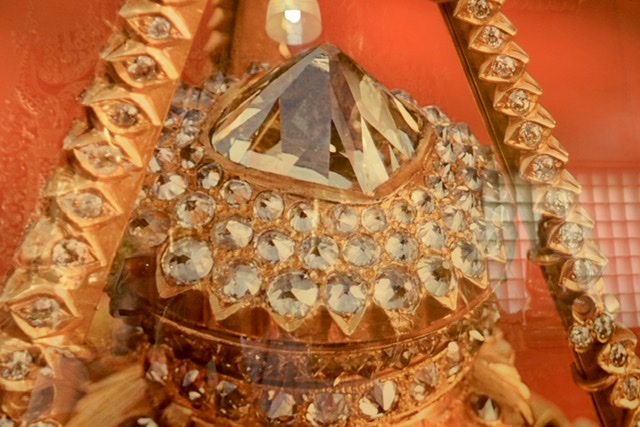
Archeologists have dated Shwedagon as having been started somewhere between the 6th and 14th century, but it withstood the tests of time, neglect, government, earthquakes and stands as a testament to Buddhist devotion. The Pagoda, complicated layers of internal bricks and mortar is covered with gold plate near the top, gold leaf in the lower areas and is encrusted with jewels and a huge diamond is the icing on the cake.

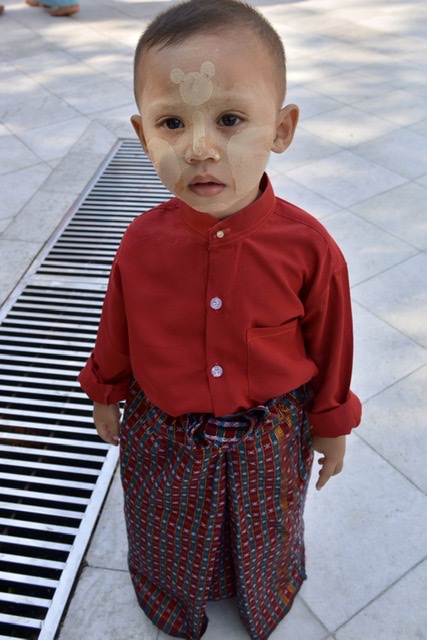
A busy day even by Shwedagon standards, I found the people were polite, curious and many wanted to practice their English and they didn’t mind having there pictures taken, in fact they seemed quite happy to oblige. The children I encountered were particularly endearing and well behaved, and obviously treasured by their families. Of course when visiting the temples one must leave ones shoes at the door, and it’s nothing short of a miracle that those same slippers, sandals, runners and flip flops find their way back to the right pair of feet. In order to avoid being offensive, Western guests are given a longyi to wear in exchange for a refundable cash deposit.

My guide had a couple of interesting stories involving the British regime, the fervor of which may have been influenced by the fact that it was Independence Day. The first story concerned a golden Buddha, returned to Myanmar by Queen Victoria following a dream that schooled her in the error of having removed it from it’s rightful home. The second involved a huge bell weighting many tons that the British army attempted to make off with but somehow let it slip into the river where it languished until rescued by the ingenuity of Burmese who managed to float it using bamboo pools and ferrying it back to the shore.

The rubies, emeralds, diamonds, sapphires (to name a few types of stones) encrusted in gold are most impressive. Although you can’t climb up to see them, there is a photo display of the different sections of the pagoda and the gemstones that adorn them. Devotees are able to purchase a gold plate and they have their names engraved. Rings and other forms of personal jewelry are donated and hung in different sections as offerings to the Buddha. Of course the biggest and most impressive stone of all is the diamond that tops the spire. Clearly an important place, the Shwedagon crowds were thick, I was glad I went (unwittingly) on a national holiday, giving me so much access to people watching.

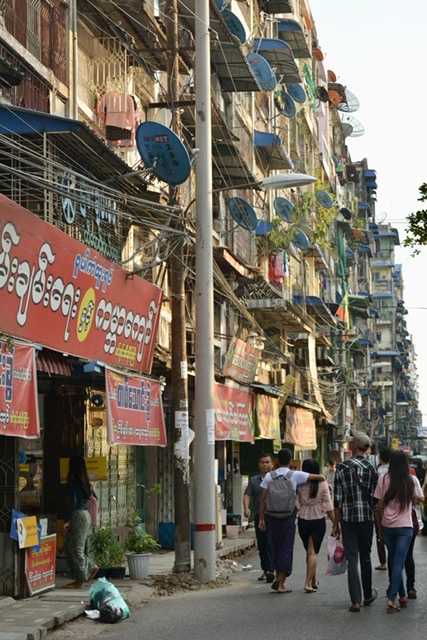
Leaving the Pagoda behind I made my way to downtown Yangon. A densely populated area, you can really see the impact of urbanization as people from the countryside seek their fortunes in the city. The best time to just wander and watch is in the heart of a city and generally there is something interesting happening at the turn of every corner.

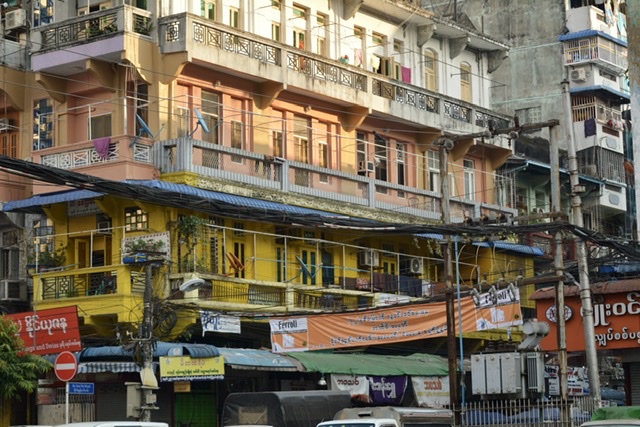
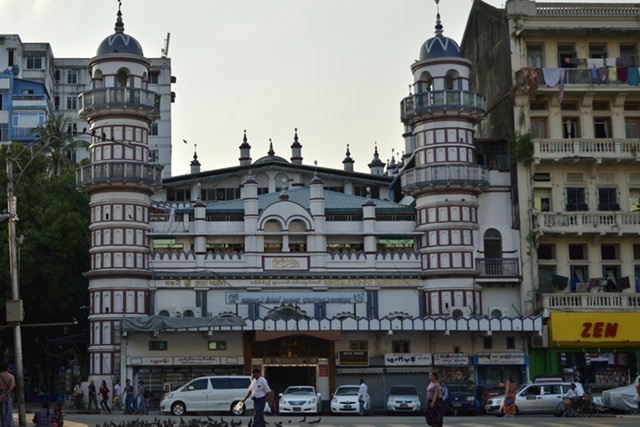
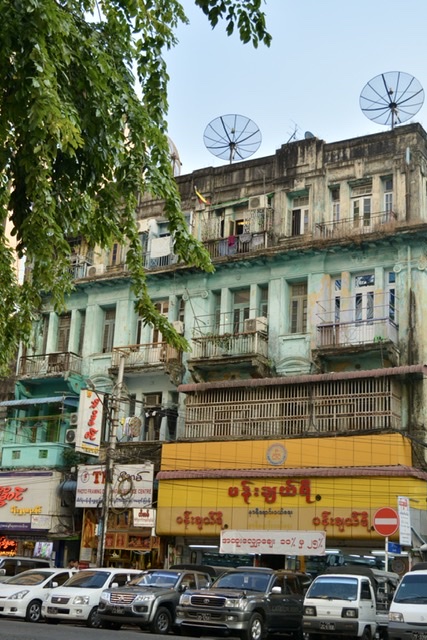
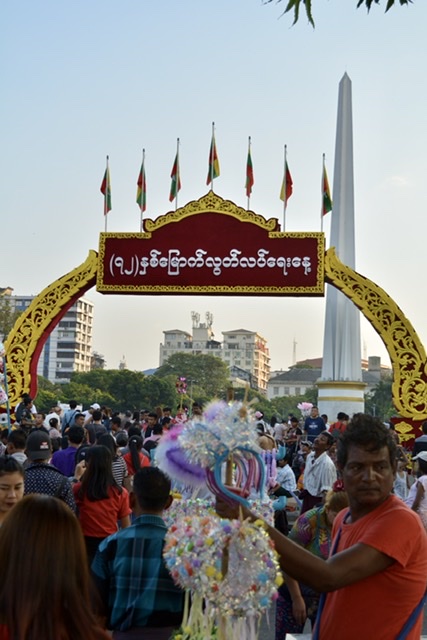
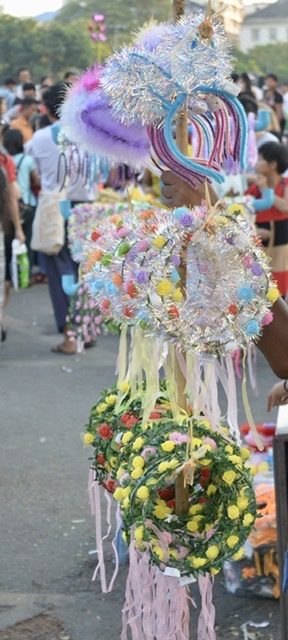
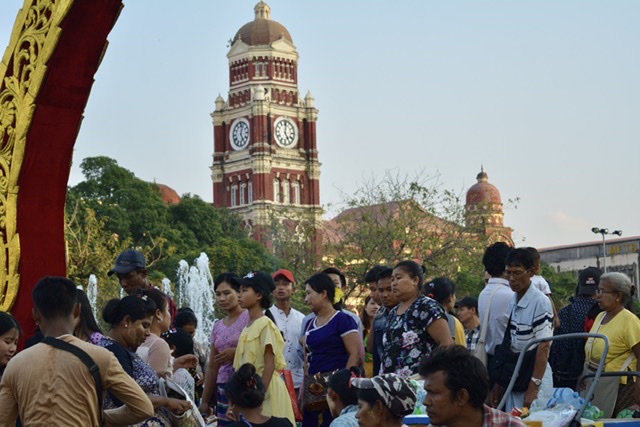
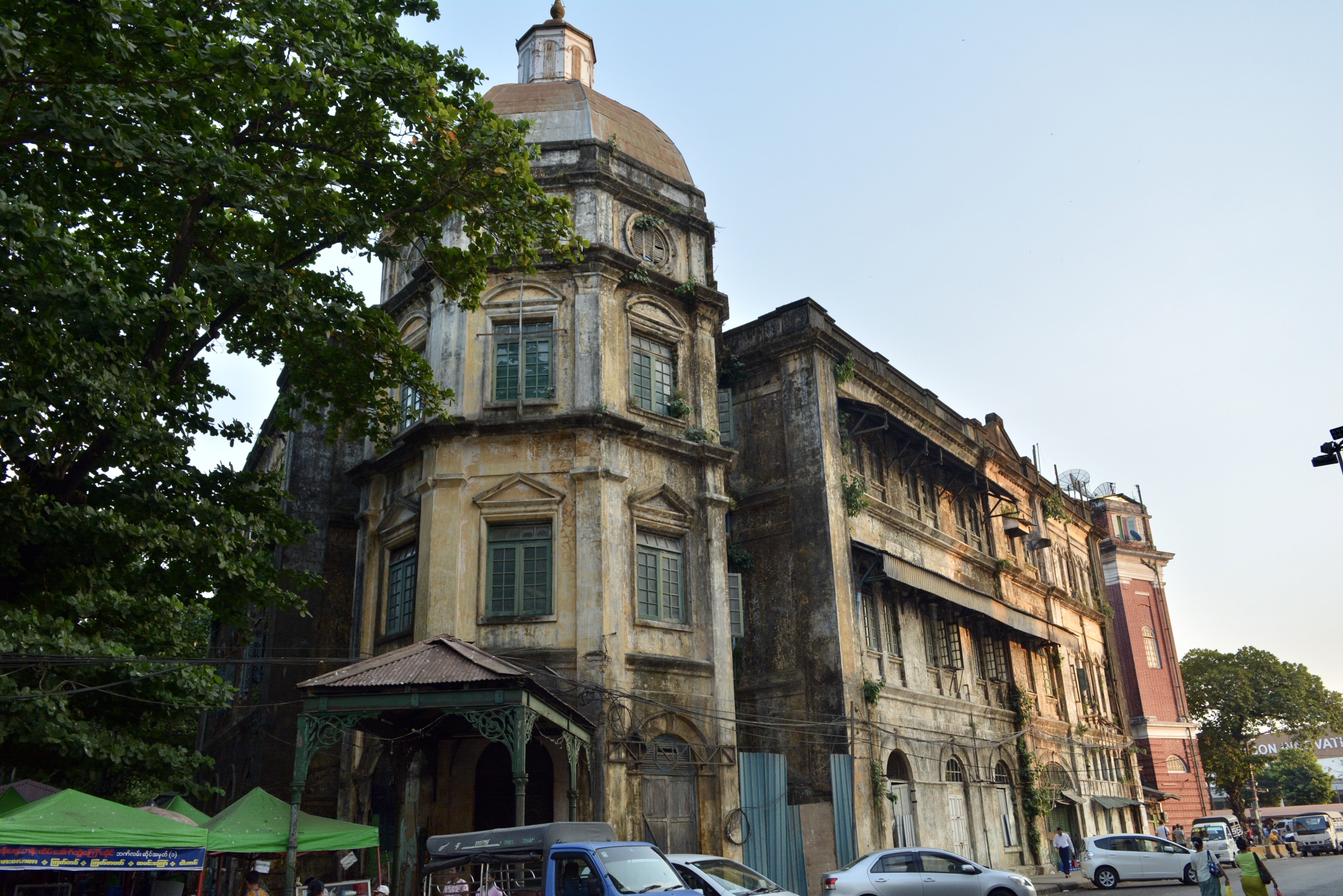
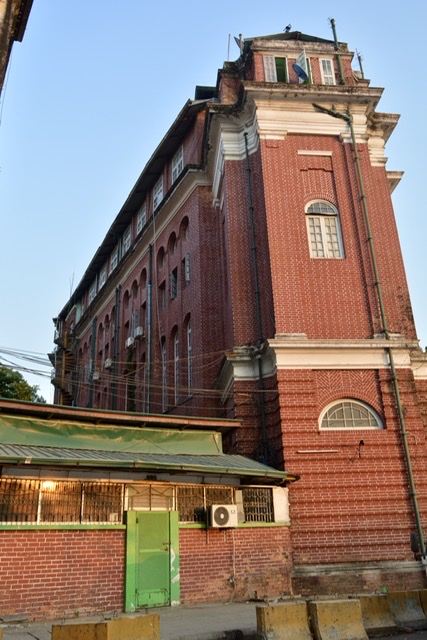
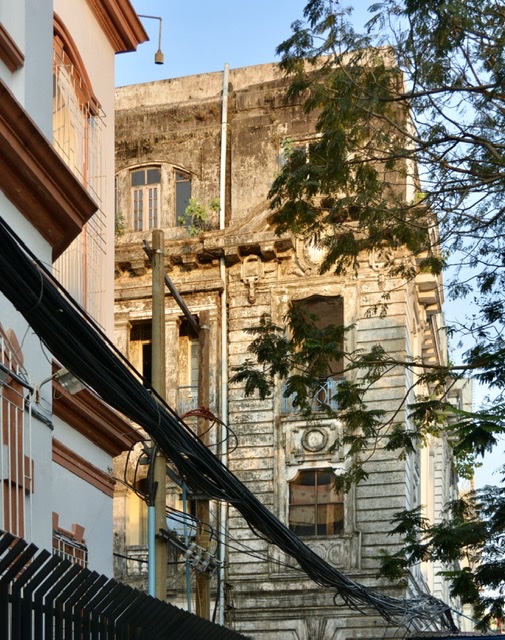
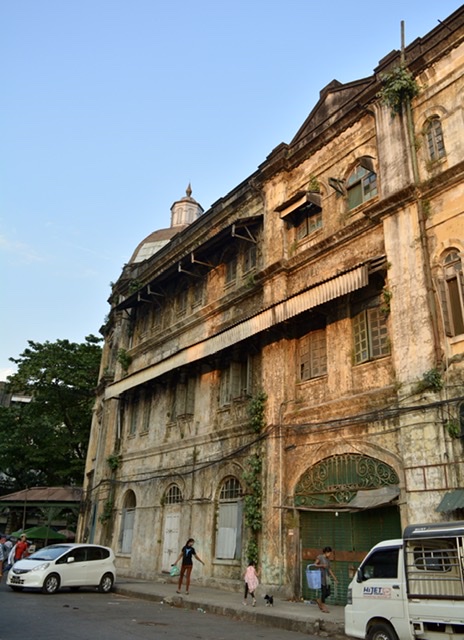
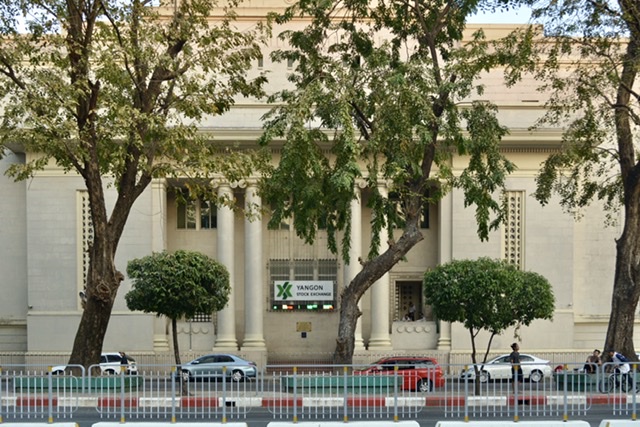
Like all colonial cities the influence of the colonizer, in this case the English, is everywhere in the core of Yangon. Some of the buildings built during the British era when Yangon was the capital, have been maintained but others are in disrepair. I happened upon the Independence Day celebration with live music and throngs of people visiting the main square with the tall Independence monument in the middle of the park. In addition to music there were food vendors, ballon sellers, entertainers and picnickers sitting on the grass enjoying the festive atmosphere.

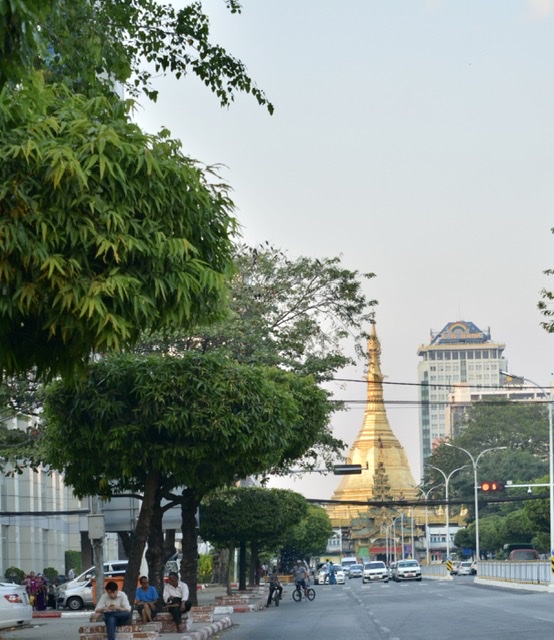
When the British designed Yangon, they put the Sule Pagoda front and centre in the heart of the city directly in front of the Manabandoola Park , ironically the future home of the Independence Monument. There are some obvious signs of economic success in Yangon including business towers, glitzy hotels and a huge mall with every designer label store imaginable. A stark contrast to its next door neighbour the Bogyoe Aung San Market, built during colonial times it sells the signature treasures of Myanmar to tourists including jewellery, paintings, puppets, lacquerware and jade. An even greater contrast is the Theingyi Zedi fruit and vegetable market with hundreds of ramshackle stalls, narrow aisles, and hoards of people elbowing their way through the chaos.

Yangon was more than a surprise to me. I expected something more dismal or downhearted about the place given recent history but it was surprisingly calm in it’s busyness, peaceful in it’s industry and beautiful in its hodgepodge of then and now. My admiration for the city is directly attributable to the welcome given by the friendly, warm people I met on my Yangon wandering.