A Month in the Yucatan: Day of the Dead

Day of the Dead, a colourful, festive and joyful way to show love and respect for deceased family members.

As in years past, I started my Mexican Adventure by returning to the sea side town of Progreso in the Yucatan. This year for the first time I made it to Mexico in time for Dias del Muertes, a celebration in which death and deceased loved ones are honoured. Things were scaled back somewhat due to Covid but there were still some interesting things to see and do.

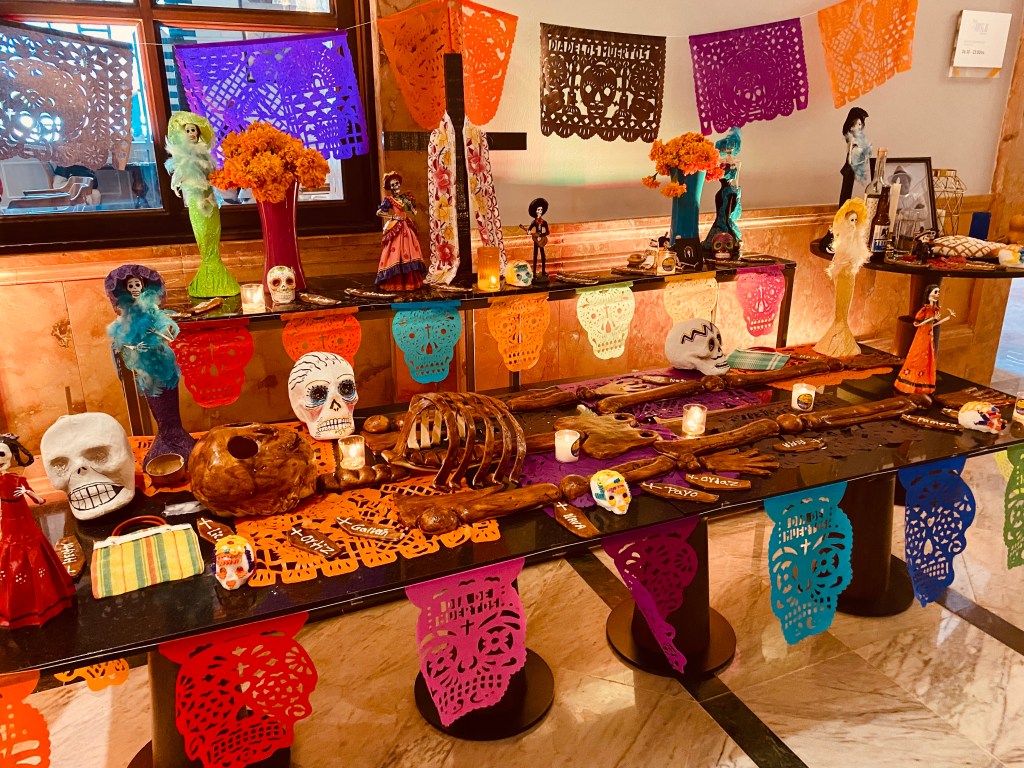
Symbols of the Day of the Dead: Skulls, Calvera Catrinas, Offerendas & Papel Picados

If you haven’t seen the movie Coco I highly recommend it as a fun and touching way to acquaint yourself with Mexican culture and especially the believes and practices around the Dias del Murertes.

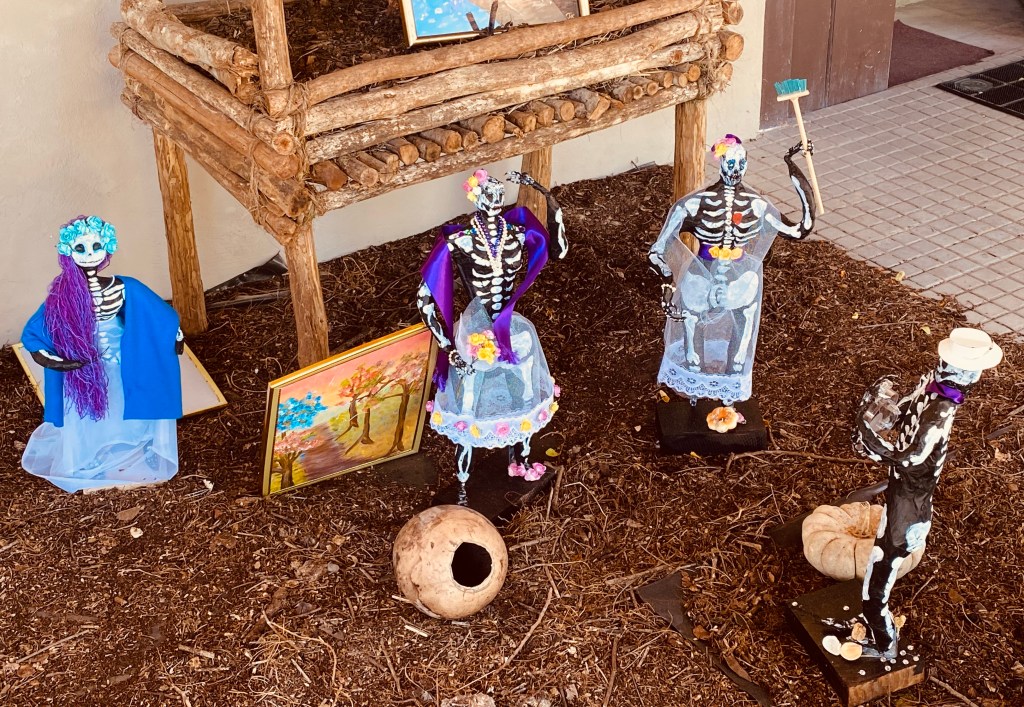
Dias del Muertes is actually several days in duration with a day dedicated to children, and then one for adult relatives and ancestors. Similar to our Canadian Halloween, people dress in costume and walk the streets admiring each others costumes. Adults and children alike participate. There are generally musical & cultural events and each community celebrates in a different way but all have in common a visit to the cemetary to spruce up the graves of lost relatives and to invite them to return to this realm by offering food, drink and special treats. Elaborately decorated altars can be seen in private homes, (called offrendas) to welcome the spirits.

Family Home Oferenda
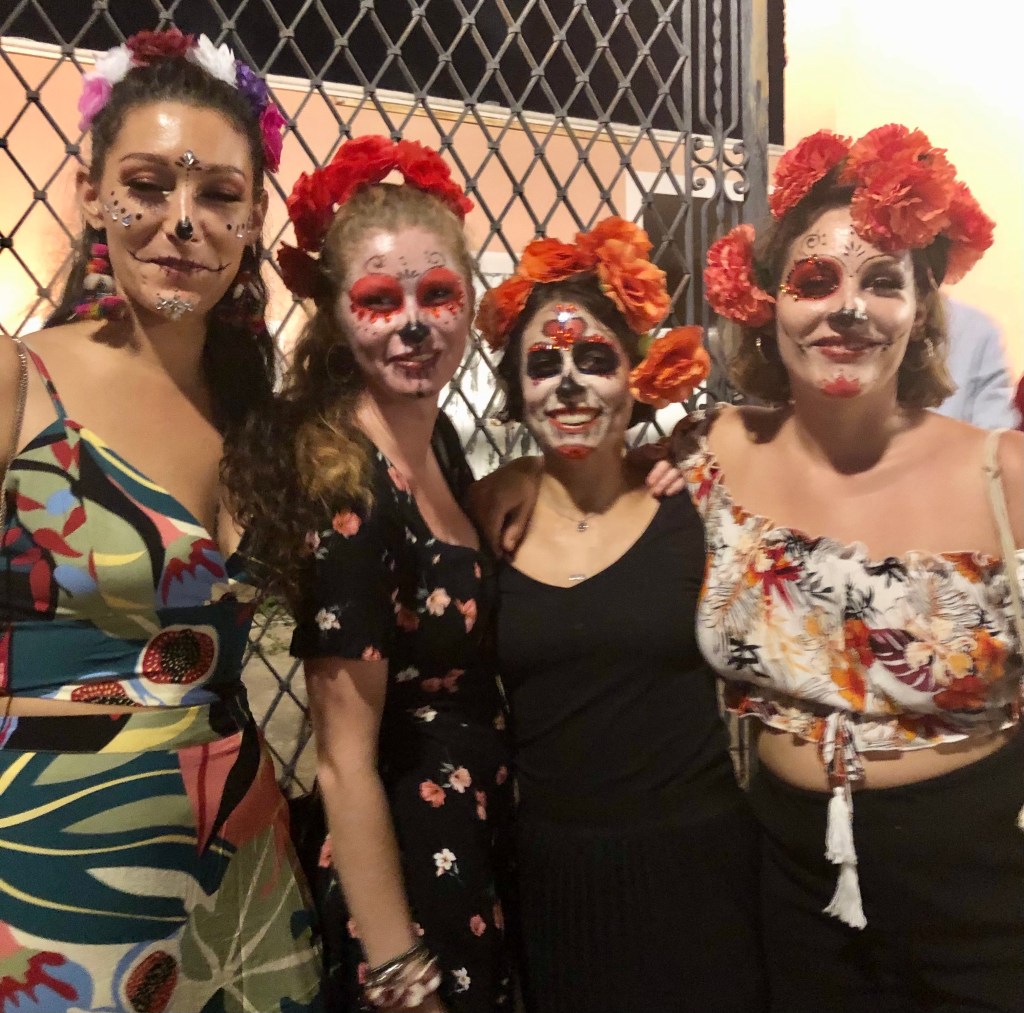
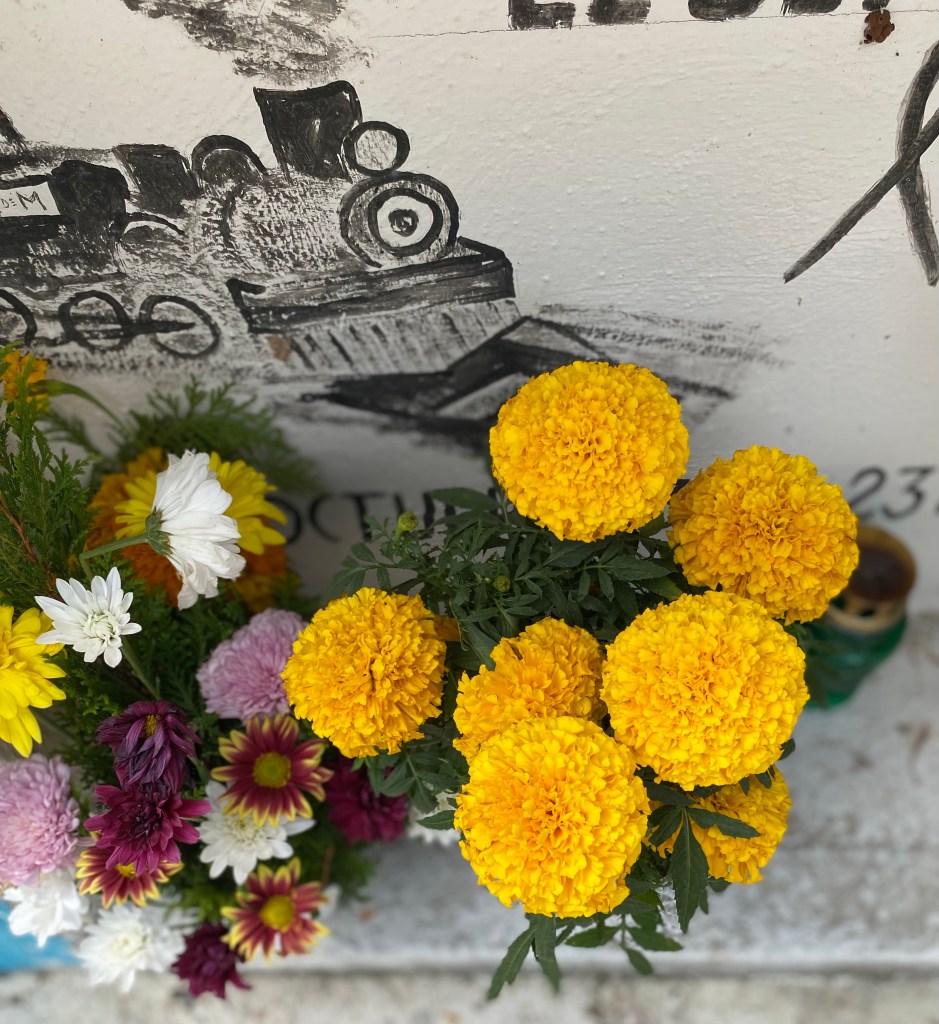
Costumes often include Marigolds

We spent a few days visiting various locations that we heard would be interesting examples of the festivities. One evening we went to Merida and sat in a restaurant to watch a pasado of costumed families followed by a cultural performance in a square at the end of Paseo de Montejo.

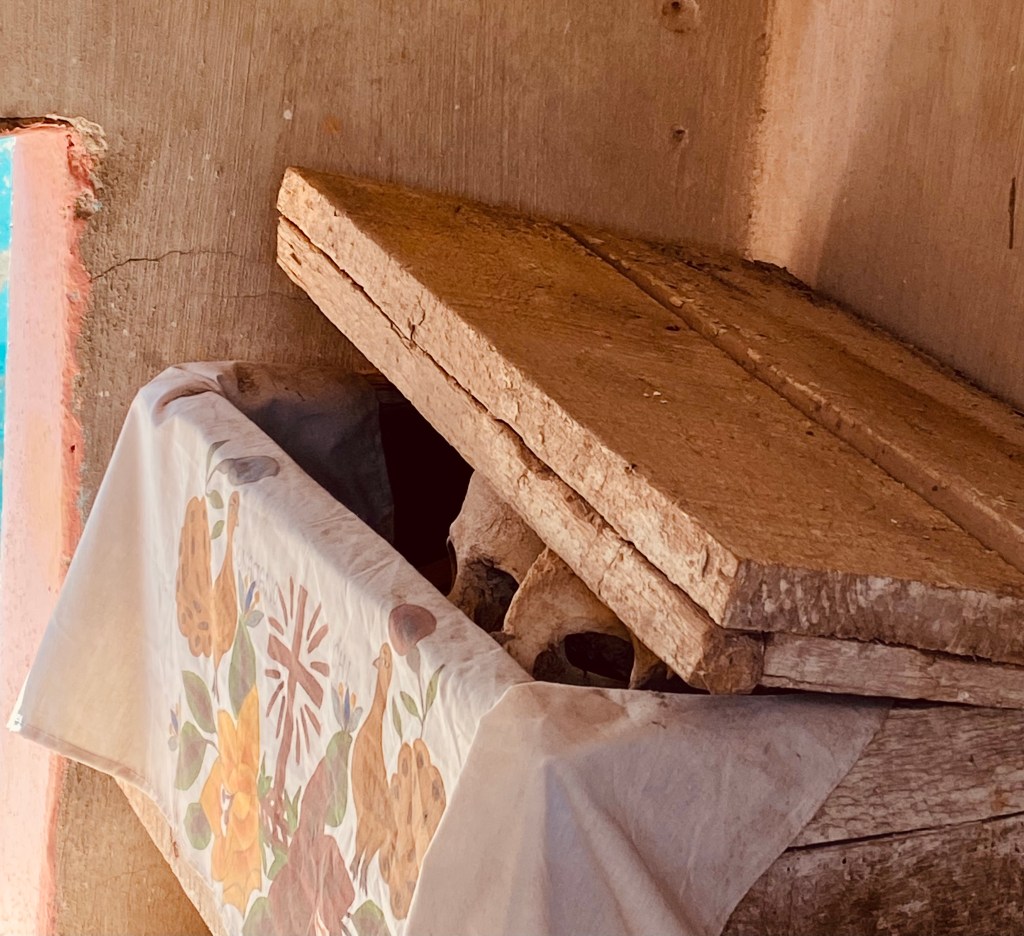
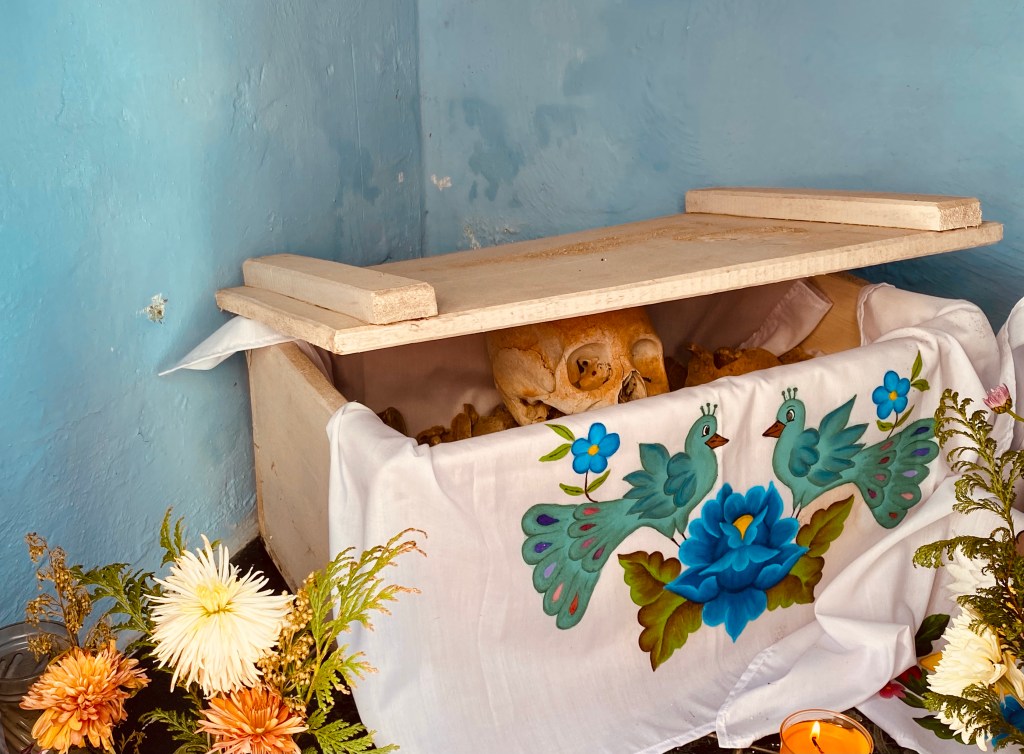
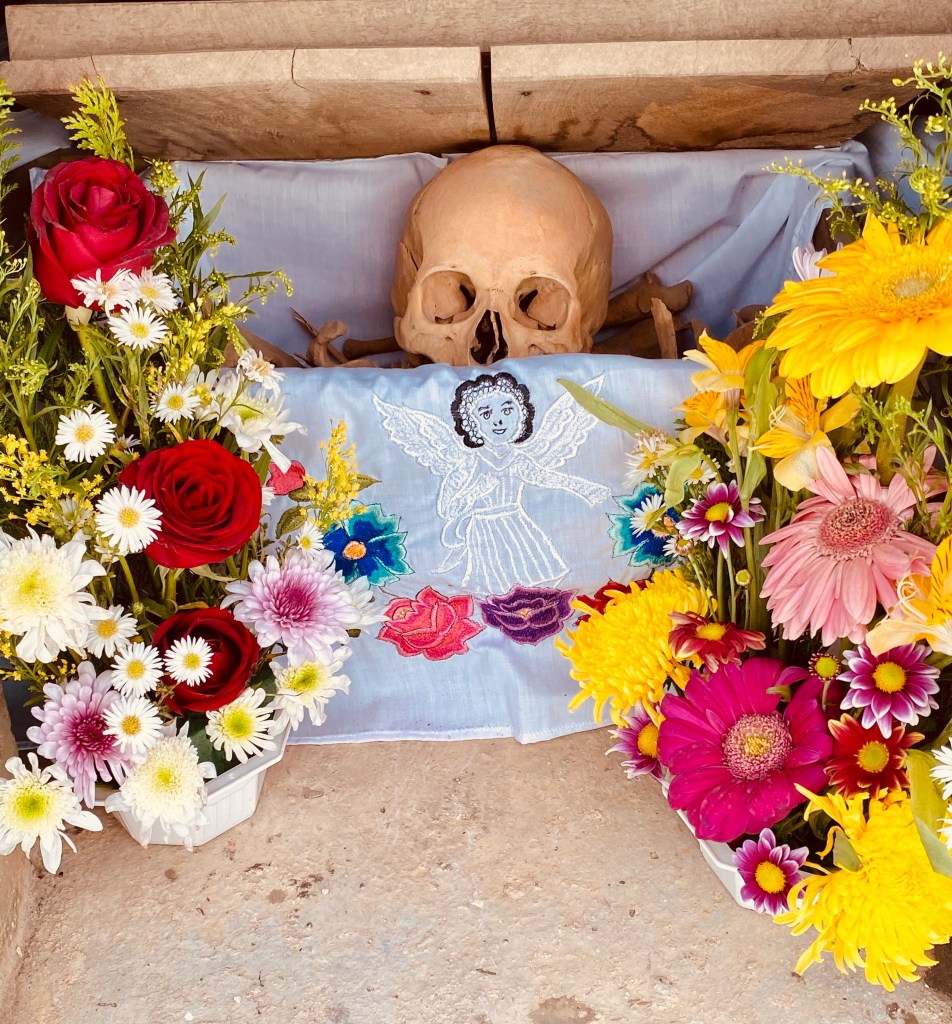
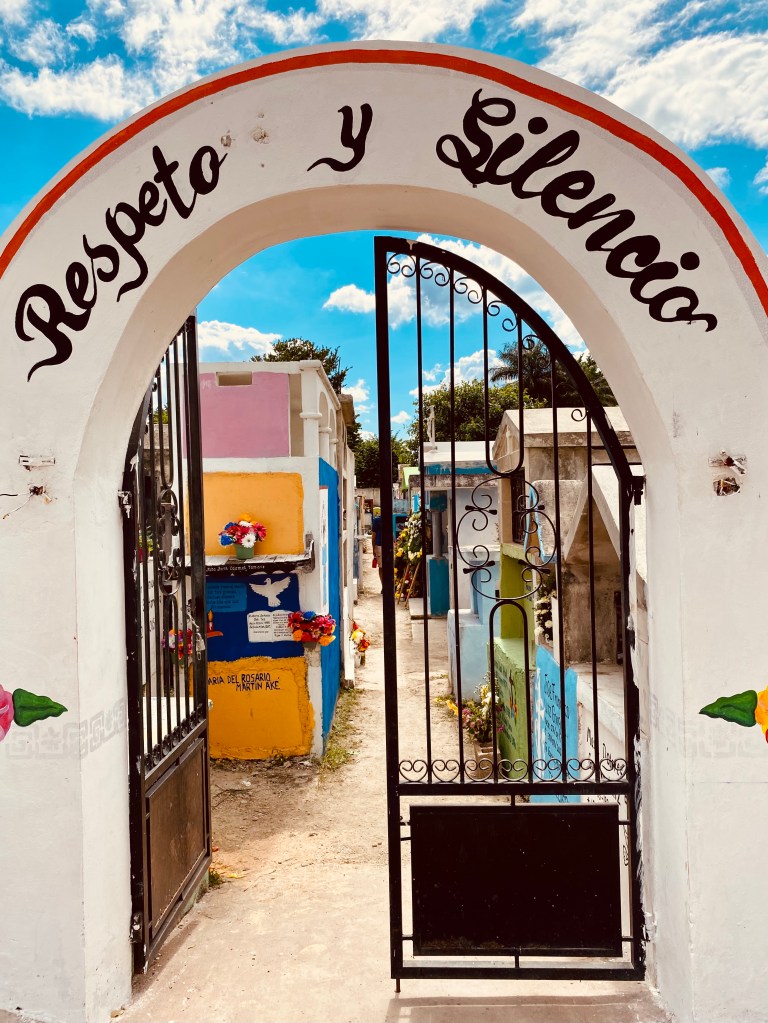
Perhaps the most interesting event for us was a visit to a pueblo called Pomuch, where we walked through the local graveyard. The tradition here is to open the boxes of the deceased and clean the bones, leaving them on display, free to roam, for a few days before they are returned to rest in peace. Unlike Halloween which is a dark night of terror and mischief, Day of the Dead festivities take place over two days and are colourful, festive and joyful, with the point being to show love and respect for deceased family members.

Cemetaries are Cleaned and Decorated

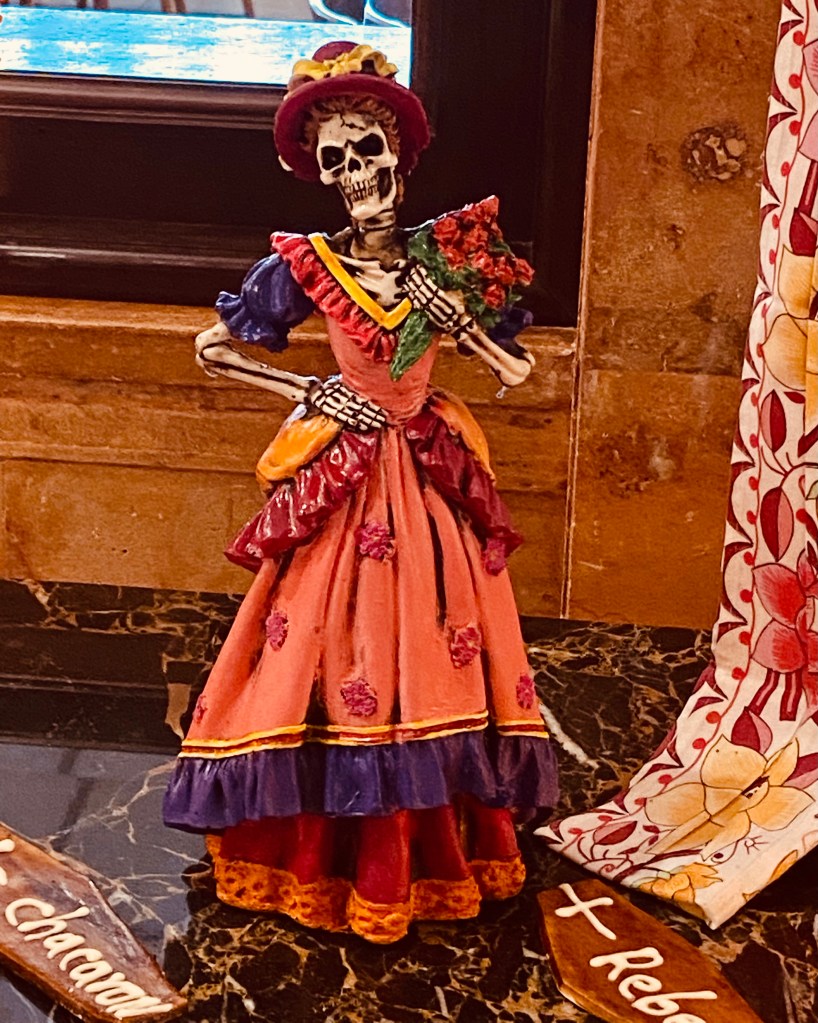
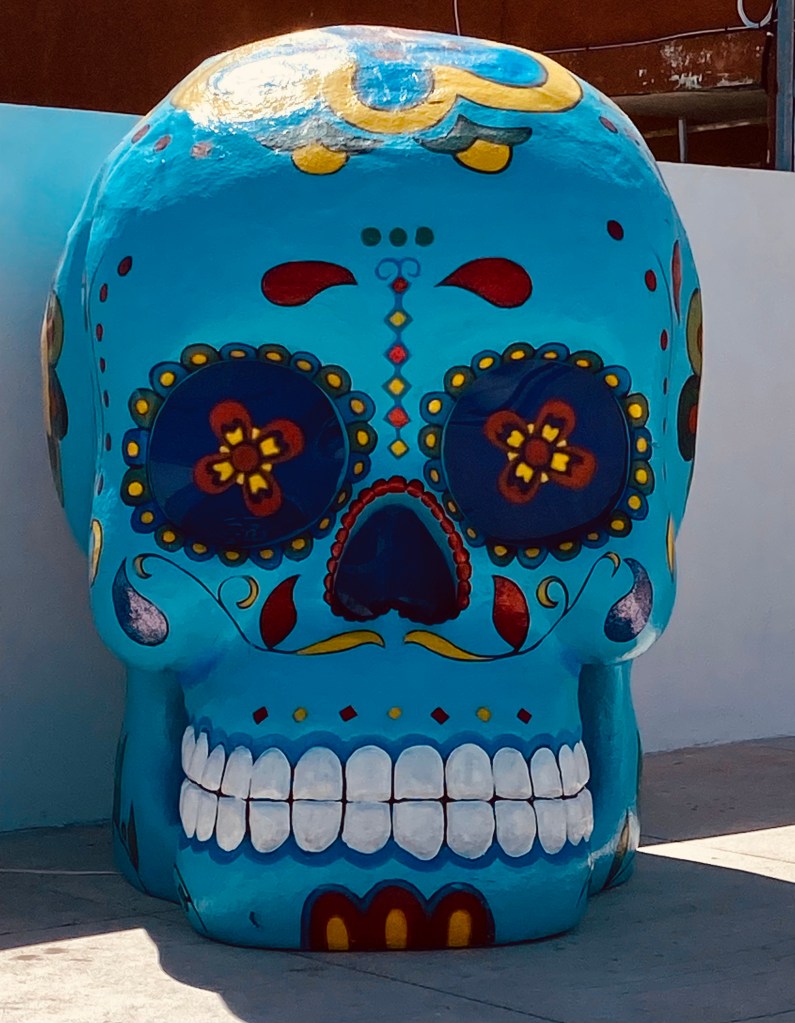
A mish-mash of indigenous and christian beliefs the symbols of the Day of the Dead are important and include calveras or skulls. One of the most ubiquitous symbols of the Day of the Dead came about when Diego Rivera, Mexicos beloved muralist, painted a stylized skeleton in one of his murals. Dressed in a large feminine hat, Rivera named her Catrina, a poke at the rich. Sugar skulls abound and food items like pan de muerto, or bread of the dead is often shaped into bones and skulls. Other sweets include tiny dough teardrops to symbolize sorrow. Of course there are drinks too including pulque, a sweet fermented drink made from the agave. Of course costumes are important as festivities normally spill into the streets and public squares at all hours of the day and night. Faces are painted to resemble skulls and the Calvera Catrina. It wouldn’t be Mexico without some noise and costumes often include shells or other noisemakers to rouse the dead and keep them close during the fun.

Calvera Catrina

To represent the wind and the fragility of life Mexican’s use layers of paper, piercing it with a hammer and chisel points to form elaborate patterns. The Papel Picado is draped around homes, streets and restaurants and adds to the festive atmosphere that permeates the day of the dead.

Certainly this celebration of death wasn’t the same as in other years without the pandemic but Mexico being Mexico there was still lots to see and do even without the large scale celebrations and gatherings that are the norm.

Marigolds

On the Road Again….Headed to Mexico and with any Luck, South America.

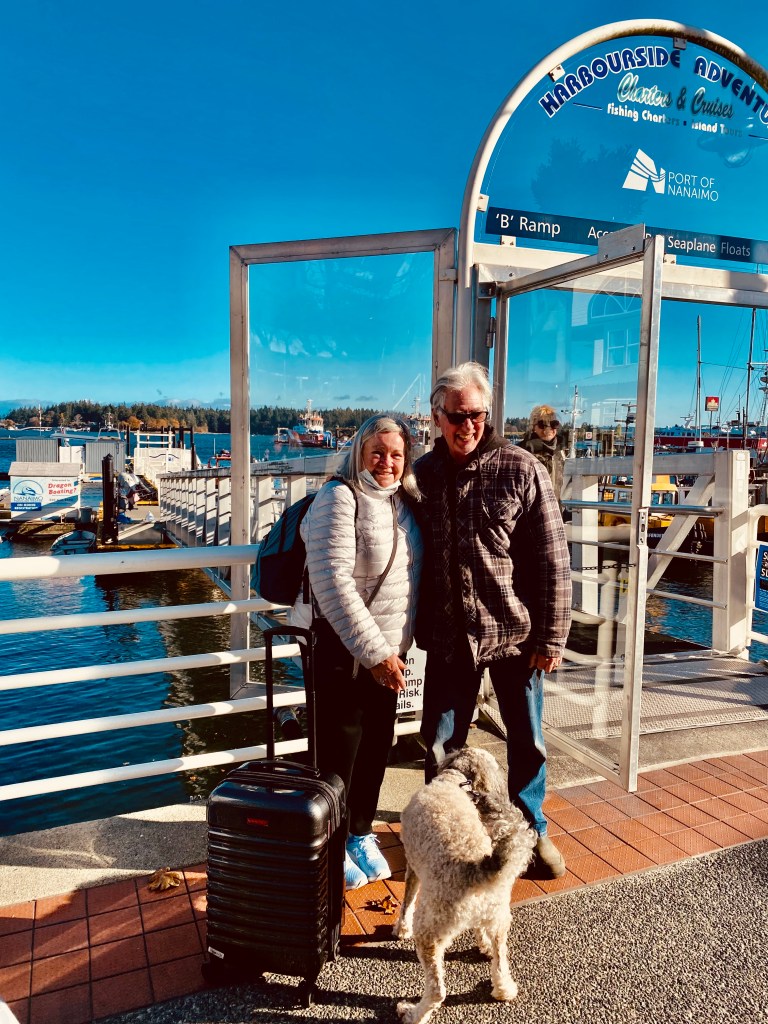
It’s been a long 2 years since covid hit and the pandemic stalled my travel plans, but here I am on the road again. As with most of my wandering this one started with a float plane to Vancouver, A beautiful blue skied fall day. Not a bad way to say goodbye to Vancouver Island and flying over my house for one last goodbye was as delightful as being driven to the float plane by my lovely friends Ralph & Lucy. A proper send-off indeed.

Farewell
A beautiful fall day in Nanaimo

All Set to Fly

Now at gate 53 YVR and I know it’s the right one because not only does it say that on my boarding pass but most of my fellow passengers are speaking Spanish. These mostly men have been working in Canada on a special program that brings them here to fill in positions unfilled by Canadians, usually in agriculture.

I am so excited to see my friends in Mexico, to return to Progreso, Puerto Escondido, Oaxaca City and to explore some new destinations as well. If all is safe by next January, I plan to fly to Ecuador and Peru, but that remains to be seen. If not, Mexico will more than suffice.

Brighton, Amsterdam, Cotswold’s & London

Soho in London

Brighton, Amsterdam, Cotswold’s & London

Solo Travel Inle Lake….More Myanmar

The beautiful countryside…

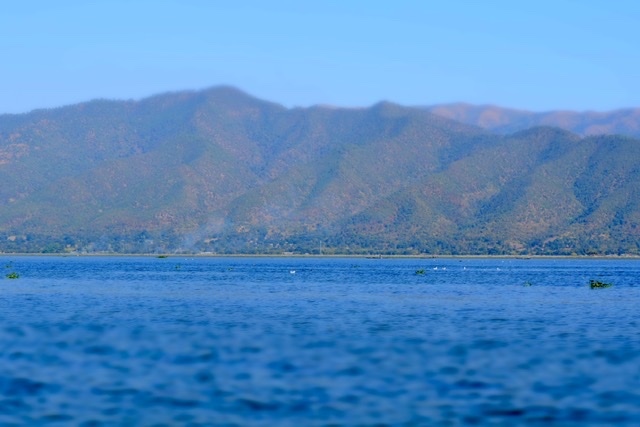
Inle Lake

So so glad I made the decision to spend some time in his incredibly beautiful part of the world. To get to the lake I flew from Mandalay to Heho, and then by taxi to Nyuangshwe, the town where you can access boat trips to the lake. On the flight I realized that not all of Myanmar was flat like the Bagan Plains.

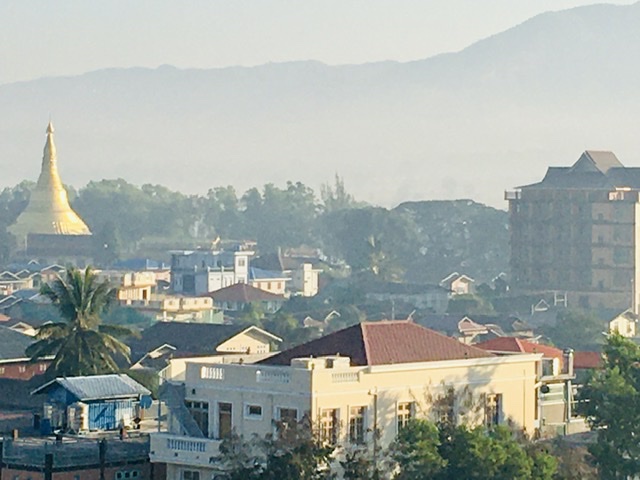
About an hours dive from the airport to Nyuangshwe, the views are are great. The nicely paved highway twists and turns its way up and then down the hills into The Inle Lake Valley.

I stayed at the Hotel Emperor Inle Lake, my favourite hotel thus far. Rock star service, free breakfasts and very helpful staff who helped me make arrangements to tour the lake with a fisherman. 

First day was a day of wandering the little town, pleasant enough with a lovely canal walk, some Wats and the usual shops and services.

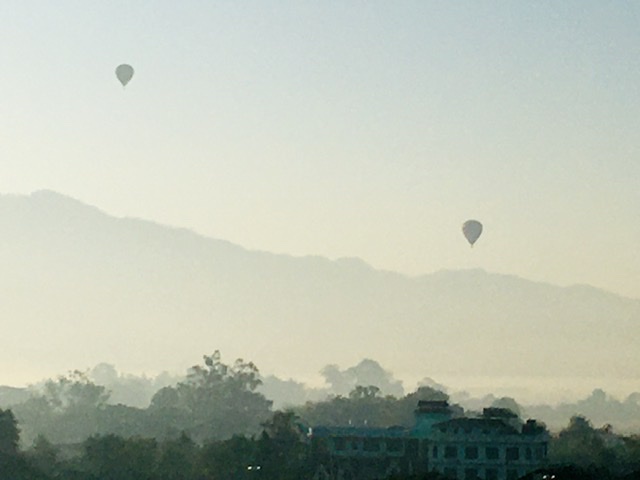
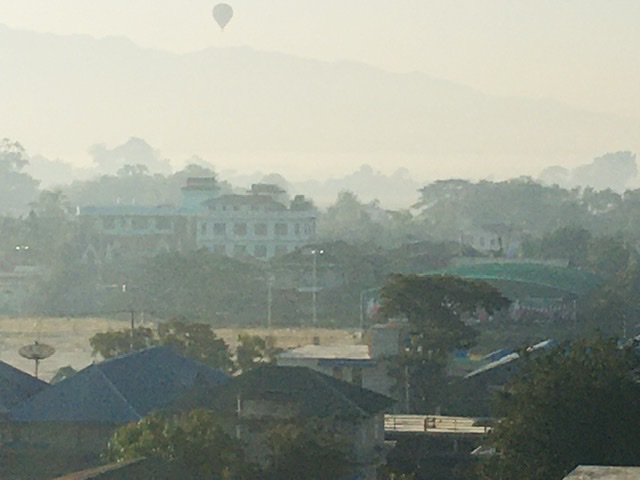
The area around Inle Lake is mainly agricultural land including sugar cane which is set fire to after the harvest and so there is a low lying smoke that settles over the town and the lake. At first I thought it was a mist but later realized it wasn’t quite so innocuous. Like Bagan, hot air ballooning is popular but oh so expensive.

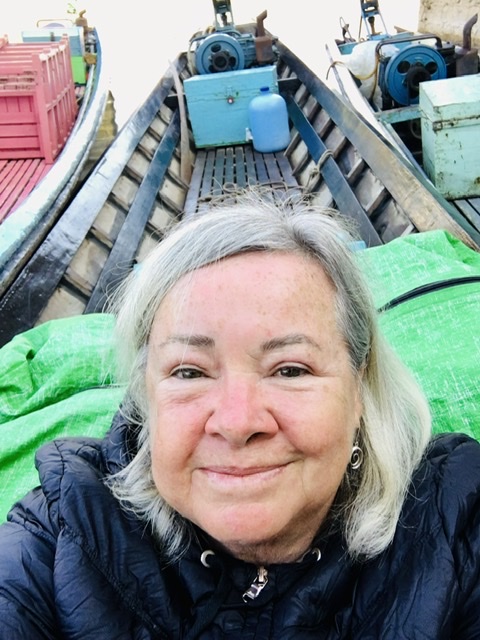
The next morning I was fetched at the Emperor by the fisherman who walked me a short distance to the canal where his longboat sat waiting. He wiped the morning dew off one of the two seats, retrieved a cushion from a plastic bag, gave me a bottle of water and we were on our way. It felt like the queens day out. 

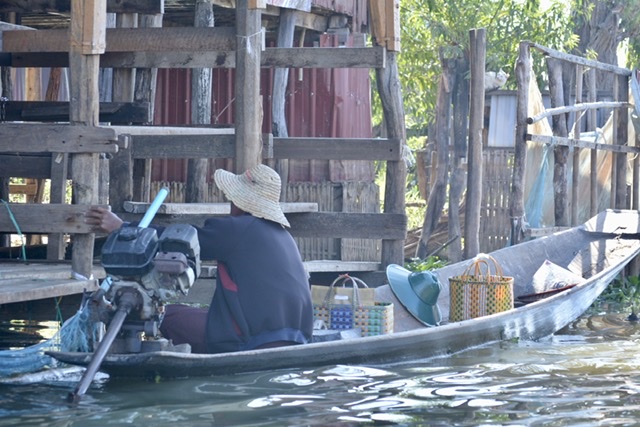
The narrow canal leading to the lake buzzed with the diesel engines on the long tailed boats, coughing black smoke when started by a hand turned wheel. The churning waters were busy with people getting to and from work, home, school or whatever else occupied their days. 

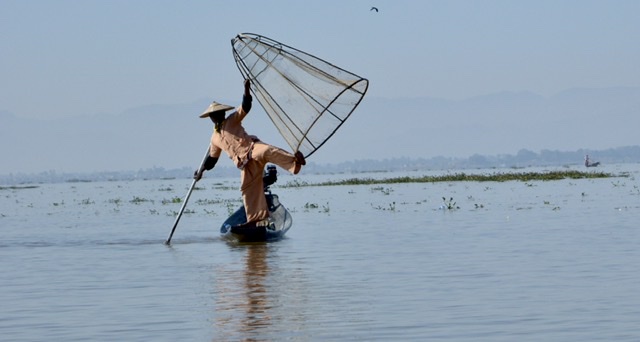
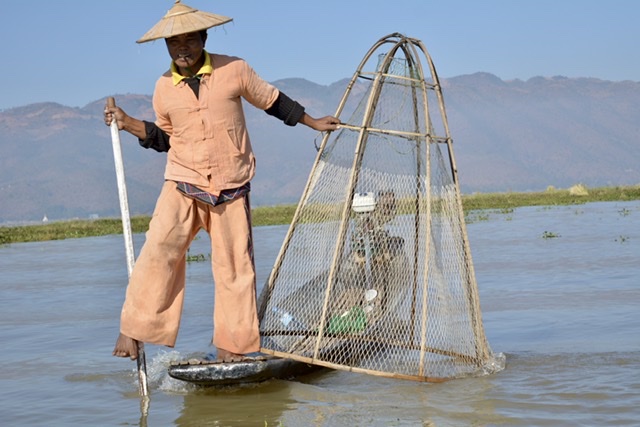
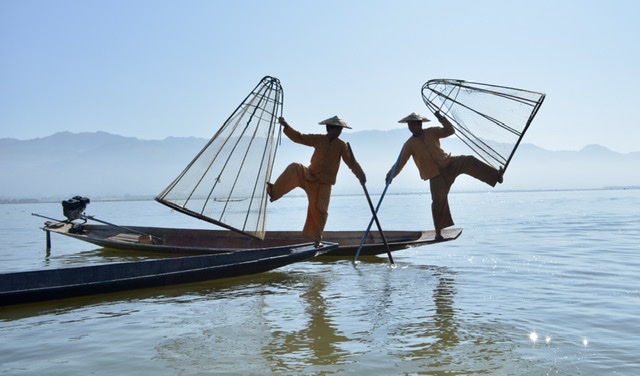
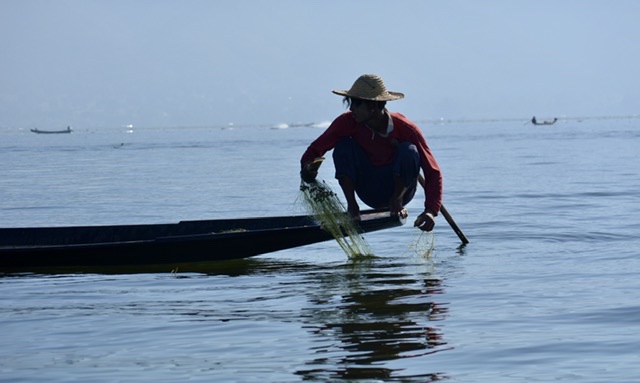
I had only hoped to see the Inle Lake long boat fisherman and it was my lucky day. These fellows perform the outstanding feat of paddling with one leg while using both hands for traps or nets and all the while balancing precariously on the narrow lip of the bow on the remainng leg. Like a dance they plunge their traps into the lake and pull them back to the surface as smoothly as ballet. Wow what a sight. 

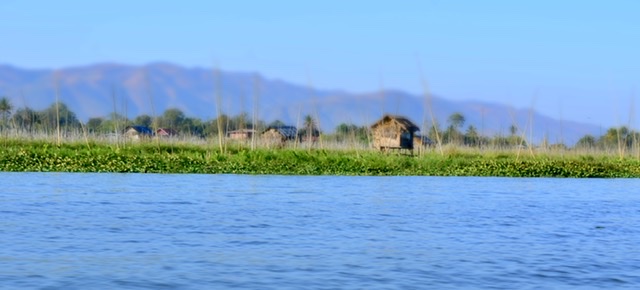
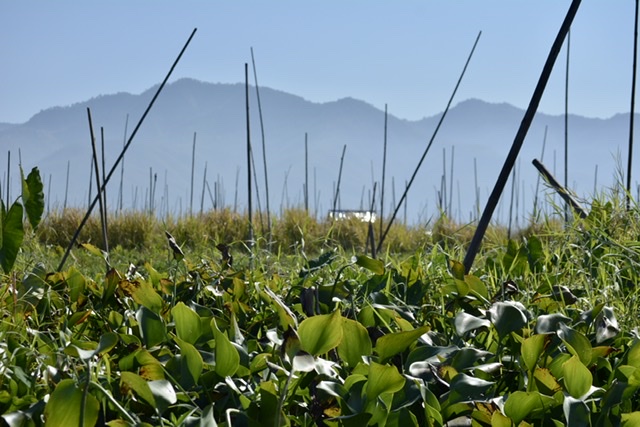
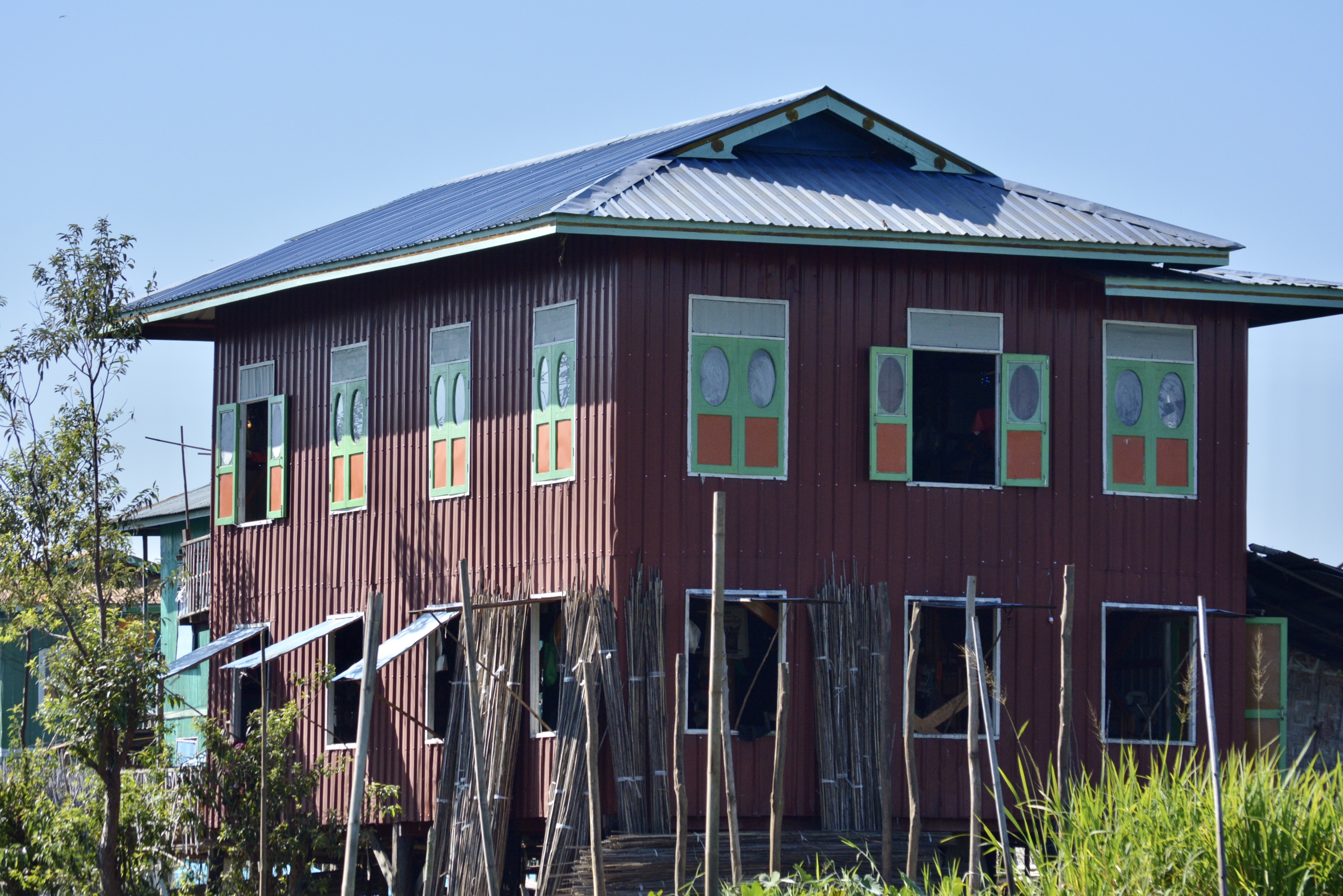
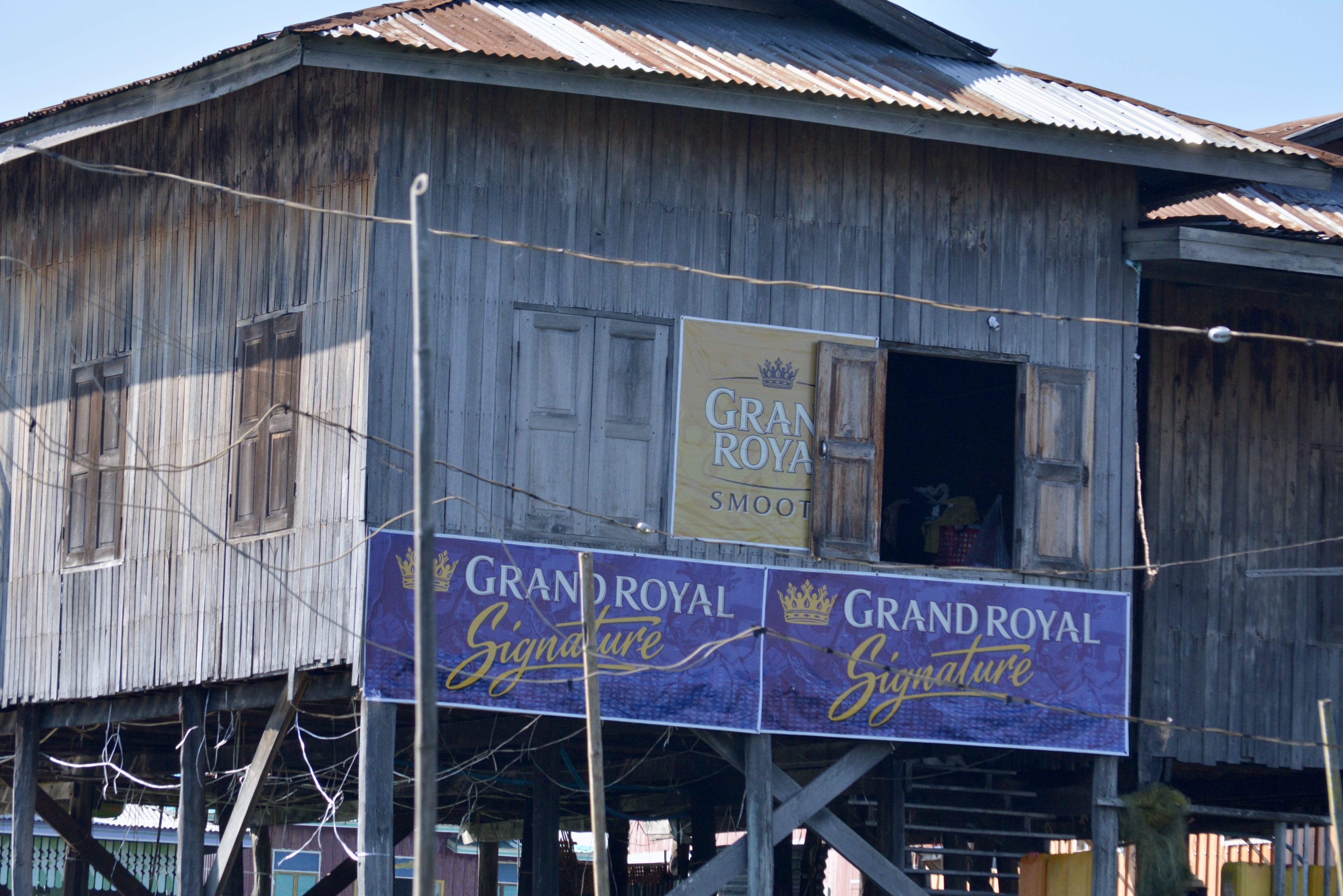
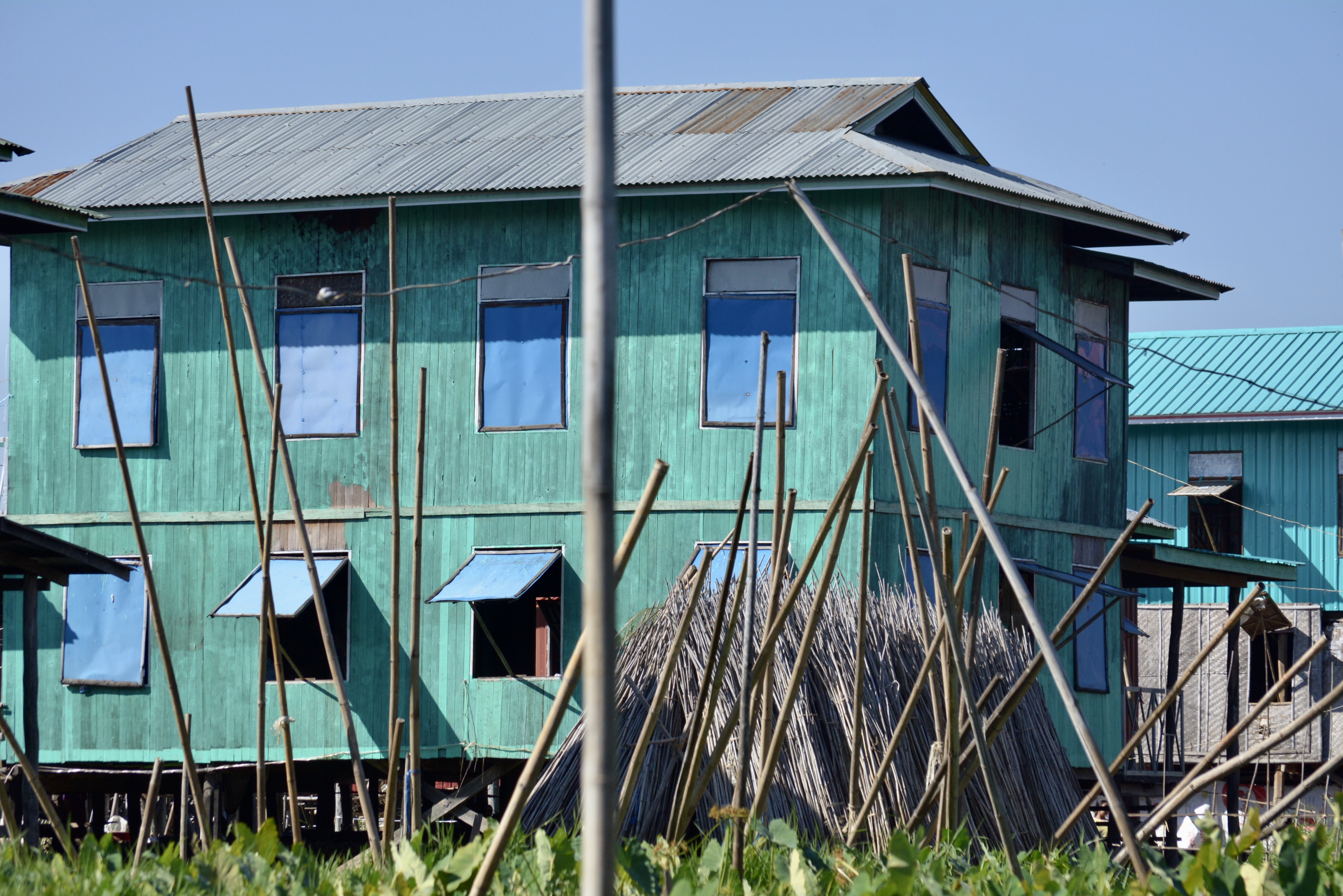
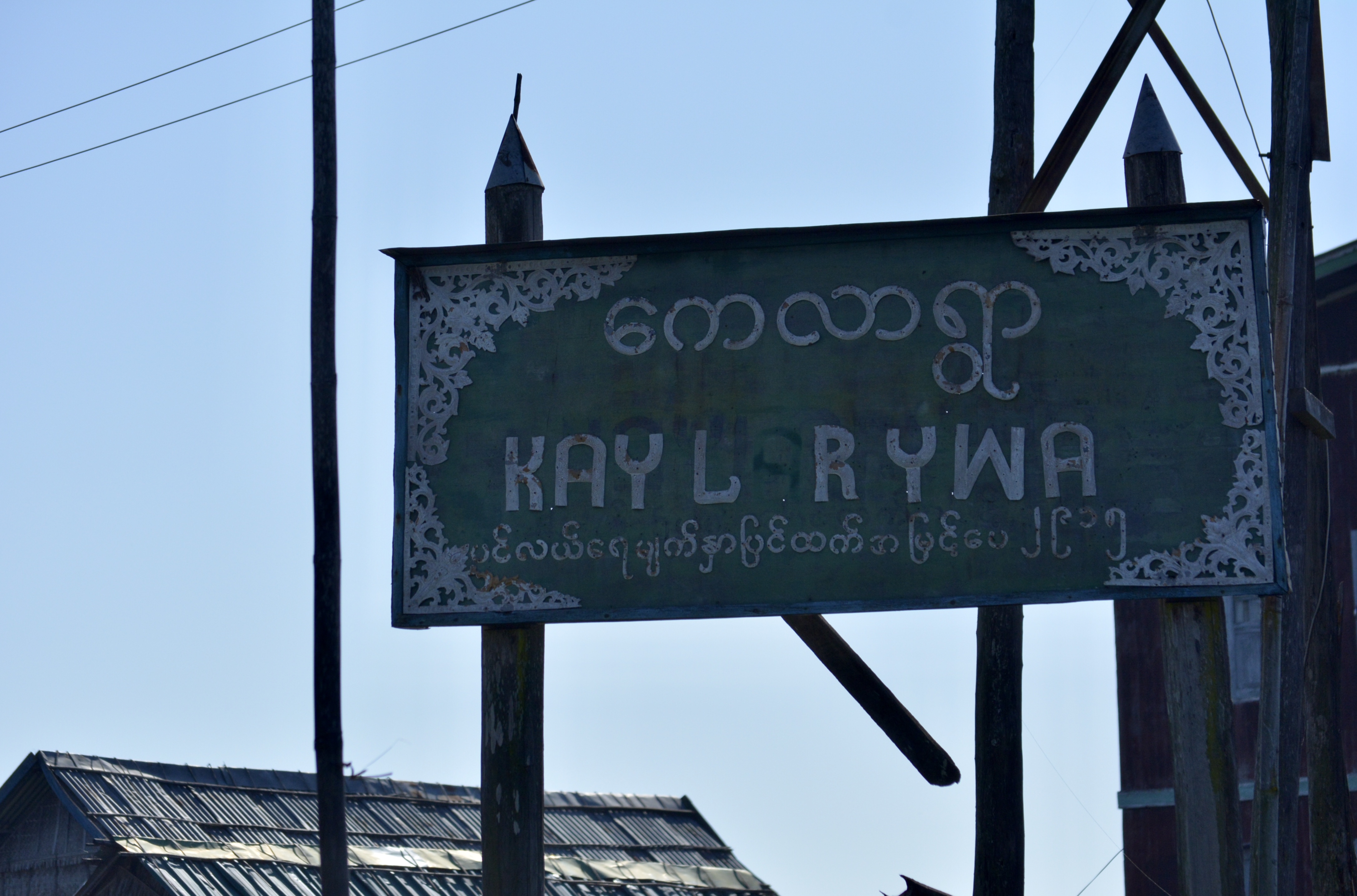
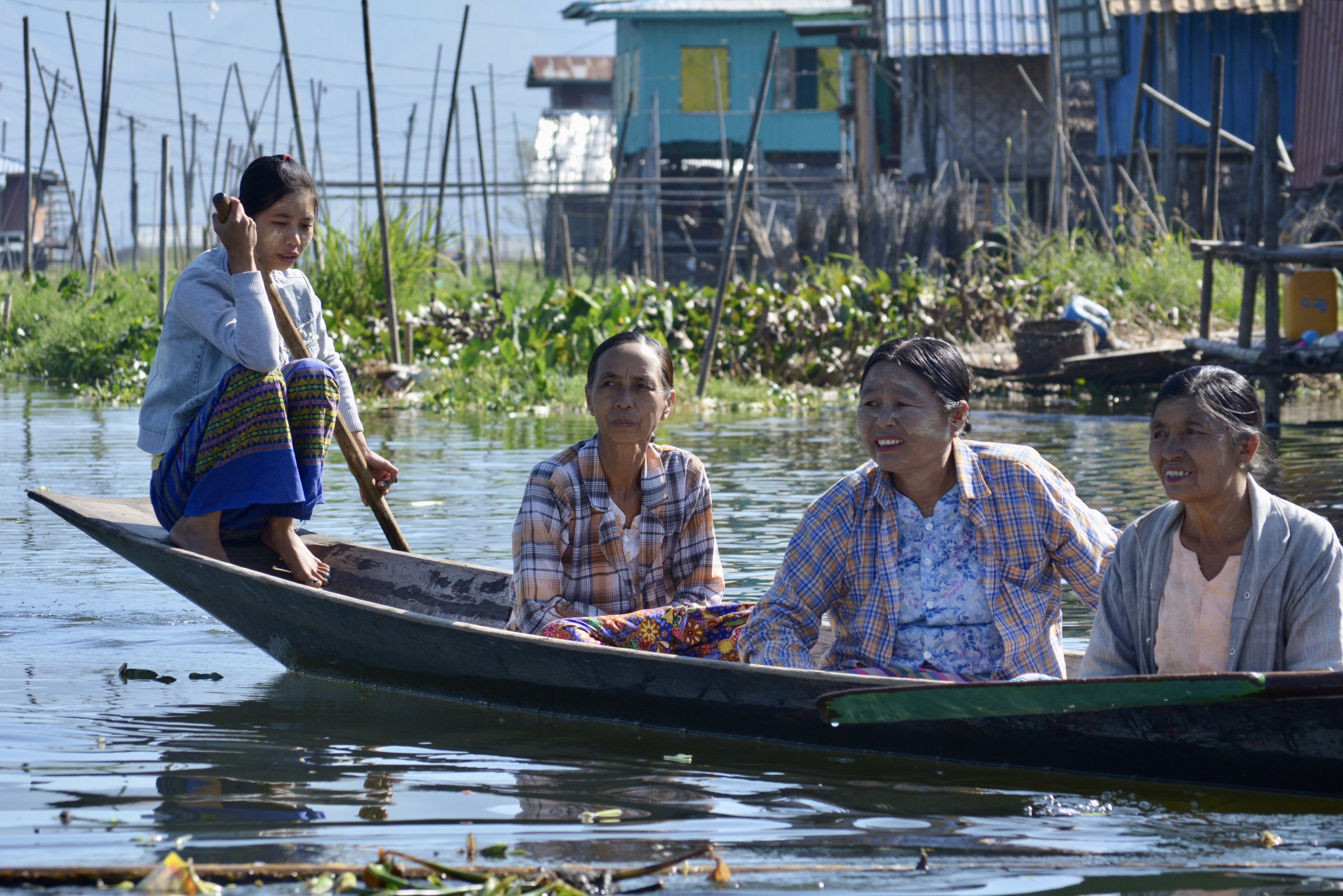
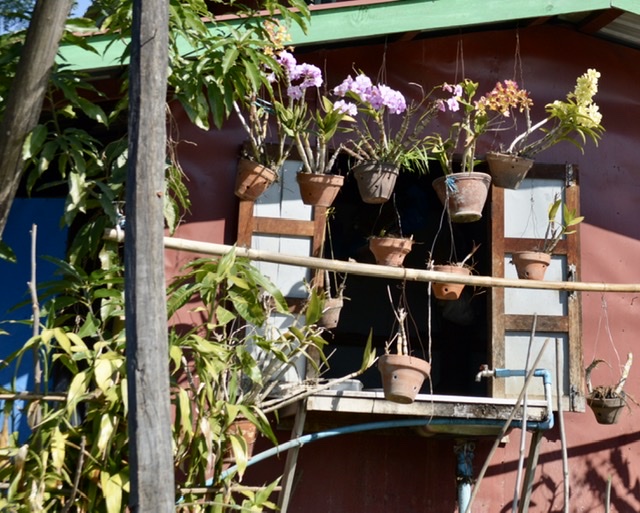
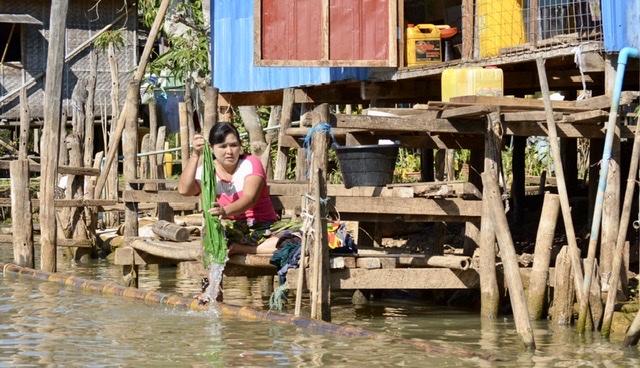
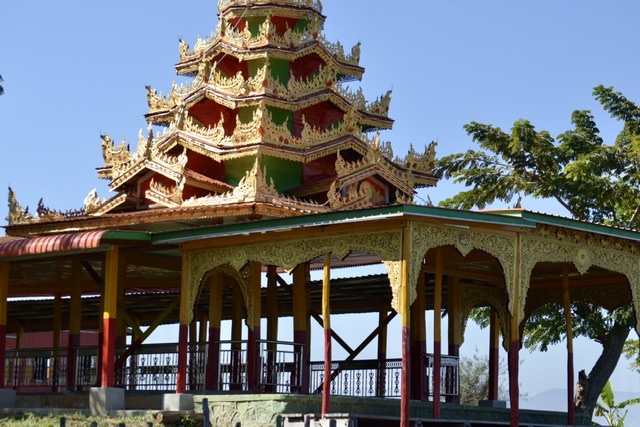
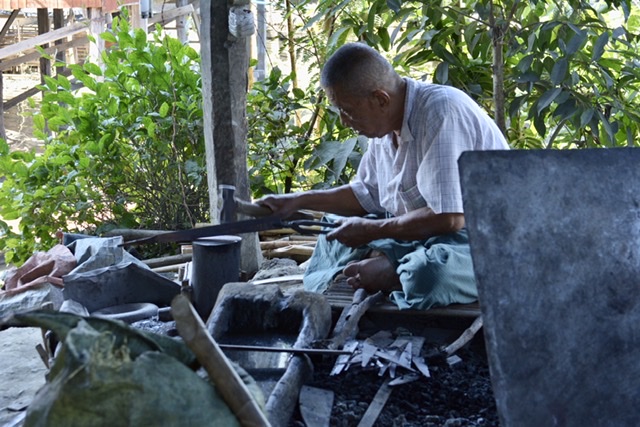
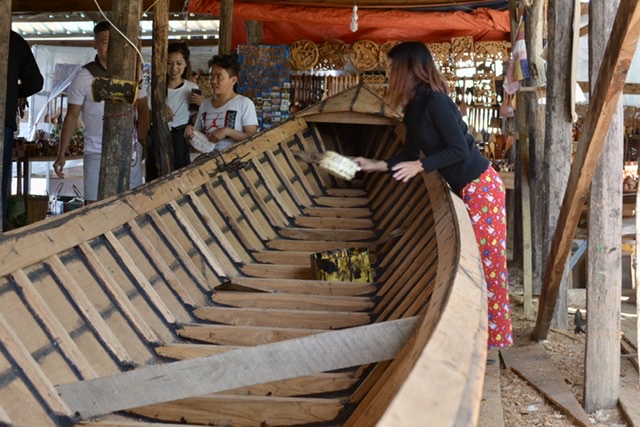
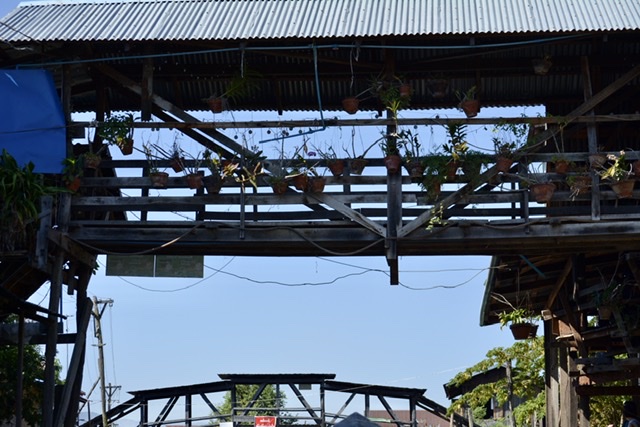
Turns out the boat tour with my fisherman, included stops at various arts and crafts cooperatives, where we would tie up to the docks in front of them. The cooperatives were in the hear today the communities entirely built on stilts including In Paw Khone, Nam Pan, Phangan Daw O Pagoda, Shwedagon in Dein Pagoda, Ywama Floating Market, and Nga Phe Kyaung Monastary, (difficult pronunciations for my English toungue). Hovering above the lake were schools, hospitals, temples, pagodas etc. In rustic buildings were mechanics, builders, boat makers, weavers etc., all busy at their trades, everyone moving about in longboats. 

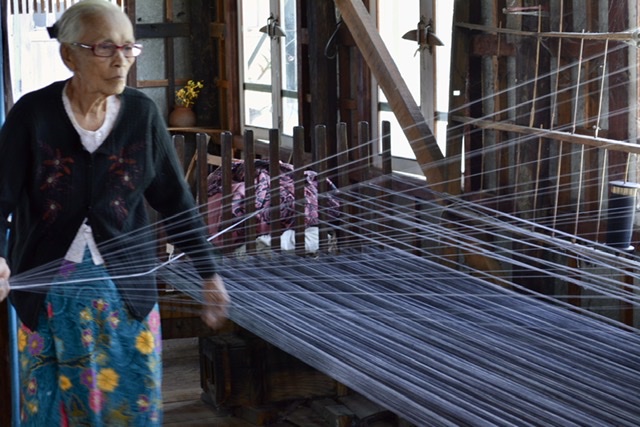
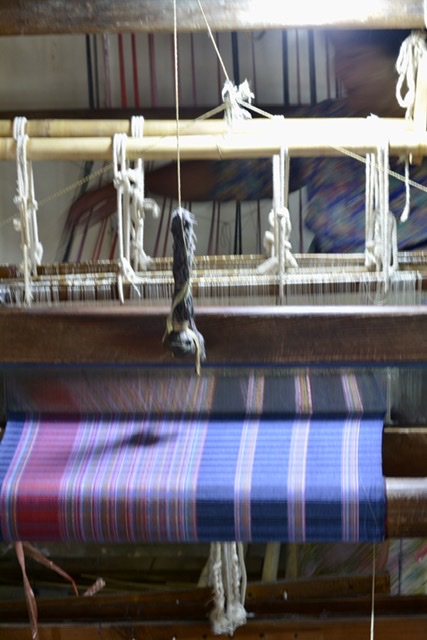
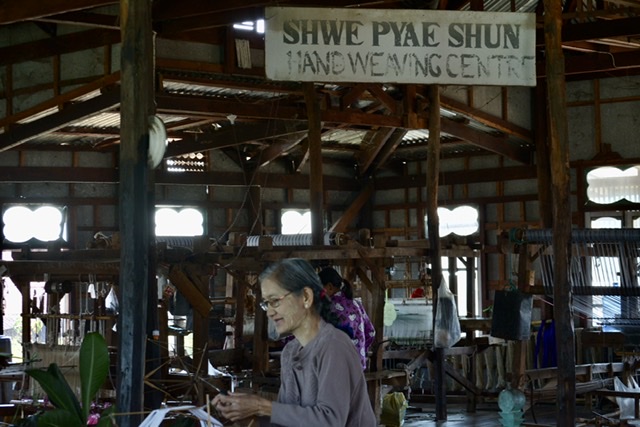
The weaving cooperatives were fascinating and the women used foot to pedal and back strap looms to make beautiful things in traditional colours and designs. I didn’t know that the lotus plant could be used to make a thread and we had passed huge nurseries of them on the way to the villages. I took a picture of a woman cutting the stems to reveal a long, fine, white thread which was then combined with other threads and spun into a larger thread used in weaving along with cotton and silk.

The tour lasted about seven hours, would have been longer but I declined the last stop where the women wear gold bands around their necks. I had read that they were often exploited by the tour guides and I did not want to contribute.

Back in Nyuangshwe I wandered the streets for awhile watching the hardworking people go about their business when suddenly there did appear a sign for dhosas, straight out of southern Indian cuisine! Hanit and Kunal who introduced me to dhosas would have been proud of my lack of hesitation. Sadly however these delicious pancakes were off the menu temporarily…plan b…samosas. 

Inle Lake is a beautiful place and has a quiet peaceful felling to it but it is close to some of the “trouble spots” in Myanmar and there is no doubt that the people have suffered at the hands of the political turmoil that has plagued Myanmar. I thought it was the most lovely of places and was so glad I went. A short flight and I was in Yangon, boarding a connecting flight to Bangkok, which in turn connected with a flight to Chaing Mai in northern Thailand.

Bagan to Mandalay by Boat

Up the Ayeyarwady River….

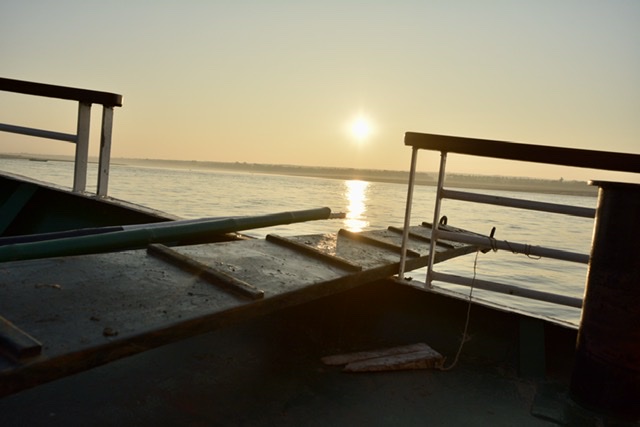
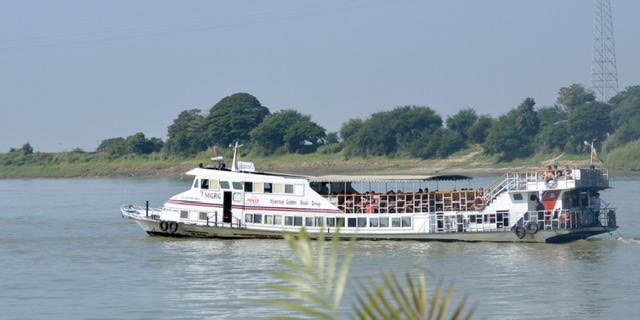
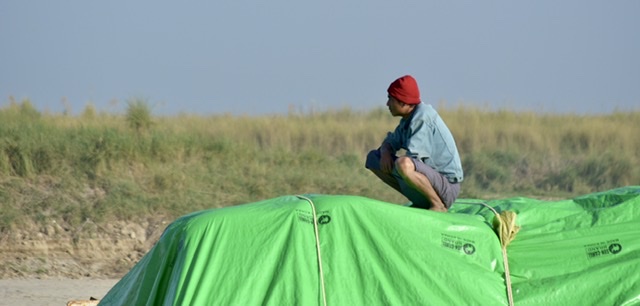
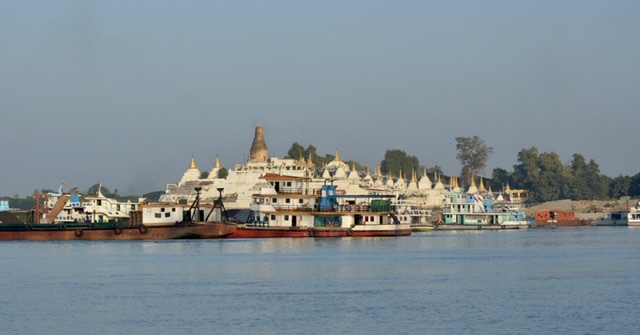
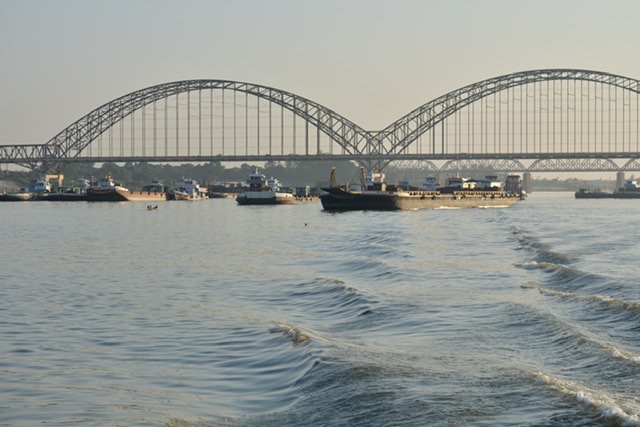
The boat from Bagan to Mandalay was a 12 hour treat from start to finish. The boat left the Bagan Jetty at 5:30 just as the sun rose over the river. The mists from a morning chill rose off the water but slowly dissipated as the sun rose above the plains of Bagan and shone down on the Ayeyarwady River. (I have also seen it spelled Irrawaddy but I suspect that is the anglicized version.) The river flows south through the middle of the country and the plain that it cuts through is as flat as it gets. In places, the high mud banks look like they were sliced flat with a knife and the scrubby grass that stands straight up above the banks give the appearance of a bad brush cut. In the west the plains end at the Chin State mountains and in the east at the Shan Hills.

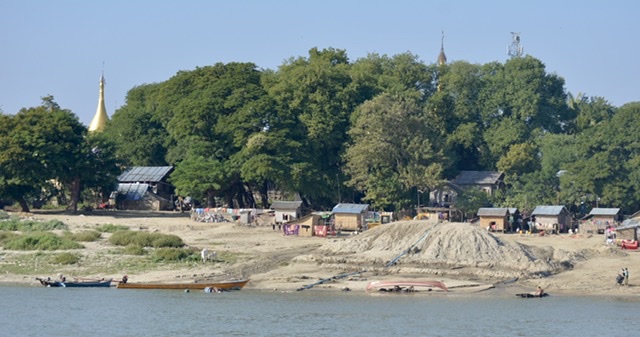
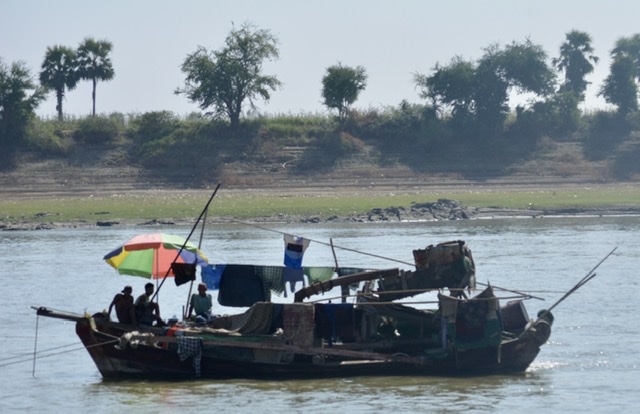
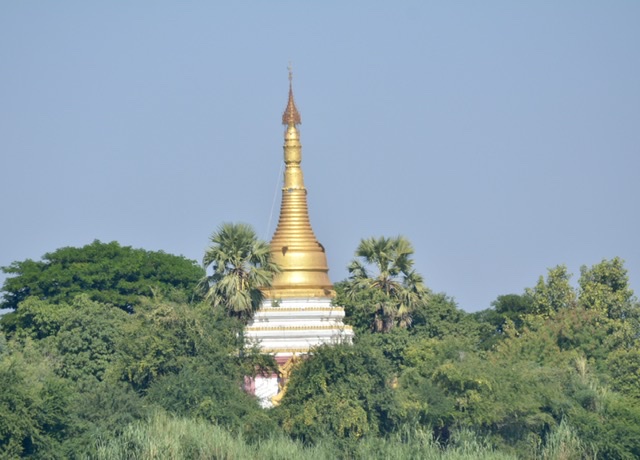
Life along the river is vibrant; farming, fishing or the transport of people and goods keep something on the horizon to watch and wonder about. We passed all manner of vessels from scows to other tour boats and it was delightful to see whole families fishing in the river using, poles, traps and nets. Reminded me of my fishing days when the fishermen would take their families along for company and to share the work. Of course along the way we saw plenty more gold domed pagodas, a further reminder that Myanmar is a deeply Buddhist country. The settlements along the river were haphazard collections of tents and shacks where the fishermen and their families live during the dry season but relocate for the rainy season. Right now it’s “winter” in Myanmar, meaning that the temperatures plummet to the mid 20’s at night and in the morning.

On board the RV Panorama, part of the Alliance Cruise Group, there were about 32 passengers, most of them a tour group from Taiwan and the rest were Europeans except for me the lone Canadian. A woman from Slovenia told me she didn’t think Canadian’s travelled much. At first people snoozed below deck and I was lucky enough to have three seats to myself which made for a great bunk. After a nap I followed the lead of other passengers and went topside for breakfast and then out onto some really comfortable deck chairs on the stern.

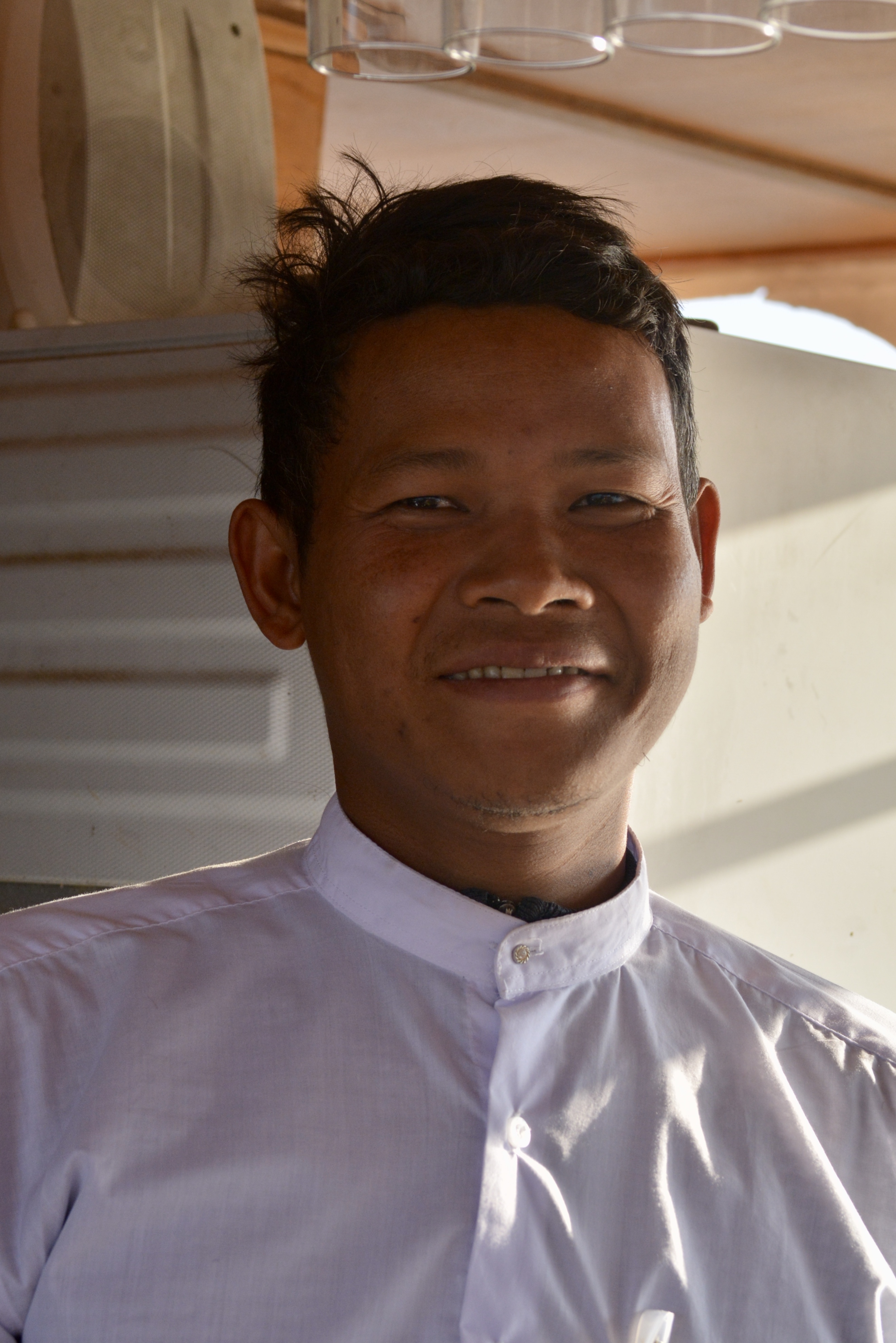
The young men who were our stewards on the boat gave us a demonstration on the art of wearing the “longyi”. With a few deft twists and turns of fabric they created, hats, shorts, jackets, slings, back packs, carrying pouches and even an elephant. Then they demonstrated the use of “thanaka” a paste made from ground bark which the Myanmar wear on their faces as both a sun block and a skin cream. They even have some fancy designs that they create after the swirl of paste dries a bit and one of the Taiwanese passengers was eager to be a model.

Twelve hours evaporated and before I knew it we were approaching the mythical city of Mandalay, made famous in Kipling’s poem. Of course it bears little or no resemblance to the romantic version set out in the poem but it was impressive as we approached our dock.

There are other ways to get from Bagan to Mandalay but in my mind the 35 USD fare that included breakfast and lunch was the only way to go.

Solo Travel in Bagan Myanmar

Acres of pagodas….

Things happen where you might be tempted to panic but doing so isn’t going to help. I had decided on a private taxi tour of Bagan as the best way to see the most Buddhist structures in one day as they are spread over 67 sq kms and there are more than 2000.

But the best laid plans… and so I found myself at the arrival gate in Bagan searching fruitlessly for the handheld sign that would bear my name. Not to be, I was nevertheless hustled out the door and into an awaiting taxi who wanted 35usd for a days tour. A fair price given they last from early morning arrival until sunset. However I had already paid in Yangon and a few kms into the journey I realized that, contrary to what I had been led to believe, this was not my car or my driver and I instructed him to turn around and go back to the airport.  

Back inside the arrivals area I found a lovely helpful English speaking guide who called the number on my voucher and after a furious relay of other calls he assured me that although there had been a communication gap between Bagan and Yangon I would be picked up shortly. All in, I had 2 hours of waiting and my 8am tour started at 10am.

While I was getting in the right taxi the first taxi driver approached my pre-paid driver and demanded payment for the five minutes I was with him. My driver paid him and explained that he was paying him for taking me to the market, which he did not. No es mi pedo as my Mexican friends say.  

Bagan Temples is a UNESCO World Heritage Site with good reason. Located on the banks of the Irrawaddy River in central Myanmar, and sprouting from the flat plains along the river is the largest collection of Buddhist temples, stupas and monasteries in the world. Time worn, reduced to rubble in some cases are stupas that show the bricks and mortar used to build them.Others are survivors, resplendently preserved and revered, covered in gold plate and gemstones they point the way to the heavens.

There are three settlements on the Bagan Temple plains; Old Bagan, New Bagan and Nyuang U Town. My tour started at the Nyuang market bustling with women sellers of fruits, vegetables, fabrics, jewellery, puppets, clothing, toys and many other goodies. Markets offer great photo opportunities, every stall is piled high with something of beauty, be it a food or a piece of clothing proudly displayed, I was told many times “made here, not China”. I bought several items including my own “longyi” for temple visits and a long legged skort as a further nod to modesty.

The temples and pagoda jut out of the plain in seemingly random patterns. Some are huddled close together and others are some distance apart. Each one is notable for different reasons, the gold, the Buddhas, the cool dark passageways, frescos, etc. In no way can one visit all 2000 in one day but I managed to pack in a few which to be honest became somewhat of a blur.

My driver spoke enough English to get me from A to B but not enough to fill in the mysteries of these ancient reminders of the 9th & 10th centuries. There is something haunting about the plains and what is poignantly missing is the human presence of the people that built them. To quote Borges, some places, “try to tell us something, or have said something we should not have missed, or are about to say something.”

The day ended with a short climb up a rare rise in the flat landscape to watch as the sun set behind the Temples of Bagan.

After a long day, especially considering my early start in Yangon, I was at last taken to the Bagan Wynn Hotel, one of the best hotels yet. Beautiful grounds and five star treatment at a very reasonable price through Hotels.com. My second day in Bagan was spent enjoying the pool and gardens of Bagan Wynn, catching my breath, working on my blog, answering friends emails and doing a little sink laundry. Tomorrow very early I am off to Mandalay, not by plane but by boat on the Irrawaddy River. Alarm set for 4:00 AM!