After leaving Halong Bay we took a short flight to Da Nang, situated along the western coast of Vietnam about mid-way to Ho Chi Min City (Saigon). Da Nang is Viet Nam’s 5th largest city and for most travellers it is the entry point for both Hue and Hoi An, ancient cities that have been recognized as UNESCO Heritage Sites. With more time I would have travelled more slowly by train from the north to central Vietnam. As it was with three days to visit the area it was just enough to get to know Hoi An and enjoy some of the interesting history, diverse culture and delicious food. Da Nang and Hue will have to wait for another trip.
We stayed just outside of the ancient city which was a blessing given the hoards of tourists and the number of people who work and live in the area. The Prince Hotel is great if your there, the staff is friendly and helpful, the rooms are clean, comfortable, the service is great and the breakfast good and at $29.00 CAD the price was right too.
About a twenty minute walk to the edge of the old town it isn’t long before we were emersed in the interesting history of Hoi An. For a small entrance fee you receive a ticket which entitles you to visit 5 of the more famous merchant homes and private temples and gardens in the Ancient City, a rich fusion of Chinese, Vietnamese, Japanese and European influences that date back to the 16th century. A major trading port,people came and went and stayed on as merchants, building the old wooden fronted merchant homes that you see today.
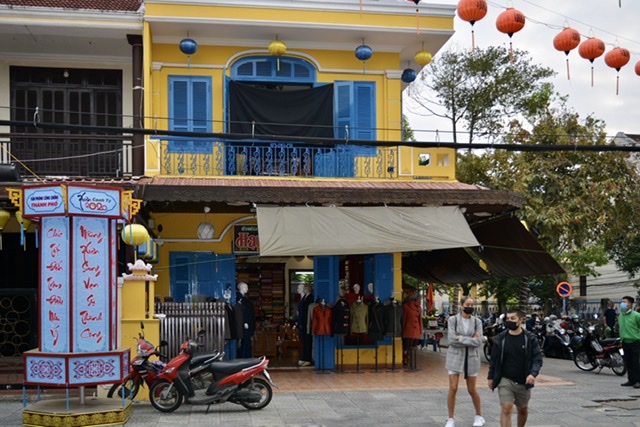
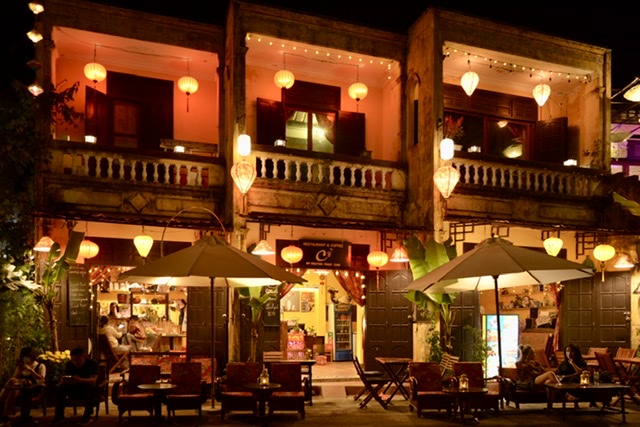
The walkways and bridges that connect the various neighbourhoods of Hoi An, were designated areas such as the Japanese or Chinese areas. The 200 year old shophouses are now home to boutiques, craft-stores, restaurants and bars, whatever brings them in to shop and to spend.
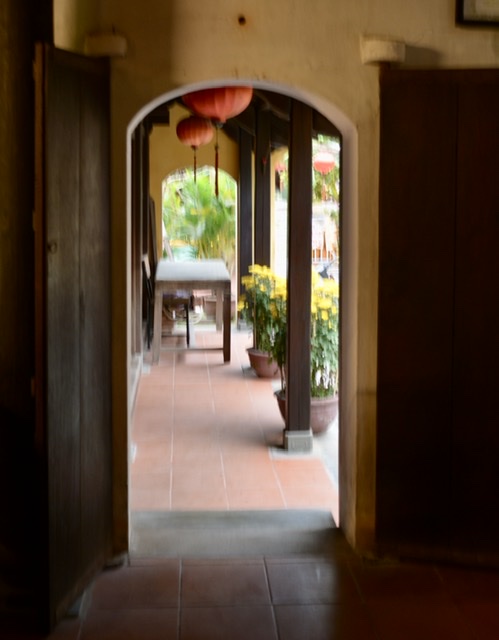
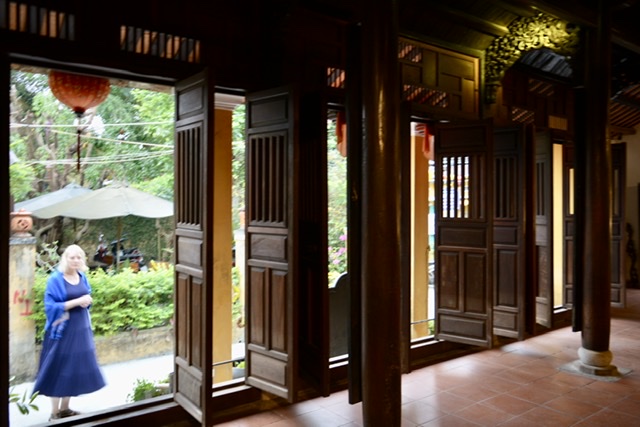
The Japanese Bridge is on of the most famous and connected the Japanese community to the Chinese community in the 16th century. Most merchants built dimly lit homes with dark wood doors and panelling with shops in the front of the house.
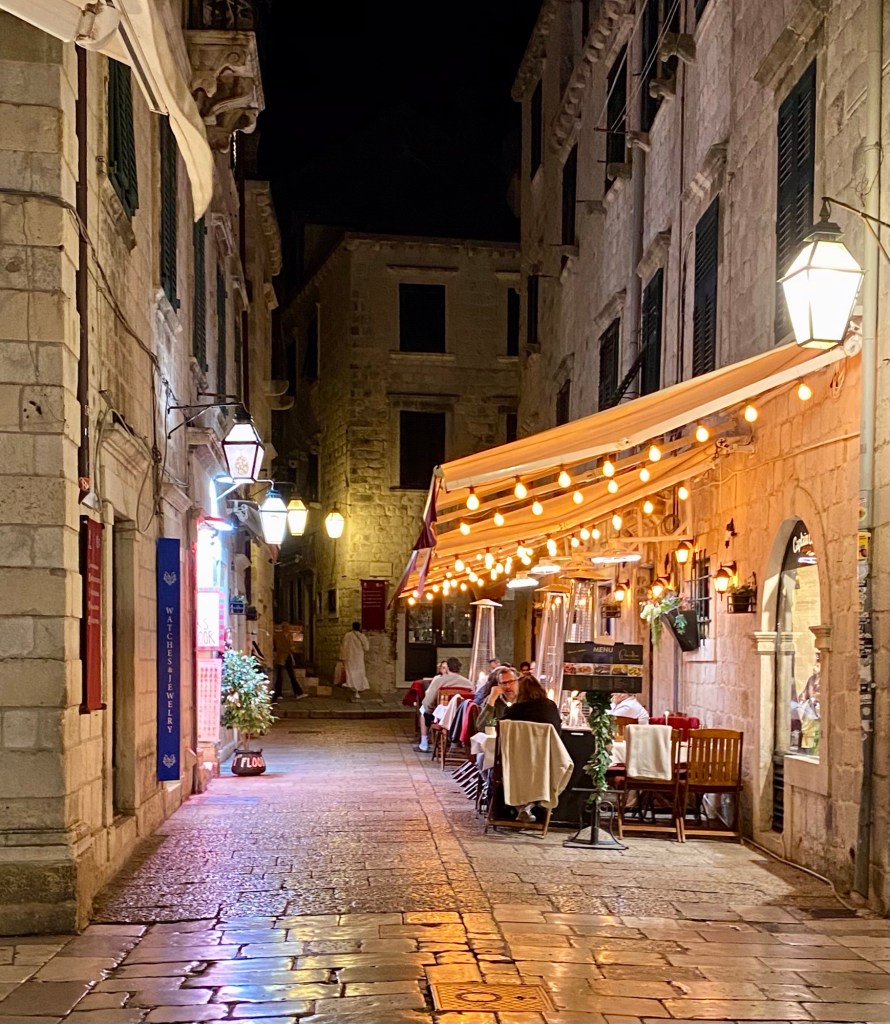
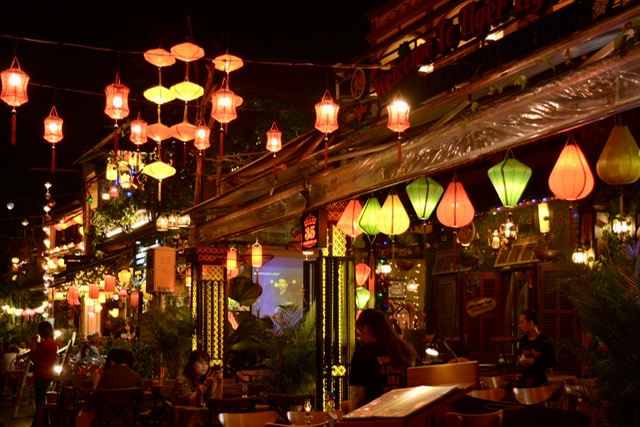
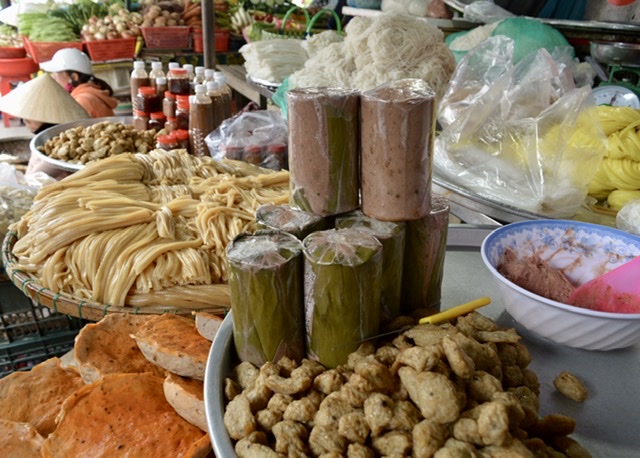
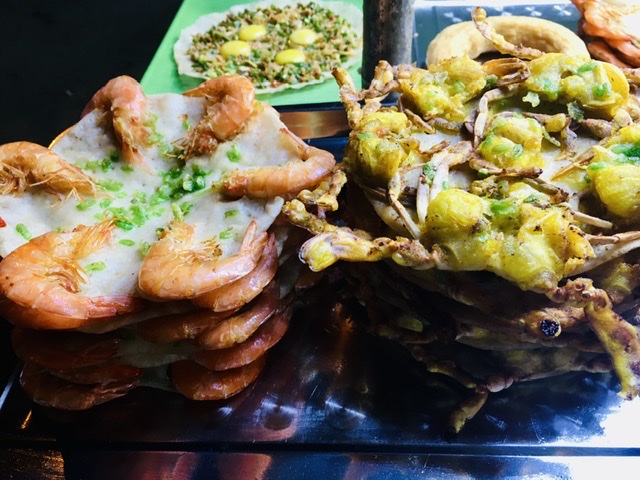
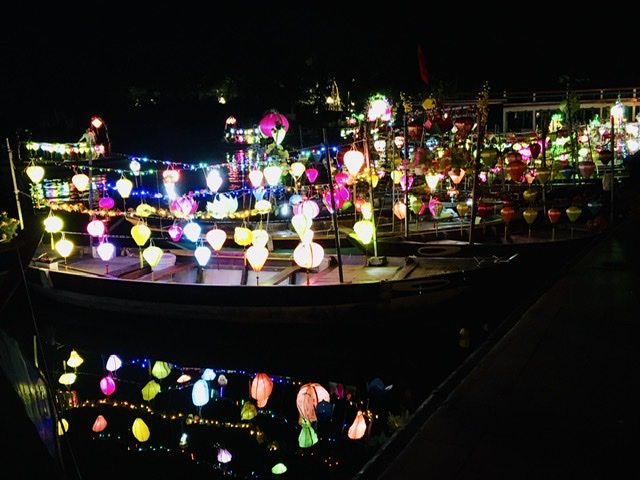
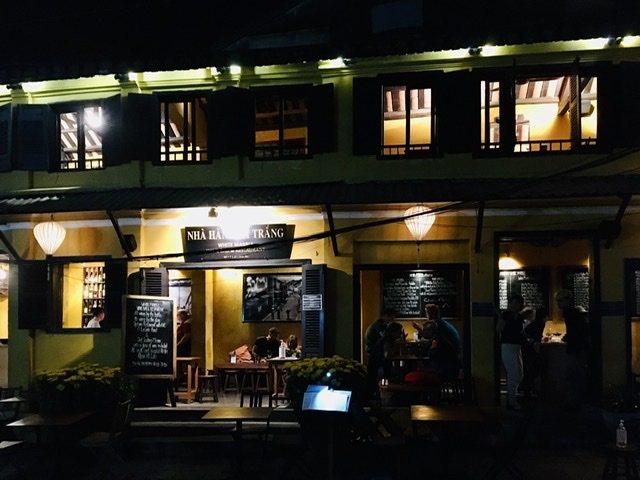
At night the shops are festooned with multi-coloured lanterns and range from souvenirs to boutique clothing stores. So fun to wander about at night and watch the dinners, shoppers and strollers enjoy the festive streets. Along the river are walkways and a favourite thing to do, after enjoying some street food, is a lantern boat ride in a sea of long boats and lanterns. The night market features many of the foods that are enjoyed by visitors and locals alike but I’m afraid that neither quail nor frog was not on my list of things to try. The lady selling the frogs told me I should “change my mind”. She’s probably right, but not when it comes to frogs. All I could think of was Kermit.
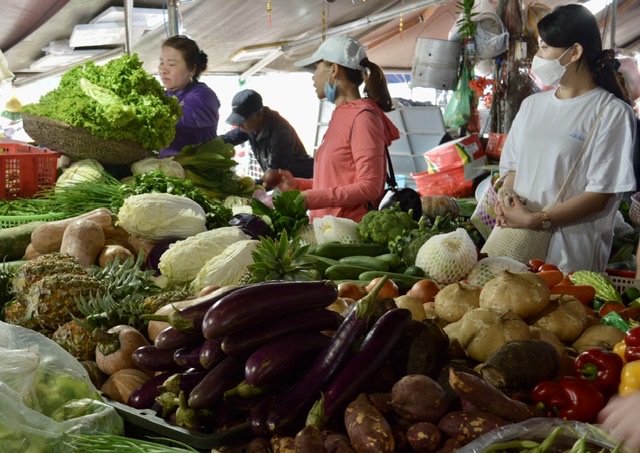
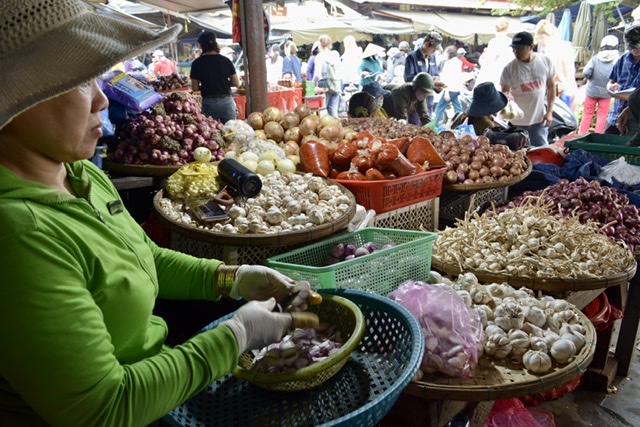
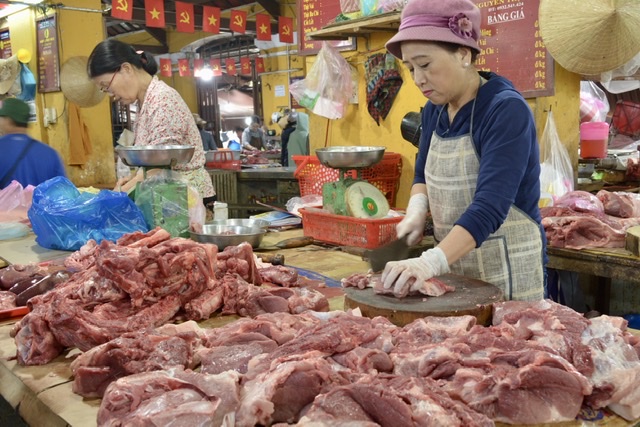
A great thing to do in Hoi An is to take a cooking class, which was actually a whole day long adventure that started with shopping for and buying the freshest ingredients at the morning market. Our guide/cooking teacher (wearing the white ball cap below) led the ten of us skillfully through the crowded market and down to the river where we caught a boat downstream to where the cooking class was to be held. A really fun way to get to class, the longboat that we boarded took us past homes, fishers, under bridges and into the delta.
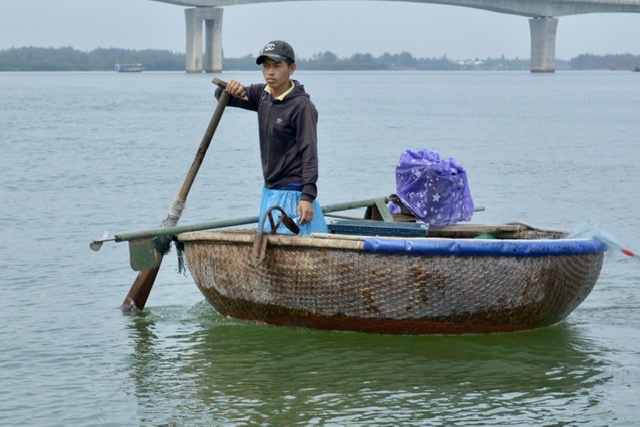
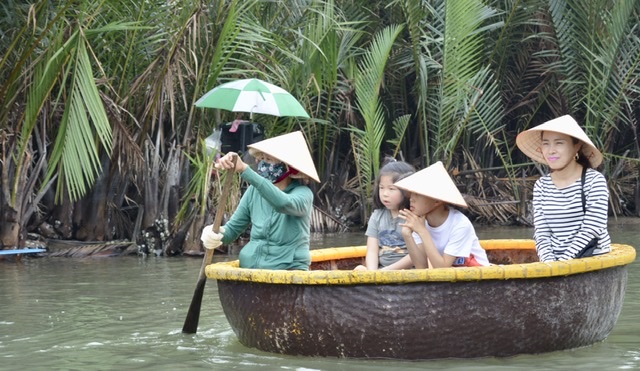
Once off the long boat we were led to a smaller dock in some mangroves where we teetered our way into teacup boats, paddled by the locals, all part of a show put on for the tourists. It was so fun and our paddlers seemed to really enjoy the reactions of the passengers as they spun the boats in dizzying circles, rocking them precariously back and forth for effect and then a number of men, alone in their tea cups were demonstrating how fast the boats could spin and what a wake they could produce when rocked to their gunnels. All done to K Pop music like Gang-am Style. What a hoot. We were taken up some of the narrower passage ways in the mangroves and were able to see the mussels clinging to the roots and the boats laden with tree fronds for weaving baskets, clothing and kinds of household items.
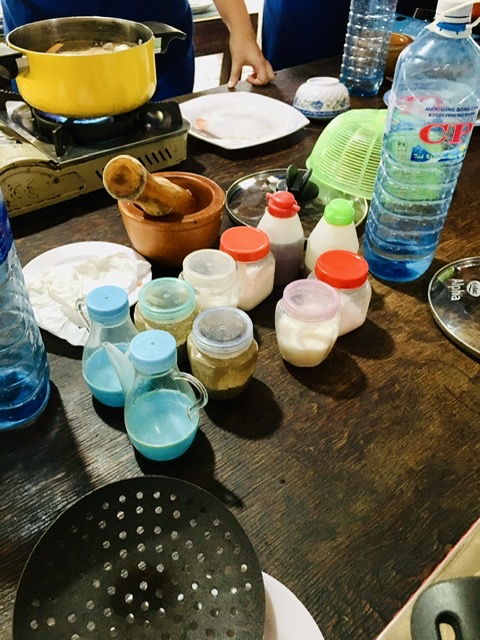
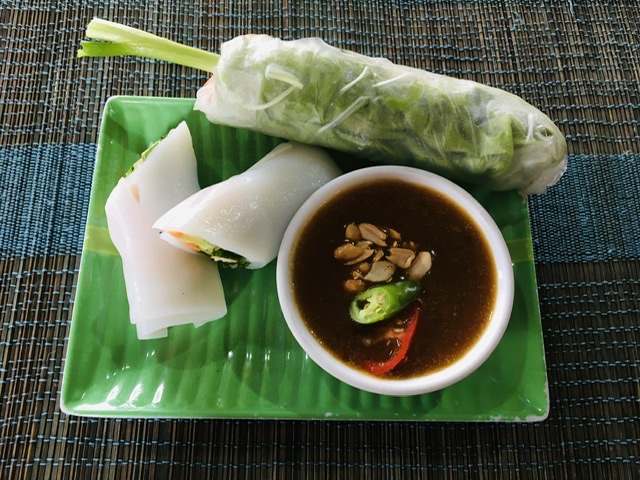
When we arrived at our cooking class we found ourselves in a very clean and organized outdoor kitchen. All the ingredients we had purchased early were cleaned, measured and placed at individual stations. We made two different kinds of Goi Cuon (salad rolls) with Nuoc Leo (peanut Hoisin Sauce). Then, Bang Xeo (sizzling savoury crepes) resembling tacos were made from rice flour, spices and coconut milk, dipped in Nuoc Cham sauce. Our Mi xao hai san (seafood stir fried noodles) was delicious and was followed up by the final dish Pho Bo Hà Nội (Hanoi style rice noodle soup with beef). Learning how to make the sauces meant learning how to combine seasonings, spices and herbs for ultimate flavours. Best of all we got to eat everything we made.
Marble Mountain and My Son are two sites that are generally combined to make a full day outing that takes you back to Da Nang and gives you a glimpse of this very modern city that even has a giant Ferris wheel, aka the London Eye.
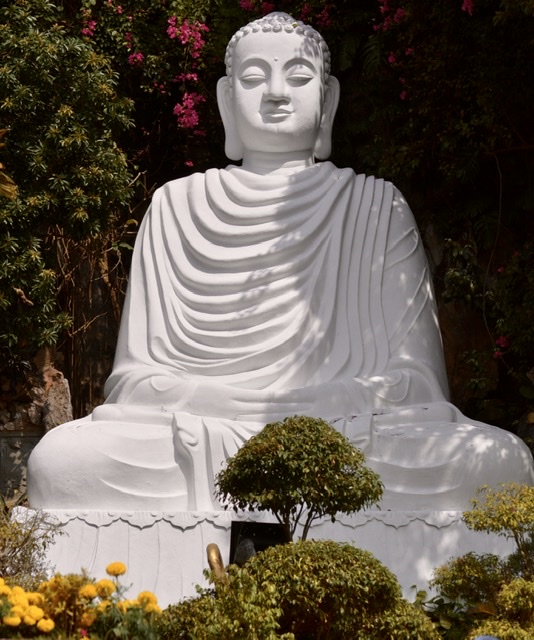
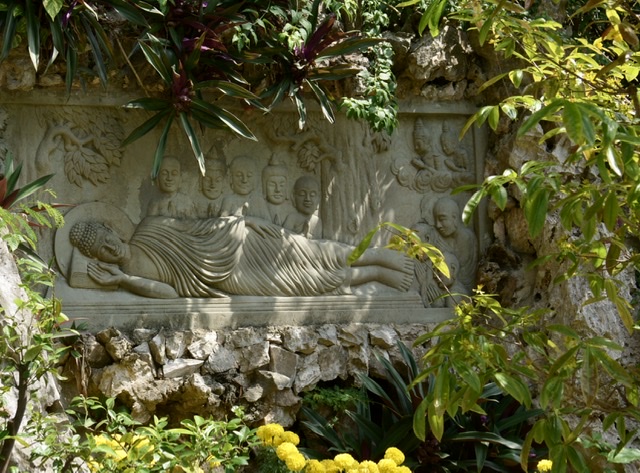
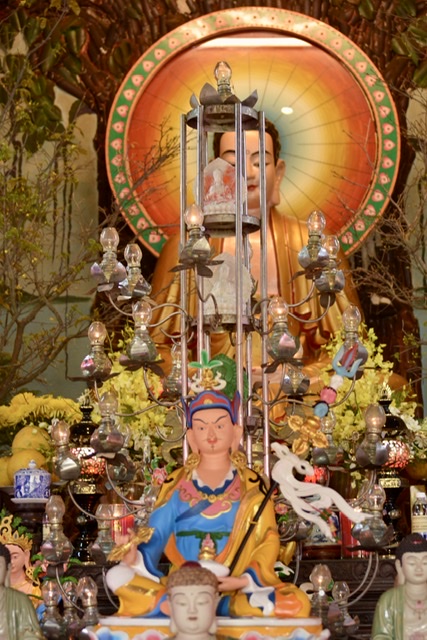
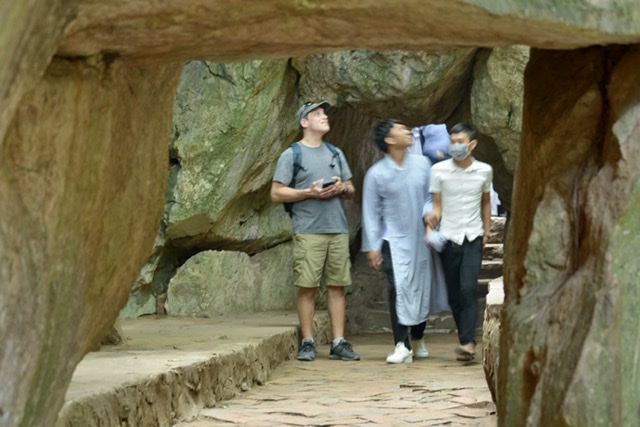
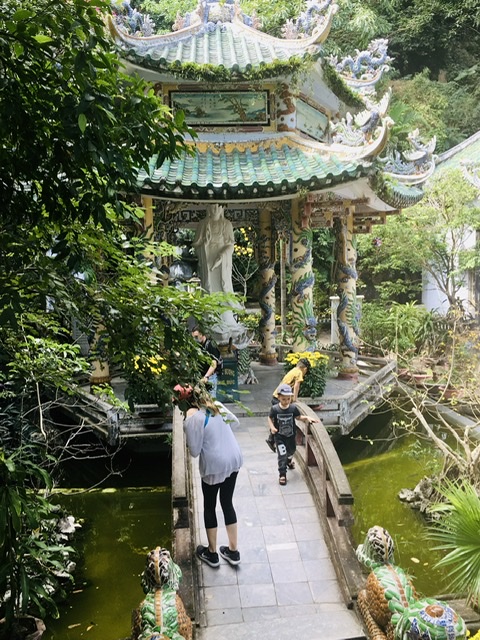
Marble Mountains are just that and all along the streets leading into Da Nang were shops selling marble statues in a range of sizes. Marble Mountains are five mountains riddled with natural caves that were made into Hindu and later Buddhist temples. You can climb to the top on uneven stairs or take an elevator to the top. We took the stairs and once at the top is when the hike really began. A series of paths join the various levels at the top of the mountain, much larger in scale than I had anticipated. Up stairs, down stairs, over bridges and through caves that led to other caves we saw several pagodas and Buddhist statues. At one point the rocky uneven staircase gave way to what was essentially a straight up scramble through a narrow chimney like passage where man made notches in the rocks helped us pull our way up and out of the cave.
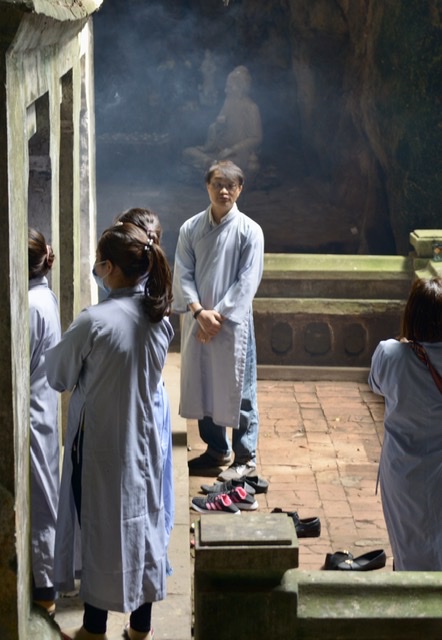
The lady below was selling incense to the pilgrims who came to worship in the caves, temples and pagodas. I offered not to buy the incense but to pay for her picture as I loved her beautiful face. So full of character and a simple joy for life she seemed quite pleased to pose for me. Inside the caves in the Smokey incense din were noviciates who came to prey and worship.
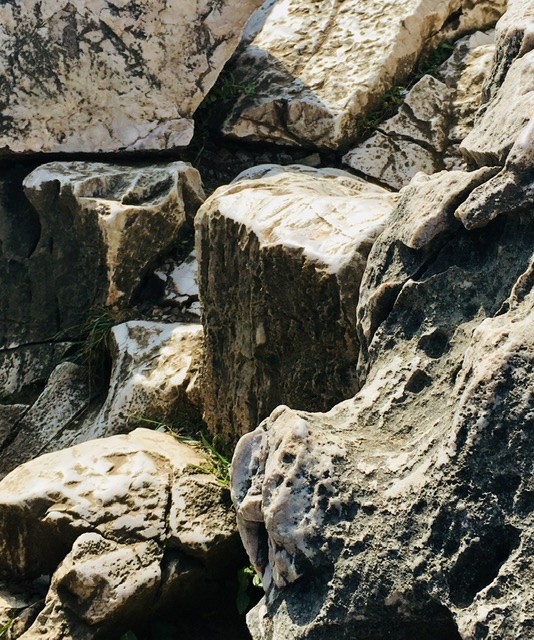
Once through the keyhole passage we made it to the top of the Marble Mountain we had ascended and were rewarded with a great view of Da Nang, the other Marble Mountains and of course the beautiful country side. I’ve included a photo of what you might consider to be a stairway.
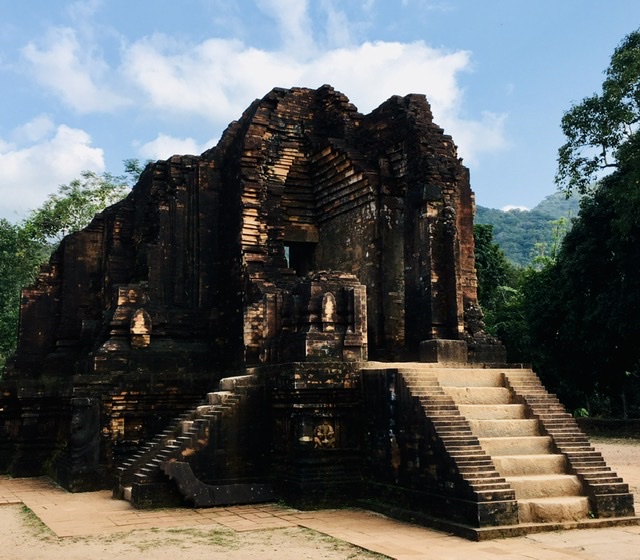
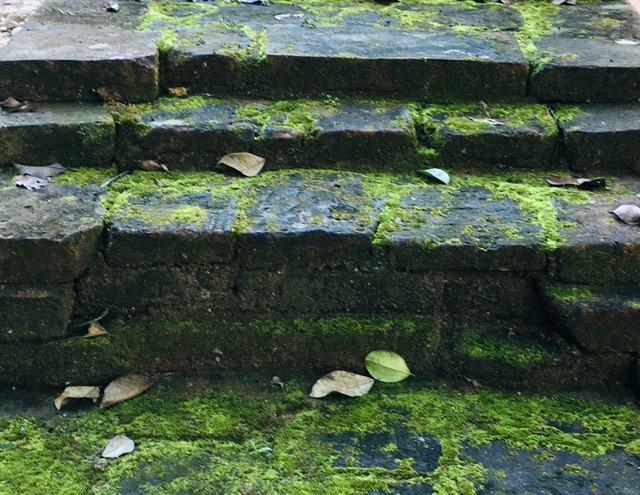
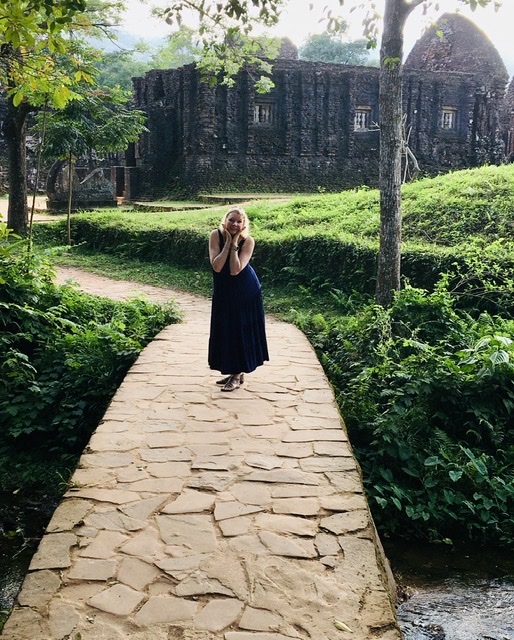
Our hired driver waited for us at the base of our Marble Mountain and once we had some restorative food and drink we continued on our way to My Son, an ancient site of the Champa kingdom which lasted from the 2nd century to the 15th. The site itself is a beautiful wooded area with flat meandering trails that take you to different clusters of ruins. Along the way there are huge craters that are reminders of the bombs dropped by the American B-52’s. You are cautioned not to stray from the path as there are unexploded mines in the area. Some of the Cham ruins were reduced to rubble by the bombing.
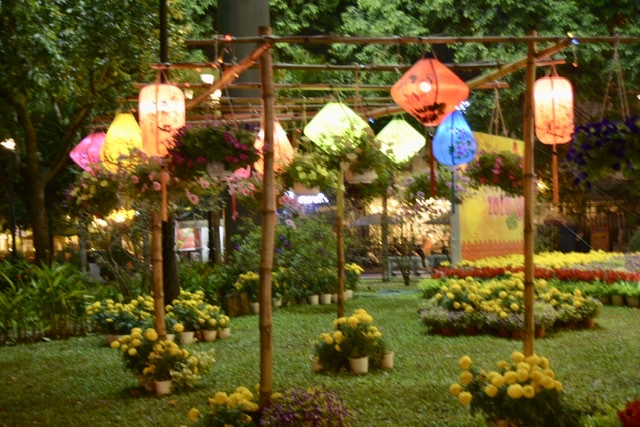
Our final night in Hoi An and one last wander through the streets to soak in the beauty of the light cast by the lanterns. Hoi An is a poetic gem and definitely if you are going to Vietnam you must go to Hoi An.
Share this: WanderwithStella











































 Wander With Stella