Nicaragua – San Juan River

Leaving Ometepe

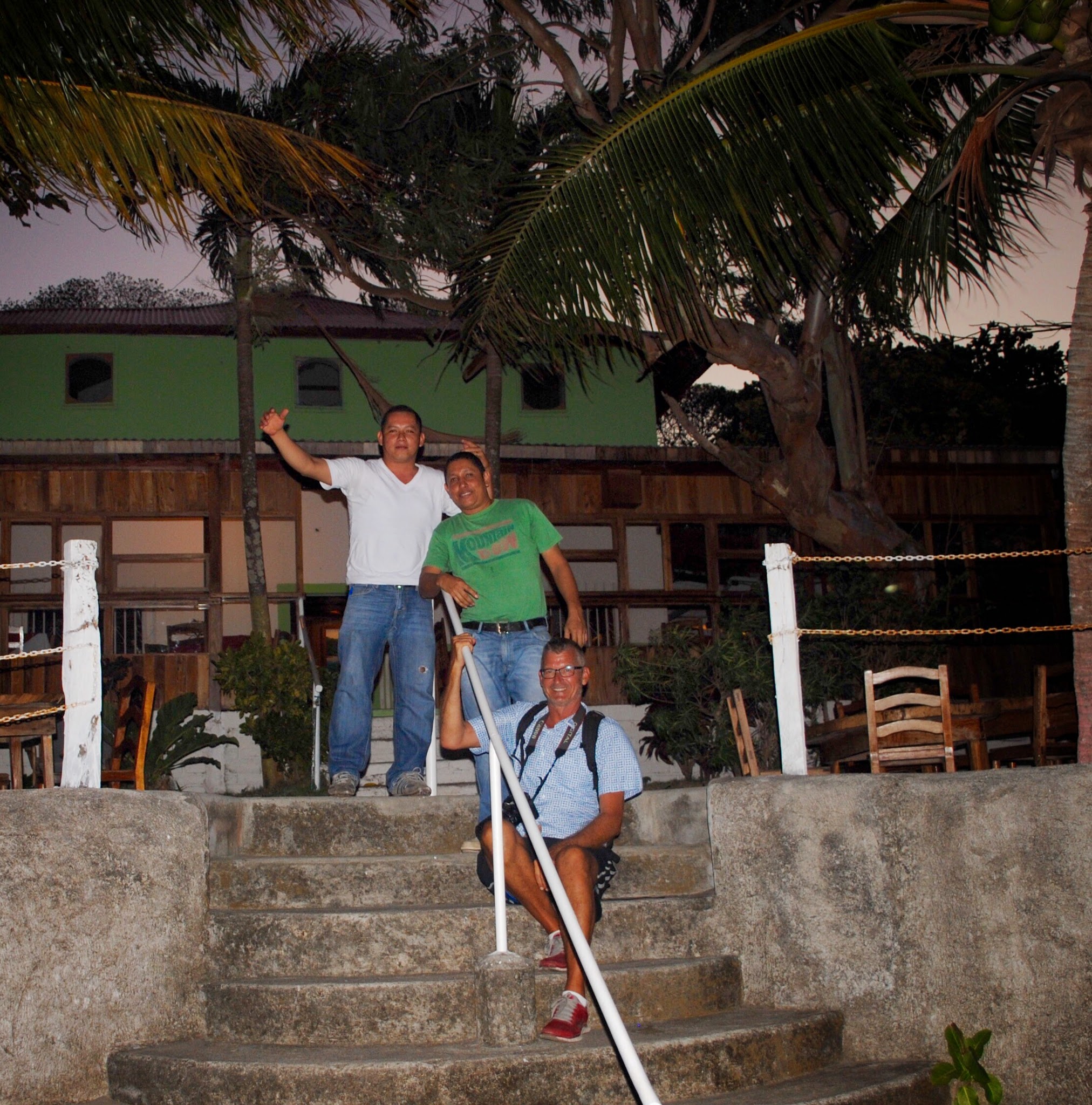
Sad to leave Ometepe, we had two choices on how to reach our next destination of San Marcos. We could either sit up most of the night on the long ferry ride across the rest of Lake Nicaragua or we could fly for $73. USD. We said our said goodbyes to our friends at the Hotel Finca Santo Domingo hotel and set off by taxi to the airport for our twenty minute flight which took us over the Concepcion Volcan and alongside the Marineras Volcan. Our last views of the beauiful Ometepe were from the air. A bit bumpy heading into the constant head wind off Lake Nicaragua but we soon found oursleves in San Carlos where we were picked up at the dock by Davie from our Fish Camp, La Esquina de La Lagua (The Corner of the Lake).

At the Corner of the Lake Nicaragua

When two rivers share a corner of a lake in the south east corner of Nicaragua magic is born. A place of transience like no other, the San Juan River flows 192 kima from Lake Nicaraugra into the Caribbean and right next to the San Juan is the Rio Frio which flows from Costa Rica to Lake Nicaragua. Once waterways for pirates and gold seekers, the corner of the lake still has that frontier feeling, a place that time forgot. Not many tourists make it to this area which make the Biological and Wildlife Reserves in this area even more inviting.

The air is hot and humid and when it rains, which it did most days, the skies open and the downpour on the tin roof of my habitacion could be deafening. Fortunately it would only rain for a short time and luckily each time we were indoors. Soon the rain would stop and quiet was restored, broken only by the call of birds, the lapping of the river and the distance thrum of outboard motors. Tom being a bird watcher was in heaven and spent his time photographing and rhapsodizing over the host of species he enjoyed every day.

French Cooking at a Nicaraguan Fish Camp

The fish camp is owned by a French ex-pat Fillipe who settled in the Caribbean and eventually moved to Nicaragua. Not short of opinions Fillipe offered his ideas on the most recent canal proposal that would see digging along the Rio Gordo. This latest route takes canal plans away from Rio San Juan which is much wider and deeper but is subject to seasonal low waters and a few rapids. Canal talk has been just that since well before the Panama Canal and a number of routes have been proposed. This latest proposal is backed by China with Russian investment and will belong to China until the investors are repaid. At least fifty years. Fillipe says he will not live to see the canal built (he looks to be about 75). Opinion about the canal is said to be strong and divided amoungst the Nicaraguans, with of course some doubting that it will even happen, although roads have been built to bring in the machinary to dig the canal. Let’s hope if it does happen that a more equitable distribution of the resultant wealth helps all of the Nicaraguan people and not just some like you see in Panama.

To Fillipe’s credit, the staff at the “Esquina” are all Nicaraguans. In addition to room and board, our $50 USD a night bought us unlimited kayak, guide and motor launch time. The night of our arrival we took a night cruise up the Rio Frio in the launch, on the hunt for caymens. We spotted several but they were quick to dive as soon as our spotlight picked up their gleaming eyes beneath the jungle overhang. Our guide Davie, born and raised on the river had a knack for spotting them that only someone of the river could. At one point he pulled up to the shore, reached over the bow and extracted a baby caymen from the muddy water. It was brilliant to see one up close and he held it long enough for us to pet it and examine its scaly skin and pointy features. He actually called it to the boat by imitating the sound of its mother which is what brought it to the surface long enough for him to make the grab. We weren’t the only boats out skimming the river on this dark night and occassionaly we would see other motor launches slipping by, or dark figures paddling dug out canoes silently into the night.

Meals at the camp were made by local women and served by the camp muchacha who was a dwarf and who made us feel very welcome in spite of language differences. He was enthusiatic and knowledgeable about his river home and several times he called us to the deck rails to see a bird or a reptile. Fillipe trained the women in French cookery and we had meals of roasted potatoes and steak with buttery sauces. It was very nice. My room had screened windows on three sides and being on the second floor of the floating camp which meant the night breeze made sleep possible. It was impossible to sleep late as the birds were up and squawking by 5:30 which had Tom leaping from his bed and me pulling the sheet over my head.

Birds Galore

Tropical Rain Forest & Cattle Fincas

Day two at the camp saw us touring far up the Rio Frio on the camp launch with our guide Davie. We slid past fincas with cattle and assorted crops that gave way to tropical rain forest with more birds than you could name. Parrots, herons, egrets, fly catchers, king fishers, not to mention other creatures like a lime green gila monster and a number of monkeys. I am certainly getting my education on bird life. The fincas along the river are very rustic and the families live in relative isolation with the river being their only means of transport in or out of San Carlos the major center on the San Juan

Heart of Darkness

On day three Davie took us by launch to San Carlos and helped us to find tickets up the river to El Castillo a Spanish fortress built to hold back the British backed pirates that were regularly ransacking Granada. They would travel up the Rio San Juan and then across Lake Nicaragua. We opted for the fast boat which would take us up the Rio San Juan to El Castillo in 1.5 hours. Little did we know that the wake of the bow of the fast boat would provide us with showers when the captain turned the boat in or out of the shallow channels of the river. Photography was out of the question.

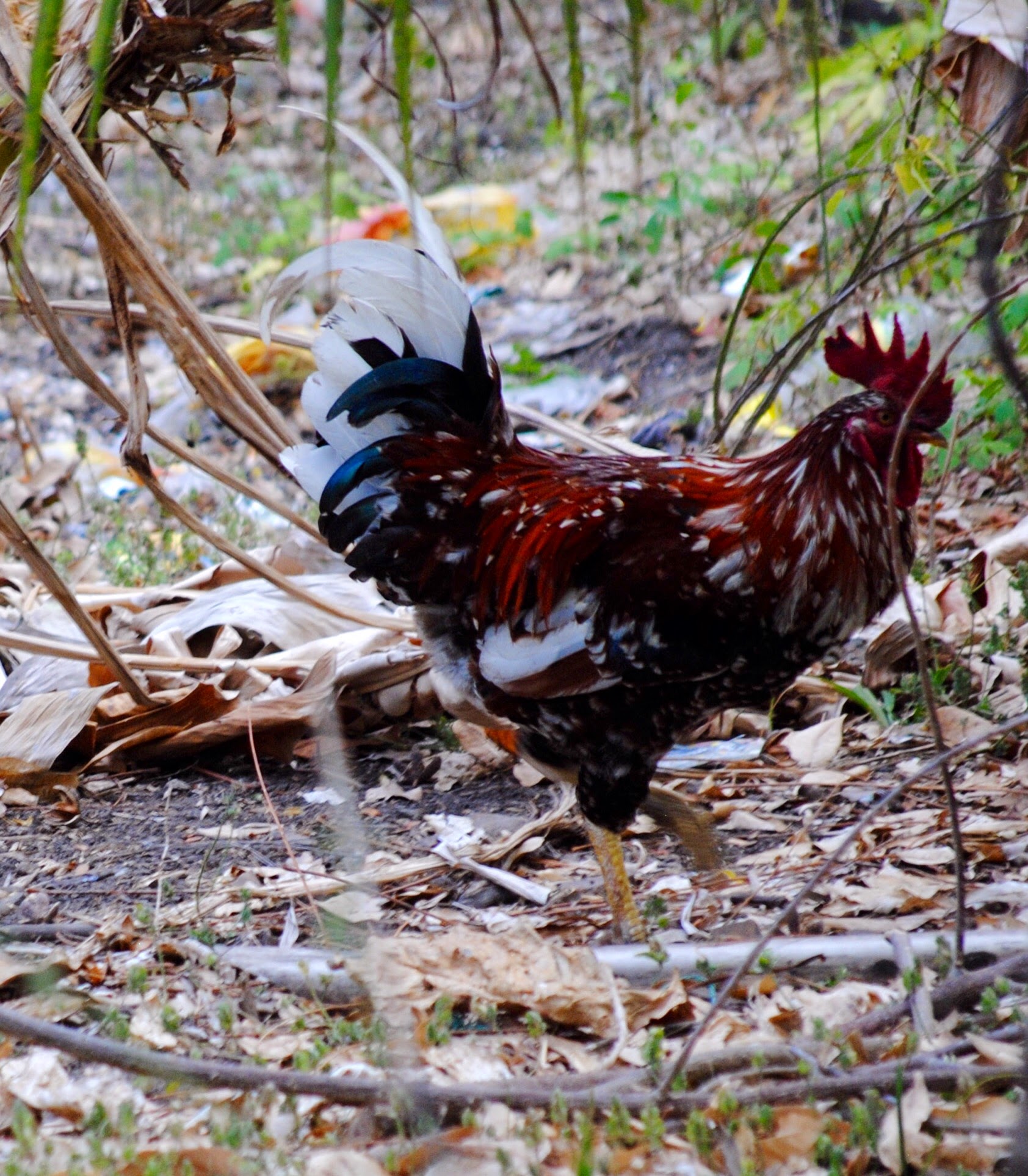
El Castillo is a beautiful little town on the river, complete with stilted buildings hanging out over the river and quaint artisitic touches on clapboard buildings and of course a resident rooster who keeps his eye on vistors. Tom made a terrible pun with his foot resting on a downed palm about “winning palms down.”

The town reaches right up a hill from the river banks and at the top of the hightest knoll is the ruin of the Spanish Fortress that dates back to 1675. Horatio Nelson himself attacked the fort at one time and nealry died of dysentery in the jungles of Nicaragua. Thank God he survived to be glorified and preside over Trafalgar Square. One of the assaults by the British was repelled by a young Castillo girl, still just a teenager, but who had been schooled in the “arts of men”. The fort looks down on rapids that make navigation difficult in the dry season.

Having asked a succession of people when the boat returned to San Marcos from Castillo we took ourselves down to the dock at 2:00 only to find that we were alone in what should have been a throng of would-be passengers. Of course, in spite of what we were told by several different people, there was no 2:00 boat and we seemed to be the only two passengers not in the loop.

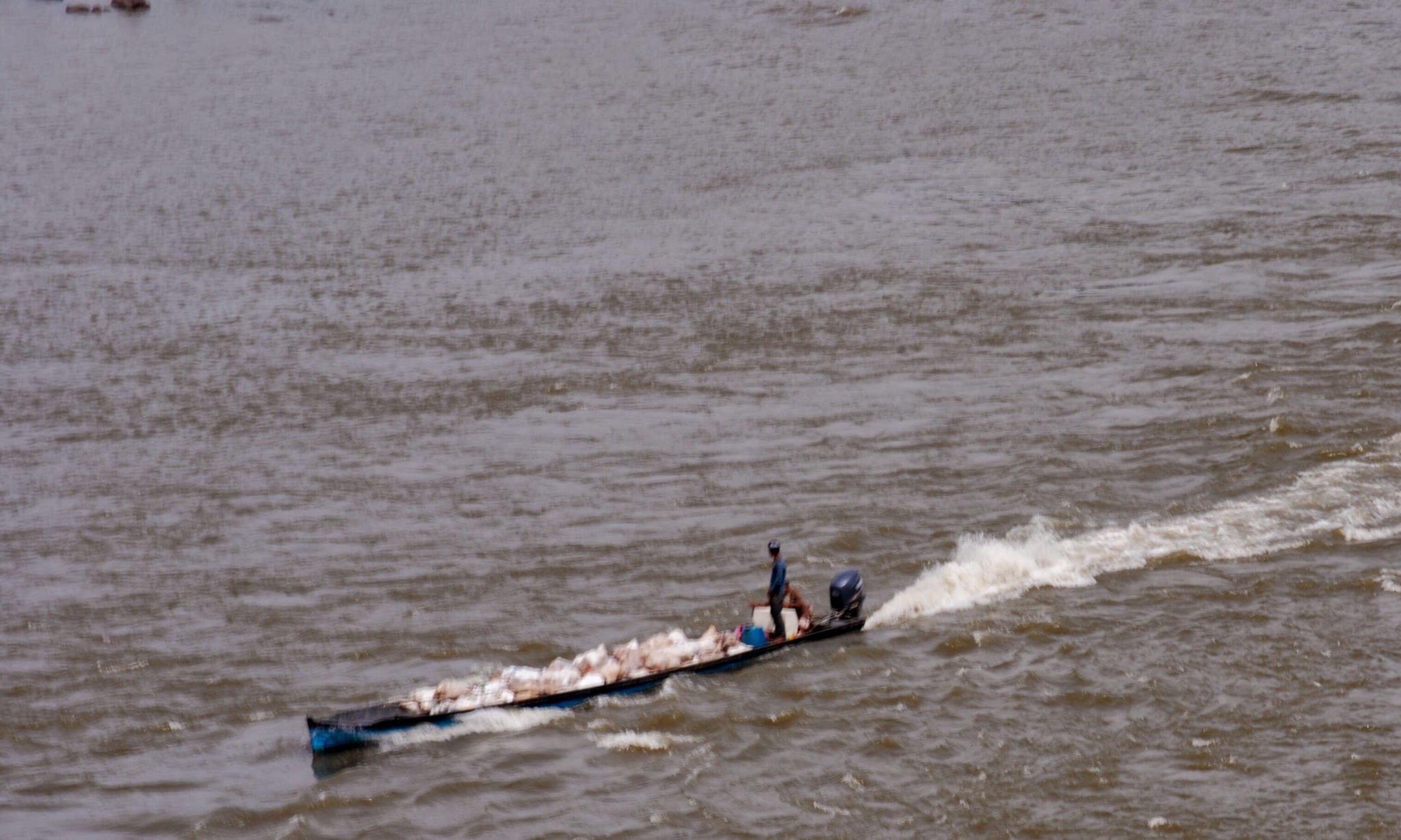
Just as we were resigning ourseves to staying the night in Castillo, and having watched a coconut boat pull away (potential ride) along came a long skinny launch, clearly a working boat of some type, and we negotiated a ride to Boca De Sabalos, another small settlement back up the river, where, the boatsman told us we could catch the last bus back to San Marcos. I bought a round of cokes at the dockside tienda and we left satisfied that we would be able to stick to our schedule of departing San Marcos for Leon on Wednesday.

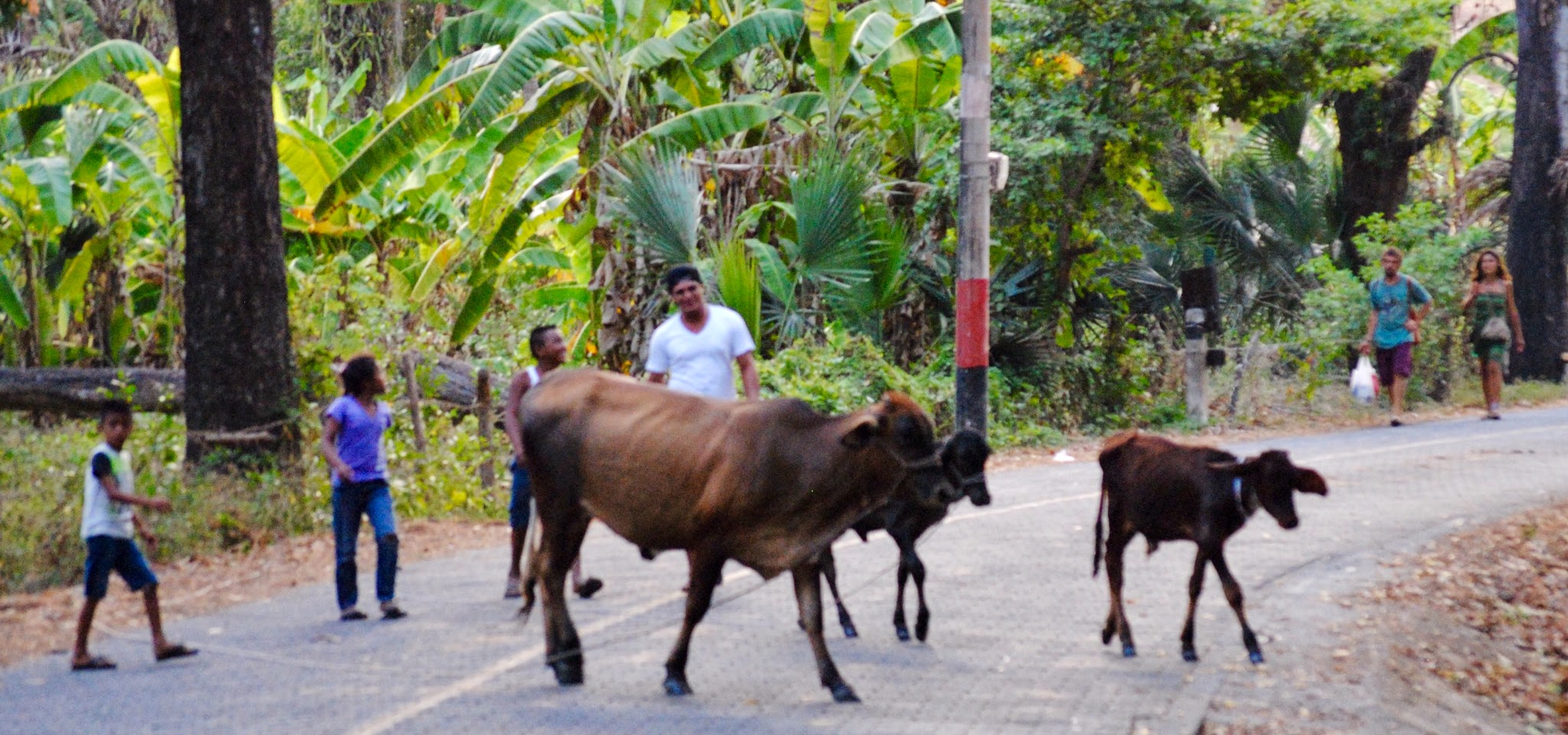
Once in the boat and underway, Tom remarked how great it was because we would have the photo opportunities that we had missed on the way up the river but I told him to hold on to that thought because just as he said it I spotted something by my right foot. A great spray of water poured in from a hole in the fiberglass. We turned back toward the captain with what were probably looks of alarm and he calmly pointed to plastic liter bottles which we were to use to bail our way along the river. Dutifully we took up the task and before long we were safely in Sabalos, having enjoyed a most unique adventure. There on the bank of the river was the chicken bus to San Marcos. It turns out the hole in the boat was made by a cow which the ranchero regularly transports along the river. Can’t imagine the boat not tipping with the weight of a distraught cow-but then maybe they like their boat rides.

After paying the boatman considerably more than what we thought he had set as the price we had a quick clamber up the muddy bank and we were enjoying the throbbing base of mega speakers blasting salsa music from the overhead racks on the chicken bus on the bumpy road back to San Marcos. At one point we hit a hole so deep I did about a foot and a half of air time, crashing back down onto the not so padded old school bus seat.

On to Leon

Our adventure made a good story back at the fish camp and everyone there was just as puzzled as we were by the absence of a return boat. Although the river was beautiful, three nights was enough to see what we had come to see so we were glad to pack up the next morning to catch the chicken bus to Leon.


Nicaragua – Ometepe

Volcanos’s in a Lake

The island of Ometepe is in the middle of Lake Nicaragua. To get to Ometepe you can take one of three ferries which leave from Granada, Rivas and San Carlos on the opposite side of the lake from Granada. We took the four hour ferry ride from Granada to Ometepe and Tom smartly chose the perfect spot to sit which gave us great leaving and arriving views. The ferry is a double decker and foreigners are given a first class ticket and are made to sit up top which is great but leaves the bottom deck for the Nica’s as they call themselves. The top deck is open at the stern and we paid a few dollars more for a deck chair that we were glad to have as the crossing is long and a little on the rough side. The wind whipped up as we crossed between Granada and Ometepe and occasionally a wave would crash against the bow and furl around, up and over the top deck rail. There were several squeals out of the young backpacker crowd as they watched their gear get wet. We had smartly stowed our suitcases inside the sitting area so we were spared the soaking.

Ferry to Ometepe

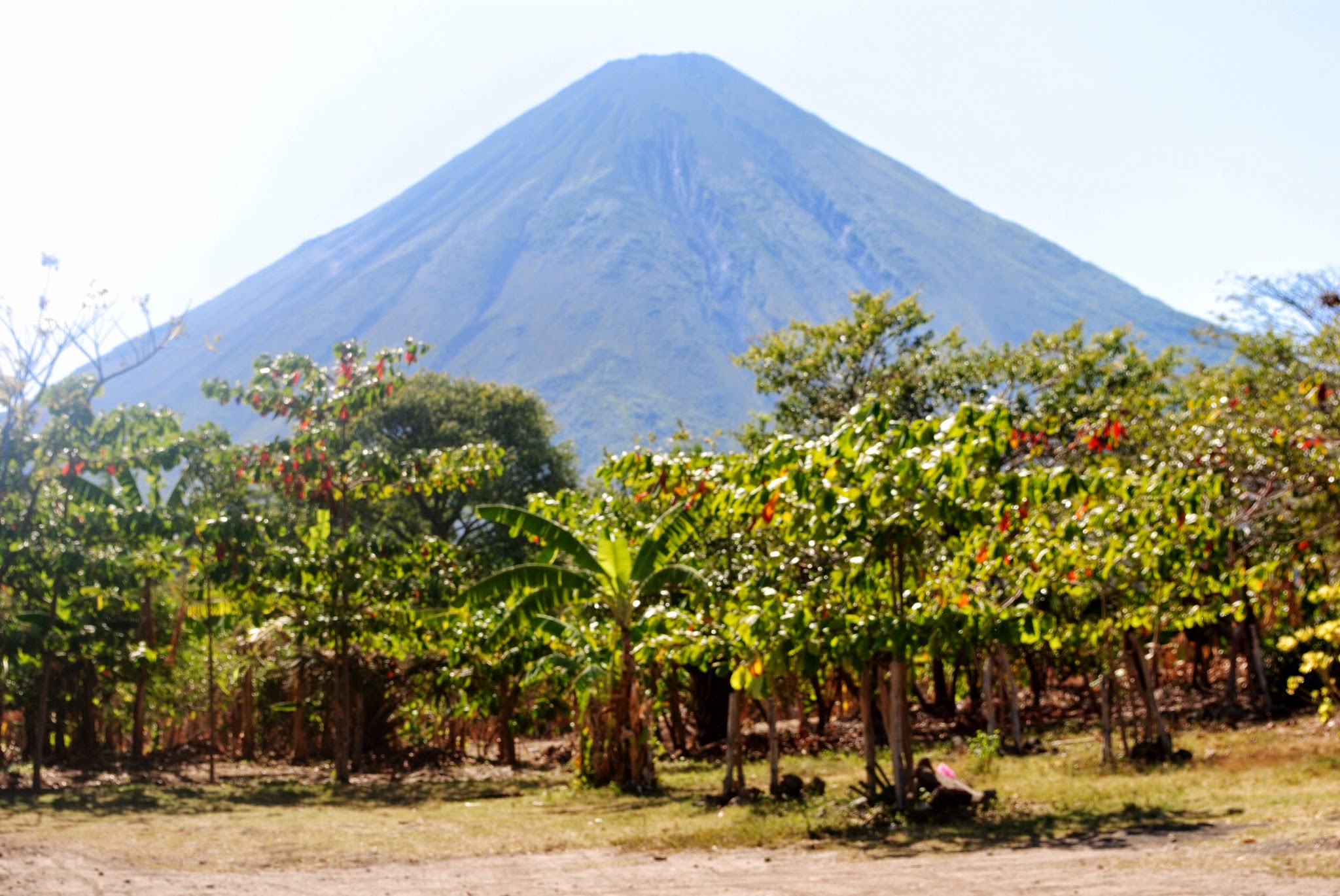
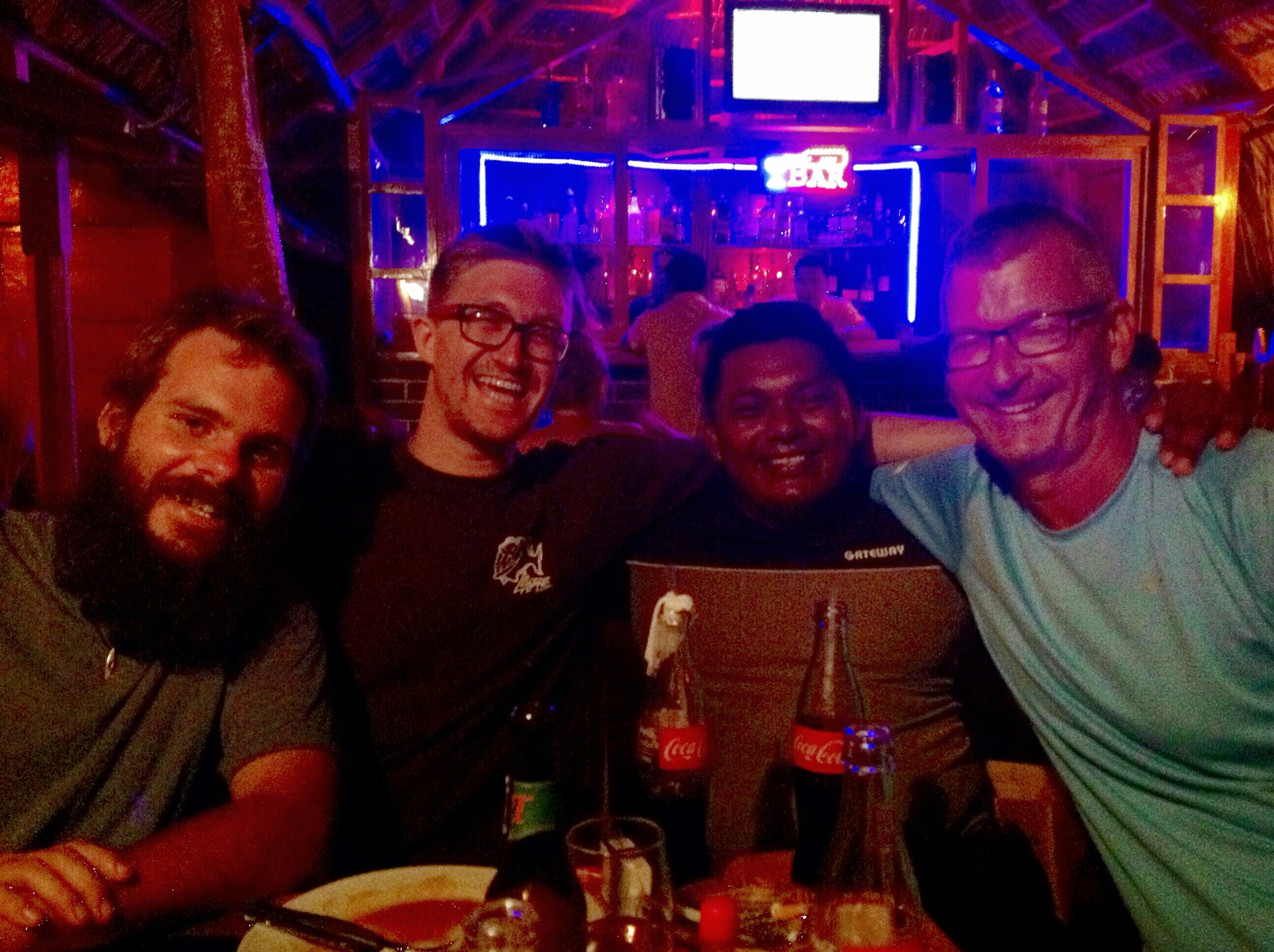
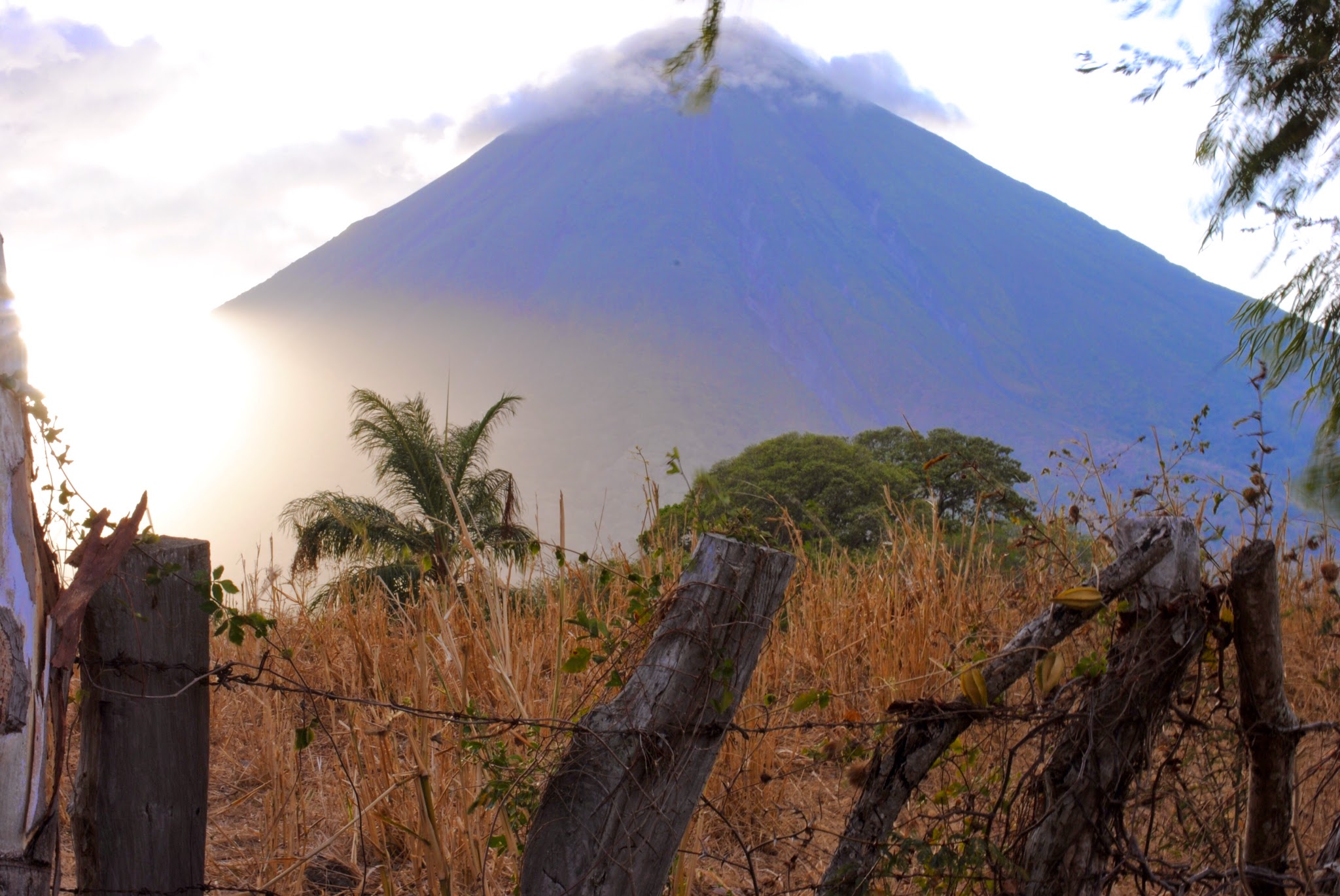
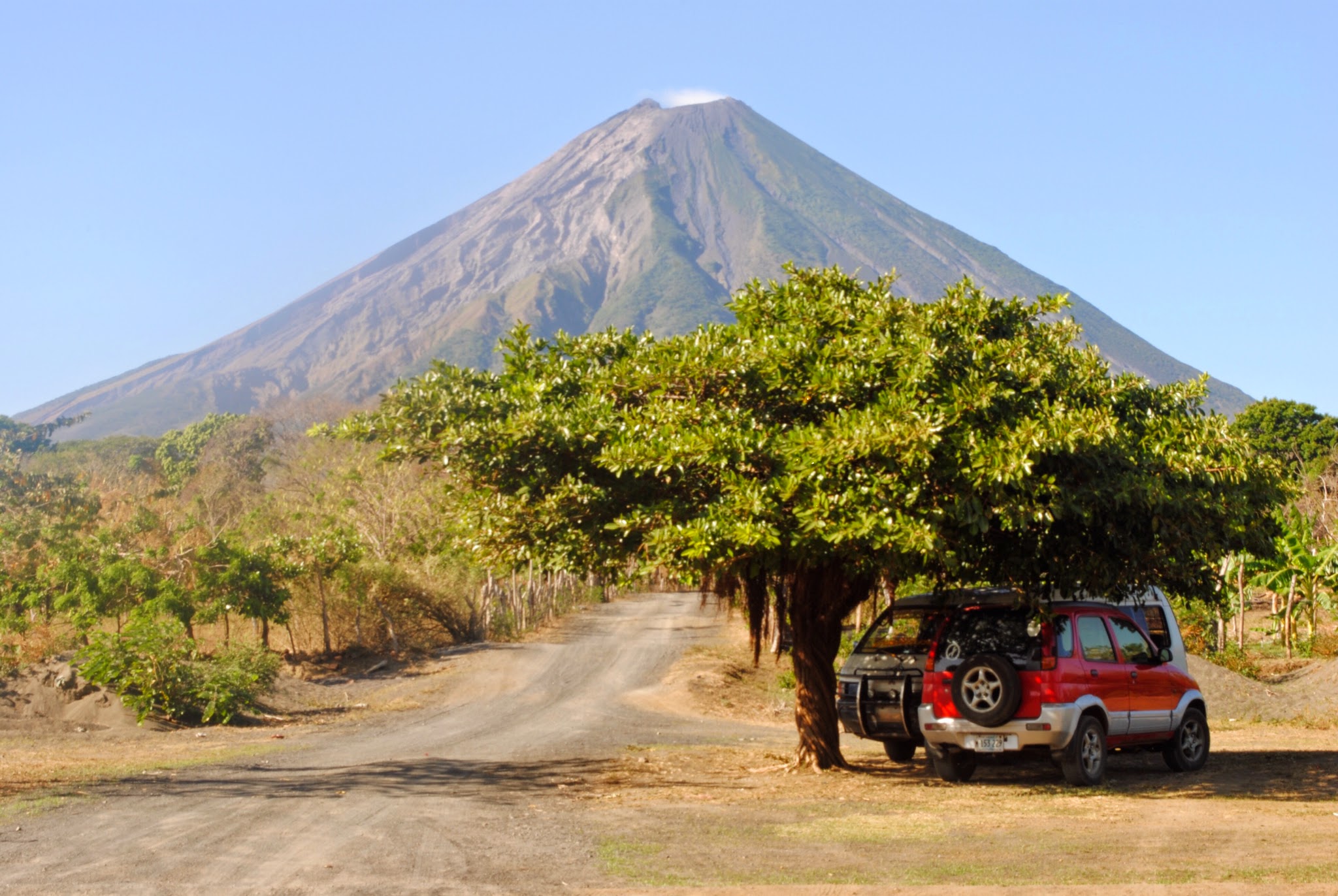
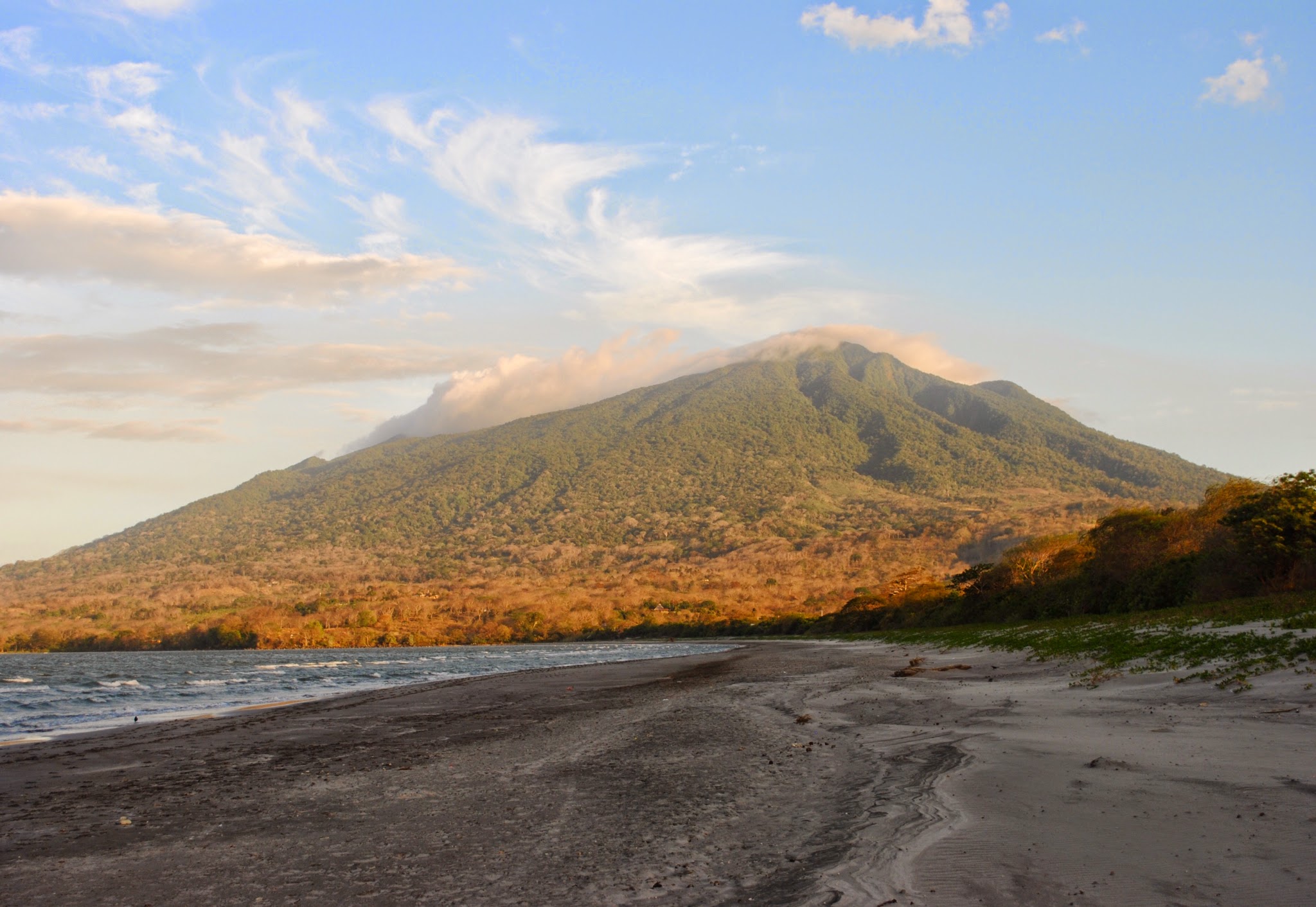
Approaching Ometepe from the north end of the island meant seeing Conception Volcano first and what a gorgeous sight. A perfect cone shape the volcano is still active and manages to produce clouds of smoke on a regular basis. In 2000, increased activity from Conception forced the volcano to be evacuated. It is 5282 feet high and offers the more intrepid traveler a change to climb to the rim and stare down at the lava below. We left that to the young Italian man, Simon, that we met in Altagracia on the first two nights of our stay. He arranged to climb the volcano the day we left for Playa Santa Domingo, he was leaving just before dark and reaching the summit some four hours later, he and his local guide would spend the night on the mountain before descending in the early hours of the morning. We’re still wondering how he made out. We also met a nice young man from Costa Rica who had been in Managua training to be a knife maker. His dream is to return to Costa Rica and be the first to make hand-made knives in his country. He spoke perfect English and had a heavy beard and you would never know that he was a central american from his appearance or accent. Also in our company for dinner one evening was Willie, a sales rep for our hotel (tout) who was in a joyous mood because his wife had just had a baby by Caesarian in the Rivas hospital on the mainland. He had sent his sister and mother along to be with her!

We stayed two nights in Altagracia and rented scooters (from Willie) to explore the island and find more permanent quarters more to our liking. The island roads are made of paving bricks and they make a figure eight around Conception and Maderas, the other but inactive volcano at the other end of the island. They say that the Maderas climb is just as challenging as climbing Conception but since it is dormant most people climb it to be safe and to see the crater lake inside the rim. We wouldn’t know as we had neither proper climbing boots nor long pants! (Excuses, excuses) Leaving the climbing to others, we covered most of the territory possible on a scooter and in so doing so found ourselves an ideal hotel for the remaining four nights of our Ometepe stay in Playa Santa Domingo.


On route we stopped for a refreshment and bathroom break at a rustic restaurant/home and met a lovely woman and her granddaughter that was home sick from school. The granddaughter was getting ready to go somewhere with her grandmother (possibly the clinic) and she was dressed in a beautiful little white dress with matching white shoes which the grandmother touched up with white shoe polish before they left. I can’t imagine what a white dress would have looked like on me at the end of a day on a tropical island where most roads and floors are dirt!

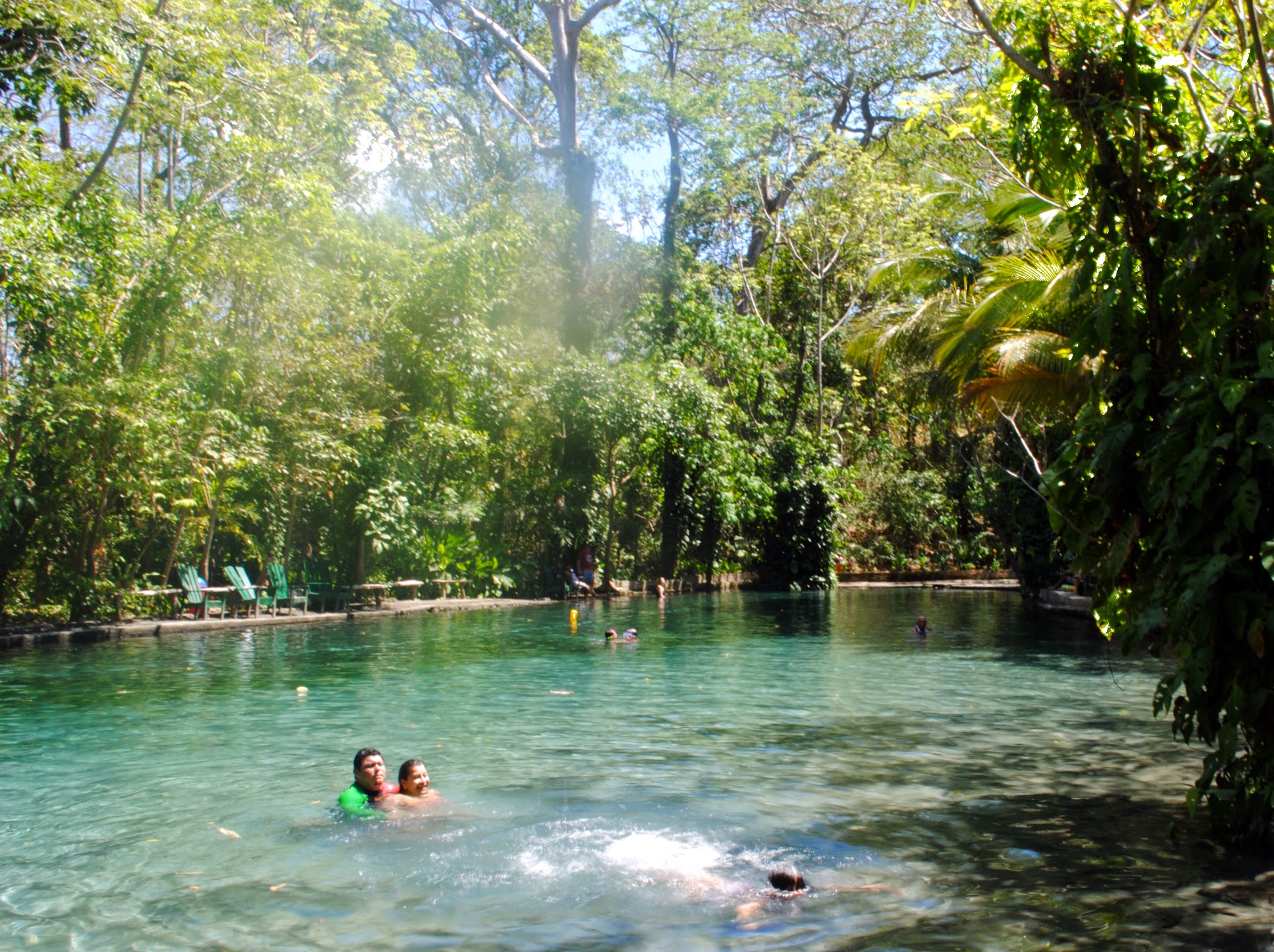
Our scooters took us to the other side of the island and the other ferry town Moyogalpa which is the largest town on the island. Before setting off in that direction we discovered the Olo del Agua, a developed thermal spring. After swimming, a swing in the hammock was followed by lunch overlooking the tropical garden and the pool and more great views of Conception having a puff.

Life On Ometepe

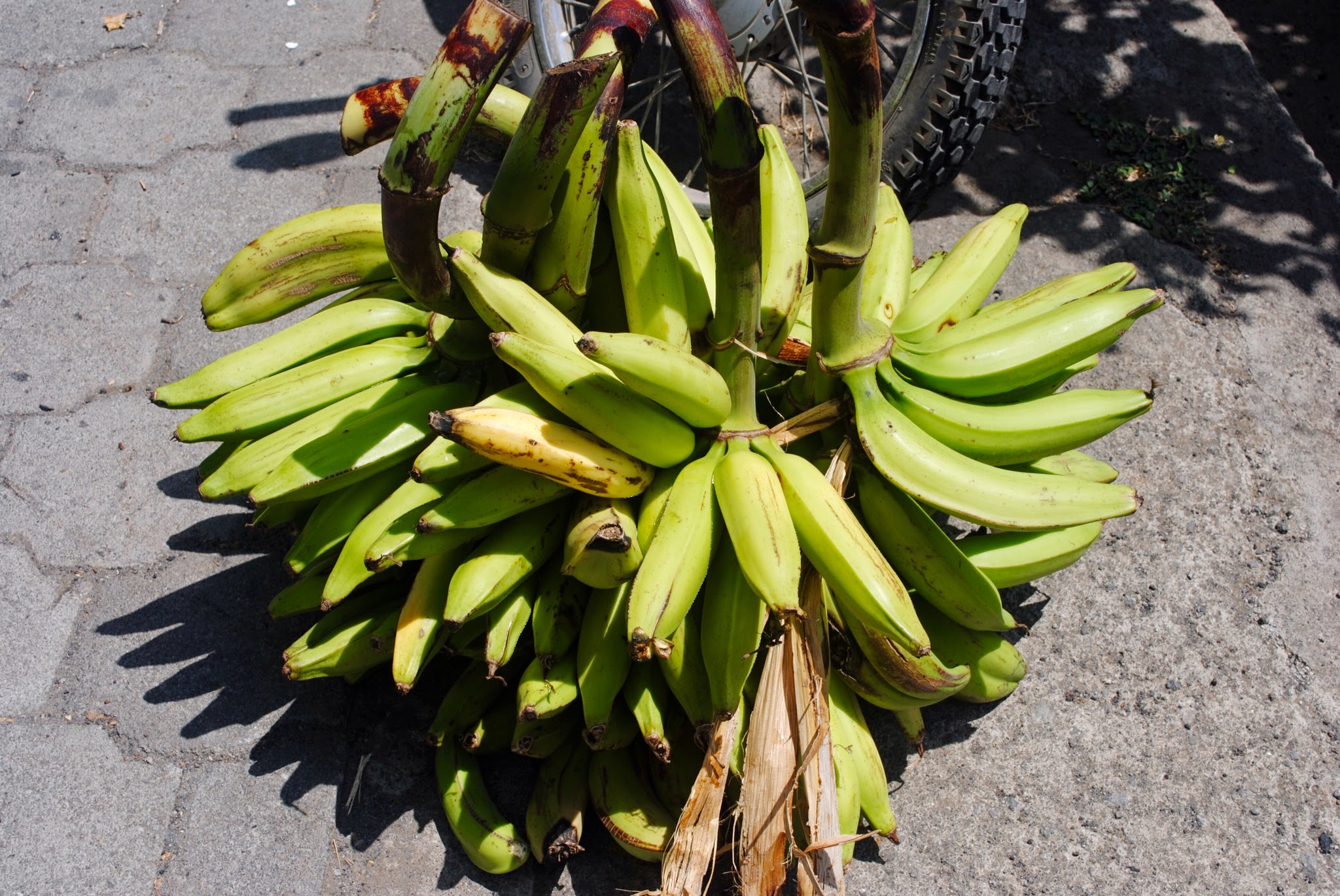
Tourism is important on Ometepe and agriculture enjoys the benefit of volcano rich soil. There are coffee, pineapple, banana, plantain, mango and other types of fincas all throughout the island and families live in dirt floored thatched huts with their livestock and crops close by. One finca we passed had dyed their new chicks bright pink for Semana Santa! There are also more expensive looking houses with four walls and a roof that are likely summer homes for well to do city dwellers. Small tiendas (stores) are often the front of a home and keep the locals supplied with what they don’t grow or produce for themselves.

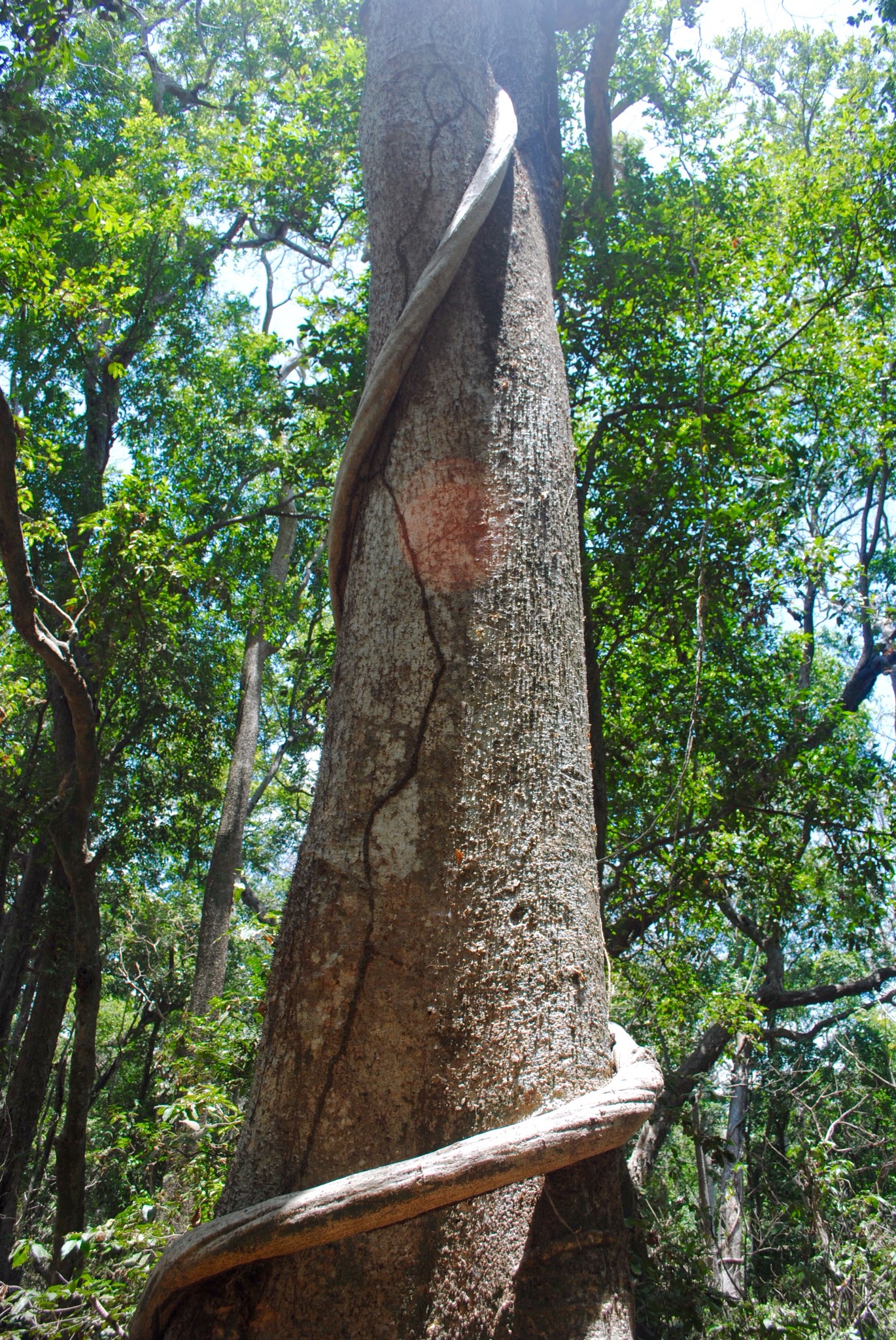
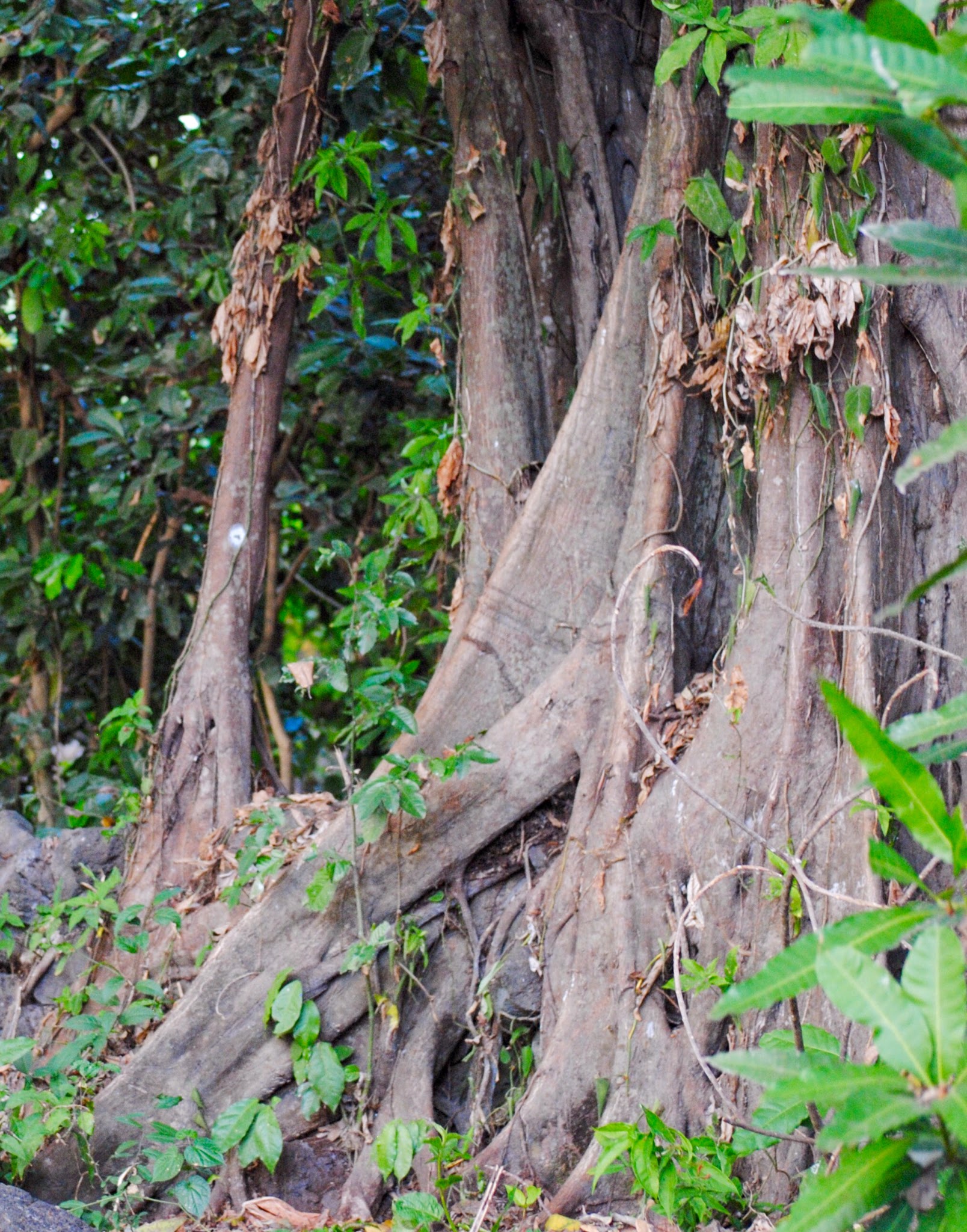
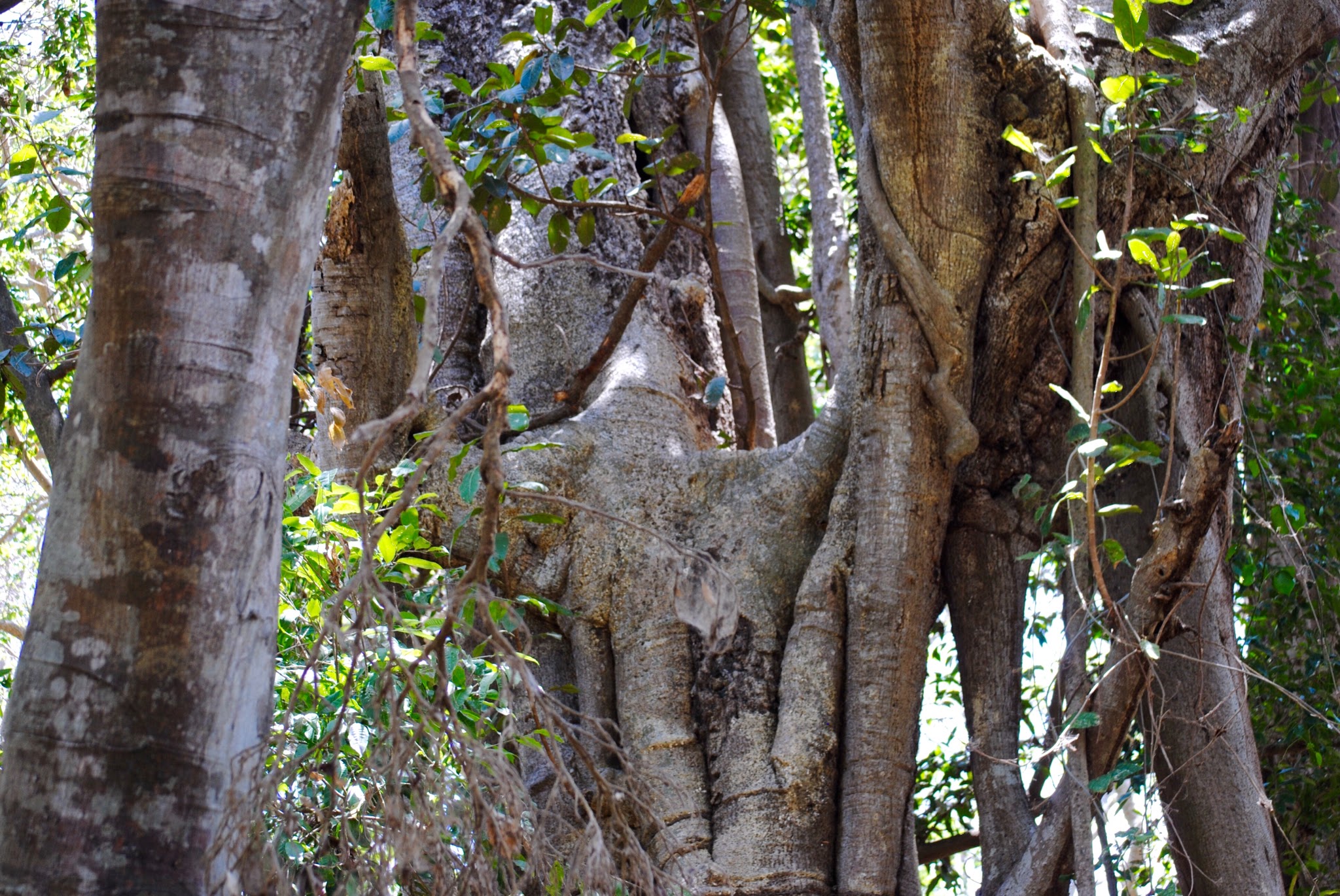
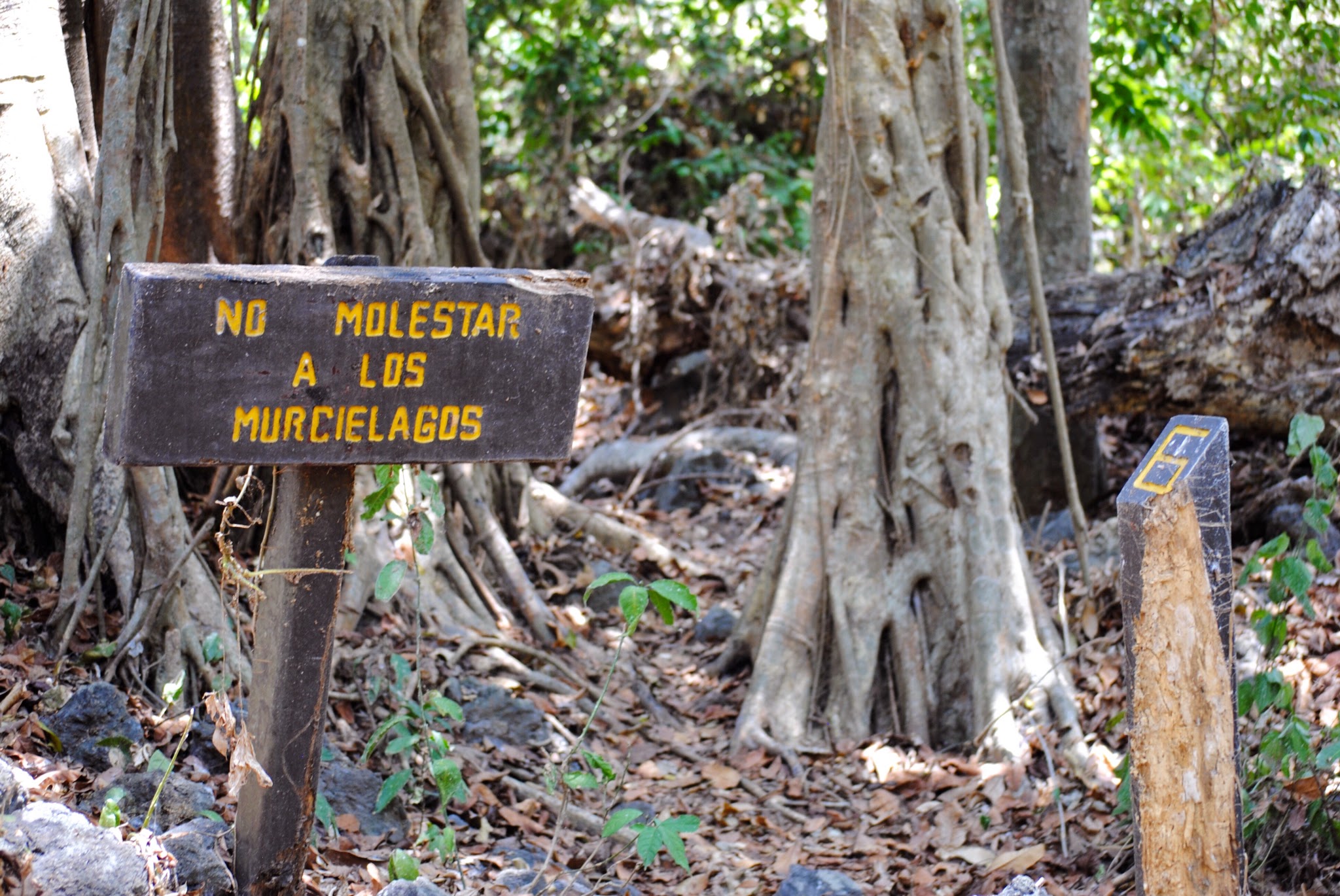
We spent our mornings exploring the trails in Maderas Volcan National Park and were lucky to see monkeys and birds in amongst the thick jungle forest. The trail is well maintained with black lava rock edges and the young man in the entrance hut was knowledgable and enthusiatic and took the time to inspect our shoes, making sure they were adequate for the hike. Giant ceiba trees stand next to Panamas with their thick tri-pod legs, and it is not ong before you see a strangler fig or a “naked Indian”. Trees are wrapped in ivy and vines hang from great heights reaching to the ground, Tom could not resist a tarzan type swing from one of them. The jungle is thick and the parks people work hard to keep up the trails. This time of the year, things are very dry and it looks like it has been some time since it has rained. We crossed over what looked like a dry creek bed and there are signs that some of the trees are just coming into leaf. It is amazing the lengths to which jungle plants will go to establish roots for water, reach high for their share of the sun or protect themselves like the thorny bark of the ceiba trees.

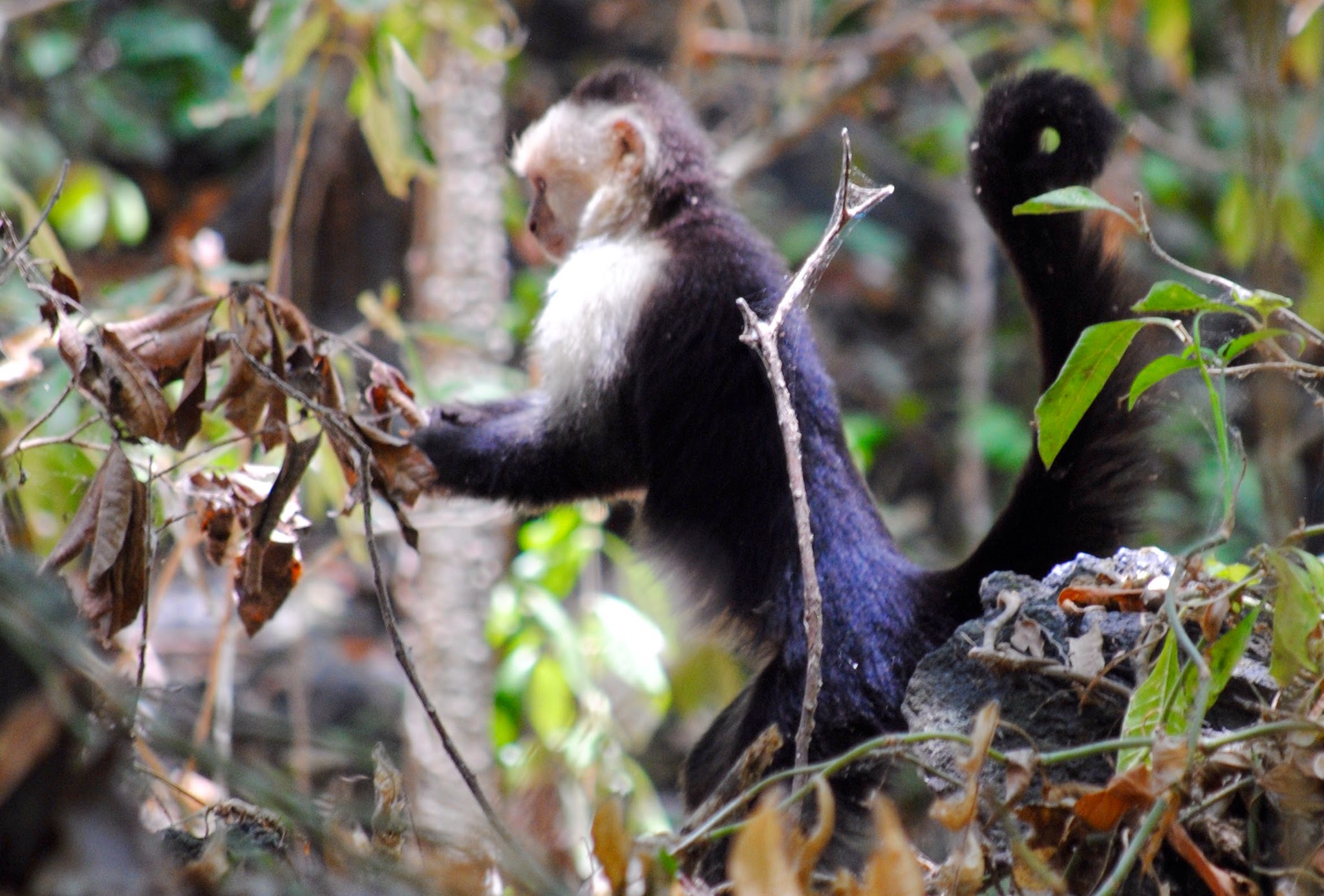
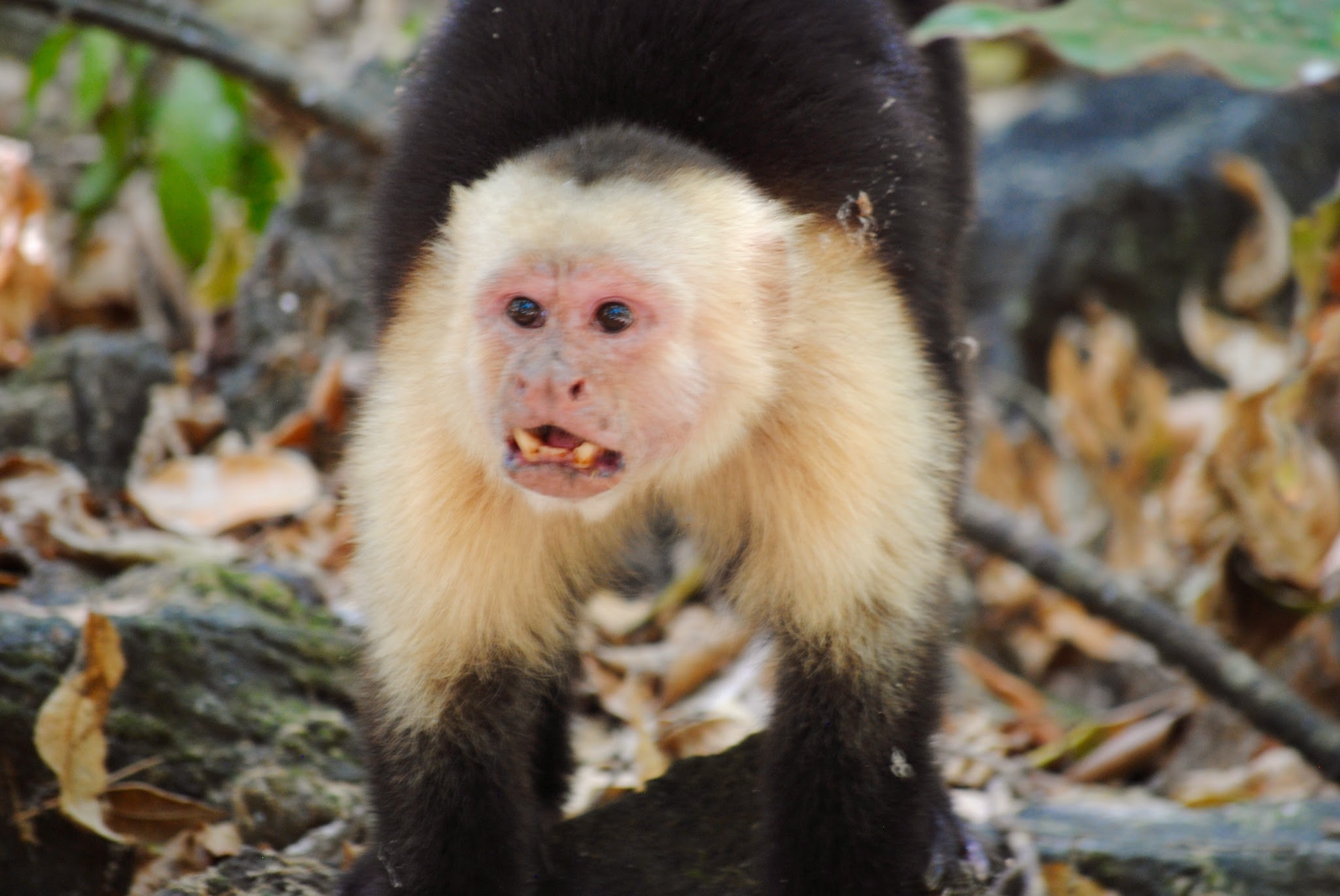
At the start of the trail, right above our heads in a giant ceiba tree was a family of coco blanco monkeys whose actual size is small in comparison to the deep rumbling growls they make. You’d think they were the size of gorillas! Later we came across some on the trail feeding on ground foilage and one of them thought I got too close and decided to make a few charges in my direction with teeth bared and hissing growls.

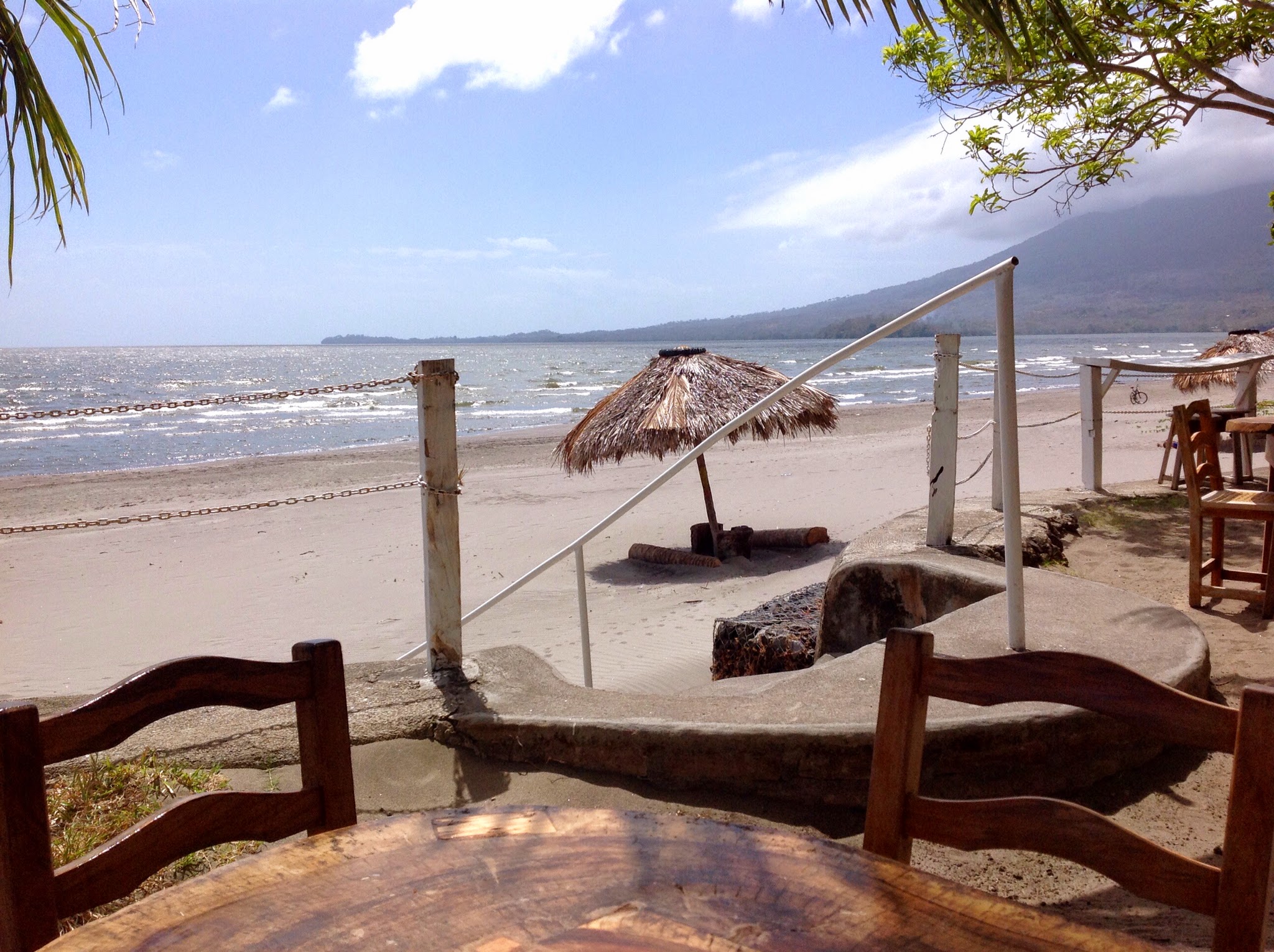
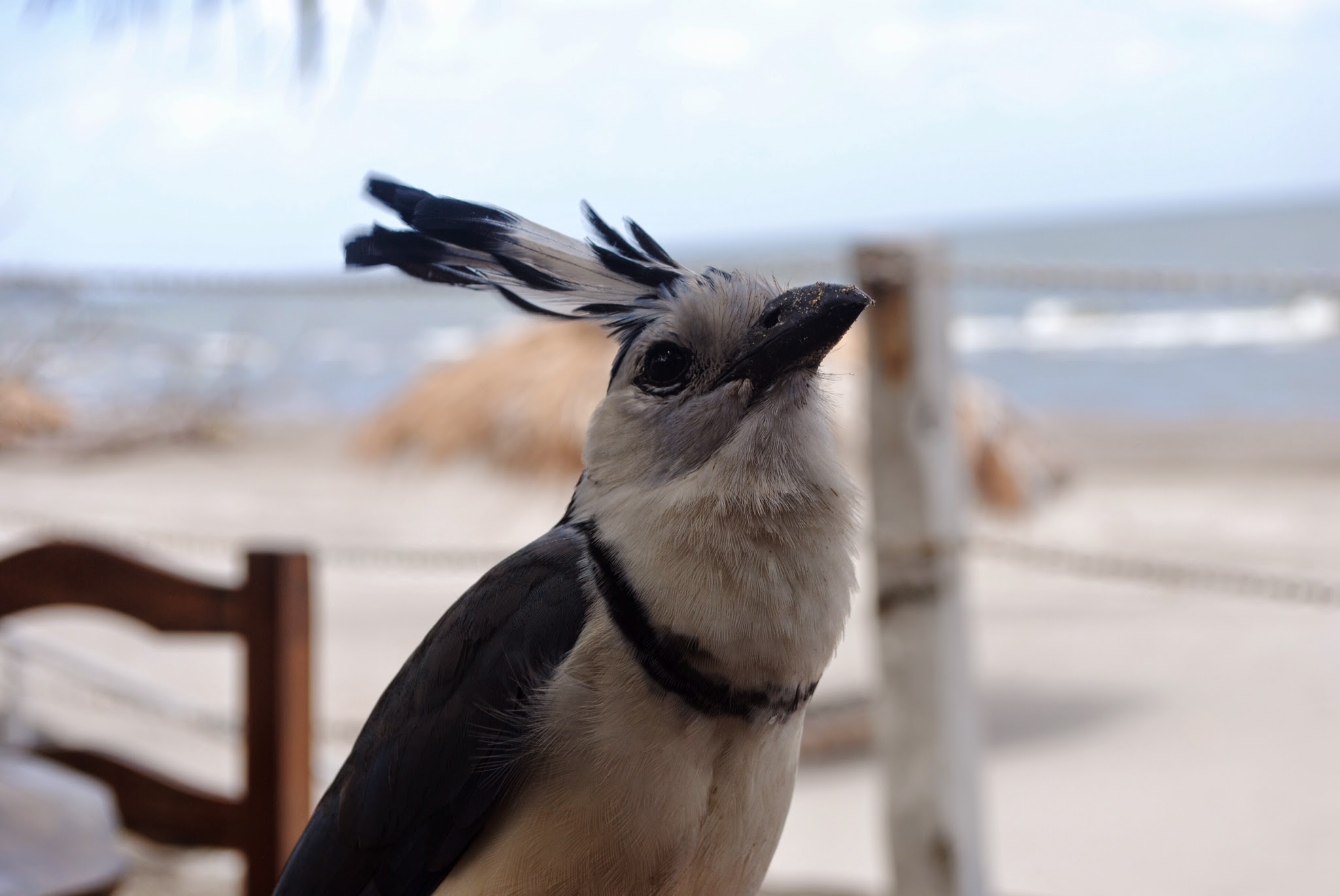
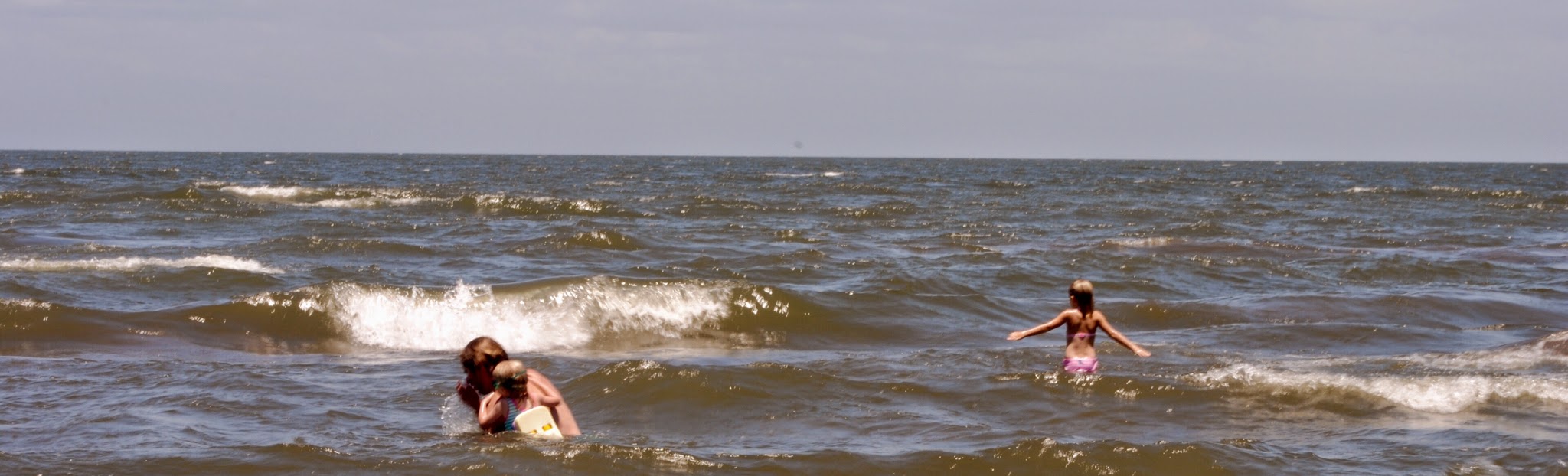
In the heat of the afternoons we spent our time at the hotel and on the beach. The lake is shallow for some distance and the wind blows every day, some days harder than others, and there are always waves to play in before retiring to deck chairs in the sand. The hotel Finca Santa Domingo where we are staying is very nice and right on the beach. They have a chef who makes delicious meals from local produce and everything we have tried has been delicious, in fact we have been eating our way through both sides of the menu. Not something we expected here on Ometepe. Tonight we had filet mignon with a mushroom sauce, that was outstanding. Even the uninvited dinner guests have been entertaining (a type of magpie with fancy hats). Around the hotel are the most mellow dogs we have encountered, no begging, barking, licking or scratching. The rooms are 25 USD a night and mine is tucked underneatch the second story with a hobbit door, a stone walled bathroom and a few resident ghekkos who keep the bugs down.

Ometepe we’ll be back!

Nicaragua – La Mariposa

La Mariposa – Remedial Spanish

At La Mariposa it is not unusual to learn spanish, see a volcano, visit small towns, play with monkeys, march in Semana Santa processions and swim with the locals at the rec centre. A spanish language school/development project/animal refuge/home stay/volunteer placement/hotel, La Mariposa is located between La Conception and San Juan. Just outside of town, the location is a beautiful tropical garden with comfortable hotel rooms, cabana style accomodation and a communal dining area. You don’t have to wander very far in the garden to find a quiet corner and a hammock, a good vantage point for bird watching, including the fowl that make Mariposa their home. La Mariposa employs over 50 locals as teachers, cooks, drivers, guides, managers and maintenance staff. They are all long term employees and along with the teachers they are quite willing to speak in Spanish to benefit of the students.

In the morning after breakfast I started my day with 2 hours of Spanish grammar followed by two hours of conversation. The combination was ideal as the teachers coordinated the grammar skills with the conversational skills.
La Mariposa Field Trips
After lunch there were a variety of optional activities that were opportunities to hear and speak more Spanish. We visited Apoyo, a volvano lake with great views of the surrounding area.

Slow-Roasted Chicken

One of our afternoons was spent at a finca where we learned how to make empanadas from corn flour, water, salt, butter and eggs. Hand mixed in huge bowls the batter can be shaped around meat, cheese etc. to make empanadas or made in to rings, a type of donut, and then baked in huge outdoor wood burning ovens. The ovens made of adobe provide great heat and flavor from the wood smoke. In spite of the great heat produced by the thick-walled overns there was a hen and her chicks snuggled up to the wall of the oven the entire time we were there. Talk about slow roasted chicken!

Masaya and a Swim in a Volcano

In the larger city of Masaya we had a look at the Masaya Volcano and in town we visited a market but not the two museums we had hoped to see because they were closed for Semana Santa. But we did venture up Apopoyan for a swim in the crater lake.

Semana Santa – The Week of Saints

Semana Santa in the country is a succession of processions through the towns and unlike in the larger cities there is a huge number of people participating. The processions I saw in Granada were small in comparison to those of La Concepcion. It seemed like there was a procession every day that represented one or more of the stations of the cross, so there were lots of opportunities for boys to play Jesus and young girls to be one of the Mary’s or even an angel, but only after the crucification of course.

Years of perfecting the processional equipment has led to come interesting adaptations. On the day after the crucifixion for example young girls dressed as angels are hoisted high in kitchen chairs that have been lovingly decorated in family kitchens. Riding shotgun behind the clear plastic coffin of Jesus is a seat of honor which the sombre faced young ladies take very seriously. The coffin and crosses that accompany Jesus to the tomb are powered by a wheelbarrowed gas generator which was refilled with gas while on the move, the procession stops for no reason! The dirgey music supplied by a ragged ensemble of aging brass instruments was thankfully drowned out somewhat by the generator but still provided a mournful background to some very serious processions. There are also random processions with Judias (Hoodias) dressed in red carrying huge chains, faces painted white and accompanied by spear-bearing roman soldiers; they are seen roaming the streets, scaring everyone on their way to find and arrest Jesus.

Nicaragua – Placemats to Places – Granada First

I used to frequent a restaurant in my neighborhood that was owned by a Nicaraguan family and on their tables they had placemats that were photo collages of their country. It was then and there that I knew I had to see Nicaragua and now I am here and it has not disappointed.

I flew from Panama City, with a short stop in San Jose, Costa Rica and landed in Managua the capital of Nicaragua. I had read that the capital was not particularly appealing and is best seen as a short term destination and so I headed for Granada on Lake Nicaragua, the largest fresh water lake in central america. The Spaniards established a fort here in 1524 making it the oldest colonial city in the Americas.

Travelling on a budget, staying in 30-40 dollar a night hostales in Cuba and Colombia meant that I was ready for a treat. I booked myself into a lovely hotel in Granada directly across the street from a ragged looking old cathedral which made for a dramatic backdrop from the balcony of the hotel. A former private casa, the hotel has been restored and brought back to a beautiful state with a central garden and pool, the rooms were so freshly renovated I could smell the paint and the sheets and beds were luxurious after our nights in rough stays. It was a real treat and the hotel was having a half price sale and it was a central location so I could wander at will. I even found the local chocolate spa for a much needed clean up. Their pool was in a beautiful courtyard garden complete with ducks in the pool.

On my first day I opted for a carriage ride, number 26 is particularly good at guiding and the driver will speak either English or Spanish as you choose. The carriage ride covered most of the tourist spots in about 2 hours including the Museum in the Convent San Francisco, Iglesia Guadalupe with corinthian columns, La Catedral, Antigua Estacion de Ferrocaril (the old train station), Iglesia Xalteva, Iglesia la Merced, Mercado Central and Park Central. From the tour I gained a good sense of the history of Granada, the important people and buildings and some pre-columbian history as well.
In the evenings I wandered through the city, finding the plaza mejor, a beautiful spot for families to dine, play and visit. Well treed with a gazebo in the centre the square is in the shadow of the catedral, rebuilt in 1856 after being razed by the american William Walker. Colonial buildings, mainly hotels and restaurants surround the square and in the background is the Mombacho Volcano.

It was the start of Semana Santas (the week of Saints) celebrated all over Latin America and I was lucky to see several processions in which the saints of churches are paraded through the streets. On Sunday I saw a beautiful procession of people carrying palm fronds behind the statuary that is paraded through the streets on palanquins until they return to the churches from whence they came. Semana Santa is a huge holiday and schools are closed for the week and families take vacations and/or celebrate together with food, drink, dance, music and usually fireworks. Often small circuses come to the pueblos and there are no shortage of people wanting to participate in the processions.

Hearses are very ornate, high-sided, black carriages drawn by white horses and behind the hearse walks the mourners on their way from the church to the burial site. This particular hearse is empty and on the way back to the funeral home.

Granda’s lake is huge and close to city are some islands you can visit by boat. Along the shores of the lake is a large park, dotted with restaurants, food vendors, picnic spots, nightclubs and beaches for the enjoyment of the Granadians. It is here that you can hire a boat to take you through the Islas for about $20 for two hours and well worth the expense. There are 350 little islands scattered in the lake, formed by the last eruption of Volcan Mambacho, over 10,000 years ago. The islands are rich in bird life and some have restuarants and hotels but most are privately owned and used as holdiay homes. We were particularly lucky on the day I chose to go because there was a floating procession for Semana Santa as we found ourselves in the midst of the throng.

Panama

My time in Panama was brief, only three nights but Tom and I managed to squeeze in quite a lot. Of course we visited the actual canal, and luckily when a cruise ship had just entered the Miraflores lock. So that was fun, although hard to see over the throng of tourists on the viewing platform waving at the throng of tourists on the Celebrity cruise ship who were waving back at them. The Museum of the canal is really worth taking in and in addition to describing the history, politics and engineering that went into the canal, there are some great displays, one of which is a simulation booth of a pilot house in a freighter and you get to steer the ship through the locks.


We covered some territory in Panama City as well seeing the Old Quarter with its many plazas, churches and museums. We also headed up above the city to a mirador where we could see the full length of Panama City with its impressive sky line filled with office towers (Trump) and some pretty interesting works of modern architecture. Sadly in between the signature towers of great wealth and where we were standing are pockets of poverty the appearance of which is accacerbated by the obvious disparities.

 
G

As recommended by all the guides, we took the train along the canal, across Panama, crossing from the Pacific to the Caribbean in just over an hour. Colon the terminus city for the train can be dangerous as there is great poverty and addiction in the downtown core of the city. Our taxi driver gave us a quick tour that provided us with a chance to see some of the highlights, really they were lowlights, of Colon before we hopped a bus to Portobello.

The local buses in Panama are old American school buses and each one is pimped up by the owners to reflect their personal style. The views along the bus route are beautiful and it was nice to the Caribbean side of Panama. We had lunch in Portobello and wandered the few blocks of the main square before heading back up the coast to spend the rest of the day at the beach. A national park with some private enterprise in the form of restaurantes and change rooms rim a beautiful little bay with the warmest water I have ever encountered. It was truly as warm as a bathtub.


We opted for the bus back to Panama City in order to see the road route and landed at the Terminale in Panama City that rivals some small airports in size. Connected to the bus terminale is a huge mall and again only reminded one of the poverty that we had seen in Colon and across the country only hours earlier. Since I had been to Costa Rica a couple of times, I decided to fly to Nicaragua and attend Spanish school while Tom saw more of Panama and Costa Rica.

Columbia – Isla San Andres

Who knew there was a beautiful island 700kms off the coast of Cartagena that is a special zona for Colombia. Although it is closer to Nicaragua than anywhere else the inhabitants opted to remain with Colombia when given a choice. As a result it has become a duty free holiday haven for Colombians and so is the Hawaii of the Colombian people.

After rejecting the idea of sailing to Colon, Panama from Cartagena we opted to fly to the Isla San Andres, stay a few days and then fly on to Panama City. As we have wanted to do on this trip we stayed in a private home with private rooms for rent, giving us an opportunity to see how the locals live and to use our Spanish. Our first two nights were spent with an interesting woman, Vicentia, who spoke English, Creole and Spanish. At her home we met a woman and son travelling from southern Colombia, from a city close to the Amazon basin. She is a doctor and her eighteen year old son wants to be a veterinarian. It was fun getting to know them, but sadly she was robbed of some cash while at a resort so we took them out to dinner to cheer them up. Doctors don’t make much money in Columbia.

We moved to the casa of Joyce and Margie for the remaining four nights and although cheaper had a nicer setting and more security, than at Vicentias. Margie is the grandmother of the resident family and is very sociable. Our first night there she got out the wine and we all got to know each other. A young couple from Chile were the other guests and they joined in the fun. I managed to sneak off to bed at a reasonable hour, but poor Tom couldn’t escape until 1:00 AM.

Plenty to do and see on Isla San Andres and the cheapest way to see the island is to just get on the bus and ride it around the island. Some of the rickety buses cross over from one side of the island to the other climbing a steep hill before descending to the other side. The buses are generally packed and getting a seat can be a challenge but the views are spectacular and you get to rub shoulders with locals who for the most are decendants of African slaves, Spaniards and Indigenous people.

Just off shore are Cays, pronounced Kee’s by the locals and for a price you are taken in launches to these tiny islets where you snorkel and swim, enoy lunch and drinks, and lay about in the sun under palm trees. Although it is very crowded there always seems to be a palm tree with your name on it and soon you have staked out your patch of sand and shade.

The water is known as the 7 colored sea and although my unsophisticated eye failed to discern seven separate and different shades of blue, I can tell you that the azure water around Isla San Andres range from dark laurentian blues to sparkling emerald greens and every shade of blue in between. It is a paradise of white coral beaches, palms, botanicas, sugar shacks and perfect weather. Not too hot and often a gentle breeze to cool your brow. Inexpensive and undeveloped it has the old time charm that places in Mexio had in the 70’s. Although the cuisine is not highly sophisticated, hamburgers and hotdogs being the mainstay of most menus, we had some decent meals from street stalls.

B
The main mode of transportation is the motorcycle and its not unusual to see a family of four on one bike. There is usually a child standing between the driver and the handlebars and another child tucked between mom and dad on the seat. No helmets or protective clothing and nothing to cover the feet but flip flops they fly past in clusters or alone, but rarely are the island roads quiet. Tom and I were given a ride to town by Margie’s son-in-law, Mike, and although there were only three of us on the bike it was pretty crowded what with our beach bags, snorkling gear, towels etc.. While in motion Tom’s mom tried to face time him from White Rock but he thought better of taking the call, he didn’t want her to know he was helmetless!

Leaving Isla San Andres is hard to do, we will miss the beaches crowded with holidaying Colombians, the gentle islanders and the peace that comes from relaxing without the constant harangue of touts selling jewellery, drinks, massages, hats, and various souvenirs that we have encountered elsewhere. If you’d Like to go we found out that there are flights from Montreal.

There is evidence that the challenge of keeping a remote island clean is being addressed to a certain degree but without enough government support and public education progress will be slow. Sadly without a recycling and garbage management program, anywhere can end up being a dumping grounds.