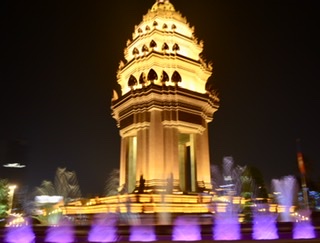
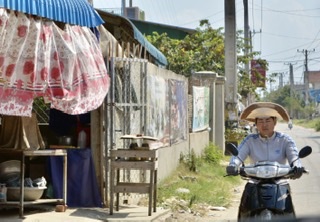
Phnom Penh is a capital but in comparison to other SE Asian capitals it is still relatively easy to get to know and travelling about in Tuk Tuks, armed with google maps, proved an economic and efficient means of getting around through the crowds and traffic.
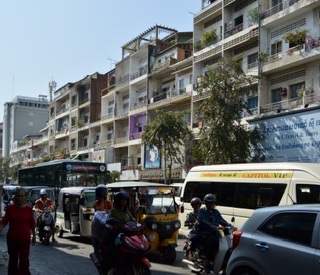


The city is situated along the Tonle Sap and Mekong Rivers which eventually empties itself into the Mekong delta in VietNam. The Okay Boutique Hotel our home for four nights was off a main artery, up a narrow alley and very close to the places you want to visit in Phnom Penh. The lobby of the hotel, heavy and dark with carved and filigreed highly polished wood and tiled floors glinting with gold coloured floral designs is quite elegant. The giant Buddha, leather furniture and water ponds with floating lotus combine to make you feel like you are snuggly inside an old wooden jewelry box.


We noticed a change in city folk right away, as one would expect. It took a little longer to get friendly service and the warm Cambodian smile, but generally we faired once we learned we had to bargain and make certain that we weren’t overcharged by the Tuk Tuk drivers that hangout in front of hotels. Money in Cambodia is interesting as the US dollar is dispensed in ATM’s, accepted everywhere, given as change and can be mixed at will when paying or getting change. The rate while for us was 4000 Cambodia Riel to 1USD. The mix of currencies was fairly fluid and easy to keep track of in the end.
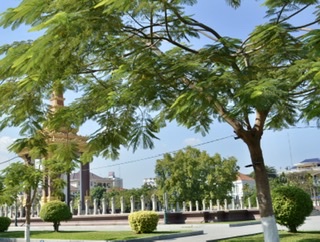

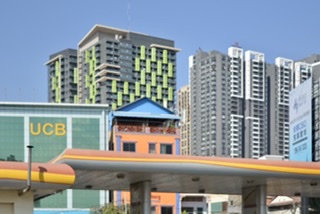
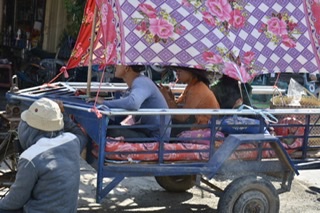
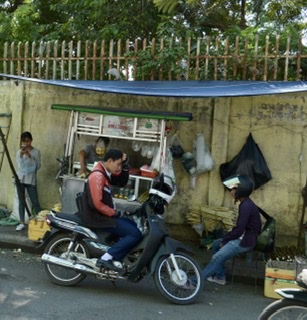
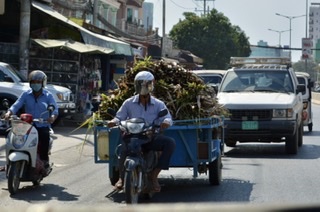
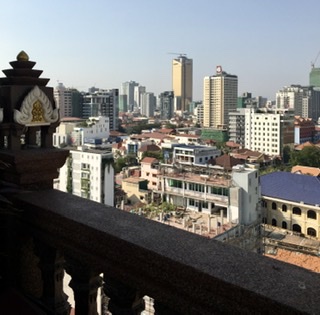
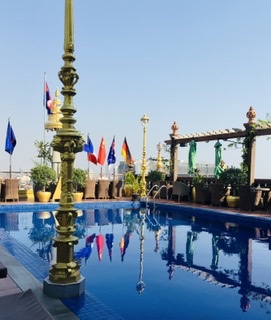
Our hotel was close to most of the main attractions; the Royal Palace, the Royal Museum and the main Watt, the Silver Pagoda. We spent our mornings out and about but admittedly were driven back to our hotel and the pool by the afternoon heat. Up on the 14th floor the pool afforded a great view of the surrounding city, a patchwork of jumbled together shorter buildings, alleys main thoroughfare and an ever growing number of glassy modern towers. Cambodias main exports are agricultural products and fabrics/clothing. Tourism is growing and there is evidence of economic growth in the hustle and bustle.

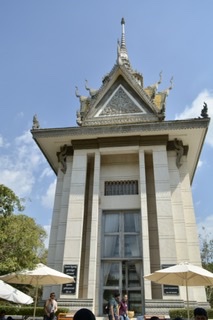
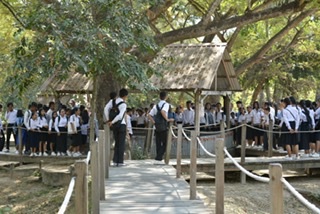
The horror of the Khmer Rouge all but sent Cambodia, once one of the jewels of the orient, back to the stone ages. All commerce, religion, ownership, personal freedom or political choice were forbidden by Pol Pot and his regime and 25% of the population died between 1975 and 1979. By the time the Vietnamese Government helped establish a new style of communist government in the 80’s, not so cruel as the Khmer Rouge, all families had suffered loses and many had fled the country. Today you do not see a lot of old people in Cambodia with the largest population group being under 30. At the killing fields we saw large school groups being lead through the history of this dark time with a reminder never to let history repeat itself in the same way again.



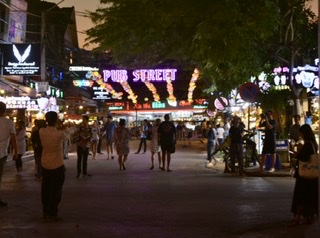
We were warned frequently to watch our bags and we had read in our guide books that tourists had been robbed and even shot so we were very cautious at night, carrying only what was necessary and sticking mainly to the busy areas along the Mekong River or surrounding the markets.
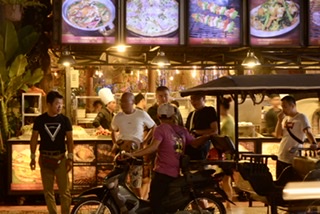
The markets are worth visiting if only for the street food. The Night Market was our first and we ate barbecue at several stalls. You pick your food with tongs, place it in a basket and hand it over for cooking. Not as spicey as Thai food, Cambodian spicing is more subtle, lots of lemongrass and capsicum.
We visited the “Russian Market” as it is known, it is a newer market but the passage ways are very narrow and it is really crowded with food sellers in the middle and dry goods people surrounding them. Not easy to negotiate and we found most of the merchandise was low quality. We didn’t stay long were glad we went.
The Central Market is another story. A permanent dome structure covers the market and the passageways are wider and the stalls organized according to merchandise, it’s earlier to find what you’re looking for and seemingly you can buy just about anything but be prepared to barter.
Along the shore of the Tonle Sap River is the Sisowath Quay where Cambodians picnic, exercise and enjoy the cool night air surrounded by a vast array of coloured lights on boats and building. Very pretty and colourful. We ate and people watched in a few restaurants in this area and our last night at a seafood restaurant near the Russian market. It was a longer ride from our hotel, but well worth it. We dined on a wonderful lemongrass and shrimp stir fry with rice followed by a peppered crab stir fry with glass noodles. Very good. We have found that ordering two dishes and sharing family style works really well.


On the whole Cambodia is very inexpensive, a Tuk Tuk in the city is generally 2 or 3USD to get you where you’re going, and a meal with a beer or a G&T around 5USD. We stayed a little upmarket (50CAD) but it was worth it to have a quiet place off the main streets with a pool.


























 Wander With Stella