Luang Prabang & Vientiane

All along the Mekong.

The other day, in Vientiane I saw a travel poster for Laos and the slogan read “Simply Laos”, which captures the natural beauty of the place perfectly. Not as sophisticated as Thailand it still has the charm of a country not yet overrun by tourism. The natural beauty of Lao is enchanting and the Mekong River, the lifeline of the country is where you can best feel the pulse of this unassuming country. Along the Mekong are several cities worth visiting. My first stop after the Slow Boat was Luang Prabang and then a short flight later I was in the capital, Vientiane.

Laos was colonized by the French and their influence is still seen in the cuisine, architecture and many Lao speak some French. There are many French tourists here as well. Once a royal kingdom, Lao was a French colony from 1893 to to the mid 1950’s, gaining full independence after a Japanese occupation in WWII. After Independence the country was divided with the US supporting of the Royal Lao Army and the USSR backing the Pathet Lao independence supporters who were aligned with the Vietnamese and the Khmer against the French. Laos has been left with the terrible legacy of having been bombed with 2,093,100 tones during the so called “secret war” by the Americans. There are museums that display the unexplored ordinance that littered the country and there are people who make a living making crafts from the metal as a way of using the terrible events to remind everyone of the horrors that resulted. In the end the communist backed faction won and in 1975 Laos People’s Democratic Republic was proclaimed. A social regime, they sent up to 50000 royalist to labour camps.

Laos was closed to the world until 1990 when it became possible to visit Laos and see the traditional, rural lifestyles that have changed little over this tumultuous history.

Luang Prabang

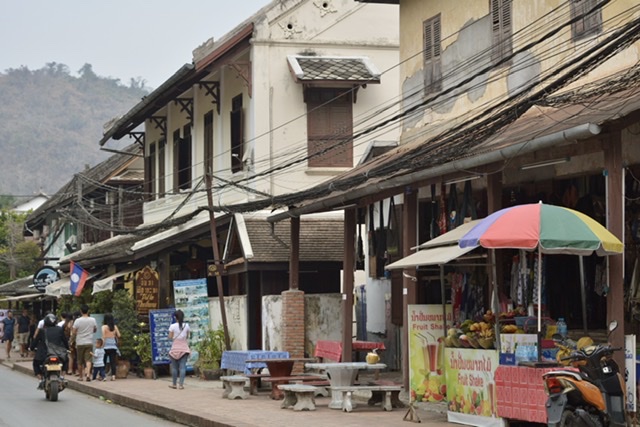
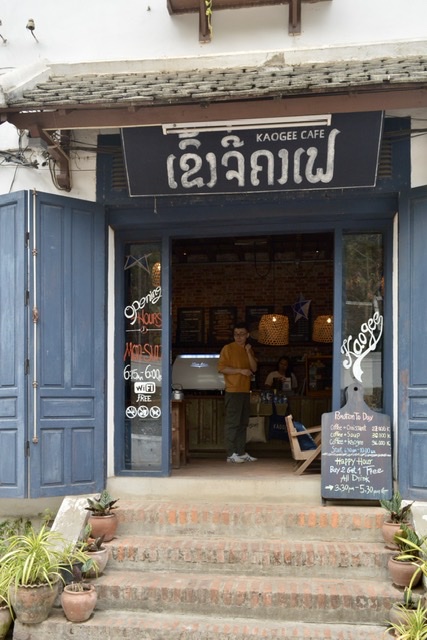
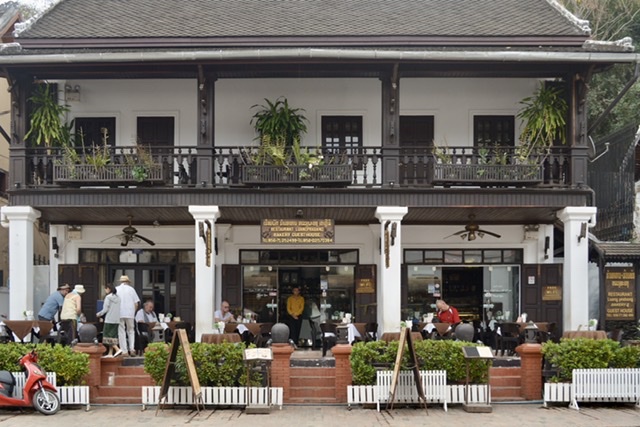
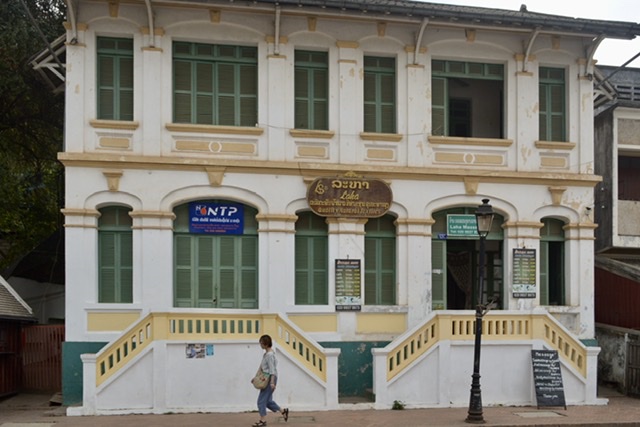
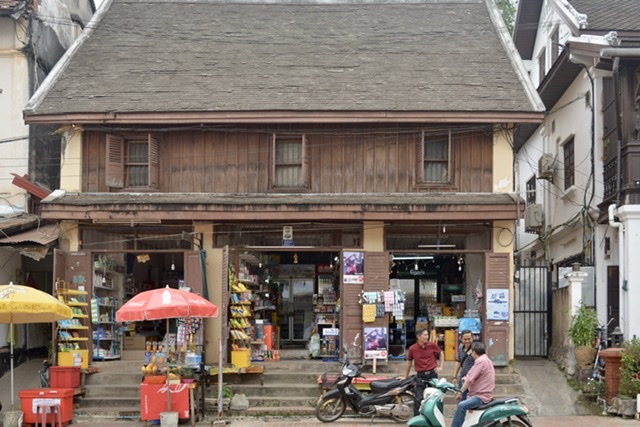
Whoever coined “Simply Lao” must have had Luang Prabang in mind. It is a quiet, unassuming city with a slow pace. The old city is host to lots of foreigners from all parts of the globe. The easiest way to get about is in a long-benched Tuk-Tuk which can dart in and our of traffic and around potholes with greater ease than a car. You can also rent bikes and scooters in Luang Prabang and this would likely be the safest of cities in which to do that. You can see the French influence throughout Luang Prabang in the architecture and you can certainly enjoy a croissant and cafe au lait at a vast number of little coffee bars and restaurants.

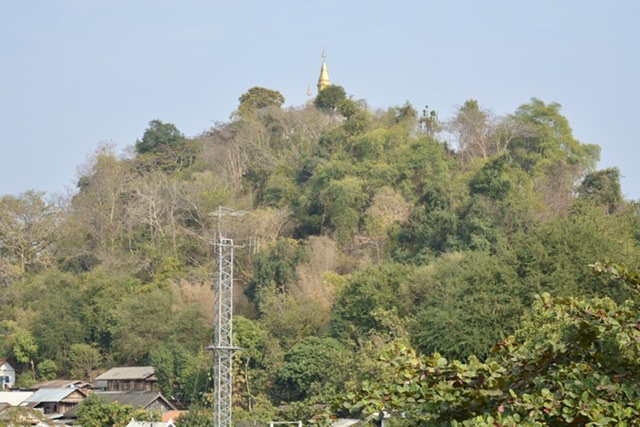
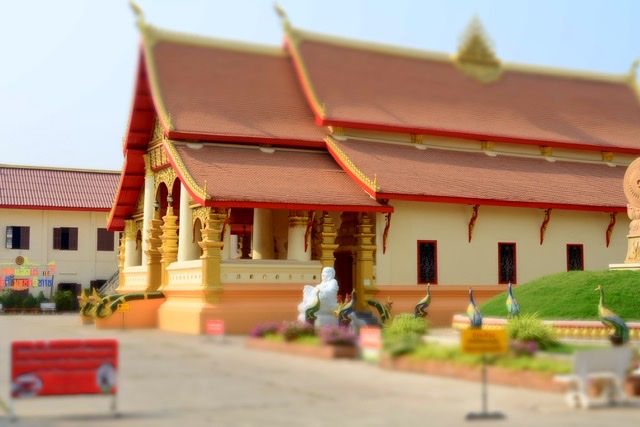
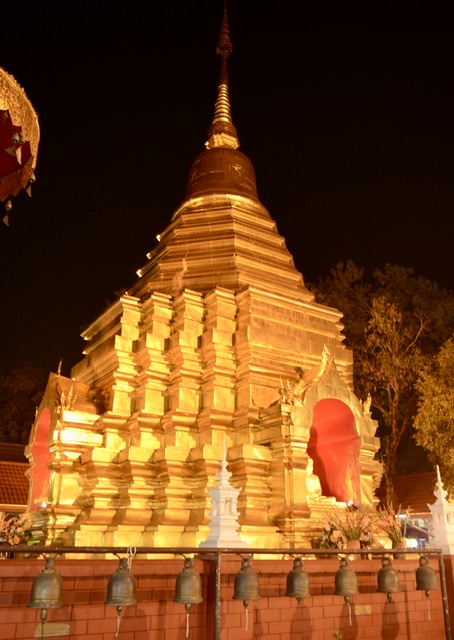
A lovely place to wander you can climb Phousi a hill in the center of town to visit the golden Buddhist stupa and from there get a good view of the surrounding area.

The signage below indicates the main sites to be seen in Luang Prabang and although certainly possible to see them all in one day, there is no rush and spreading them out over the course of a few days mixed with a few cafe au laits is a wanderers delight. The Do’s and Dont’s are a reminder to foreigners that our Lao hosts do not share our same customs and I thought it was a gentle and friendly reminder about some of the unacceptable behaviours. Could have used this on the boat with the Tourist Thugs I encountered.

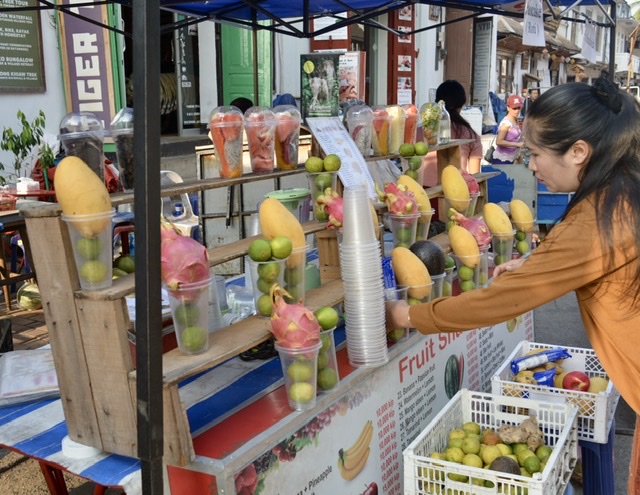
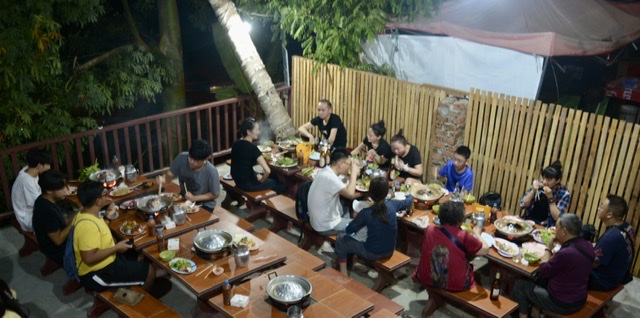
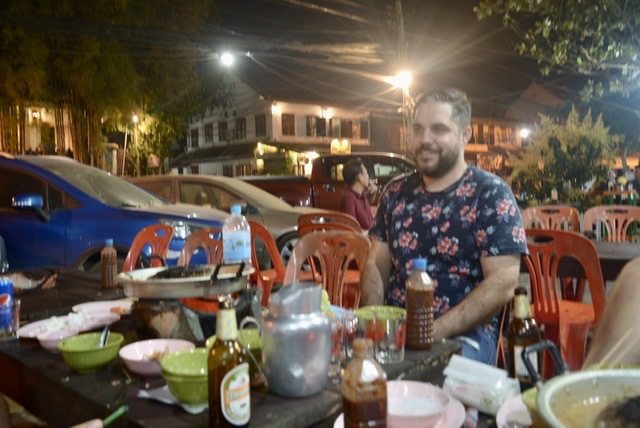
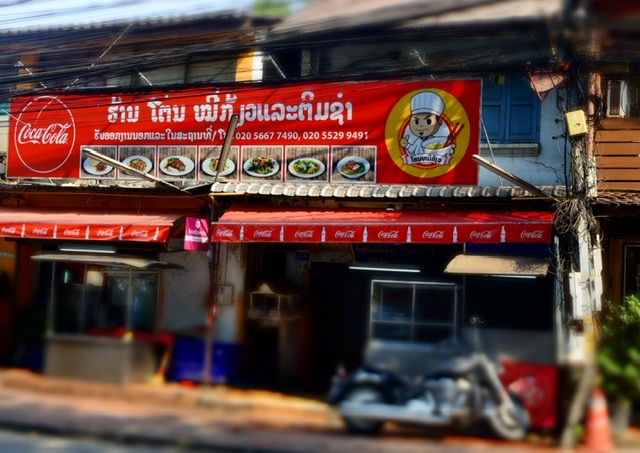
Lunag Prabang boasts some fine food experiences and one in particular, stands out…. A Lao style barbecue at your table, you first load your tray from a long buffet filled with meats/seafood, followed by vegetables, herbs and spices. The sticky rice comes at the end as does the cashier who you pay before returning to your table to “cook” your selections. The individual charcoal braziers on each table are red hot and chunks of port fat are provided to grease the piping hot metal inverted colander on which you spread your food. So delicious and very popular, the place was packed. Other Lao dishes I tried were “Larp”, a minced meat salad and Tam Mak Hung, a very spicy salad made from shredded green papaya, garlic, chillies, lime juice and fish paste. Noodle soups are also very popular and eaten for breakfast. It is served with lettuce, mint, coriander leaves and bean sprouts on the side. The best deserts, in spite of the French influence are the fresh fruits; guava, lychee, rambutan, mangosteen and pomelo. Mmmm good as is or whipped into a smoothy.

The Royal Palace Museum is another place to visit but was closed while I was there, all except the grounds which were interesting in themselves.

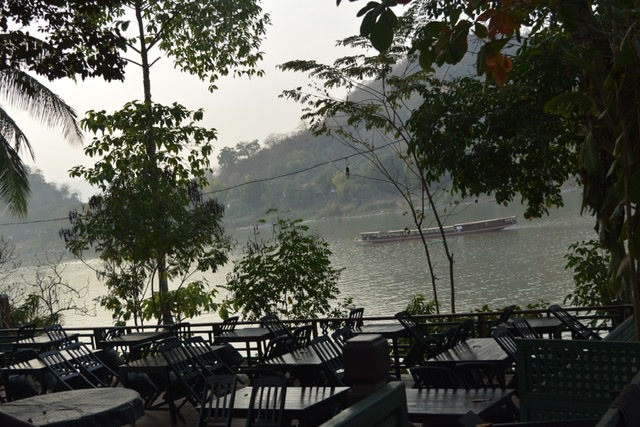
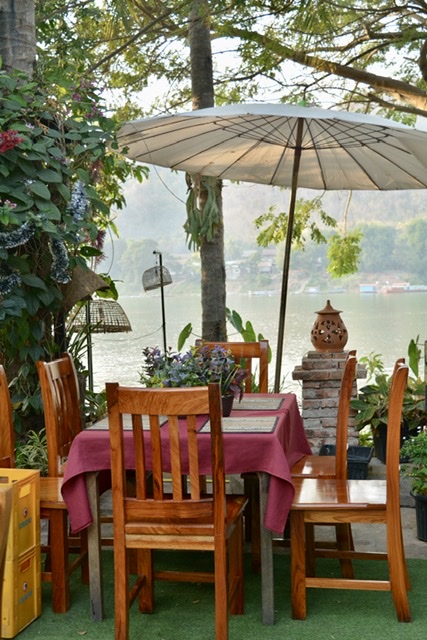
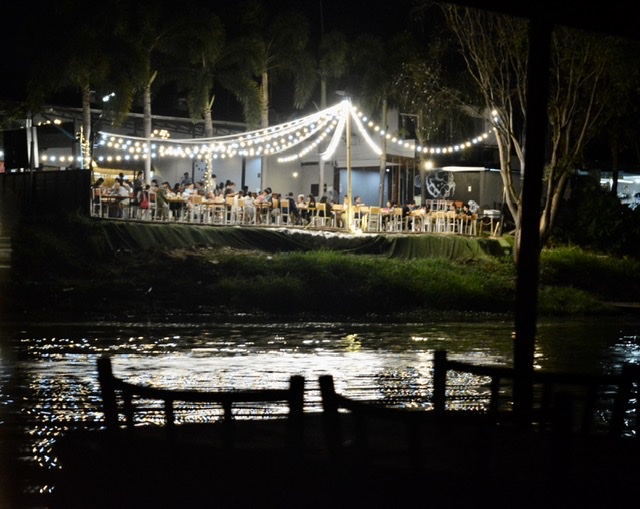
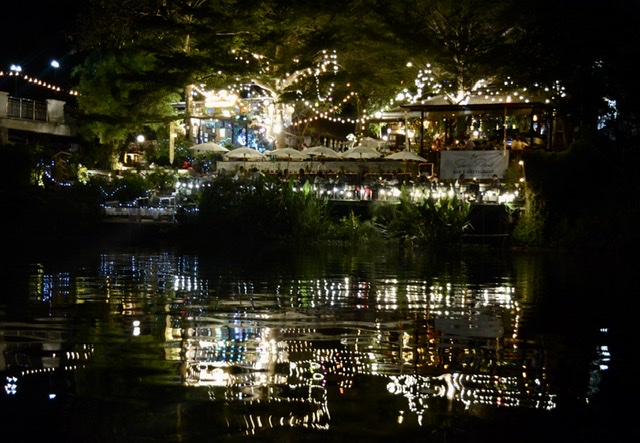
An evening stroll along the Mekong reveals the place to be for an evening of Lao food and people watching. Tons of restaurants line the banks and invite passerby’s to tarry over drinks and dinner and while being mesmerized by the Mekong.

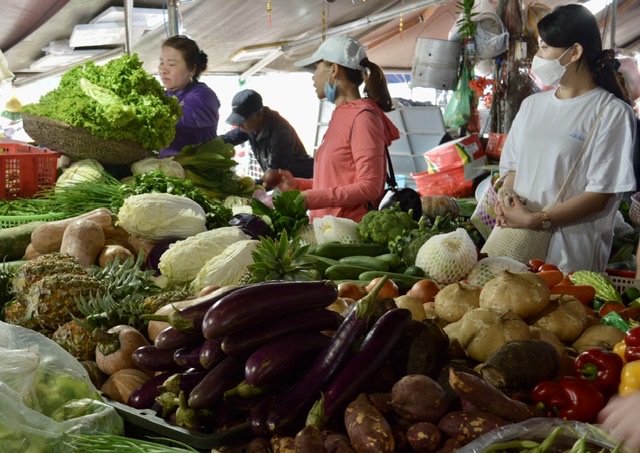
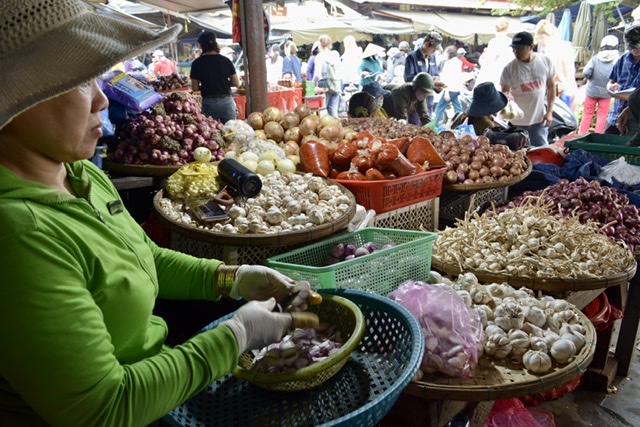
Such a safe place, Luang Prabang is nice even at night and the Main Street is transformed into a very busy and long night market full of crafts and souvenirs. There are some beautiful fabrics and so many other things to buy and so little suitcase space to carry them home.

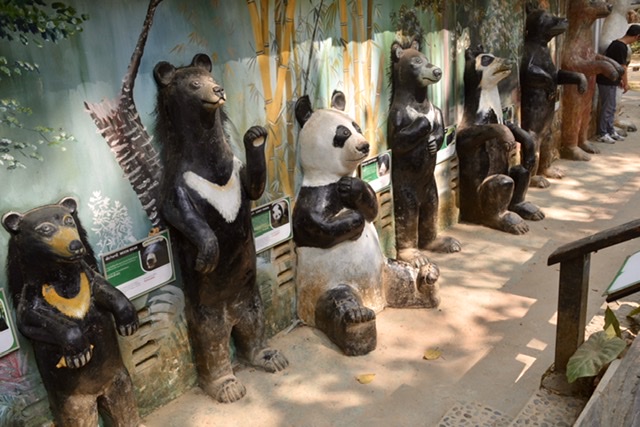
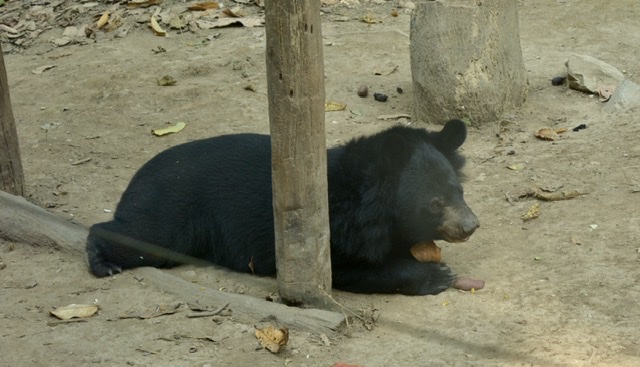
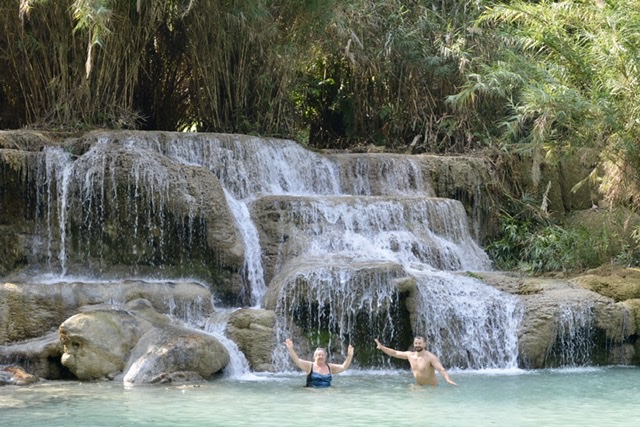
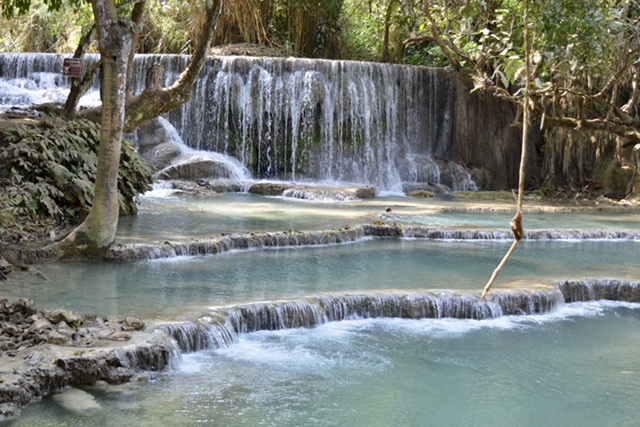
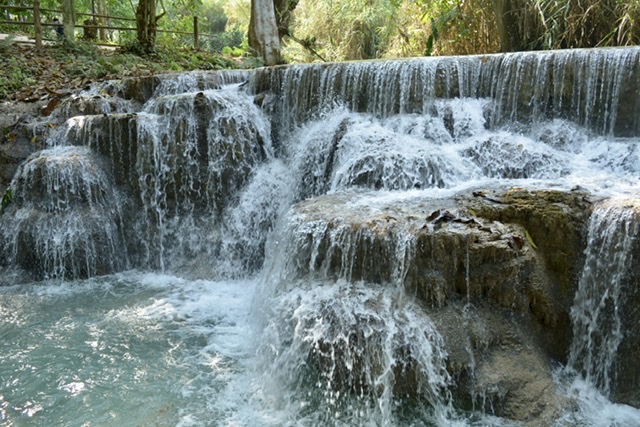
There are many day trips you can do from Luang Prabang and I chose to visit the multi-level Kuang Si waterfalls. Before you make the trek up to the falls you pass through a bear sanctuary, which was completely unexpected. There were dozens of bears enclosed in large spaces where they are free to wander, play and live out their days. Signage tells that there are no longer safe wilds for the bears in Laos, mainly thanks to poachers and deforestation. The poachers captured and killed the bears particularly for use in Chinese medicines. So sad, they can never be released.

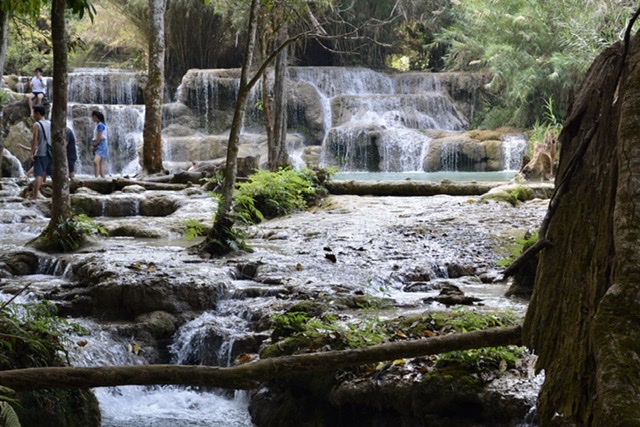
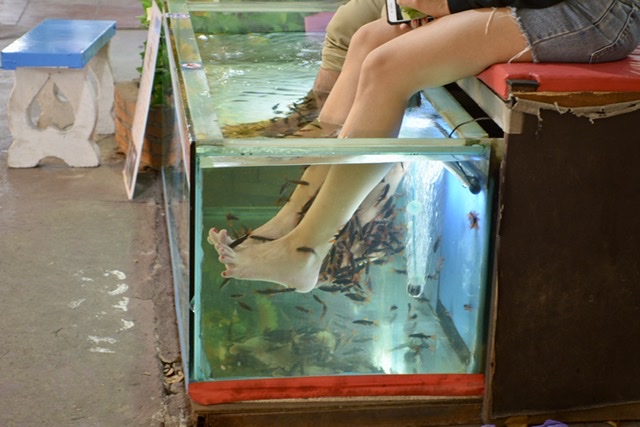
The Kuang Si falls are beautiful shades of blue and the pools of water that form at their feet are great for swimming. A little on the cold side but being a west coast Canadian, I quickly adapted and enjoyed the refreshing waters. A little disconcerting are those self same little fish found in pedicure tanks that eat your dry dead skin. If you keep your feet moving though they are kept at bay.
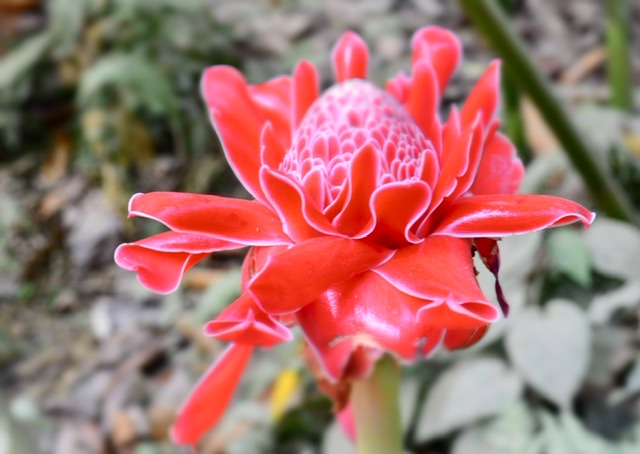
The trail that leads up and along the falls is through a beautiful tropical forest and definitely is enjoyable on its own. The plant, flower and tree species are well marked and you can read about the wild life prevalent in the area as well. And in English, thank you to our Lao hosts.

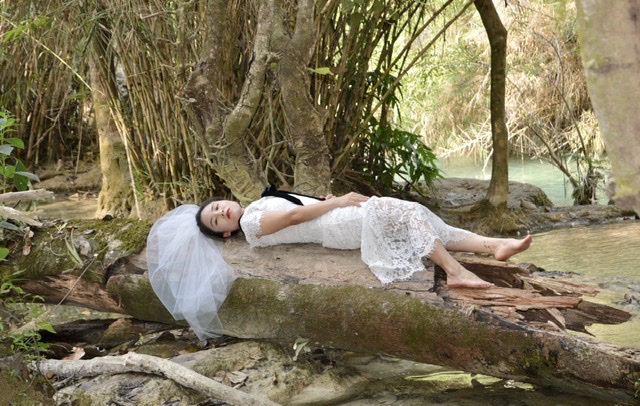
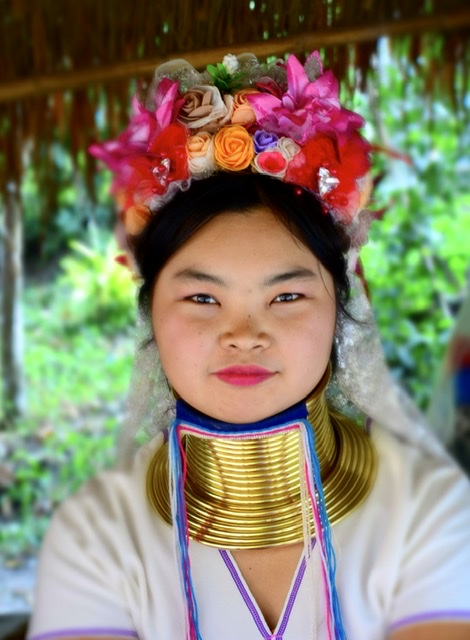
The bride above is not intentionally included with the flora and fauna but is there simply because she was there, along the trail, posed, and anyone with camera in hand would be hard put to resist the intrusion.

Vientiane – The Capitol of Laos

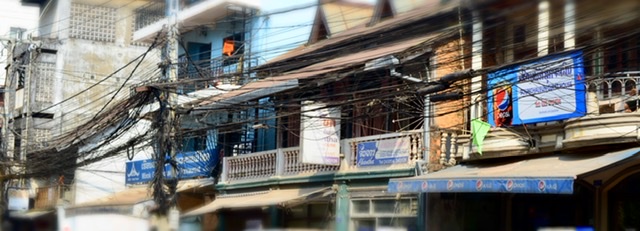
My regret about Luang Prabang is that I spent only two nights there, saving my last four Laos nights for Vientiane. I wish that I had reversed that decision and enjoyed more of “Simply Laos”. Even though I read and did some research I fear that I thought there was more to do in Vientiane and that it too would reflect the “simply Laos” sentiment. There are some famous Pagodas in Vientiane but I visited the ruins of one that have an historical connection to the Khmer from Cambodia and resemble those that I saw in Ankhor Wat. Wandering the streets I marvelled at the electrical installations and wondered how a problem could ever be solved in the event of having to unravel the trail of tangled wires.

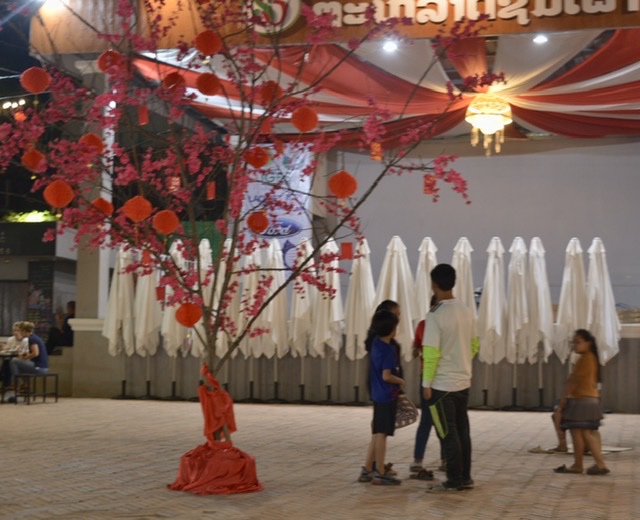
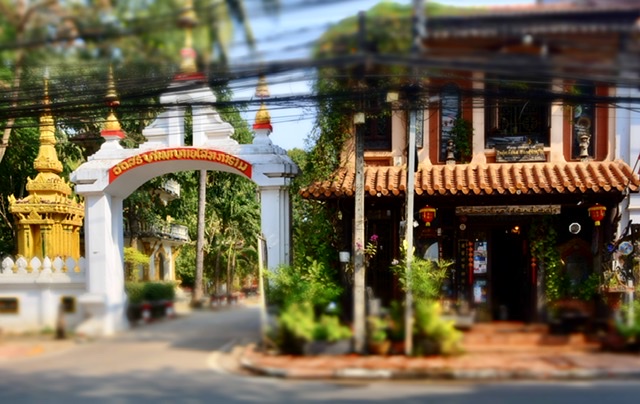
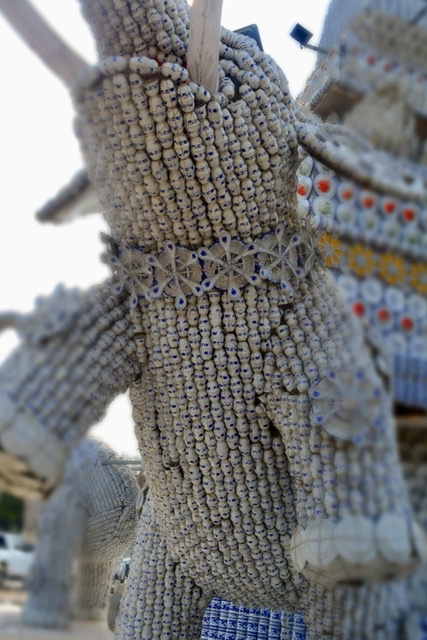
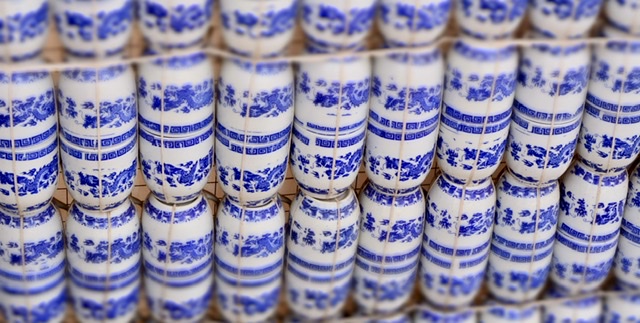
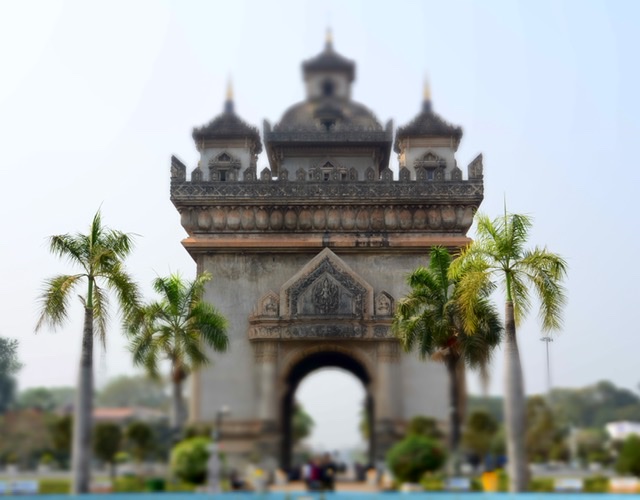
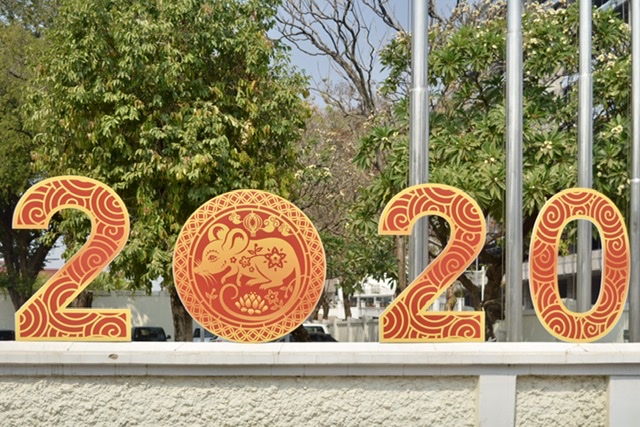
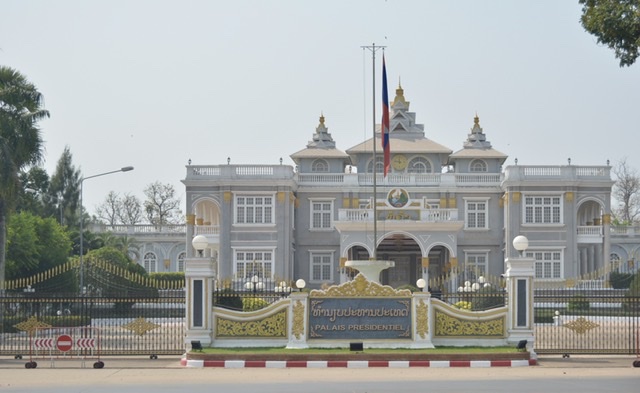
There are French architectural influences including a street compared to the Champs Élysées and an arch commemorating Independence. In front of the Arch is a remarkable sculpture made from blue and white porcelain cylinders. Until you are up close it’s hard to see how that is possible. At the opposite end of the street to the Arch is the Presidential Palace and in between the Morning Market is a great place to wander and see what’s for sale. The Lunar New Year was about to happen and signs of the upcoming celebration were everywhere.

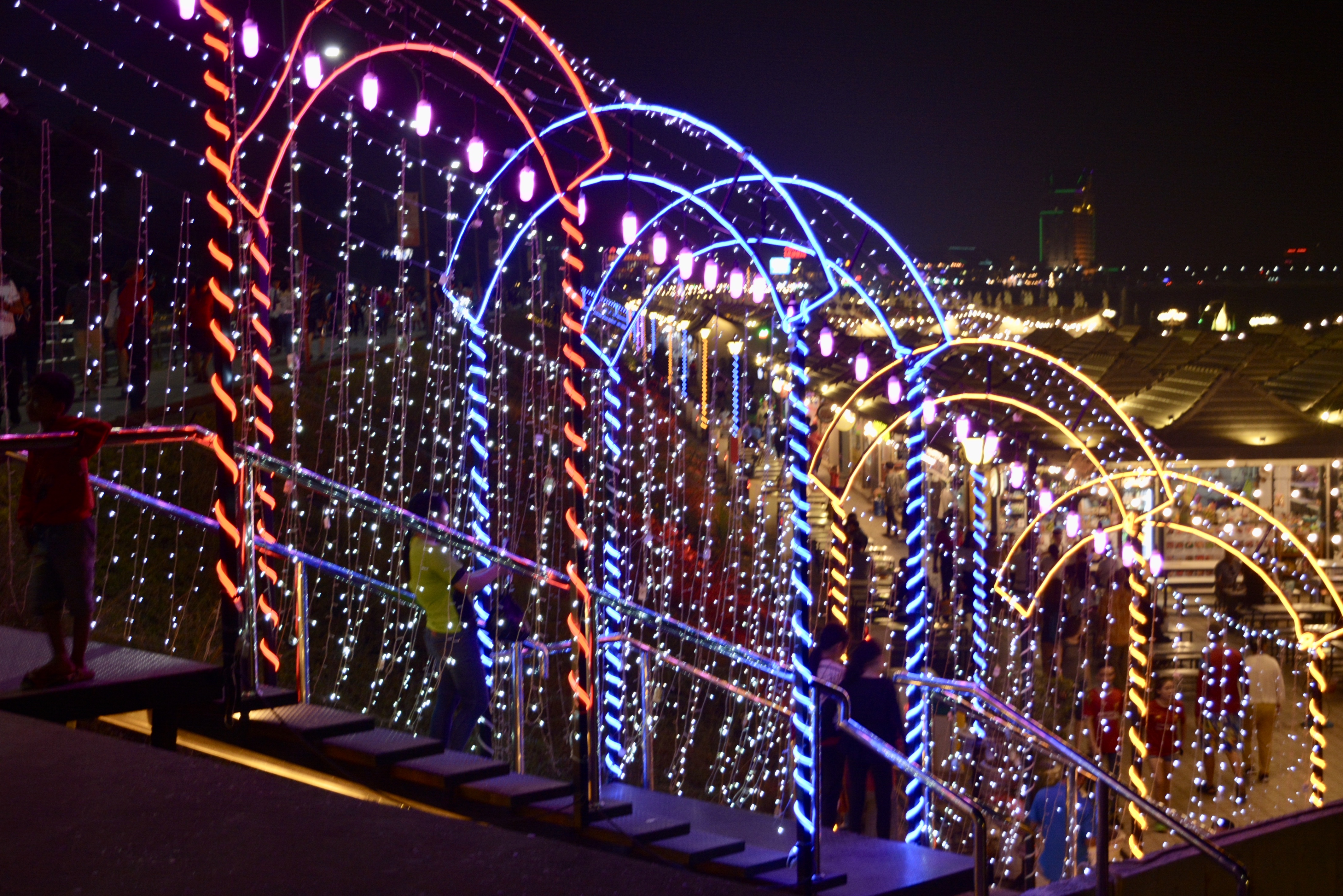
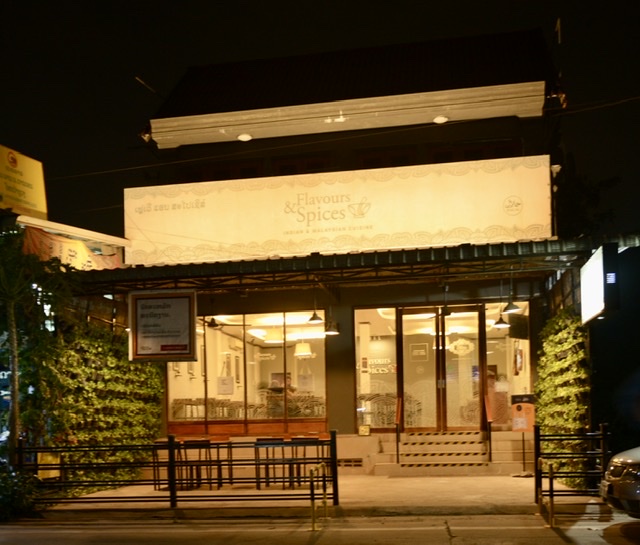
I made good use of my four days in Vientiane, catching up on laundry, correspondence and the last night I had dinner with some “Slow Boat” friends. We strolled along the riverfront, visited the a night market with plenty of things for sale and many food stalls. There were also a number of rides and games for the whole family. We had decided on a South Indian Restaurant listed as the number one choice in Trip Advisor. We were not disappointed at the Flavours & Spices.

Next stop Vietnam!

Slow Boat from Chaingkhong to Luang Prabang on the Mekong River

The Slow, Slow, Slow Boat to Luang Probang

Traveling from Thailand into Laos can be done by land or air but one of the popular ways to go is to take the 3 day “Slow Boat” trip from Chiangkhong Thailand. If you buy your ticket in Chaing Mai be sure and understand exactly what you’re getting yourself into. My friends advice to find a travel agent with good English went unheeded and I bought my package from an agency, even though the woman was not able to answer my questions but I liked the price.

DAY ONE:

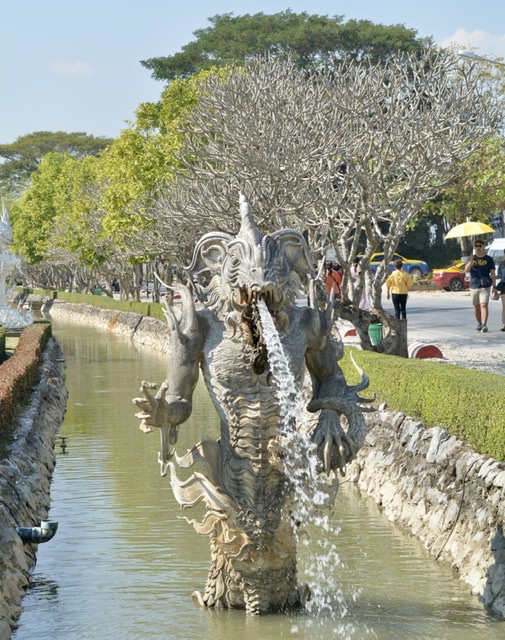
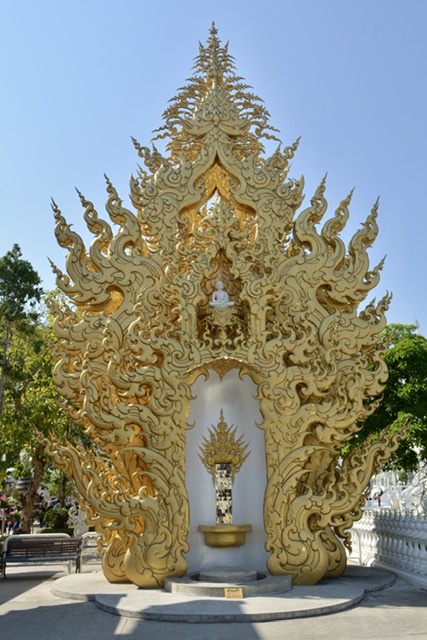
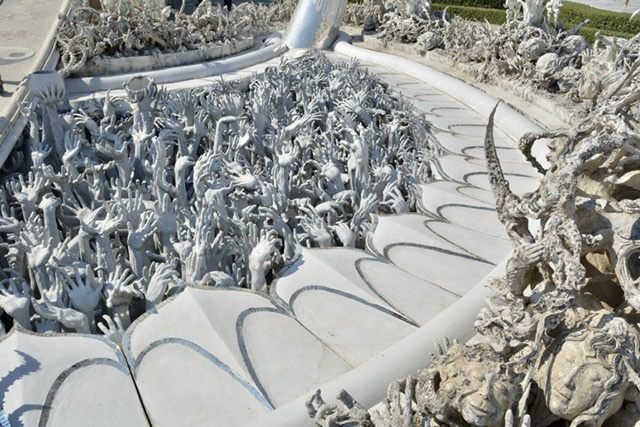
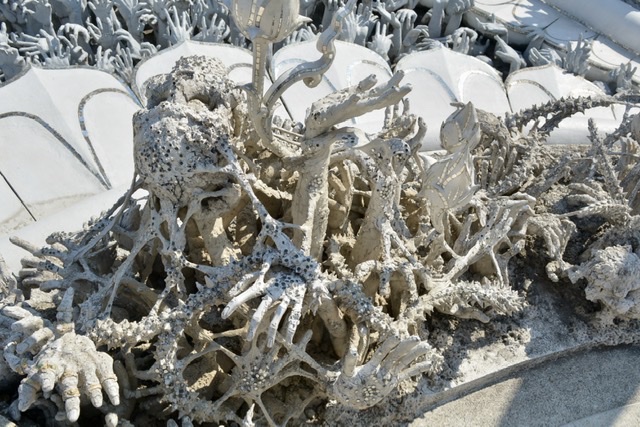
Everything started well enough, we left on time in a passenger van, full but not cramped, and headed north through Chaing Rai to our first overnight stop in Chaingkhong. One of the selling points of this tour for me was the chance to stop in Chaing Rai at the White Temple, a spectacular place, part frosty icing, part lacy doily, part Disney, part Super Heroes and all curlicues. I loved it but it was thronging with people and hard to get a photo without people in it but somehow I managed. 

We arrived in Chiangkhong at the end of the day to the ‘guesthouse’ included in the package and it was disgusting. My first room had a cement slab bed with a mattress thrown on top that was equally as hard as the slab. Covered in a red polyester cigarette burned sheet it was finished with a lumpy pillow that looked like it had been dragged down the road.

Phased but determined to be a good sport, (I learned in Central America that you can rest easier if you throw down your beach wraps or sarongs and cover everything that will touch your skin). I was fighting the urge to flee until I opened the bathroom door, one peek and I launched back up two very steep flights of stairs to demand another room….which was worse and had ten bunks in it.

Upon fleeing the scene I ran into this lovely woman who had also freaked at the sight of the accommodation and she led to a hotel a few doors down where she and her friends had found a room. She even negotiated a lower price for me. Sheets, towels, comfy bed and a happy me for 28 cad.

Day 2

After a good nights sleep, the other deserters and myself returned to the the hotel and the poor folks who had touched it out in the dive. There were 20 of us traveling on to Laos to board the “slow boat”.

The guesthouse owner was in charge of getting us all transported across the Laos border and through the visitor visa process. Clearly, the guesthouse owner had his share of experience in getting tourists through the process which I am sure is like herding cats, but still no excuse for such crap accommodation.

First thing after breakfast, you are told to see him to exchange Thai Baht for USD to pay for the Lao visa because with this currency you pay the lowest price for the visa. Other currencies have steeper prices with the Canadian dollar being the highest. No explanation available. The owner checks your passport expiry date and ensures that you have a photo for the Lao officials to process your visa. When all is checked and ready you are given a lunch bag and handed 25 baht for your bus fare across the Friendship Bridge into Laos and then finally at long last you are given the nod to board a van to the boarder.

At the border you are stamped out of Thailand, loaded onto a bus, paying the 25 baht bus fair and arriving on the Laos side of the Friendship Bridge with crisp American bills (otherwise unacceptable) enough for the visa and one extra for “overtime” because the Lao officials have to work on Saturday (2$ if it’s a Sunday). Two forms, three wickets, the Lao visa safely glued inside your passport and a turnstile later, you board yet another van that takes you about 20 minutes up the river to the launching area. (Not going to call it a dock).

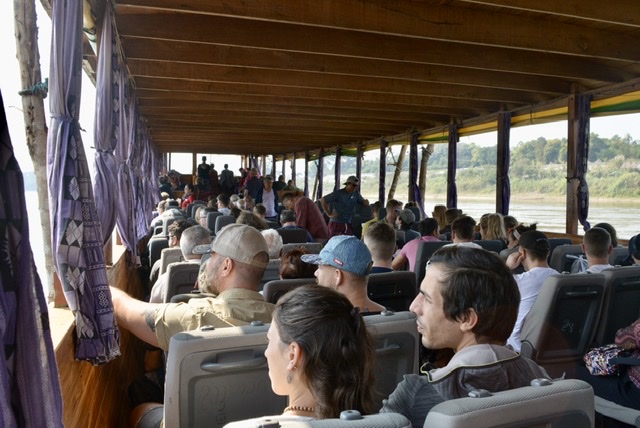
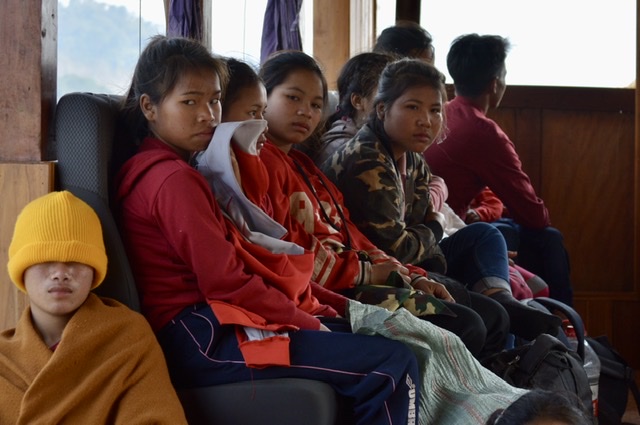
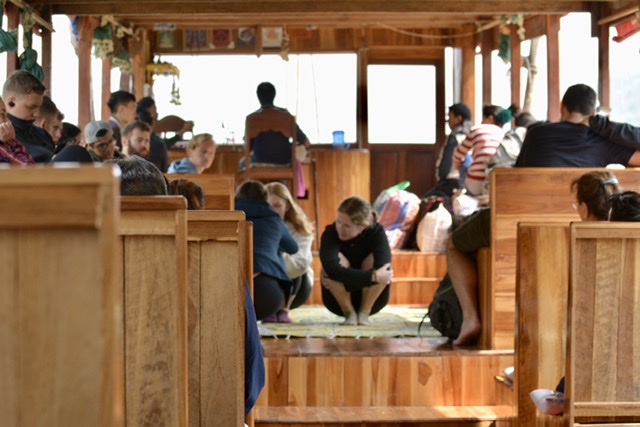
The wooden “Slow Boats” are about 50 meters long and 7 meters wide with loosely assigned seating in repurposed car seats, so of course, those that arrived first picked the ”best seats” and argued with the latecomers that it was meant to be first come first served. Our 20 person group was combined with a larger group so the boat we were on was quite full and we were the last to load. The local Lao sat at the front of the boat surrounded by their huge parcels and packages. Slow Boats have long been their mode of transport and now they find themselves surrounded by foreigners, who taking up most of the seats settled in and we were away. The Slow Boats are open sided but between the poles that hold up the roof, there are rolled up curtains for the rainy season.

The Captain sits in the very front of the boat and has to keep track of the great many meters of boat behind him. A huge diesel engine lurks deep inside the open bilge near the stern and makes its presence felt, clanking away, sputtering, coughing and spewing fumes as it pushes the Slow Boat along. Thin guard rails around the engine pit give a nod to safety and behind the engine area is a small back deck. The staff quarters on the boat appear to be the limited, noisy, oily space available around the engine pit. The bilge pumps tell the story of the hull as they spew a constant broad stream of bilge water shooting out the sides of the boat back into the river whence it came.

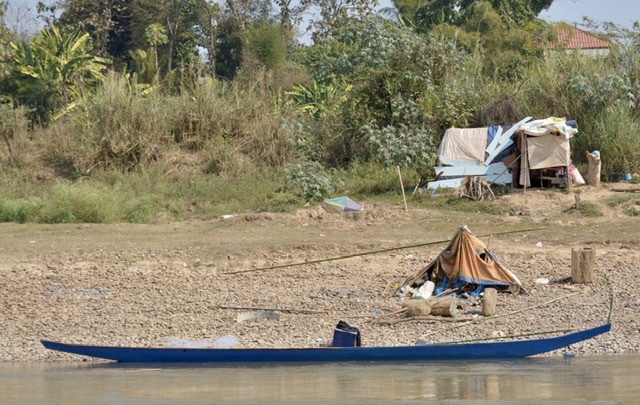
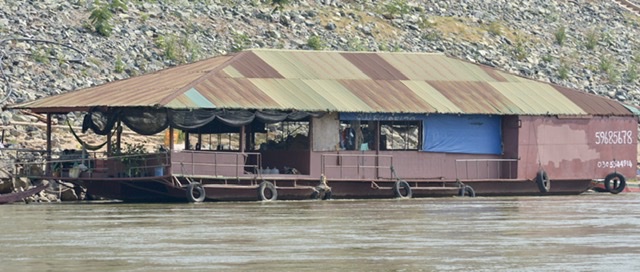
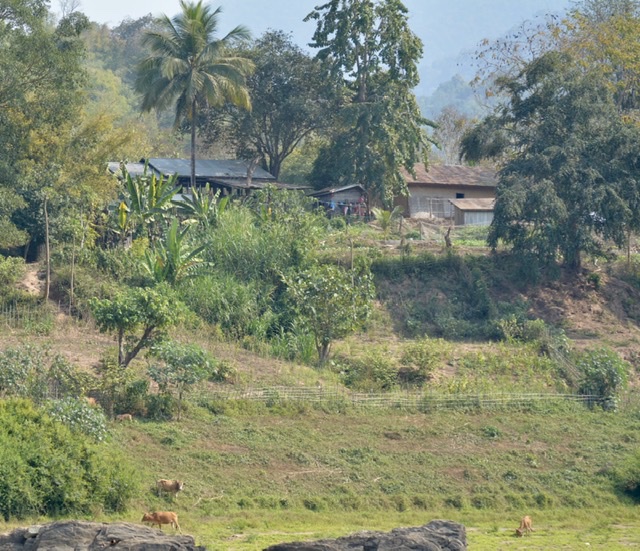
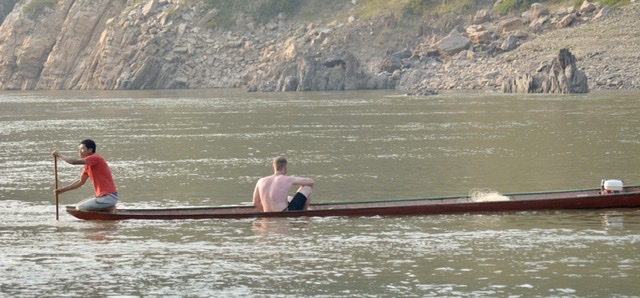
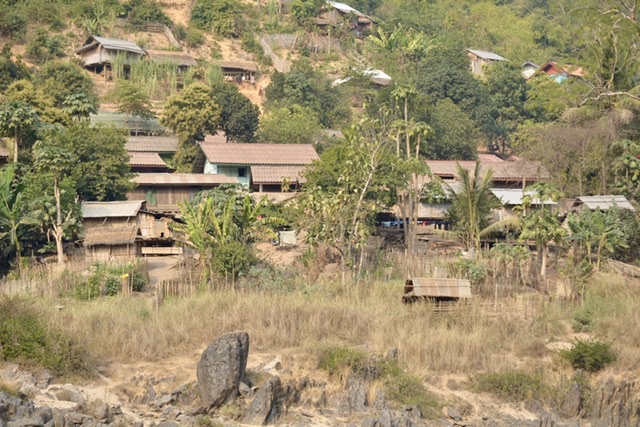
I met a whole gang of really fun, nice, easygoing people on the Slow Boat who shared stories, food and laughs. It was a good thing because it was a long day and in spite of its beauty the scenery became a little monotonous. Along the rocky banks of restless Mekong we watched Lao people go about their lives, farming, bathing, barbecuing, fishing, washing clothes, some even panning for gold and others swimming in the calmer waters. All of these scenes repeating themselves as we passed the small villages on the hillsides.

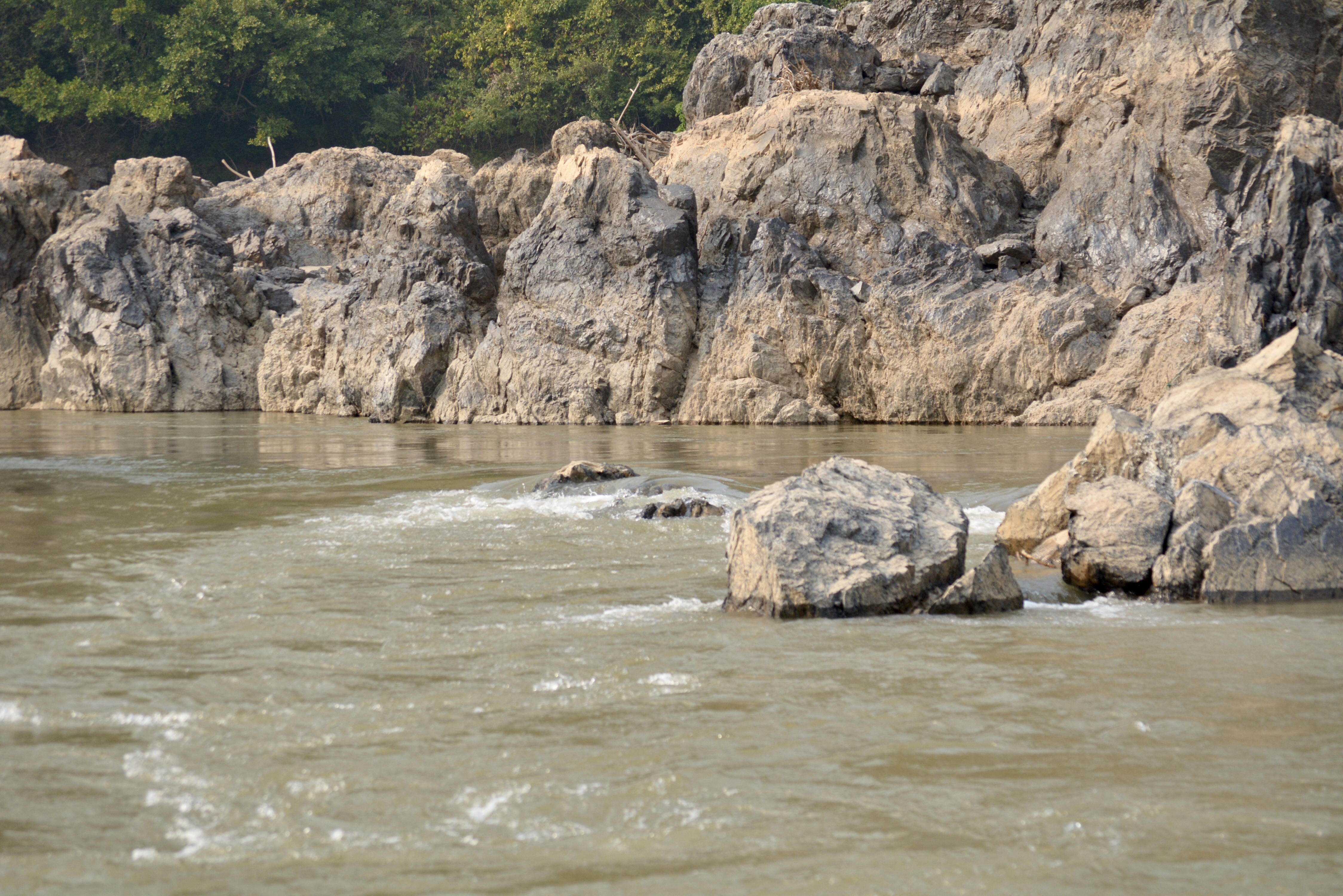
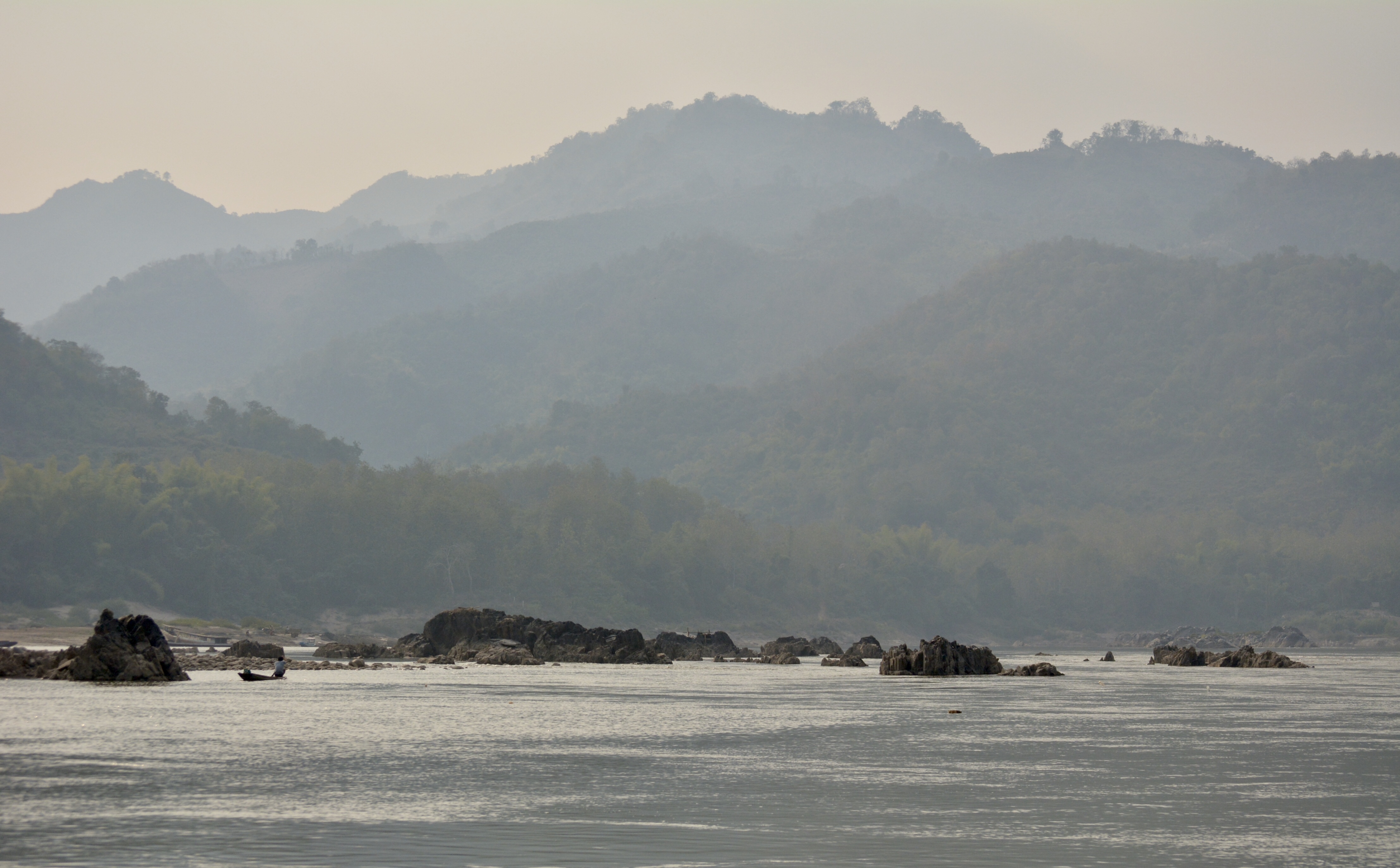
The Lao Mekong acts as an important supply and transportation route before it passes through Cambodia and empties into the Mekong Delta in Vietnam Nam. There are strong eddies and occasional rapids that the captain pilots around, sometimes squeezing between the huge rocks that stand menacingly in the boats path. The river widens and narrows and the navigational hazards mean than the Captain must know the river well to keep the “Slow Boats” afloat.

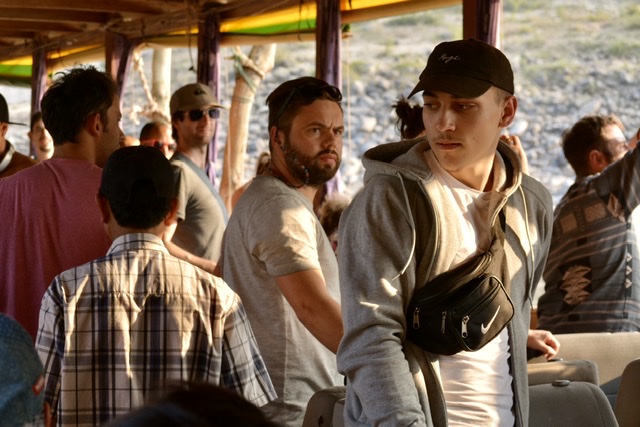
Sadly there were a group of tourist thugs (I’m not naming their country of origin because they could have been from anywhere) whose idea of a vacation involves commandeering a whole section of the boat, drinking copious amounts of beer (on day 2 they brought on 5 bottles of whiskey) and were as loud, obnoxious and profane as possible.

Just a few hours short of our stopover destination, Pak Beng, two of them decided to swing out from the open sides of the boat and up on to the roof. Only, one of them didn’t make it and he was man overboard, bouncing around in the eddies as the captain turned the very long, very slow boat around in a narrow rocky part of the river to retrieve him from a passing fisherman who had, luckily for him, rescued him before we could get back.

Most passengers were alarmed and on their feet watching the scene unfold but his drunken buddies thought it was hilarious but the poor Lao woman who worked the canteen was the one to alert the captain and she was in hysterics. Apparently Slow Boat owners/staff are held responsible if anything happens to the tourists and she could easily have landed in jail. Ugly! 

After some boat wide excitement, we carried on to Pak Beng, watching the sunset behind the mountains.

On our second day on the Mekong, we boarded a different boat. Not as cramped with old car seats it also had some nice wooden benches and although it seemed smaller than the first boat it also seemed more open and there was a nice breeze blowing in the open sides of the boat.

The canteen sold beer, water, pop, potato chips and noodles so that no one starved to death but most people wisely stocked up in Pak Beng where the French influence was evident in the number of bakeries selling brie and baguettes. 

Eight hours a day is a long time to spend onboard, sitting in the old car seats or on the hard wooden benches and frequent strolls up and down the aisle are necessary to eleviate butt pain. But my “gang” on the boat was fantastic, funny and non-complaining. It’s so great when you find a group that is compatible. The other passengers were a mix of retired types and young backpackers, who for the most part were pleasant to be around. I spoke to many interesting people and am constantly amazed at how well the Europeans in particular speak English. As we neared Luang Prabang we passed the famous Buddha Caves and watched a beautiful sunset.

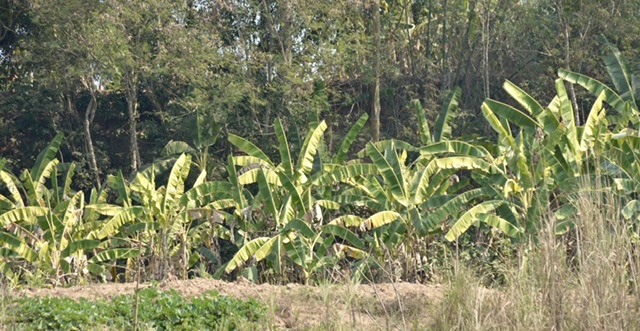
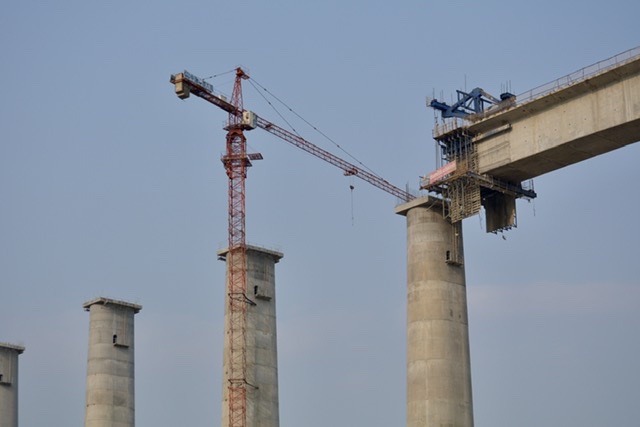
I would say that if you want to take the Slow Boat to Luang Prabang, you should be prepared for some adversity. But, on the whole I had many magical moments where I was very glad to be there, watching the the people, the other boats, the mountain villages, the livestock, the banana groves, and in contrast the new “brought to you by The Government of the Peoples Republic of China” bridges and roads, and the giant grey green rocks standing guard over all the activity. All gliding by on the “Slow Boat” to Luang Prabang on the mighty Mekong River.

Chiang Mai Thailand

Chiang Mai the peaceful…a great place to regroup.

Joined Dawn and Craig, my travelling buddies at a air BnB condo in Chaingmai. The condo was the size of a postage stamp by Canadian standards we nonetheless had our own bedrooms and bathrooms. Nice building, with all the mod cons like a washing machine and with a roof top pool and lovely views of the city.

Chaing Mai is very big, our taxi driver told us it could take 5 hours to travel from the north end to the south end of the city. But the heart of Chaing Mai is the old walled city. A very large area, one can see ruins of the old wall and the moat is still there and makes for great strolling and people watching. You can enter the old city through some of the ancient gates, there are other entrances but not as romantic sounding.

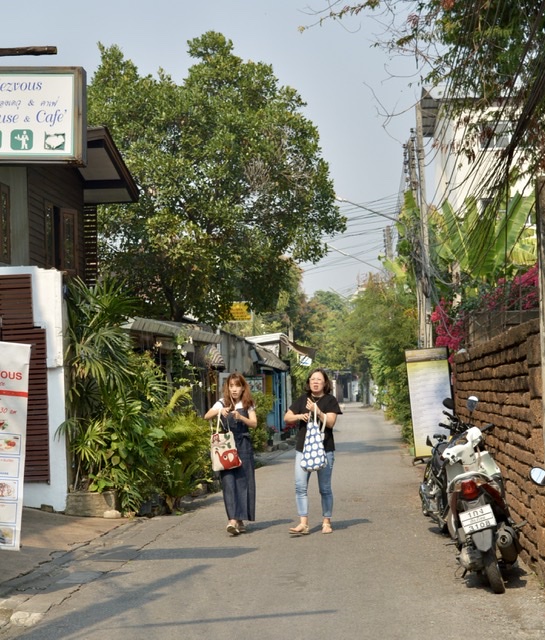
Inside the labyrinth that is the old city you will be accosted by the sights and sounds that are born out of the proximity of homes, hotels, inns, restaurants, bars, outdoor markets, tuktuks, motos, cars, temples, Wats etc., all zipped up together by narrow lanes and wider arteries that are not necessarily the fastest routes. A great walking space it doesn’t really matter if you are lost or which direction you head you can always google map your way out, but in the meantime you will be rewarded with something interesting at every turn.

Inside the walls we shopped, dined, wandered, people watched, visited temples and watts and rested our tired feet while sipping fresh fruit smoothies. Friends from Canada have Thai friends that own a restaurant called the Blue Diamond. A wonderful place and Nee gets up at 4:00 am to bake for the deli section of the bakery. It looks, smells and tastes wonderful. I had met Nee and Eed, her husband, in Nanaimo last summer and they were so gracious and warm when I visited the Blue Diamond. If I was staying in Chiang Mai this would definitely become a regular place for me.

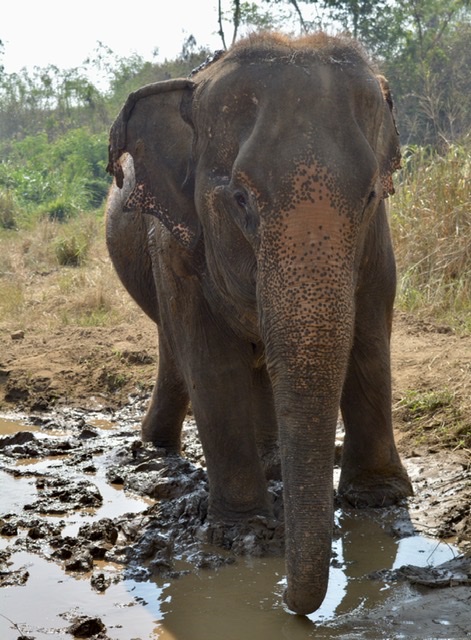
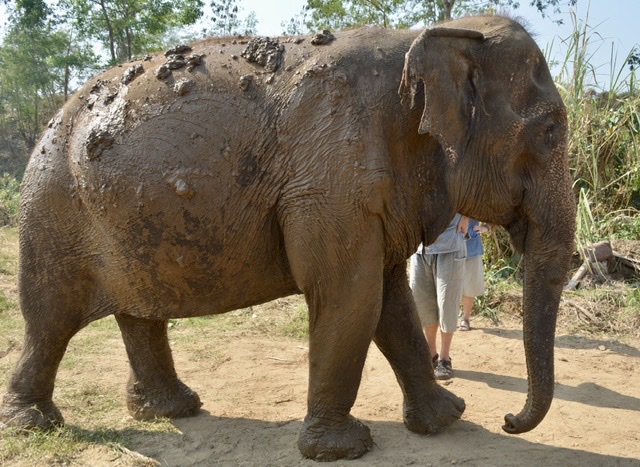
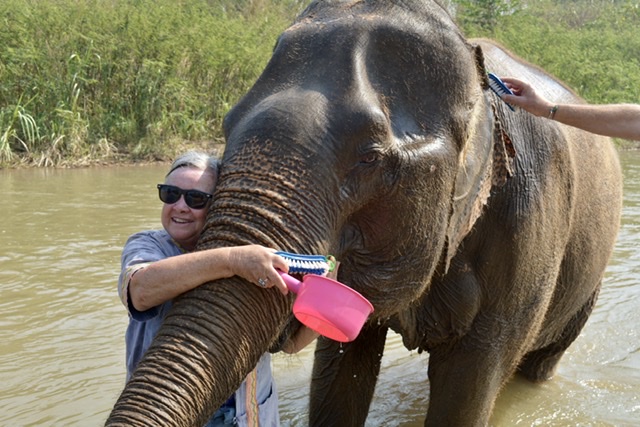
One day we hired a driver, Bon Bon, to take us to a few spots we wanted to visit outside of Chiang Mai. The first was the Kanjana Elephant Sanctuary (www.kajanaelephantsancuary.com) if you need to look it up. We chose this sanctuary because it is not a “riding” camp, which is now frowned upon and with good reason. The elephants at Kanjana are very used to people. There weren’t many, I think six, all female and all former “work” elephants with the exception of a two year old who was born in the sanctuary. After “suiting” us up in protective shirts and pants we were taken to prepare squash to feed the elephants, a little bribe to make them like us. Feeding them was quite an experience, for one thing you had to watch your toes, then you had to give them commands that indicated that they could take the food with their trunks or that you were going to insert the food right into their mouths so they would have to raise their trunks. The inside of an elephants mouth is an experience in itself. It is soft and made up of many lumpy large folds of tongue like flesh. They are sticky and damp and your hand comes out the same way.

They were so hungry and as the guide at the sanctuary said they like to poop, eat and bathe and it sounds like several of them deserve to do exactly that after hard lives in logging and farming. They have been replaced by machinery of course and were too much trouble and expense to keep as pets; that is why there are elephant camps all over Thailand, many with the best of intentions. None of the elephants will leave the sanctuary, they will spend the rest of their days there and one in particular with a broken leg was very sad and it was good to know she had a safe haven.

After feeding we walked with the elephants down to the river and gave them a good scrubbing with wire brushes. They loved it and rolled around in the water, between the people and the elephants spraying each other with water we were pretty wet by the end of bath time and we all walked back to the main camp. For $60 CAD it was well worth the experience and I like to think the elephants benefit.

After the elephant sanctuary we motored on to the “Sticky Falls” in Chet Si Fountain National Park. A beautiful forested park, with camp sites, hiking trails, picnic areas and of course the sticky falls, so named because you can actually walk up and down the falls without slipping (too much). The water was refreshing and not too cold and the falls were so steep in sections we had to use ropes to climb up or down.

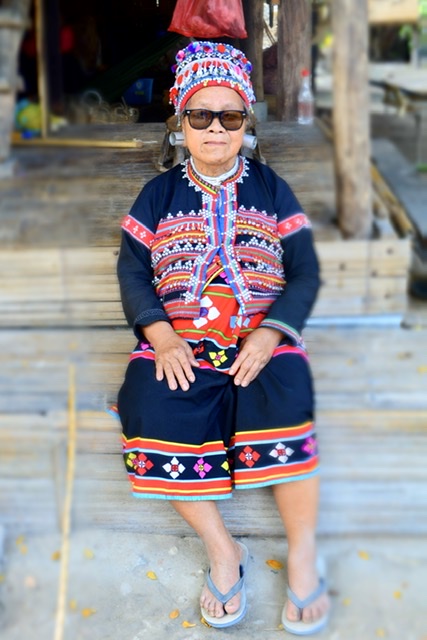
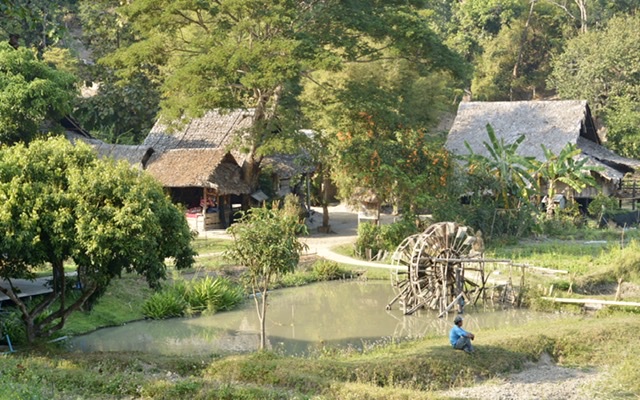
Feeling clean and refreshed we headed to Baan Tong Luang, an eco-agricultural hill tribes village. Many of the people who live here are refugees from Myanmar. To quote the brochure “ Baan Tong Luang hill tribes community has been founded since 2003. To preserve the traditional way of life of the tribes and help families and tribes who work for the Maesa Elephant Camp. To remain in its original life, which cannot be found in the present day.”

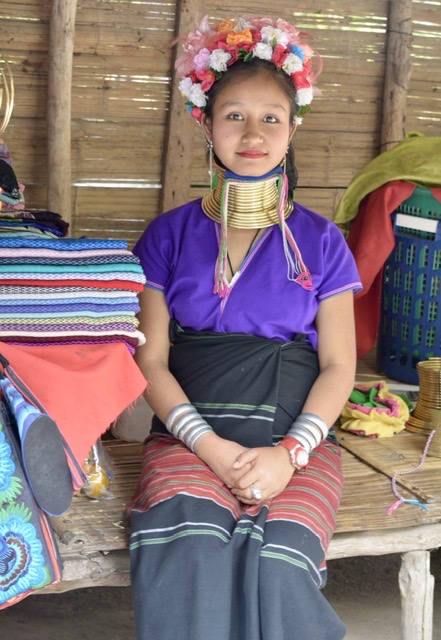
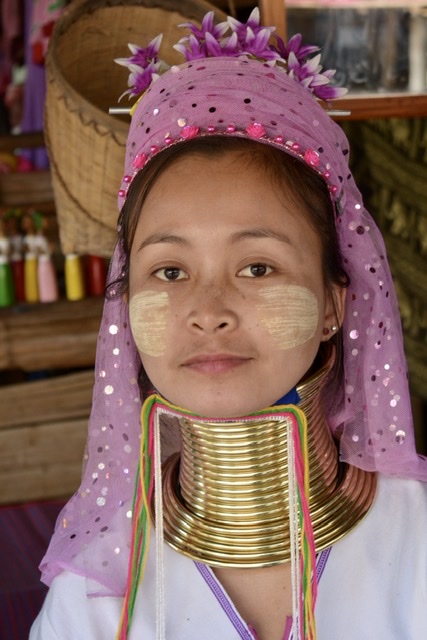
There are eight ethnic tribes living together in this community. They live in traditional style building, each according to their cultural practice and the arts and crafts that are mainly handmade are sold in their section of the village. Each tribe has very different characteristics in their work but all of it is colourful and beautiful from baskets to tapestries. One group is the long necked people called the Karens. Only the women wear the neck bracelets that weigh enough to force their rib cages down, giving their necks an elongated appearance.

For me the idea of an “indigenous” center made for tourists to come and see the culture and history of these different groups could be problematic but my sense here was that the people were safe and supported, living a peaceful existence quite different from the lives they had to flee in times of war and turmoil. Interestingly these tribes originated in many different places; Tibet, Myanmar, China with many migrating to Thailand in the 1980’s.

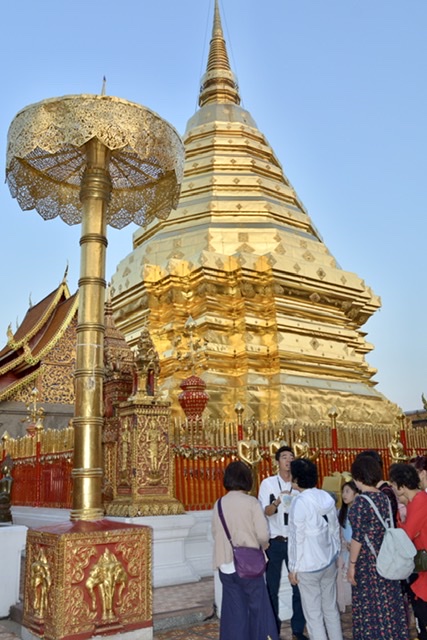
Bon Bon our driver spoke pretty good English and he answered our millions of questions about Thai society, daily life, military service, being a monk, the cost of living, etc etc. He was probably happy when the last stop of the day came and he let us lose at the Phra Borommathai Doi Suthep Temple on the top of a mountain above Chiang Mai. With a gondola to take us to the top, thank God, as we had walked and climbed a lot since morning, we were impressed enough with the Temple itself but there were also outstanding views of Chiang Mai in The Valley below.

The markets in Chiang Mai deserve a mention of their own. On Sunday evening there is a street market that goes on for blocks and blocks, selling handicrafts, art, clothing, food and household goods to mention a few things. There is also the Chiang Mai night market a permanent set-up with terrific street food and again blocks and blocks of stalls selling everything imaginable. The markets themselves are a work of colourful vibrant art. The atmosphere is upbeat and people go the markets to shop, dine and enjoy live music and people watching.

Our last night we took a dinner cruise on the Ping Mae River which was somewhat of a disappointment. We were picked up at the condo and drove around until the van was full of cruisers. At the river we were shepherded down to the boat and given dinner which was mediocre and then set off on the cruise. Since it was night time it was dark and the only time you could really see anything was when we passed a brightly lit restaurant or bar. There were some very nice homes along the river and some upscale restaurants. Not sorry I did it but wouldn’t do it again.

So arrangements have been made, Dawn and Craig leave for Krabi and Koh Lanta in the south of Thailand in the morning and I take a van north through Chiangrai to Chiangkhong where I will overnight before crossing over the Friendship bridge into Lao.

Solo Travel Inle Lake….More Myanmar

The beautiful countryside…

Inle Lake

So so glad I made the decision to spend some time in his incredibly beautiful part of the world. To get to the lake I flew from Mandalay to Heho, and then by taxi to Nyuangshwe, the town where you can access boat trips to the lake. On the flight I realized that not all of Myanmar was flat like the Bagan Plains.

About an hours dive from the airport to Nyuangshwe, the views are are great. The nicely paved highway twists and turns its way up and then down the hills into The Inle Lake Valley.

I stayed at the Hotel Emperor Inle Lake, my favourite hotel thus far. Rock star service, free breakfasts and very helpful staff who helped me make arrangements to tour the lake with a fisherman. 

First day was a day of wandering the little town, pleasant enough with a lovely canal walk, some Wats and the usual shops and services.

The area around Inle Lake is mainly agricultural land including sugar cane which is set fire to after the harvest and so there is a low lying smoke that settles over the town and the lake. At first I thought it was a mist but later realized it wasn’t quite so innocuous. Like Bagan, hot air ballooning is popular but oh so expensive.

The next morning I was fetched at the Emperor by the fisherman who walked me a short distance to the canal where his longboat sat waiting. He wiped the morning dew off one of the two seats, retrieved a cushion from a plastic bag, gave me a bottle of water and we were on our way. It felt like the queens day out. 

The narrow canal leading to the lake buzzed with the diesel engines on the long tailed boats, coughing black smoke when started by a hand turned wheel. The churning waters were busy with people getting to and from work, home, school or whatever else occupied their days. 

I had only hoped to see the Inle Lake long boat fisherman and it was my lucky day. These fellows perform the outstanding feat of paddling with one leg while using both hands for traps or nets and all the while balancing precariously on the narrow lip of the bow on the remainng leg. Like a dance they plunge their traps into the lake and pull them back to the surface as smoothly as ballet. Wow what a sight. 

Turns out the boat tour with my fisherman, included stops at various arts and crafts cooperatives, where we would tie up to the docks in front of them. The cooperatives were in the hear today the communities entirely built on stilts including In Paw Khone, Nam Pan, Phangan Daw O Pagoda, Shwedagon in Dein Pagoda, Ywama Floating Market, and Nga Phe Kyaung Monastary, (difficult pronunciations for my English toungue). Hovering above the lake were schools, hospitals, temples, pagodas etc. In rustic buildings were mechanics, builders, boat makers, weavers etc., all busy at their trades, everyone moving about in longboats. 

The weaving cooperatives were fascinating and the women used foot to pedal and back strap looms to make beautiful things in traditional colours and designs. I didn’t know that the lotus plant could be used to make a thread and we had passed huge nurseries of them on the way to the villages. I took a picture of a woman cutting the stems to reveal a long, fine, white thread which was then combined with other threads and spun into a larger thread used in weaving along with cotton and silk.

The tour lasted about seven hours, would have been longer but I declined the last stop where the women wear gold bands around their necks. I had read that they were often exploited by the tour guides and I did not want to contribute.

Back in Nyuangshwe I wandered the streets for awhile watching the hardworking people go about their business when suddenly there did appear a sign for dhosas, straight out of southern Indian cuisine! Hanit and Kunal who introduced me to dhosas would have been proud of my lack of hesitation. Sadly however these delicious pancakes were off the menu temporarily…plan b…samosas. 

Inle Lake is a beautiful place and has a quiet peaceful felling to it but it is close to some of the “trouble spots” in Myanmar and there is no doubt that the people have suffered at the hands of the political turmoil that has plagued Myanmar. I thought it was the most lovely of places and was so glad I went. A short flight and I was in Yangon, boarding a connecting flight to Bangkok, which in turn connected with a flight to Chaing Mai in northern Thailand.

Mandalay, Myanmar

Where the catfish play…

Mandalay

Getting off the boat in Mandalay was a mad rush of taxis and Tuk Tuks vying for our business. Of course you have to bargain and I managed to get the price down from 10000 kyats to 8000. I established that this was the normal price through a series of hand signals with a fellow passenger as he was whisked away into the crowd. At this time that is worth about $8 cad. This scrum of who will carry who and for how much is always invigorating and riding in a Tuk Tuk is a much more in the now experience that being shut up in an air conditioned taxi.

My hotel, The Royal Pearl, in Mandalay was very close to the palace grounds but based on the hallways I had a bit of a gulp when I first arrived, but it turned out my room itself was quite lovely. It was well located and walking distance to the main sights. Not the prettiest city, Mandalay for a couple of days might be sufficient unless you are able to get out into the countryside. Glad though, to have some time to walk and stretch my legs after the boat trip, I left Royal Pearl after breakfast and headed to the palace, the grounds of which are huge and surrounded by a moat. Foreigners can only enter from the east gate for 10000 kyats so it was a long lovely stroll along the broad sidewalk that skirted the moat around the palace.

But as chance would dictate my direct beeline took an interesting turn when a young guide talked me into a full day tour outside of Mandalay, across the Ayeyarwady to visit Sagaing (temples)and then return via a country market which he assured me far surpassed the beauty and grandeur of the palace and the pagodas in Mandalay. Turns out the tour was on the back of his motorbike. A little wobbly getting on the first time he said to me “Mother you are very strong”to which I replied “yes and you may call me grandmother” trying to muster all the esteemed treatment possible given my undignified lunge on to the bike. 

He was right and the tour was great and took me up into the hills that we had passed on the boat, great vistas and amazing pagodas (yes more pagodas) we spent the day whizzing up and down the hills in the fresher country air. Turns out my guide knew just enough English to talk me into the tour and not much more. At the top of Sagain Hill, which is dotted with white and gold pagodas, is the Soon U Ponya Shin Paya and the Unmin Thounzeh temples.

My guide offered me the opportunity to have an authentic Myanmar meal at a road cafe. They served a meat dish of your choice along with rice and then lifted a bug screen from an array of a dozen or more small dishes, condiments, vegetables, pickles, sauces etc. Myanmar excels in fresh veg dishes; green beans, cauliflower, squashes of all kinds, etc. There is a subtle spicing not as hot as Thailand but slightly above Cambodia. I paid “our” bill and out of the corner of my eye I saw the owner give my guide a kickback, can’t complain as the total for both of us was less than 5.00 Cad.

After tootling around the Mandalay hills for five or so hours we crossed back over the Ayeyarwady River to visit a pier/market (think Granville Island) for a short stop. By now I was mounting and dismounting like a pro and wasn’t nearly pulling my little guide over to the pavement each time.

How motorcyclists weave in and out among the traffic, traveling together like a school of fish, always close but never touching, is beyond me. The only rule seems to be if there’s a space…fill it. All in all it was an interesting and exhilarating day and my butt was glad to see the east gate foreigner entrance to the royal palace of Mandalay. 

It is a very long walk from the gate to the actual palace grounds and along the way there are army barracks for soldiers and their families. Other than that the grounds are pretty and a nice place to walk. The palace itself is rather minimalist when compared to others, like the one in Bangkok, but it’s simplicity leaves a lot to the imagination. There are a few structures that would have been reserved for the royal family and clustered around them were panabodes that would have been reserved for the retinue that served them.

Too late to climb Mandalay hill for the sunset, which apparently is the Mandalay thing to do, I returned to my hotel and caught the last of it from the rooftop restaurant of the Royal Pearl. Tomorrow an early flight to Heho, gateway to Inle Lake.

Bagan to Mandalay by Boat

Up the Ayeyarwady River….

The boat from Bagan to Mandalay was a 12 hour treat from start to finish. The boat left the Bagan Jetty at 5:30 just as the sun rose over the river. The mists from a morning chill rose off the water but slowly dissipated as the sun rose above the plains of Bagan and shone down on the Ayeyarwady River. (I have also seen it spelled Irrawaddy but I suspect that is the anglicized version.) The river flows south through the middle of the country and the plain that it cuts through is as flat as it gets. In places, the high mud banks look like they were sliced flat with a knife and the scrubby grass that stands straight up above the banks give the appearance of a bad brush cut. In the west the plains end at the Chin State mountains and in the east at the Shan Hills.

Life along the river is vibrant; farming, fishing or the transport of people and goods keep something on the horizon to watch and wonder about. We passed all manner of vessels from scows to other tour boats and it was delightful to see whole families fishing in the river using, poles, traps and nets. Reminded me of my fishing days when the fishermen would take their families along for company and to share the work. Of course along the way we saw plenty more gold domed pagodas, a further reminder that Myanmar is a deeply Buddhist country. The settlements along the river were haphazard collections of tents and shacks where the fishermen and their families live during the dry season but relocate for the rainy season. Right now it’s “winter” in Myanmar, meaning that the temperatures plummet to the mid 20’s at night and in the morning.

On board the RV Panorama, part of the Alliance Cruise Group, there were about 32 passengers, most of them a tour group from Taiwan and the rest were Europeans except for me the lone Canadian. A woman from Slovenia told me she didn’t think Canadian’s travelled much. At first people snoozed below deck and I was lucky enough to have three seats to myself which made for a great bunk. After a nap I followed the lead of other passengers and went topside for breakfast and then out onto some really comfortable deck chairs on the stern.

The young men who were our stewards on the boat gave us a demonstration on the art of wearing the “longyi”. With a few deft twists and turns of fabric they created, hats, shorts, jackets, slings, back packs, carrying pouches and even an elephant. Then they demonstrated the use of “thanaka” a paste made from ground bark which the Myanmar wear on their faces as both a sun block and a skin cream. They even have some fancy designs that they create after the swirl of paste dries a bit and one of the Taiwanese passengers was eager to be a model.

Twelve hours evaporated and before I knew it we were approaching the mythical city of Mandalay, made famous in Kipling’s poem. Of course it bears little or no resemblance to the romantic version set out in the poem but it was impressive as we approached our dock.

There are other ways to get from Bagan to Mandalay but in my mind the 35 USD fare that included breakfast and lunch was the only way to go.