Cuba -La Havana – Ramble in the Rubble

Ramble in the Rubble

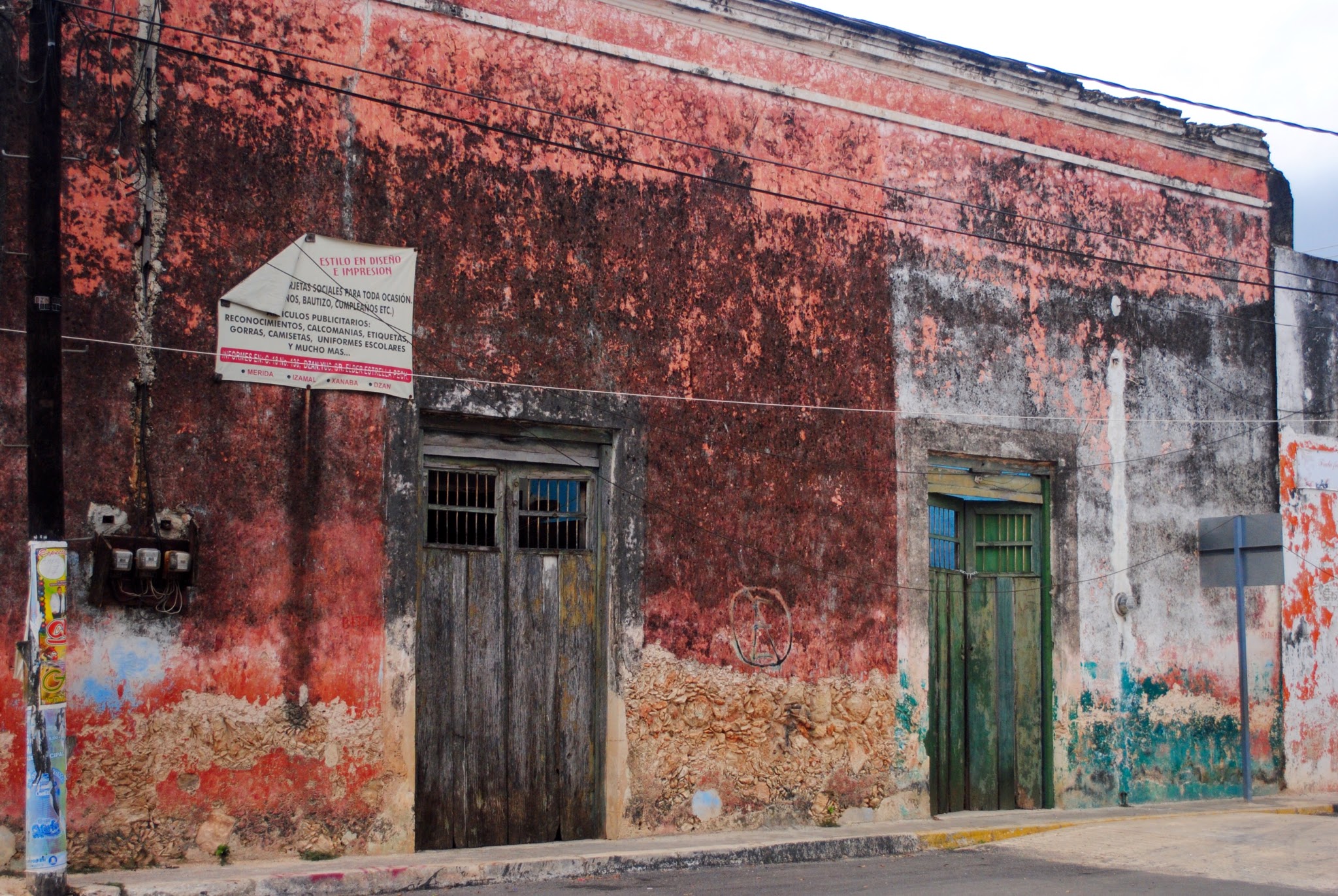
Picture a Spanish colonial city after decades of neglect. Think about what colonial buildings would look like when the plaster has crumbled and fallen and the paint and patina on the wood are long gone. Imagine streets and sidewalks that are a gauntlet of rubble and potholes. Listen for the pulse of music, the rumble of old motor cars backfiring their way through narrow streets leaving black clouds of exhaust, the shrill whistles of pedicab drivers, add the chatter of crowds and you will have Havana Cuba.
The neglect and disintegration of Havana is both disturbing and alluring. One can only imagine the magnitude of the architectural glory that was once Havana. Time has not been kind to the beautiful avenidas, the once lush green parks and the narrow streets. While the buildings of Havana are frozen in time, its inhabitants have continued their day to day existence. Patching and repairing where money, time and materials have allowed, they modify and compartmentalize once palatial homes to accommodate the large number of people who have migrated from rural to urban Cuba. The buildings, and whatever else remained after the last revolution, stand resolute looking as if they are patiently waiting for life to resume. Even as the buildings crumble, Havana rumbles along, propelled by human spirit and ingenuity. Almost everything in plain sight on the streets of Cuba is held together with a lick and a promise, except in the Old Quarter where the Cuban government goes to great expense to refurbish colonial buildings for the promotion of tourism. Since the collapse of the Soviet Union and the economic problems of Venezuela, Cuba no longer receives the subsidies from these two important allies and has come to rely on tourism to a large degree. And tourists there are many and they join the rivers of Cubanos that ramble through the rubble to get from one place to another.

Yucatan: Overnight Trips to Vallodolid and Campache

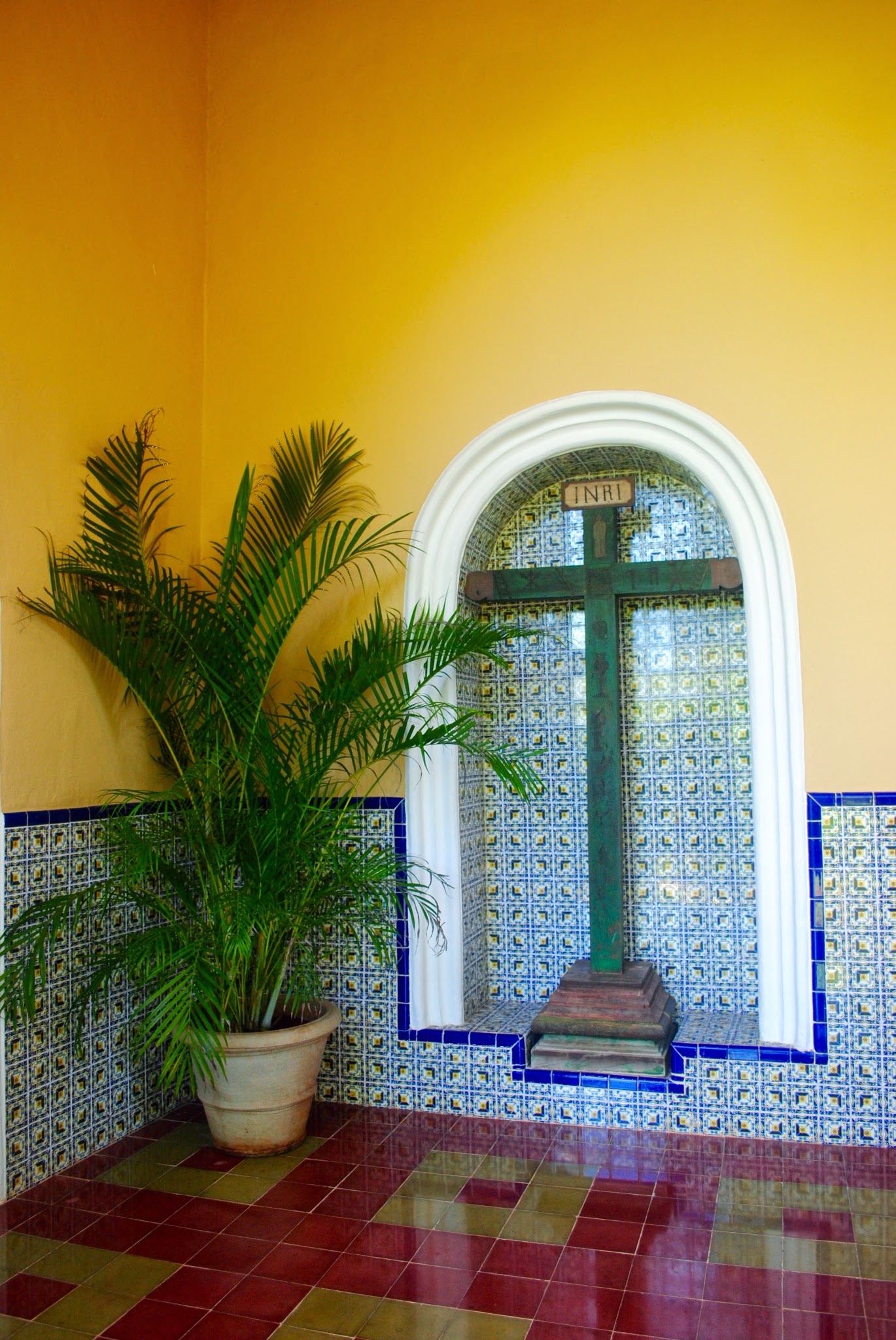
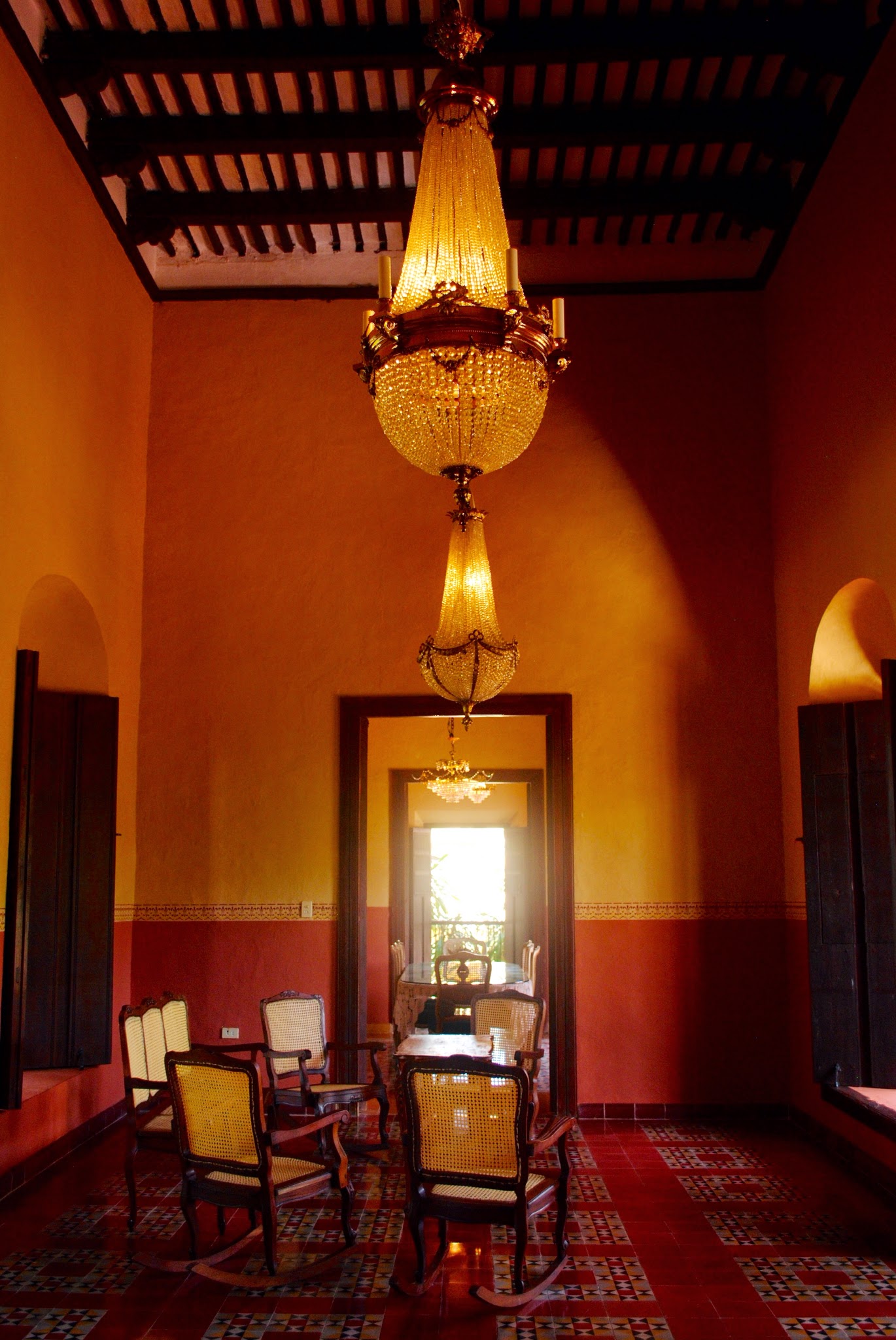
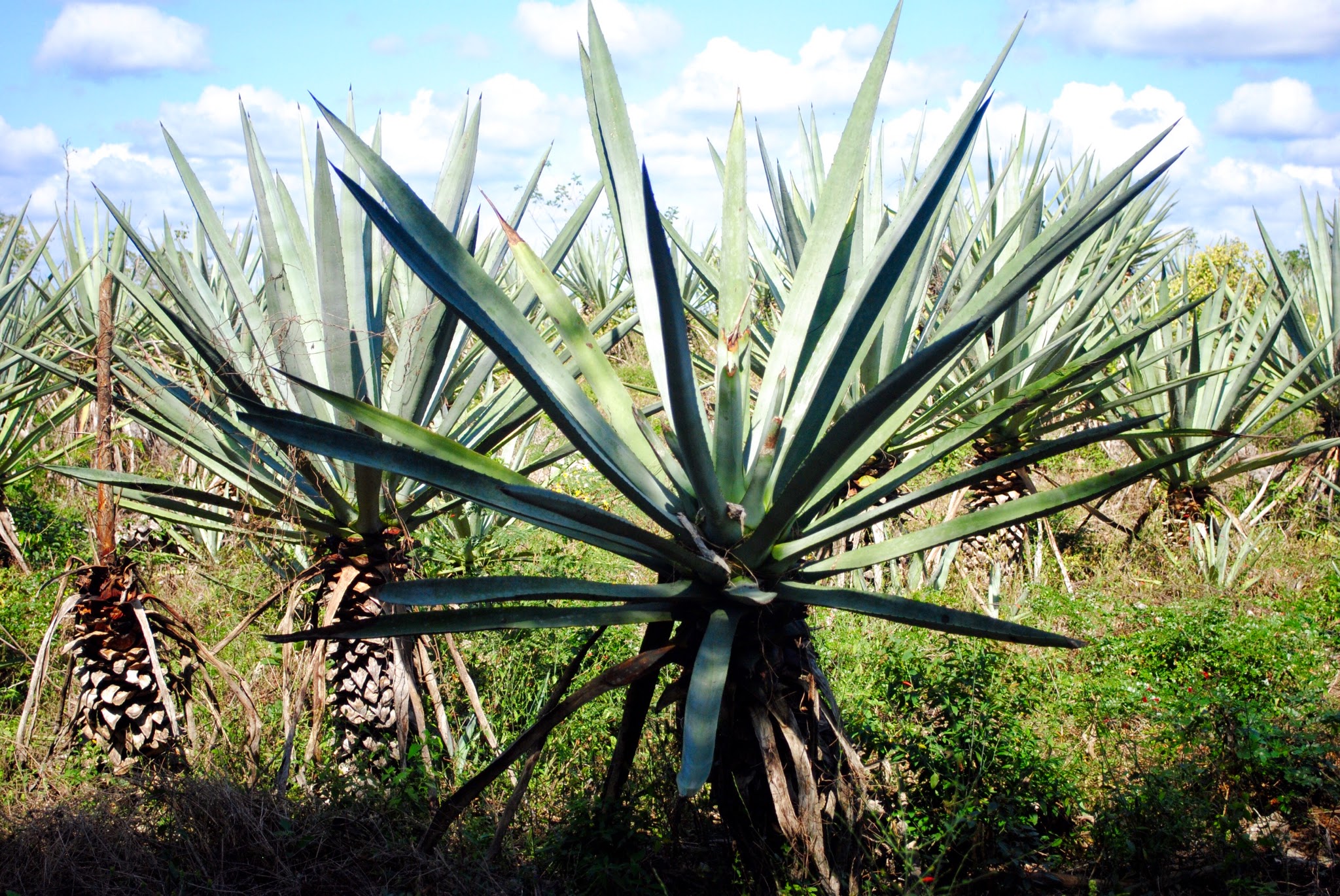
Setting aside three nights for a longer road trip was a good decision as it gave Tom and I a chance to explore more of the Yucatan and the neighbouring state of Campeche. The first night we spent in the colonial town of Valladolid, which is half way between Merida and Cancun. On the way we stopped to visit Sotuta de Peon, a henequen plantation, about an hour and a half from Progreso via Merida. It is a “working” hacienda that goes into production twice a day for the tourists who want to see how the yucca cactus becomes the henequen rope. The hacienda tour is in English and starts in the casa de la hacienda. Beautiful tiled walls and floors are everywhere including on the veranda. High ceilings keep the haciendas cool. According to the animated tour guide these houses were rarely used by the wealthy owners who chose instead to stay in their mansions in Merida. Nevertheless they were beautifully furnished, well stocked

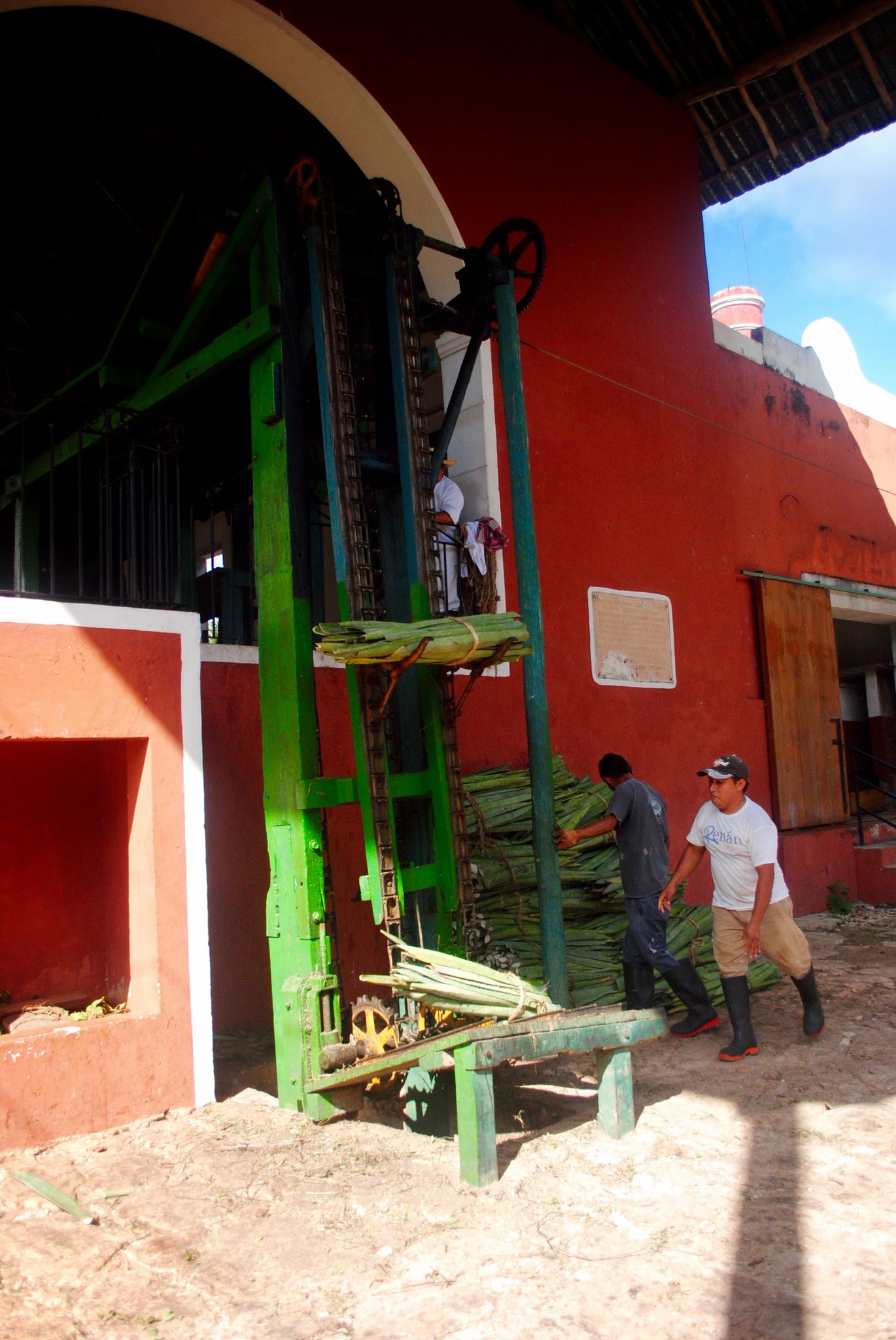
Managed by an overseer, haciendas were really little fiefdoms unto themselves. They had their own currency, laws, stores etc. and even a jail. Local Maya did the hard work of planting, tending and processing the cactus, living out their lives on the hacienda and in the surrounding pueblo. The machinery used in the production of henequen rope is still functional and was invented specifically for the haciendas and of course ramped up production from the earlier times when everything was done by hand.

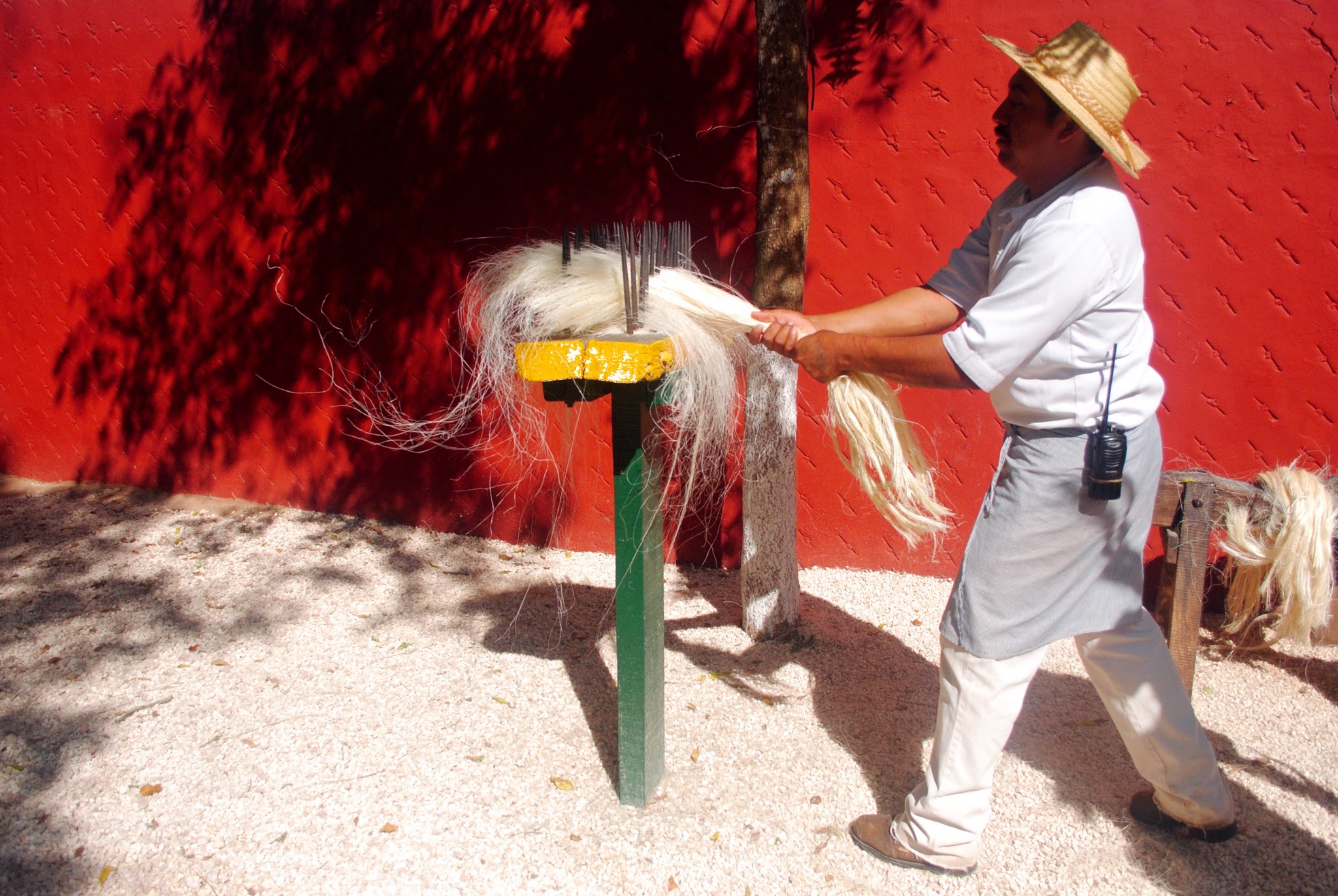
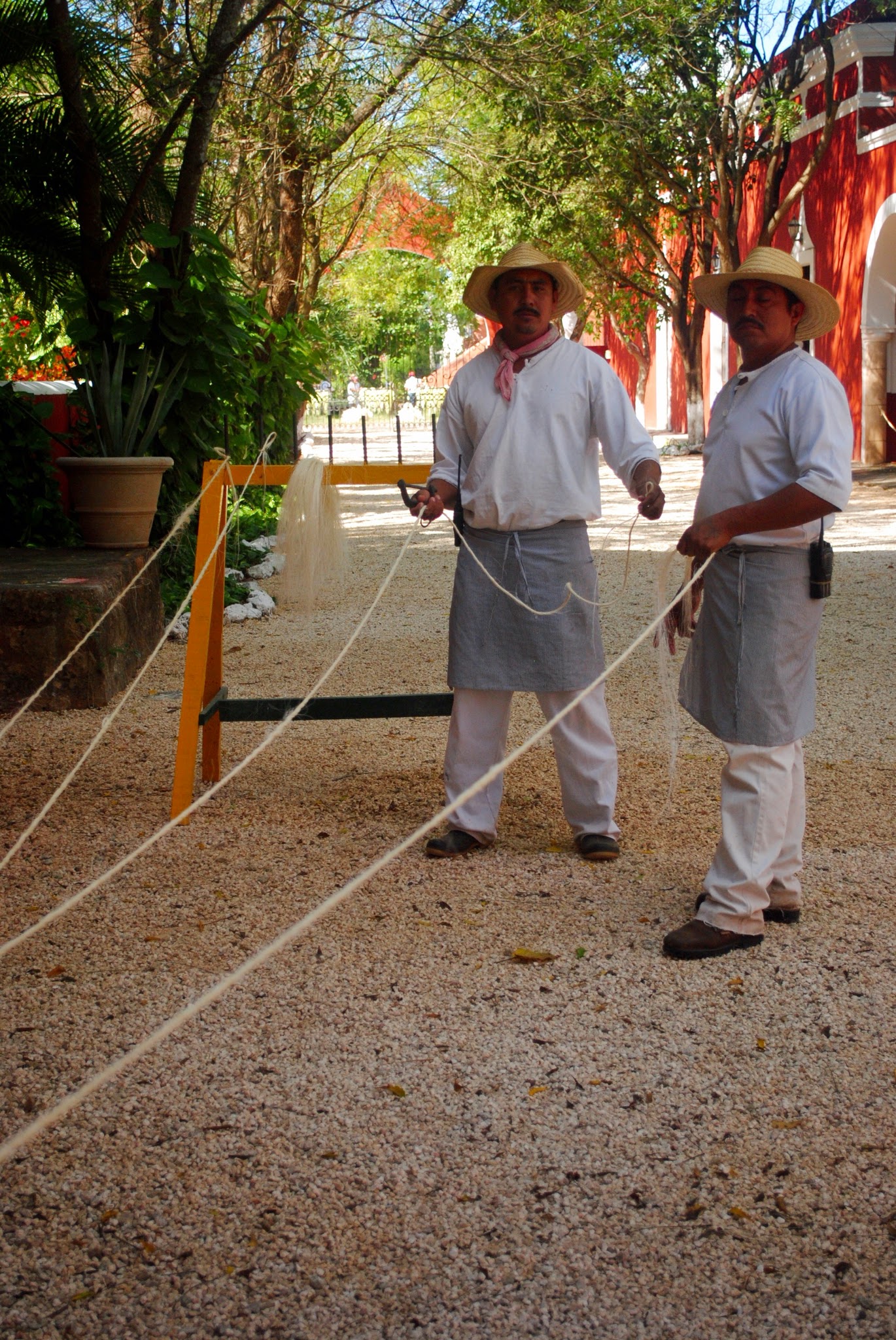
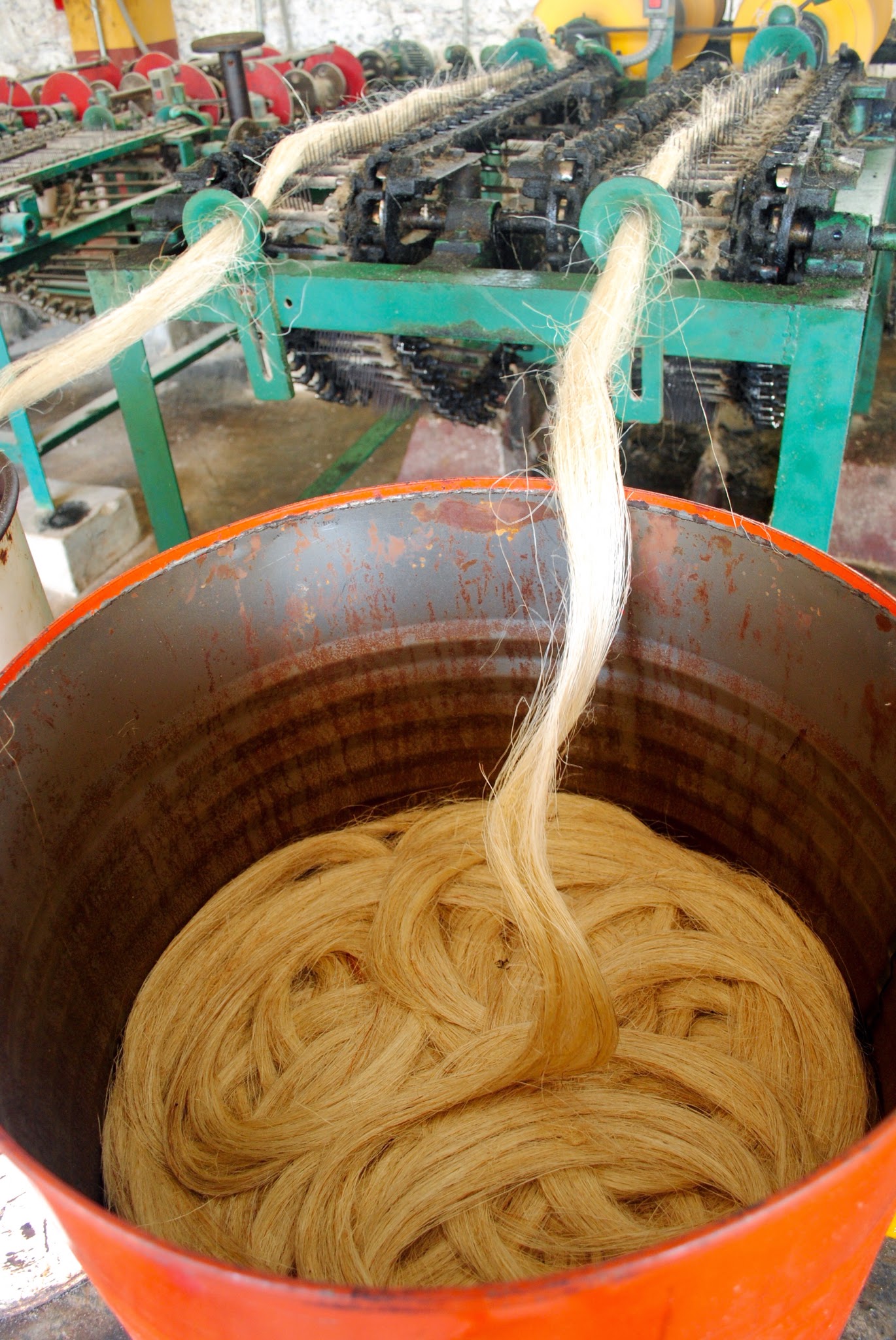
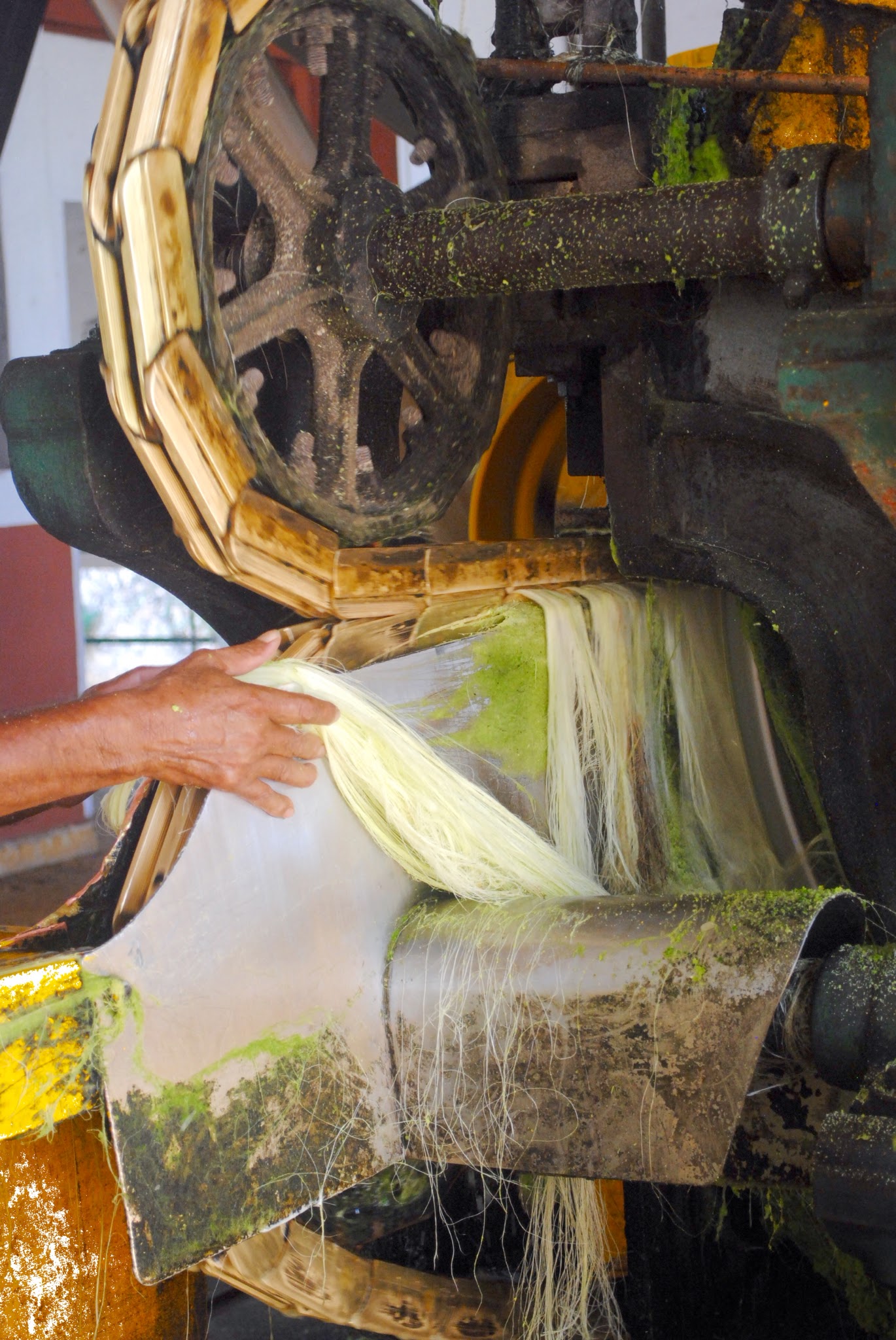
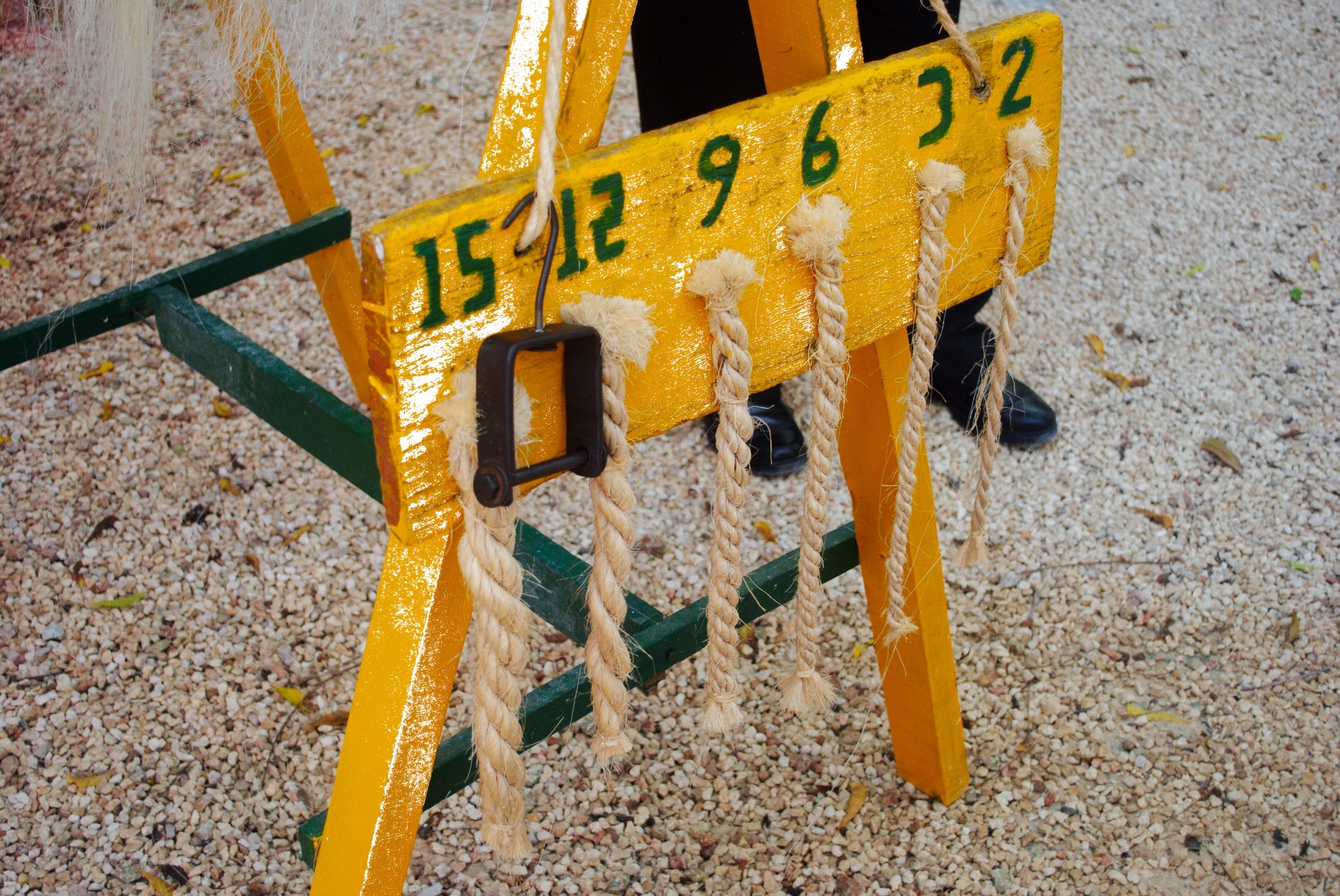
The first step in making the rope is to remove the skin of the cactus, revealing the fiber which when dried in the sun is separated by a machine and finally it is spun into rope of varying thickness and crated for shipping. The tour at Sotuta de Peon finishes with a burro pulled train ride through the cactus fields to a typical home of a Maya worker. At the home an elder who worked at the hacienda, gave some of its history and impressed us all buy saying goodbye in about a dozen language. The grand finale of the tour is a swim in a covered cenote complete with an air/light shaft, stalagmites and stalagtites. The water is clear and cool and the limestone walls and rock formations are fun to explore.

Back in the car and on the road we reached our next destination just before dark. Valladolid is a beautiful colonial city located midway between Cancun and Merida and it has a cenote right in the heart of town and several in the surrounding areas. This is a great place to stay if you are visiting Chichan Itza or just touring the area south of Merida. It is not necessary to take the toll highway from Merida to Valladolid as there is a free alternative route which takes a little longer but gives you a good look at the countryside.


In Vallodolid, there are a number of inexpensive colonial hotels right off the main square and plenty of places to walk, eat and enjoy the sights including Mayan artisan co-ops.Valladolid is a good reminder that if you don’t like noise, music or colour you won’t want to come to Mexico, but if you do you will really enjoy the atmosphere wherever you go.Among its many charms, Valladolid has great restaurants with authentic Maya food. Yucatano dishes are varied and generally feature fish, seafood, pork and chicken. Beef is not prevalent and most ingredients are local and fresh. Of course they are spiced and prepared in the Yucatano way and are really delicious. Yucatican cuisine is much lighter and the spicing more subtle than in other areas of Mexico. Cheese is used sparingly, but tomatoes, peppers and onions, along with tortillas, form the back bone of many dishes. Juices and smoothies, beer and tequila based drinks, bottled water and cafe con leche are standard.

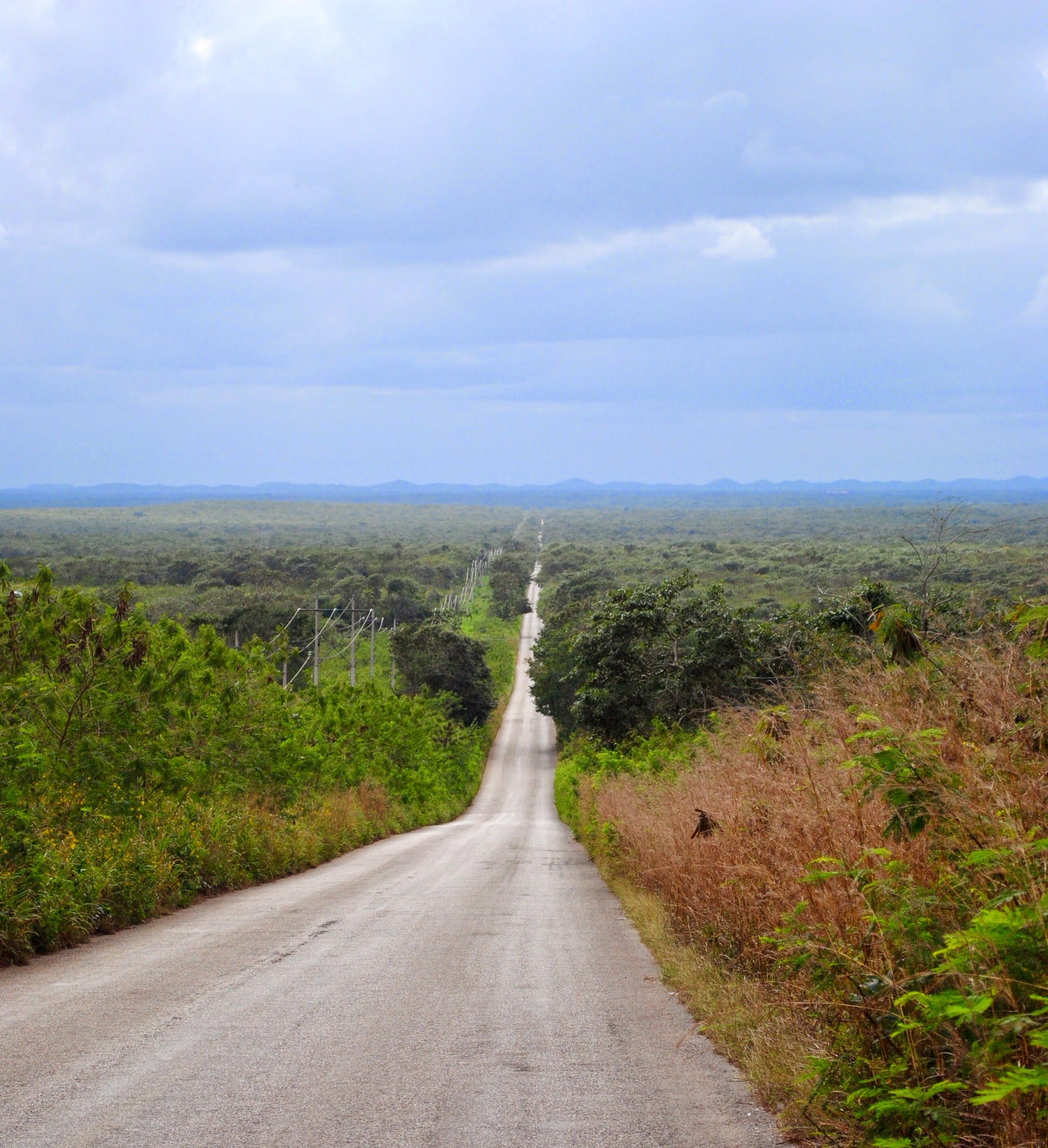
One could easily spend two or three days in Valladolid wandering the streets and exploring the surrounding area but we had only one night before we headed in a south easterly direction for the State of Campeche and the capital city, Campeche. Although in a different state it is still on the Yucatan peninsula. Along the route we passed through the pueblos, witnessing daily life as it unfolds at a much slower pace than in the cities. The countryside was beautiful and at one point we even gained some height as the road passed over a series of hills before returning to the flats along the coast.

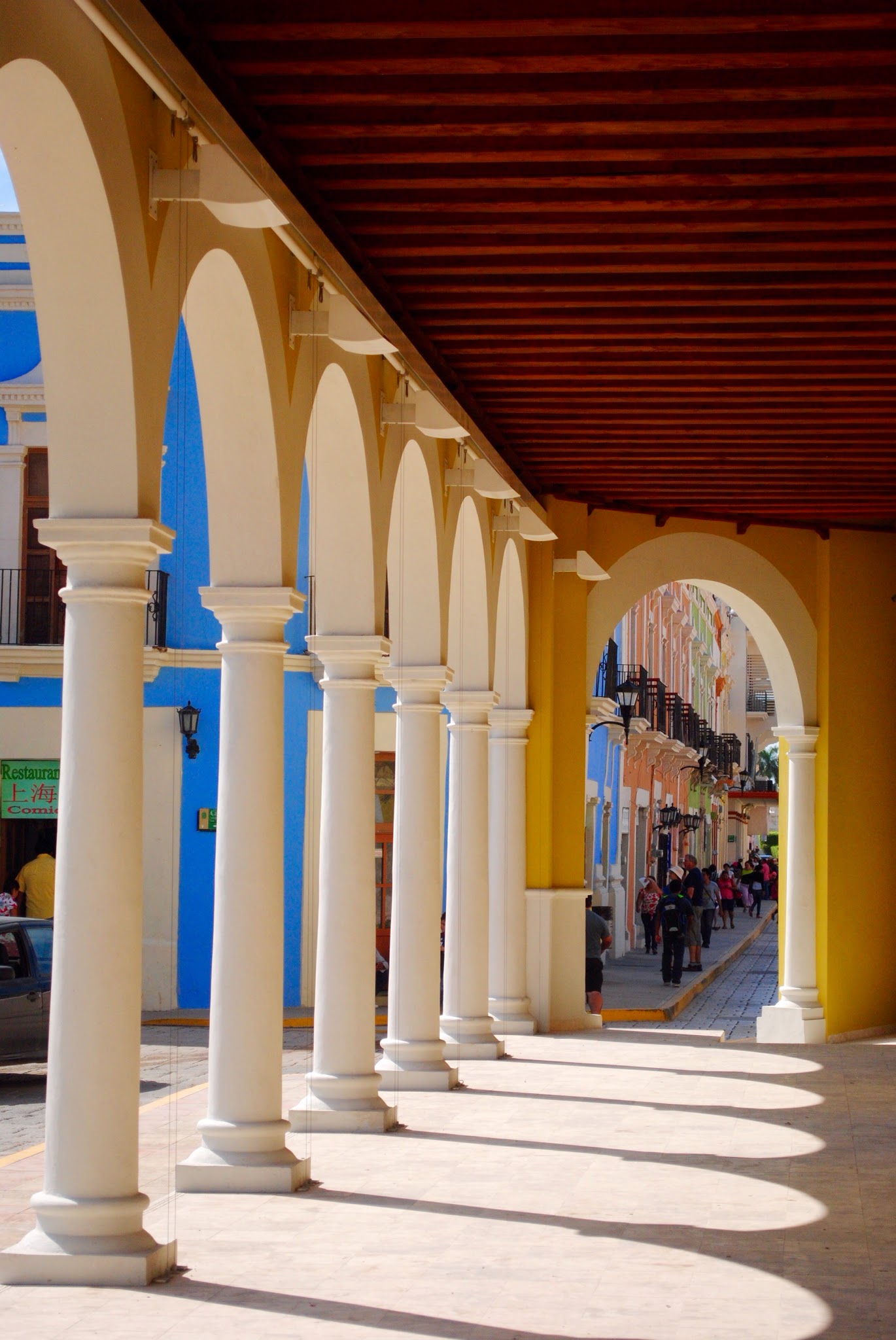
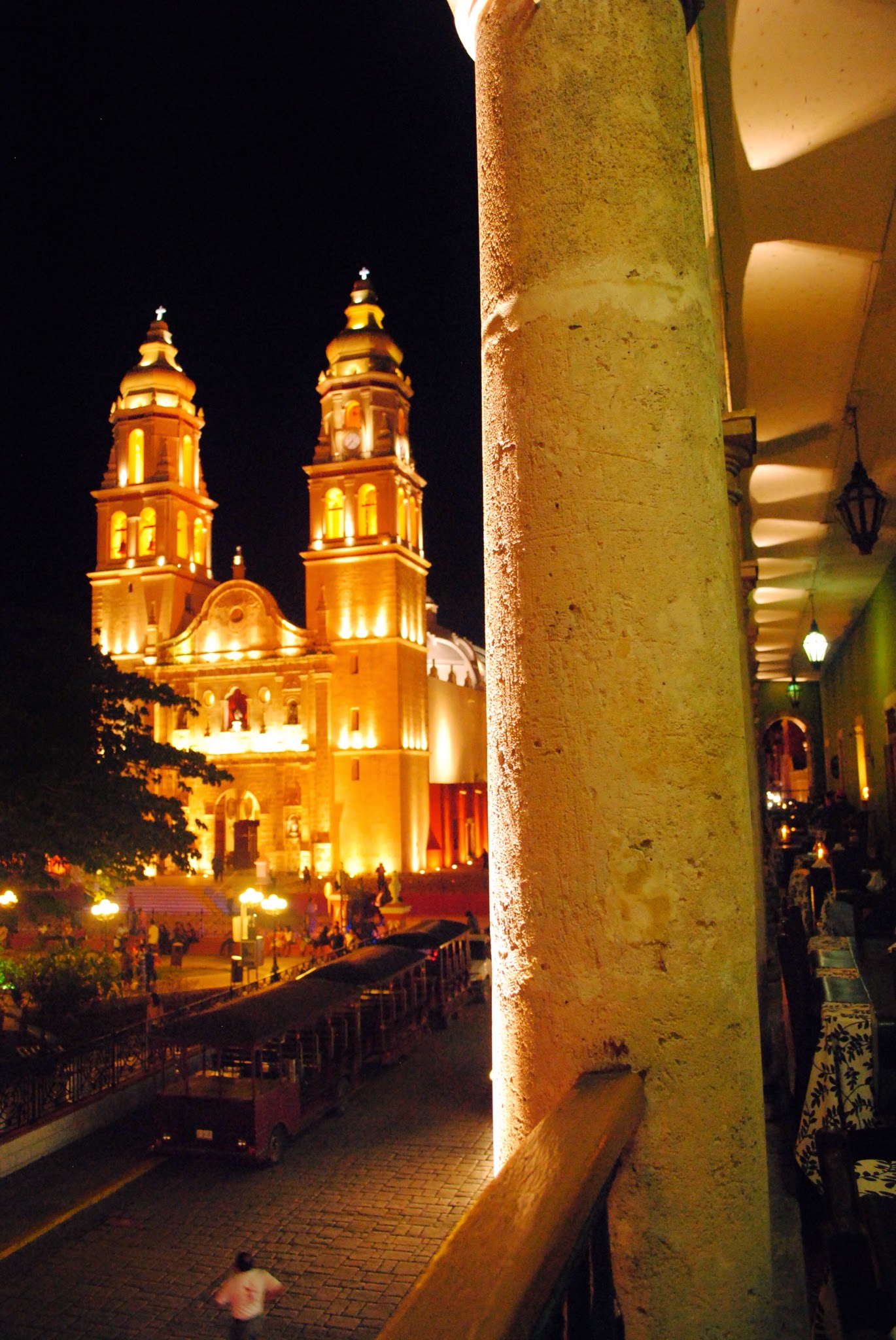
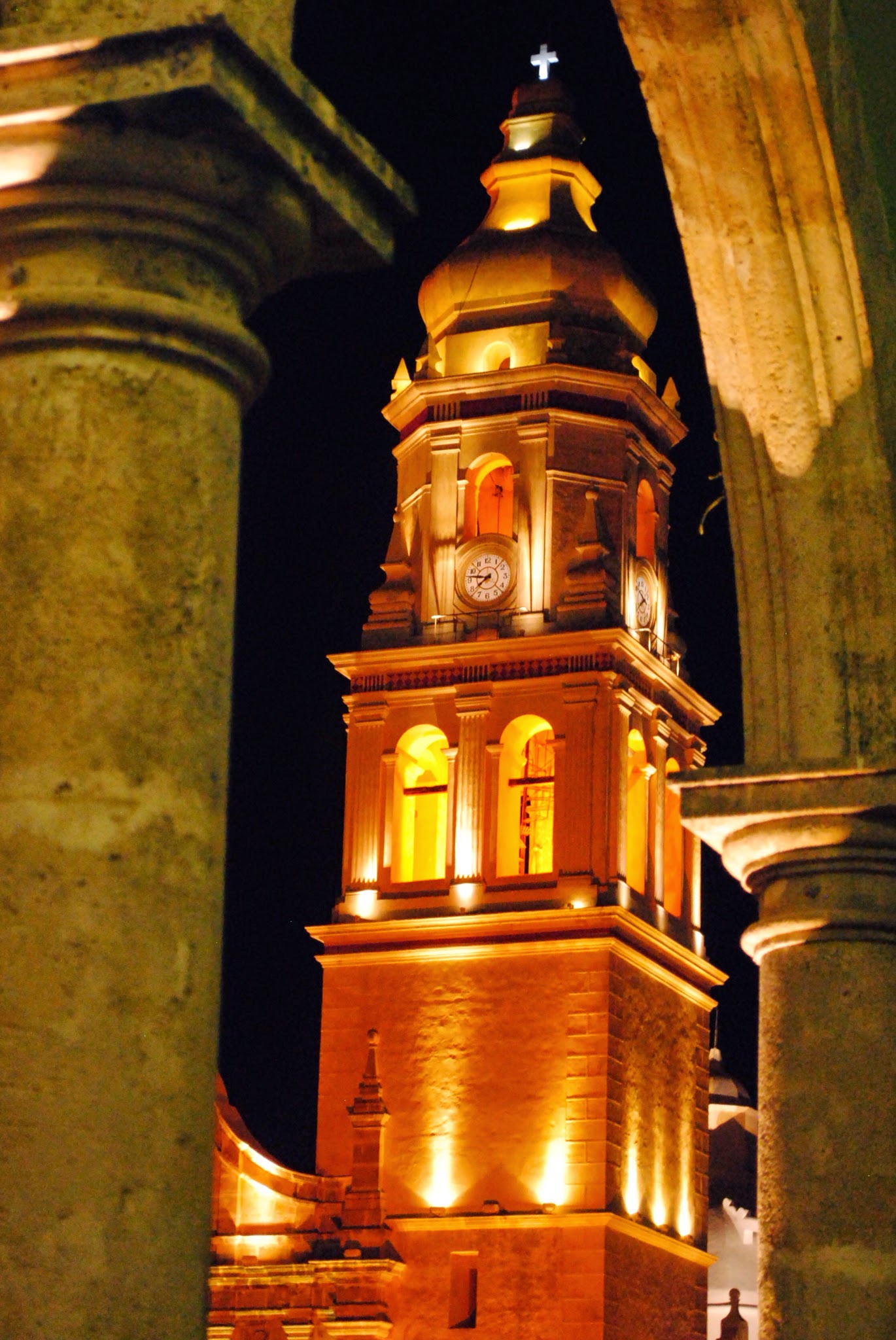
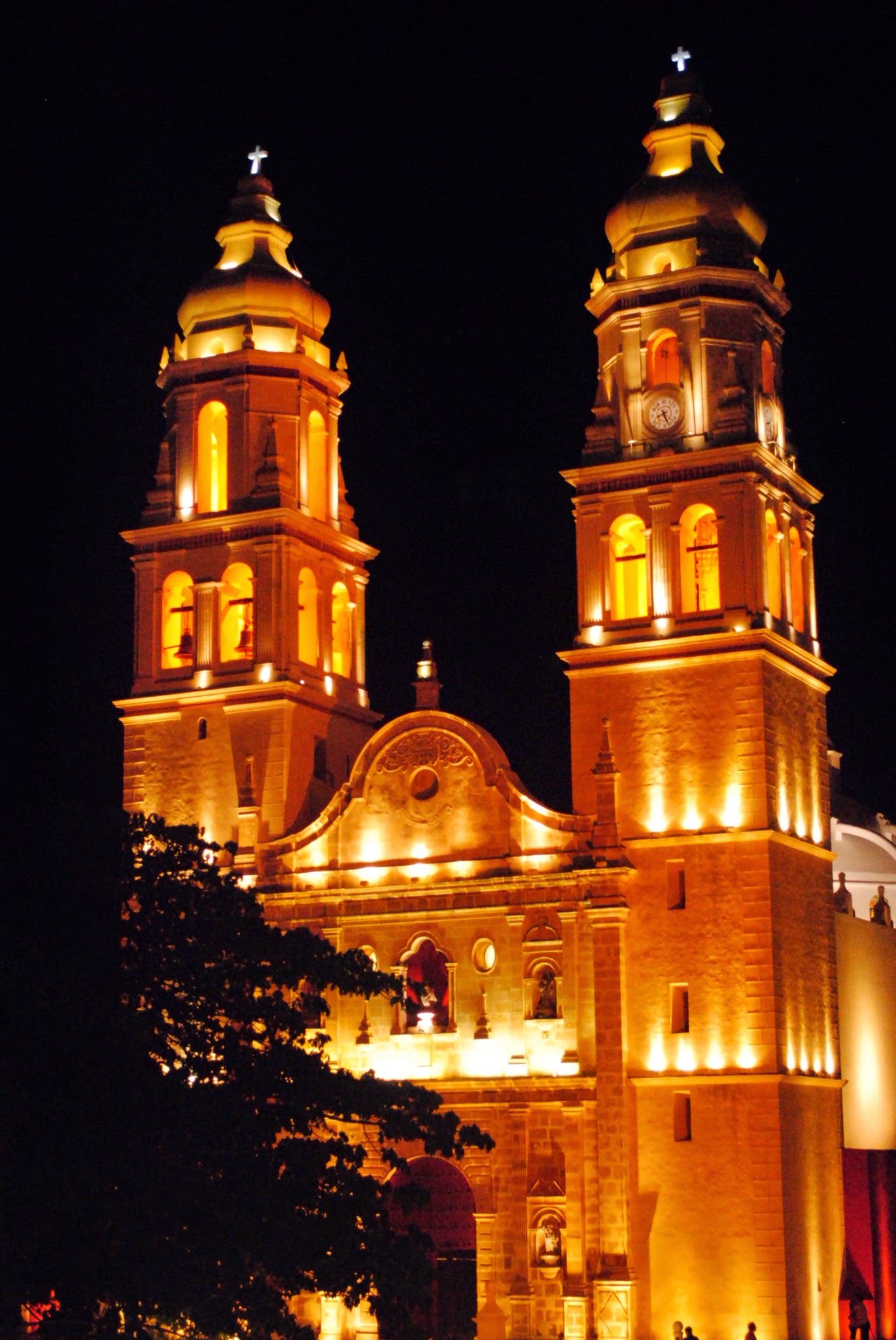
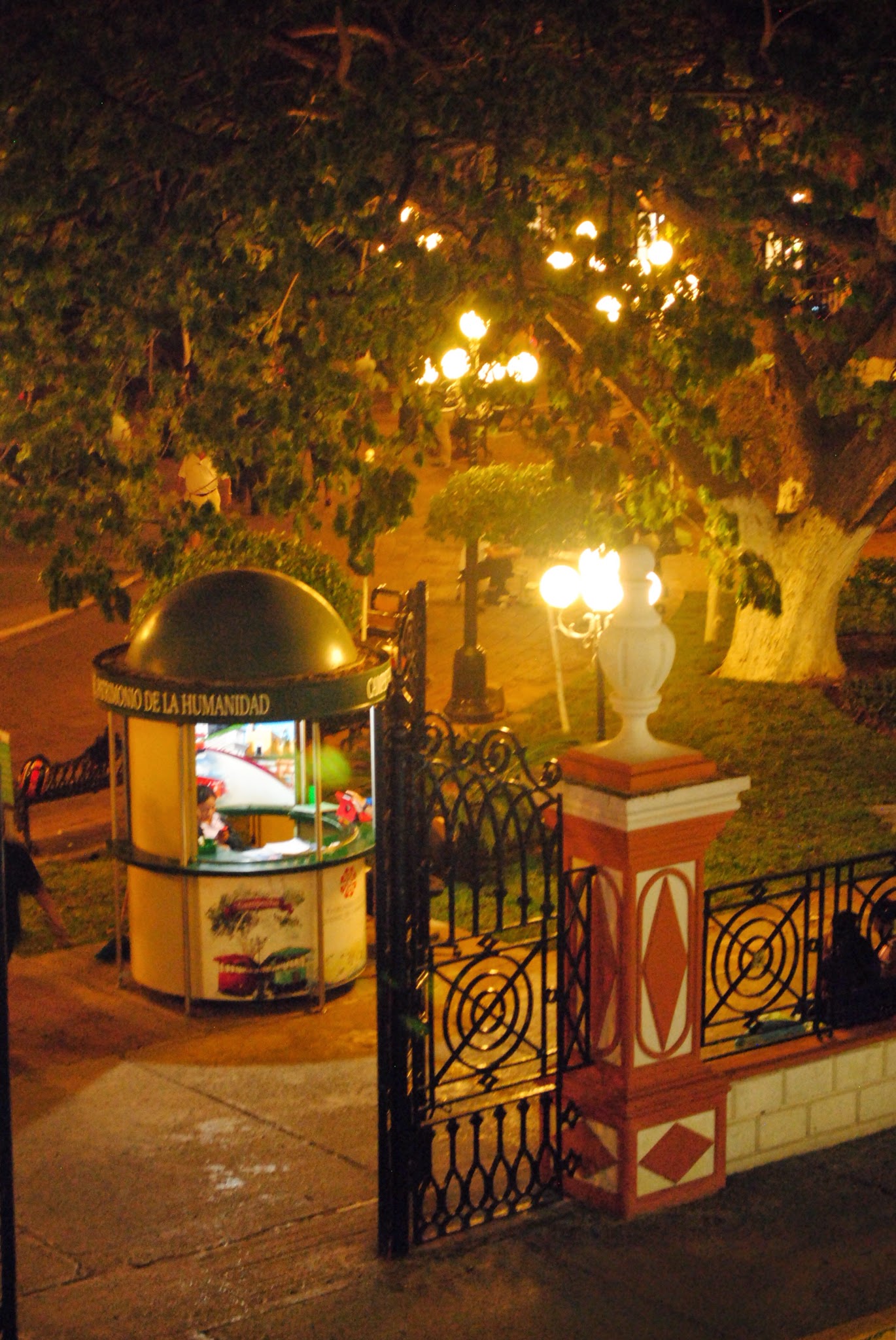
The city of Campeche is a UNESCO world heritage sight. A walled city it necessarily became a fortress to fend off pirates and enemy armies. We stayed in a beautiful old colonial hotel a block off the main square. Tiled floors, high ceilings, open courtyard and long slender french windows overlooking the street made for a comfortable stay. The Campeche Malecon is beautiful and since it is outside the old city walls it is much more modern area. Inside the walls is another story. On the evenings that we were in Campeche, a laser light show was beamed onto the arched walls of the colonial commisario. It told the story of Campeche from prehistoric times to modern days. The visuals were designed to fit snuggly in the arches and on the front of the building, with brilliant colors and playful transitions, it was really entertaining. Folding chairs were set out earlier for the crowd that would come to watch but by the time we arrived the first night it was standing room only.

Also in the main square we watched as a group of mainly women set up for bingo. Instead of letters they use pictures which dates back to a time when literacy rates were lower. Every bit as voracious as the bingo ladies at home, they ranand grabbed at the folding chairs and tables before the delivery man could even set them down, he looked a tad fearful as they lunged at the chairs

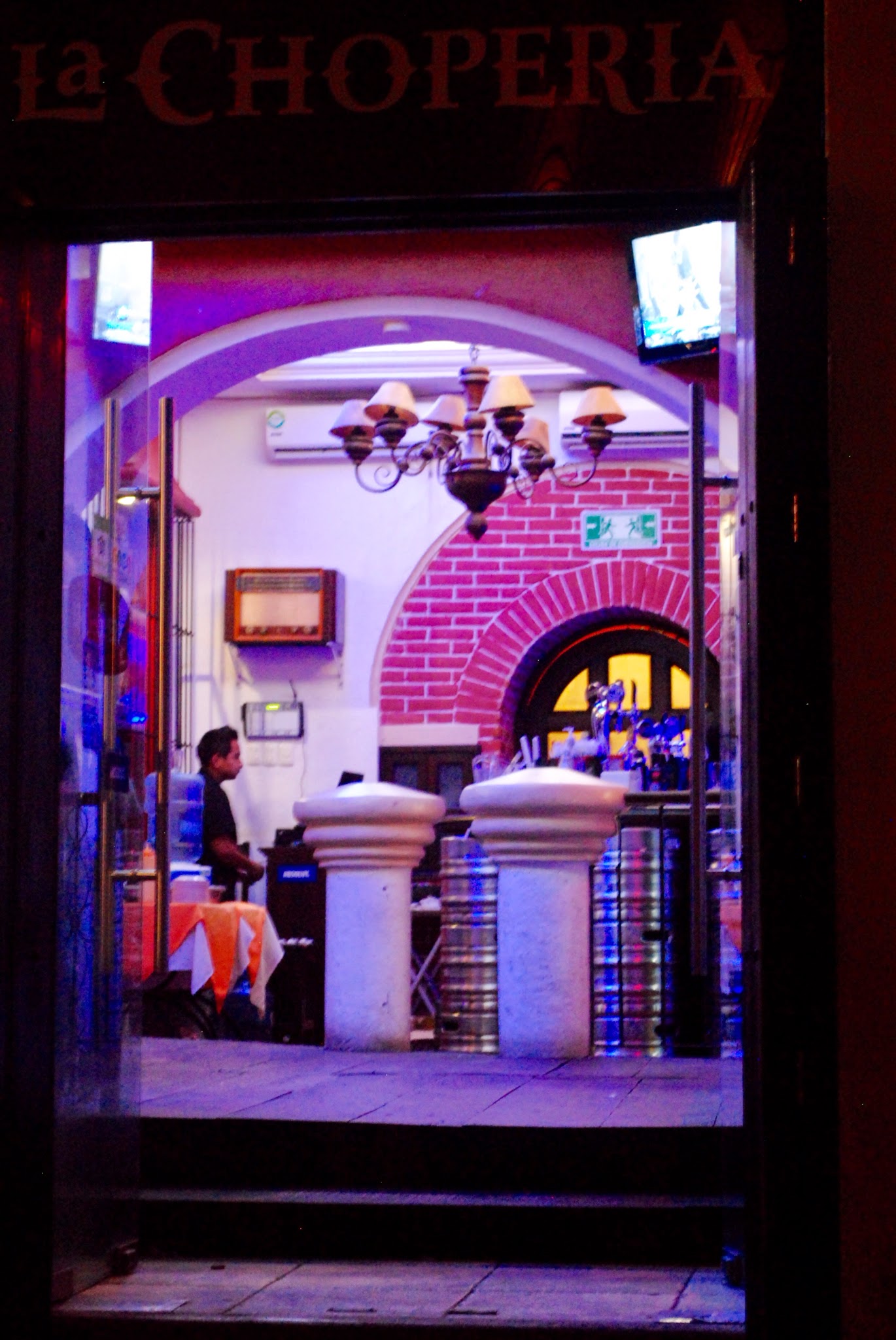
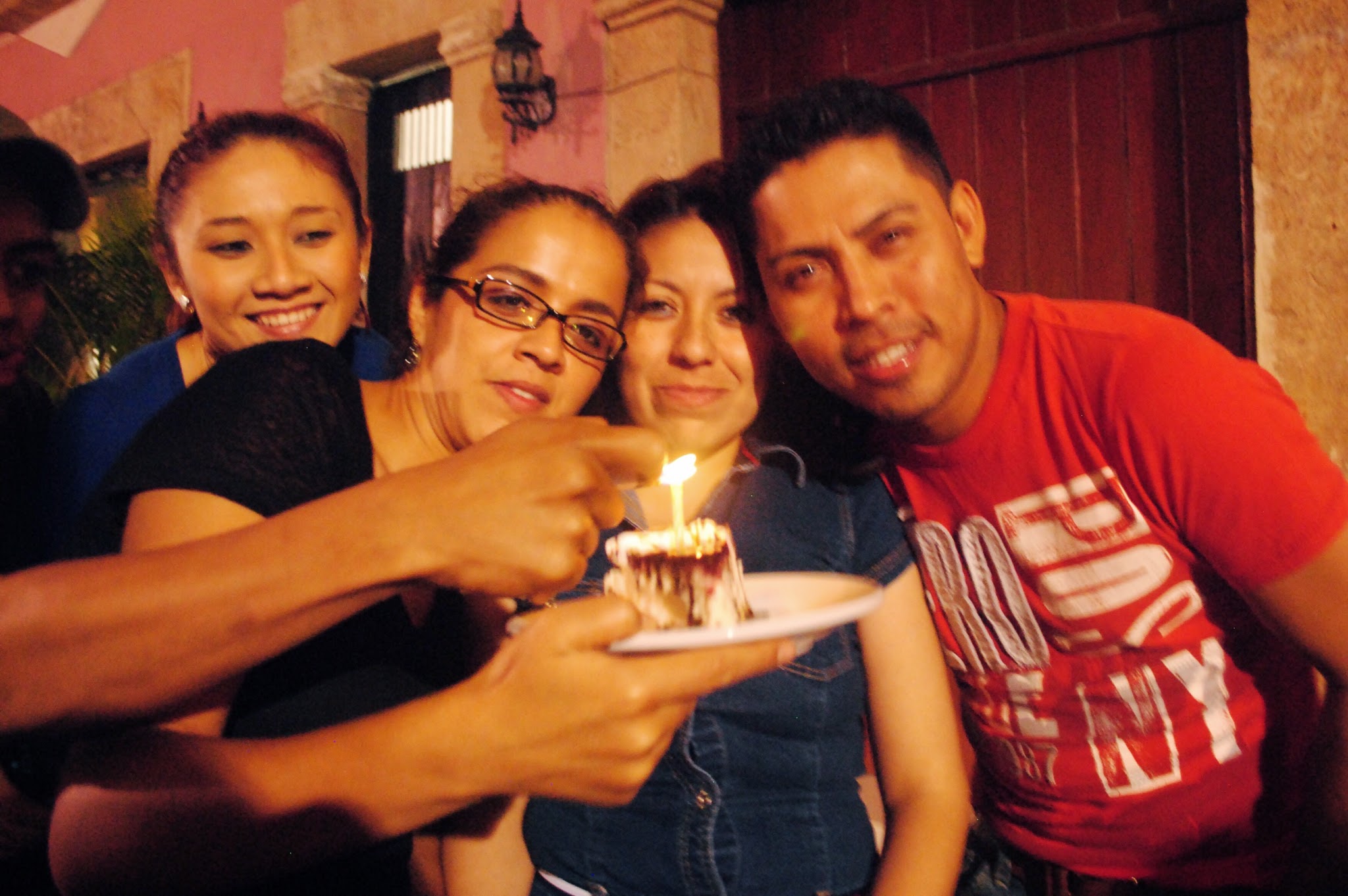
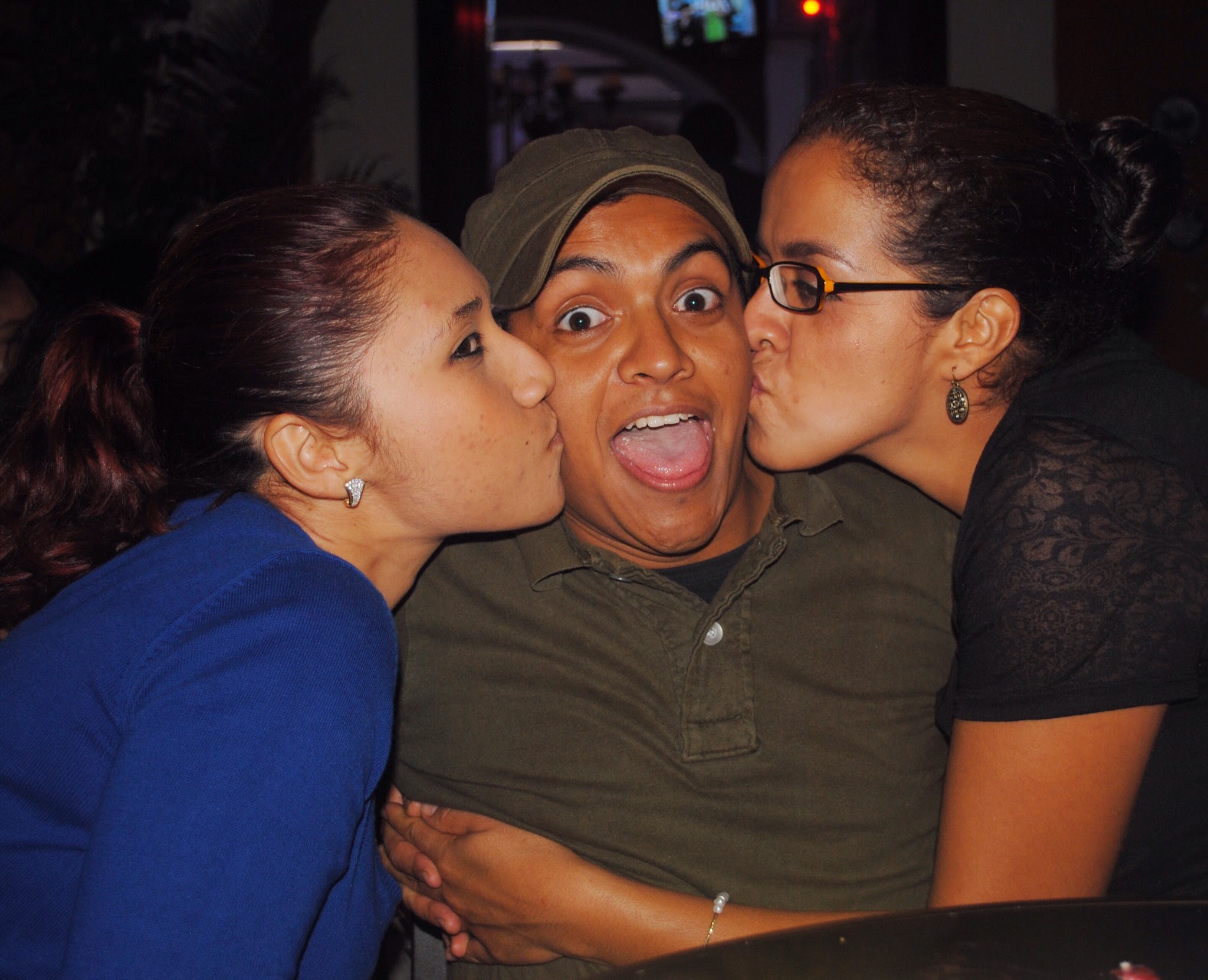
On night two we viewed the show from the balcony of a restaurant overlooking the square. Inside the restaurant was brimming with kitchey antiques. Later at our hotel bar we met a group of young Mexicans who were great fun and very interesting. Most of them work in health care, a doctor, nutritionist, hospital administrator with a couple of teachers and a lawyer thrown in for good luck. We have all become fast friends on facebook and will likely visit with them when we return to Mexico in April.

Yucatan: Day Trips Around Progreso

Ruins, cenotes, pueblos, lagoons, haciendas and miles of beautiful beaches…..

Christmas and New Years have come and gone and my friend Tom from Vancouver has arrived to join me before we fly to Havana for a month of Spanish Language classes at the University of Havana. Now an expert at renting cars and friendly enough with Louis at Avis in the Fiesta American to get a “free” second driver rate, Tom and I spread our wings and spent several days exploring the sights around Progreso. The Coast Road which runs east to west along the Gulf is a great highway that skirts the lagoon on one side and the beach on the other. In one day there are many things to see and do.

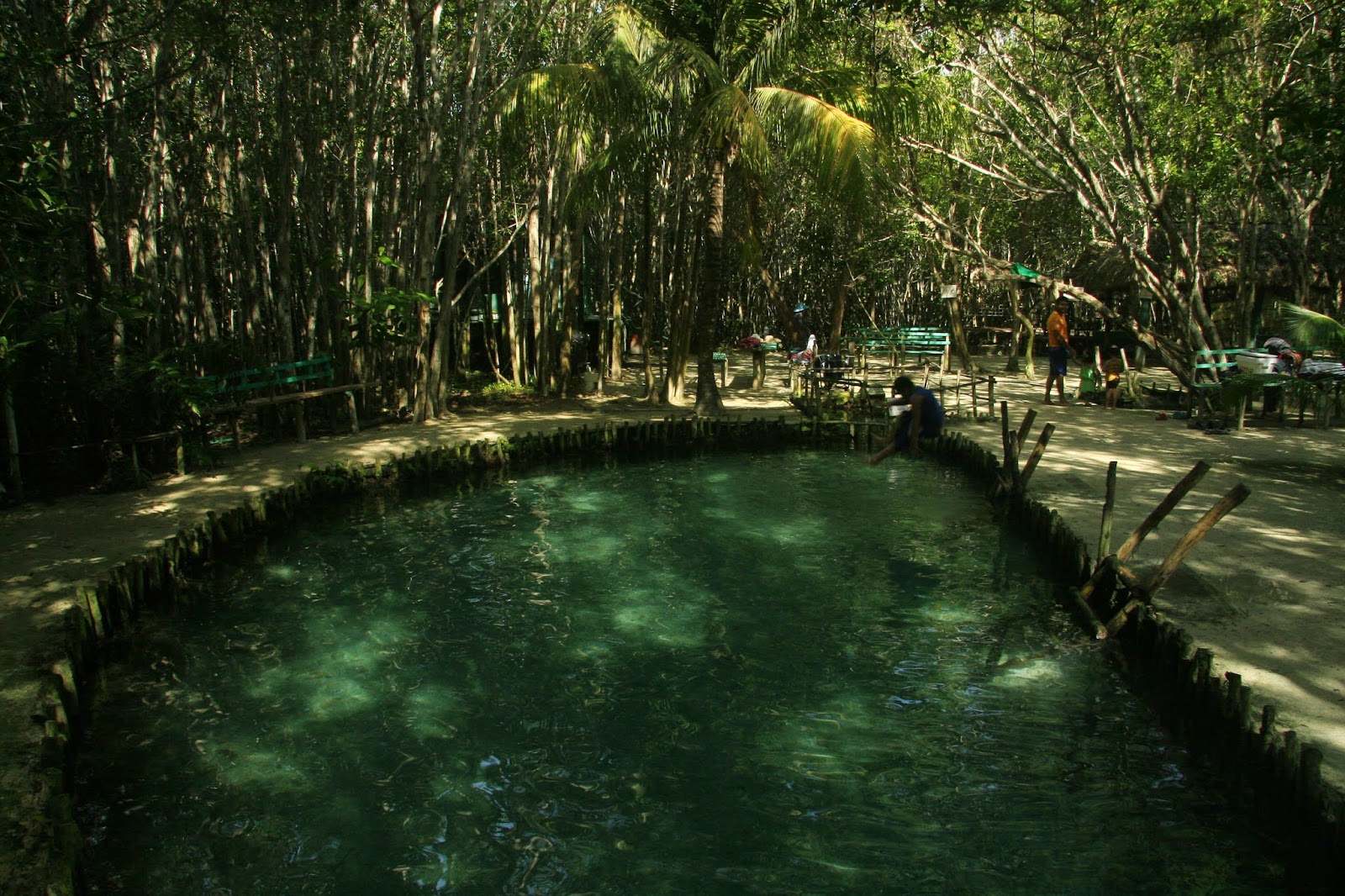
Cenote – Photo by Thomsonclair

Cenote – Photo by Thomsonclair

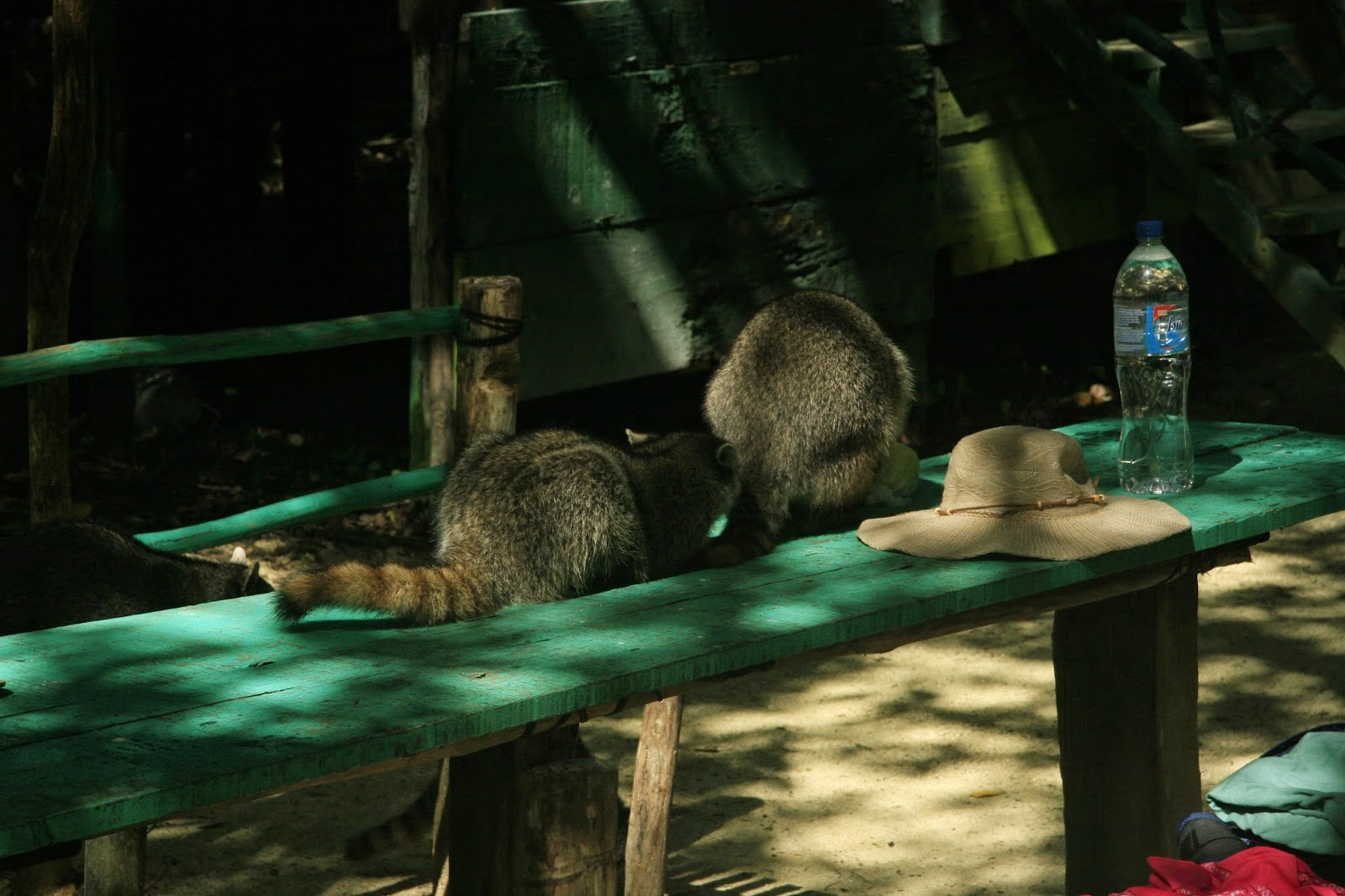
Do not leave your lunch unattended! – Photo by Thomsonclair


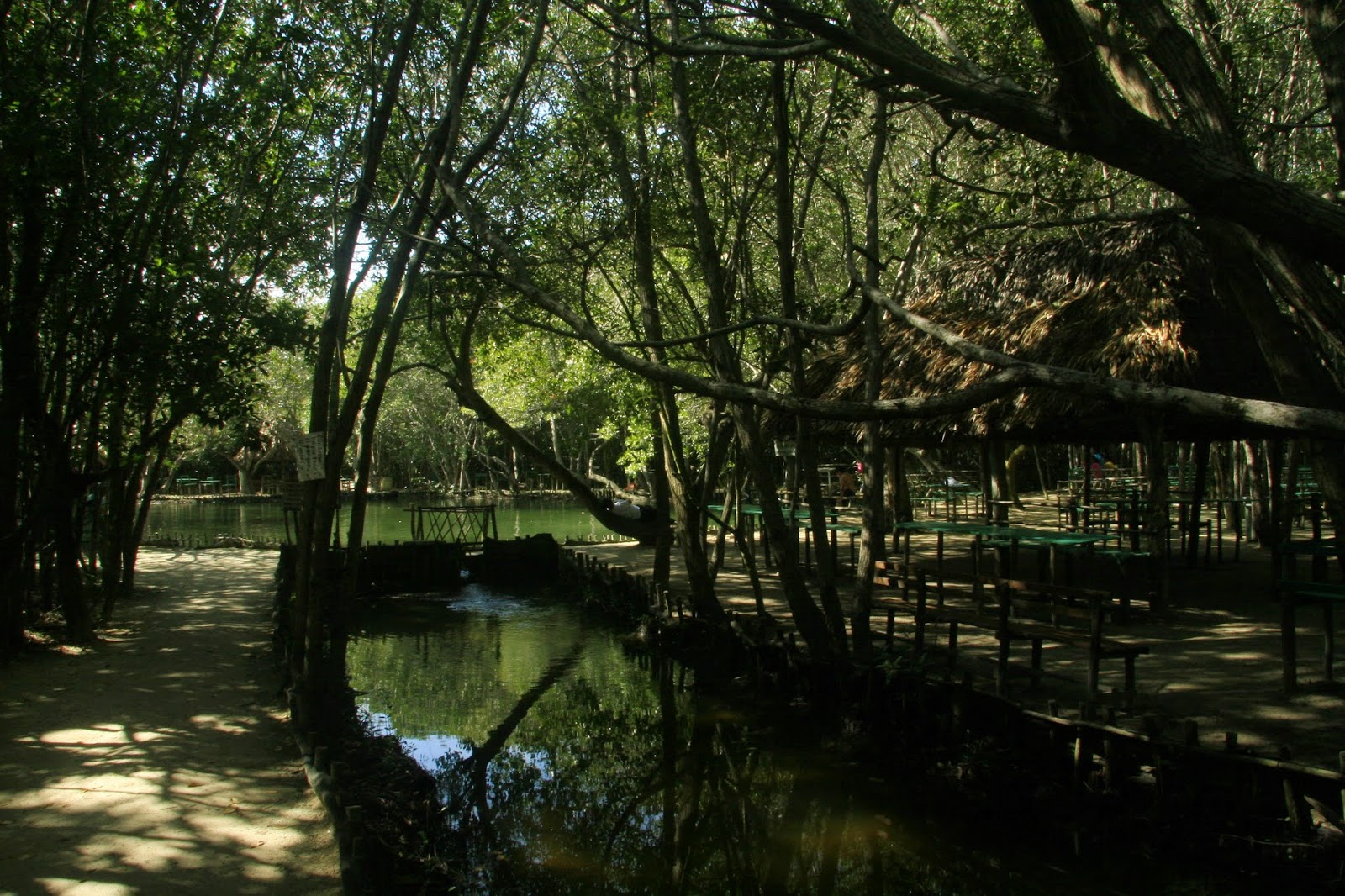
We started our Coast Highway tour heading east out of Progreso, with a stop just minutes outside of town at El Corchito. A palapa hut sits along the lagoon beside the highway to mark its access and for about 35 pesos you are ferried across the lagoon and into the mangroves where you are dropped off to swim in several cenotes. The water is fresh and warm and there are always raccoon, coati and bird life in the mangroves. On occasion if you are very lucky you will spot a crocodile. 

For the keener, there is an explanation of cenotes below, straight from the Frommers guide book, Cancun and the Yucatan.

Portals to the Underworld

The Yucatan Peninsula is a flat slab of limestone that Millions of years ago absorbed the force of the giant meteor thought o have extinguished the dinosaurs. The impact sent shock waves through the brittle limestone, creating an immense network of fissures that drain rainwater away from the surface. The vast subterranean basin, which stretches for miles across the peninsula, is invisible but for the areas many cenotes – sinkholes or natural wells that exist nowhere else in nature. Many are perfectly round vertical shafts, others are in caverns that retain a partial roof, often perforated by tree roots. To the Maya, they were passageways to the underworld. Indeed they look sacred. Quiet, dark and cool, they are the opposite of the warm, bright world outside.


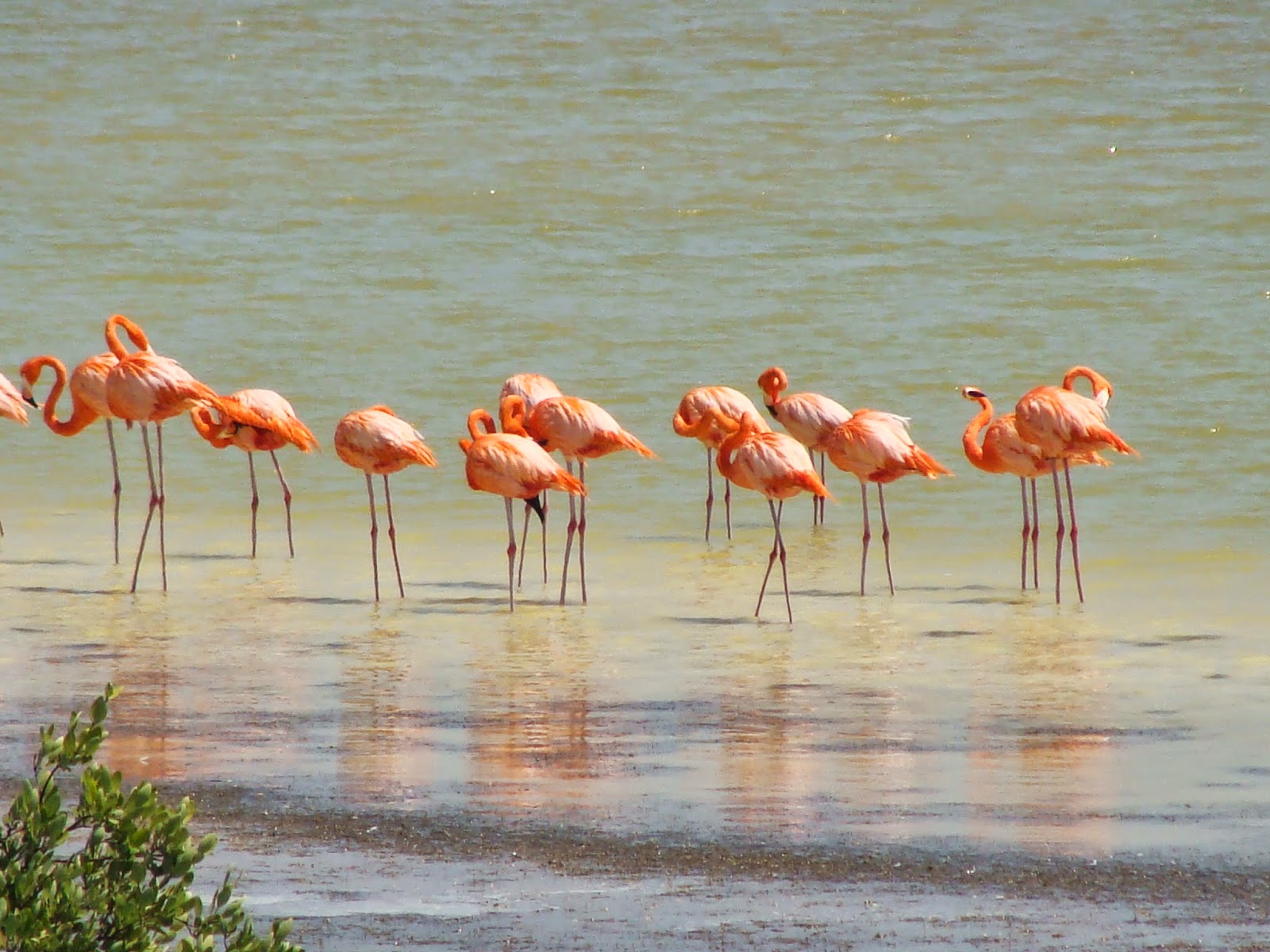
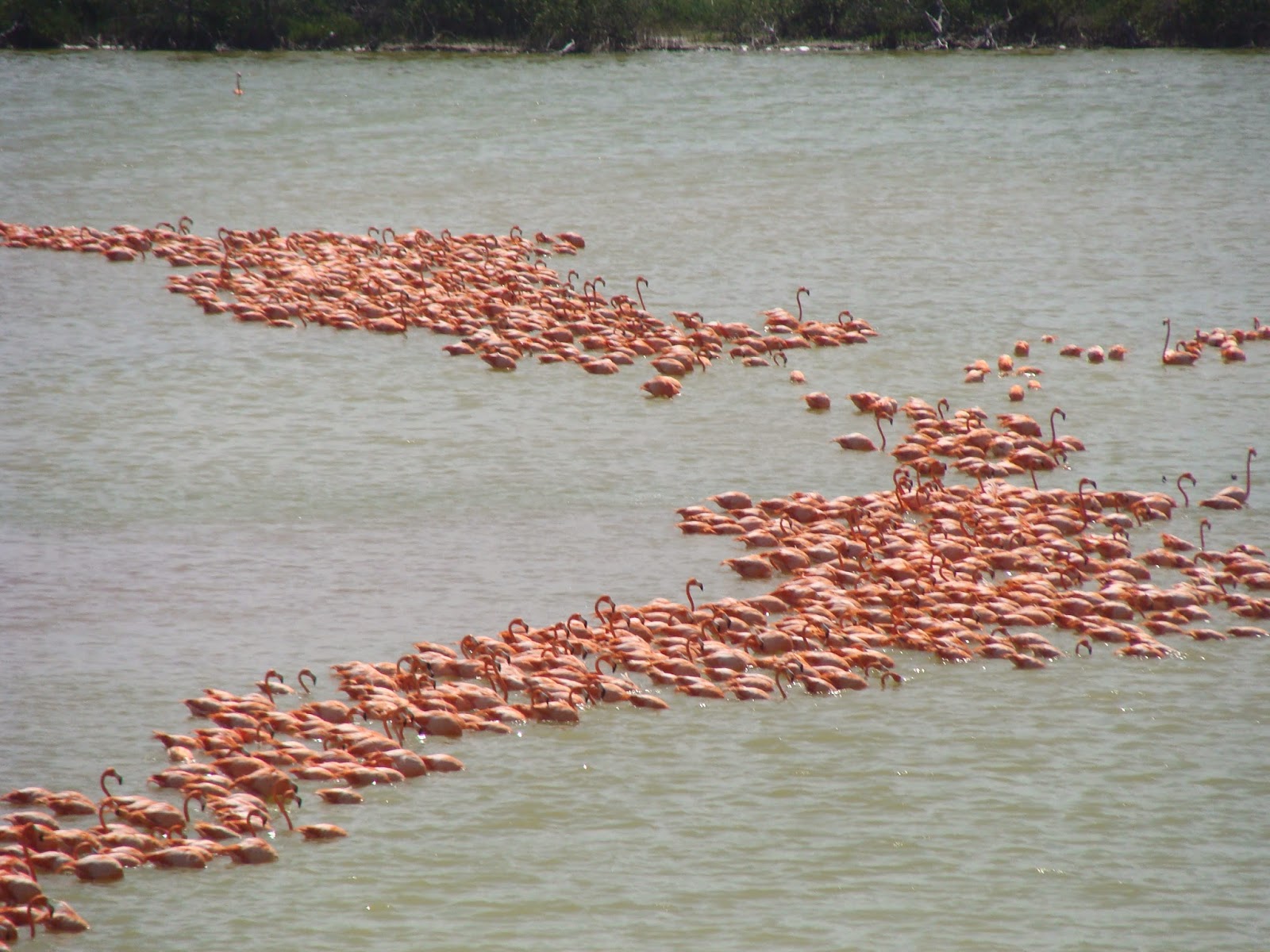
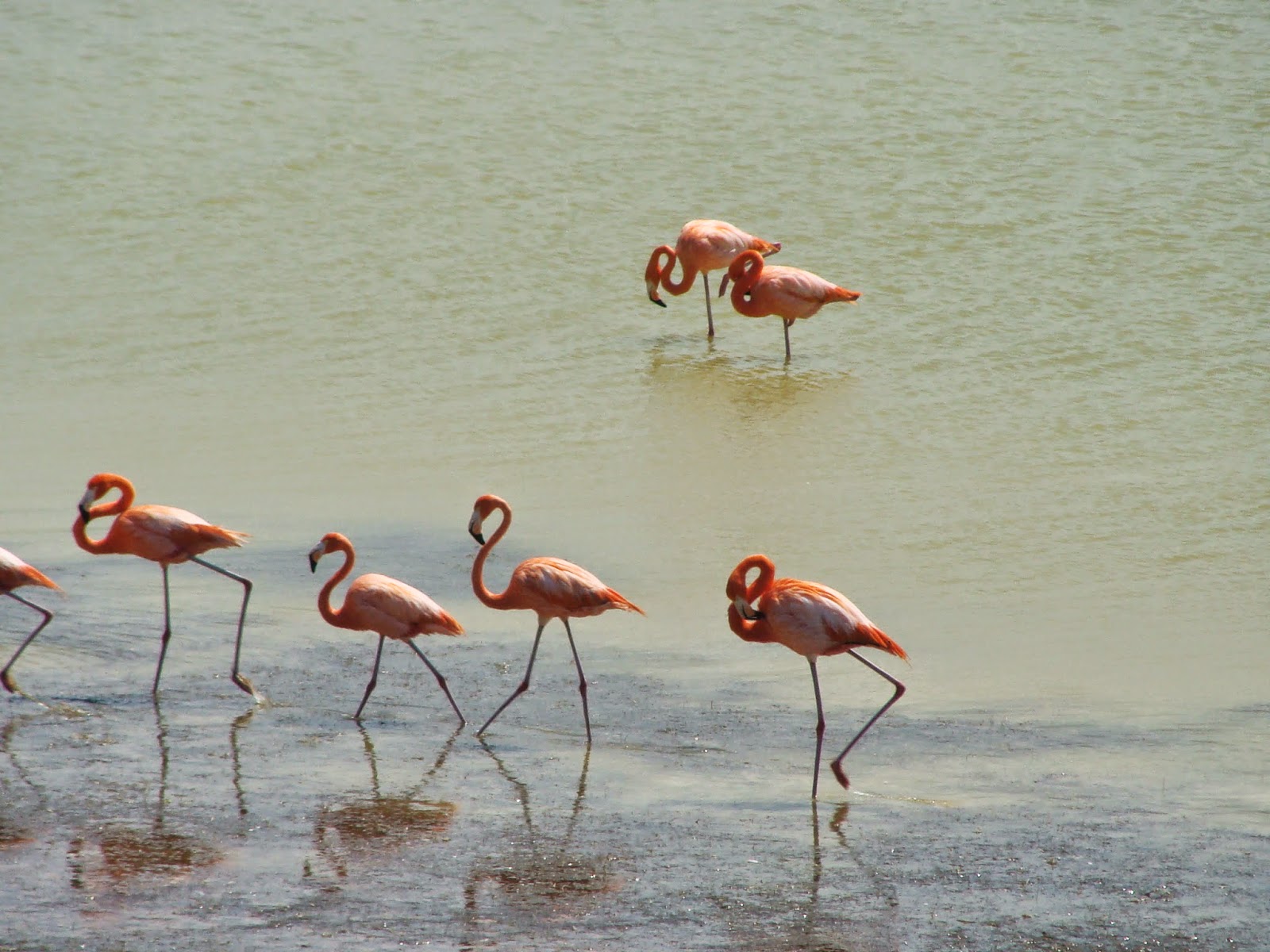
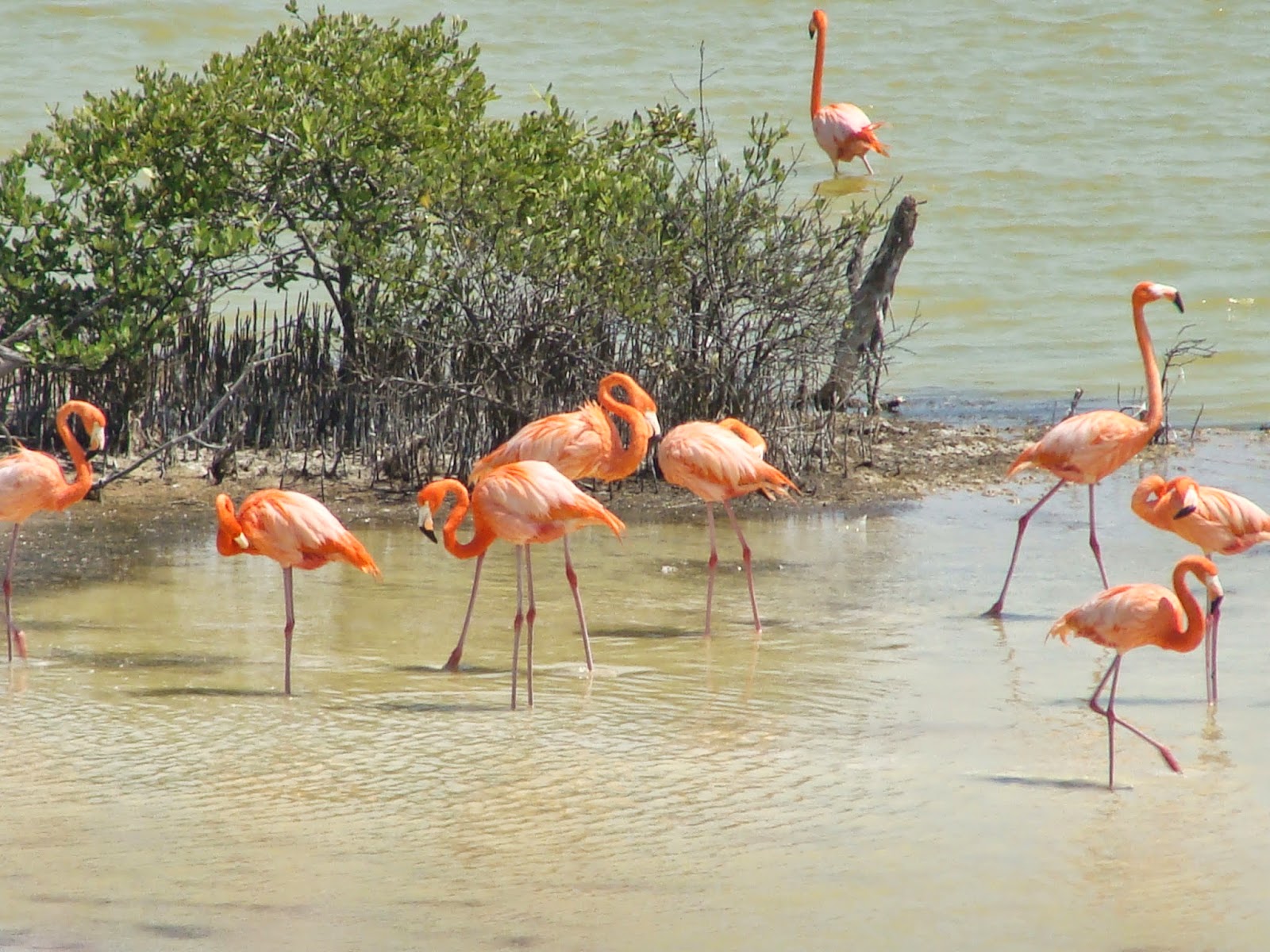
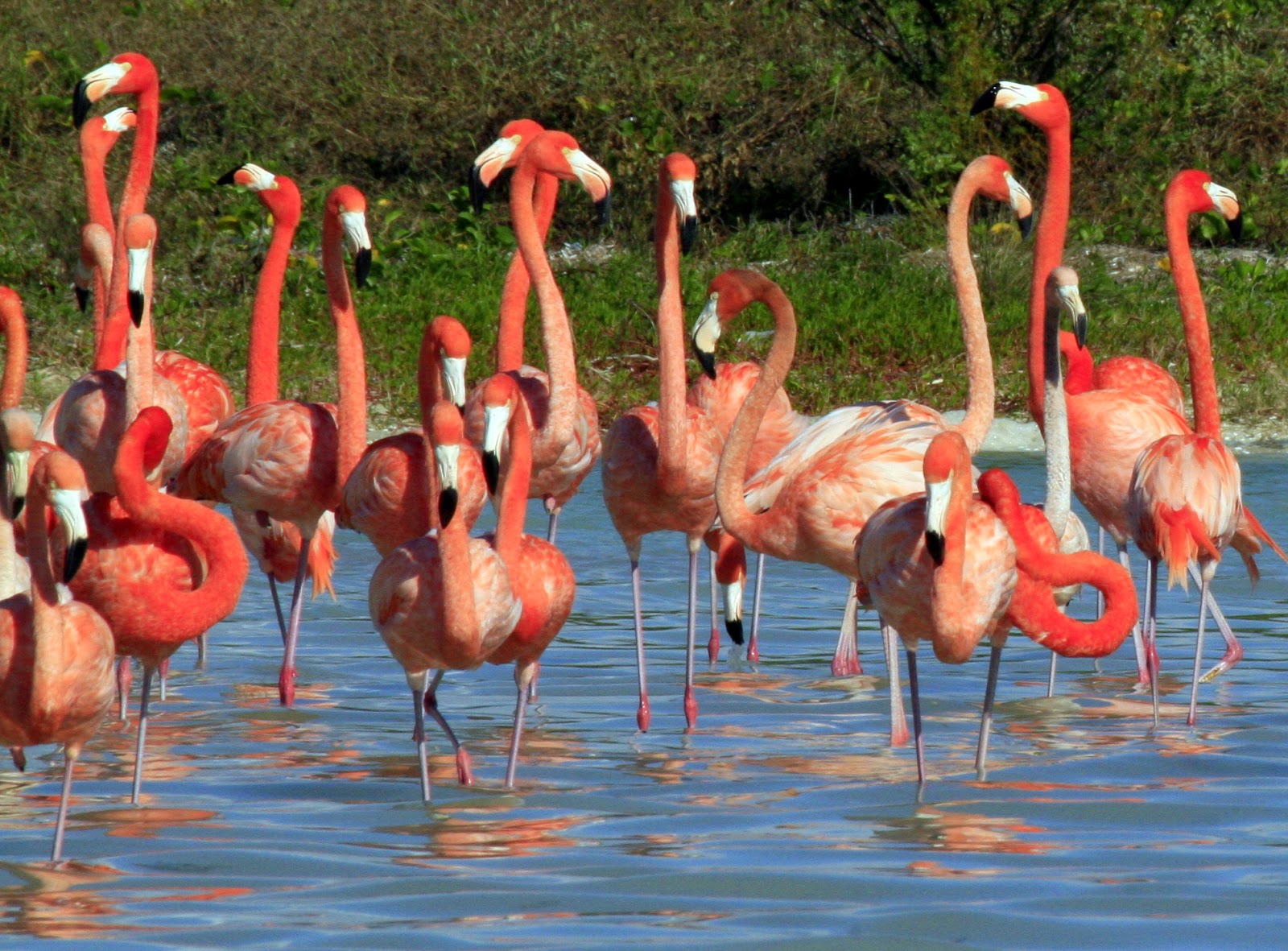
Carrying on east along the coast highway, you will come across an observation tower built for watching the flamingos. Parading endlessly bank and forth in stick like fashion, creating great cacophony with their honking; serving a purpose known only to them. If enough of them have their head and necks extended they look musical notes prancing on a treble clef. Apparently they are pink because of the amount of shrimp they consume and the older they are the pinker they get. Of course they are not the only bird to be spotted in the mangroves; there are also heron, ibis, etc. but the flamingos seem to draw the biggest crowd.

About 36 km down the highway is the turn off to Xcambo, a Maya ruin; and right at the turn is a natural salt deposit in the bottom of the lagoon. You can wade into the lagoon, bend down, dig into the sandy bottom and grab a fist full of pink salt. Xcambo which in Maya means “the place of the crabs or crocodiles” is a large ruin but has only been partially restored so seems much smaller than it really is. To complement the pyramids and to give a touch of irony, there is a Catholic chapel. Xcombo was occupied from 150 to 300 AD according to archaeologists and was important because it provided salt to the surrounding Maya cities. Not one of the more famous ruins it is a pleasure to visit because you can get up close to everything and do not have to fight the crowds or the hawkers.

Back in the car and back to the highway, we continued east to the small Port of Telchac just in time for lunch. A favorite outdoor restaurant, with somewhat fading Christmas decorations, serves ceviche de camarones and cold beer. After lunch its a good idea to beat the heat with a swim at the beautiful white sand beach just a few streets behind the restaurant which is often deserted except for the seabirds. 

The highway back to Progreso has a turn in for Chicxulub, the small town east of Progreso. It is known for its large market on Thursdays, beautiful beaches, a colorful pier and being the site of the meteorite strike some 65 million years ago. In fact Chicxulub is Maya for “tail of the devil”.

In the other direction from Progreso along the Coast Highway are fishing villages of Chuburna and Chelum. On the way you will see the harbour with its many marinas and a large bridge over the Laguna Chelem. Rents are a little cheaper on this side of Progreso so there are lots of expats who buy or rent the pretty brightly coloured casas that line the beaches.

Mexico – Yukatan: Road Trip to Celestun

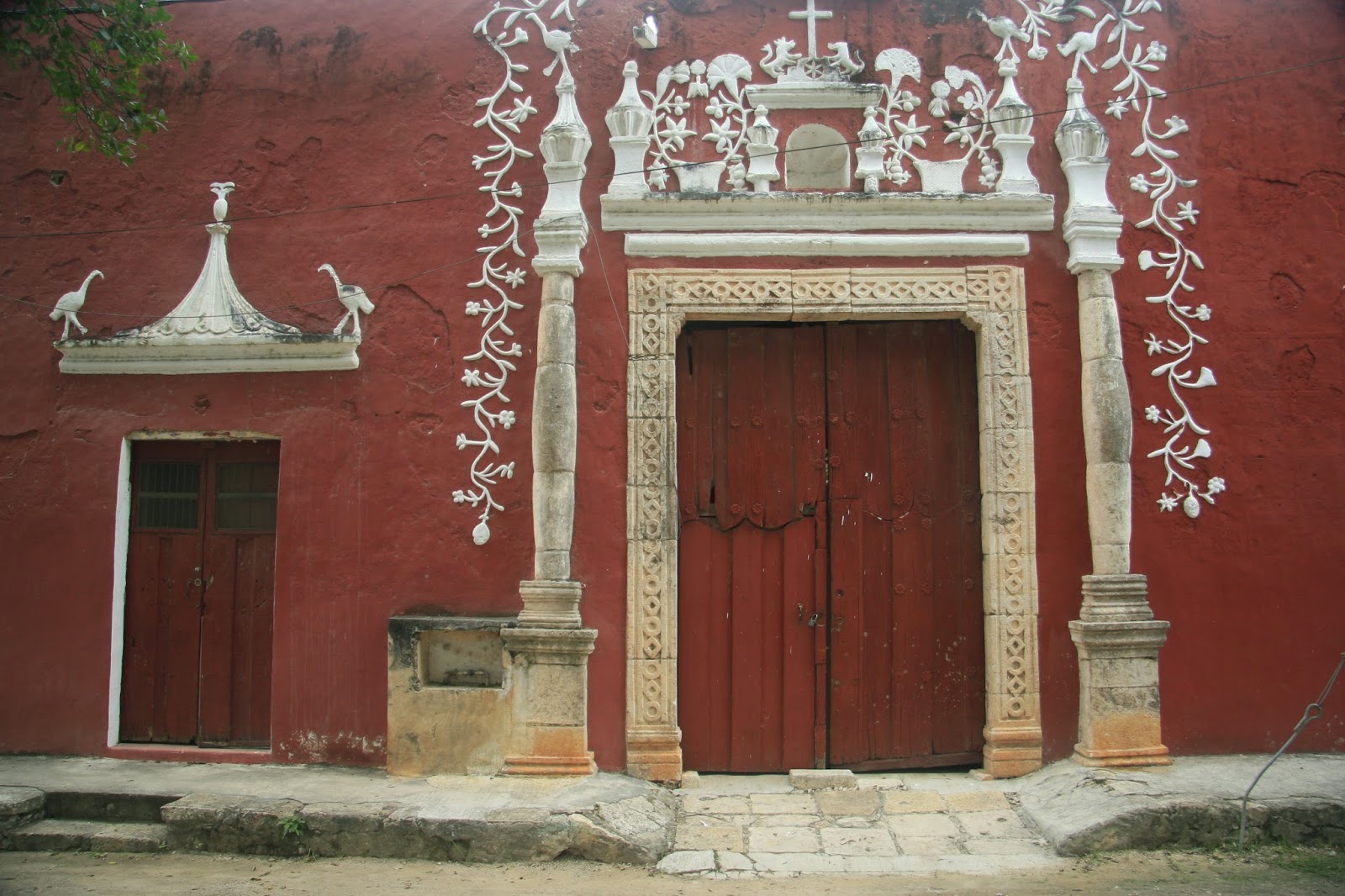
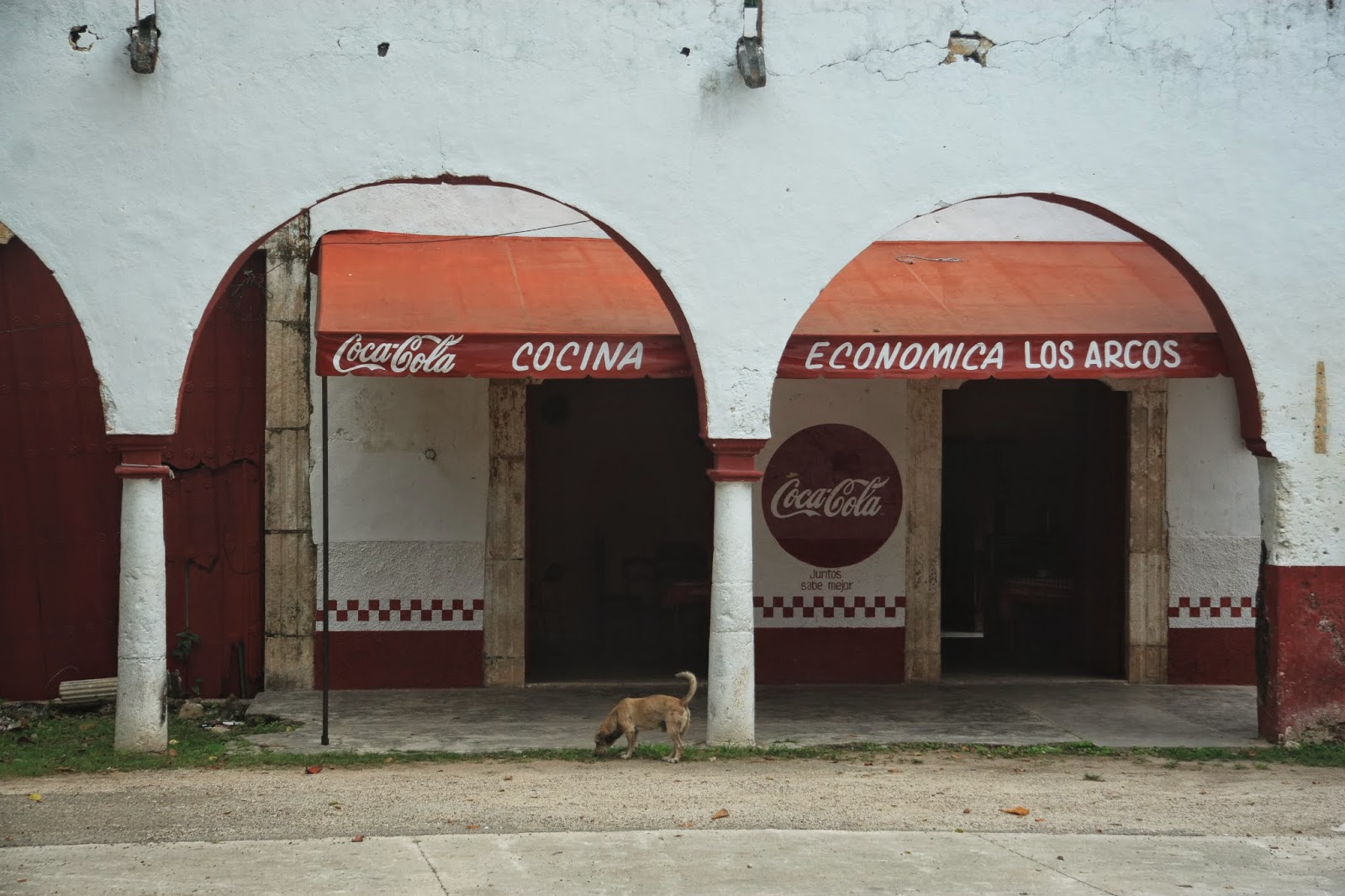
Celestun is a good two hour drive from Progreso and if done right takes a whole day. You can take a bus from Merida but since we had the rental car, we drove southwest from Merida through the pueblos of Uman and Kinchil. I love the pueblos. Although everyone of them has a main square with a park, a church, a commisario, schools and a commercial area they are decidedly unique and each one has a look that distinguishes it from the next.Sometimes it’s the colours, the state of the streets and buildings, sometimes it’s the people and sometimes it’s the church. In everyone of them, you will see people going about their business, children coming and going from school, teens playing soccer or basketball and if you drive through at night you will see the pueblos come to life with light, sound and people walking and visiting. Must not forget the peros, for the dogs are as much a part of the scenery as the people and on close observation appear to have purposeful pursuits just like their human counterparts. It is well worth stopping, parking and walking around the square in the pueblos, often you will be asked where you are from or you will find a unique little shop or a cafe with delicious Yucatano food that you might not otherwise have discovered. Of course any semblance of main road dissolves as you enter the pueblo and soon you are driving circles around the square looking for the way out of town as signage is sometimes at a minimum.

Main Square – Pueblo Convent  Photo by Thompsonclair

Pueblo Tiendas – Photo by Thompsonclair

Setting up the fair in a Pueblo – Photo by Thompsonclair

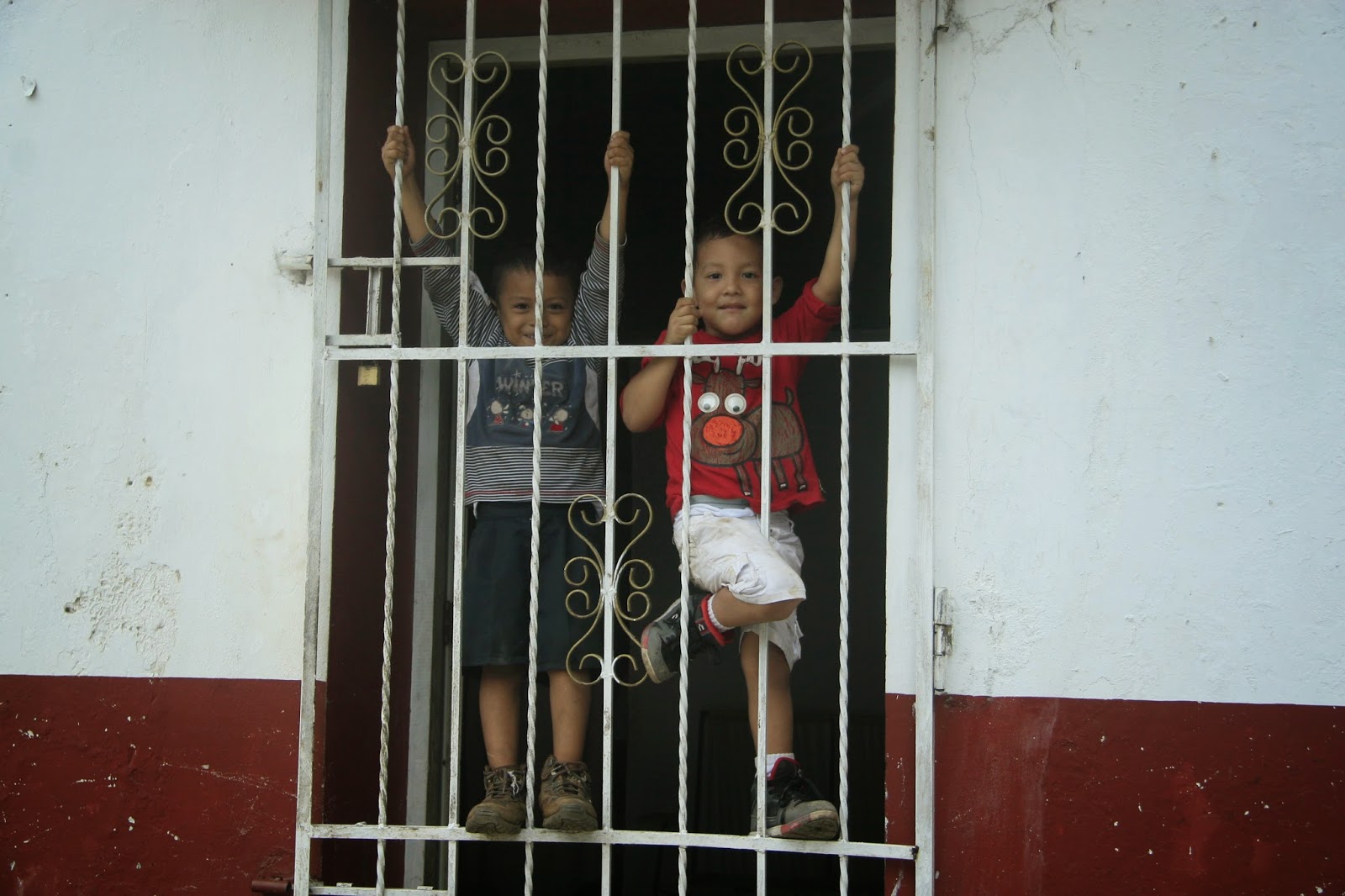
Climbing the walls – Photo by Thompsonclair

Schools Out in the Pueblo – Photo by Thompsonclair

Delivery truck in the Pueblo – Photo by Thompsonclair

Old Convent Walls in Pueblo – Photo by Thompsonclair

Every Pueblo has a Church – Photo by Thompsonclair
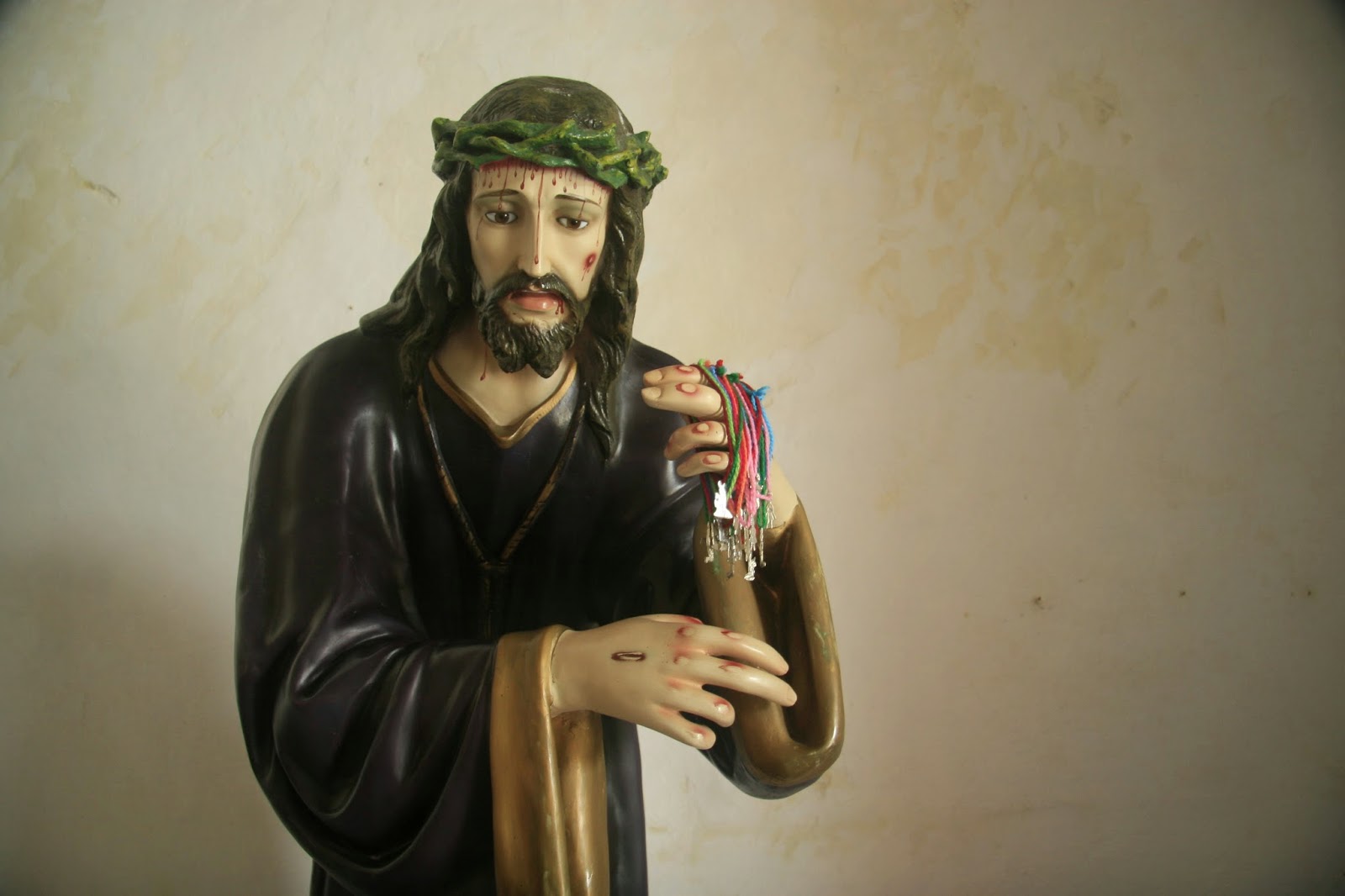
Every Church has a Jesus… – Photo by Thompsonclair

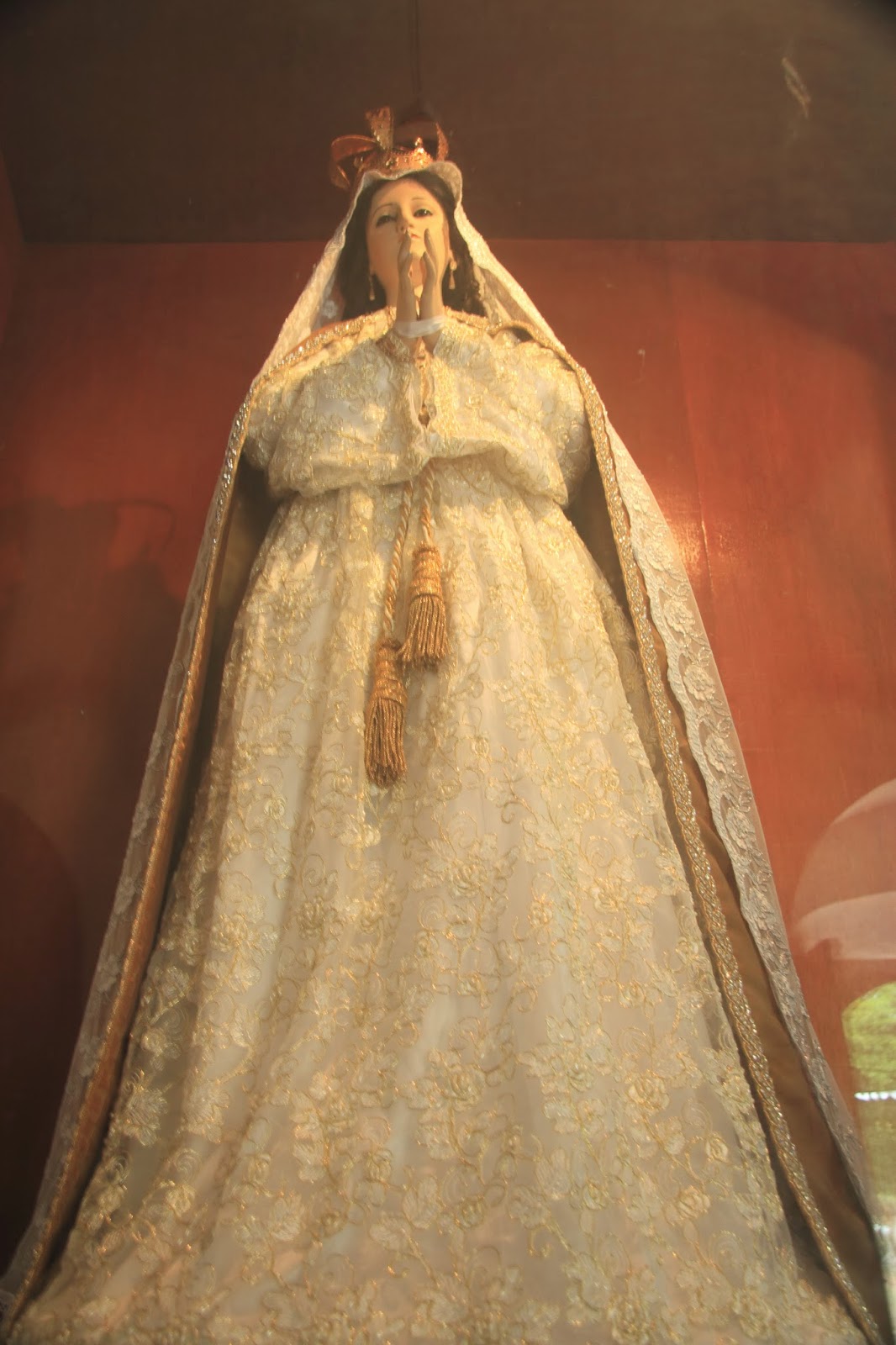
…And a Mary – Photo by Thompsonclair

A Deluxe Taxi – Photo by Thompsonclair

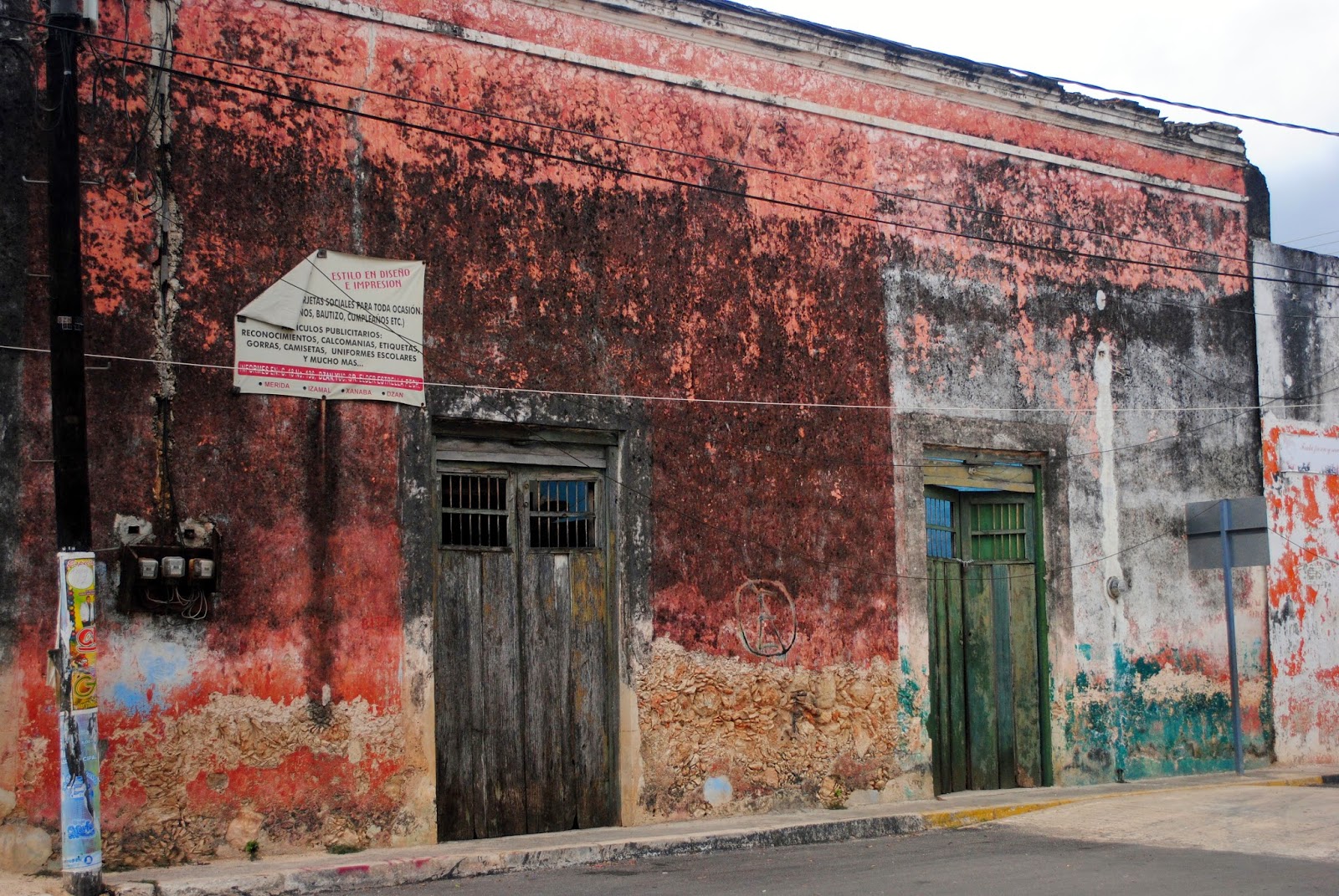
If the walls could talk


On to Celestun, slowed only by curiosity and the multitude of  topes (speed bumps) and what awaits when you arrive is worth any effort to get there. Celestun is in the Parque Natural Ria Celestun and is where you head for a really close up look at the flamingos as the park is a nesting grounds. When you drive into Celestun if is easy to find the beach where you can have lunch at a beach cafe and where you can find a boat to take you down the coast a ways and into the ria to visit the mangroves. The boat trip is not expensive if you wait to get to the beach in the main town and you are willing to go with five or six others to see the ria. 
Flamingos in Parque Natural Ria Celestun – Photo by Thompsonclair

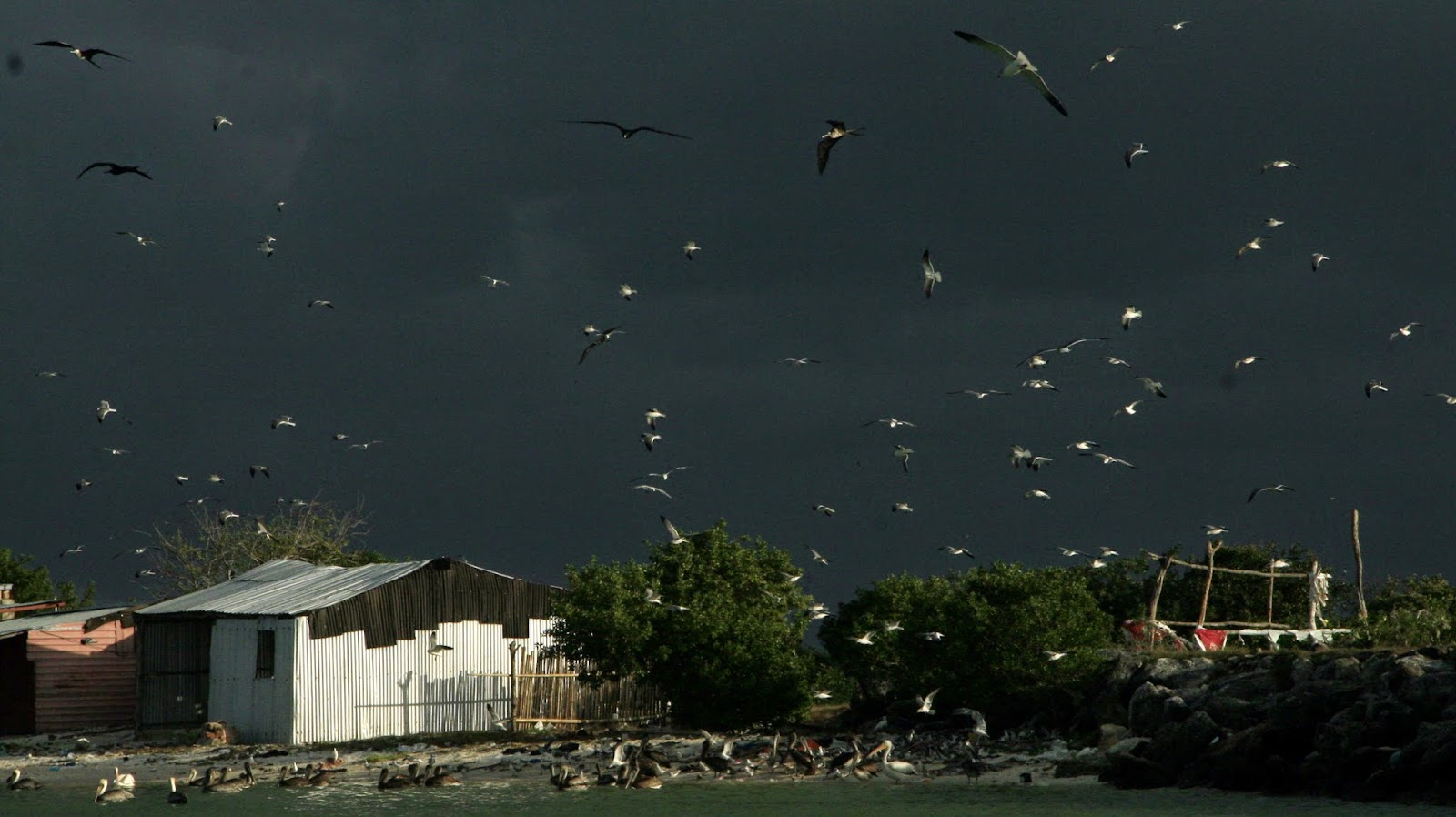
 Along the way bird life abounds so bird-lovers are going to like this trip. In addition to beautiful scenery and lots of birds we were lucky enough to see a crocodile, camouflaged and snuggled up against a mangrove tree. He hung about for some minutes before he decided to pay us any attention, even though we were feet away in the safety of the boat. When we finally did seep into his awareness he causally gave a look and slid away into the water.

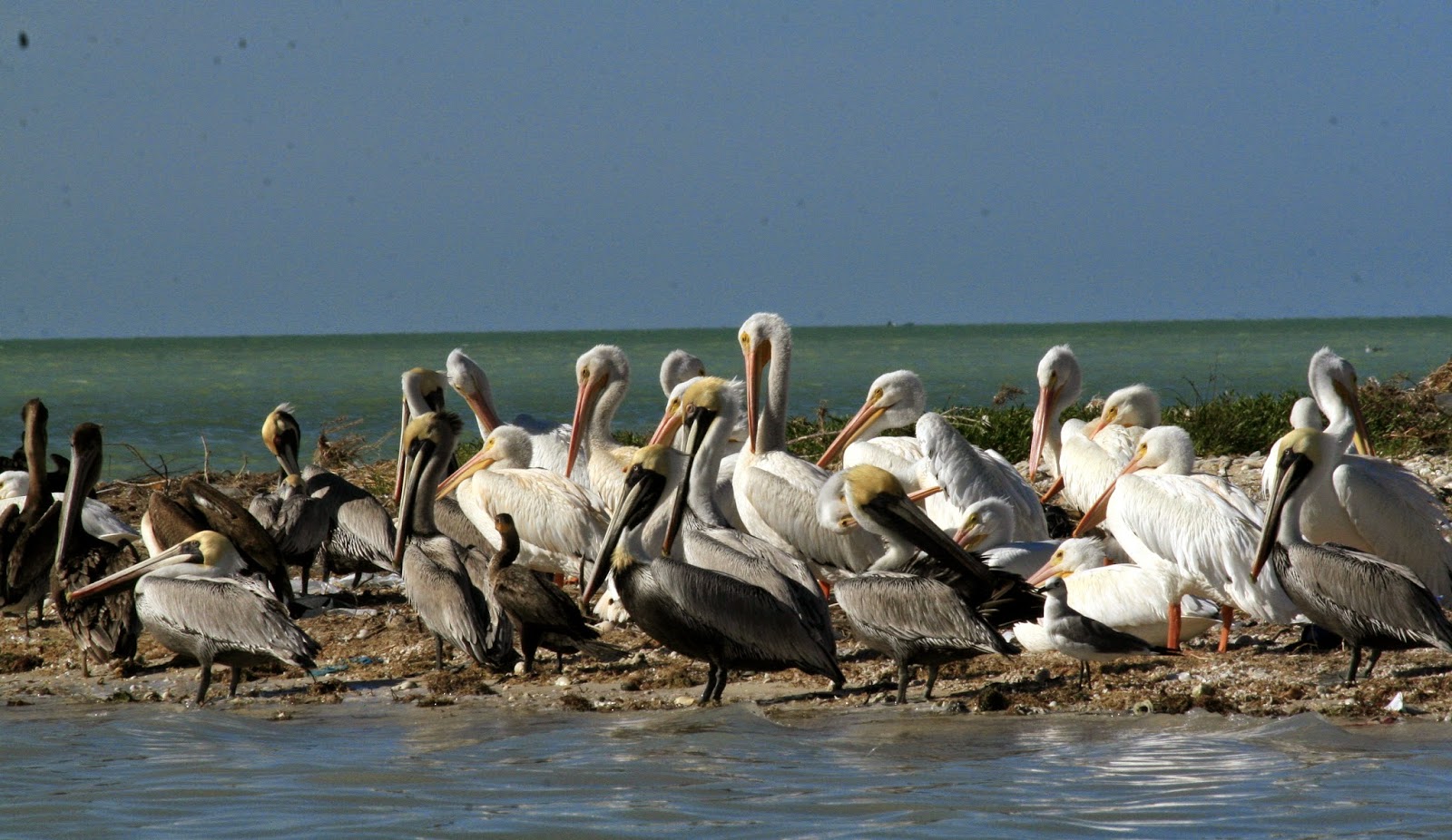
Pelicanos – Photo by Thompsonclair

Crocodile in Mangroves – Photo by Thompsonclair

Sliding Away – Photo by Thompsonclair

Celestun Shore – Photo by Thompsonclair

A Post for Everyone – Photo by Thompsonclair

Flamingos in Flight – Photo by Thompsonclair

Pink Reflections – Photo by Thompsonclair

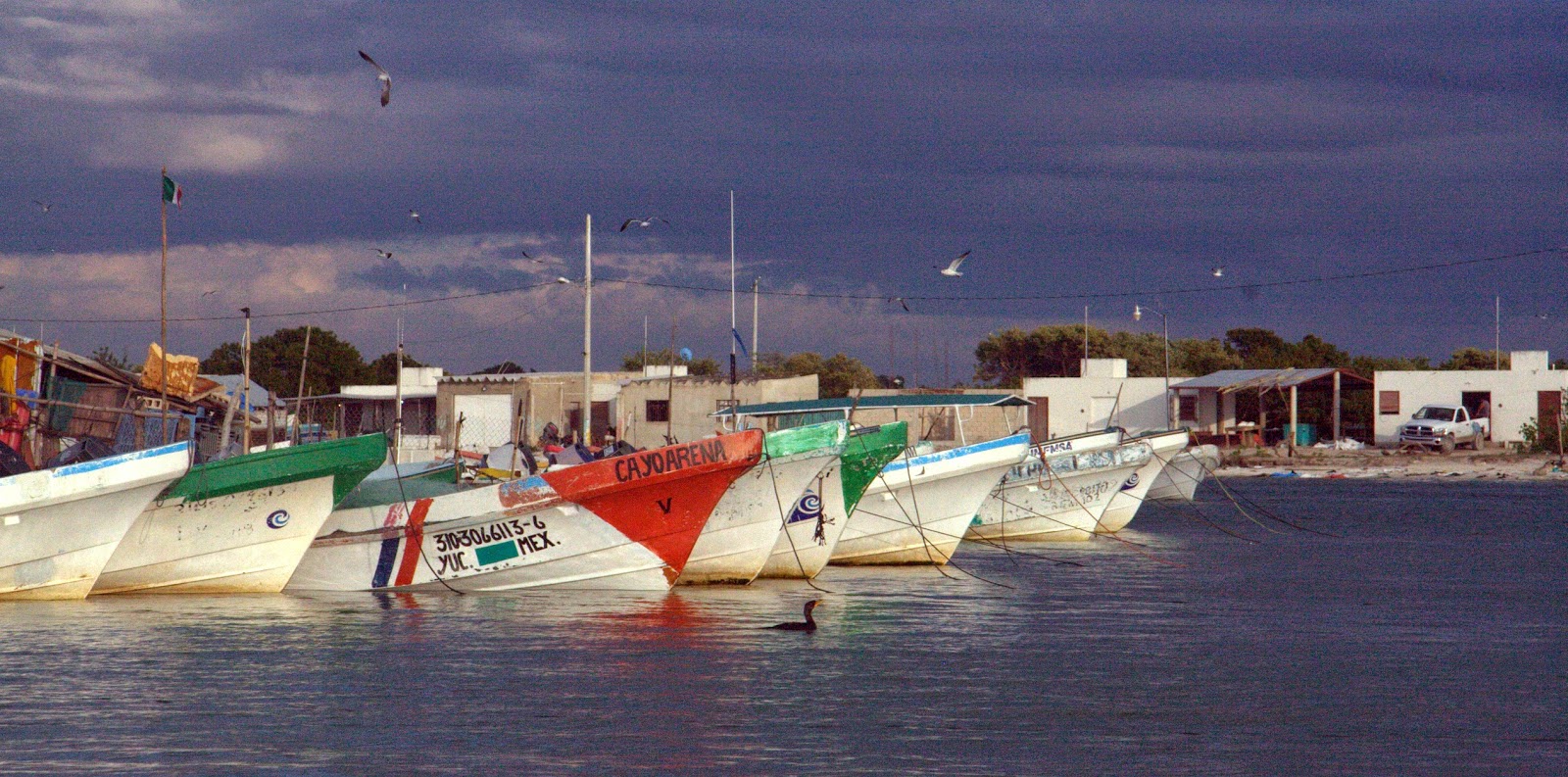
Boats of Celestun – Photo by Thompsonclair

Dutch Friends from Boat Trip – Photo by Thompsonclair

Although it was late in day before we left Celestun we wanted to see Sisal, the famous port from which the henequen rope was exported and the reason this rope made from the Yucca cactus, became known worldwide as Sisal. As each crate of Sisal left the port it was stamped with “Sisal” to indicate the name of the port, not the product within. Through more Pueblos and over more topes we made our way to Sisal with just enough time to have a cursory look at the Port of Sisal before the sun slid below the horizon.
Mexico – Yucatan: Christmas in Progresso

I can’t believe its Christmas Eve. Where has the month gone? Before I left and when I first arrived I believed I would have a full blown blog well in hand, but tech issues and distractions (fun) have kept me busy and thwarted my efforts. 


On the 17th, of December,  I rented a car and drove Hisako back to Cancun to catch her plane home and as luck would have it, Craig and Dawn arrived the same day so I picked them up and brought them back to Progreso. We are sharing the cost of a rental car for ten days so I have been adventurous and driven myself all around Merida when it’s my turn to have it. Yesterday I even went into El Centro to pick up a bracelet I was having restrung. Craig and Dawn need the car because they are busy working and attending appointments related to being owners of Casa sol Mar and I benefit in the off times. Often we share a meal and last night we had fresh caught grouper, grilled in butter and garlic and I made rice and a salad. Can’t beat that. All seafood is fresh here, caught daily and sold at the market along with prawns and shrimp galore. 

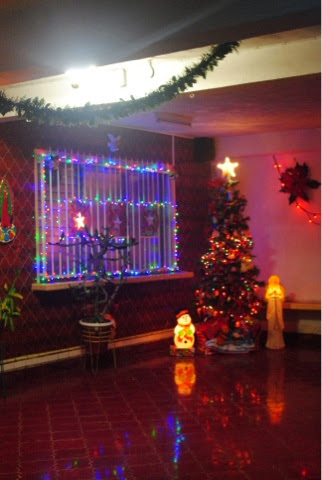
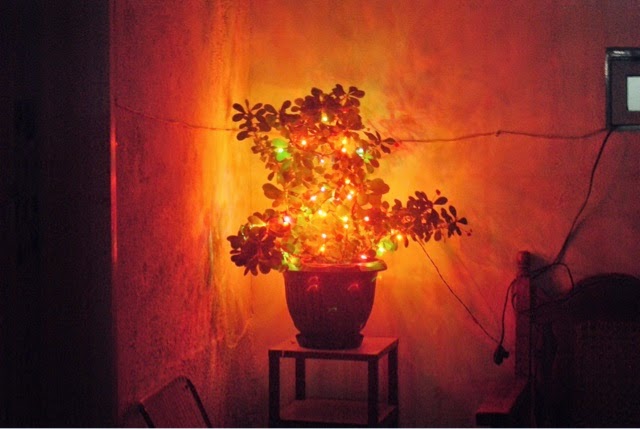
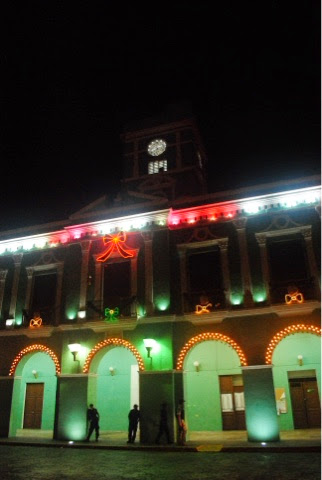
It has been great fun to watch Progreso don the festive season. Like Merida, Progreso is no slouch when it comes to decking the halls.I got caught up in the fervor and bought a fake tree at the local Bodega.

My $9:00 Bodega Tree


The stores, businesses and homes have great lights and decorations. An evening walk through the barrios to view the Christmas lights is especially fun and often there are quirky items that catch your eye. 


City Hall all Lit UP and Guarded

City Hall Goes All Out
High and Wide 

Pride of ownership brought this man outside to invite us on to his patio.
Private home

The ubiquitous Coca Cola Santa
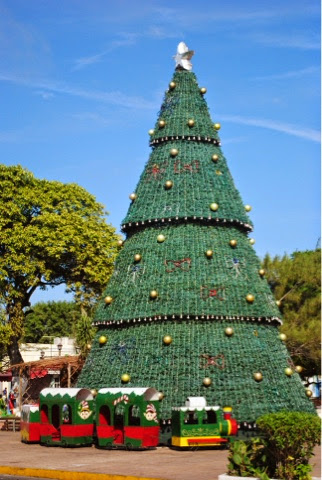
Tree and Train in the Zocolo


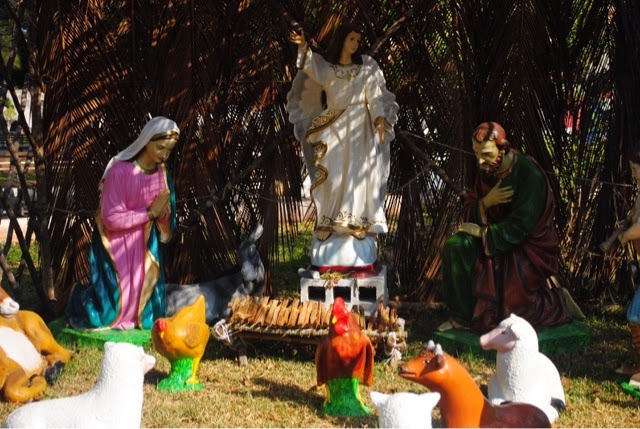
Empty Creche in Nativity Scene…Waiting for the Baby Jesus

Christmas decorations are everywhere and always brightly colored and over-sized. Lots of creches, but no baby Jesus until tonight when he is scheduled to arrive all over the Yucatan, just like Santa Claus only more important. Night or day the town gets more festive as Christmas Day approaches.

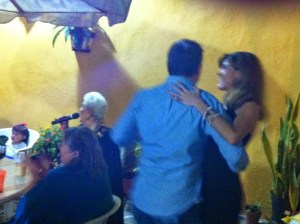
This being Christmas Eve, today is the most important day of the season here in Progreso. My friends Luis Miguel and Alena have invited me to Luis Miguel’s grandmother’s house for Christmas Eve dinner. Dawn has warned me that it has the potential to go very late, sometimes til 3:00 or 4:00 in the morning. I will need a nap this afternoon if I am to stay awake. 
Dancing and Karaoke with Luis Miguel’s Grandma at the Mike
Texting and Tequilla


Tomorrow, Christmas Day, Dawn, Greg, Luis Miguel, Alena, the Texan in apartment #4 and I are having a turkey dinner with all the trimmings. I am in charge of vegetables and I scavenged the tiendas and the market have managed to amass all the requirements for Canadian traditional dishes. 


Mexico – Does Zumba Trump Aztec Dance?

Joining a yoga class turned out to be a good idea for many reasons, one of which was I met Jacque and Clinton owners of a B&B just around the corner and down the street from Casa Sol Mar. Last night at ten o’clock a bus load of Aztecs from Mexico City pulled up in front of the B&B, needing a place that could accommodate twenty nine. Fortunately there was room for everyone; grandparents, parents, children and several babies. Hammocks were strung, beds were crowded with occupants and soon all was quiet again in the house of Clinton and Jacque.
This morning, all 29 of the Aztec arose, by sheer number alone they took over Jacque and Clinton’s house, making breakfast and getting ready for the day. Travelling with groceries they tour about on a large bus that houses them and their regalia. As a dance troupe they look for opportunities to perform and this being the holiest of times in Mexico, the feast of the Virgin of Guadalupe, they are making a pilgrimage to Chichan Itza where they will perform their ancestral Aztec dances in the shadows of this Mayan ruin.


Clinton and Dancers
Hisako and Dancer
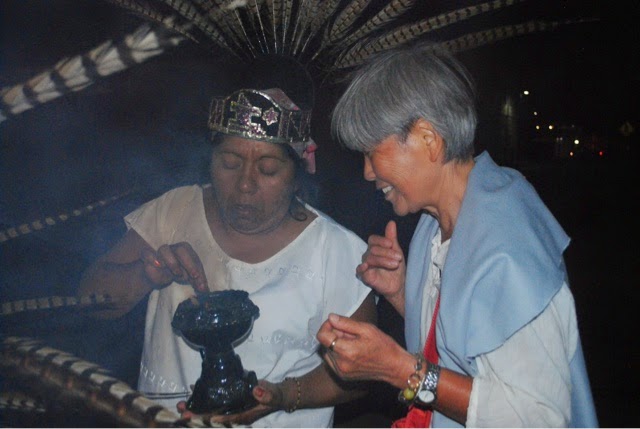
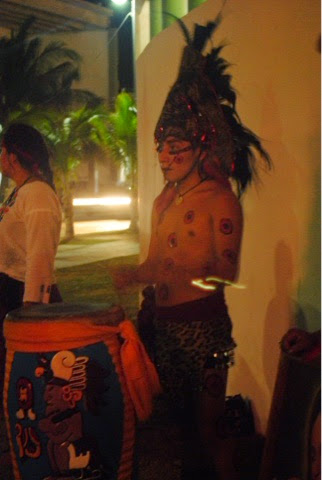
In gratitude to their hosts, the Troupe offered to perform a ceremonial dance in their honor. Dressing a dozen or more of their members in elaborate regalia was a spectacle in itself. Feathered Headdress, traditional costumes, rattles, smudge pots, drums and a stream of dancers entered and exited the bus in preparation for a grand procession. The yellow/red blaze of the Oxxo convenience store lighting the pavement where the assembly gathered. Once dressed, blessed and ready to go the procession wound it’s way down the street and around the corner toward the beach.

                                                                                            Ceremony at the beach

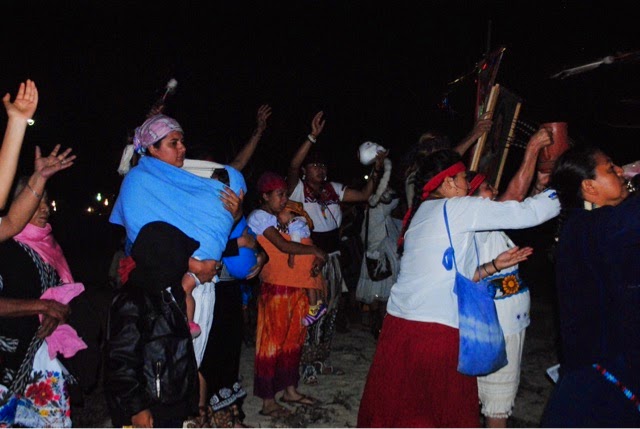
At the beach, in the light of the moon, several ceremonies of thanks and praise took place. There were many similarities to West Coast regalia; rattles, smudging, communal spirit and celebration. Rattles, made of large round seed pods in huge clusters and filled with gravel adorned the dancers ankles. Their ceremonial dress was a familiar mix of traditional materials, feather, beads etc. and modern acetates in brilliant reds and blues. As prearranged with the local police, the parade wound its way off the beach and up the street to the Park de Paz only to find a Zumba class in full swing. Not to be thwarted the Aztecs wound around the back of the Park behind the Zumba class, set up their drums and proceeded to dance with great joy and vigor for several hours.
Let the Dancing Begin

Invited to join the circle of dancers was an honor, with so few of us being the recipients of this grand gesture. The dim streetlights of Progreso softened and back-lit the dancers as they stepped, whirled and changed direction as one. Smoke from the smudge pots wafted around the dancers who later told us that they do all the fundraising for their cultural trips themselves, many of them working at “day jobs” but intent on staying connected to their culture. Unannounced to the locals, the presence of the dancers from Mexico City soon drew a crowd; families of three or more on scooters, cars filled with people on the way home from outings, and the casual passerby on foot and soon we had an audience. One of the greatest gifts of travel are the unexpected events this being one of them.