Cuba: La Havana

Changes…
At this time last year I was in Havana for five days, long enough to know that I had to return. Things have changed in a year. The regulations that govern commerce have been relaxed even further and a vast number of small businesses have sprouted up, there is evidence of more to buy and more to buy it with. Generally spirited and happy in spite of political conditions, Cubans seem even more upbeat that a year ago and there is a feeling of expectancy in the air following the recent concessions made by the Americas vis a vis the embargo against Cuba. There are more new cars on the roads, people are wearing more up to date fashions, although Cubans were always well put together and proud of their look. Interestingly enough the embargo has not stopped a flow of money and goods from the US to Cuba, particularly throw expat Cubanos now living in the states. A taxi driver told Tom that most of the parts for the old cars come indirectly from Vancouver in Washington State and Portland Oregon
In spite of the continuation of the Cuban revolution as a socialist ideal there are clearly those who have and those who have not. The dividing lines seem to follow the same general rules as in other parts of the world; color, rural/urban, family connections and education. For several years the government has allowed Cubans to run what are basically bed and breakfasts where foreigners stay with the benefit of getting to know a Cuban family, a much better option that staying in one of the large and sometimes unfriendly government run hotels. I understand that at one time it was illegal for a Cuban to have a foreigner visit their home. This year the number of Casa Particulares (B&B’s) seems to have doubled and anyone who is government licensed to have a Casa is making well beyond the average salary. Clearly tourism is have a great impact on the fortunes of many Cubans and those that work in tourism share the top spot for wages with taxi drivers. With an almost 100% literacy rate Cuba has one of the most highly educated populations but professionals in education and healthcare etc. are very poorly paid as a result of socialist principles.

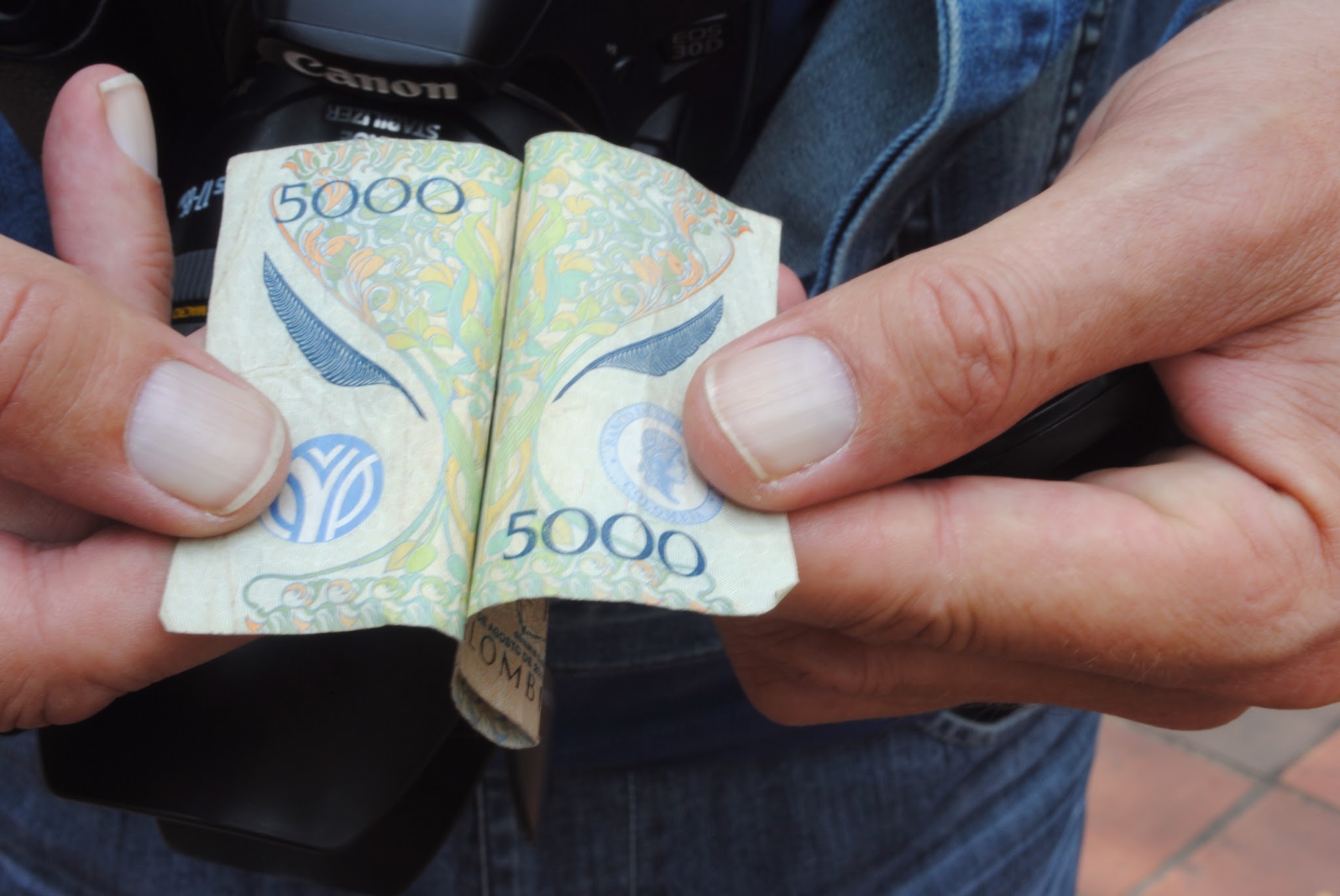
The tourist dollar is legendary in Cuba and where ever you go someone is trying to get if from your pocket to theirs. Generally in a warm, friendly and even sentimental manner the Cubans are very resourceful in their pitches to relieve you of your CUC’s as the tourist money is known. The Cuban government will only allow foreigners to access CUC’s from ATM’s set on par with the US dollar. Many restaurants, shops etc. provide two prices one in CUC’s and one in Cuban Pesos which is worth about 25 pesos to the US dollar. It can be confusing and many people think it is illegal for foreigners to have pesos but this is not the case and having them can be very helpful. You can change your CUC at any bank for Pesos and use them for buses, shopping in markets etc..

Cuba: Trinidad – A Weekend Away

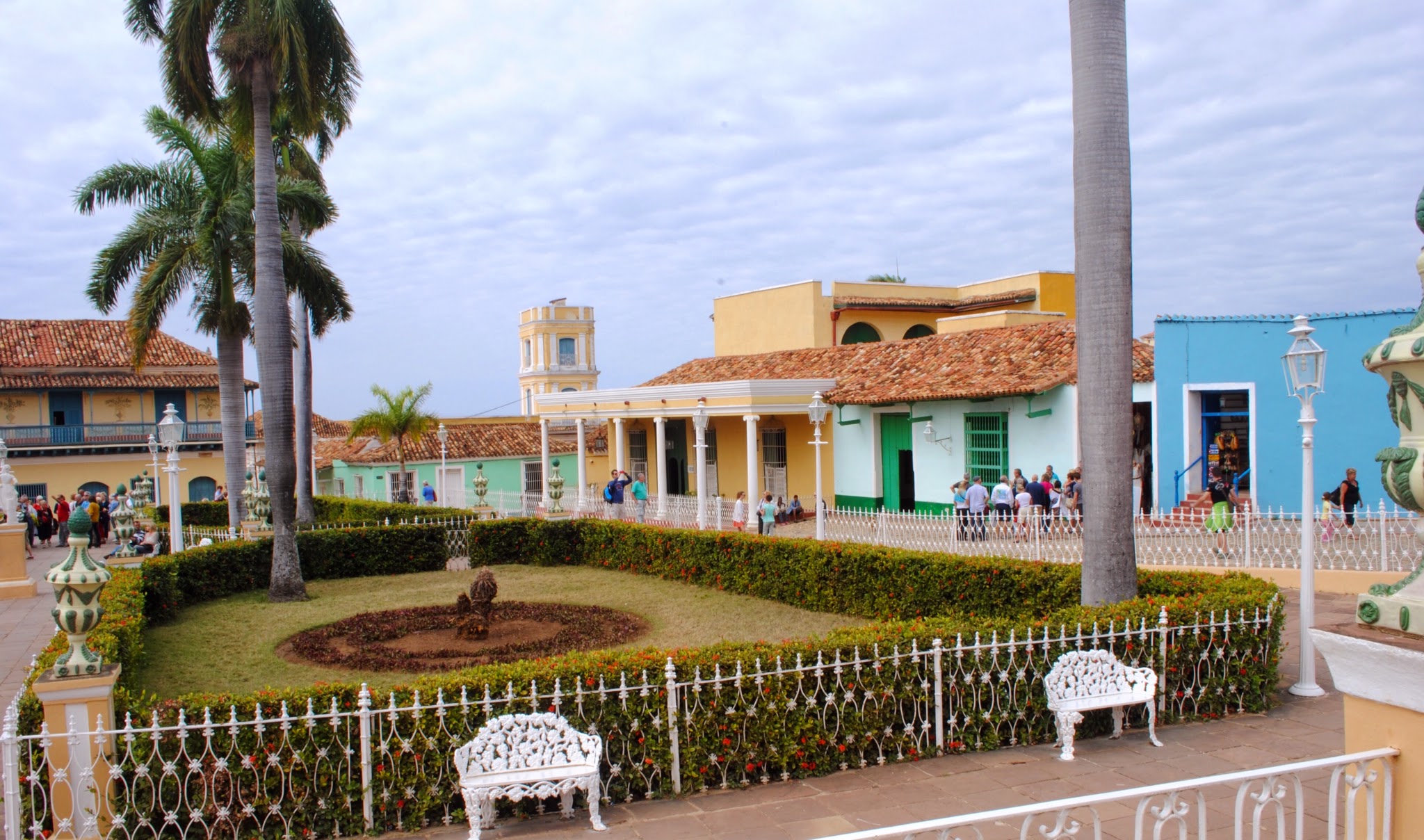
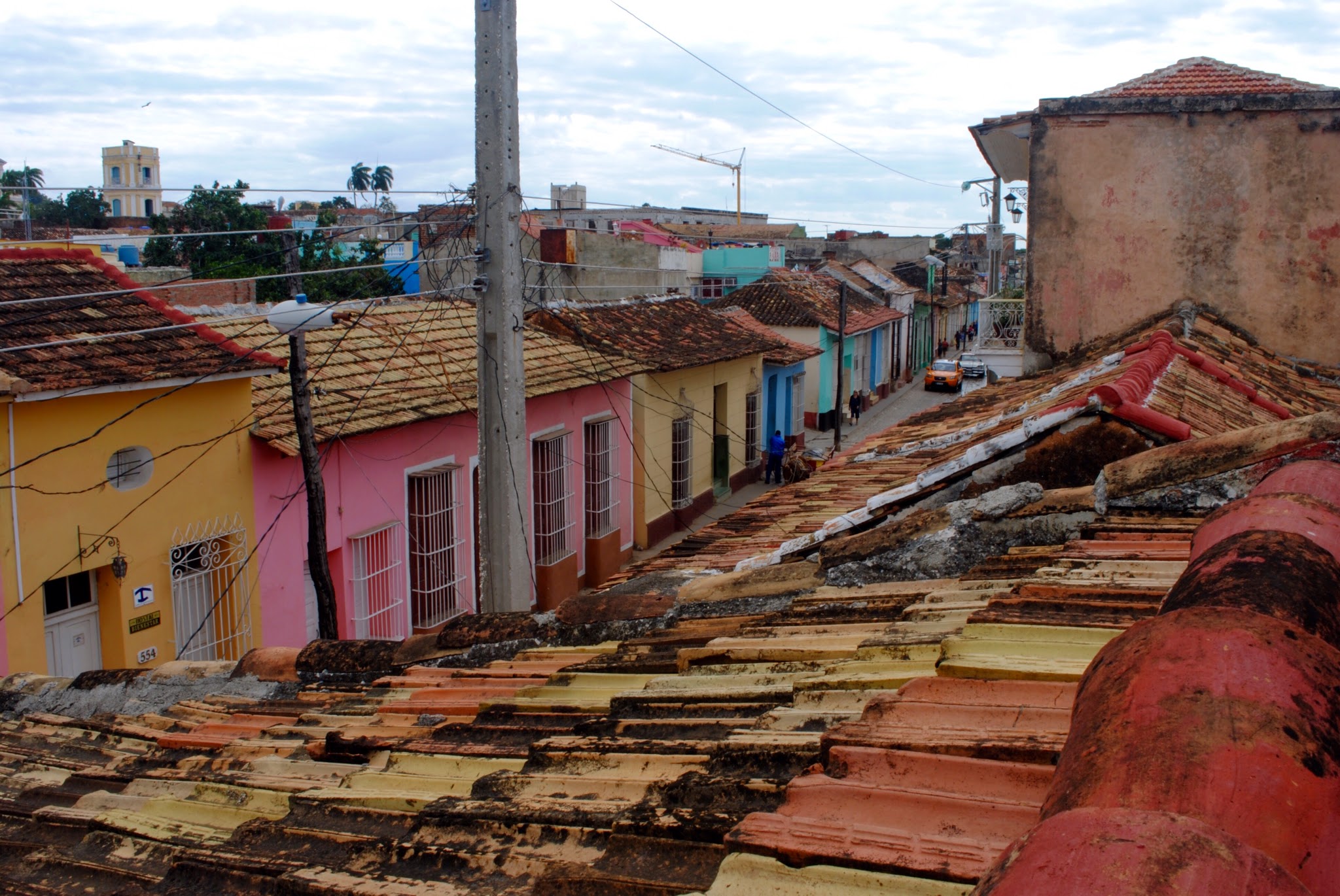
Another Unesco World Heritage Site, Trinidad is about four hours south east of Havanna. Yoanis from our Casa Particular in Havana booked us rooms and it turned out they were in separate houses but close enough to go back and forth. The town itself is rustic, colonial and friendly. Red tiled roofs and brightly colored buildings with plenty of small tiendas selling artsy/crafty souvenirs. For us the highlights of this weekend getaway were meeting our host families, getting to a beach and seeing the countryside surrounding Trinidad.
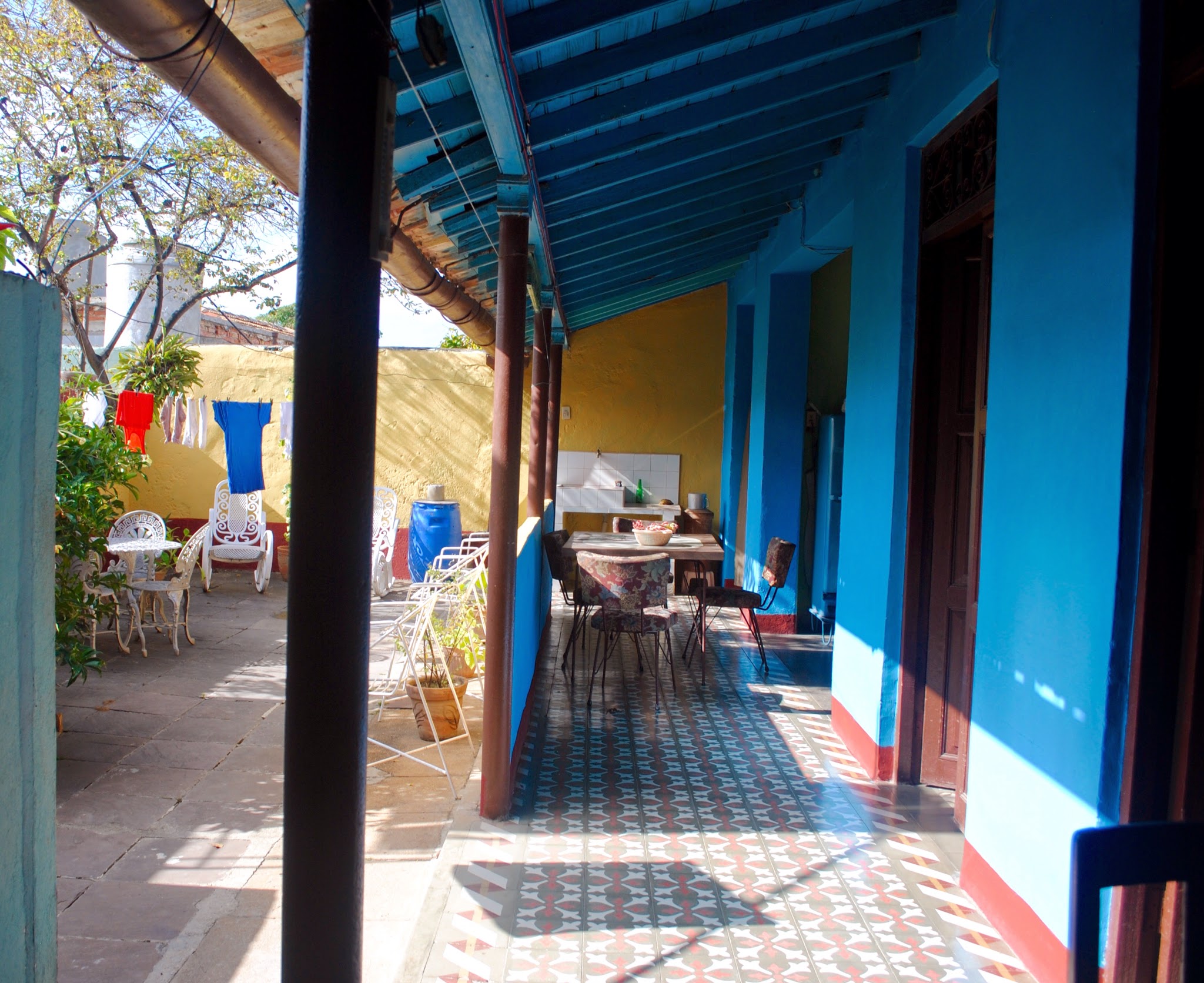
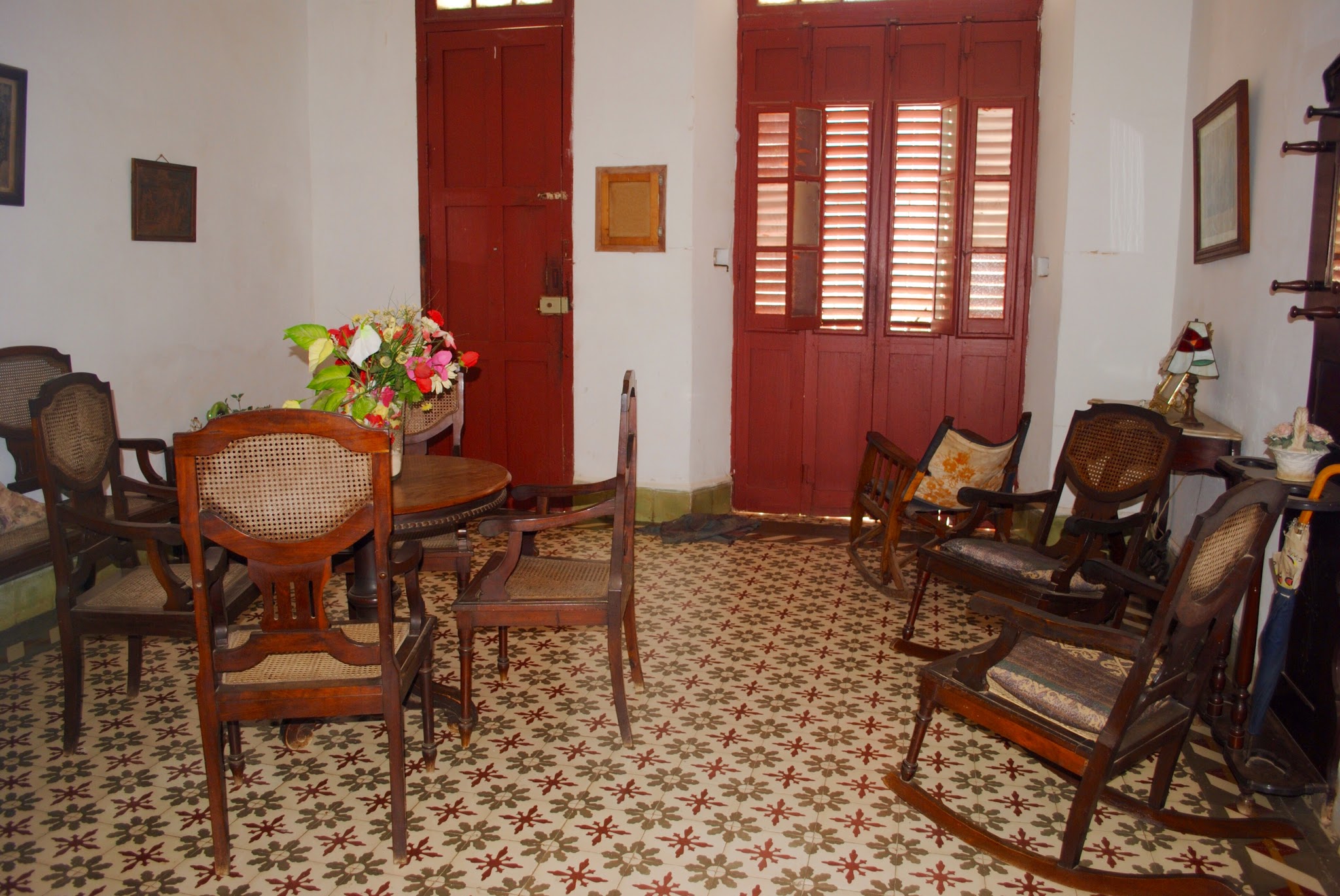
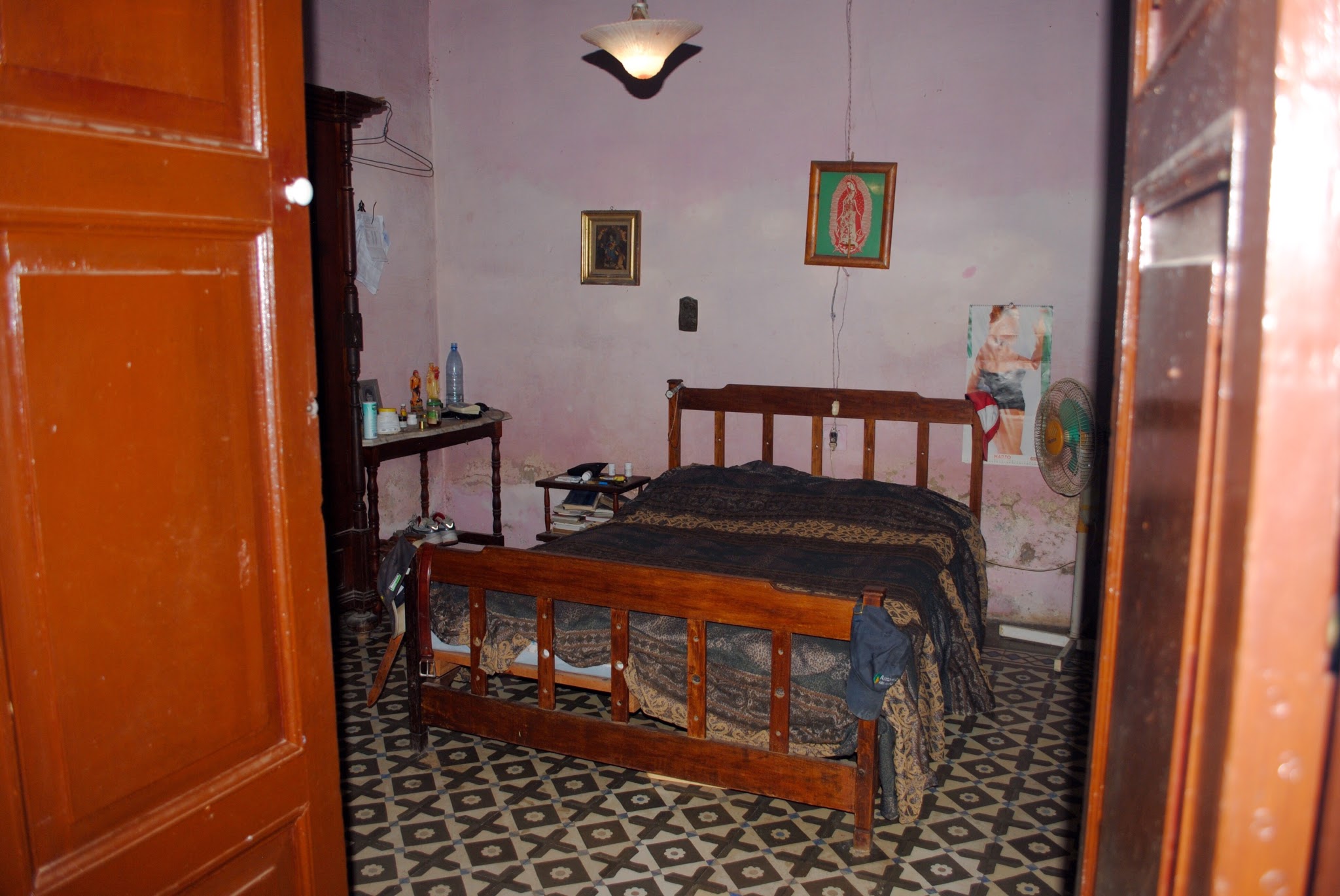
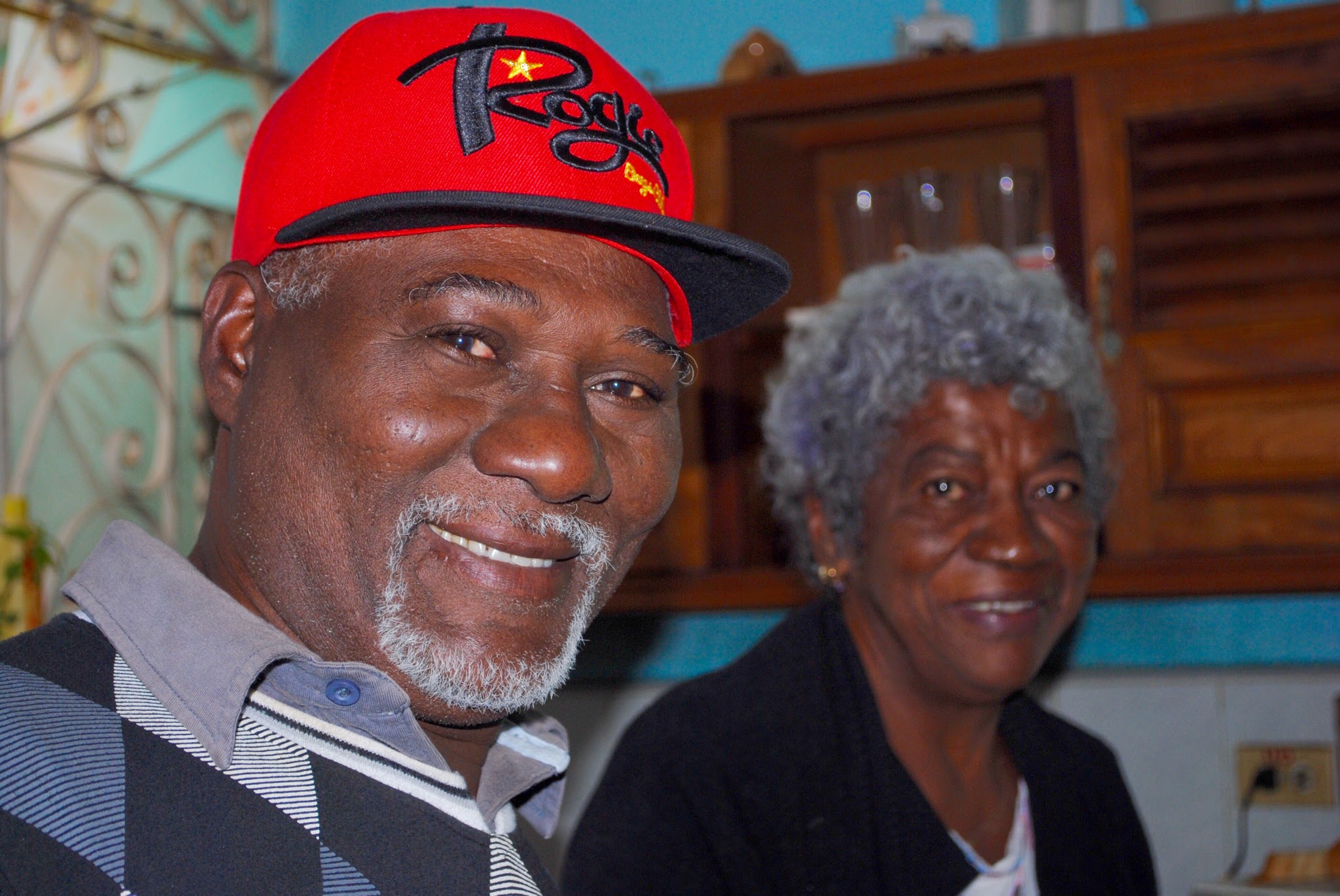
My host was an eighty seven year old whose wife died a few years ago and he now has a younger male relative and his four year old daughter living with him. His typically unrevealing street door masks a large and comfortable home with multiple bedrooms and a central courtyard with a garden. He was born in the house, has lived there all his life and keeping him company all the while are colonial furnishings and beautifully tiled floors. A very hospitable man, he spoke English that he taught himself from a book called Nine Hundred English Words.
Tom and Ray stayed in a casa owned by Marea and Alexander who took great care of us and made our arrangements for seeing the sites. Their living quarters were up a narrow, steep set of stairs and the kitchen was a mix of indoors and outdoors and above was a rooftop patio with great views of the city. Marea cooked us a delicious lobster dinner which sadly Ray wasn’t able to enjoy, having succumbed to Cubas version of Montezumas revenge. Marea took great care of him while Tom I went by horse and cart into the hillsides. Our driver took us to a national park, complete with entrance fee and then on to see a waterfall which was dry and swimming holes that had no circulation as a result. Had there been rain in the last four months we would have seen a beautiful cascade, falling into natural ponds in an idyllic jungle setting. Accessible only on foot it gave us a chance to get out if the cart and stretch our legs.
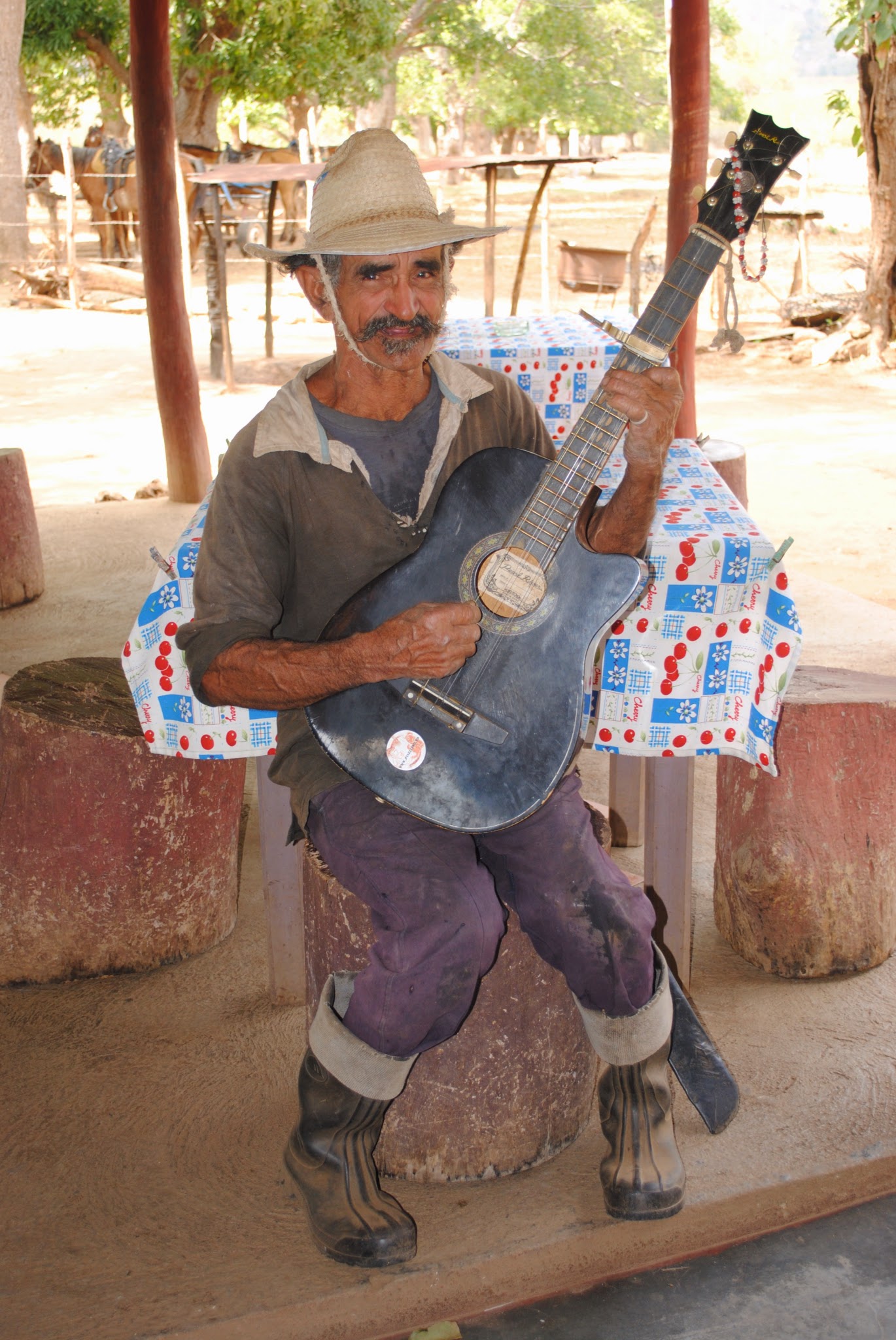
Our lunch stop was in a farmers yard, where surrounded by chickens, cats, horses, dogs, roosters, pigs and goats the owners set up a kitchen and were selling meals. Whether it was the jostling of the cart or the live reminders of what was on the barbeque we declined all offers excepting bottled water. In the middle of the fray sat a toothless old man strumming on a cracked and old guitar, making a much better subject for a photo than he did music. A group of swaggering european men arrived on horseback, cowboy hats, cuban cigars, rum on hand and nearly as big as their ponies. Comically, once they had all seated themselves one managed to topple over backwards, a great expanse of arms and legs flailing until he came to rest on the lip of the planked floor. Size isn’t everything!

The beach is a short taxi ride from Trinidad and we swam and watched the sunset with two earnest looking twenty something’s doing the North American version of yoga in the sand. With rays stomach a little tricky we hired a taxi back to Havana and it cost a fraction more than three tickets on the bus. A great getaway weekend from the blast and blare of Havanna.

Cuba : La Havana – Problem Solved

Problem Solved

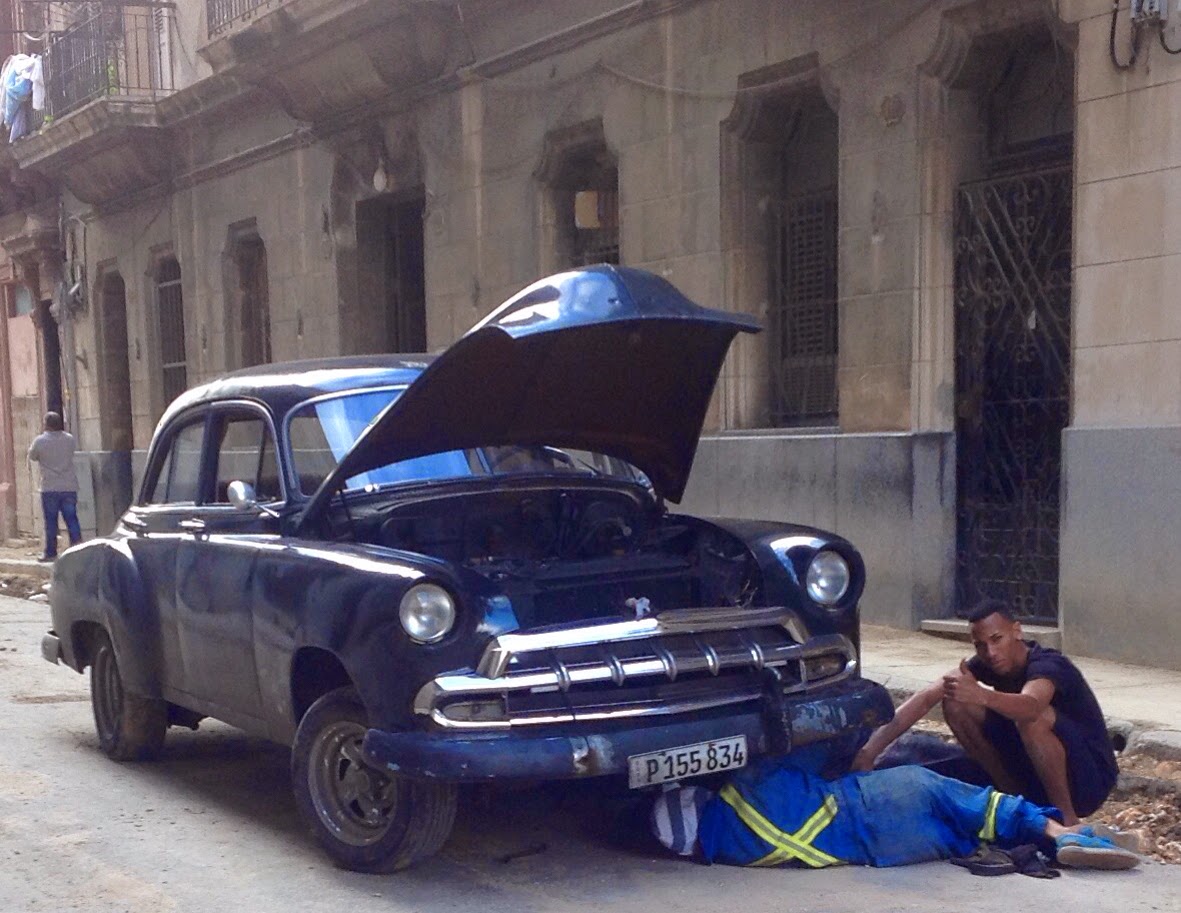
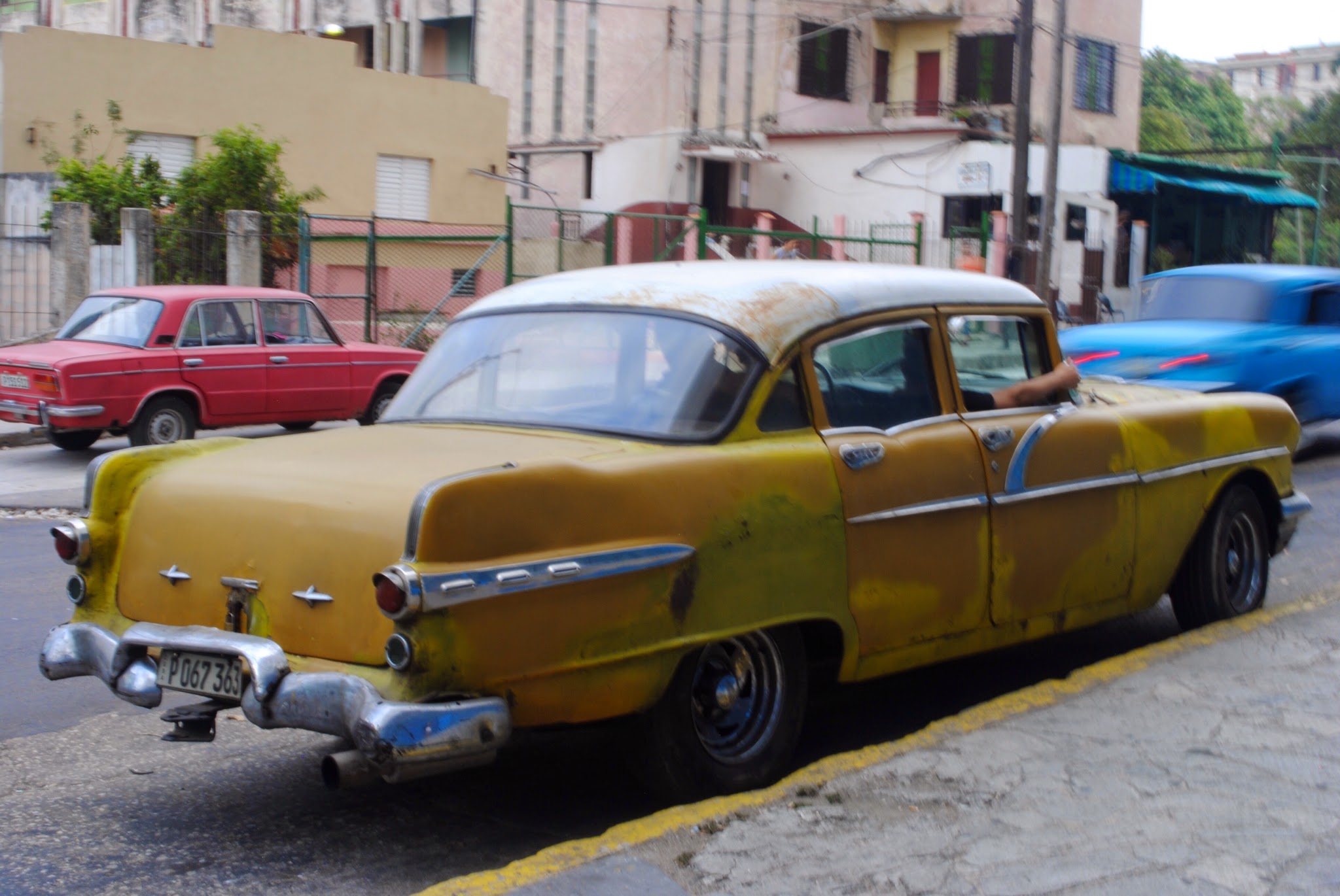
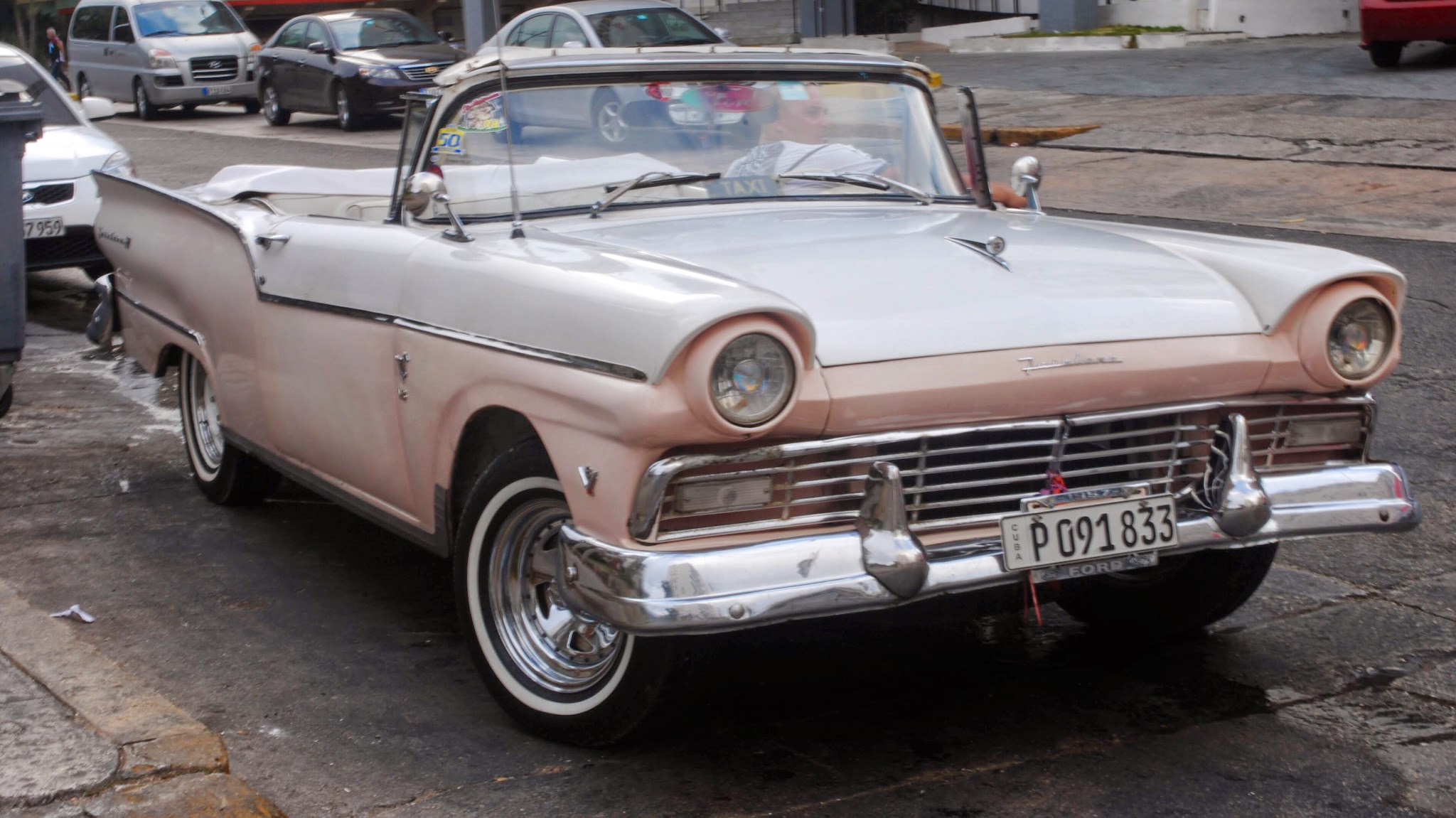
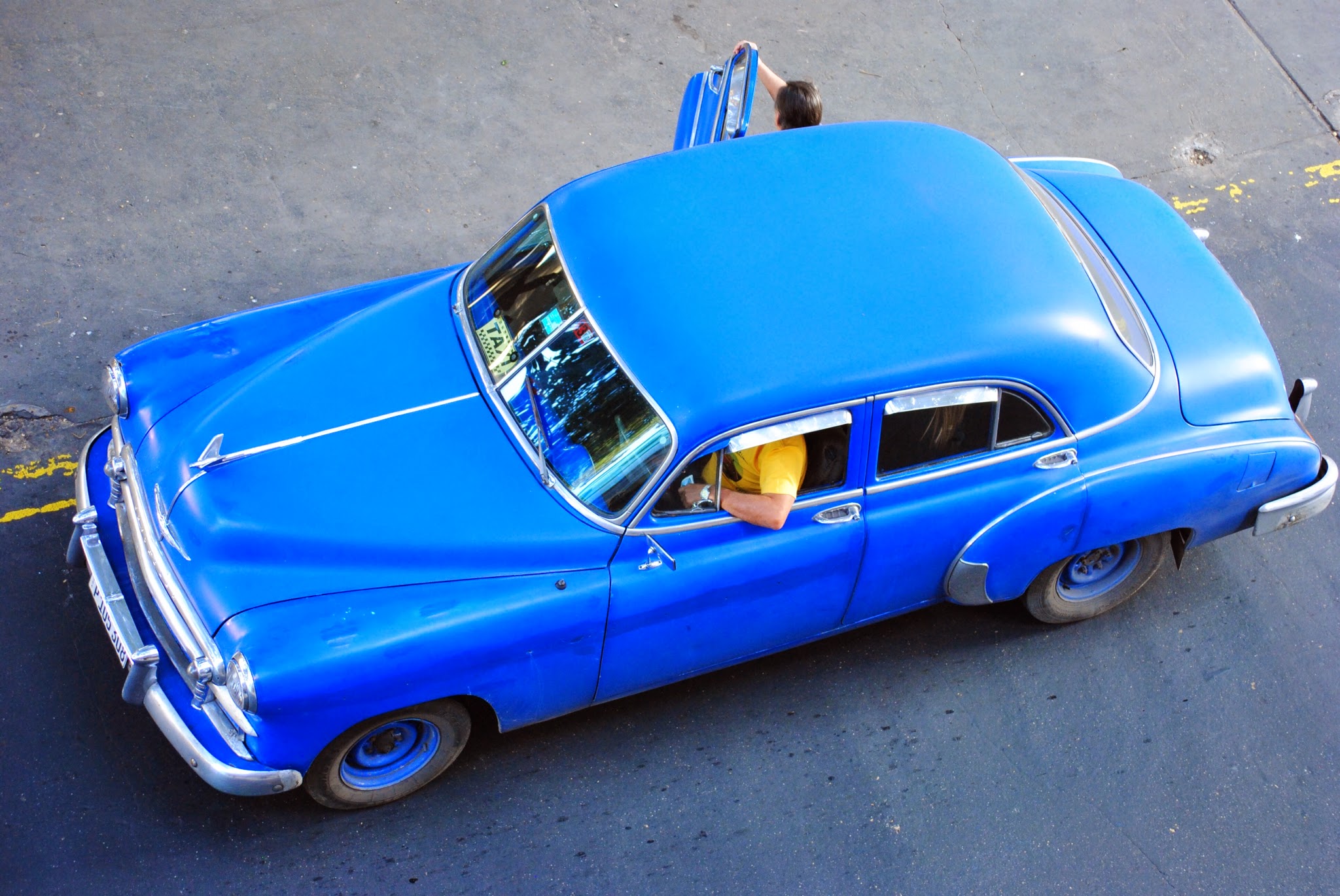
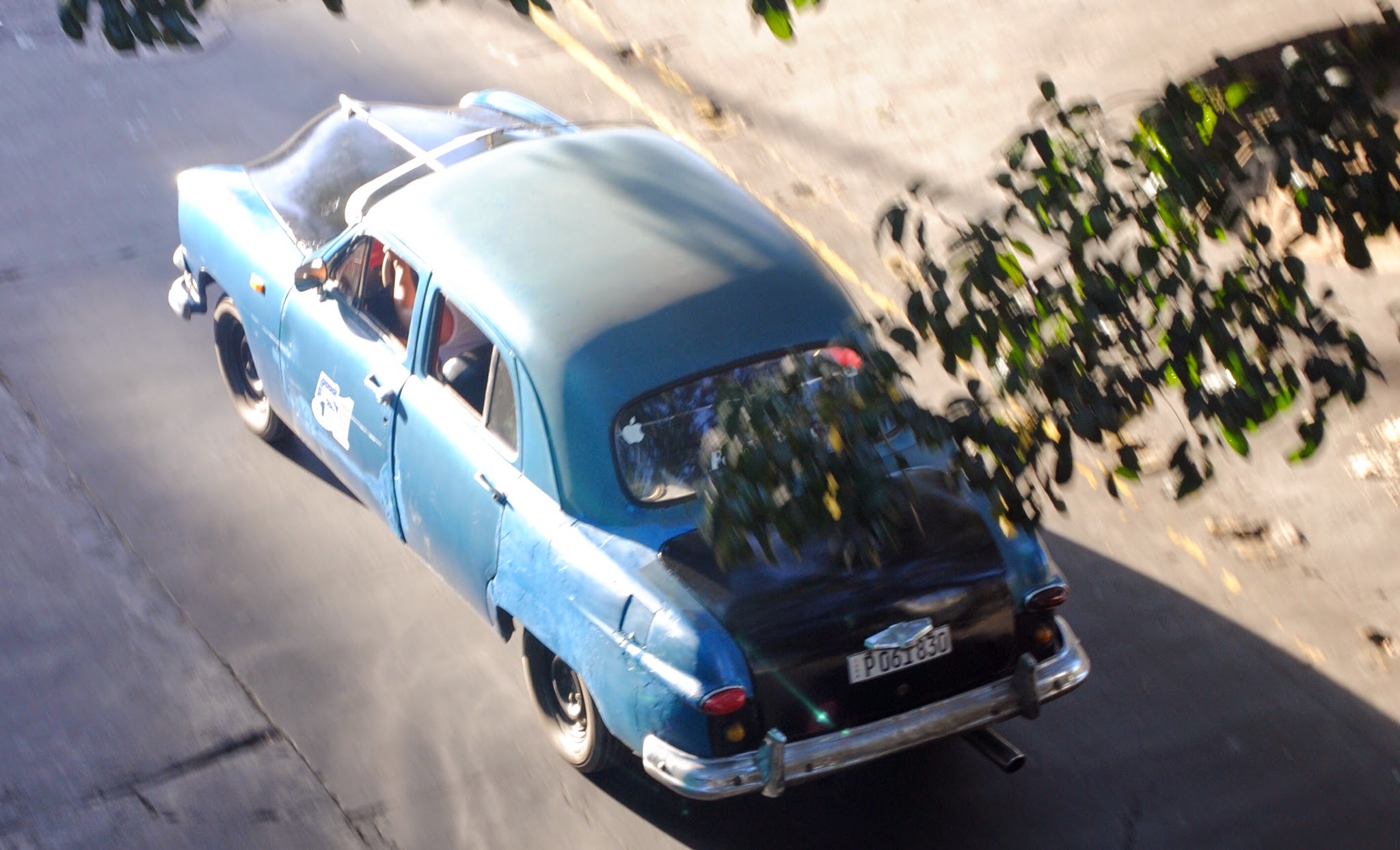
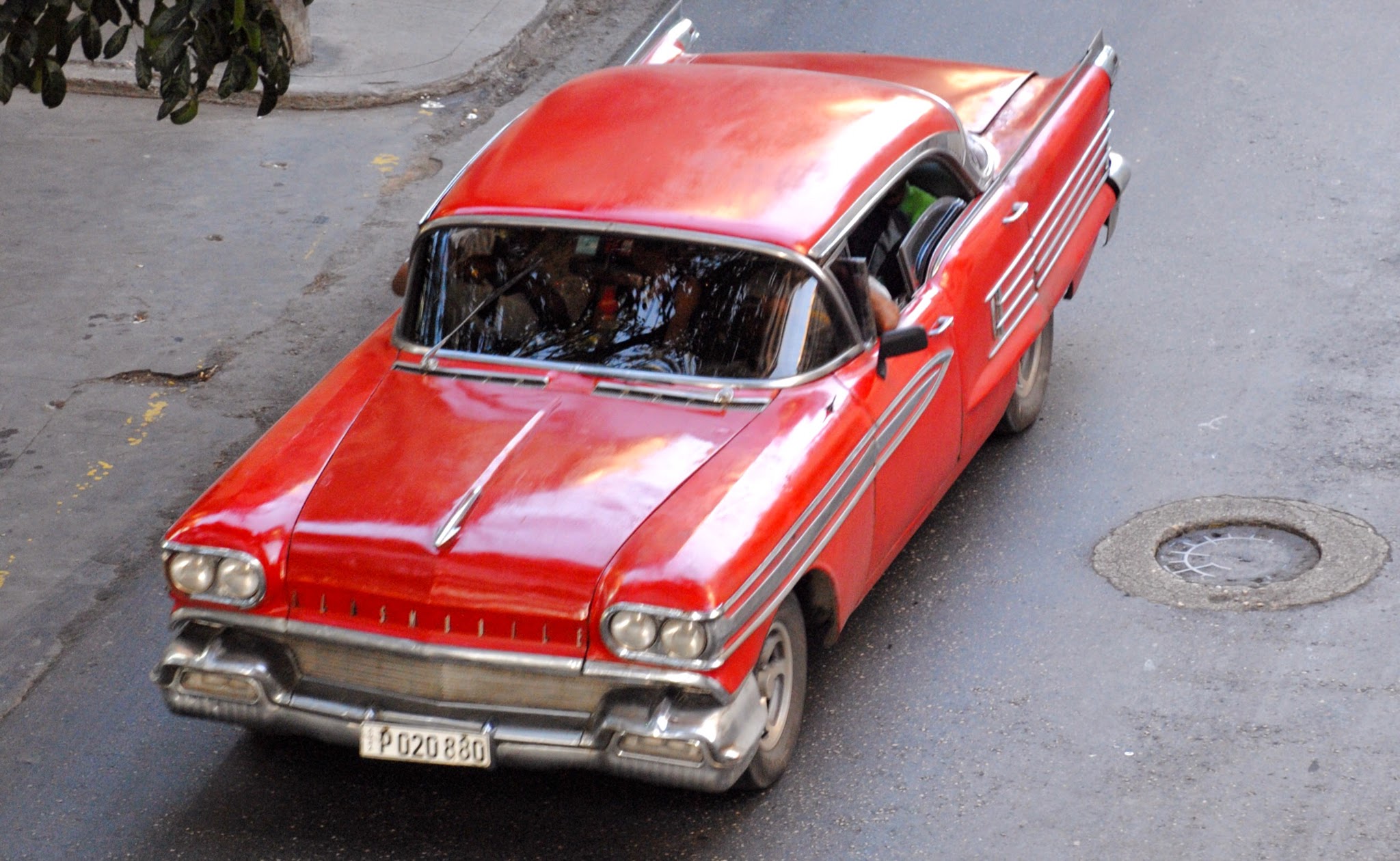
They call them Almondrones (almonds) but they are more like cockroaches and their cousins, the beetles. They are all large, some are dark in color and look like they have been through a war. Others gleam and glisten, sporting brilliant colors and glossy skins. Like insects, they appear to be fixed on their destinations with a vengence. They roar about town, taking a run at even the slightest incline and they are usually carrying a full load. They are of course the cars. Pre embargo automobiles left over from a time when havana was alive with party goers, gamblers, musicians, artists and holiday makers. In Cuba there are few people who can afford their own vehicle unless they are taxi drivers in which case they provide a service by plying the main calles as public taxis. And no wonder as the public buses are always packed, nose to nose as my Cuban friend describes his daily commute.

Often these are the legendary vehicles from the 40’s and 50’s that have survived the passage of time with the greatest of loving care. To hail one of these taxi’s you stand along the curb on a main artery and stick out your arm, using your fingers to message the driver, telling him how many passengers and about where you are headed. As the taxi slows you shout out your destination and the driver will either stop for you or not. Squeezing in the long bench seats in the front and back of the taxis can bring you into some close encounters with Cubanos, generally of a friendly nature. A CUC will get you all the way form Parque Central in downtown Havana, east along Neptuno to the University of Havana. This kind of ingenuity captures the spirit of the Cuban people who have spent their lives making do and getting by without many of the simple pleasures and privileges that much of the rest of the world enjoys. Nothing is thrown away, nothing is wasted, there is a repair shop for everything and mechanical skills are at a premium.

Cuba: La Havana – University and Wandering

University of Havana

I attended the university of havana for the month of February at a cost of $300.00 CUCS. The university itself is a spectacular array of classical style buildings with great columns set at the top of steep marble stairs. A friends said she thought she was in Athens on first sight of the university. Like the rest of Havana the university has seen better days and for the first three weeks of class we had to flush the toilets with buckets of water as the pipes were broken. The instructors were great, big hearted women with great senses of humour and they had plenty to laugh at with some of our language fauxpas. My class was great and had a variety of people from all over; Germany, Sweden, Switzerland, England, France and even someone from Campbell River, close to my home town on Vancouver Island.

I wrote an exam on the first day and was placed in the Elemental class with 16 others. Tom decided after a few days to opt for private tutoring made available through the owners of our casa particular. Turned out to be a good decision as his tutor became a great friend to us and I signed up for a few private remedial lessons myself. My spanish did improve but I was in over my head in terms of understanding the profesoras directions. Also for some reason the text book that was promised never appeared so studying from disorganized notes riddled with mistakes didn’t help. Eventually I was allowed to download the text to a flash drive but I only have my ipad and so will have to wait until I get back to my laptop to use it. I liked having the schedule of having a class for half a day and half a day to wander

Places of Note To Wander

Malecon

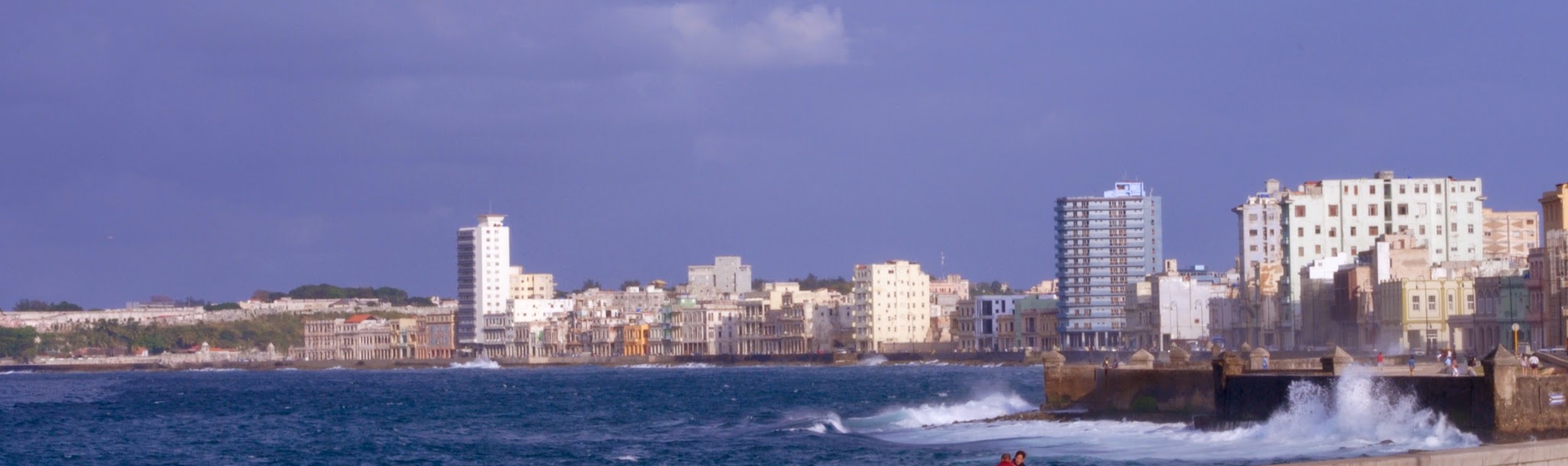
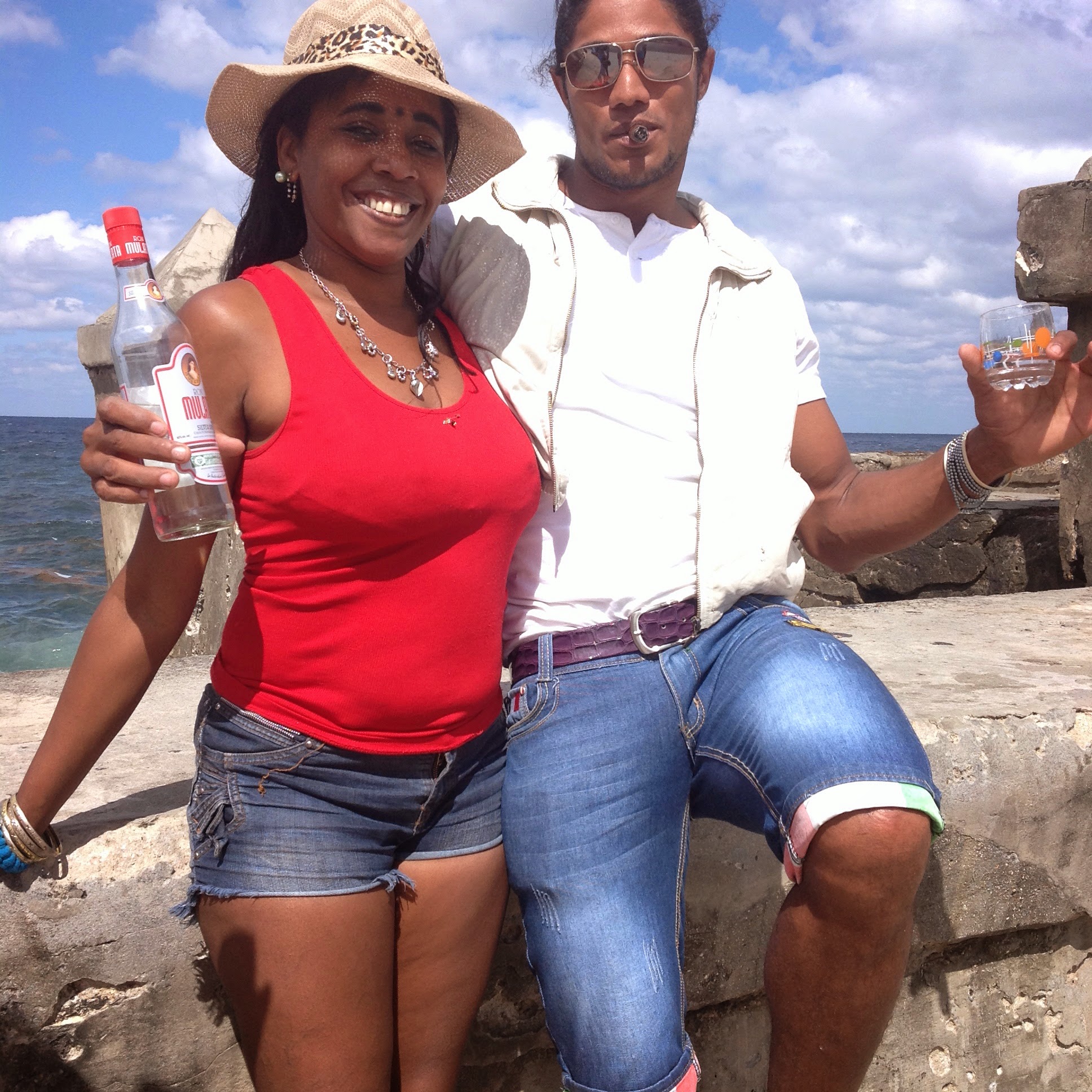
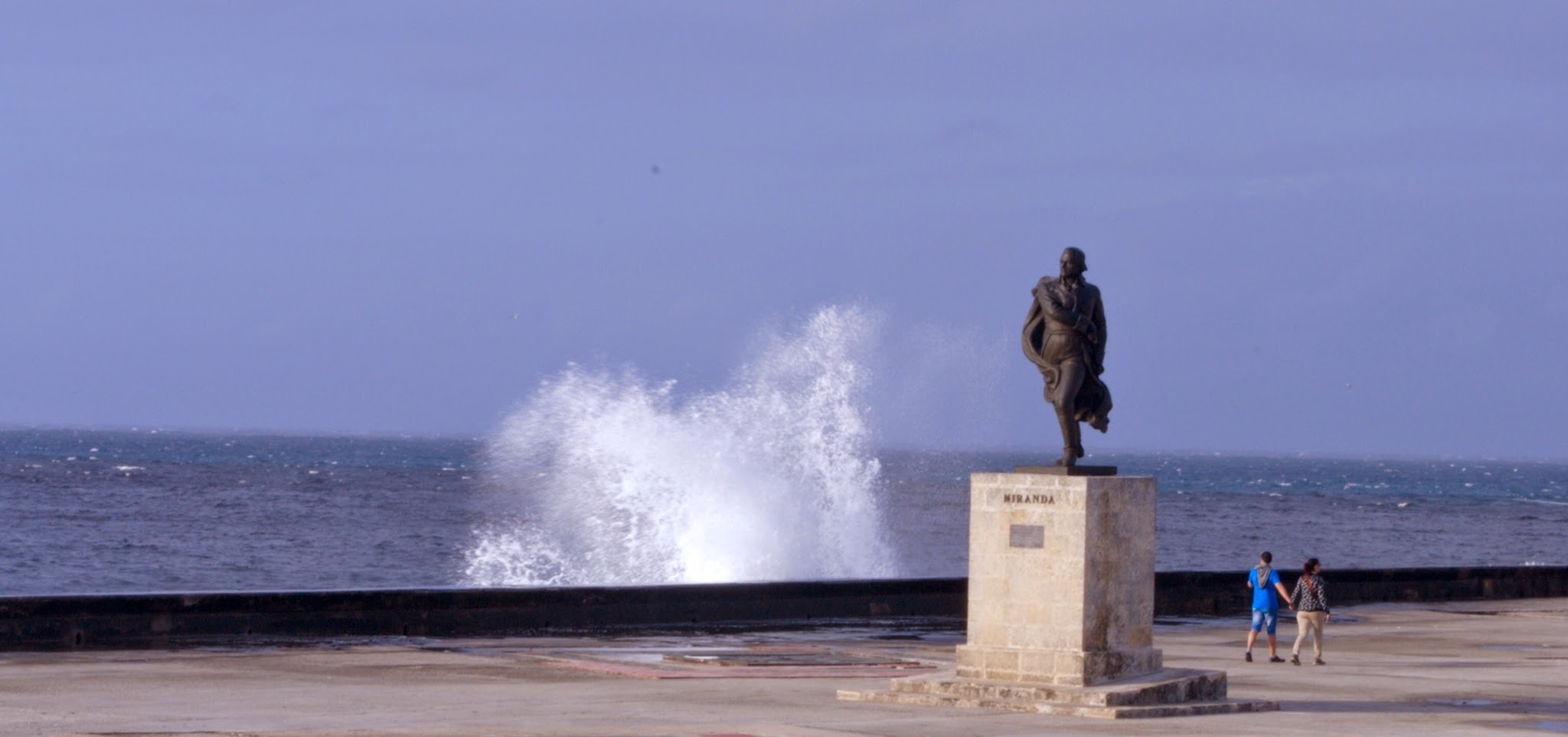
During the day and late into the night the Malecon is alive with people seeking refuge from the teaming narrow streets. Young Cubanos in particular spend time on the malecon, hanging, partying, singing, dancing, playing instruments and sometimes even fishing. The beautiful blue of the ocean water joins the sky on the far horizon and it is here that you sense that Cuba is indeed an island, set apart, different from anywhere else in the world. The rocky beach below the seawall is lost to the waves that crash up and over the malecon, sometimes right on to the avenida above. It is rumoured that American interests have pre-selected sites along the Malecon for their eventual return to Havana.

La Habana Vieja

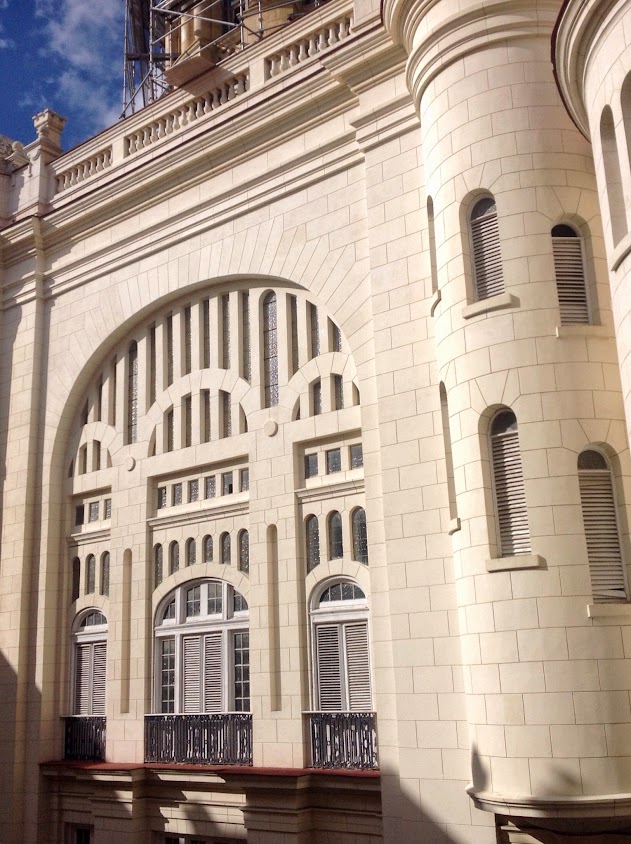
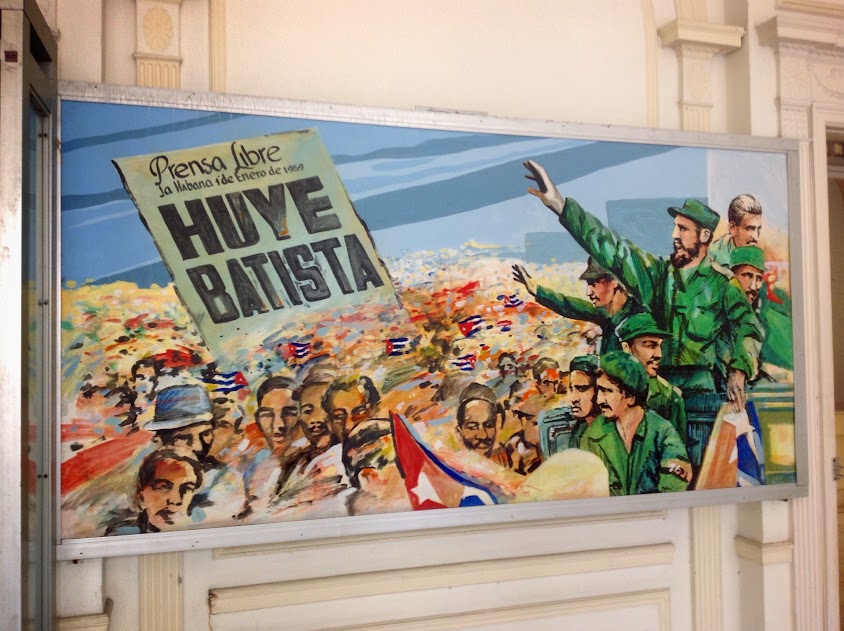
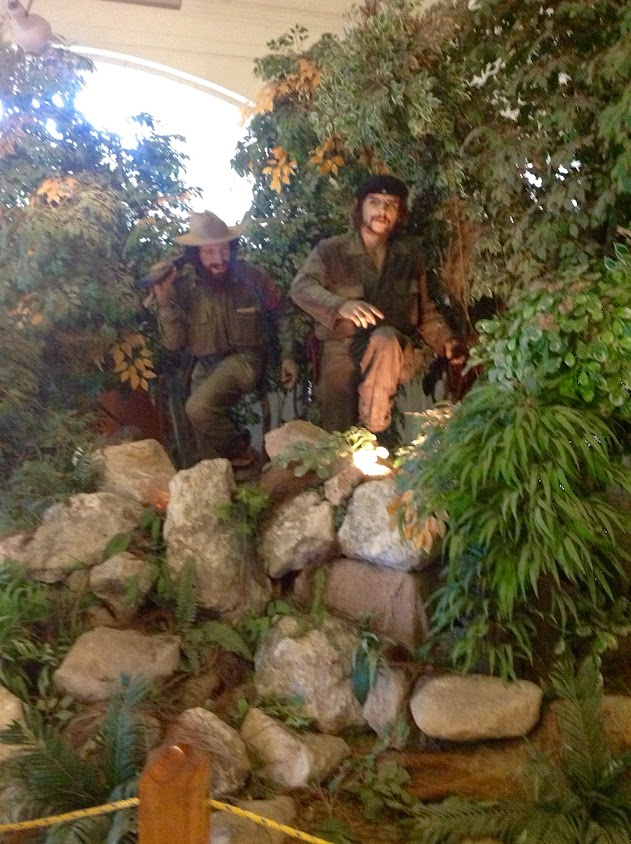
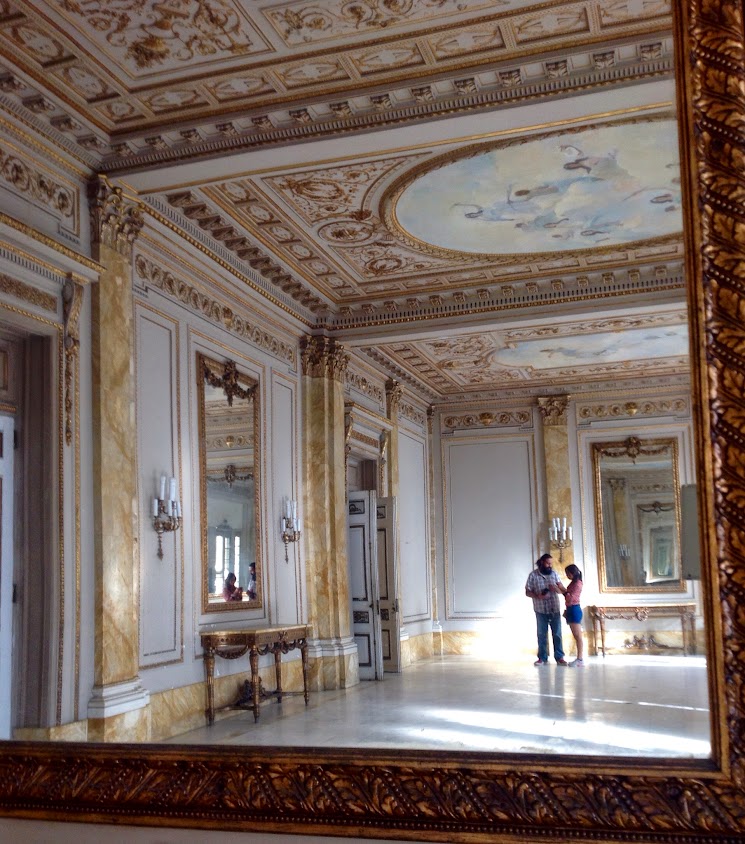
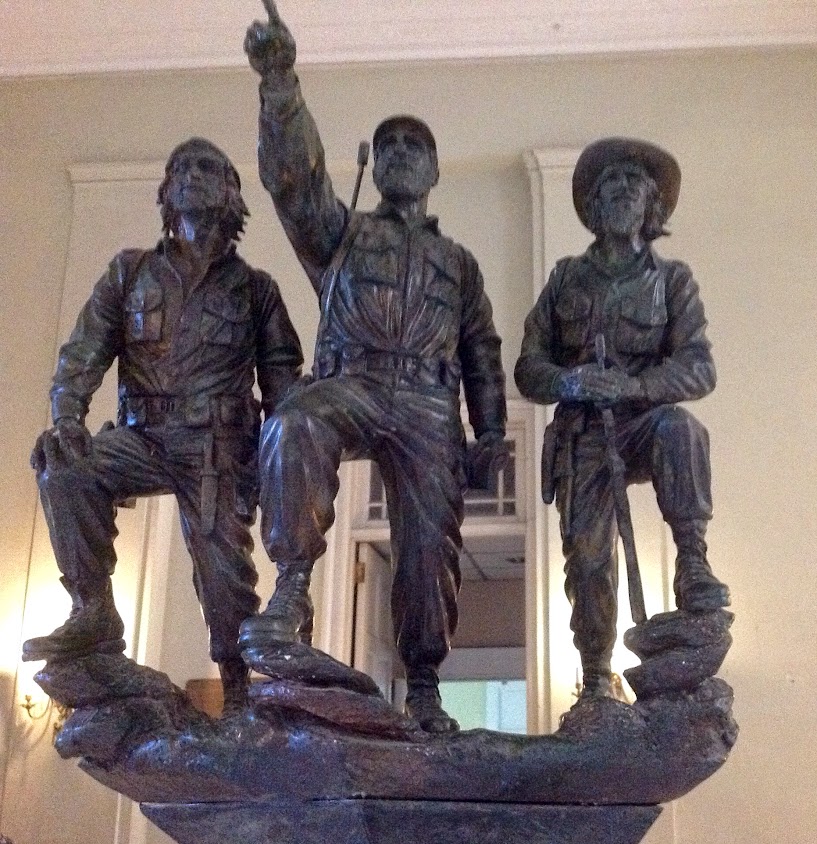
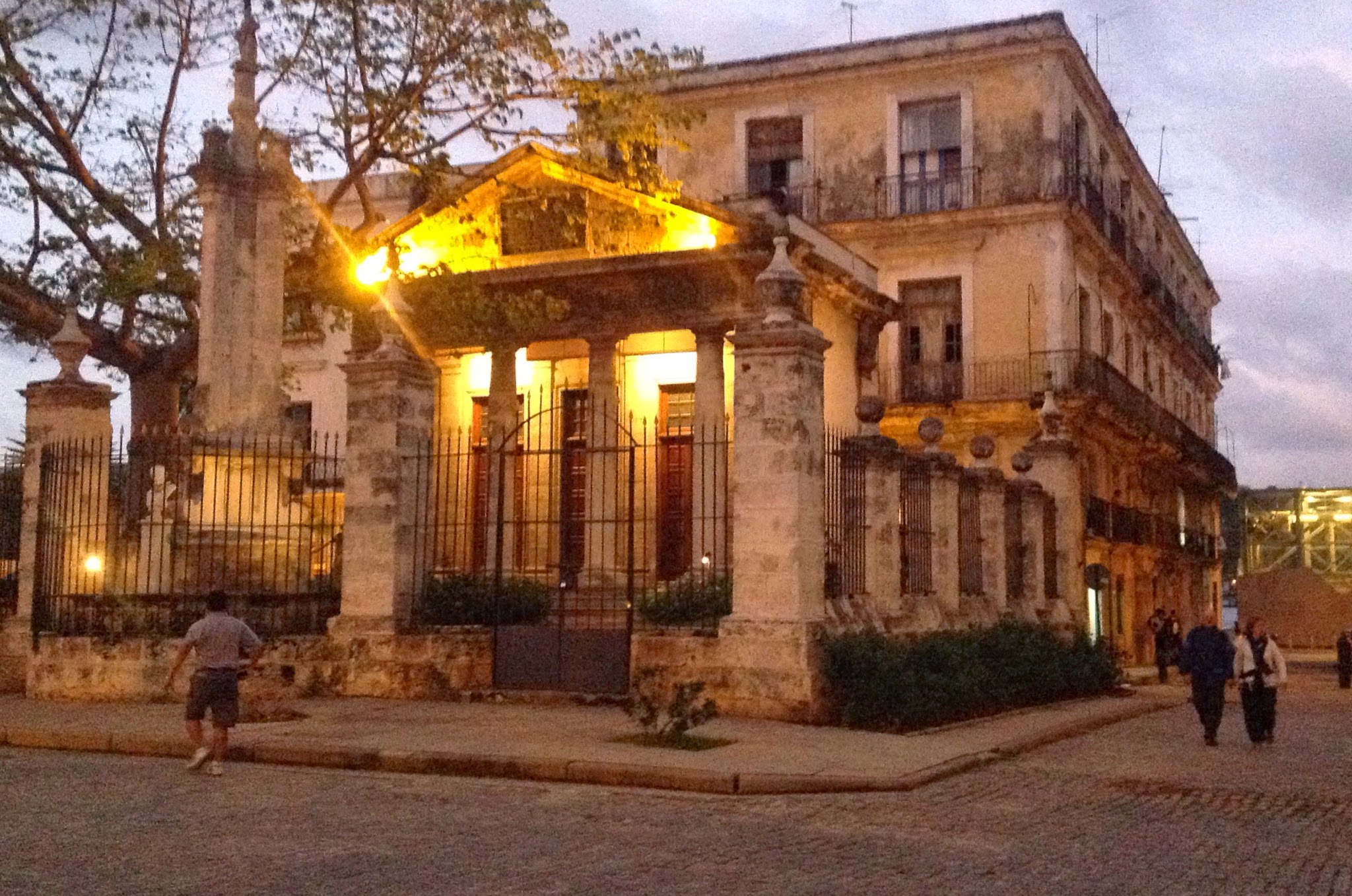
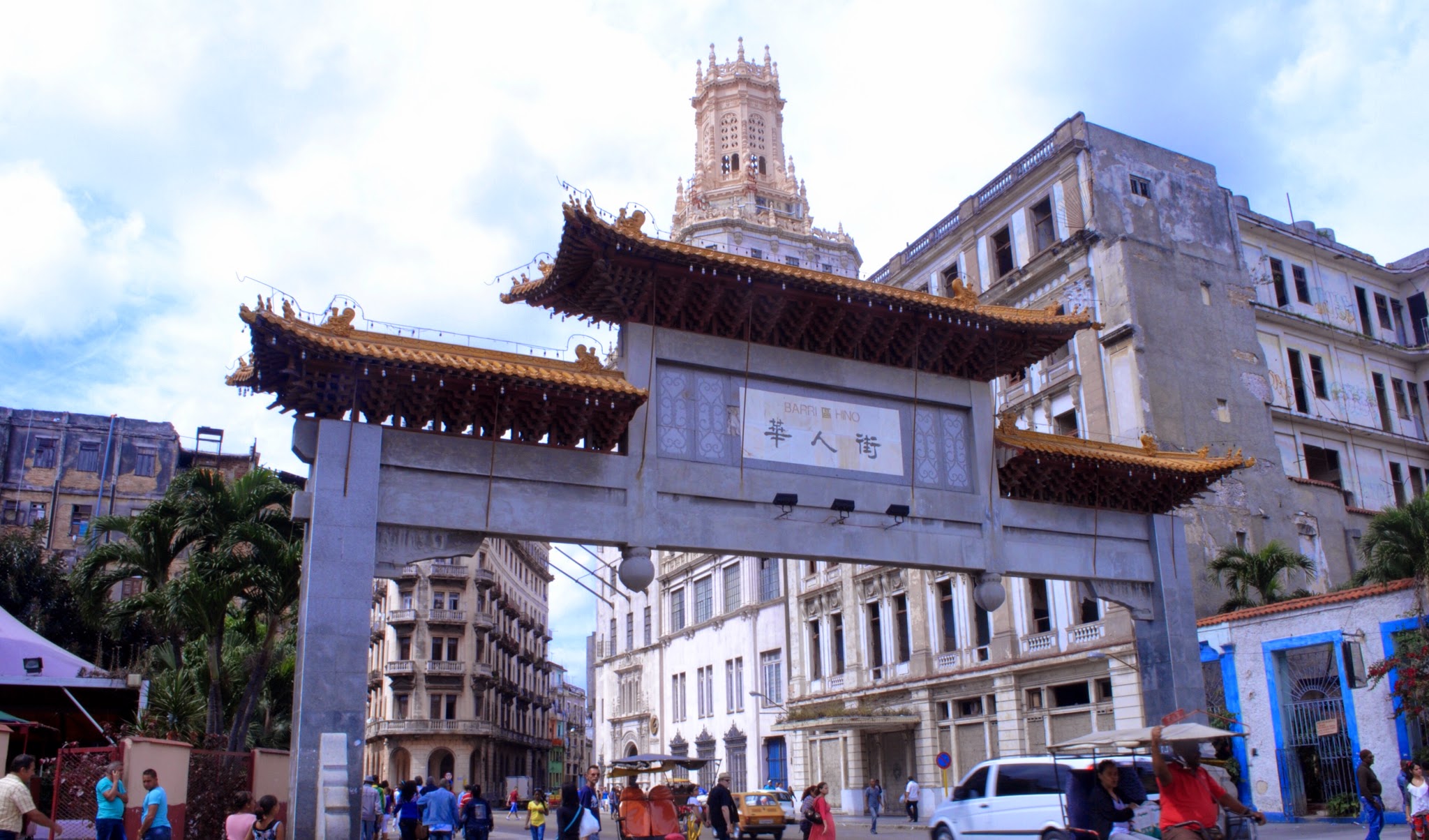
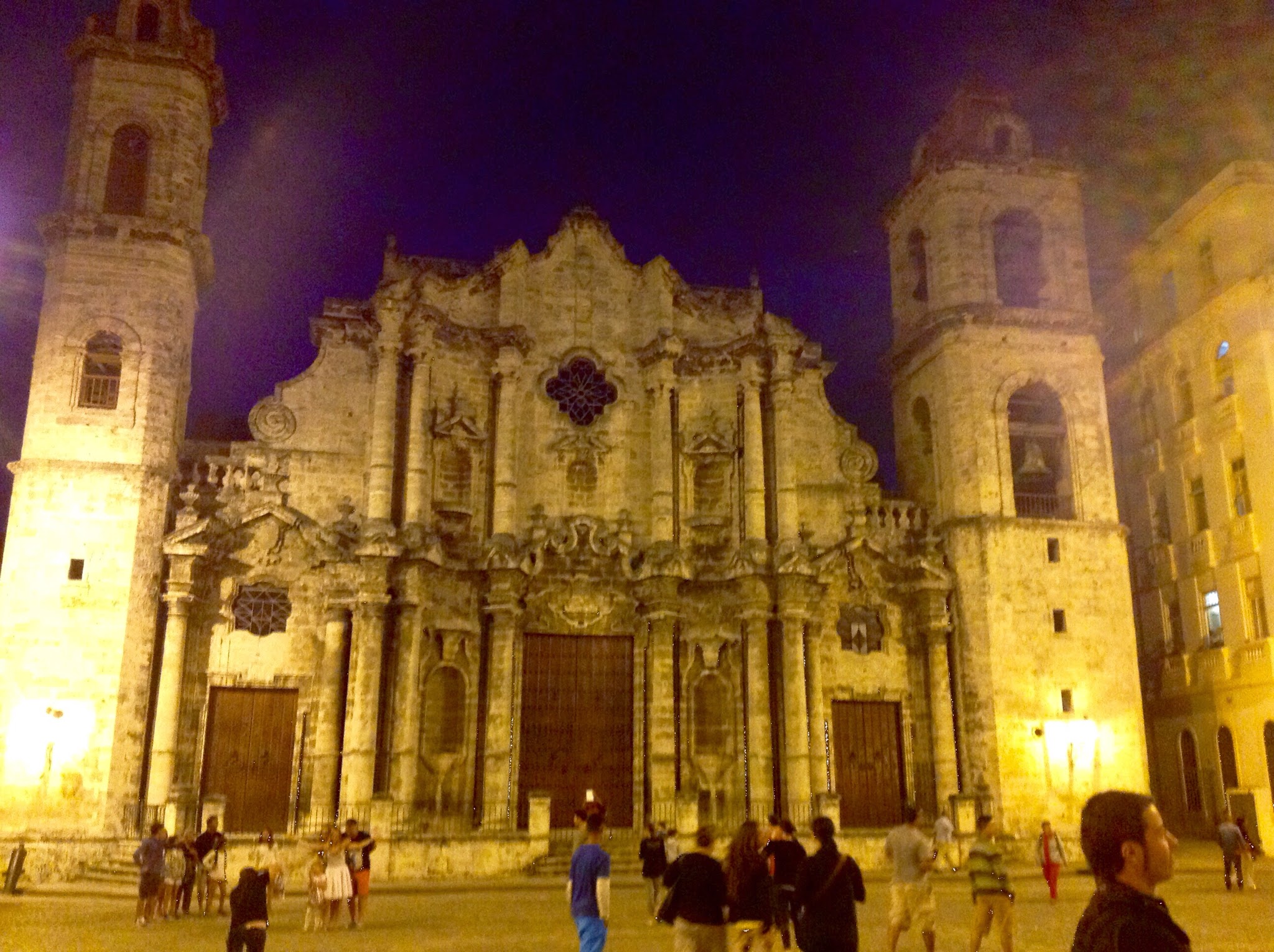
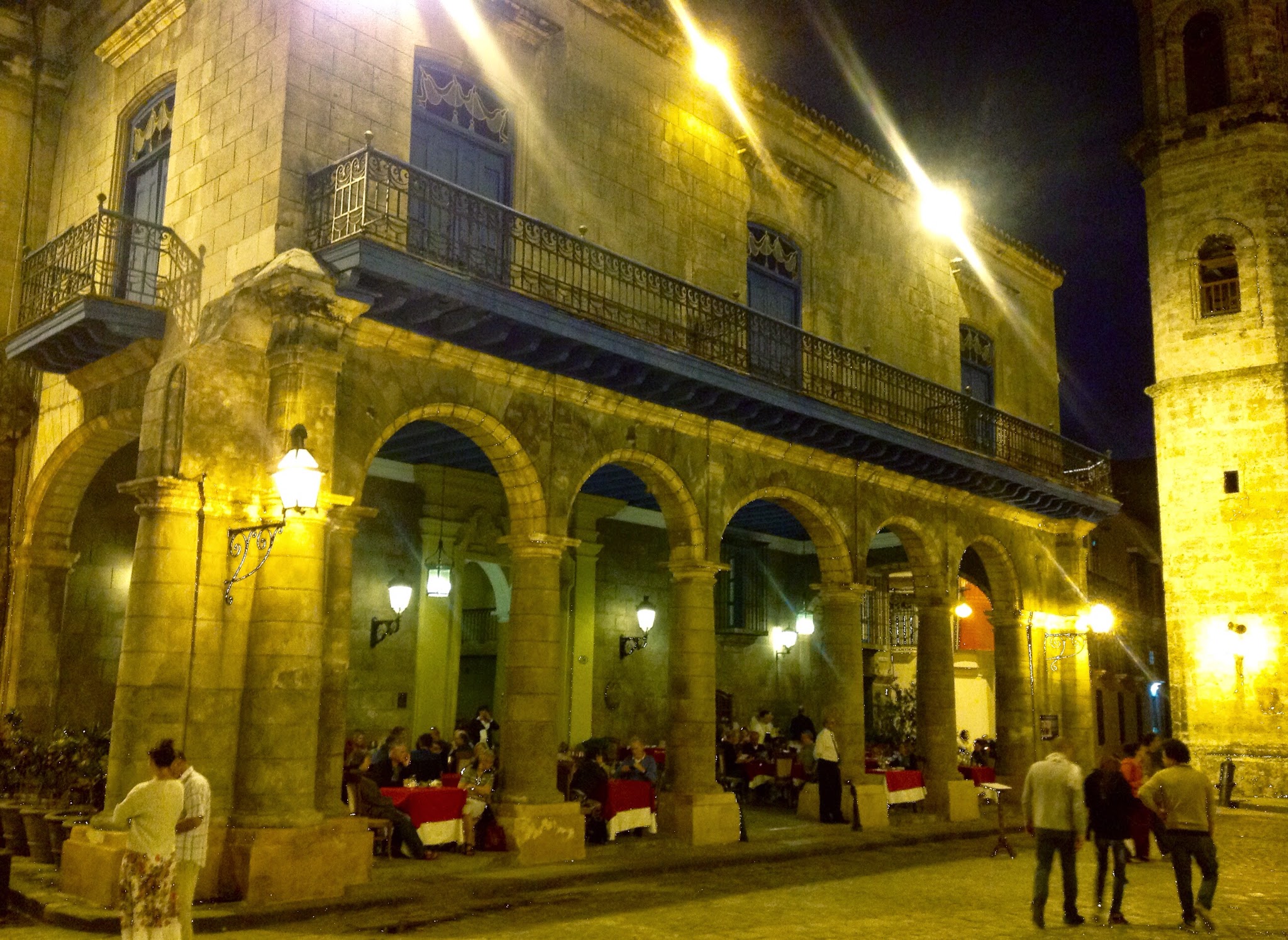
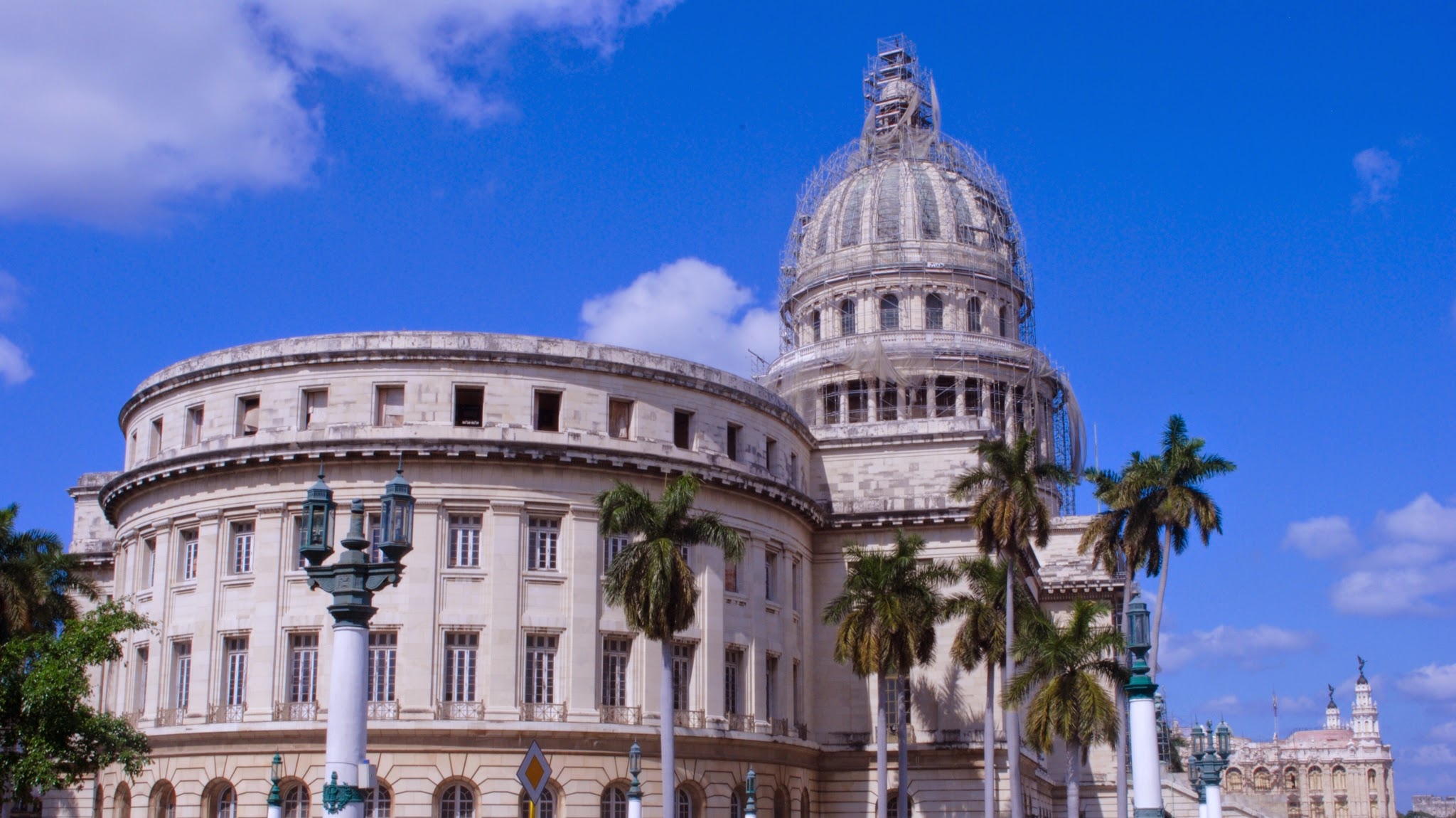
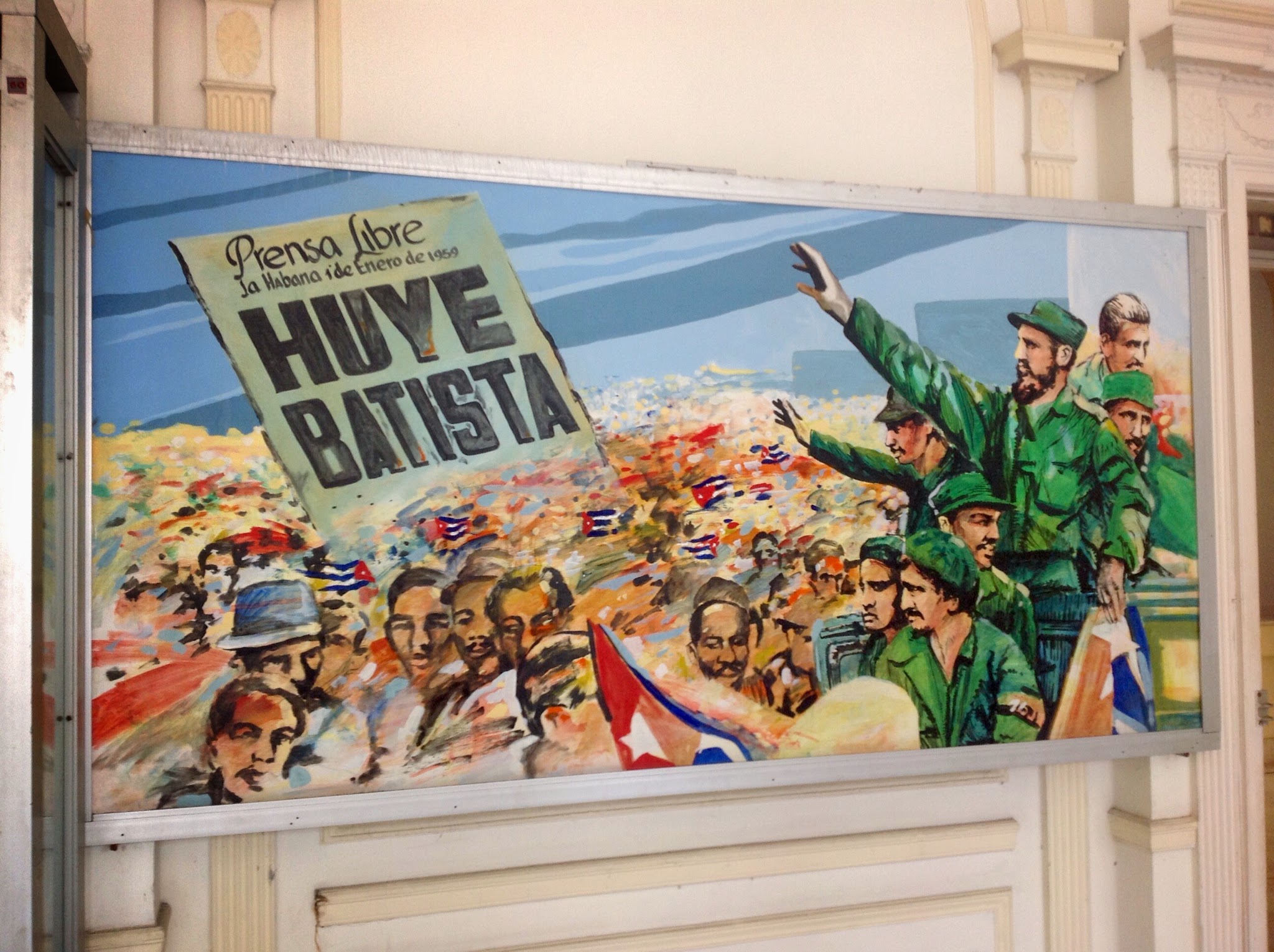
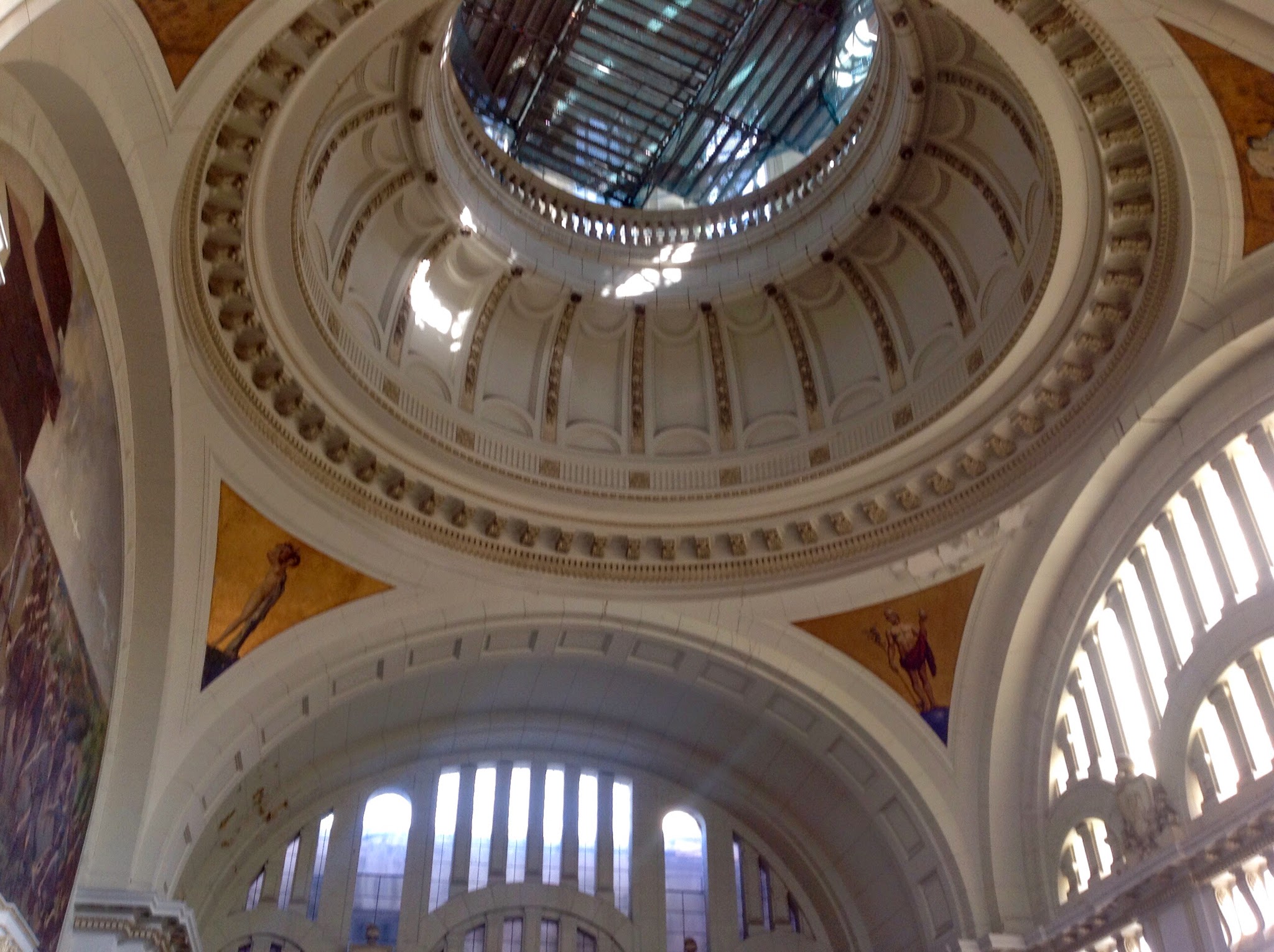
As you can imagine, Havana is a haven for artistes and musicians of great talent. From the rubble arises great beauty and the talent and passion of Cubans is evident everywhere especially in Havana Vieja, a UNESCO World Heritage Site. Safe during both the day and the evening, Vieja (old) Havana is alive with pedicabs, restuarants, bars, music, hotels, museums, impressive buildings, theatres, parks and wide avenues for strolling and people watching. Rarely do you enter a bar or restaurant but there is live music, dancing and the clatter of dishes and the murmur of people talking and laughing. It is also a tourist mecca and so can become somewhat tiresome if you are in Havana longer than a few days. There is a hop on hop off bus that has a very long three hour route that gives a great overview of Havana including Vieja and costs only 5 CUC’s. In Vieja you can visit the Museum of the Revolution a collection of sad memoriabilia, including bullet ridden uniforms, personal items of dead revolutionairies and of course depictions of and homage to the heros of the revolution most notablly, Che and Fidel. Housed in a the former presidential palace the building itself is being restored and adjascent to it is the Granma, the famous boat that brought Fidel and Che back to Cuba from Mexico in 1956, where they had formulated and consolidated their plans for the revolt against the Batista dictatorship. Among the beautiful places to wander are numerous squares, generally flanked by churches, parks, cathedrals, government buildings, museums and restaurants. They are beautiful at night lit up and aglow dating back to the 1600’s and a time when high-walled facades hid exquisite interiors behind great wooden doors.

Behind every door or shutter are hidden from the curious passer-by centuries-old memories interrupted dreams, past loves, ambitions and sorrows that only they – the doors- have sealed, and that they will only reveal to those that have the key.” (Quote from Habaguanex, Company Turistica)

Museum of the Revolution

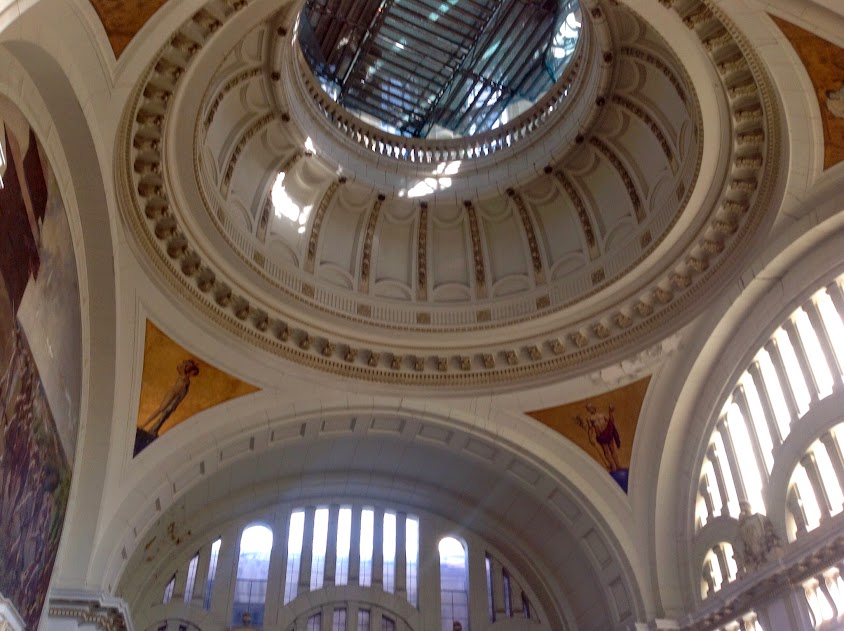
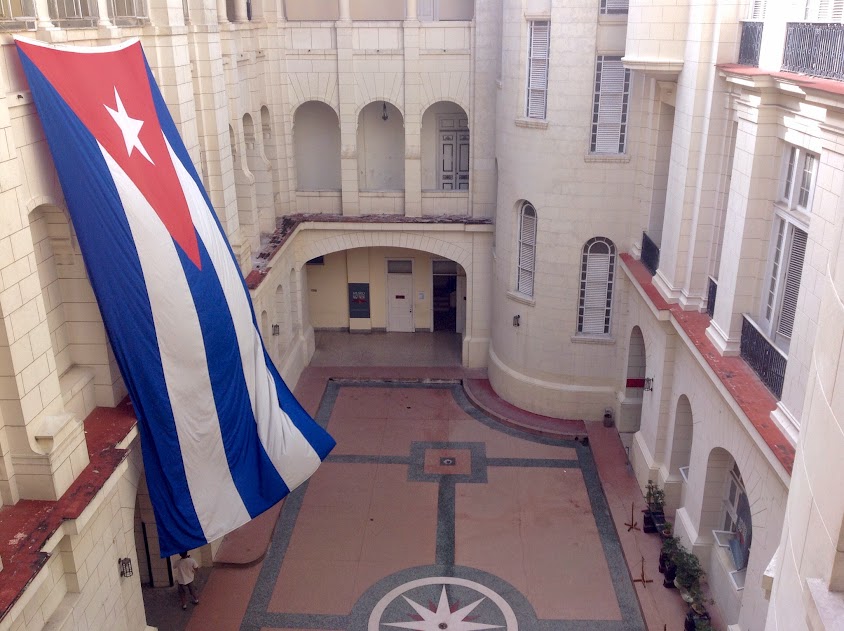
The former presidential palace now houses the museum of the revolution. Filled with sad reminders of the fight against Batista’s regime, heroic diaramas, bullet riddlen jackets and personal items of dead companeros are snuggled amongst a meticulous refurbishment of the palace. Central Havana And Vedado
Central Havana and Vedado around the University are great neighborhoods to wander and both lack the strong tourist presence of Viejo. A night out at the Teatro do los Americos in Centro Havana to see a comedy show was a cultural experience that if nothing else introduced us to Cuban audience behavior. The language was above our heads but we enjoyed watching the audience and since the first part of the show involved audience participation we were treated to a full array of Cuban humour and behaviors. Audience participants were given a much coveted gift of shampoo and conditioner. Walking between the univeristy and Vieja and through Havana Centro reveals a great deal about daily living, shopping, communication and just how the regular havana family lives. Family means a great deal and daily contact is the norm between generations and extended families. Families connections appear to be the key to getting what you need.

Casa Particulares – Mi Casa Es Su Casa!
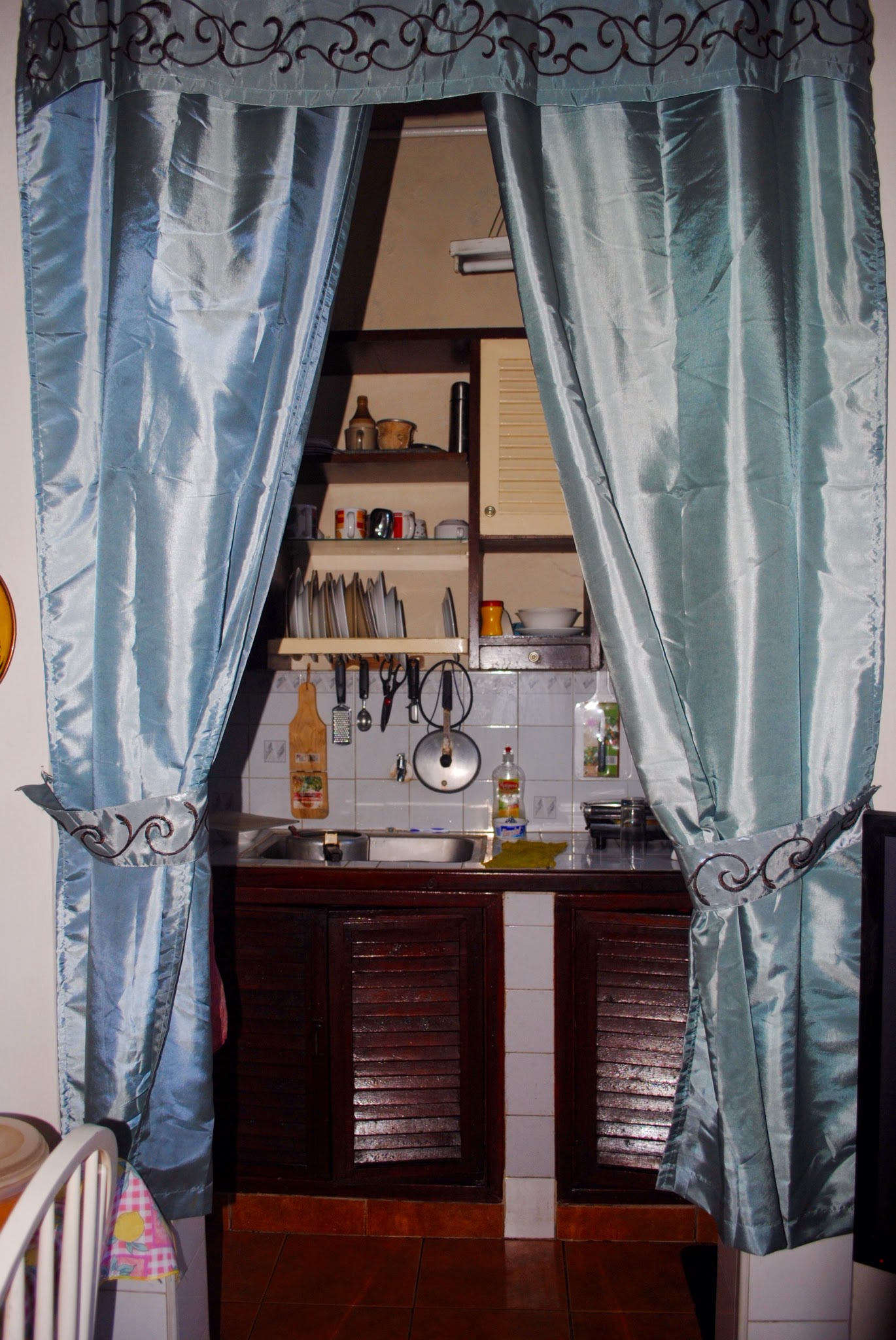
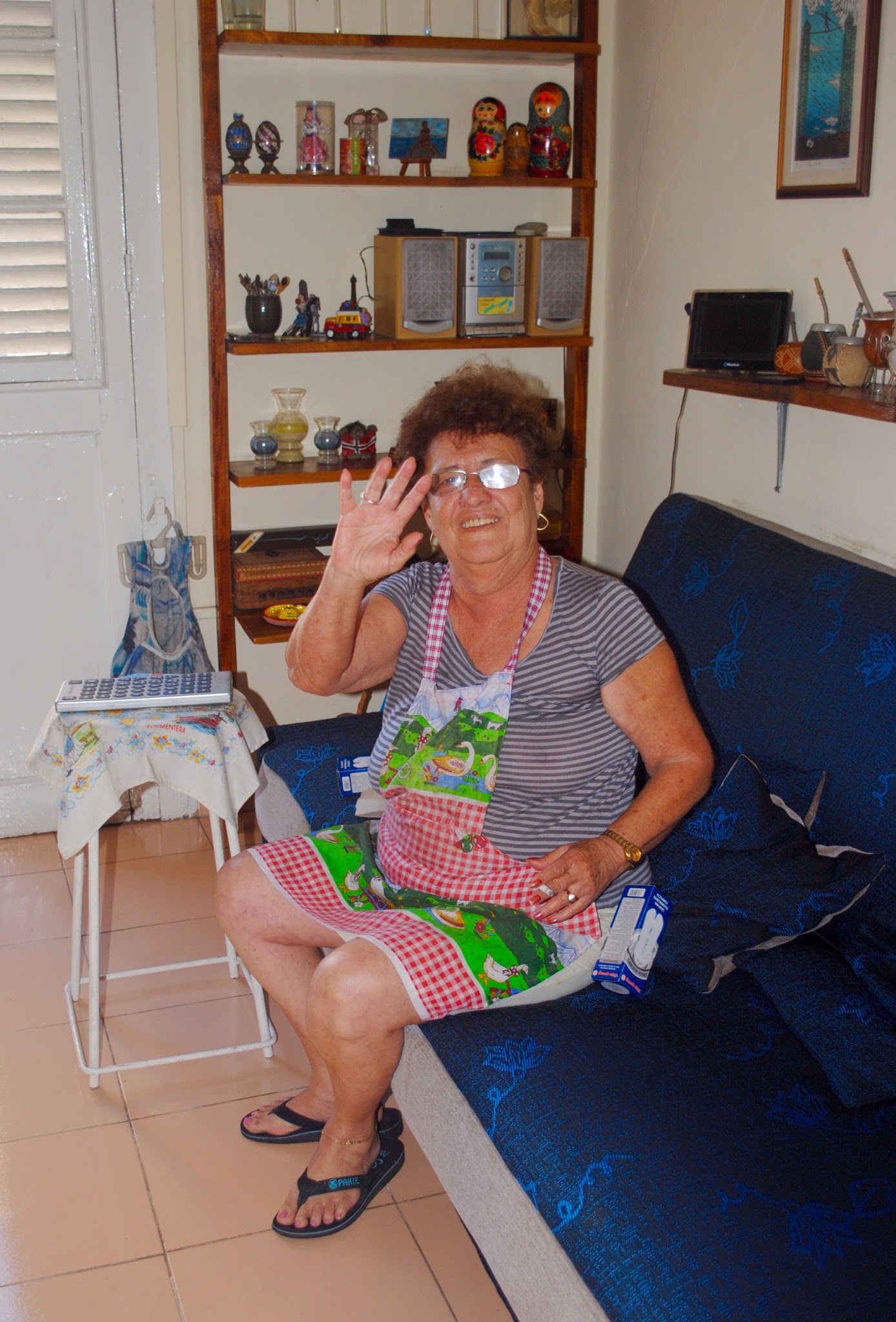
Staying in a Casa Particular means living with a Cuban family. Generally you have your own room and as much company and Spanish conversation as you like. We were lucky to find a Casa close to the university owned by “Concha” who lives alone in her four bedroom apartment, a rare find in Cuba. The bedrooms are off a long hallway leading to the kitchen and our rooms had their own bathrooms with long shuttered doors leading to narrow balconies overlooking the street. The rumble from the old cars was ear shattering to begin with but soon we learned to live in the quiet moments. Casas are usually the least expensive and best option for a long stay as many of the government run hotels are expensive and staffed by “friends of the government” who have little vested in efficiency or productivity. These hotels are useful for gaining access to the Internet but charge exorbitant rates for an hour of time which you then have to use up in three days from purchase.
Conchas family was close by, her son and daughter in law helped with the running of the place and would make meals and do laundry for a price. Lovely people they were a good mix of friend and business owners. Three rooms were for rent in the Casa, the fourth bedroom belonging to Concha. At twenty five CUC’s per room times three rooms, Concha was earning many times what my profesoras made in a day. Clearly owning or renting a multi bedroom apartment is a cash cow in Cuba.

Cuba -La Havana – Ramble in the Rubble

Ramble in the Rubble

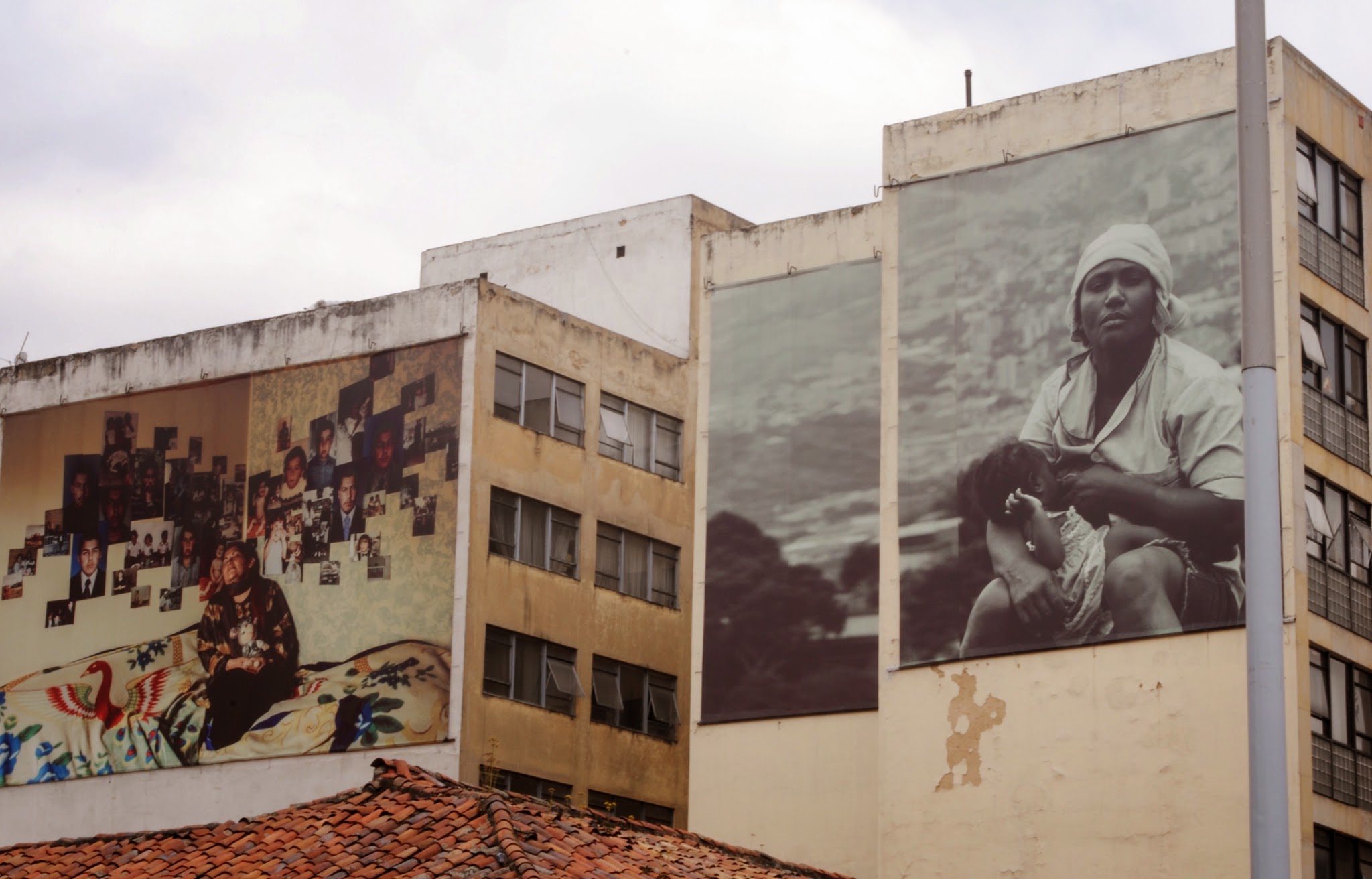
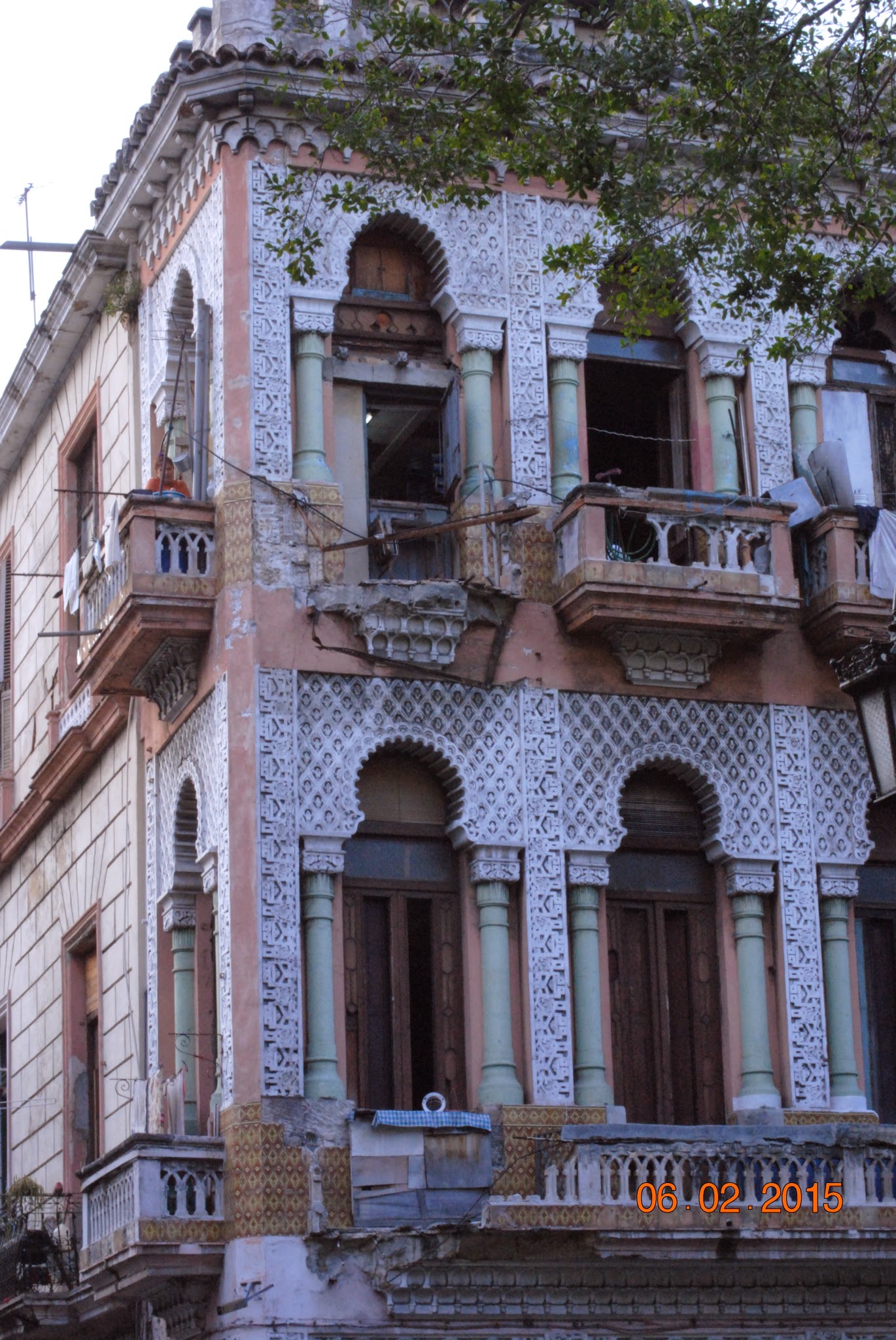
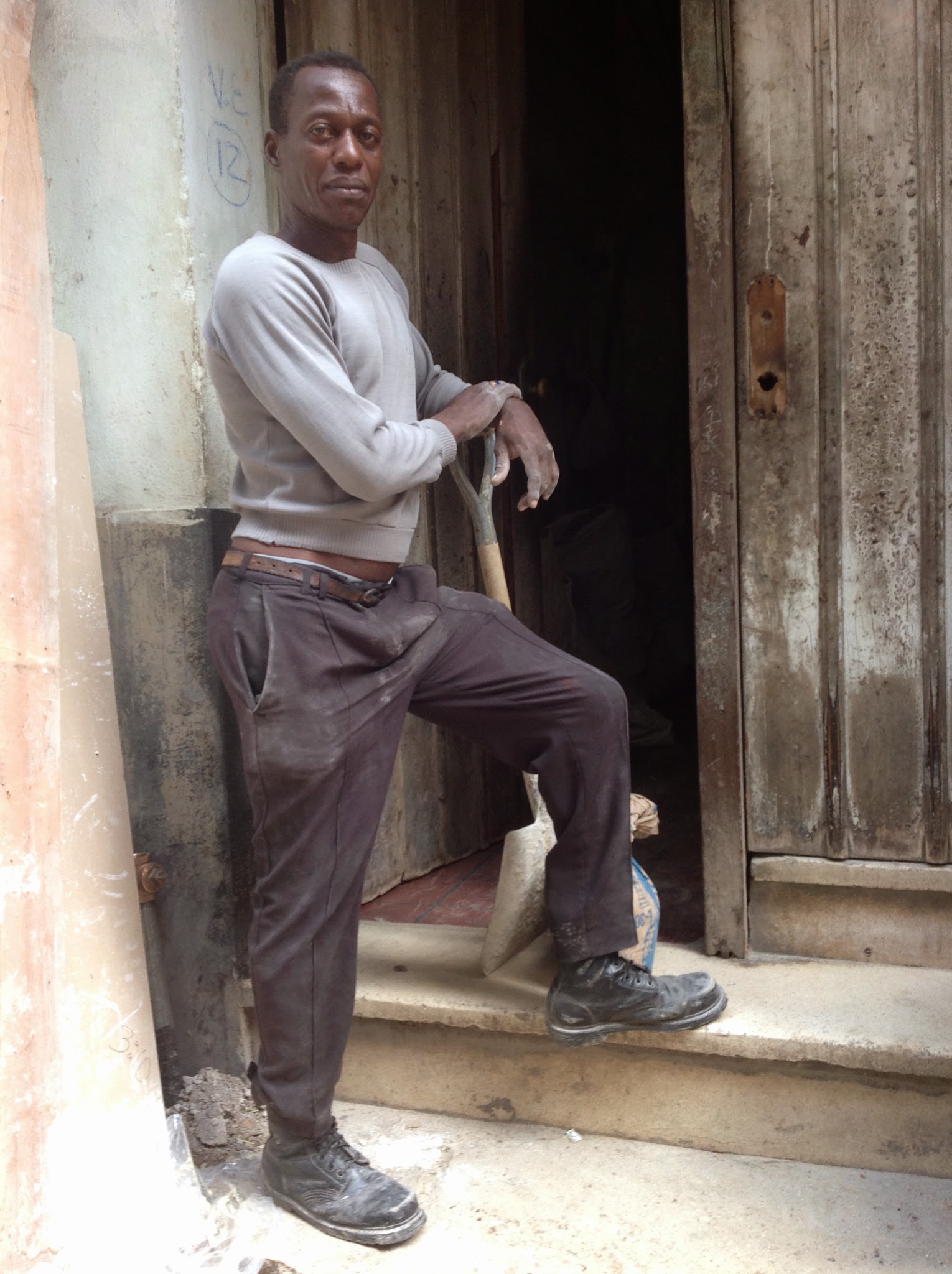
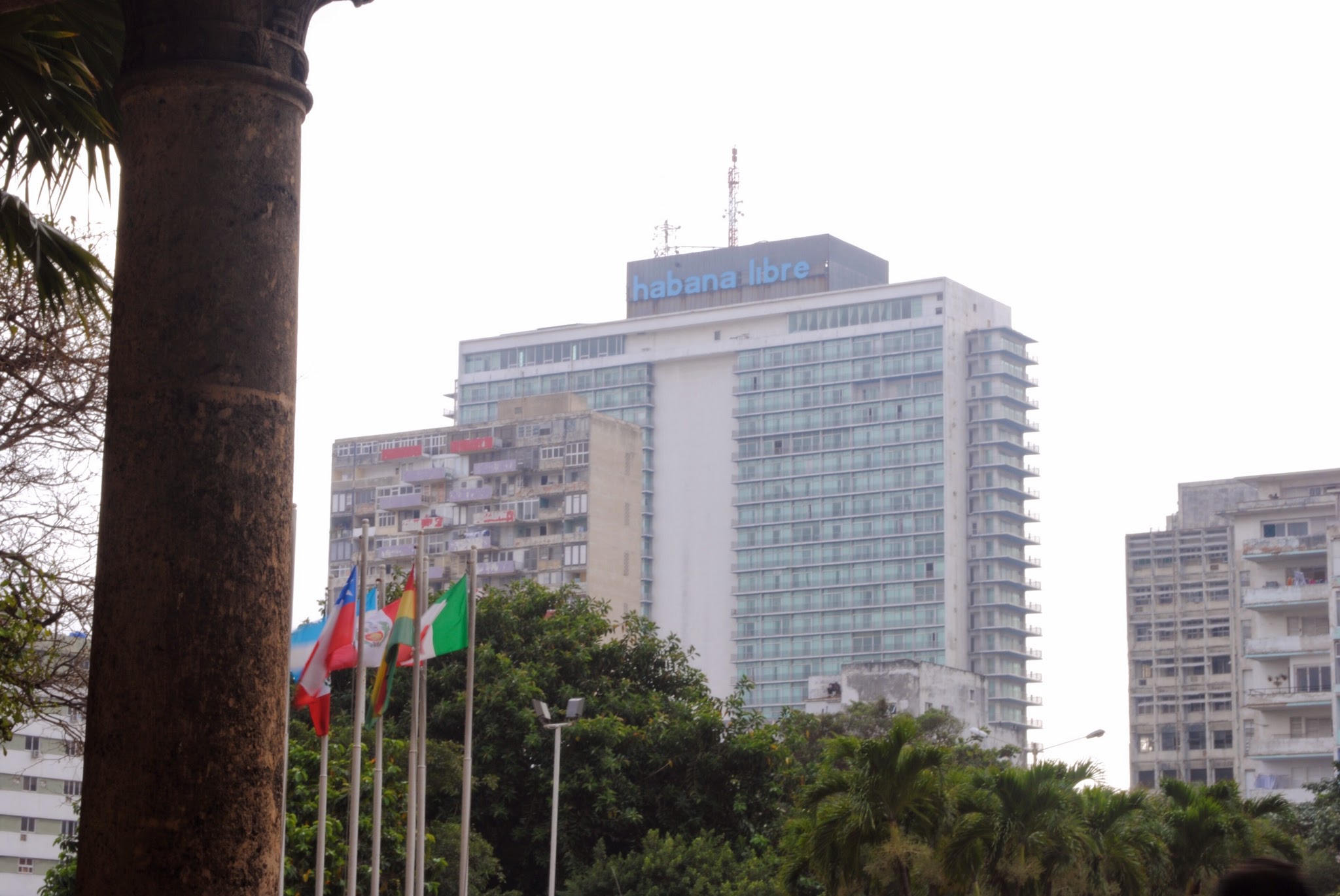
Picture a Spanish colonial city after decades of neglect. Think about what colonial buildings would look like when the plaster has crumbled and fallen and the paint and patina on the wood are long gone. Imagine streets and sidewalks that are a gauntlet of rubble and potholes. Listen for the pulse of music, the rumble of old motor cars backfiring their way through narrow streets leaving black clouds of exhaust, the shrill whistles of pedicab drivers, add the chatter of crowds and you will have Havana Cuba.
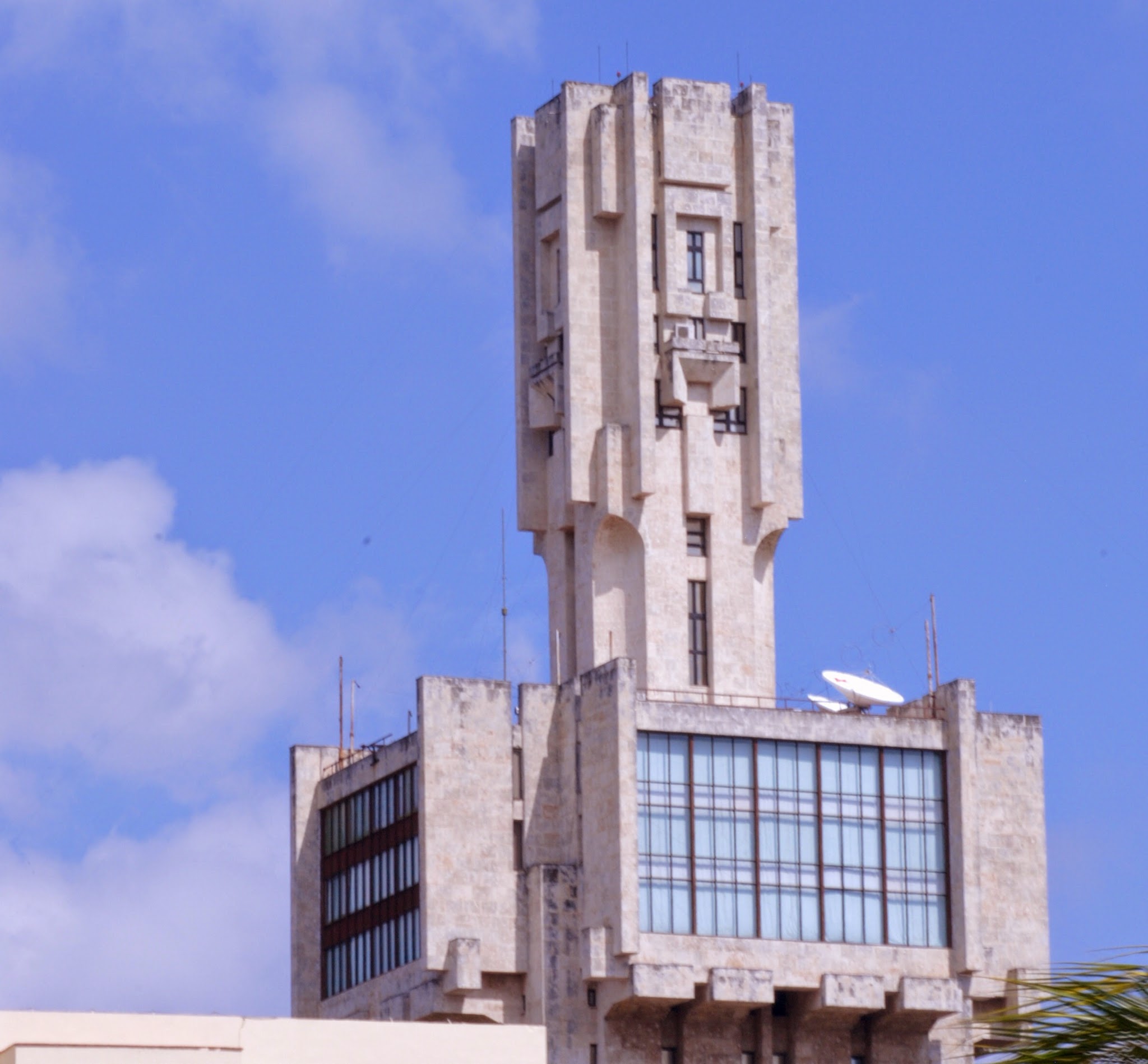
The neglect and disintegration of Havana is both disturbing and alluring. One can only imagine the magnitude of the architectural glory that was once Havana. Time has not been kind to the beautiful avenidas, the once lush green parks and the narrow streets. While the buildings of Havana are frozen in time, its inhabitants have continued their day to day existence. Patching and repairing where money, time and materials have allowed, they modify and compartmentalize once palatial homes to accommodate the large number of people who have migrated from rural to urban Cuba. The buildings, and whatever else remained after the last revolution, stand resolute looking as if they are patiently waiting for life to resume. Even as the buildings crumble, Havana rumbles along, propelled by human spirit and ingenuity. Almost everything in plain sight on the streets of Cuba is held together with a lick and a promise, except in the Old Quarter where the Cuban government goes to great expense to refurbish colonial buildings for the promotion of tourism. Since the collapse of the Soviet Union and the economic problems of Venezuela, Cuba no longer receives the subsidies from these two important allies and has come to rely on tourism to a large degree. And tourists there are many and they join the rivers of Cubanos that ramble through the rubble to get from one place to another.

Yucatan: Overnight Trips to Vallodolid and Campache

Setting aside three nights for a longer road trip was a good decision as it gave Tom and I a chance to explore more of the Yucatan and the neighbouring state of Campeche. The first night we spent in the colonial town of Valladolid, which is half way between Merida and Cancun. On the way we stopped to visit Sotuta de Peon, a henequen plantation, about an hour and a half from Progreso via Merida. It is a “working” hacienda that goes into production twice a day for the tourists who want to see how the yucca cactus becomes the henequen rope. The hacienda tour is in English and starts in the casa de la hacienda. Beautiful tiled walls and floors are everywhere including on the veranda. High ceilings keep the haciendas cool. According to the animated tour guide these houses were rarely used by the wealthy owners who chose instead to stay in their mansions in Merida. Nevertheless they were beautifully furnished, well stocked

Managed by an overseer, haciendas were really little fiefdoms unto themselves. They had their own currency, laws, stores etc. and even a jail. Local Maya did the hard work of planting, tending and processing the cactus, living out their lives on the hacienda and in the surrounding pueblo. The machinery used in the production of henequen rope is still functional and was invented specifically for the haciendas and of course ramped up production from the earlier times when everything was done by hand.

The first step in making the rope is to remove the skin of the cactus, revealing the fiber which when dried in the sun is separated by a machine and finally it is spun into rope of varying thickness and crated for shipping. The tour at Sotuta de Peon finishes with a burro pulled train ride through the cactus fields to a typical home of a Maya worker. At the home an elder who worked at the hacienda, gave some of its history and impressed us all buy saying goodbye in about a dozen language. The grand finale of the tour is a swim in a covered cenote complete with an air/light shaft, stalagmites and stalagtites. The water is clear and cool and the limestone walls and rock formations are fun to explore.

Back in the car and on the road we reached our next destination just before dark. Valladolid is a beautiful colonial city located midway between Cancun and Merida and it has a cenote right in the heart of town and several in the surrounding areas. This is a great place to stay if you are visiting Chichan Itza or just touring the area south of Merida. It is not necessary to take the toll highway from Merida to Valladolid as there is a free alternative route which takes a little longer but gives you a good look at the countryside.


In Vallodolid, there are a number of inexpensive colonial hotels right off the main square and plenty of places to walk, eat and enjoy the sights including Mayan artisan co-ops.Valladolid is a good reminder that if you don’t like noise, music or colour you won’t want to come to Mexico, but if you do you will really enjoy the atmosphere wherever you go.Among its many charms, Valladolid has great restaurants with authentic Maya food. Yucatano dishes are varied and generally feature fish, seafood, pork and chicken. Beef is not prevalent and most ingredients are local and fresh. Of course they are spiced and prepared in the Yucatano way and are really delicious. Yucatican cuisine is much lighter and the spicing more subtle than in other areas of Mexico. Cheese is used sparingly, but tomatoes, peppers and onions, along with tortillas, form the back bone of many dishes. Juices and smoothies, beer and tequila based drinks, bottled water and cafe con leche are standard.

One could easily spend two or three days in Valladolid wandering the streets and exploring the surrounding area but we had only one night before we headed in a south easterly direction for the State of Campeche and the capital city, Campeche. Although in a different state it is still on the Yucatan peninsula. Along the route we passed through the pueblos, witnessing daily life as it unfolds at a much slower pace than in the cities. The countryside was beautiful and at one point we even gained some height as the road passed over a series of hills before returning to the flats along the coast.

The city of Campeche is a UNESCO world heritage sight. A walled city it necessarily became a fortress to fend off pirates and enemy armies. We stayed in a beautiful old colonial hotel a block off the main square. Tiled floors, high ceilings, open courtyard and long slender french windows overlooking the street made for a comfortable stay. The Campeche Malecon is beautiful and since it is outside the old city walls it is much more modern area. Inside the walls is another story. On the evenings that we were in Campeche, a laser light show was beamed onto the arched walls of the colonial commisario. It told the story of Campeche from prehistoric times to modern days. The visuals were designed to fit snuggly in the arches and on the front of the building, with brilliant colors and playful transitions, it was really entertaining. Folding chairs were set out earlier for the crowd that would come to watch but by the time we arrived the first night it was standing room only.

Also in the main square we watched as a group of mainly women set up for bingo. Instead of letters they use pictures which dates back to a time when literacy rates were lower. Every bit as voracious as the bingo ladies at home, they ranand grabbed at the folding chairs and tables before the delivery man could even set them down, he looked a tad fearful as they lunged at the chairs

On night two we viewed the show from the balcony of a restaurant overlooking the square. Inside the restaurant was brimming with kitchey antiques. Later at our hotel bar we met a group of young Mexicans who were great fun and very interesting. Most of them work in health care, a doctor, nutritionist, hospital administrator with a couple of teachers and a lawyer thrown in for good luck. We have all become fast friends on facebook and will likely visit with them when we return to Mexico in April.